World News in Brief: Deadly strikes in Sudan, health systems in South Sudan near the brink, Guterres calls for unity ahead of Ramadan.

Over the past week, North Kordofan state recorded more than a dozen attacks in and around the towns of El Obeid, Bara, Rahad and Um Rawaba.  

In South Kordofan, suspected drone strikes hit health facilities in the state capital, Kadugli, and in Kuweik town, reportedly killing four medical workers, injuring more than 20 people. 

Concerns over the conflict continue to deepen after a report today from the UN Human Rights Office revealed the “sustained” and “systematic attacks” to civilians in the neighbouring Darfur region in late 2025 that may “amount to crimes against humanity”. 

Growing humanitarian concerns 

“The violence is triggering a new wave of displacement, with reports of many fleeing homes, in need food, health care and protection,” warned the Spokesperson for the Secretary-General Stéphane Dujarric on Friday. 

While the humanitarian situation in Dilling and Kadugli continues to deteriorate, he emphasised that “rapid, safe, unhindered and sustained humanitarian access is essential for us to scale up our response.” 

Commercial vehicles, telecommunications infrastructure and key transport routes have been affected the drone strikes, disrupting humanitarian movements and supply chains. 

Mr. Dujarric called for “the protection of humanitarian infrastructure, in line with international humanitarian law” and urged for more funding through UN aid coordination office OCHA to support displaced families across Sudan. 

Violence pushes South Sudan’s health system to the brink 

Since late December 2025, a devasting escalation of violence has swept across northern and central parts of South Sudan, the UN children’s agency (UNICEF) said on Friday. 

In Jonglei state alone, at least 280,000 people have been displaced – the majority being women and children.

“They fled with nothing. They are sleeping in displacement camps left over from the not-so-distant civil war – camps where there are barely any services. Others are out in the open, in remote locations, with nothing at all,” said UNICEF’s representative in South Sudan, Obia Acheng. 

Children were believed to make up 53 percent of those displaced.

“These children face killing and maiming. Recruitment into armed groups. Separation from their families. Gender-based violence. And profound psychological distress that will mark them for years,” Mr. Acheng emphasised.

Delivering for children

South Sudan’s health system is on the verge of collapse, with 11 health facilities attacked or looted since fighting intensified and many nutrition centres forced to close, UNICEF said.

Cholera cases have surged to 479 nationwide, with treatment centres overwhelmed and resources running low.

Around 825,000 children across Jonglei, Unity, and Eastern Equatoria states are now at risk of acute malnutrition — conditions that make children 12 times more likely to die without treatment.

Pregnant and nursing mothers are increasingly cut off from care, and humanitarian infrastructure is under assault.

Despite these grim numbers, UNICEF continues to run primary healthcare, nutrition, water and sanitation, and child protection programmes across the country. 

The UN Security Council also issued a statement expressing grave concern about the escalating violence in Jonglei, Eastern Equatoria, and throughout South Sudan. 

Members strongly called on all parties to de-escalate and immediately cease renewed hostilities and to resolve issues through peaceful dialogue.  

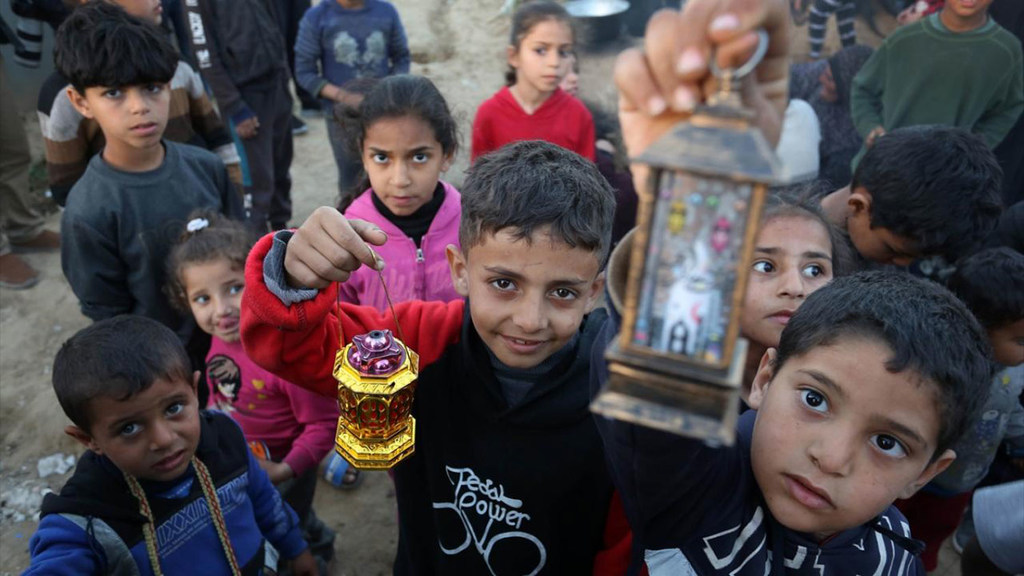
Children in Gaza hold lanterns to celebrate the advent of Ramadan. (file)

UN chief calls for unity and compassion ahead of Ramadan 

UN Secretary-General António Guterres has urged people worldwide to embrace the spirit of peace, compassion and solidarity as Muslims prepare to observe the holy month of Ramadan.  

“For Muslims around the world, the holy month of Ramadan is a sacred period of reflection and prayer. Ramadan also represents a noble vision of hope and peace.” Mr. Guterres said in a message ahead of the start on Tuesday.  

He noted, however, that for many — from Afghanistan to Yemen, Gaza, and Sudan — this vision of hope and unity remained distant amid conflict, hunger, and displacement. 

The UN chief called on the global community to bridge divides, deliver aid to those in need, and uphold human rights and dignity for all. 

“May this Holy Month inspire us to work as one to build a more peaceful, generous and just world for all people,” he said. 

Source link

Global health systems ‘at risk’ as funding cuts bite, warns WHO

This is occurring as the risk from pandemics, drug-resistant infections and fragile health services are on the rise, said the WHO Director-General.

Addressing the WHO Executive Board in Geneva, Tedros Adhanom Ghebreyesus stressed the impact of workforce reductions last year due to “significant cuts to our funding,” which have had significant consequences.

Sudden and severe cuts to bilateral aid have also caused huge disruptions to health systems and services in many countries,” he told health ministers and diplomats, describing 2025 as “one of the most difficult years” in the agency’s history.

While WHO had managed to keep its lifesaving work going, Tedros said the funding crisis exposed deeper vulnerabilities in global health governance, particularly in low and middle-income countries struggling to maintain essential services.

What’s on the agenda?

The WHO Executive Board has a sweeping agenda covering pandemic preparedness, immunisation, antimicrobial resistance, mental health and health emergencies in conflict zones.

Key issue: Members are also reviewing budget pressures, governance reform and formal withdrawal notifications from the United States and Argentina.

Why it matters: The discussions come as global health risks rise, even as international cooperation and predictable financing are under strain.

What’s next: Outcomes from this week’s meeting will be forwarded to the World Health Assembly in May, shaping WHO’s direction amid mounting geopolitical and public health pressures.

Click here for more information on the session, and here for our recent coverage of key global health issues.

High stakes

The WHO funding crisis is part of a broader retreat from international health financing, forcing countries to make difficult choices, he added.

“In response to funding cuts, WHO is supporting many countries to sustain essential health services, and to transition away from aid dependency towards self-reliance,” Tedros said, pointing to domestic resource mobilisation – including higher health taxes on tobacco, alcohol and sugary drinks – as a key strategy.

Yet the scale of unmet needs remains vast.

According to WHO, 4.6 billion people still lack access to essential health services, while 2.1 billion face financial hardship because of health costs. At the same time, the world faces a projected shortage of 11 million health workers by 2030, more than half of them nurses.

Deeper crisis averted

Tedros said WHO has avoided a more severe financial shock only because Member States have agreed to increase mandatory assessed contributions, reducing the agency’s reliance on voluntary, earmarked funding.

“If you had not approved the increase in assessed contributions, we would have been in a far worse situation than we are,” he told the Board.

Thanks to those reforms, WHO has mobilised about 85 per cent of the resources needed for its core budget for 2026-27. But Tedros cautioned that the remaining gap will be “hard to mobilise,” particularly in a difficult global funding environment.

“Although 85 per cent sounds good – and it is – the environment is very difficult,” he said, warning of “pockets of poverty” in underfunded priority areas such as emergency preparedness, antimicrobial resistance and climate resilience.

WHO Director-General Tedros Adhanom Ghebreyesus. (file photo)

Gains have been made

Despite the financial climate, notable games have been made in recent months.

Tedros highlighted the adoption last year of the Pandemic Agreement and amended International Health Regulations (IHR), aimed at strengthening preparedness in the wake of COVID-19.

WHO also expanded disease surveillance, rolled out artificial intelligence (AI)-powered epidemic intelligence systems, and supported countries in responding to hundreds of health emergencies in 2025 – many of which never reached public attention because outbreaks were contained early.

However, one in six bacterial infections globally are now resistant to antibiotics, Tedros said, describing the trend as concerning and accelerating in some regions.

‘Solidarity is the best immunity’

“The pandemic taught all of us many lessons – especially that global threats demand a global response,” said Tedros. “Solidarity is the best immunity.”

He warned that without predictable and sufficient financing, the world risks being less prepared – not more – for the next health emergency.

“This is your WHO,” Tedros told the Board, “Its strength is your unity. Its future is your choice.

Deputy UN chief urges bold action to transform food systems at global summit in Addis Ababa

Delivering closing remarks at the UN Food Systems Summit +4 Stocktaking Moment (UNFSS+4) in Addis Ababa, co-hosted by Ethiopia and Italy, Ms. Mohammed praised the growing momentum behind food systems transformation.

But she also warned that with just five years left to 2030, “hunger and malnutrition persist. Climate shocks, conflict, debt, and inequality are widening the cracks in our systems.”

“Too often food systems are seen as part of our challenges,” she said. “When in fact, they can be one of the greatest solutions to deliver for people, planet, peace and prosperity.”

A global process for transformation

The UN Food Systems Summit process was launched in 2021 “in the midst of a global pandemic” to catalyse national and global action to make food systems more inclusive, resilient and sustainable.  

The 2025 stocktake brought together over 3,000 participants from governments, civil society, Indigenous Peoples, youth, and the private sector to assess progress and renew commitments.

To date, more than 130 countries have developed National Pathways for food systems transformation, supported by UN agencies and development partners.

Moving the UNFSS process forward

In her address, Ms. Mohammed highlighted several areas of progress and called for urgent, coordinated action:

  • Food systems as climate solutions: 
    “Food and agriculture are now part of the climate plans of 168 countries,” she said, noting their potential to reduce emissions and build resilience.
  • School meals as a strategic investment: 
    Over 170 countries are implementing school meal programmes. These are not just meals – they are investments in children, our farmers, and the future.
  • Cities driving innovation: 
    Urban centres are leading efforts to reduce food waste and strengthen local supply chains. Cities are showing what innovation looks like on the ground.
  • Inclusion is essential: 
    Ms. Mohammed called for inclusion of youth, Indigenous Peoples, women, and marginalized communities. “These are powerful commitments to transform food systems for people and the planet that you have helped inspire.”
  • Financing must match ambition: 
    She urged donors and development banks to align investments with national pathways.  

“As we conclude this Stocktake, we must acknowledge that we met in the face of challenges that test our moral values and threaten the future sustainability of our planet, underscoring the urgency of our work together.”

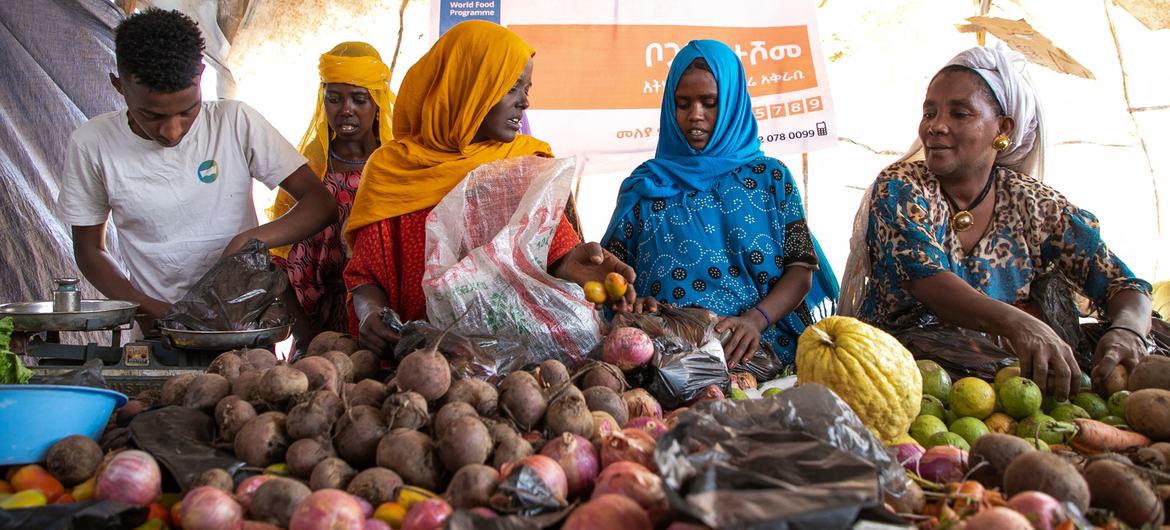
A food market in the Amhara region of Ethiopia.

Global hunger declines, but regional disparities persist

The Summit, which has been running in the Ethiopian capital since 27 July, saw the launch of the State of Food Security and Nutrition in the World 2025 (SOFI) report, which revealed a modest decline in global hunger – but a troubling rise in food insecurity in Africa and Western Asia  

Jointly produced by FAO, IFAD, UNICEF, WFP and WHO, the report highlights how persistent food price inflation has undermined access to healthy diets, especially for low-income populations. Vulnerable groups – including women, children, and rural communities – remain disproportionately affected.

The report calls for:

  • Coherent fiscal and monetary policies to stabilize markets
  • Open and resilient trade systems
  • Targeted social protection for at-risk populations
  • Sustained investment in resilient agrifood systems

While noting an encouraging decrease in the global hunger rate, the report underscored that progress is uneven. SOFI 2025 serves as a critical reminder that the international community must intensify efforts to ensure that everyone has access to sufficient, safe, and nutritious food.  

Hope for those who need it most

At a key side event on Tuesday, Ms. Mohammed appealed for long-term, inclusive solutions to food insecurity in crisis-affected regions. She highlighted the staggering toll of acute malnutrition, noting that over 37 million children under five will face acute malnutrition this year – nearly 10 million of them suffering from severe wasting, the deadliest form of undernutrition.

“Communities are trapped in relentless cycles of hardship,” she said. “But courage is on display at all moments.”

Ms. Mohammed urged governments and partners to move beyond short-term interventions and embrace transformative, locally driven solutions. She praised countries embedding resilience into national strategies and combining traditional knowledge with science to rebuild food systems.

“These governments are not waiting for permission – they are leading,” she said.

She outlined three priorities for action: Catalytic finance that builds local capacity; Coordinated responses that bridge humanitarian and development divides; and Community-centred approaches, especially for women and youth.

“Food systems transformation is especially critical in complex settings,” she said. “It drives food security, resilience, stability, and inclusive growth.”

She wrapped up the event with a call to strengthen multilateralism and unlock opportunity “for and with those who need it most.”

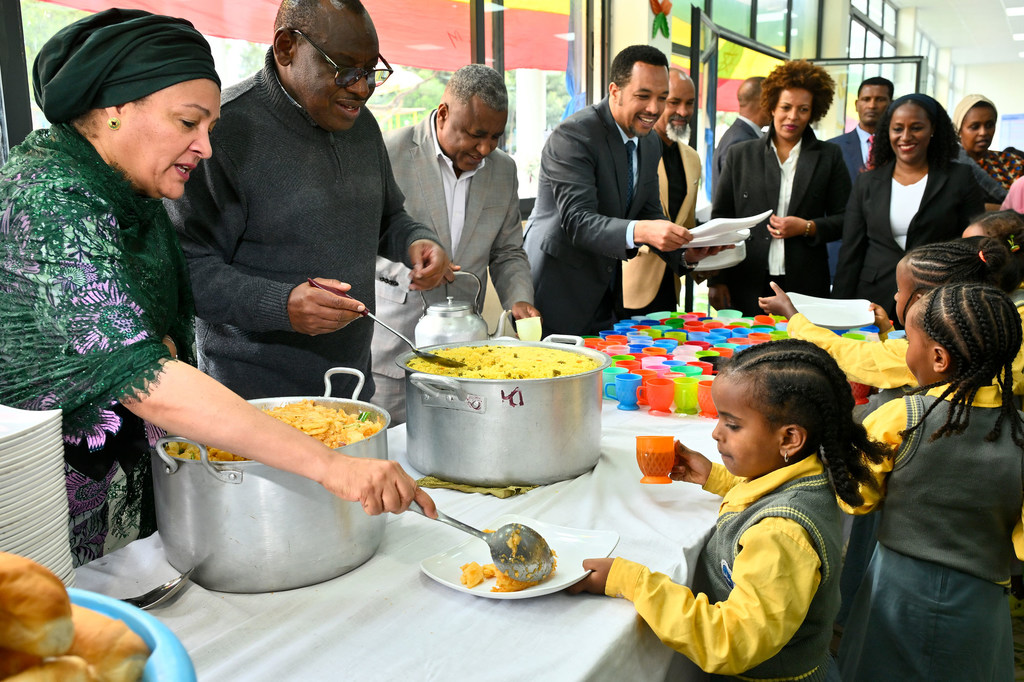
UN Deputy Secretary-General Amina Mohammed (left) serves food to children at a UN Food Systems Summit event in Addis Ababa, Ethiopia.

Looking ahead

Ms. Mohammed closed the Summit with a call to action:

“Our movement has shown what is possible when we work together in deliberate ways across sectors, stakeholders, and countries with a shared purpose.”

She called on governments and people everywhere to build on what has been accomplished and continue to work together for peace and to realize the vision of the 2030 Agenda.

“Let’s continue to lead the way – together.”

Source link

Afghanistan: Surging returns from Iran overwhelm fragile support systems, UN agencies warn

Ninety-nine per cent of the returnees were undocumented, and 70 per cent were forcibly returned, with a steep rise in families being deported – a shift from earlier months, when most returnees were single young men, according to the UN agency.

The rise follows a March decision by the Iranian Government requiring all undocumented Afghans to leave the country.

Conditions deteriorated further after the recent 12-day conflict between Iran and Israel, which caused the daily refugees crossings to skyrocket from about 5,000 to nearly 30,000, according to Arafat Jamal, the UN refugee agency (UNHCR) representative in Afghanistan.

“They are coming in buses and sometimes five buses arrive at one time with families and others and the people are let out of the bus and they are simply bewildered, disoriented, and tired and hungry as well,” he told UN News, describing the scene at a border crossing.

“This has been exacerbated by the war, but I must say it has been part of an underlying trend that we have seen of returns from Iran, some of which are voluntary, but a large portion were also deportations.” 

Strain on aid efforts

Afghanistan, already grappling with economic collapse and chronic humanitarian crisis, is unprepared to absorb such large-scale returns.

The 2025 Humanitarian Needs and Response Plan calls for $2.42 billion in funding, but only 22.2 per cent has been secured to date.

The scale of returns is deeply alarming and demands a stronger and more immediate international response,” said IOM Director General Amy Pope, “Afghanistan cannot manage this alone.”

Meanwhile, UNHCR alongside partners is working to address the urgent needs of those arriving – food, water, shelter, protection. However its programmes are also under severe strain due to limited funding. 

The agency had to drastically reduce its cash assistance to returnee families at the border from $2,000 per family to just $156.

We are not able to help enough women, and we are also hurting local communities,” added Mr. Jamal.

Some relief, but not enough

In response to growing crisis, the UN Central Emergency Response Fund (CERF) has allocated $1.7 million to the World Food Programme (WFP) to support drought-affected families in Faryab Province.

The funds will provide cash assistance to some 8,000 families in the region, where over a third of the rural population is already facing crisis or emergency levels of acute food insecurity.

“Acting ahead of predicted hazards to prevent or reduce humanitarian impacts on communities is more important than ever,” said Isabelle Moussard Carlsen, Head of OCHA Afghanistan, adding “when humanitarian action globally and in Afghanistan is underfunded…we must make the most of every dollar.” 

Source link