
Global health systems ‘at risk’ as funding cuts bite, warns WHO

This is occurring as the risk from pandemics, drug-resistant infections and fragile health services are on the rise, said the WHO Director-General.

Addressing the WHO Executive Board in Geneva, Tedros Adhanom Ghebreyesus stressed the impact of workforce reductions last year due to “significant cuts to our funding,” which have had significant consequences.

Sudden and severe cuts to bilateral aid have also caused huge disruptions to health systems and services in many countries,” he told health ministers and diplomats, describing 2025 as “one of the most difficult years” in the agency’s history.

While WHO had managed to keep its lifesaving work going, Tedros said the funding crisis exposed deeper vulnerabilities in global health governance, particularly in low and middle-income countries struggling to maintain essential services.

What’s on the agenda?

The WHO Executive Board has a sweeping agenda covering pandemic preparedness, immunisation, antimicrobial resistance, mental health and health emergencies in conflict zones.

Key issue: Members are also reviewing budget pressures, governance reform and formal withdrawal notifications from the United States and Argentina.

Why it matters: The discussions come as global health risks rise, even as international cooperation and predictable financing are under strain.

What’s next: Outcomes from this week’s meeting will be forwarded to the World Health Assembly in May, shaping WHO’s direction amid mounting geopolitical and public health pressures.

Click here for more information on the session, and here for our recent coverage of key global health issues.

High stakes

The WHO funding crisis is part of a broader retreat from international health financing, forcing countries to make difficult choices, he added.

“In response to funding cuts, WHO is supporting many countries to sustain essential health services, and to transition away from aid dependency towards self-reliance,” Tedros said, pointing to domestic resource mobilisation – including higher health taxes on tobacco, alcohol and sugary drinks – as a key strategy.

Yet the scale of unmet needs remains vast.

According to WHO, 4.6 billion people still lack access to essential health services, while 2.1 billion face financial hardship because of health costs. At the same time, the world faces a projected shortage of 11 million health workers by 2030, more than half of them nurses.

Deeper crisis averted

Tedros said WHO has avoided a more severe financial shock only because Member States have agreed to increase mandatory assessed contributions, reducing the agency’s reliance on voluntary, earmarked funding.

“If you had not approved the increase in assessed contributions, we would have been in a far worse situation than we are,” he told the Board.

Thanks to those reforms, WHO has mobilised about 85 per cent of the resources needed for its core budget for 2026-27. But Tedros cautioned that the remaining gap will be “hard to mobilise,” particularly in a difficult global funding environment.

“Although 85 per cent sounds good – and it is – the environment is very difficult,” he said, warning of “pockets of poverty” in underfunded priority areas such as emergency preparedness, antimicrobial resistance and climate resilience.

WHO Director-General Tedros Adhanom Ghebreyesus. (file photo)

Gains have been made

Despite the financial climate, notable games have been made in recent months.

Tedros highlighted the adoption last year of the Pandemic Agreement and amended International Health Regulations (IHR), aimed at strengthening preparedness in the wake of COVID-19.

WHO also expanded disease surveillance, rolled out artificial intelligence (AI)-powered epidemic intelligence systems, and supported countries in responding to hundreds of health emergencies in 2025 – many of which never reached public attention because outbreaks were contained early.

However, one in six bacterial infections globally are now resistant to antibiotics, Tedros said, describing the trend as concerning and accelerating in some regions.

‘Solidarity is the best immunity’

“The pandemic taught all of us many lessons – especially that global threats demand a global response,” said Tedros. “Solidarity is the best immunity.”

He warned that without predictable and sufficient financing, the world risks being less prepared – not more – for the next health emergency.

“This is your WHO,” Tedros told the Board, “Its strength is your unity. Its future is your choice.

World News in Brief: Haiti funding cuts bite, civilian suffering intensifies in Myanmar, Belarus deaths in custody alert

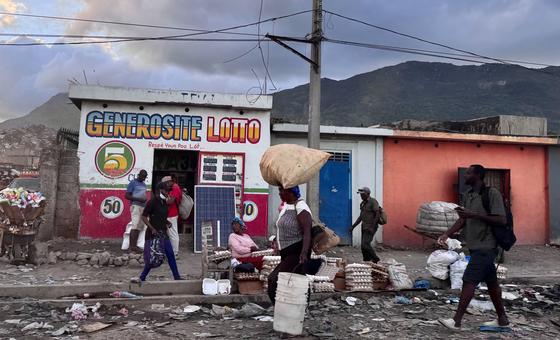
Ongoing violence is compounding the country’s food crisis, disrupting local food production in critical areas such as the commune of Kenscoff and the Artibonite department, often considered the breadbaskets of Haiti.

While the UN and its partners are responding “wherever and whenever possible,” UN Spokesperson Stéphane Dujarric said this Wednesday that humanitarians have only been able to reach 38 per cent of the population they aim to support.

Multiple roadblocks

“This is due to ongoing violence and insecurity, severe underfunding of the response, and the obvious access challenges,” he said.

Over halfway through the year, Haiti is the least-funded of the many humanitarian appeals that the UN coordinates – despite shortfalls for food security in the country being at extreme levels – with just over two per cent of the $425 million needed this year received to date.

Myanmar: Intensifying conflict impedes humanitarian aid

Almost four months after Myanmar’s devastating earthquake, the UN is deeply concerned over the plight of civilians caught up in the country’s devastating and continuing conflict between the military regime and opposition armed groups.

As fighting intensifies, civilians are particularly vulnerable, with increasing attacks on infrastructure.

According to reports, an air strike hit a monastery in Sagan Township in Sagaing Region on 11 July, killing 22 people and injuring at least 50 others. The monastery had been providing shelter to displaced people who had fled nearby villages.

A displacement camp in North Shan State was also reportedly hit by an airstrike over the weekend.

‘Broader pattern’

“These incidents are part of a broader pattern of attacks affecting people across Myanmar,” said Mr. Dujarric, with frequent reports of people being killed, injured or displaced by violence.

Such insecurity also impacts the ability of humanitarian teams to reach people in need: with one in three people now facing acute hunger, and the current monsoon season having caused flooding, “the UN urgently calls on all parties to respect human rights and international humanitarian law,” he said.

Belarus: Rights experts urge probe into deaths in custody of opposition activists

Top independent human rights experts called on Belarus on Wednesday to launch urgent investigations into the deaths of several people jailed for political dissent.

The experts – who are known as Special Rapporteurs – highlighted the case of 61-year-old businessman Valiantsin Shtermer. He died in May 2025 while serving his sentence in a so-called “Correctional Colony” in Šklou.

Mr. Shtermer had been jailed for making critical remarks about Russia’s full-scale invasion of Ukraine. Despite his serious medical condition, he was allegedly denied adequate care in prison.

Fifty-year-old opposition activist Vitold Ashurak meanwhile, also died shortly after being placed in an isolation in the same prison.

According to the Special Rapporteurs, Mr. Ashurak was a member of the Belarusian National Front who was jailed for violating public order during protests related to the disputed 2020 presidential elections.

We must not ignore these deaths

“These deaths must not be ignored,” said the experts, who added that there were strong grounds to believe that they resulted from abuse or neglect linked to the exercise of fundamental rights.

“It is of the utmost importance to thoroughly investigate the alleged instances of ill-treatment and neglect that resulted in the deaths of Shtermer, Ashurak, Puškin and other persons designated as political prisoners by human rights defenders,” the Human Rights Council appointed experts underscored.

“There are strong reasons to believe that these individuals lost their lives in retaliation for exercising their civil and political rights, including the rights to freedom of expression and peaceful assembly.”

The independent experts voiced concern that some opposition figures had been stigmatised and labelled as “extremists” or even “terrorists”.

Special Rapporteurs report regularly to the Human Rights Council. They are not UN staff and do not receive payment for their work.

Source link

As funding cuts bite, UN chief announces new dawn for peacekeeping

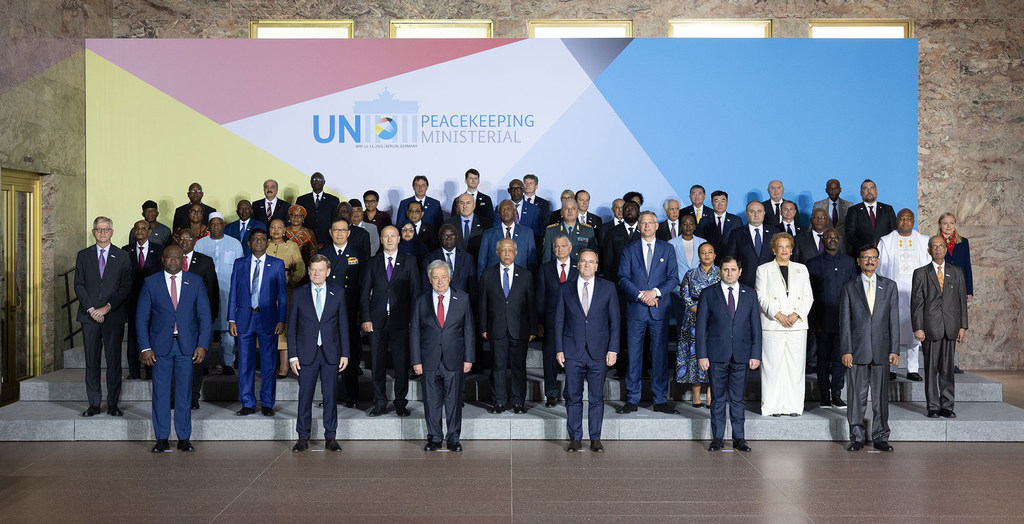
Addressing the UN Peacekeeping Ministerial 2025 in the German capital, the Secretary-General told dozens of ministers from more than 130 countries that peacekeepers remain key to “help countries move from conflict to peace.”

“In trouble spots around the world, blue helmets can mean the difference between life and death,” he insisted. “They are also a clear demonstration of the power of multilateral action to maintain, achieve and sustain peace.”

Despite the proven value of peacekeeping missions in ensuring a durable peace in countless countries from Cambodia to Liberia and Timor Leste, Mr. Guterres warned that today’s challenges have made this task much harder.

“We are now facing the highest number of conflicts since the founding of the United Nations and record numbers of people fleeing across borders in search of safety and refuge,” he said, before alluding to additional obstacles caused by an absence of political support for peacekeeping mandates.

The UN’s peacekeeping budget runs on a July-June cycle and has unpaid arrears of $2.7 billion.

Practical approach

To counter this and in the face of “dramatic financial constraints” now affecting the UN in its entirety, the Secretary-General announced an urgent review of operations to inspire a new peacekeeping model that is “fit for the future.”

In coming years, “a clear exit strategy” for peacekeepers will be key, Mr. Guterres said, as well as working with Member States and the Security Council “to ensure that any new mandates “are prioritized and achievable with the resources available.”

Other clues about what UN peacekeeping 2.0 could look like post-reform might be gleaned from the missions that the UN chief referred to in his speech in Germany.

Active missions such as UNIFIL in Lebanon have already shown that it is possible to adapt to today’s challenges while still ensuring peace and aid deliveries, Mr. Guterres noted.

And in a nod to MINUSCA in the Central African Republic, the Secretary-General highlighted its work in protecting civilians “and assisting the government to extend its reach beyond the capital where people are in desperate need.”

In the Democratic Republic of the Congo, too and despite ongoing fighting there, peacekeepers from MONUSCO also remain in the field and protect vulnerable populations, the UN chief maintained.

As Member States prepared to announce financial pledges for peacekeeping on Wednesday, Mr. Guterres stressed that the overall budget for missions represented only 0.5 per cent of global military spending.

Peacekeeping “is only as strong as Member States’ commitment to it,” stressed Mr. Guterres.

Amid massive cuts to UN funding by Member States, it remains to be seen if the upbeat mood in Berlin translates into desperately needed financial support for the global body’s peacekeeping operations.

“UN peacekeeping today is more vibrant than ever,” insisted Boris Pistorius, Minister of Defence of Germany. “It is and will remain a cornerstone of international stability. Let us commit to making it even more effective for the sake of those who depend on it.”

Cutbacks

The UN chief’s push to streamline the global body comes a day after his call to push ahead with major efficiency improvements and cost-cutting in response to the chronic liquidity crisis caused by Member States falling into arrears.

Important as these sweeping structural reforms are – with potential staff downsizing of up to 20 per cent – they are not the answer to the failure of some countries to pay the Organization to fulfil the mandates they have given it, Mr. Guterres insisted.

According to information provided by the UN Controller to the General Assembly’s Fifth Committee (Administrative and Budgetary), only $1.8 billion has been received against the $3.5 billion regular budget assessments for 2025 – a shortfall of around 50 per cent.

In the budget line for unpaid assessments these amounted to $2.4 billion on 30 April, with the United States owing about $1.5 billion, China $597 million, Russia $72 million, Saudi Arabia $42 million, Mexico $38 million and Venezuela $38 million. An additional $137 million has yet to be paid by other Member States.

For International Tribunals, total contributions outstanding totalled $79 million on 30 April.

© Bundeswehr/Jana Neumann

At the 2025 UN Peacekeeping Ministerial in Berlin, Secretary General António Guterres underscored the vital role of UN peacekeeping and urged Member States to help shape peace operations fit for the future.

Source link