World News in Brief: IOM warning for Sudan returnees, Nipah virus alert for India, food security in Afghanistan

They did so despite extensive damage to housing, basic services, vital infrastructure, and an uncertain future. 

The highest number of returns were recorded in Khartoum State, where more than 1.3 million people have made the journey home, followed by nearby Aj Jazirah State, according to IOM’s latest data.

Pockets of security

IOM says the number of returnees is rising, signaling pockets of perceived relative security in parts of the country. 

Overall, 83 per cent of returnees had been internally displaced, while 17 per cent returned from neighbouring countries, including Egypt, South Sudan, and Libya, as well as from the Gulf States. 

However, across areas in Darfur and Kordofan where violence continues to escalate, increased displacement has been recorded.

IOM warns that without adequate resources and renewed efforts toward peace, millions of families will remain trapped in protracted displacement and instability.

WHO: India on alert with two cases of Nipah virus in January

India has confirmed two cases of the sometimes-fatal Nipah virus this month in the eastern state of West Bengal, according to an update by the World Health Organization (WHO). 

This is the seventh documented Nipah outbreak in India and the third in West Bengal, following outbreaks in 2001 and 2007.

The infected individuals are a male and a female nurse working at the same private hospital. As of last week, the male patient is recovering, while the female patient remains in critical condition.

Nipah is a virus transmitted mainly from bats to humans, sometimes through contaminated food or close contact. It can also spread from animals such as pigs to humans, and in some cases between people.

Nipah virus infection can range from asymptomatic illness to severe respiratory disease and fatal encephalitis.

Low transmission risk

 Historically, Nipah outbreaks in the WHO Southeast Asia Region have been limited to Bangladesh and India, occurring sporadically or in small clusters. There have been no known instances of international spread through travel.

WHO says India has demonstrated its capacity to manage previous outbreaks well and public health measures are currently being implemented.

As of 27 January, no additional cases have been detected. The national government has deployed an outbreak response team to West Bengal to work closely with state authorities.

For Nipah, no licensed vaccine or treatment is currently available, making early detection and prevention essential.

$100 Million initiative launched to strengthen food security in Afghanistan

In Afghanistan, the UN food agency (FAO) and the Asian Development Bank (ADB) are implementing a $100 million initiative to bolster food and nutrition security and restore agricultural livelihoods for more than one million vulnerable people over the next two years.

Backbone of the economy

Although agriculture remains the backbone of Afghanistan’s rural economy, it continues to face challenges such as low productivity, restricted market opportunities, and repeated natural disasters. 

The project will reach over 151,000 households – that’s just over a million people – including returnees, host communities, and disaster-affected families. 

With millions of Afghans already facing mounting pressures and at risk of slipping into deeper acute food insecurity and malnutrition, there is an urgent need for sustained investment that goes beyond emergency response to strengthen long-term resilience.

In 2026, 17.4 million people are projected to face acute food insecurity, including 4.7 million classified as being in the emergency phase – just one away from famine conditions. 

FAO has supported about 5.6 million people since 2022. 

Through its partnership with ADB, millions more rural households will gain the tools and resources needed to produce food, safeguard livestock, and secure their families’ nutrition.

Source link

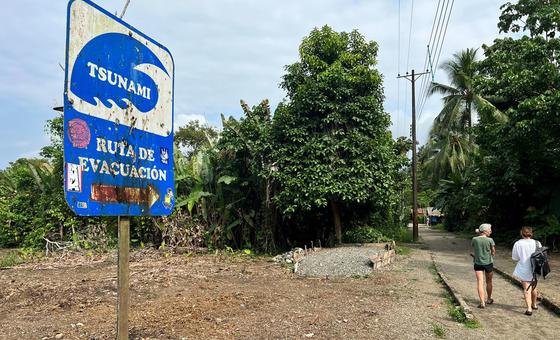
Tsunami alert highlights worth of global early warning system

While the UN-backed International Atomic Energy Agency (IAEA) reported 
that there had been no damage to Japan’s nuclear facilities after an 8.8 magnitude quake was recorded off Russia’s Kamchatka Peninsula, coastal communities have been taking no chances and evacuating to higher ground or moving further inland.

Alerts were sent out within a few minutes of the Russia quake, the UN Office for Disaster Risk Reduction (UNDRR) confirmed. Although the authorities have now downgraded the threat across Japan as waves of 1.3 metres (4ft 2in) have been recorded, the advice is for people to stay in shelters until the danger diminishes from continuing sea surges.

“It is very complex; we are observing the tsunami data in real time, so we need people to stay at the shelter until the tsunami is completed,” said tsunami engineer Professor Fumihiko Imamura from Tohoku University.

Deadly legacy

In the Asian island nation, memories are still raw from the 11 March 2011 Tohoku earthquake and tsunami which killed more than 18,000 people.

Just last year, the 7.6 magnitude Noto quake left approximately 500 dead and damaged 150,000 homes.

The disaster also caused a major accident at the Fukushima Daiichi Nuclear Power Plant, forcing tens of thousands of people from their homes. 

Today’s developments come amid reports that the latest earthquake was among the 10 most powerful ever recorded, hence why the authorities are monitoring its impact so closely.

So far, alerts have been triggered off the west coast of the United States, in South America from Chile to Mexico and from Papua New Guinea to Vanuatu in the Pacific. 

A 8.8 magnitude earthquake is a very large earthquake,” explained Kamal Kishore, Special Representative of the UN Secretary-General for Disaster Risk Reduction. 

“As you go from magnitude eight to nine, or seven to eight, at every step the strength of the earthquake increases exponentially. So, an earthquake which is magnitude eight as opposed to seven would be 30 times bigger.” 

Faster than a jet liner

Speaking to UN News, Mr. Kishore highlighted the huge distances tsunamis can cover, picking up enormous energy they then dump on coastal communities. 

Their progress can be as fast as a passenger jet and can be tracked by deep sea pressure change sensors, or tsunameters, that are connected to surface buoys which relay information in real time to satellites. This data is then modelled by national weather centres, influencing whether alerts are issued.

“It’s a real threat because the tsunamis travel really fast from one coast to the other,” continued Mr. Kishore. “The Indian Ocean tsunami of 2004 was one of the most devastating in our memory, which travelled from all the way from the coast of Indonesia to the Sri Lankan shores within a little over an hour.”

Lessons learned

In addition to the coordination role of UNDRR in the global early warning system, other UN entities also closely involved include the World Meteorological Organization (WMO) and the Intergovernmental Oceanographic Commission of the UN agency for Education, Science and Culture (UNESCO-IOC).  

The IOC’s role is critical in making sure that countries that use tsunami-tracking instrumentation follow the same standard. 

These efforts are in line with the UN Secretary-General’s Early Warnings for All initiative to ensure that everyone on Earth is protected from hazardous weather, water or climate events through lifesaving early warning systems.

Today, one in three people – and mainly in least developed countries and Small Island Developing States – lacks access to adequate multi-hazard early warning systems.

“Tsunami prevention really highlights how important it is to have multilateral action” such as sharing data to run the algorithms behind wave modelling systems, insisted the UN’s Mr. Kishore. 

“There are countries which are separated by thousands of kilometres of ocean, but they are affected by the same hazard,” he continued. 

“If you do not share information on observing these hazards, not just in the location where they have occurred, but on what is happening in the intermediate locations in the ocean…we will not be able to warn our citizens.”  
Source link

World News in Brief: Haiti funding cuts bite, civilian suffering intensifies in Myanmar, Belarus deaths in custody alert

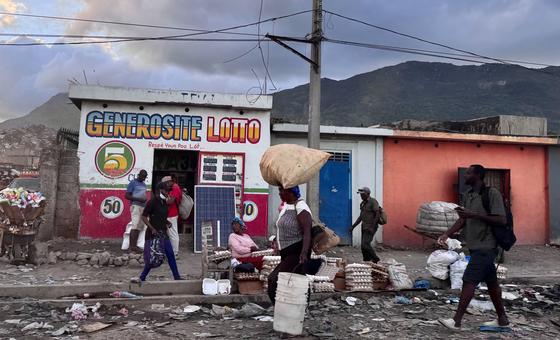
Ongoing violence is compounding the country’s food crisis, disrupting local food production in critical areas such as the commune of Kenscoff and the Artibonite department, often considered the breadbaskets of Haiti.

While the UN and its partners are responding “wherever and whenever possible,” UN Spokesperson Stéphane Dujarric said this Wednesday that humanitarians have only been able to reach 38 per cent of the population they aim to support.

Multiple roadblocks

“This is due to ongoing violence and insecurity, severe underfunding of the response, and the obvious access challenges,” he said.

Over halfway through the year, Haiti is the least-funded of the many humanitarian appeals that the UN coordinates – despite shortfalls for food security in the country being at extreme levels – with just over two per cent of the $425 million needed this year received to date.

Myanmar: Intensifying conflict impedes humanitarian aid

Almost four months after Myanmar’s devastating earthquake, the UN is deeply concerned over the plight of civilians caught up in the country’s devastating and continuing conflict between the military regime and opposition armed groups.

As fighting intensifies, civilians are particularly vulnerable, with increasing attacks on infrastructure.

According to reports, an air strike hit a monastery in Sagan Township in Sagaing Region on 11 July, killing 22 people and injuring at least 50 others. The monastery had been providing shelter to displaced people who had fled nearby villages.

A displacement camp in North Shan State was also reportedly hit by an airstrike over the weekend.

‘Broader pattern’

“These incidents are part of a broader pattern of attacks affecting people across Myanmar,” said Mr. Dujarric, with frequent reports of people being killed, injured or displaced by violence.

Such insecurity also impacts the ability of humanitarian teams to reach people in need: with one in three people now facing acute hunger, and the current monsoon season having caused flooding, “the UN urgently calls on all parties to respect human rights and international humanitarian law,” he said.

Belarus: Rights experts urge probe into deaths in custody of opposition activists

Top independent human rights experts called on Belarus on Wednesday to launch urgent investigations into the deaths of several people jailed for political dissent.

The experts – who are known as Special Rapporteurs – highlighted the case of 61-year-old businessman Valiantsin Shtermer. He died in May 2025 while serving his sentence in a so-called “Correctional Colony” in Šklou.

Mr. Shtermer had been jailed for making critical remarks about Russia’s full-scale invasion of Ukraine. Despite his serious medical condition, he was allegedly denied adequate care in prison.

Fifty-year-old opposition activist Vitold Ashurak meanwhile, also died shortly after being placed in an isolation in the same prison.

According to the Special Rapporteurs, Mr. Ashurak was a member of the Belarusian National Front who was jailed for violating public order during protests related to the disputed 2020 presidential elections.

We must not ignore these deaths

“These deaths must not be ignored,” said the experts, who added that there were strong grounds to believe that they resulted from abuse or neglect linked to the exercise of fundamental rights.

“It is of the utmost importance to thoroughly investigate the alleged instances of ill-treatment and neglect that resulted in the deaths of Shtermer, Ashurak, Puškin and other persons designated as political prisoners by human rights defenders,” the Human Rights Council appointed experts underscored.

“There are strong reasons to believe that these individuals lost their lives in retaliation for exercising their civil and political rights, including the rights to freedom of expression and peaceful assembly.”

The independent experts voiced concern that some opposition figures had been stigmatised and labelled as “extremists” or even “terrorists”.

Special Rapporteurs report regularly to the Human Rights Council. They are not UN staff and do not receive payment for their work.

Source link

World News in Brief: Sudan refugees, aid for Syrian returnees, MERS alert in Saudi Arabia, Venezuela urged to end secret detentions

The UN refugee agency, UNHCR, reported on Wednesday that most of the new arrivals are women and children.

Many have come from Zamzam camp and the city of El Fasher, locations targeted by paramilitary Rapid Support Forces, who’ve been fighting forces of the military government for more than two years.

In Chad, the high numbers of those arriving are putting significant strain on overwhelmed resources.

Exhausted and victimised

Aid teams say that many refugees arrive exhausted after walking for days because they are unable to afford transport.

They report being victims of targeted attacks, looting and sexual violence.

Numerous children have been injured, families separated, and others remain missing, the refugee agency said.

Immediate needs in Chad include shelter, food, medical care and psychological support but the $409 million refugee response appeal is only 20 per cent funded.

Syria’s returnees desperately need help to start over

Syrians trying to rebuild their lives in their war-torn country urgently need the support of the rest of the world to help them start again, UN aid agencies said on Wednesday.

Hopes rose this week in Damascus following Donald Trump’s move to end punitive sanctions – but after more than 13 years of civil war that ended with the fall of the Assad regime last December, many communities today face a range of basic problems.

These include unreliable access to electricity, clean water and healthcare.

Records destroyed

The destruction of public records is also preventing returnees from accessing essential services or claiming housing and land rights, according to the UN migration agency, IOM.

Its Director-General, Amy Pope, insisted Syrians were resilient and innovative but that they needed help, now. “Enabling (them) to return to a country that is on the path to stability and progress is critical for the country’s future,” she insisted.

A new IOM report from more than 1,100 communities across Syria found that work is scarce, partly because farming and markets are still struggling to recover.

Shelter reconstruction is also needed urgently, while unresolved property issues continue to prevent people from rejoining their communities.

Since January 2024, the UN agency has recorded more than 1.3 million returnees previously displaced within Syria, in addition to nearly 730,000 arrivals from abroad.

WHO issues warning over deadly MERS outbreak in Saudi Arabia

A recent outbreak of Middle East Respiratory Syndrome coronavirus (MERS-CoV) in Saudi Arabia has raised concerns after two people died from the disease between March and April.

The World Health Organization (WHO) has released updated guidelines to help contain the outbreak, which has seen nine confirmed cases – seven of them in the capital, Riyadh. Several of those infected were healthcare workers who caught the virus from a patient.

MERS is caused by a zoonotic coronavirus, from the same family of viruses as COVID-19. While WHO estimates the fatality rate to be around 36 per cent, the true figure may be lower, as mild cases often go undiagnosed.

Despite the recent cases, the risk of wider spread remains moderate at both the regional and global levels, according to WHO.

MERS is primarily carried by dromedary camels and can be passed to humans through direct or indirect contact with infected animals.

Human-to-human transmission usually happens in healthcare settings, through respiratory droplets or close contact.

No vaccine, no cure

Much like COVID-19, MERS can range from no symptoms at all to severe respiratory illness, including acute respiratory distress — and in some cases, death. There’s currently no vaccine or specific treatment.

To stop the virus from spreading, WHO urges hospitals and clinics to step up infection prevention and control measures, especially where suspected cases are being treated.

Since MERS was first identified in 2012, it has caused 858 deaths across 27 countries in the Middle East, Africa and South Asia.

Call for Venezuela to end secret detention of political opponents

Top independent human rights experts have urged the Venezuelan authorities to stop the reported practice of holding political opponents incommunicado.

In an alert on Wednesday, they insisted that these “targeted detentions” were illegal and amounted to enforced disappearance, a major human rights violation if proved and potentially an international crime.

They maintained that using secret detention was a deliberate strategy by the State “to silence opposition figures…and to instill fear among the population”.

Lack of legal protection

The mission pointed to a widespread lack of “effective judicial protection” for civil society in Venezuela and accused State security forces of colluding with the Public Prosecutor’s Office.

The services allegedly responsible for detentions include the national intelligence service, the national guard and military counterintelligence.

The mission’s independent rights experts also maintained that criminal courts and the Constitutional Chamber of the Supreme Tribunal of Justice were also “complicit” by ensuring that the alleged crimes went unpunished.

The Fact-Finding Mission on Venezuela was created by the Human Rights Council in 2019; its members are not UN staff and they work in an independent capacity.

UN alert over deepening crisis in Sudan as famine spreads and violence escalates

In a statement issued by his Spokesperson on Wednesday, UN Secretary-General António Guterres said he was “appalled” by the deteriorating situation in North Darfur, where the regional capital, El Fasher, is under intense and sustained attack.

The onslaught comes just two weeks after deadly assaults on the nearby Zamzam and Abu Shouk displacement camps, where hundreds of civilians, including humanitarian workers, were reportedly killed.

Mass displacement

More than 400,000 people have fled Zamzam camp alone, with the majority now seeking safety in Tawila, west of El Fasher.

There are also increasing reports of harassment, intimidation and arbitrary detention of displaced people at checkpoints, adding to the already dire humanitarian emergency.

“With the conflict now in its third year and increasingly destabilizing the broader region, the Secretary-General reiterates his call for the facilitation of safe and unhindered humanitarian access to all areas of need by all necessary routes,” UN Spokesperson Stéphane Dujarric said.

He also called for the protection of civilians, in line with the warring parties’ clear obligations under international humanitarian law.

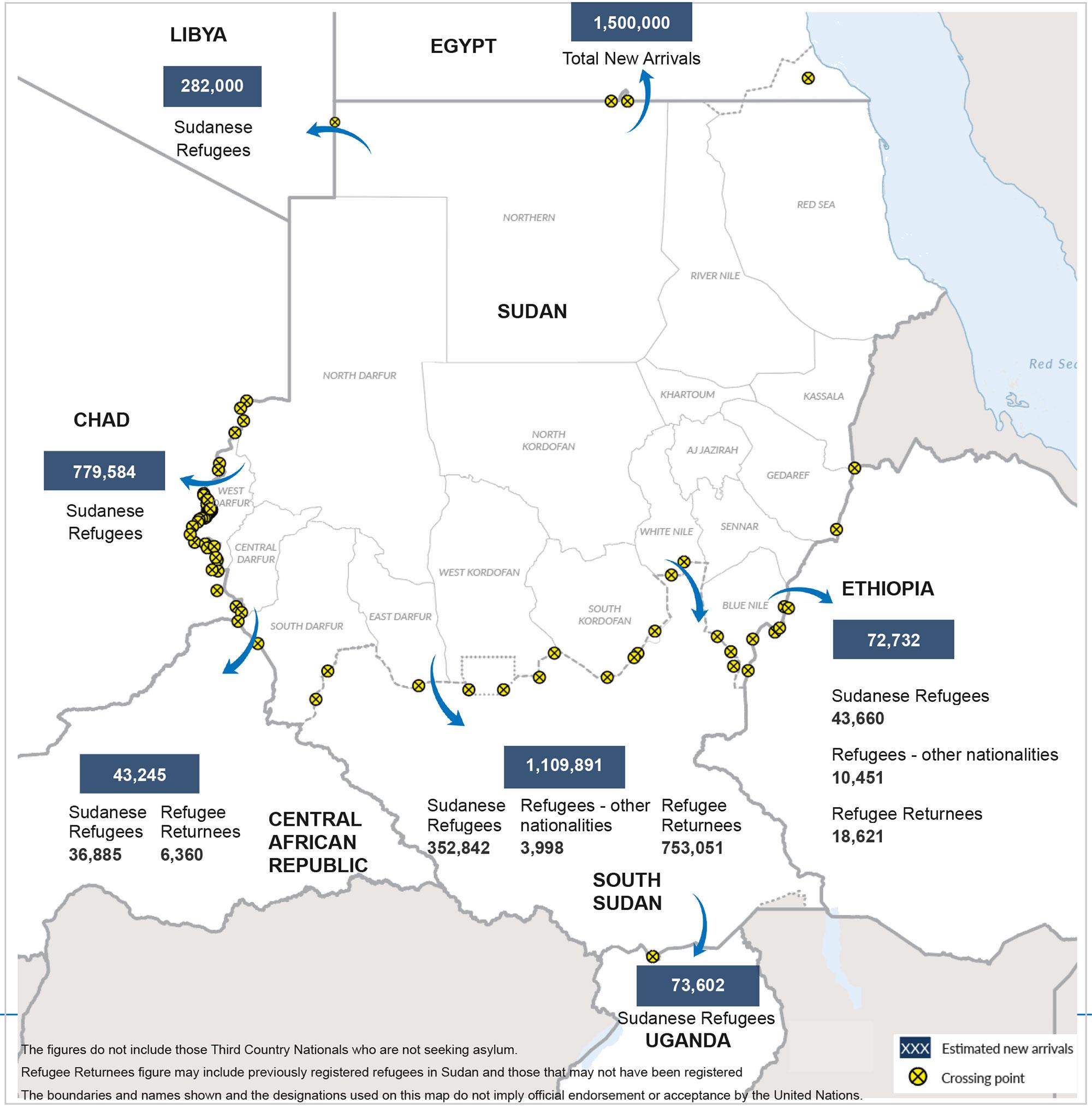
Refugee movements from Sudan.

Accountability is paramount

Perpetrators of serious violations must be held accountable,” Mr. Dujarric stressed.

The civil war between rival militaries – the national Sudanese Armed Forces (SAF) and the paramilitary Rapid Support Forces (RSF) and allied militias – has claimed tens of thousands of lives and driven more than 12.7 million people from their homes, including nearly four million as refugees in neighbouring countries.

Violence and insecurity has also sparked a catastrophic hunger crisis, with over half the population suffering acute food insecurity and famine conditions confirmed in various regions, leaving millions at risk of starvation.

Emergency response underway in Tawila

Despite the escalating violence and dwindling funds, humanitarian agencies continue their efforts to deliver lifesaving aid.

The UN relief coordination office, OCHA, reported on Wednesday that an inter-agency convoy led by UN Deputy Humanitarian Coordinator Antoine Gérard crossed into Darfur from Chad earlier this week via the Adré border, en route to Tawila.

The convoy is transporting critical supplies including nutrition and medical items, dignity kits, and other essential goods.

Food and nutrition assistance for approximately 220,000 people has already reached Tawila, with the UN World Food Programme (WFP) confirming that distributions began this week and are already 20 per cent complete.

Additional convoys are in motion, including one expected to depart Chad on Wednesday with 19 trucks of nutrition supplies.

Aid reaches capital Khartoum

WFP has begun the first food distributions in the centre of the capital Khartoum since the conflict erupted two years ago.

Deliveries of 70 metric tonnes of food to the Burri neighbourhood are set to begin on Thursday, attempting to reach nearly 8,000 people.

Aid distributions have also started in Alazhari, one of the areas at high risk of famine, where 20,000 people are receiving assistance.

Despite these efforts, WFP warned that the impending rainy season and severe funding shortfalls could undermine recent progress.

The agency, which assists about four million people monthly, aims to expand coverage to seven million – but that still represents only a fraction of those in need.

Source link