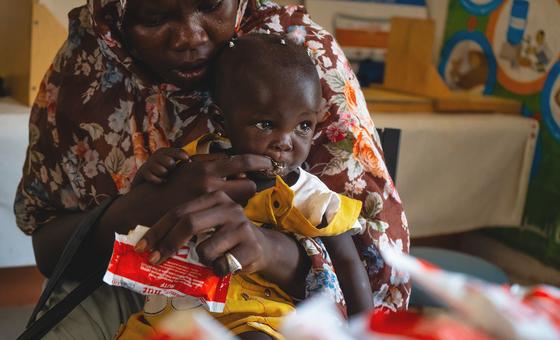
Mounting civilian casualties in Sudan as fighting intensifies

It has now been 842 days since conflict between troops from the military government and their former allies-turned-rivals in the paramilitary Rapid Support Forces erupted in Sudan, turning the country into the world’s largest humanitarian crisis.  

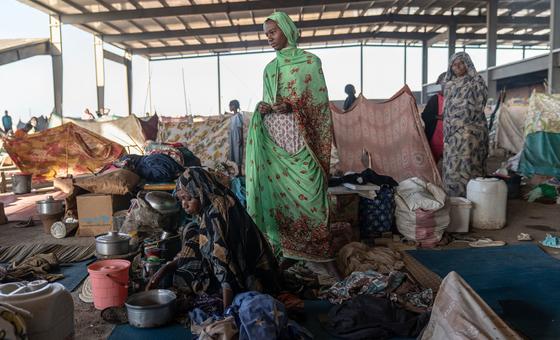
Heavy fighting continues in North Darfur State, with multiple civilian casualties reported in recent days – most notably during clashes in the state capital, El Fasher, on 1 and 2 August – following earlier violence between armed groups near the Abu Shouk camp for displaced people, which currently hosts 25,000 residents.  

Starvation threat

One year after famine was confirmed in Zamzam camp on the outskirts of El Fasher, the city remains under siege, with no food aid deliveries entering by road, leaving residents of the regional capital increasingly facing starvation.  

Prices of food items such as sorghum and wheat are more than four times higher than elsewhere in the country, while many families are unable to afford even the most basic items.  

“Limited cash assistance continues, but it is nowhere near enough to meet rising needs,” said Deputy UN Spokesperson Farhan Haq on Monday during the daily briefing in New York.  

Cholera menace continues

Meanwhile, cholera continues to spread across Darfur, with nearly 1,200 cases reported – around 300 of them children – in the locality of Tawila since late June.  

In South Darfur, health authorities have reported more than 1,100 suspected cases and 64 deaths since late May, as “shortages of medical supplies, clean water and sanitation services are severely hampering the humanitarian response,” said Mr. Haq.  

The UN Children’s Fund (UNICEF) warns that the lives of more than 640,000 under-fives are at heightened risk of violence, disease and hunger in the region.

Compounded crisis

In Blue Nile State, floods in Ed Damazine displaced more than 100 people and destroyed at least 200 tents at Al-Karama camp on 1 August, further compounding the challenges facing people who fled their homes due to conflict.  

Meanwhile, in Khartoum State, the presence of deadly landmines in multiple locations adds a dangerous new layer to the threats already faced daily by civilians.  

As OCHA’s Director of Operations, Edem Wosornu, visits Sudan this week to assess the humanitarian situation, the agency has called for sustained and expanded humanitarian access along with greater international support for the most vulnerable. 

Source link

World News in Brief: Haiti funding cuts bite, civilian suffering intensifies in Myanmar, Belarus deaths in custody alert

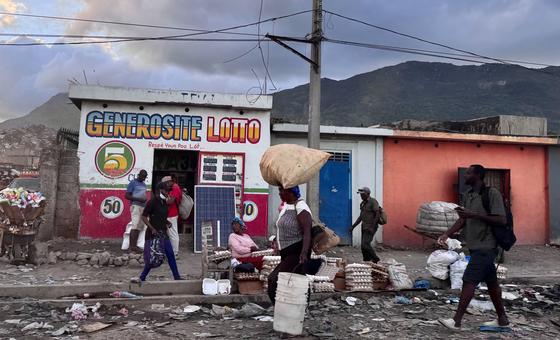
Ongoing violence is compounding the country’s food crisis, disrupting local food production in critical areas such as the commune of Kenscoff and the Artibonite department, often considered the breadbaskets of Haiti.

While the UN and its partners are responding “wherever and whenever possible,” UN Spokesperson Stéphane Dujarric said this Wednesday that humanitarians have only been able to reach 38 per cent of the population they aim to support.

Multiple roadblocks

“This is due to ongoing violence and insecurity, severe underfunding of the response, and the obvious access challenges,” he said.

Over halfway through the year, Haiti is the least-funded of the many humanitarian appeals that the UN coordinates – despite shortfalls for food security in the country being at extreme levels – with just over two per cent of the $425 million needed this year received to date.

Myanmar: Intensifying conflict impedes humanitarian aid

Almost four months after Myanmar’s devastating earthquake, the UN is deeply concerned over the plight of civilians caught up in the country’s devastating and continuing conflict between the military regime and opposition armed groups.

As fighting intensifies, civilians are particularly vulnerable, with increasing attacks on infrastructure.

According to reports, an air strike hit a monastery in Sagan Township in Sagaing Region on 11 July, killing 22 people and injuring at least 50 others. The monastery had been providing shelter to displaced people who had fled nearby villages.

A displacement camp in North Shan State was also reportedly hit by an airstrike over the weekend.

‘Broader pattern’

“These incidents are part of a broader pattern of attacks affecting people across Myanmar,” said Mr. Dujarric, with frequent reports of people being killed, injured or displaced by violence.

Such insecurity also impacts the ability of humanitarian teams to reach people in need: with one in three people now facing acute hunger, and the current monsoon season having caused flooding, “the UN urgently calls on all parties to respect human rights and international humanitarian law,” he said.

Belarus: Rights experts urge probe into deaths in custody of opposition activists

Top independent human rights experts called on Belarus on Wednesday to launch urgent investigations into the deaths of several people jailed for political dissent.

The experts – who are known as Special Rapporteurs – highlighted the case of 61-year-old businessman Valiantsin Shtermer. He died in May 2025 while serving his sentence in a so-called “Correctional Colony” in Šklou.

Mr. Shtermer had been jailed for making critical remarks about Russia’s full-scale invasion of Ukraine. Despite his serious medical condition, he was allegedly denied adequate care in prison.

Fifty-year-old opposition activist Vitold Ashurak meanwhile, also died shortly after being placed in an isolation in the same prison.

According to the Special Rapporteurs, Mr. Ashurak was a member of the Belarusian National Front who was jailed for violating public order during protests related to the disputed 2020 presidential elections.

We must not ignore these deaths

“These deaths must not be ignored,” said the experts, who added that there were strong grounds to believe that they resulted from abuse or neglect linked to the exercise of fundamental rights.

“It is of the utmost importance to thoroughly investigate the alleged instances of ill-treatment and neglect that resulted in the deaths of Shtermer, Ashurak, Puškin and other persons designated as political prisoners by human rights defenders,” the Human Rights Council appointed experts underscored.

“There are strong reasons to believe that these individuals lost their lives in retaliation for exercising their civil and political rights, including the rights to freedom of expression and peaceful assembly.”

The independent experts voiced concern that some opposition figures had been stigmatised and labelled as “extremists” or even “terrorists”.

Special Rapporteurs report regularly to the Human Rights Council. They are not UN staff and do not receive payment for their work.

Source link

UN warns of record civilian casualties in Ukraine

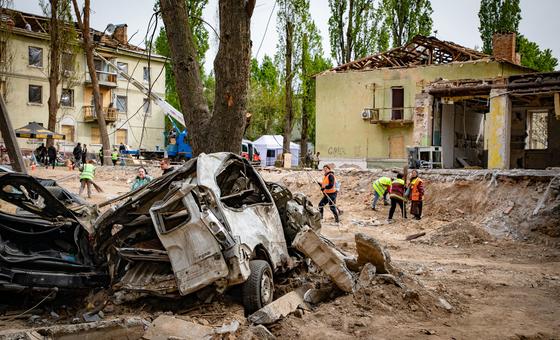
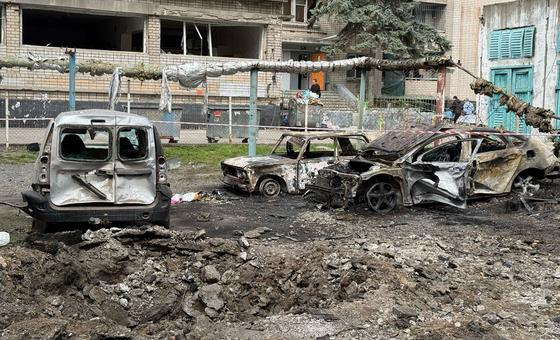
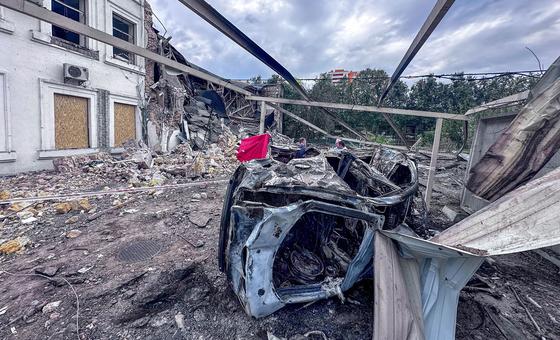
Russian forces launched an attack overnight focused on Kyiv, deploying 397 Shahed unmanned attack and decoy drones, along with 18 high-powered missiles, killing two and injuring at least 16, according to the UN Human Rights Monitoring Mission in Ukraine (HRMMU).

UN Spokesperson Stéphane Dujarric noted during his daily briefing in New York that four Kyiv districts were hit, damaging residential buildings, a clinic and a TV station, while an outpatient clinic was destroyed during the bombardment.

Mr. Dujarric also relayed reports from local authorities of recent attacks in other regions which left more than nine dead and at least ten civilians injured.

Grim June record

These attacks come after June saw the highest monthly civilian casualty count in Ukraine since the Russian invastion began in February 2022, with 232 people killed and 1,343 injured.

This data reflects a worsening trend: 6,754 civilians were killed or injured in the first half of 2025 – a sharp 54 per cent rise compared to the same period in 2024, when 4,381 civilian casualties were documented.

This breaks down to a 17 per cent increase in civilian deaths and a 64 per cent increase in injuries.

Russia’s increased use of long-range missiles and drones in urban areas – and their enhanced destructive power – were key drivers behind the spike in casualties.

The growing number of attacks also played a crucial role, as Russia launched ten times more missile and unmanned drone strikes in June 2025 than in June 2024.

Civilians across Ukraine are facing levels of suffering we have not seen in over three years,” said Danielle Bell, Head of HRMMU. “The surge in long-range missile and drone strikes across the country has brought even more death and destruction to civilians far from the frontline.”

Child suffering intensifies

Also on Thursday, the UN Children’s Fund (UNICEF) reported that an estimated 70 per cent of children in Ukraine (3.5 million) are experiencing “material deprivation” – up from 18 per cent in 2021.

Material deprivation refers to a lack of essential goods and services, including nutritious food, appropriate clothing, heating at home and access to education.

According to UNICEF’s report, one in three children in Ukraine lives in a home without a functioning water supply or sewage system, and nearly half lack access to a space to play.

This deprivation is driven by continued attacks on infrastructure – including water, sanitation, and energy systems – as well as on homes, schools, and healthcare facilities, along with rising poverty across the country.

Looking towards recovery

These warnings come as the fourth Ukraine Recovery Conference opened in Rome on Thursday. It aims to build global awareness and maintain momentum for international support and investment in Ukraine’s recovery, rebuilding, reform, and modernisation.

The Director General of the UN migration agency (IOM), Amy Pope, is among those attending. The agency plays a major role in Ukraine, where nearly four million people remain internally displaced, and another five million refugees reside across Europe.

“Displacement on this scale imposes numerous challenges for Ukraine and its people,” she said.

“Recovery must begin with a focus on the people in need – connecting them to services and restoring their livelihoods, so it becomes more than just returning home, but about regaining their place in society.”

Source link

Report reveals significant rise in civilian casualties and rights violations in Ukraine

It covers the period from 1 December 2024 to 31 May 2025, during which 986 civilians were killed and 4,807 injured – a 37 per cent increase compared to the same period the previous year.

The war in Ukraine – now in its fourth year – is becoming increasingly deadly for civilians,” said Danielle Bell, Head of the UN Human Rights Monitoring Mission in Ukraine (HRMMU).

“We continue to document patterns of violence that are inconsistent with obligations under international humanitarian law.”

Concern over use of short-range drones

Most casualties occurred in areas under Ukrainian Government control, primarily due to Russian attacks using long-range explosive weapons in populated areas and short-range drones near frontline locations.

Nearly half of all casualties were caused by missiles, loitering munitions and air-dropped bombs in densely populated areas. At least three attacks involved the use of missiles with fragmentation warheads which detonated above ground and scattered fragments across large open areas, killing and injuring many civilians at once.

The use of short-range drones is driving the rise in civilian casualties, the report said. OHCHR verified that 207 civilians were killed and 1,365 injured in these attacks.

Among the deadliest incidents was a Russian drone strike on a civilian bus transporting employees of a mining company to work in the Dnipropetrovsk region. Eight women and two men were killed, and 57 people were injured.

“The high number of civilian casualties from the use of short-range drones, which allow operators to see their targets in real time, raises grave concerns,” Ms. Bell said.

Our findings strongly suggest a failure to distinguish between civilian and military targets, and to take all feasible precautions to verify the military nature of those targets – or worse, an intentional decision not to.

During the same period, Russian forces struck at least five hospitals directly. Some of the attacks used multiple loitering munitions, suggesting potential deliberate targeting of the hospitals in violation of international humanitarian law.

Prisoners of war

Serious violations against prisoners of war (POWs) also remain a major concern, according to the report. OHCHR documented credible allegations that at least 35 Ukrainian POWs and one Russian POW were executed during the reporting period.

Staff interviewed 117 recently released Ukrainian POWs and two detained medical personnel, nearly all of whom described being tortured and ill-treated in captivity. This included severe beatings, electric shocks, sexual violence, dog attacks, and deliberate humiliation, often carried out by personnel wearing balaclavas to conceal their identities.

Ms. Bell said the continued brutalization of Ukrainian prisoners of war is not only inhumane, but a serious violation of international law.

These are not isolated incidents – they point to well-documented patterns of widespread and systematic torture that demand urgent and unambiguous accountability, and measures toward prevention,” she said.

Meanwhile, more than half of the Russian POWs and third-country nationals held by Ukraine also reported abuse – including torture, ill-treatment, threats, and internment in unofficial facilities – which mostly occurred in transit places before arrival at official places of internment.

Rights concerns in Russian-occupied areas

The report highlights ongoing human rights concerns with Ukrainian civilians unlawfully detained by Russian authorities, predominantly in occupied territory. People who have been released described torture, ill-treatment, and dire conditions of detention.

Ukrainians in occupied territory faced increased coercion to adopt Russian citizenship. OHCHR documented over 16,000 homes listed by Russian occupation authorities as potentially “abandoned” and therefore at risk of being confiscated.

Displaced residents faced severe legal and logistical obstacles, as well as security risks, to reclaim their property.

Ukrainian children recruited

Another issue covered in the report is the recruitment and use of Ukrainian children “for sabotage activities of increasing gravity against Ukrainian military objectives.”

The children reportedly were recruited by unidentified actors, likely affiliated with Russia, according to Ukrainian law enforcement authorities. Some of these youngsters were killed or injured, while others are facing prosecution after being enticed via social media to commit arson or plant explosives.

“Using children to commit acts of sabotage or violence exploits their vulnerability and endangers their lives,” Ms. Bell said. “It compounds their suffering by exposing them to violence, coercion, and harsh legal consequences.

OHCHR also voiced concern over the situation of older people, mainly women, as well as persons with disabilities, who remain at disproportionate risk, particularly in frontline areas.

Many are unable to evacuate due to poverty and limited housing options, while those who can often face long stays in shelters that lack appropriate facilities, or they are placed in institutional settings due to the absence of suitable alternatives.


Source link

UN rights mission condemns civilian toll in deadly missile strikes on Ukraine

At least 24 people were reported killed and over 300 injured – including 32 children – when ballistic missiles struck Ukraine’s Dnipro and Odesa regions on Monday and Tuesday, the UN Human Rights Monitoring Mission in Ukraine (HRMMU) said on Wednesday.

The attacks destroyed homes, schools, hospitals, and other civilian infrastructure, and left hundreds wounded.

“The attacks struck during the day when civilians were at work, on trains, or at school,” said Danielle Bell, head of HRMMU.

“The timing alone made the high number of civilian casualties entirely foreseeable.”

On 23 June, two ballistic missiles launched by Russian forces hit Lyceum No. 1, a middle school in Bilhorod-Dnistrovskyi, Odesa region. Although the school year had ended, staff and students were present for administrative work. The strike killed three educators and injured 14 others, including two boys.

The school, which served over 700 students, sustained critical damage.

No military objective

HRMMU, which visited the attacks sites, reported no evidence of military presence at the school, and people confirmed that no military presence had been stationed there.

“The school in Bilhorod-Dnistrovskyi was not a military objective,” Ms. Bell said.

“Yet it was hit by two ballistic missiles, killing educators and injuring children.”

The following day, 24 June, missiles struck an industrial area of Dnipro city at around 11 AM local time. The blast shattered windows in nearby schools, hospitals and residential buildings.

HRMMU confirmed that two dormitories were hit, injuring numerous residents. A nearby passenger train was also impacted – windows blown out by the shockwave – injuring more than 20 travellers, according to a UN monitor onboard.

A troubling trend

These strikes followed a series of other attacks in June that have resulted in significant civilian harm, including in Kyiv city on 17 and 23 June, according to the human rights mission.

Civilian casualties in the first five months of 2025 were nearly 50 percent higher than during the same period last year, with increases typically seen during the summer months.

“Ballistic missiles, when used in densely populated areas, cause predictable and widespread harm to civilians, as demonstrated by these recent attacks,” Ms. Bell said.

“The rising civilian casualties reflect the severity of that risk.”

Source link

Civilian deaths in conflict are surging, warns UN human rights office

At least 48,384 individuals – mostly civilians – were killed in 2024, based on casualties recorded by OHCHR.

“Behind every statistic is a story. Behind every data point, a person,” said UN rights chief Volker Türk.

This alarming rise in civilian deaths exposes major failures to protect some of the most vulnerable in both peacetime and conflict situations, “painting a picture of a global human rights landscape in need of urgent action,” he said.

Human rights defenders

Just over 500 of those killed in 2024 were human rights defenders, with the number of journalists killed also rising by 10 per cent, comparing 2023 to 2024.

The level of targeting of human rights defenders and journalists remained alarmingly high: at least one human rights defender, journalist, or trade unionist was killed or forcibly disappeared every 14 days.

Detentions of rights defenders was most widespread in northern Africa, central, southern and western Asia. Killings were most prevalent in Latin America and the Caribbean.

Alarming rise in deaths of women and children

Violence against children and women in armed conflicts has been devastating over the past two years.

Between 2023 and 2024, approximately four times more children and women were killed in armed conflicts than during 2021–2022.

Women reported experiencing gender-based discrimination at more than twice the rate of men, and the poorest households were hardest hit, perpetuating cycles of poverty and inequality.

Discrimination does not exist in isolation,” said Mr Türk, as OHCHR’s findings revealed widespread and compounding discrimination, with nearly one in three persons with disabilities reporting having experienced discrimination, compared to fewer than one in five without disabilities.

Source link

UN condemns deadly Russian strikes on Ukrainian capital as civilian toll mounts

According to the UN Human Rights Monitoring Mission in Ukraine (HRMMU), more than 30 locations across seven districts of Kyiv were struck in what it described as “the deadliest attack” on the Ukrainian capital in nearly a year.

Last night’s attack exemplifies the grave threat posed by the tactic of deploying missiles and large numbers of drones simultaneously into populated areas,” said Danielle Bell, Head of HRMMU.

Humanitarian Coordinator for Ukraine, Matthias Schmale, also strongly condemned the attacks, which extended to Odesa, Zaporizhzhia and other areas.

“The people of Ukraine should not have to take cover in shelters night after night,” he said. “Each day, the war takes a devastating toll on civilians.”

In the southern port city of Odesa, strikes reportedly injured several civilians and damaged a kindergarten and a centre for children with special needs – places where children should feel safe. In Zaporizhzhia, residential buildings were hit.

First responders and humanitarian agencies are already on the ground, providing emergency care and supplies while assessing further needs.

Human toll rising

The barrage included 440 long-range drones and 32 missiles launched by Russian forces, HRMMU noted in a news release citing information from Ukrainian authorities, of which 175 drones and 14 missiles targeted Kyiv.

It marked the fourth time this month that more than 400 munitions were fired in a single night – far surpassing the 544 total launched during the entire month of June 2024.

Even before this latest attack, the human toll of such tactics had been rising sharply. HRMMU had already verified at least 29 civilian deaths and 126 injuries from long-range weapons in June alone.

The overall civilian casualty count in the first five months of 2025 is nearly 50 per cent higher than in the same period last year.

Mr. Schmale reiterated that attacks on civilians and civilian infrastructure are prohibited under international humanitarian law.

Civilians, including children, must never be a target,” he said. “We must not normalize the war.”

Refugee crisis deepens

Meanwhile, the broader humanitarian crisis continues to deepen. The intense conflict, now in its third year since Russia’s full-scale invasion, has driven more than 6.3 million Ukrainians to seek refuge across Europe.

Most are women, children, and older persons, many of whom rely on temporary protection directives extended by host countries like the European Union (EU) and Moldova, according to a report released on Tuesday by Office of the UN High Commissioner for Refugees (UNHCR).

Noting the volatile situation in Ukraine, the agency urged the respective governments to maintain legal status for refugees until conditions allow for safe, dignified, and sustainable returns.

Source link

Ongoing Russian strikes continue alarming civilian casualty trend

The toll includes 1,389 casualties in April (221 killed, 1,168 injured) – the highest monthly total so far this year – followed by 1,019 in May (183 killed, 836 injured).

Casualties were reported across 17 out of 24 regions and the city of Kyiv, including areas far from the frontline.

The vast majority of attacks (97 per cent) led to civilian casualties occurred in areas under Ukrainian Government control.

“This year has been devastating for civilians across Ukraine, with significantly more deaths and injuries than during the same period in 2024,” said Danielle Bell, Head of the HRMMU – the monitoring mission set up by the UN rights office, OHCHR, at the invitation of the Ukrainian Government.

“The intensification of long-range attacks with missiles and loitering munitions and frequent attacks with short-range drones along the frontline are a deadly combination for civilians.”   

Weapons and impact

Long-range missile and drone attacks caused the largest proportion of civilian casualties – some 28 per cent of casualties during May.

On the other hand, short-range drones remained the leading cause in frontline areas.

Russian armed forces carried out at least five attacks on port infrastructure in the Odesa region on the Black Sea, resulting in civilian casualties and damage to facilities.

One such attack on 23 May killed three men and injured 12 more, including port workers, according to the report.

Continuing trends in June

The mission noted that long-range attacks have intensified this month. Since 6 June, Russian forces have launched over 1,500 long-range weapons, according to Ukrainian authorities.

The HRMMU is in the process of verifying reports that these attacks (or subsequent falling debris) have killed at least 19 civilians and injured 205 others nationwide in just a five-day span. If confirmed, June could match or surpass April and May in total casualties.

At this pace and scale, further loss of civilian life is not just possible – it is inevitable,” said Ms. Bell.

Source link

Drone strikes on civilian infrastructure in Port Sudan must end: UN expert

“These ongoing attacks on critical infrastructure are putting lives at risk, worsening the humanitarian crisis, and violating basic human rights,” said Radhouane Nouicer, the designated expert on the human rights situation in Sudan, appointed by UN rights office OHCHR.

Targeted sites include the city’s main electricity substation and fuel and gas storage facilities, leading to widespread power cuts and restricted access to food, water and healthcare. Some strikes have hit densely populated areas, displacing residents.

“It is devastating to see the continued destruction of infrastructure and social services in Sudan,” Mr Nouicer added.

Once a lifeline, now a target

Since civil war erupted in April 2023, Port Sudan has served as a vital entry point for humanitarian aid. The conflict has killed over 18,000 people, displaced 13 million, and left 30.4 million in need of assistance.

That lifeline has come under threat. A drone strike on the Port Sudan airport forced the UN to temporarily suspend aid flights and the movement of humanitarian personnel.

Guterres calls for coordinated action

At the League of Arab States Summit in Iraq over the weekend, UN Secretary-General António Guterres called for renewed international engagement to end the violence in Sudan.

“Multilateral efforts are urgently needed to stop the appalling violence, famine and mass displacement,” he said.

The UN chief also met with the African Union and Arab League leadership to discuss ways to ensure unhindered humanitarian access and work towards a “durable, comprehensive ceasefire.”

Escalating attacks

Port Sudan is not alone. Similar strikes have been reported in North River Nile and White Nile states, where power stations have allegedly been targeted by the Rapid Support Forces (RSF) militia, which has been battling Government troops during a brutal civil war for control of Sudan.

Mr Nouicer called these attacks a “major escalation” with “alarming implications” for civilian protection.

He urged all parties to stop targeting civilian sites, in line with international law.

“Civilian infrastructure is protected under international law and must never be a target,” he said.

Source link

Sudan drone attacks raise fears for civilian safety and aid efforts

These attacks appear to be the latest in a series of retaliatory military operations, conducted by the Rapid Support Forces and the Sudanese Armed Forces, targeting airports in each other’s areas of control,” UN Deputy Spokesperson Farhan Haq told reporters in New York on Monday.

The fighting between troops of the military Government and former allies-turned-rivals for power, the RSF, began in April 2023. The war has devastated much of the country, killing thousands and displacing over 8.6 million people, according to UN agencies.

As conflict rages in Khartoum, Darfur, and other areas, Port Sudan on the Red Sea coast has remained a relative safe haven and a key hub for UN and international relief efforts.

Multiple drone strikes

The RSF carried out drone attacks on a military base and other targets on Sunday near the airport – and on Monday, there was a second series of attacks targeting fuel depots in the eastern part of Port Sudan, according to latest news reports.

© UNICEF/Ahmed Mohamdeen Elfatih

Mothers tend to their children suffering from severe acute malnutrition at a hospital in Port Sudan.

The RSF has not so far claimed responsibility for Monday’s strikes which left fuel storage facilities ablaze in what the army characterised as an attack on civilian infrastructure.

The Secretary-General is “concerned with the recent reports of drone attacks on military and civilian infrastructure” in the area, which until now had largely been spared from the devastation of the year-long war.

Call for urgent dialogue

Mr. Haq stressed that the attack on Port Sudan was a “worrying development threatening the protection of civilians and humanitarian operations” in the city, which has become a lifeline for humanitarian aid across the country.

The Secretary-General “renews his call for urgent dialogue between the warring parties towards an immediate cessation of hostilities and an inclusive political process,” Mr. Haq said. “This is essential to prevent further escalation, protect civilians, and put Sudan back on a path towards peace and stability.”

On the humanitarian front, the UN’s aid coordination office OCHA said the drone strikes have not directly affected its operations in Port Sudan.

UN aid operations continuing

“None of our offices, premises or warehouses have been impacted, and we continue to carry out our regular operations,” Mr. Haq confirmed.

However, he added that the situation is being closely monitored, and that UN Humanitarian Air Service flights in and out of the city have been temporarily paused.

Beyond Port Sudan, recent strikes on power stations across Sudan have disrupted electricity and clean water supplies – worsening conditions for displaced families and returnees.

We call on all parties to this conflict to ensure that civilians and civilian infrastructure are not targeted,” the Deputy Spokesperson said. “Wars have rules, and international humanitarian law must be respected.”

© UNICEF/Ahmed Mohamdeen Elfatih

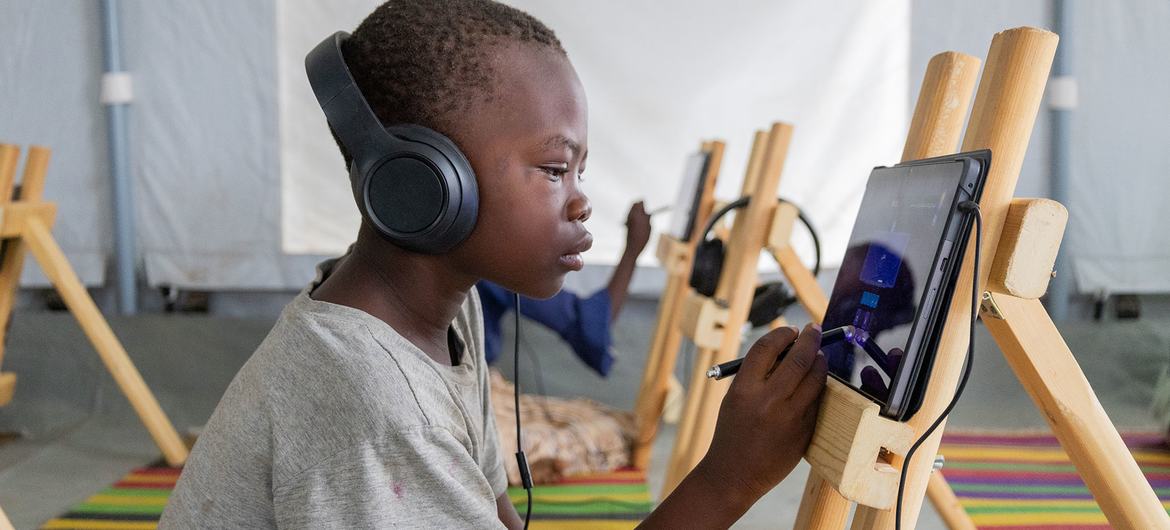
Children participate in an e-learning session at the Al Seniyaa internally displaced people’s gathering site in Port Sudan.