
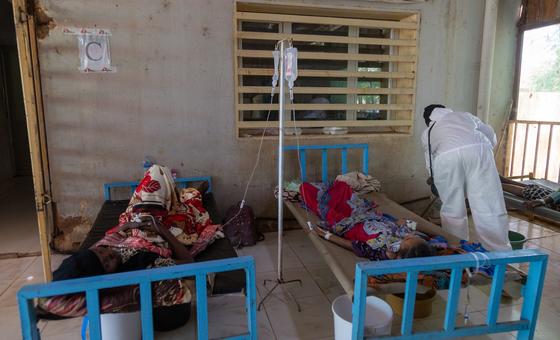
Cholera spreads in North Darfur, 640,000 children under threat, UNICEF warns

More than 1,180 cholera cases – including an estimated 300 in children – and at least 20 deaths have been reported in Tawila, a town that has absorbed over half a million people fleeing violence since April.

Across the wider Darfur region, the toll is even more alarming: nearly 2,140 cases and at least 80 fatalities as of 30 July.

Despite being preventable and easily treatable, cholera is ripping through Tawila and elsewhere in Darfur, threatening children’s lives, especially the youngest and most vulnerable,said Sheldon Yett, UNICEF Representative in Sudan.

With hospitals bombed and many health facilities shuttered, Tawila – located just 70 kilometres from the besieged state capital El Fasher – has become a flashpoint of overlapping crises.

Limited access to clean water, poor sanitation and overcrowded camps have created ideal conditions for the disease to spread.

Deepening catastrophe

The cholera outbreak is unfolding against a backdrop of deepening catastrophe. Since the war between rival militaries erupted in April 2023, critical infrastructure has been decimated, millions displaced and food systems dismantled.

Famine has already been declared in at least 10 locations, including the vast Zamzam camp, with over a dozen more areas at risk.

Sudan’s extreme vulnerability to climate shocks – from droughts to devastating floods – has further compounded the crisis, leaving families to navigate the deadly intersection of conflict, hunger, disease and environmental collapse.

Over 640,000 children at risk

More than 640,000 children under five in North Darfur alone are now at risk. Recent assessments show that the number of children suffering from severe acute malnutrition in the region has doubled in the past year.

Children whose bodies are weakened by hunger are far more likely to contract cholera and to die from it,” UNICEF warned.

They cannot wait a day longer.

Call for action

UNICEF is urgently calling on all parties to ensure sustained, safe and unimpeded humanitarian access. Bureaucratic delays, looted aid convoys and active fighting have hampered the delivery of vital supplies, including vaccines, therapeutic food and medical kits.

The agency is scaling up its emergency response in Tawila and across Darfur, distributing Oral Rehydration Salts (ORS), chlorinated water and hygiene kits.

Nearly 30,000 people in Tawila now have daily access to safe drinking water, while outreach teams are raising awareness on prevention and early treatment.

Funds urgently needed

To support long-term containment, UNICEF plans to deliver more than 1.4 million doses of oral cholera vaccine and bolster treatment centres.

Additional supplies – soap, latrine slabs, plastic sheeting – are being readied, though access remains the greatest obstacle.

Since the outbreak was officially declared in August 2024, more than 94,000 cholera cases and over 2,370 deaths have been reported across 17 of Sudan’s 18 states. UNICEF says it urgently requires $30.6 million to fund its emergency cholera response.

Source link

Gaza: More deaths reported as starvation spreads

In an update on Friday, OCHA said that the starvation crisis is deepening across the enclave, with the local health authorities announcing that two more people had died from starvation the previous day.

Hunger and malnutrition increase the risk of illnesses that weaken the immune system, particularly among women, children, older people and persons with disabilities or chronic diseases, with deadly consequences. 

Food scarcity also impacts pregnant and breastfeeding women, increasing the risk of their babies being born with health complications and affecting mothers’ ability to breastfeed. 

Aid constrictions

The small trickle of supplies making it into the Strip is nowhere near adequate to address the immense needs as Israeli authorities continue to impose constraints on humanitarians and hamper their response. 

Out of 15 attempts to coordinate humanitarian movements inside Gaza on Thursday, four were outright denied, three were impeded, one was postponed and two others had to be cancelled by the organisers, with only five missions facilitated.

Even though the limited amount of fuel received yesterday was fully allocated to community kitchens, healthcare and water and sanitation facilities, the fuel shortage continues as the quantities entering Gaza remain insufficient to maintain essential facilities.

UN preparations

Despite severe constraints, UN teams are prepared to ramp up aid delivery and address these severe needs as soon as they are allowed to do so. 

For the UN to accelerate the delivery of food aid, health services, clean water and waste management, nutrition supplies and shelter materials, Israel must open its crossings, allow fuel and equipment in and permit humanitarian staff to operate safely.

The Under-Secretary-General for Humanitarian Affairs, Tom Fletcher, said in a social media post on Thursday that “we must save as many lives as we can – and we have a plan.” 

The plan he shared with Member States outlines the necessary steps to stop the horror and alleviate constraints on humanitarian operations. 

Mr. Fletcher has also written to the head of the Gaza Humanitarian Foundation (GHF), the aid distribution model backed by Israel and the United States, reiterating that the UN is ready to engage with any partner to provide desperately needed humanitarian aid to Gaza.

He stressed that any such partnership must adhere to the globally accepted principles of humanity, impartiality neutrality and independence, with aid going where needs are greatest and without discrimination and that humanitarians answer to civilians in need, not the warring parties. 

Mr. Fletcher also said that he welcomes dialogue on how to reach as many people as possible to alleviate suffering without causing harm. 

UN alert over deepening crisis in Sudan as famine spreads and violence escalates

In a statement issued by his Spokesperson on Wednesday, UN Secretary-General António Guterres said he was “appalled” by the deteriorating situation in North Darfur, where the regional capital, El Fasher, is under intense and sustained attack.

The onslaught comes just two weeks after deadly assaults on the nearby Zamzam and Abu Shouk displacement camps, where hundreds of civilians, including humanitarian workers, were reportedly killed.

Mass displacement

More than 400,000 people have fled Zamzam camp alone, with the majority now seeking safety in Tawila, west of El Fasher.

There are also increasing reports of harassment, intimidation and arbitrary detention of displaced people at checkpoints, adding to the already dire humanitarian emergency.

“With the conflict now in its third year and increasingly destabilizing the broader region, the Secretary-General reiterates his call for the facilitation of safe and unhindered humanitarian access to all areas of need by all necessary routes,” UN Spokesperson Stéphane Dujarric said.

He also called for the protection of civilians, in line with the warring parties’ clear obligations under international humanitarian law.

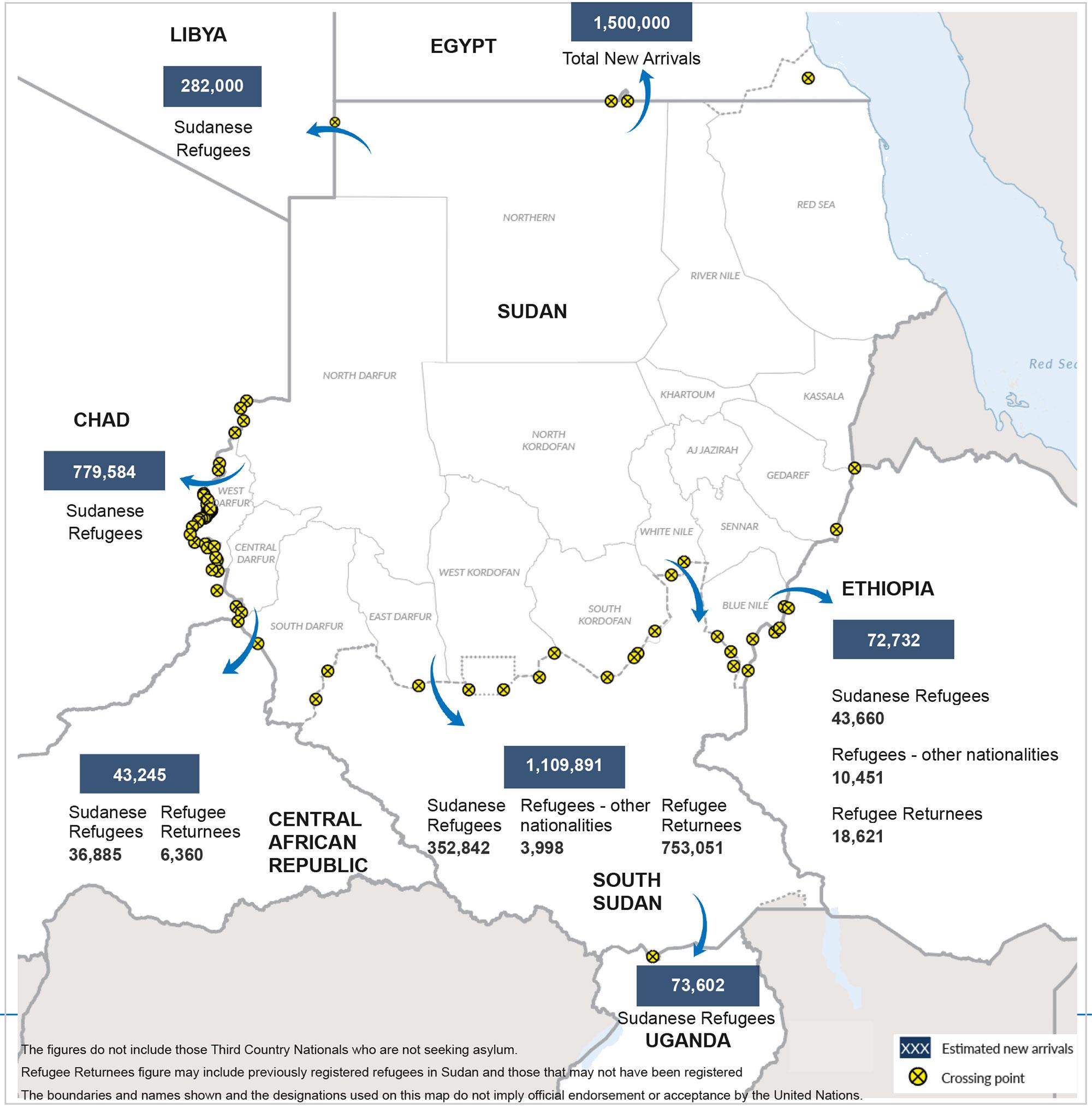
Refugee movements from Sudan.

Accountability is paramount

Perpetrators of serious violations must be held accountable,” Mr. Dujarric stressed.

The civil war between rival militaries – the national Sudanese Armed Forces (SAF) and the paramilitary Rapid Support Forces (RSF) and allied militias – has claimed tens of thousands of lives and driven more than 12.7 million people from their homes, including nearly four million as refugees in neighbouring countries.

Violence and insecurity has also sparked a catastrophic hunger crisis, with over half the population suffering acute food insecurity and famine conditions confirmed in various regions, leaving millions at risk of starvation.

Emergency response underway in Tawila

Despite the escalating violence and dwindling funds, humanitarian agencies continue their efforts to deliver lifesaving aid.

The UN relief coordination office, OCHA, reported on Wednesday that an inter-agency convoy led by UN Deputy Humanitarian Coordinator Antoine Gérard crossed into Darfur from Chad earlier this week via the Adré border, en route to Tawila.

The convoy is transporting critical supplies including nutrition and medical items, dignity kits, and other essential goods.

Food and nutrition assistance for approximately 220,000 people has already reached Tawila, with the UN World Food Programme (WFP) confirming that distributions began this week and are already 20 per cent complete.

Additional convoys are in motion, including one expected to depart Chad on Wednesday with 19 trucks of nutrition supplies.

Aid reaches capital Khartoum

WFP has begun the first food distributions in the centre of the capital Khartoum since the conflict erupted two years ago.

Deliveries of 70 metric tonnes of food to the Burri neighbourhood are set to begin on Thursday, attempting to reach nearly 8,000 people.

Aid distributions have also started in Alazhari, one of the areas at high risk of famine, where 20,000 people are receiving assistance.

Despite these efforts, WFP warned that the impending rainy season and severe funding shortfalls could undermine recent progress.

The agency, which assists about four million people monthly, aims to expand coverage to seven million – but that still represents only a fraction of those in need.

Source link