
Reaching a child in Darfur is ‘hard-won and fragile’, says UNICEF

Briefing journalists in Geneva on Friday, Eva Hinds, the UN child agency’s Chief of Communications, described a humanitarian response that is fragile, painstaking and essential, following her return from a 10-day mission to Darfur.

For nearly three years, rival militaries who were former allies have been battling for control of the shattered country, engaged in a brutal civil conflict that has destablised multiple countries bordering Sudan. 

In Darfur today, reaching a single child can take days of negotiation, security clearances, and travel across sand roads under shifting frontlines,” she said. “Nothing about this crisis is simple: every movement is hard-won, every delivery fragile.

City built from fear

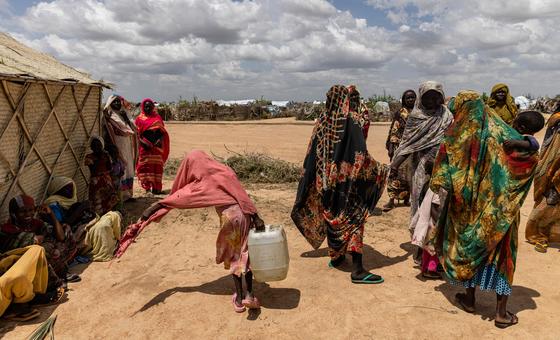
Ms. Hinds had just returned from Tawila, in North Darfur, where she witnessed what she described as an entire city rebuilt from desperation. Hundreds of thousands of people have fled violence and erected makeshift shelters from sticks, hay and plastic sheeting.

“Over 500,000 to 600,000 people are sheltering there,” she reported. “But standing inside that vast expanse of makeshift shelters was overwhelming. It felt like an entire city uprooted and rebuilt out of necessity and fear.

Despite the insecurity and logistical hurdles, UNICEF and its partners are still reaching children.

Effective aid operation

In just two weeks, more than 140,000 children were vaccinated, thousands treated for illness and malnutrition, safe water restored to tens of thousands, and temporary classrooms opened.

“It is painstaking, precarious work – delivered one convoy, one clinic, one classroom at a time – but for children in Darfur, it is the thin line between being abandoned and being reached,” Ms Hinds said.

She described meeting Doha, a teenage girl newly arrived from Al Fasher, who dreams of returning to school and one day teaching English. “Her name refers to the soft light just after sunrise,” Ms Hinds said. “She embodies that image – hopeful and determined.”

‘The children are freezing’

At a nutrition site, she met Fatima, a young girl being treated for malnutrition after losing her mother to the conflict.

At a centre for women and girls, mothers spoke of having no food, blankets or warm clothes for their children. “The children are freezing,” one mother told her. “We have nothing to cover them with.”

“These personal stories reflect only a small part of a much wider situation,” Ms Hinds said, stressing that Sudan is now the world’s largest humanitarian emergency, yet one of the least visible.

What I witnessed is a humanitarian catastrophe unfolding on a massive scale,” she warned.

Sudan’s children urgently need international attention and decisive action. Without it, the horrors facing the country’s youngest and most vulnerable will only deepen.”

Source link

Sudan War: Cholera Vaccination Campaign Begins in Darfur

The World Health Organization (WHO)’s Deputy Representative to the country Hala Khudari reported on Tuesday that the outbreak, which started in July 2024 in Kassala, has spread to all 18 states of the country.

More than 113,600 cases have been registered so far and over 3,000 deaths – a “concerning case fatality rate” of 2.7 per cent.

Speaking from Port Sudan, she said that the past year saw surges in White Nile and Khartoum among other states, resulting from the impact of the conflict and increased population movement. This critical situation has been compounded by severely limited basic services such as water, food and health, caused by ongoing heavy fighting between the Sudanese army and the paramilitary Rapid Support Forces.

Cholera is an acute intestinal infection that spreads through bacteria-contaminated food and water. According to WHO, it can kill within hours when not treated, and case fatality rates above one per cent indicate “serious gaps in case management and delayed access to care”.

Conditions ripe for disease

The resurgence of cholera in Sudan has been fuelled by heavy rains and flooding, overcrowding and lack of access to clean water in displacement sites and within communities.

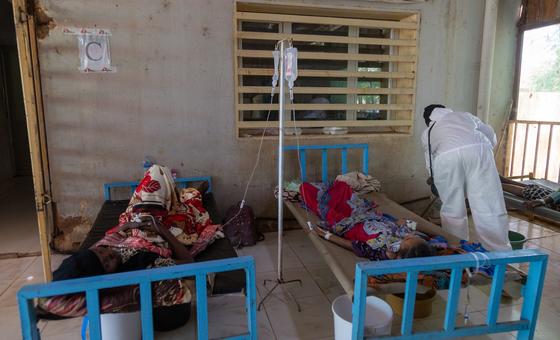
In the Darfur region, where cholera has been spreading since May, the number of cases continues to increase amid “severe access constraints” which are impeding the response, including inaccessible roads due to the rainy season, Ms. Khudari said. As of two days ago 12,739 cases and 358 deaths were reported in more than half of all the localities of the five Darfur states.

In certain localities in West Darfur, the case fatality rate has been as high as 11.8 per cent, she said.

Ms. Khudari explained that WHO and partners have been working to control the outbreak with a vaccination campaign in the worst-hit communities. It began last Sunday “after weeks of preparations to overcome access, transport and logistical challenges”.

The campaign aims to protect 1.86 million people in six priority localities of the Darfurs.

The WHO representative said that the “biggest challenge” in launching the campaign was to “actually get the vaccines there”. She described the difficulties in delivering the life-saving immunizations and supporting supplies via “long routes” to Nyala in South Darfur state earlier this month, amid ongoing security concerns.

El Fasher survivors

Preparations are ongoing to launch the campaign by the end of September in Tawila in North Darfur State, which hosts more than 575,000 internally displaced people, most of whom have fled from the besieged city of El Fasher.

The vaccines are being deployed in Sudan with the support of the UN Children’s Fund (UNICEF), whose spokesperson Ricardo Pires raised the alarm over the severe risks of cholera for children.

Children under five have been “disproportionately affected”, he told reporters, and so far at least 380 have died.

Access to life-saving treatment for cholera in Sudan is limited as the almost two-and-a-half-year-old violent conflict has devastated the health system.

The outbreak comes at a time when “more than 70 per cent of hospitals in conflict-affected areas are non-operational, with health centres being damaged or destroyed during the conflict, lacking supplies and even staff, as well as facilities being often used as shelter,” Mr. Pires stressed.

The UNICEF spokesperson also underscored the impact of “relentless” attacks on the country’s power and water infrastructure which have off cut millions of people including many children from safe and clean water, forcing families to collect water from unsafe and contaminated sources.
 

Sudan: Hundreds feared dead in Darfur landslide

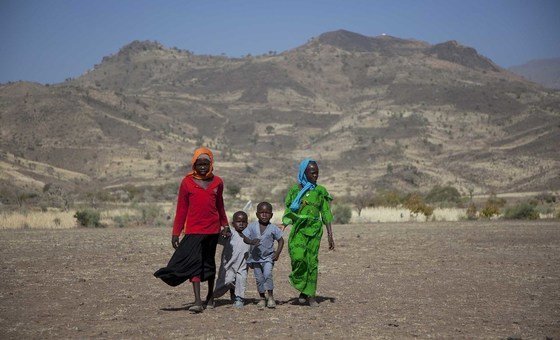
Up to 1,000 people are feared dead in the tragedy, which occurred on Sunday in Tarsin village, located in the Jebel Marra range on the border of Central and South Darfur states.

The landslide was triggered by days of heavy rain.

“I extend my heartfelt condolences to the families of the victims and to the people of Sudan at this tragic time,” Luca Renda, interim UN Humanitarian and Resident Coordinator in the country said in a statement.

Meanwhile, the UN and partners are mobilizing to provide support to the affected population.

The humanitarian community stands in solidarity with the people of Sudan and will spare no effort to ensure that aid can reach those in need without delay,” he said.

Refuge amid war

The UN migration agency IOM expressed sadness over the loss of life due to the catastrophic landslide, which is among the deadliest disasters in Sudan’s recent history.

The tragedy comes amid the brutal ongoing war between the Sudanese Armed Forces (SAF) and a militia group known as the Rapid Support Forces (RSF) that has displaced millions since April 2023.

The Marrah Mountains have become a refuge for families fleeing violence in the besieged city of El Fasher in North Darfur and surrounding areas.

“The area remains largely inaccessible to humanitarian organizations due to ongoing conflict and restrictions, compounding the hardship of those affected,” IOM said.

The agency urged all parties to the conflict to ensure the safety of aid workers and civilians, in line with international humanitarian law. 

Source link

Cholera spreads in North Darfur, 640,000 children under threat, UNICEF warns

More than 1,180 cholera cases – including an estimated 300 in children – and at least 20 deaths have been reported in Tawila, a town that has absorbed over half a million people fleeing violence since April.

Across the wider Darfur region, the toll is even more alarming: nearly 2,140 cases and at least 80 fatalities as of 30 July.

Despite being preventable and easily treatable, cholera is ripping through Tawila and elsewhere in Darfur, threatening children’s lives, especially the youngest and most vulnerable,said Sheldon Yett, UNICEF Representative in Sudan.

With hospitals bombed and many health facilities shuttered, Tawila – located just 70 kilometres from the besieged state capital El Fasher – has become a flashpoint of overlapping crises.

Limited access to clean water, poor sanitation and overcrowded camps have created ideal conditions for the disease to spread.

Deepening catastrophe

The cholera outbreak is unfolding against a backdrop of deepening catastrophe. Since the war between rival militaries erupted in April 2023, critical infrastructure has been decimated, millions displaced and food systems dismantled.

Famine has already been declared in at least 10 locations, including the vast Zamzam camp, with over a dozen more areas at risk.

Sudan’s extreme vulnerability to climate shocks – from droughts to devastating floods – has further compounded the crisis, leaving families to navigate the deadly intersection of conflict, hunger, disease and environmental collapse.

Over 640,000 children at risk

More than 640,000 children under five in North Darfur alone are now at risk. Recent assessments show that the number of children suffering from severe acute malnutrition in the region has doubled in the past year.

Children whose bodies are weakened by hunger are far more likely to contract cholera and to die from it,” UNICEF warned.

They cannot wait a day longer.

Call for action

UNICEF is urgently calling on all parties to ensure sustained, safe and unimpeded humanitarian access. Bureaucratic delays, looted aid convoys and active fighting have hampered the delivery of vital supplies, including vaccines, therapeutic food and medical kits.

The agency is scaling up its emergency response in Tawila and across Darfur, distributing Oral Rehydration Salts (ORS), chlorinated water and hygiene kits.

Nearly 30,000 people in Tawila now have daily access to safe drinking water, while outreach teams are raising awareness on prevention and early treatment.

Funds urgently needed

To support long-term containment, UNICEF plans to deliver more than 1.4 million doses of oral cholera vaccine and bolster treatment centres.

Additional supplies – soap, latrine slabs, plastic sheeting – are being readied, though access remains the greatest obstacle.

Since the outbreak was officially declared in August 2024, more than 94,000 cholera cases and over 2,370 deaths have been reported across 17 of Sudan’s 18 states. UNICEF says it urgently requires $30.6 million to fund its emergency cholera response.

Source link