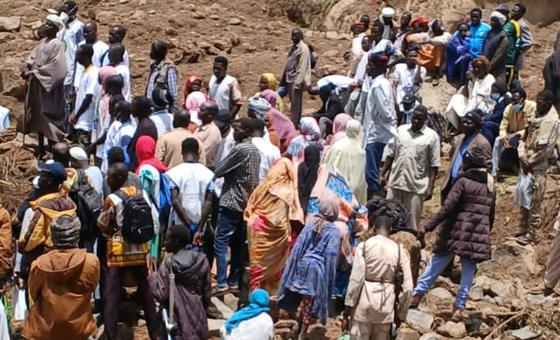

The death toll has not yet been verified as ongoing downpours and rugged terrain are making it extremely difficult to reach the impacted communities, according to the UN migration agency, IOM.
To date, an estimated 150 people were displaced from Tarseen and neighbouring villages, with families now sheltering in nearby communities.
The UN humanitarian agency, OCHA, and partners have put a rapid response plan into operation. On Thursday, teams comprising nearly a dozen local and international non-governmental organizations and UN agencies went to the site, travelling part of the way by donkey because of the rugged terrain.
Their mission focused on confirming the number of people affected and assessing and responding to urgent needs, OCHA said.
Transporting critical supplies
Teams also transported critical supplies for up to 750 people, including medical kits, nutrition support, food rations, non-food items and other essential materials.
Mobile health clinics and emergency medical teams were also deployed to provide immediate care on the ground.
The response aims to support the survivors in Tarseen and neighbouring villages affected by the disaster.
“The assessment’s findings will guide the scale-up of assistance, with UN agencies preparing to send more supplies to meet additional needs,” Mr. Dujarric said.
Flooding, escalating violence in North Darfur
Meanwhile, OCHA warned that the situation in El Fasher in North Darfur is worsening, amid escalating violence and now flooding. Local sources report that heavy artillery fire has killed dozens of civilians in recent days.
At the same time, humanitarian access continues to be impeded, and women and girls face grave protection risks, including from sexual violence.
Compounding the crisis in the area, heavy rains and flooding displaced 350 people in Korma Town on Monday, with latrines destroyed at the displacement site. Families have sought shelter with host communities.
Famine and cholera
In recent days, flooding in the Zamzam and Abu Shouk camps for displaced people close to El Fasher impacted 4,300 residents, destroyed 900 tents and damaged 2,300 houses, according to UN partners on the ground.
“These incidents further deepen the horrific situation in a place that knows famine, and it has been fired upon and been abused,” the UN Spokesperson said.
Meanwhile, cholera continues to surge, with aid partners reporting nearly 8,000 cases in North Darfur and more than 3,800 cases in South Darfur since May, he said.
The outbreak has been heightened by the severe malnutrition, which has doubled in North Darfur over the past year, leaving children particularly vulnerable.
Sudan has been embroiled in war between rival militaries since April 2023.
“We and our partners are supporting the response to the outbreak by providing clean water, health services and conducting cholera vaccination campaigns, despite the serious logistical challenges,” Mr. Dujarric said.