Downpours stymy aid teams following deadly landslide in war-torn Sudan

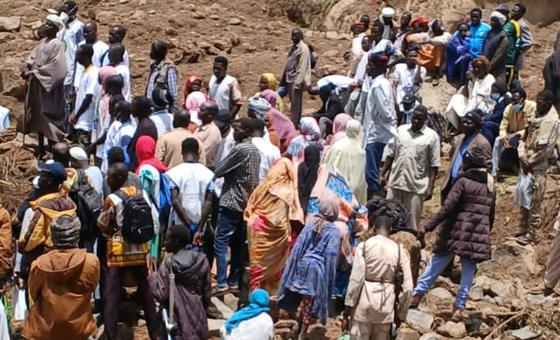
The death toll has not yet been verified as ongoing downpours and rugged terrain are making it extremely difficult to reach the impacted communities, according to the UN migration agency, IOM.

To date, an estimated 150 people were displaced from Tarseen and neighbouring villages, with families now sheltering in nearby communities.

The UN humanitarian agency, OCHA, and partners have put a rapid response plan into operation. On Thursday, teams comprising nearly a dozen local and international non-governmental organizations and UN agencies went to the site, travelling part of the way by donkey because of the rugged terrain.

Their mission focused on confirming the number of people affected and assessing and responding to urgent needs, OCHA said.

Transporting critical supplies

Teams also transported critical supplies for up to 750 people, including medical kits, nutrition support, food rations, non-food items and other essential materials.

Mobile health clinics and emergency medical teams were also deployed to provide immediate care on the ground.

The response aims to support the survivors in Tarseen and neighbouring villages affected by the disaster.

The assessment’s findings will guide the scale-up of assistance, with UN agencies preparing to send more supplies to meet additional needs,” Mr. Dujarric said.

Flooding, escalating violence in North Darfur

Meanwhile, OCHA warned that the situation in El Fasher in North Darfur is worsening, amid escalating violence and now flooding. Local sources report that heavy artillery fire has killed dozens of civilians in recent days.

At the same time, humanitarian access continues to be impeded, and women and girls face grave protection risks, including from sexual violence.

Compounding the crisis in the area, heavy rains and flooding displaced 350 people in Korma Town on Monday, with latrines destroyed at the displacement site. Families have sought shelter with host communities.

Famine and cholera

In recent days, flooding in the Zamzam and Abu Shouk camps for displaced people close to El Fasher impacted 4,300 residents, destroyed 900 tents and damaged 2,300 houses, according to UN partners on the ground.

These incidents further deepen the horrific situation in a place that knows famine, and it has been fired upon and been abused,” the UN Spokesperson said.

Meanwhile, cholera continues to surge, with aid partners reporting nearly 8,000 cases in North Darfur and more than 3,800 cases in South Darfur since May, he said.

The outbreak has been heightened by the severe malnutrition, which has doubled in North Darfur over the past year, leaving children particularly vulnerable.

Sudan has been embroiled in war between rival militaries since April 2023.

“We and our partners are supporting the response to the outbreak by providing clean water, health services and conducting cholera vaccination campaigns, despite the serious logistical challenges,” Mr. Dujarric said.

Source link

First Person: From aid worker to refugee and back in war-torn Sudan

Sudan is one of the world’s largest and most complex humanitarian crises, with more than 30.4 million people – over half the population – urgently needing humanitarian assistance, yet the 2025 Sudan humanitarian needs and response plan is severely underfunded, with only 13.3 per cent of the required resources received so far.

Forced to flee the country with his family after the war intensified, Mr. Ibrahim returned to help people affected by the war in Darfur. Ahead of World Humanitarian Day, marked annually on 19 August, he described his journey, from aid worker to refugee and back again to Sudan.

“I was at home helping my daughter revise for her grade six exams, scheduled for the next day. Then, out of nowhere, the sound of heavy gunfire shattered the silence in my hometown, Zalingei, the capital of Central Darfur state, which remains gripped by insecurity and critical shortages of basic services.

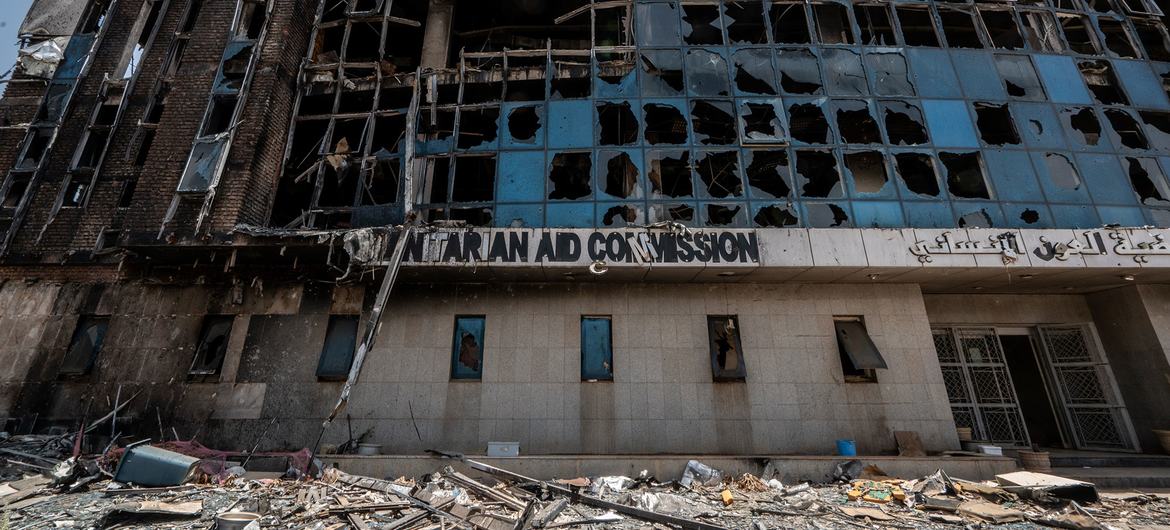
The former Humanitarian Aid Commission Building in Khartoum, Sudan.

At first, I thought the gunfire would pass quickly. I rushed to stock up on food supplies and water, enough for six days. But, the streets became battlegrounds. All I could do was try to keep my family safe.

Despite the chaos, I continued to work. Electricity and Internet access were sporadic, but I kept my phone charged to send daily updates to the OCHA Head of Office. It gave me purpose amid the uncertainty.

Eventually, it became too dangerous to stay.

The journey of displacement

On the 39th day, we fled. Our family of 10 began a harrowing journey with no clear destination, only the desperate need to escape. We left behind more than just walls and belongings; we left behind a life built with love and hope.

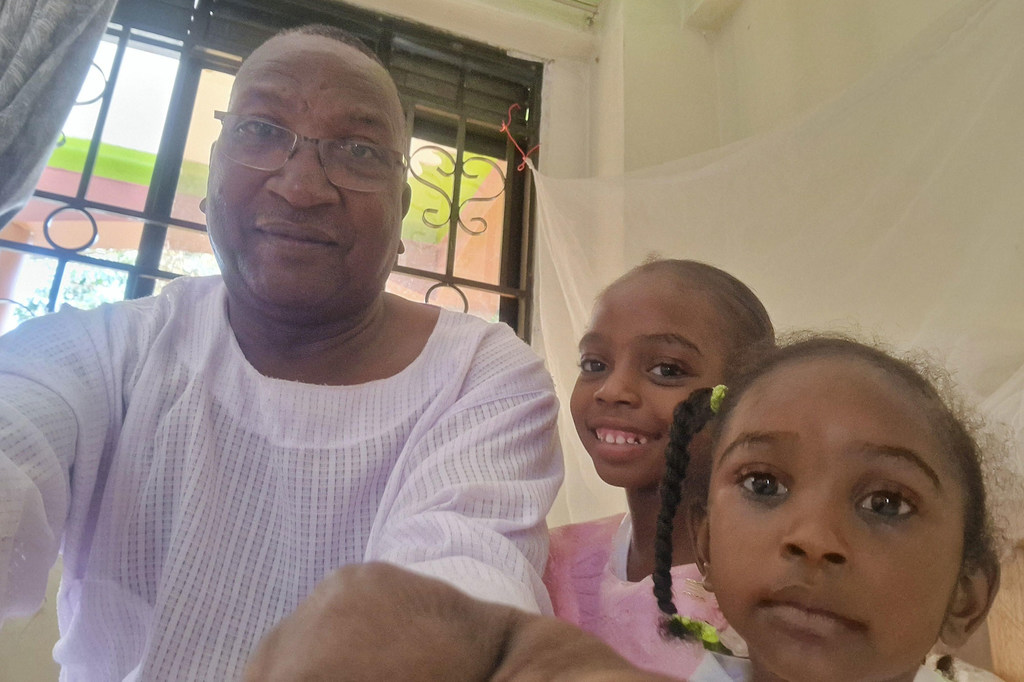
Adam with two of his daughters in Uganda.

Our journey took us first to Nyala in South Darfur, then to Kosti in White Nile State. From there, we crossed the border into neighbouring South Sudan and eventually reached Uganda, a country I had heard offered stability and a good education system for children. The journey by car took 23 days. My children had no passports, and there were no refugee camps for Sudanese nationals at the time.

To my relief, migration authorities in both countries were kind and supportive. In Kampala, we rented a house and received asylum status within three days. The moment I held our refugee cards, I exhaled deeply and thought ‘we’ve made it.’

I enrolled my children in school and began working online, finally finding a sense of stability.

Here I was, an aid worker now a refugee, needing the same support I once provided to others.

Returning to Zalingei

Months later, I faced a difficult decision. Do I stay with my family or return to Darfur and continue the work I had done for years? I chose to return.

Leaving my family behind was incredibly hard, but their safety was paramount.

I returned to Zalingei with a renewed sense of duty to serve those still trapped in the hardship I had endured. I was also the sole breadwinner for my family and needed to ensure they could survive in Uganda.

My hometown changed

When I arrived in Zalingei, I barely recognised it. Buildings were scarred with bullet holes.

I found another family sheltering inside our house, a doctor and his family whose own home had been destroyed. I let them stay, setting aside a small section for myself and a colleague. The house had been looted. Windows were gone and our belongings had vanished. I had hoped to find my children’s school certificates, photos, any documents left behind. But, they were gone.

Everyone was armed, even children as young as 15. People were tense, traumatised and always bracing for the next wave of violence.

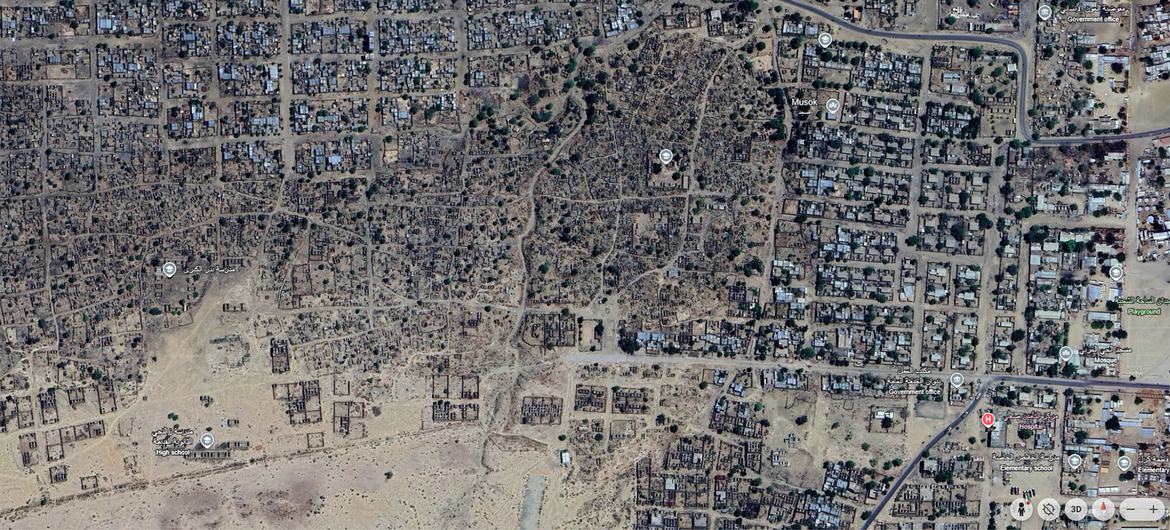
Google Earth image of Zalingei as of 21 March 2025 with visible signs of house destruction on the southern part of the city.

Machine guns and wreckage in West Darfur

I didn’t stay long in Zalingei. Soon I was called to El Geneina in West Darfur, a town devastated by violence, and whose people desperately needed humanitarian support.

El Geneina’s streets were strewn with the wreckage of burned-out military vehicles. Armed men patrolled in pickup trucks mounted with machine guns.

The humanitarian needs were immense. People lacked food, shelter, household essentials, healthcare, clean water and protection, but we never had enough resources for them.

Family, sacrifice and hope for Sudan

It’s heartbreaking to witness the suffering caused by the recent donor funding cuts. Many organizations have been forced to scale back their operations, leaving countless people without help.

It’s heartbreaking to witness the suffering caused by the recent donor funding cuts.

Still, we did all we could.

Between 2023 and 2025, we reached more than 800,000 displaced people with critical assistance, in West and Central Darfur.

I also went on to work with OCHA colleagues in Chad to coordinate cross-border humanitarian convoys into Darfur.

These convoys were lifelines, delivering food, medicine and supplies to communities cut off by conflict.

Today, I remain in Sudan. 

My family is still in Uganda. I visit them once a year, but the separation is painful.”

Source link

UN officials warn of starvation amid ‘gender emergency’ in war-torn Sudan

Particularly hard hit is El Fasher, where hunger is growing, with the Office for the Coordination of Humanitarian Affairs (OCHA) warning of a deteriorating situation that is putting even more civilians’ lives at risk.

OCHA’s Director of Operations and Advocacy, Edem Wosornu, who is currently in the country, said the suffering is immense, with people trapped, displaced or returning to face communities in ruins. She called for unimpeded access and urgent support to reach those on the frontlines of hardship.

Briefing reporters at UN Headquarters in New York, UN Deputy Spokesperson Farhan Haq said “with increasingly alarming food shortages and spiraling prices, people in El Fasher are reported to be resorting to eating animal feed in what is an increasingly catastrophic situation.”                       

Thousands face starvation, cholera threat

El Fasher has the highest cost of basic goods nationwide at nearly $1,000 per household per month, which is far beyond the reach of most families. This includes more than $700 for food alone – more than eight times the cost of basic food items in other parts of the country, Mr. Haq said.

These steep costs, coupled with the siege and lack of aid delivery by road for over a year, have left thousands facing starvation,” he added, noting that engagement around the calls from the Secretary-General and the UN Emergency Relief Coordinator for a pause in the area is “more important than ever.

In an effort to curb public health risks in North Darfur, UN humanitarian partners and local authorities launched a sanitation campaign on 5 August targeting 11,000 people in the localities of El Fasher and Dar As Salam with a goal of preventing disease outbreaks in overcrowded displacement sites during the ongoing rainy season.

They are also scaling up efforts to respond to a cholera outbreak in the locality of Tawila, which has absorbed 330,000 displaced people fleeing conflict in Zamzam and El Fasher since April.

In Blue Nile State, cholera cases have surged to nearly 2,800 since late June, with over 40 new infections recorded yesterday alone, with 14 deaths have been reported, the UN Deputy Spokesperson said.

‘Gender emergency’

Warnings also came from gender equality agency, UN Women.

“This crisis is a gender emergency,” said Salvator Nkurunziza, the agency’s representative in Sudan, told UN News.

Displaced women and girls can be subject to the risks of exploitation and abuse, especially during the delivery of aid, where protection mechanisms are weak or absent in some locations,” he said.

According to the agency’s Unit for Combating Violence Against Women in Sudan, as of March 2025, there have been 1,138 cases of rape recorded since April 2023, including 193 children, most of whom were in conflict-affected areas, he said.

“The actual number may be higher as fear of stigma and other social and security reasons prevent accurate reporting of gender-based violence crimes,” he warned.

Women, girls ‘most affected’ by food insecurity

“Certainly, these crimes including rape and harassment can prevent women and girls from access food assistance,” he said.

Unreported gender-based violence crimes in besieged areas can be higher than shown in recent statistics, he continued, emphasising that women and girls are the most affected by food insecurity in those areas, and the situations there indicate a looming hunger crisis.

“Women are central to the survival of their households, especially in displacement settings, but their ability to access food assistance is deeply compromised,” Mr. Nkurunziza said. “Female-headed households, already three times more likely to be food insecure, are now the hungriest group in the country.”

Source link

On the road in war-torn Gaza

Moving around Gaza has become ever more difficult amid the ongoing 21-month-long war.

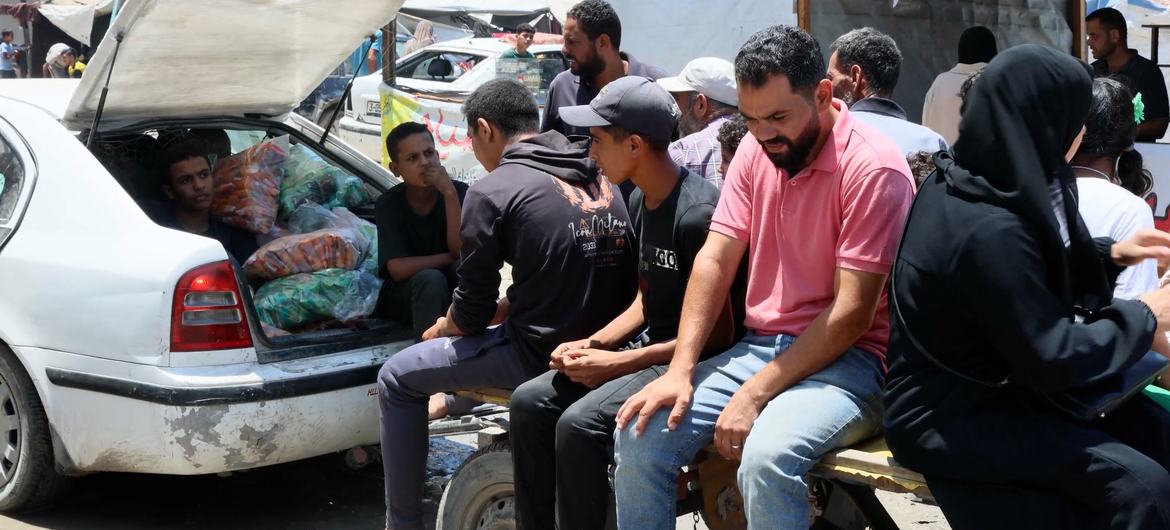
Mr. Saad, who was displaced from the town of Beit Lahia in the northern Gaza Strip, was waiting for the vehicle pulling the cart he was sitting in to move.

“Transportation is very difficult and unsafe,” he told UN News. “The roads are exhausting. We pray to God to grant us patience and to return home.”

This was on Rashid Street, west of the city, which connects the north and south of the Strip. It is crowded with carts, cars and three-wheeled motorcycles that have also been converted into means of transportation.

The area is interspersed with tents of displaced people, all surrounded by the rubble of buildings destroyed by war on both sides of the road.

War and evacuation orders have left many in Gaza scrambling for transportation to safety.

A luxury not for everyone

“People can barely find enough to eat, so how will they pay for transportation?” Umm Haytham Al-Kulak asked while waiting in a passenger compartment attached behind a motorcycle,

“We walk mostly; we can’t take public transportation,” she said.

“May God help the drivers. Fuel prices are high, and all the people are exhausted and overwhelmed.”

In Gaza, many people have no choice but to use risky ways to get around during the ongoing war.

Sky high fuel costs

Drivers are paying skyrocketing prices for fuel, which is a heavy burden, Abdel Karim Abu Asi said as he waited for his car to be fully loaded with passengers.

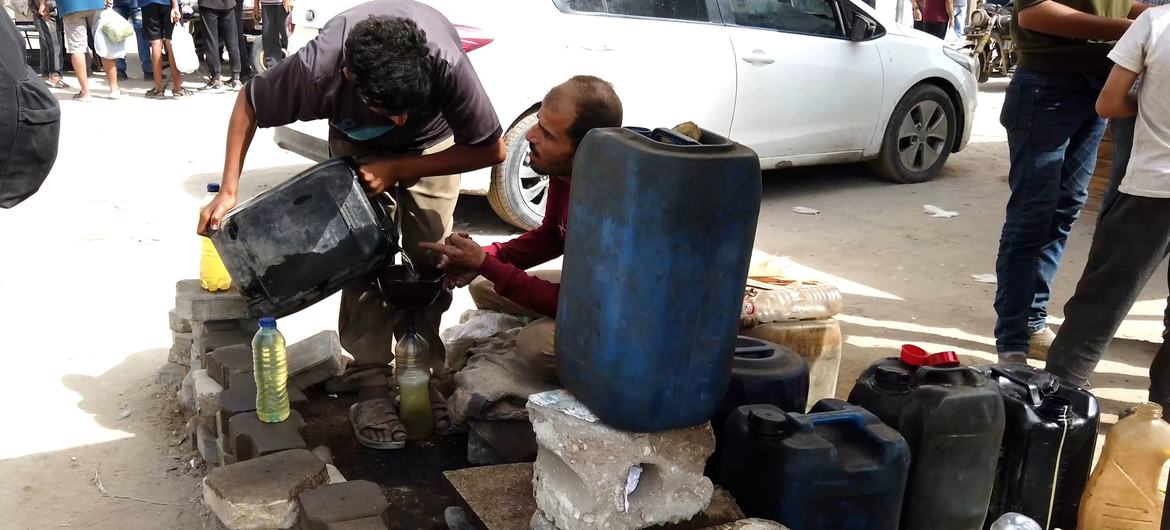
“The price of a litre of diesel has reached 100 shekels [around $27],” he said. “What should we do? We’re trying to use locally produced fuel, but it causes significant damage to cars and a lot of problems.”

This isn’t the only problem facing drivers. Mr. Abu Asi said the prices of spare parts are very high. A part that used to cost around 100 shekels now sells for around 2,000 shekels, or around $560.

“We also suffer from the destruction of the streets, and no matter how hard the municipalities try to repair them, the problem is not solved because they require a large number of bulldozers to clear them,” he said.

“People must be helped with transportation costs and many other aspects.”

Fuel vendors sell their products at sharply inflated prices, with a litre of fuel reaching around 100 shekels.

Only option

Despite all the challenges, people there continue to go about their daily lives, even if it takes all day to get from one place to another. That’s what happened to Hussein Al-Hamarneh, who was waiting in a car to travel to the southern Gaza Strip.

Mr. Al-Hamarneh believes that most of these means of transportation are “uncomfortable, such as tuk-tuks [three-wheeled motorcycles] and carts pulled by cars, which are primarily designed to transport goods or animals, not people”.

“This is the only option for those who do not own cars,” he said.

Tayseer Abu Asr, who arranges for passengers to board a cart pulled by a car, stood on the section of the road.

“We’re trying to help people get around,” he said. “These carts have become our only means of transportation after the destruction of buses and taxis.”

On top of these challenges during the ongoing war, the Gaza Strip is facing a fuel crisis.

UN agencies warned earlier this week that the fuel shortage in Gaza has reached critical levels. They said if supplies run out, it will place an unbearable new burden on the population.