Yemen: UN Sounds Alarm as Famine, Fighting, Detentions Exacerbate Crisis

UN Special Envoy Hans Grundberg told the Security Council on Monday that the turmoil in Yemen cannot be seen in isolation.

“Yemen is both a mirror and a magnifier of the region’s volatility,” he said, noting that progress toward peace is hampered by regional rivalries, cross-border dynamics, and internal divisions.

Mr. Grundberg highlighted a dangerous escalation in hostilities, noting repeated attacks on civilians and critical infrastructure. Military clashes in Al Dhale’, Ma’rib, and Ta’iz underscore the risk that miscalculations could trigger a return to full-scale conflict.

The Houthis, also known as Ansar Allah, have been fighting Yemeni Government forces, backed by a Saudi-led coalition, for control of the country for over a decade.

Hans Grundberg, UN Special Envoy for Yemen, briefs the Security Council on the situation in Yemen. He warned that Yemen’s conflict is unravelling within an already volatile regional landscape.

© UNICEF/Ahmed Al-Basha A girl and her brother walk home after attending classes at a UNICEF-supported educational tent. Millions of children in Yemen are out of school due to displacement and conflict-damaged schools. (file photo)

“Against the backdrop of the war in Gaza, we are seeing an alarming and dangerous intensification of hostilities between Ansar Allah and Israel,” he said, noting that a number of civilians were reportedly killed and injured, and critical infrastructure struck.

The Special Envoy warned that the current cycle of violence is dragging Yemen further from a peace process that could deliver sustainable, long-term peace and economic growth.

“This escalatory cycle must end…we need to get the focus back on Yemen – focus on both its internal challenges and on unlocking its great potential,” he stressed.

Spiralling humanitarian situation

The humanitarian situation is equally dire. UN Emergency Relief Coordinator Tom Fletcher told the Council that Yemen remains the third most food-insecure country in the world, with 17 million people already struggling to eat and an additional one million expected to face extreme hunger before February next year.

“Seventy per cent of households do not have enough food to meet daily needs – this is the highest rate ever recorded,” he said.

Mr. Fletcher highlighted that one in five households goes a full day without any food, while two million women and girls have lost access to reproductive health services amid funding shortfalls.

Despite funding gaps and a challenging operating environment, humanitarians continue to deliver aid where possible. In Hajjah, Amran, and Ma’rib, organizations have provided food, water, health, and nutrition services to tens of thousands.

More than 172,000 people affected by flooding received non-food items, shelter, hygiene kits, and clean water.

But Mr. Fletcher warned that ongoing hostilities, infrastructure damage, and the detention of UN staff severely hamper operations.

Twenty-two UN personnel have been recently arbitrarily detained by Ansar Allah; though one staff member was released, over 40 remain in detention, including a colleague who died while in custody.

Both top UN officials emphasised the urgent need for dialogue and adherence to international law. Special Envoy Grundberg urged Yemeni leaders to step back from unilateral actions and pursue a nationwide ceasefire, economic reforms, and inclusive political engagement.

Mr. Fletcher called for the immediate release of all detained aid workers and a secure operating environment, warning that funding cuts and conflict-related obstacles are costing lives.

“Detaining humanitarian staff does not help the people of Yemen. It does not feed the hungry, heal the sick, nor protect those displaced by floods or fighting,” he said.

“The people of Yemen, wherever they may live, must receive the humanitarian aid that they need. They deserve a future of greater security, justice and opportunity.”

‘Our work is largely invisible’: Journey from outer space to frontline aid worker

Ahead of donning a beige WFP vest and boots to face hurricanes, wars and refugee camps, the Portuguese scientist worked with satellite imagery and cartography, creating maps to support humanitarian missions, until he realised he didn’t want to stay behind a computer screen.

On the occasion of World Humanitarian Day, marked annually on 19 August, Mr. Matos shared his story with UN News.

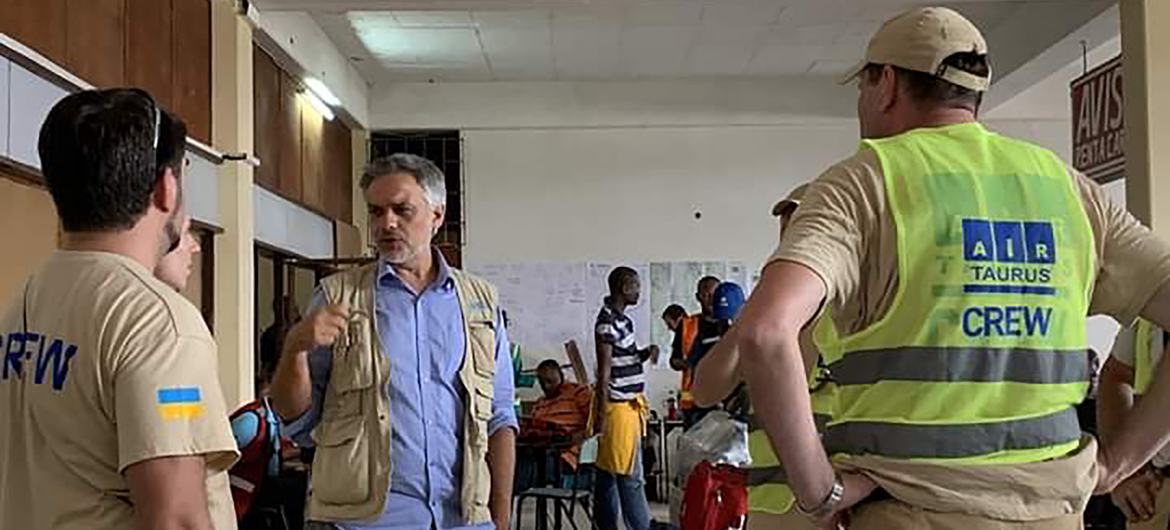
Pedro Matos joined the WFP response team following the deadly Cyclone Idai in Mozambique in 2019. (file)

From hurricanes to war

“At a certain point, it just wasn’t enough,” he recalled about his space engineering job. “I didn’t want to be making maps for other people to go and do humanitarian responses. I want to take those maps and be the one to do the responding.”

That’s exactly what he did. At WFP, he first developed maps on the ground and then went on to coordinate the agency’s emergency operations.

Since then, he has visited dozens of countries often at the epicentre of crises, from Hurricane Idai in Mozambique to the outbreak of war in Ukraine.

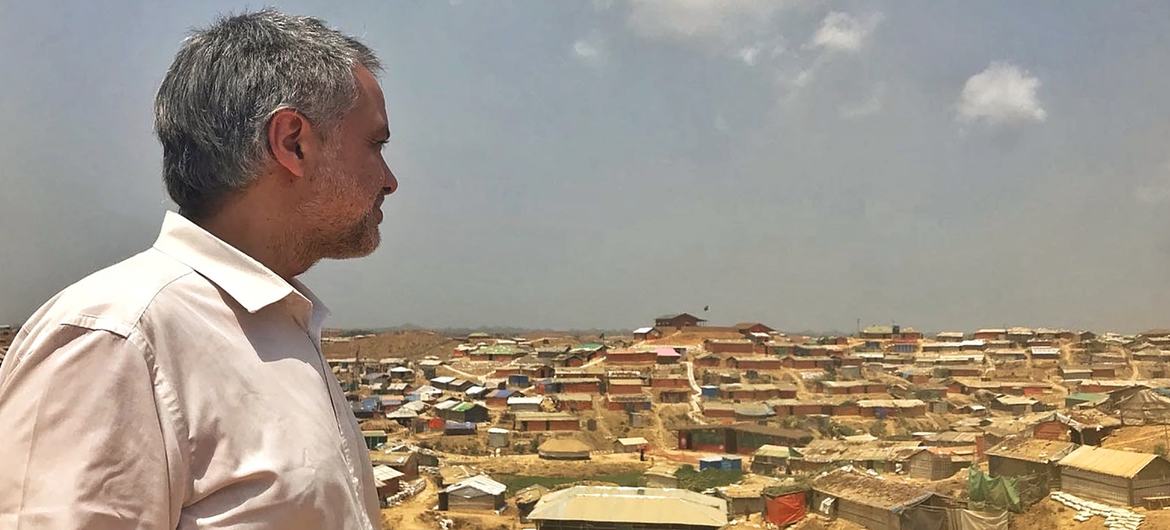
In 2018, Pedro Matos looks at the Kutupalong refugee camp where Rohingya refugees live. (file)

‘Like moving an entire government’

Coordinating in an emergency response is like “moving an entire government”, where each UN agency represents a “ministry” and the response only works when everyone comes together over the four essential areas in a crisis response: food, shelter, water and health.

Having just returned from a mission in Bangladesh, he described efforts to respond at Cox’s Bazar, the world’s largest refugee camp and home to 700,000 people who fled violence in Myanmar.

“We’ve been able to provide better conditions for people to live in this limbo with a little more comfort,” he said, also remembering his visit there in 2018 at the height of the crisis.

At the time, “a million people crossed the border in a month.” Today, although they remain in “limbo”, he pointed to improvements such as more monsoon-resistant homes and roads, gas stoves and reforestation.

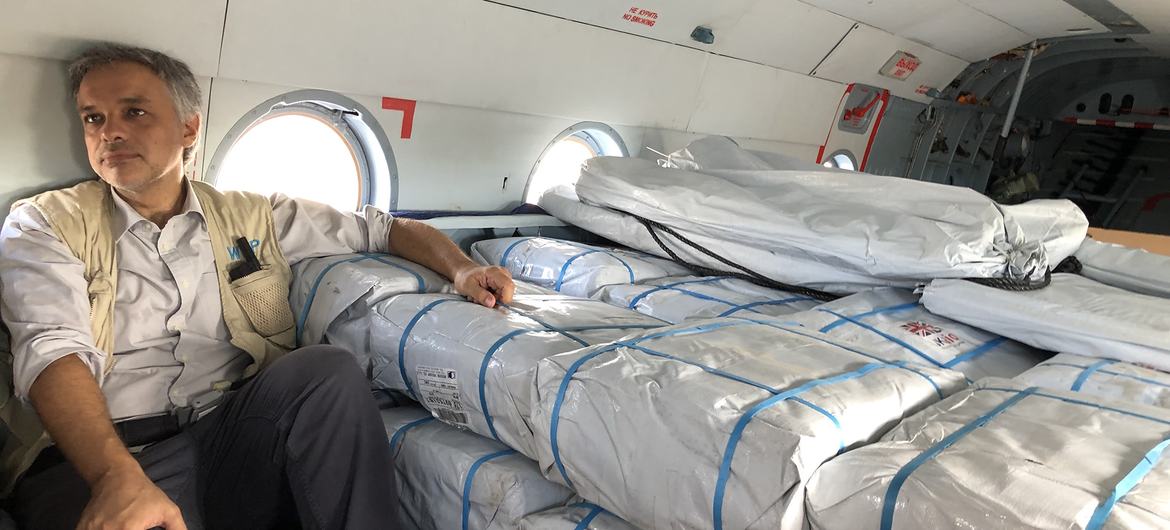
Pedro Matos on board a humanitarian aid flight after Cyclone Idai in Mozambique. (file)

Heart-shredding challenges and profound rewards

The job has meant both challenges and rewards.

“We’ve also had a few instances where we’ve been kidnapped, or come under fire, but it’s not the things that happen to us that impact us the most,” he said. “It’s the things that happen to others that have the most impact.”

Hurricane Idai in Mozambique was a Category 5 hurricane that hit Beira in 2019 was one of the biggest and most intense crisis, but also most rewarding, he said.

“There’s this mix of something that was very intense and hard because we couldn’t reach everyone, but at the same time, the fact was that there were many people – tens or hundreds of thousands of people – who would have died if we hadn’t been there,” he said. “That was the most impactful response in my 17 years at the United Nations.”

When he was in Yemen, “we were bombed 20 times a day” in the capital, Sana’a, he said, adding that “there’s a strange normalcy” that develops.

“We find ourselves saying things like, ‘no, that wasn’t very far; it was only 500 metres from here,’” he said. “It’s something I never thought I’d think or say before doing this work.”

When reaching central Ukraine several weeks after Russia’s full-scale invasion in early 2022, he called the situation “very intense”. Within a week, he and his colleagues began distributing money to people coming from the frontlines.

We couldn’t reach everyone, but there were tens or hundreds of thousands of people who would have died if we hadn’t been there.

“When we interviewed people and asked them what they were doing with the money we gave them, it was very gratifying,” he said. “It was beautiful.”

Those who had been wounded in the war were using the money to buy painkillers. Others used it to pay for gas to escape the frontlines. One mother had been able to buy her daughter a scoop of ice cream for the first time since the war began.

“Her daughter was delighted,” he said. “There are very rewarding moments.”

Feeding millions every day

“We all think we know what the humanitarian or aid sector is,” Mr. Matos explained, adding that the scale during a crisis is much, much larger.

“I thought we’d be rehabilitating schools, feeding 100 people,” he continued. “I never imagined I’d be feeding 13 million people a day in Yemen. The scale is absolutely incredible.”

However, humanitarian work is often seen as a separate job, he said. Almost every profession that exists in private and government sectors also exists in an aid landscape, from lawyers, those who work in procurement, like in supermarkets, and human resources.

“I basically do the same work as social workers or firefighters,” he said. “They do it here every day, and I do it elsewhere. But, our work is in the same field and very similar.”

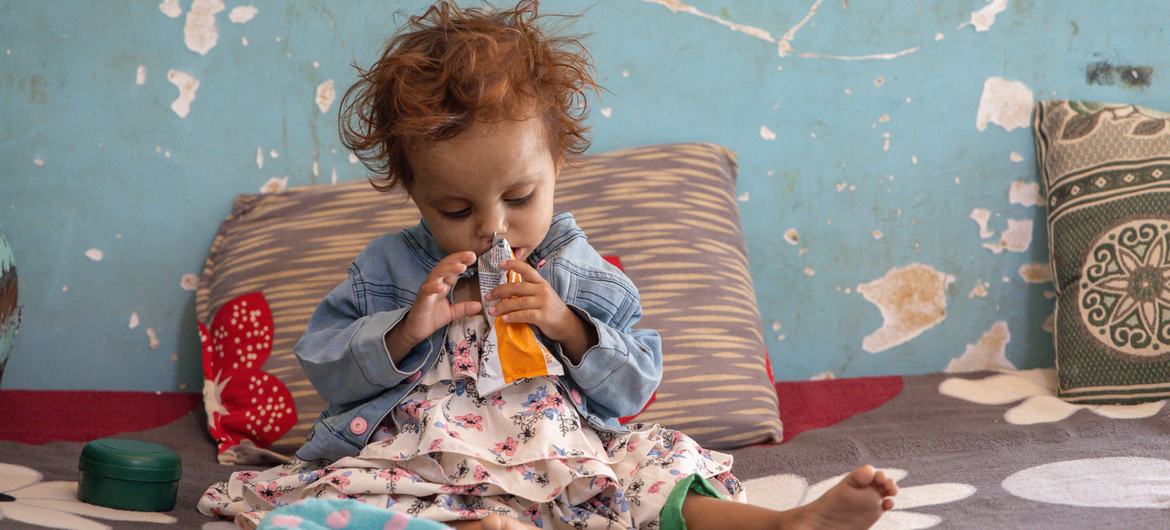
A toddler eats a food supplement, as part of WFP’s nutrition programme, in Mokha, Taiz, in Yemen.

The value of a Nobel Prize

WFP was awarded the Nobel Peace Prize in 2020, a recognition that Mr. Matos received with humility.

“Our work is largely invisible, despite feeding 120 million people every day,” he said. “It gave us a platform to raise awareness about crises like Congo, Myanmar, Sudan and Gaza, which often go unnoticed.”

Our work is largely invisible, despite feeding 120 million people every day.

He said his job is to give voice to the voiceless when crises fade from news headlines. Despite the difficulties and risks across his career, Mr. Matos has no doubt about the most important lesson he learned.

“People are essentially good,” he said. “When faced with the imminence of tragedy, people are fundamentally good and want to help others, even if that other person is very different. It was good to realise this because it’s not always obvious when we’re far from these crises.”

Source link

First Person: From aid worker to refugee and back in war-torn Sudan

Sudan is one of the world’s largest and most complex humanitarian crises, with more than 30.4 million people – over half the population – urgently needing humanitarian assistance, yet the 2025 Sudan humanitarian needs and response plan is severely underfunded, with only 13.3 per cent of the required resources received so far.

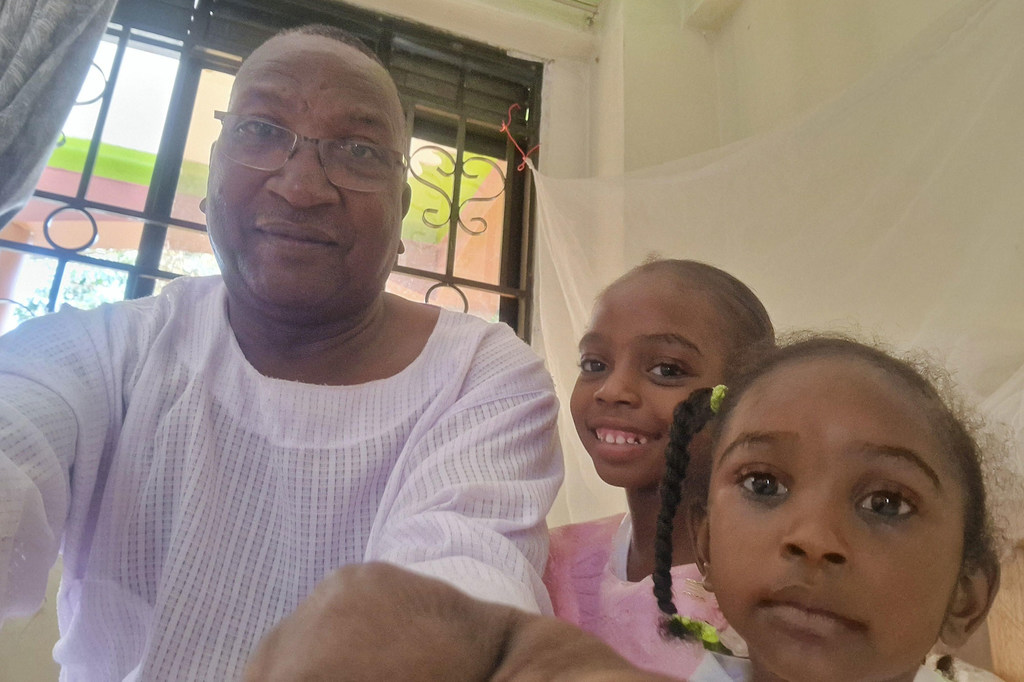
Forced to flee the country with his family after the war intensified, Mr. Ibrahim returned to help people affected by the war in Darfur. Ahead of World Humanitarian Day, marked annually on 19 August, he described his journey, from aid worker to refugee and back again to Sudan.

“I was at home helping my daughter revise for her grade six exams, scheduled for the next day. Then, out of nowhere, the sound of heavy gunfire shattered the silence in my hometown, Zalingei, the capital of Central Darfur state, which remains gripped by insecurity and critical shortages of basic services.

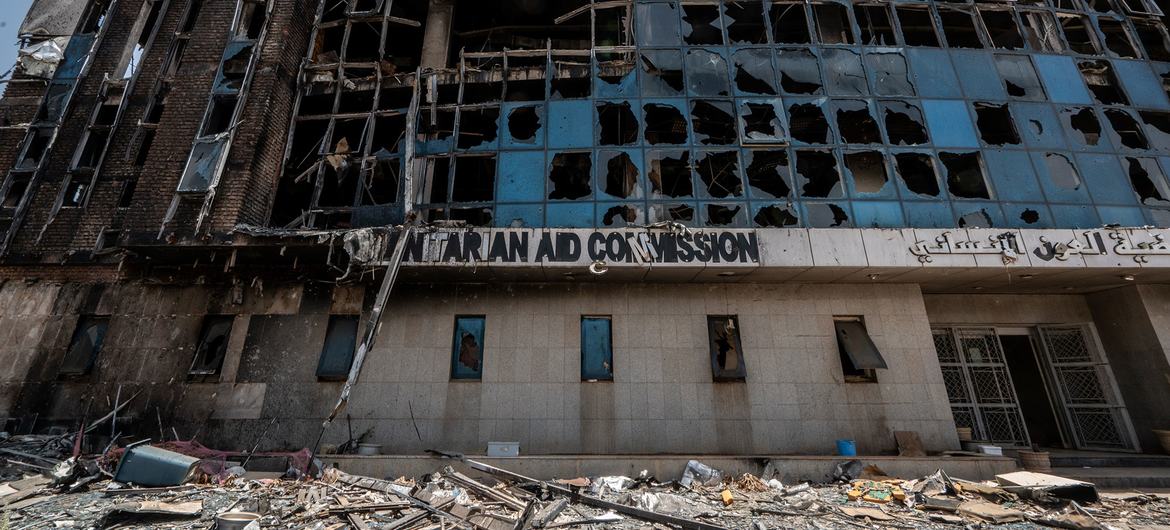
The former Humanitarian Aid Commission Building in Khartoum, Sudan.

At first, I thought the gunfire would pass quickly. I rushed to stock up on food supplies and water, enough for six days. But, the streets became battlegrounds. All I could do was try to keep my family safe.

Despite the chaos, I continued to work. Electricity and Internet access were sporadic, but I kept my phone charged to send daily updates to the OCHA Head of Office. It gave me purpose amid the uncertainty.

Eventually, it became too dangerous to stay.

The journey of displacement

On the 39th day, we fled. Our family of 10 began a harrowing journey with no clear destination, only the desperate need to escape. We left behind more than just walls and belongings; we left behind a life built with love and hope.

Adam with two of his daughters in Uganda.

Our journey took us first to Nyala in South Darfur, then to Kosti in White Nile State. From there, we crossed the border into neighbouring South Sudan and eventually reached Uganda, a country I had heard offered stability and a good education system for children. The journey by car took 23 days. My children had no passports, and there were no refugee camps for Sudanese nationals at the time.

To my relief, migration authorities in both countries were kind and supportive. In Kampala, we rented a house and received asylum status within three days. The moment I held our refugee cards, I exhaled deeply and thought ‘we’ve made it.’

I enrolled my children in school and began working online, finally finding a sense of stability.

Here I was, an aid worker now a refugee, needing the same support I once provided to others.

Returning to Zalingei

Months later, I faced a difficult decision. Do I stay with my family or return to Darfur and continue the work I had done for years? I chose to return.

Leaving my family behind was incredibly hard, but their safety was paramount.

I returned to Zalingei with a renewed sense of duty to serve those still trapped in the hardship I had endured. I was also the sole breadwinner for my family and needed to ensure they could survive in Uganda.

My hometown changed

When I arrived in Zalingei, I barely recognised it. Buildings were scarred with bullet holes.

I found another family sheltering inside our house, a doctor and his family whose own home had been destroyed. I let them stay, setting aside a small section for myself and a colleague. The house had been looted. Windows were gone and our belongings had vanished. I had hoped to find my children’s school certificates, photos, any documents left behind. But, they were gone.

Everyone was armed, even children as young as 15. People were tense, traumatised and always bracing for the next wave of violence.

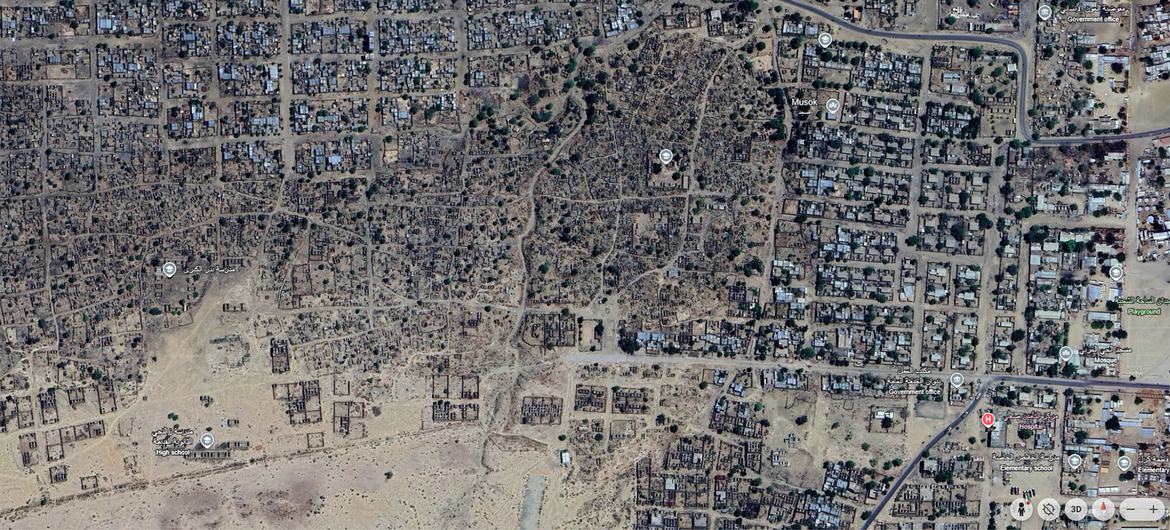
Google Earth image of Zalingei as of 21 March 2025 with visible signs of house destruction on the southern part of the city.

Machine guns and wreckage in West Darfur

I didn’t stay long in Zalingei. Soon I was called to El Geneina in West Darfur, a town devastated by violence, and whose people desperately needed humanitarian support.

El Geneina’s streets were strewn with the wreckage of burned-out military vehicles. Armed men patrolled in pickup trucks mounted with machine guns.

The humanitarian needs were immense. People lacked food, shelter, household essentials, healthcare, clean water and protection, but we never had enough resources for them.

Family, sacrifice and hope for Sudan

It’s heartbreaking to witness the suffering caused by the recent donor funding cuts. Many organizations have been forced to scale back their operations, leaving countless people without help.

It’s heartbreaking to witness the suffering caused by the recent donor funding cuts.

Still, we did all we could.

Between 2023 and 2025, we reached more than 800,000 displaced people with critical assistance, in West and Central Darfur.

I also went on to work with OCHA colleagues in Chad to coordinate cross-border humanitarian convoys into Darfur.

These convoys were lifelines, delivering food, medicine and supplies to communities cut off by conflict.

Today, I remain in Sudan. 

My family is still in Uganda. I visit them once a year, but the separation is painful.”

Source link

Gaza: UN staff now fainting from hunger, exhaustion; WHO worker detained

Doctors, nurses, journalists, humanitarians, among them UNRWA staff, are hungryfainting due to hunger and exhaustion while performing their duties,” said Juliette Touma, Director of Communications with the UN agency for Palestine refugees, UNRWA. 

Speaking from Amman, she stressed that seeking food “has become as deadly as the bombardments.”

The development comes as the UN human rights office, OHCHR, announced on Tuesday that more than 1,000 Palestinians have now been killed by the Israeli military while trying to get food in Gaza since the so-called Gaza Humanitarian Foundation (GHF) started operating on 27 May. 

“As of 21 July, we have recorded 1,054 people killed in Gaza while trying to get food,” said OHCHR spokesperson Thameen Al-Kheetan; “766 of them were killed in the vicinity of GHF sites and 288 near UN and other humanitarian organizations’ aid convoys.” 

Mr. Al-Kheetan noted that the finding came from “multiple reliable sources on the ground, including medical teams, humanitarian and human rights organizations. It is still being verified in line with our strict methodology.”

The Foundation’s hubs are supported by the US and Israeli authorities and started operating in southern Gaza on 27 May, bypassing the UN and other established NGOs. 

Aid relief is not a job for mercenaries

“The so-called GHF distribution scheme is a sadistic death-trap,” UNRWA’s Ms. Touma said. “Snipers open fire randomly on crowds, as if they’re given a licence to kill.” 

Quoting a statement by UNRWA head Philippe Lazzarini, Ms. Touma called the scheme a “massive hunt of people in total impunity.”

“This cannot be our new norm. Humanitarian assistance is not the job of mercenaries,” she added.

The UNRWA spokesperson insisted that the UN and its humanitarian partners have the expertise, experience and available resources to provide safe, dignified and at-scale assistance. 

“We have proven it time and again during the last ceasefire,” she said.

Living conditions in the Strip have reached a new low as prices for basic commodities have increased by around 4,000 per cent. For Gaza’s inhabitants who have lost their homes and been displaced multiple times, they have no income and find themselves completely deprived of essentials.

A child waits for food in Gaza.

$200 for a bag of flour

Ms. Touma highlighted the testimony of a colleague on the ground who had to walk for hours to buy a bag of lentils and some flour, paying almost $200 for it. 

On Monday, the UN World Food Programme (WFP) said that a quarter of Gaza’s population faces famine-like conditions. Almost 100,000 women and children are suffering from severe acute malnutrition and need treatment as soon as possible.

Vital everyday items such as diapers are scarce and costly, at about $3 each. Mothers have resorted to using plastic bags instead, while one father “said that he had to cut one of his last shirts to give his daughter sanitary pads,” Ms. Touma said.

“We at UNRWA have stocks of hygiene supplies, including diapers for babies and for adults waiting outside the gates of Gaza,” Ms. Touma stressed, insisting that the agency has 6,000 trucks loaded with food, medicines and hygiene supplies waiting in Egypt and in Jordan to be allowed into the enclave.

Urgent ceasefire call

She reiterated the UN’s calls for “a deal that would bring a ceasefire, that would release the hostages, that would bring in a standard flow of humanitarian supplies into Gaza under the management of the United Nations, including UNRWA.”

Humanitarian operations in the enclave are being pushed into an “ever-shrinking space”, said World Health Organization (WHO) spokesperson Tarik Jašarević.

Briefing journalists in Geneva, he condemned three attacks on Monday on a building housing WHO staff in Deir Al-Balah in central Gaza, as well as the “mistreatment of those sheltering there and the destruction of its main warehouse.”

“Staff and their families, including children, were exposed to grave danger and traumatized after airstrikes caused a fire and significant damage,” Mr. Jašarević said, adding that Israeli military entered the premises, “forcing women and children to evacuate on foot” towards the coastal shelter of Al Mawasi amid active conflict. 

Screened at gunpoint

The WHO spokesperson said that staff and family members were “handcuffed, stripped, interrogated on the spot and screened at gunpoint.” Two staff and two family members were detained and while three were later released, one WHO staff member remains in detention for reasons unknown to the organization.

Mr. Jašarević called for the release of the detained staff member and insisted that “no one should be held without charges and without due process.”

The latest evacuation order for the area has impacted several WHO premises and compromised its presence on the ground, “crippling efforts to sustain a collapsing health system,” Mr. Jašarević added, and “pushing survival further out of reach for more than two million people.” 

The Israeli military operation in Deir Al-Balah on Monday also caused an explosion and fire inside WHO’s main warehouse, which is located within the evacuation zone in the central Gazan city – “part of a pattern of systematic destruction of health facilities,” the agency’s spokesperson said.

According to Gaza’s health authorities, since the start of the war in October 2023 some 1,500 health workers have been killed in the Strip. Some 94 per cent of all health facilities have been damaged and half of Gaza’s hospitals are “not functional at all,” Mr. Jašarević said. 

“The chance to prevent loss of lives and reverse immense damage to the health system slips further out of reach every day,” he stressed.

Visa denials 

Spotlighting further challenges to the humanitarian operation in Gaza, the WHO spokesperson pointed to an increase in the denial of visas by the Israeli authorities for emergency medical teams seeking to enter the Strip since the breakdown of the latest ceasefire between Israel and Hamas on 18 March. 

He said that 58 international staff for the emergency medical teams, including surgeons and critical medical specialists, have been denied access.

UNRWA’s Ms. Touma highlighted the fact that ever since the agency’s Commissioner-General was denied entry to Gaza in March 2024, he has not been allowed back into the Strip. He has also not received a visa from Israel to enter the occupied West Bank, including East Jerusalem, for more than a year. 

The UNRWA spokesperson also deplored the lack of access for international media to the enclave. 

“It certainly is time, if not long overdue, for international media to go into Gaza precisely to look into the facts and to help with reporting first-hand information on the horrors that people in Gaza are living through,” she said.