‘Our work is largely invisible’: Journey from outer space to frontline aid worker

Ahead of donning a beige WFP vest and boots to face hurricanes, wars and refugee camps, the Portuguese scientist worked with satellite imagery and cartography, creating maps to support humanitarian missions, until he realised he didn’t want to stay behind a computer screen.

On the occasion of World Humanitarian Day, marked annually on 19 August, Mr. Matos shared his story with UN News.

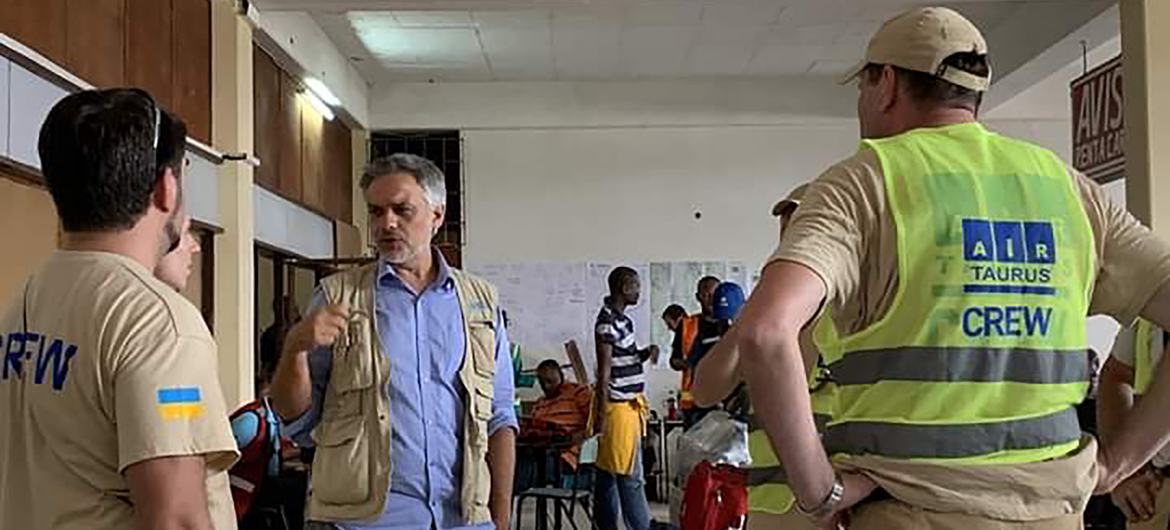
Pedro Matos joined the WFP response team following the deadly Cyclone Idai in Mozambique in 2019. (file)

From hurricanes to war

“At a certain point, it just wasn’t enough,” he recalled about his space engineering job. “I didn’t want to be making maps for other people to go and do humanitarian responses. I want to take those maps and be the one to do the responding.”

That’s exactly what he did. At WFP, he first developed maps on the ground and then went on to coordinate the agency’s emergency operations.

Since then, he has visited dozens of countries often at the epicentre of crises, from Hurricane Idai in Mozambique to the outbreak of war in Ukraine.
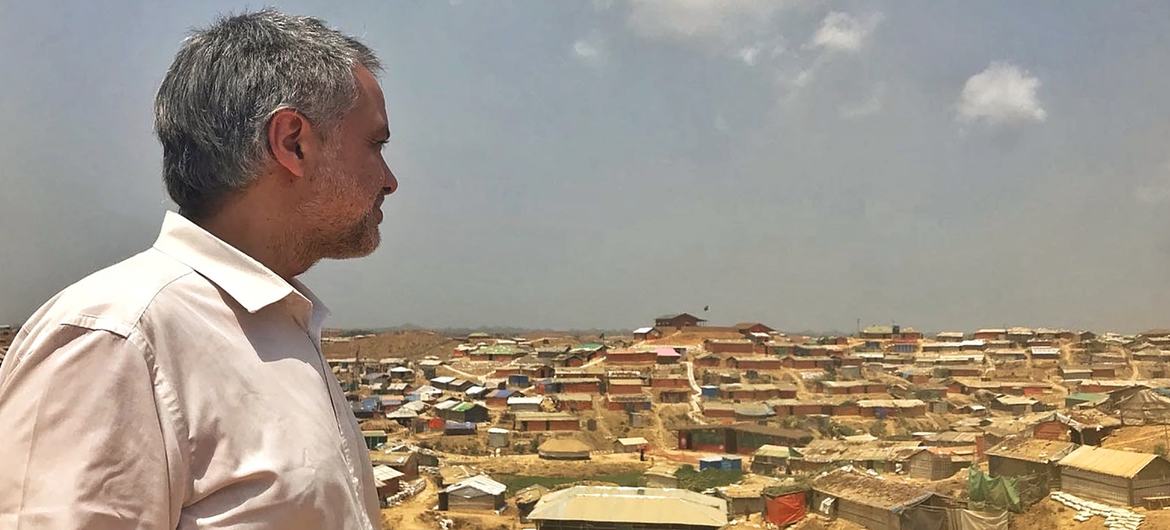
In 2018, Pedro Matos looks at the Kutupalong refugee camp where Rohingya refugees live. (file)

‘Like moving an entire government’

Coordinating in an emergency response is like “moving an entire government”, where each UN agency represents a “ministry” and the response only works when everyone comes together over the four essential areas in a crisis response: food, shelter, water and health.

Having just returned from a mission in Bangladesh, he described efforts to respond at Cox’s Bazar, the world’s largest refugee camp and home to 700,000 people who fled violence in Myanmar.

“We’ve been able to provide better conditions for people to live in this limbo with a little more comfort,” he said, also remembering his visit there in 2018 at the height of the crisis.

At the time, “a million people crossed the border in a month.” Today, although they remain in “limbo”, he pointed to improvements such as more monsoon-resistant homes and roads, gas stoves and reforestation.
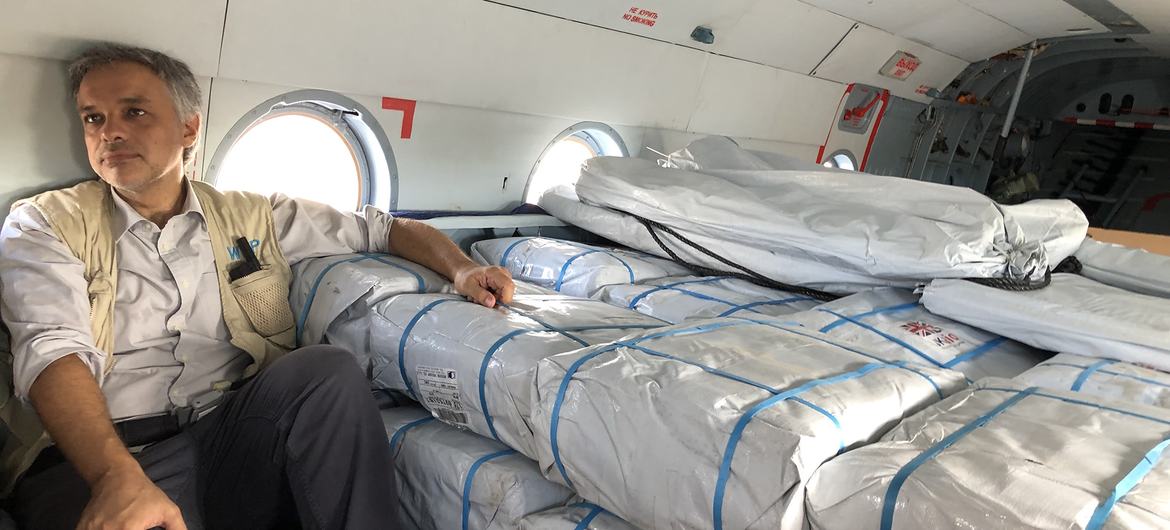
Pedro Matos on board a humanitarian aid flight after Cyclone Idai in Mozambique. (file)

Heart-shredding challenges and profound rewards

The job has meant both challenges and rewards.

“We’ve also had a few instances where we’ve been kidnapped, or come under fire, but it’s not the things that happen to us that impact us the most,” he said. “It’s the things that happen to others that have the most impact.”

Hurricane Idai in Mozambique was a Category 5 hurricane that hit Beira in 2019 was one of the biggest and most intense crisis, but also most rewarding, he said.

“There’s this mix of something that was very intense and hard because we couldn’t reach everyone, but at the same time, the fact was that there were many people – tens or hundreds of thousands of people – who would have died if we hadn’t been there,” he said. “That was the most impactful response in my 17 years at the United Nations.”

When he was in Yemen, “we were bombed 20 times a day” in the capital, Sana’a, he said, adding that “there’s a strange normalcy” that develops.

“We find ourselves saying things like, ‘no, that wasn’t very far; it was only 500 metres from here,’” he said. “It’s something I never thought I’d think or say before doing this work.”

When reaching central Ukraine several weeks after Russia’s full-scale invasion in early 2022, he called the situation “very intense”. Within a week, he and his colleagues began distributing money to people coming from the frontlines.

We couldn’t reach everyone, but there were tens or hundreds of thousands of people who would have died if we hadn’t been there.

“When we interviewed people and asked them what they were doing with the money we gave them, it was very gratifying,” he said. “It was beautiful.”

Those who had been wounded in the war were using the money to buy painkillers. Others used it to pay for gas to escape the frontlines. One mother had been able to buy her daughter a scoop of ice cream for the first time since the war began.

“Her daughter was delighted,” he said. “There are very rewarding moments.”

Feeding millions every day

“We all think we know what the humanitarian or aid sector is,” Mr. Matos explained, adding that the scale during a crisis is much, much larger.

“I thought we’d be rehabilitating schools, feeding 100 people,” he continued. “I never imagined I’d be feeding 13 million people a day in Yemen. The scale is absolutely incredible.”

However, humanitarian work is often seen as a separate job, he said. Almost every profession that exists in private and government sectors also exists in an aid landscape, from lawyers, those who work in procurement, like in supermarkets, and human resources.

“I basically do the same work as social workers or firefighters,” he said. “They do it here every day, and I do it elsewhere. But, our work is in the same field and very similar.”
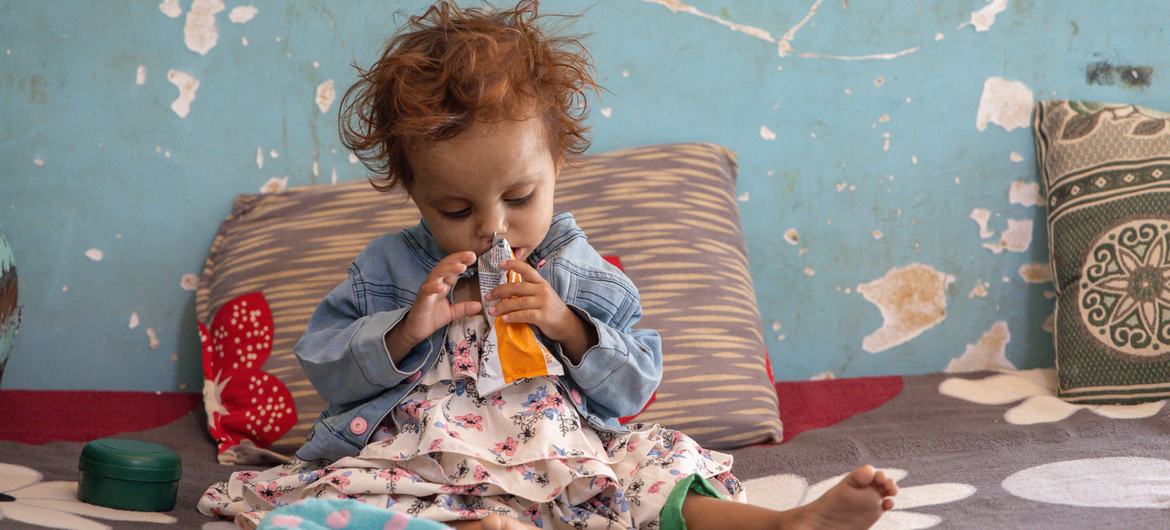
A toddler eats a food supplement, as part of WFP’s nutrition programme, in Mokha, Taiz, in Yemen.

The value of a Nobel Prize

WFP was awarded the Nobel Peace Prize in 2020, a recognition that Mr. Matos received with humility.

“Our work is largely invisible, despite feeding 120 million people every day,” he said. “It gave us a platform to raise awareness about crises like Congo, Myanmar, Sudan and Gaza, which often go unnoticed.”

Our work is largely invisible, despite feeding 120 million people every day.

He said his job is to give voice to the voiceless when crises fade from news headlines. Despite the difficulties and risks across his career, Mr. Matos has no doubt about the most important lesson he learned.

“People are essentially good,” he said. “When faced with the imminence of tragedy, people are fundamentally good and want to help others, even if that other person is very different. It was good to realise this because it’s not always obvious when we’re far from these crises.”
Source link

Syria: Fragile ceasefire in Sweida ‘largely holding’ amid volatility

Declared on July 19, the ceasefire followed a harrowing wave of sectarian clashes, Israeli airstrikes and grave human rights violations.

UN Special Envoy for Syria Geir Pedersen told ambassadors in the Security Council on Monday that the recent escalation had “rocked” the country’s already precarious transition and highlighted the need for “major course corrections” on security and political fronts.

Syrians are reeling after appalling violence in Sweida – violence that should not have happened and which also saw unacceptable foreign intervention,” Mr. Pedersen said.

Escalation and fallout

The unrest began on July 12 when mutual kidnappings escalated into armed conflict between Druze groups and Bedouin tribes, drawing in Syrian security forces.

The violence spiralled, with reports of extrajudicial executions, desecration of corpses and looting. Footage circulated widely on social media fanned sectarian tensions and disinformation.

Though fighting has largely subsided, Mr. Pedersen warned the situation “remains tense and volatile.” Civilians suffered the most, with hundreds killed and widespread accounts of abuses by both state and non-state actors.

“I condemn the appalling violations against civilians and combatants in Sweida. I also condemn Israel’s intervention,” he said, referring to airstrikes around Sweida and Damascus that reportedly caused civilian and security force casualties.

A wide view of the Security Council meeting on the situation in Syria. On screen is Geir Pedersen, Special Envoy of the Secretary-General for Syria.

Humanitarian crisis worsens

Humanitarian needs are escalating sharply. Edem Wosornu, Director of Operations at the UN Office for the Coordination of Humanitarian Affairs (OCHA), described Sweida as “teetering on the edge of collapse.

“The recent violence in Sweida has displaced an estimated 175,000 people…a third of the population in the governorate, where two-thirds of people were already in need of assistance,” she told ambassadors.

Hospitals are overwhelmed and face severe shortages of electricity, supplies and personnel. The World Health Organization (WHO) confirmed five attacks on healthcare in Sweida, including the killing of two doctors, obstruction and targeting of ambulances

Vital infrastructure, including water systems are critically damaged, and food, fuel and medicine remain scarce. Aid access remains limited due to insecurity.

While three UN-supported aid convoys reached Sweida with food, fuel and health supplies, Ms. Wosornu stressed the need for “sustained humanitarian access” and protection for aid workers and infrastructure.

Droughts and wildfires deepen suffering

The violence coincided with devastating wildfires in Lattakia that displaced over 1,100 people and destroyed farmland.

The fires were worsened by “the worst drought-like conditions Syria has seen in 36 years,” Ms. Wosornu said, with water reservoirs falling to historic lows.

UN agencies are responding with clean water, health services and food assistance.

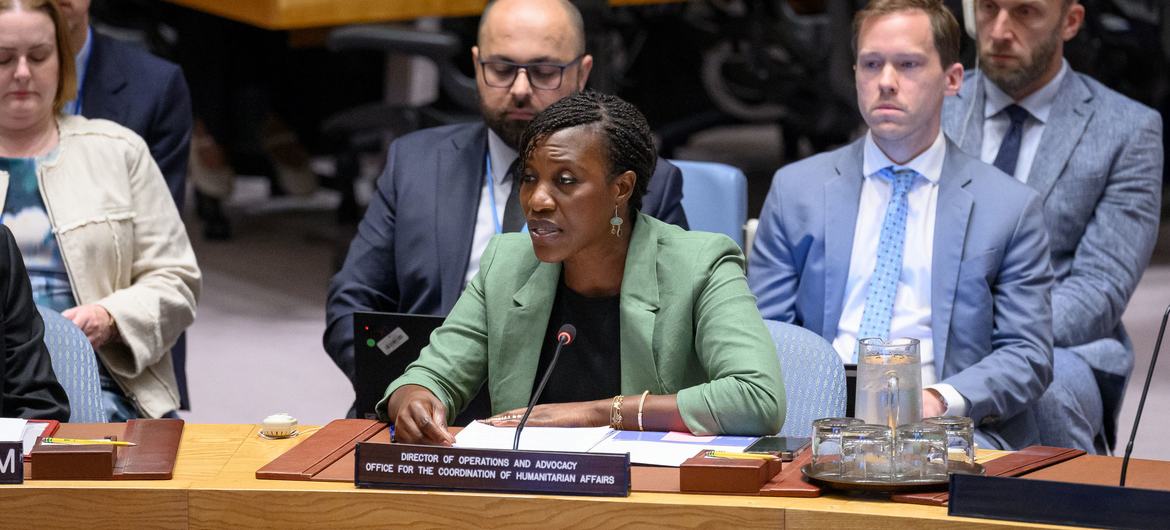
Edem Wosornu, Director of the Operations at OCHA, briefs UN Security Council members on the situation Syria.

Comprehensive political reforms

Special Envoy Pedersen emphasised that sustainable peace in Syria hinges on inclusive political reform, security sector transformation and transitional justice.

“The state has a clear duty to act professionally and with discipline, even when under attack. It must take control of its forces and ensure visible accountability,” he said.

A new People’s Assembly is expected in September, a key step in the transitional framework. Mr. Pedersen warned that unless the process is inclusive, transparent and representative, it risks deepening public mistrust.

Transition simply cannot fail

The Syrian political transition simply cannot fail,” he said.

Ms. Wosornu echoed the call for international solidarity, urgent funding and a halt to hostilities. Only 12 per cent of the revised $3.2 billion humanitarian appeal has been met.

“Our assistance is falling far short of meeting the level of needs,” she said, “If Syria is to recover, such violence must stop.

Broadcast of the Security Council meeting on the situation in Syria.

Largely eradicated diseases at risk of returning due to budget cuts

Cuts to global health funding are leading to a rise in outbreaks of diseases that vaccines had nearly wiped out, the UN health agency, WHO, is warning on Thursday.

In Africa’s “meningitis belt”, which spans parts of sub-Saharan Africa, vaccination campaigns had successfully eliminated meningitis A. Similarly, improved routine immunization and emergency vaccine stockpiles drastically reduced cases of yellow fever and related deaths.

But this progress is now at risk. “Funding cuts to global health have put these hard-won gains in jeopardy,” warned Tedros Adhanom Ghebreyesus, Director-General of the World Health Organization.

Outbreaks on the rise

In 2023, measles cases were estimated at more than 10.3 million – a 20 per cent increase compared to 2022.

WHO, UN Children’s Fund UNICEF and their partners warned in a statement marking the beginning of World Immunization Week that this upward trend is expected to continue into 2025.

Yellow fever is also making a comeback. After years of declining cases in Africa thanks to improved vaccine access, 2025 has already seen a rise in outbreaks across the continent. Cases have also been confirmed in the Americas.

Misinformation threat

Vaccination efforts are increasingly under pressure due to a combination of misinformation, population growth, humanitarian crises, and funding cuts.

Earlier this month, a WHO review across 108 countries found that nearly half are experiencing moderate to severe disruptions to vaccination campaigns, routine immunisations, and supply chains due to falling donor support.

The global funding crisis is severely limiting our ability to vaccinate over 15 million vulnerable children in fragile and conflict-affected countries against measles,” said Catherine Russell, Executive Director of UNICEF.

Vaccines offer high returns

Vaccines save around 4.2 million lives each year, protecting against 14 different diseases. Almost half of those lives are saved in Africa.

Despite this, falling investment now risks the re-emergence of diseases once thought to be under control.

Health experts emphasise that immunization is one of the most cost-effective health interventions. Every $1 invested in vaccines brings an estimated return of $54 through better health and economic productivity.

UNICEF, WHO, and their partners are calling on parents, the public, and political leaders to support immunization programmes and ensure long-term investment in vaccines and public health systems.

Source link