In Bahrain; work, dignity and the quiet rise of home-grown enterprise

Their experiences underline a broader message: inclusive economic growth depends on opening space for those too often excluded, including people with disabilities, youth and home-based innovators.

Entrepreneur by necessity

For Shaymaa Saeed, a young Egyptian crochet designer and handicrafts artist with a disability, entrepreneurship was not a lifestyle choice but a necessity. Health challenges prevented her from securing formal work, pushing her to rethink how she could earn a living.

“I started my project from home in 2018 due to health challenges, after I was unable to secure a job,” she told UN News

Instead of giving up, I turned my hobby into a source of income

What began as a personal coping strategy gradually became a viable business. Ms. Saeed went on to take part in some of Egypt’s largest handicrafts exhibitions, building confidence and visibility along the way. 

Recently, she presented her work outside her home country for the first time, marking a significant milestone in her journey.

Stepping on stage

“My participation marks my first step onto the international stage,” she said, pointing to the role of entrepreneurship training and institutional backing. “The support I received helped me grow personally and professionally, with greater confidence.”

UN News/Abdul Monem Makki

Shaymaa Saeed, a young Egyptian entrepreneur who’s attending WEIF in Bahrain.

All the issues raised by Ms. Saeed’s experiences are up for discussion during this week’s Sixth World Entrepreneurs Investment Forum (WEIF), in the Bahraini capital, Manama, where a parallel exhibition on home-based entrepreneurship is showcasing how targeted support can turn personal challenges into economic opportunity. 

Organised by the UN Industrial Development Organization’s (UNIDO) International Technology and Innovation Promotion Office in Bahrain, the gathering is bringing together entrepreneurs, policymakers and investors from dozens of countries.

Big dreams

Ms. Saeed’s enterprise remains entirely home-based and online, but her ambitions extend well beyond that. “I do not yet have a physical store, but I dream of having my own space to showcase and sell my work, and of reaching markets across the world as a successful small business.”

Ms. Saeed is candid about the realities of building a business from scratch. “Success does not come overnight,” she said. “It is a continuous journey of effort, learning and development.”

I dream of having my own space to showcase and sell my work, and of reaching markets across the world

Similar themes are emerging from other women using art and entrepreneurship as vehicles for agency and expression. 

Bahraini visual artist and art teacher Mariam Sayed Anwar, who also lives with a disability, described creativity as both discipline and emotional release.

“My work moves between still life, portraits, charcoal, pencil and acrylic,” she explained, stressing the importance of experimentation. “I never limit myself to just one medium.”

For her, art communicates what language sometimes cannot. “Through paint and brushes, I can express what is in my heart and soul more than writing ever could. Art is my language; when words fall silent, my work speaks for me.”

UN News/Abdul Monem Makki

A woman speaker takes the stage at the World Entrepreneurs Investment Forum 2026 in Manama, Bahrain.

International exposure

Beyond individual stories, entrepreneurs from Africa gathering in Bahrain are highlighting the structural conditions that shape success or failure. 

Zimbabwean entrepreneur Dr. Roselyn Musaruru-Wacharewa said exposure to international networks had reshaped her understanding of what is possible – not  just for individual women, but for entire regions.

UN News/Abdul Monem Makki

From Zimbabwe, entrepreneur Dr. Roselyn Musaruru-Wacharewa describes how exposure to international platforms in Bahrain has reshaped her outlook.

“In many African countries, governments tax entrepreneurs so heavily that it feels like they want you out of business,” she said, contrasting this with environments where policy actively encourages enterprise. 

Her appeal was blunt: African women entrepreneurs are ready, but governments must “change the narrative and give them real access and recognition”.

Guterres underlines private sector role

The importance of creating such enabling conditions was echoed by UN leaders and national officials, though the emphasis remained on outcomes rather than rhetoric. 

In his message delivered in Bahrain on Tuesday, UN Secretary-General António Guterres underlined the private sector’s role as an engine of jobs, innovation and investment, particularly through micro, small and medium-sized enterprises, which account for roughly two-thirds of global employment. 

He stressed that growth must go hand in hand with respect for human rights and labour standards, and with expanding opportunities for those left behind.

UNIDO officials highlighted youth and women as central drivers of innovation, while Bahraini authorities pointed to national initiatives supporting young and women entrepreneurs, alongside strategies embracing artificial intelligence and new technologies.

Lived experience

Yet the strongest arguments for inclusive growth came not from policy statements, but from lived experience. 

From home-based businesses run entirely online, to art that speaks where words fail, entrepreneurs like Shaymaa Saeed illustrate what becomes possible when talent meets opportunity – and what is lost when barriers remain.

Source link

Thailand grants work rights to long-term refugees from Myanmar, UN welcomes resolution

Some 81,000 forcibly displaced people are hosted in temporary shelters along the Thai-Myanmar border where they have been living in the camps for decades.

Nearly half the refugee population were born under canvas, where displaced families have largely depended on humanitarian assistance.

Over a million Rohingya, a mostly-Muslim minority from Myanmar, have fled conflict and persecution in multiple waves of displacement.

Monday marked eight years since the mass exodus of Rohingya from Myanmar’s Rakhine state in Myanmar and the UN on Monday called for greater international solidarity over their plight.

‘Turning point’

UNHCR’s Representative in Thailand, Tammi Sharpe, described the Government’s decision as a major “turning point.”

She said it would not only help refugees support themselves but also benefit local economies and strengthen Thailand’s long-term growth.

By unlocking the potential of these individuals, Thailand is not only upholding humanitarian principles but also making a strategic investment in its own future,” Ms. Sharpe said.

Although the new resolution covers a limited number, the UN agency said it would continue to advocate for wider refugee inclusion – offering support to the Thai Government in rolling out the new policy.

Aid cuts

The move comes at a time when aid budgets for displaced people worldwide are facing severe cuts.

For the UN agency, Thailand’s move could set a regional precedent for sustainable, rights-based refugee policies – and serve as a model for countries facing similar challenges, UNHCR said.

According to agency, $25.4 million is needed in 2025 to ensure operations covered by the Thailand-based international office is sustained – which also oversees operations in Cambodia, the Lao People’s Democratic Republic and Viet Nam.

Source link

‘Our work is largely invisible’: Journey from outer space to frontline aid worker

Ahead of donning a beige WFP vest and boots to face hurricanes, wars and refugee camps, the Portuguese scientist worked with satellite imagery and cartography, creating maps to support humanitarian missions, until he realised he didn’t want to stay behind a computer screen.

On the occasion of World Humanitarian Day, marked annually on 19 August, Mr. Matos shared his story with UN News.

Pedro Matos joined the WFP response team following the deadly Cyclone Idai in Mozambique in 2019. (file)

From hurricanes to war

“At a certain point, it just wasn’t enough,” he recalled about his space engineering job. “I didn’t want to be making maps for other people to go and do humanitarian responses. I want to take those maps and be the one to do the responding.”

That’s exactly what he did. At WFP, he first developed maps on the ground and then went on to coordinate the agency’s emergency operations.

Since then, he has visited dozens of countries often at the epicentre of crises, from Hurricane Idai in Mozambique to the outbreak of war in Ukraine.

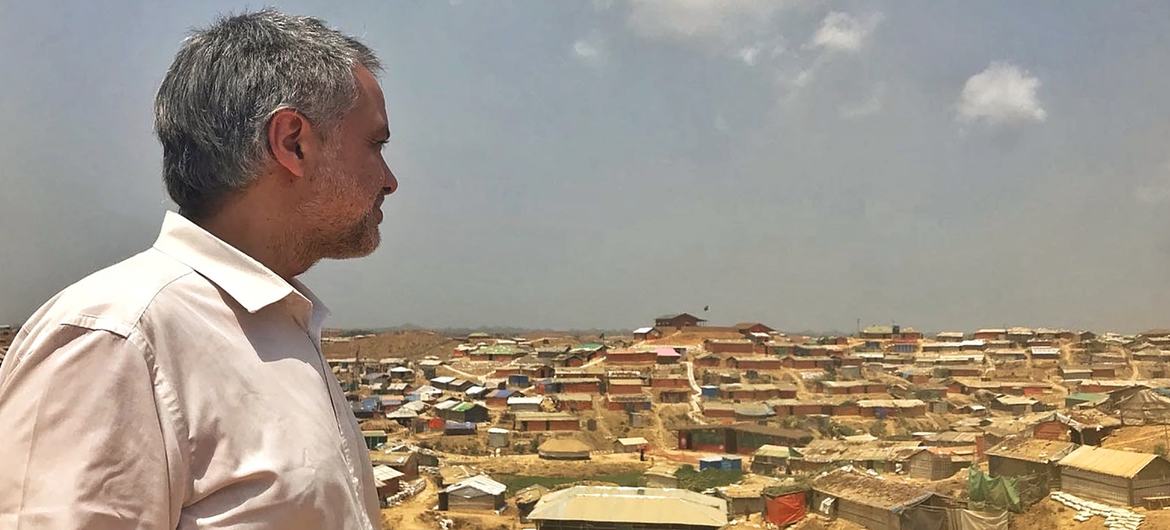
In 2018, Pedro Matos looks at the Kutupalong refugee camp where Rohingya refugees live. (file)

‘Like moving an entire government’

Coordinating in an emergency response is like “moving an entire government”, where each UN agency represents a “ministry” and the response only works when everyone comes together over the four essential areas in a crisis response: food, shelter, water and health.

Having just returned from a mission in Bangladesh, he described efforts to respond at Cox’s Bazar, the world’s largest refugee camp and home to 700,000 people who fled violence in Myanmar.

“We’ve been able to provide better conditions for people to live in this limbo with a little more comfort,” he said, also remembering his visit there in 2018 at the height of the crisis.

At the time, “a million people crossed the border in a month.” Today, although they remain in “limbo”, he pointed to improvements such as more monsoon-resistant homes and roads, gas stoves and reforestation.

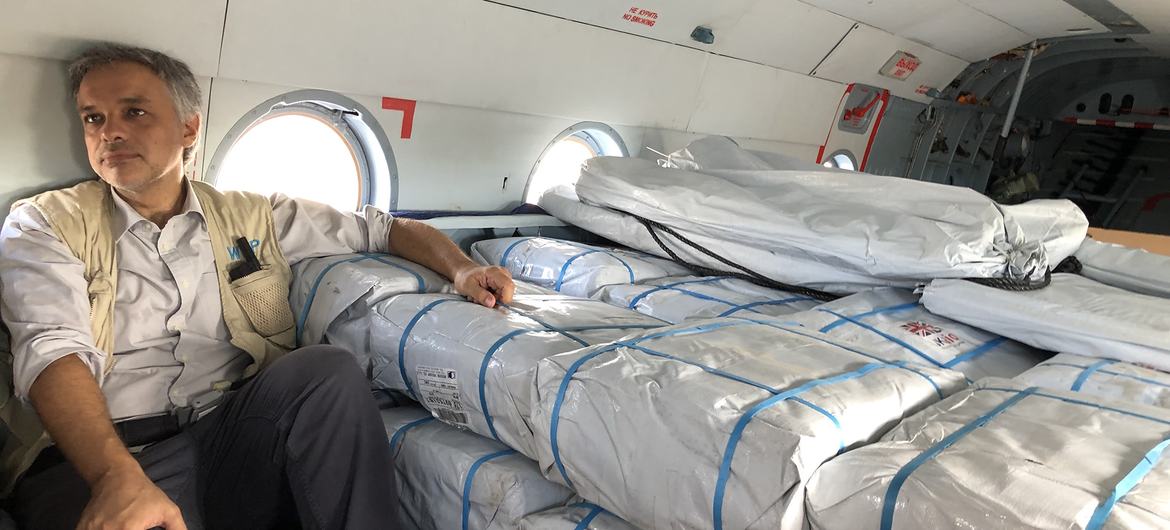
Pedro Matos on board a humanitarian aid flight after Cyclone Idai in Mozambique. (file)

Heart-shredding challenges and profound rewards

The job has meant both challenges and rewards.

“We’ve also had a few instances where we’ve been kidnapped, or come under fire, but it’s not the things that happen to us that impact us the most,” he said. “It’s the things that happen to others that have the most impact.”

Hurricane Idai in Mozambique was a Category 5 hurricane that hit Beira in 2019 was one of the biggest and most intense crisis, but also most rewarding, he said.

“There’s this mix of something that was very intense and hard because we couldn’t reach everyone, but at the same time, the fact was that there were many people – tens or hundreds of thousands of people – who would have died if we hadn’t been there,” he said. “That was the most impactful response in my 17 years at the United Nations.”

When he was in Yemen, “we were bombed 20 times a day” in the capital, Sana’a, he said, adding that “there’s a strange normalcy” that develops.

“We find ourselves saying things like, ‘no, that wasn’t very far; it was only 500 metres from here,’” he said. “It’s something I never thought I’d think or say before doing this work.”

When reaching central Ukraine several weeks after Russia’s full-scale invasion in early 2022, he called the situation “very intense”. Within a week, he and his colleagues began distributing money to people coming from the frontlines.

We couldn’t reach everyone, but there were tens or hundreds of thousands of people who would have died if we hadn’t been there.

“When we interviewed people and asked them what they were doing with the money we gave them, it was very gratifying,” he said. “It was beautiful.”

Those who had been wounded in the war were using the money to buy painkillers. Others used it to pay for gas to escape the frontlines. One mother had been able to buy her daughter a scoop of ice cream for the first time since the war began.

“Her daughter was delighted,” he said. “There are very rewarding moments.”

Feeding millions every day

“We all think we know what the humanitarian or aid sector is,” Mr. Matos explained, adding that the scale during a crisis is much, much larger.

“I thought we’d be rehabilitating schools, feeding 100 people,” he continued. “I never imagined I’d be feeding 13 million people a day in Yemen. The scale is absolutely incredible.”

However, humanitarian work is often seen as a separate job, he said. Almost every profession that exists in private and government sectors also exists in an aid landscape, from lawyers, those who work in procurement, like in supermarkets, and human resources.

“I basically do the same work as social workers or firefighters,” he said. “They do it here every day, and I do it elsewhere. But, our work is in the same field and very similar.”

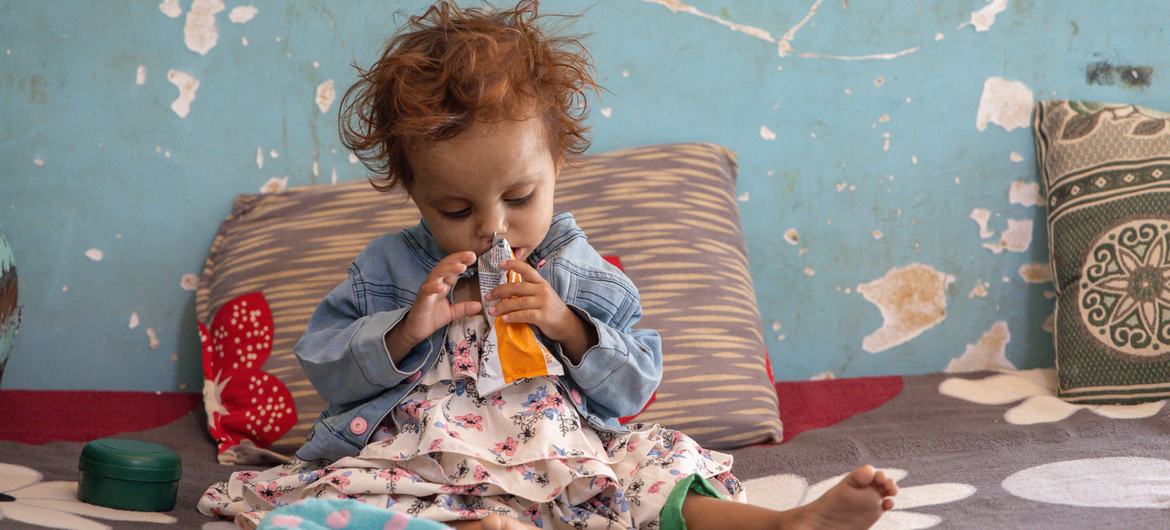
A toddler eats a food supplement, as part of WFP’s nutrition programme, in Mokha, Taiz, in Yemen.

The value of a Nobel Prize

WFP was awarded the Nobel Peace Prize in 2020, a recognition that Mr. Matos received with humility.

“Our work is largely invisible, despite feeding 120 million people every day,” he said. “It gave us a platform to raise awareness about crises like Congo, Myanmar, Sudan and Gaza, which often go unnoticed.”

Our work is largely invisible, despite feeding 120 million people every day.

He said his job is to give voice to the voiceless when crises fade from news headlines. Despite the difficulties and risks across his career, Mr. Matos has no doubt about the most important lesson he learned.

“People are essentially good,” he said. “When faced with the imminence of tragedy, people are fundamentally good and want to help others, even if that other person is very different. It was good to realise this because it’s not always obvious when we’re far from these crises.”


Source link

‘Humanitarian work, a moral obligation’: Retired doctor returns to face the ‘silent threat’ in Gaza

After a successful career that lasted 43 years, during which he worked in Saudi Arabia, for the Palestinian Ministry of Health and then the UN Children’s Fund (UNICEF), Dr. Awadallah decided to retire at the end of 2021.

But, that was short-lived. As the crisis in Gaza escalated and polio reappeared, he decided to return to the field. Doing so was not just a job assignment. As he describes it, it’s a “message of loyalty” to his profession, to the children of Gaza and to the institution that gave him so much.

Dr. Awadallah’s return was driven by a “deep inner sense of responsibility and belonging”.

“I felt that my long experience and field knowledge could make a difference in these critical times,” he told UN News.

‘The Silent Threat to Gaza’

Dr. Awadallah’s story was the focus of the film The Silent Threat to Gaza, produced by UNICEF in conjunction with World Humanitarian Day, observed annually on 19 August. The organization emphasises that the film is a powerful testament to the resilience of humanitarian workers who are facing the dangers of conflict.

Named in May on Time Magazine’s TIME100 Health List for leading “a heroic vaccination campaign” that reached 600,000 children in Gaza, Dr. Awadallah was one of the lead subjects of the 32-minute documentary. The film follows him and his colleague Fairuz Abu Warda, who, during short periods of last year’s ceasefire, delivered lifesaving vaccines to children across the Gaza Strip.

Watch the full document here:

UNICEF said their courage underscores a fundamental fact that when humanitarian principles are adhered to, workers are protected and given safe and timely access, lives can be saved even in the most fragile environments. The UN agency stressed that the courage of humanitarian workers, such as Dr. Awadallah and Ms. Warda, reinforces the urgent need for principled action and international accountability.

Dr. Awadallah told UN News how exhaustion, hunger and fear were part of their daily routine under constant bombardment from the air and sea.

However, their priority was to keep vaccinations effective and reach every child, he said, remembering the moments when he would see his colleagues collapse from exhaustion and then immediately return to work.

A living testimony to willpower

Dr. Awadallah points out that every scene in the vaccination campaign, from the smile of a child to the insistence of the teams to reach the farthest house despite the security difficulties and the danger of moving, reminded him that “humanitarian work cannot be retired.”

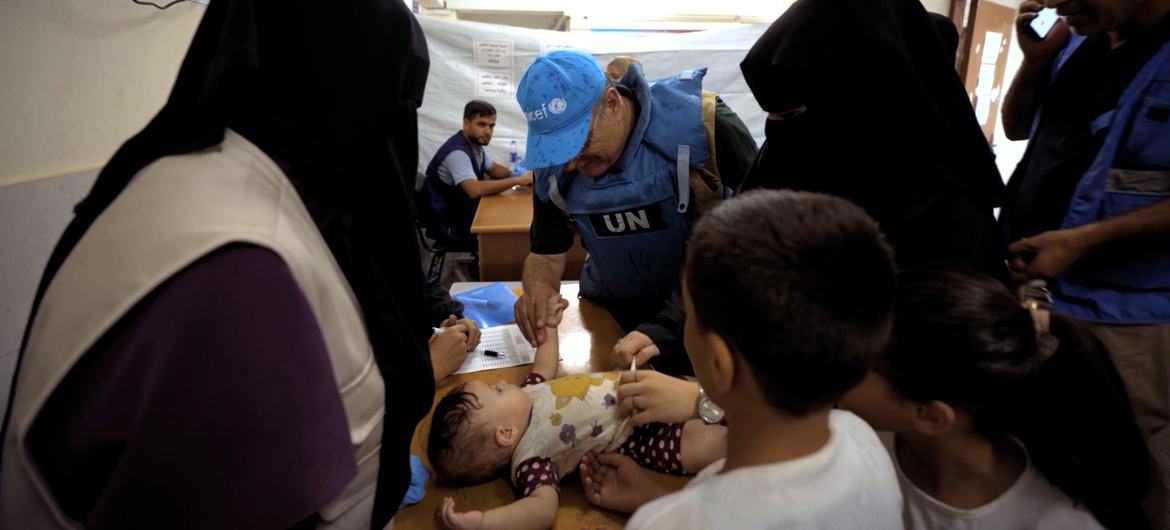
Children received the polio vaccine as part of a Gaza-wide campaign. (file)

“I provide humanitarian work, and even if I retire, it does not apply to humanitarian work,” he said.

“The Silent Threat to Gaza was not just a film or a depiction of events, but a living testimony to the strength of will and the power of hope.”

He believes that every shot in the film was “a message to the world that despite the wounds, despite the death and the difficulty of life, Gaza is able to rise up and protect its children”.

Despite the risks to their lives, Dr. Awadallah and his fellow humanitarian workers in Gaza continue their work under constant bombardment.

Protecting humanitarian workers is ‘not a luxury’

“Fear knows no way to their hearts,” he said. “We hear the explosion and then we go to do our work. We are moving towards our goal and we are used to it.”

He said more than 350 medical personnel have been killed, hundreds injured and more than 1,300 arrested.

He appealed to the world that the protection of those who lend a helping hand “is not a luxury, but a prerequisite for ensuring that life and hope reach those in need”, and that it is a “humanitarian duty” that is as important as the provision of assistance itself.

Dr. Younis Awadallah administers a polio vaccine in Gaza.

Spreading hope

After decades of experience, Dr. Awadallah said he has learned that human beings have an incredible resilience beyond imagination.

“Resilience is not the absence of pain and suffering, but the ability to persevere and rise despite tragedies,” he said. “I saw mothers smiling and laughing at their children despite the bleeding and pain. I saw patients facing the pain with a smile and hope.”

Their role as humanitarian workers goes beyond providing treatment and material assistance to include “promoting and instilling hope in people’s hearts, supporting them psychologically and maintaining their strength in the face of problems”, he said.

Not just a profession

On World Humanitarian Day, Dr. Awadallah pays tribute to all those who choose to walk towards danger rather than away from it.

I believe in this business

“We are throwing ourselves into perdition for the sake of others,” he said.

Humanitarian workers in Gaza and everywhere in the world – regardless of their specialties – “are witnesses that mercy knows no boundaries and that human solidarity can flourish even during wars or amid the rubble”, he added.

He said he hopes he would be able to reunite with his family soon.

“My message today is that humanitarian work is not just a profession, but a moral and humanitarian obligation. I left my family and haven’t seen them for two years because I believe in this business.”

UN peacekeeping can work in a fractured world if there is political will

Under-Secretary-General Jean-Pierre Lacroix and Assistant Secretary-General Marta Pobee briefed the Council on priorities for adapting UN peace operations to foster political solutions.

They emphasised the urgent need for the Council and the broader UN membership to overcome divisions and strengthen support for peace operations as unique platforms for advancing diplomacy in conflict zones.

Peacekeeping missions often operate in highly volatile environments, where political processes are stalled, trust among conflict parties is low and humanitarian conditions dire,” Mr. Lacroix said.

Progress is incremental, fragile and uneven. A breakthrough in one moment may be followed by setbacks the next. Yet, even modest gains can be critical in preventing a relapse into widespread violence and saving lives.

He pointed to missions that have made measurable contributions to peace processes, such as MINUSCA in the Central African Republic (CAR), which helped broker the 2019 Political Agreement and launched disarmament efforts, or MONUSCO in the Democratic Republic of the Congo (DRC), which contributed to reduced violence during the 2023 elections.

Security Council unity crucial

Mr. Lacroix stressed that political coherence and unity among Security Council members are essential for missions to realise their potential.

Without “strong, united political support”, he warned, peace operations are limited to managing conflicts and protecting civilians rather than supporting durable peace agreements.

The Council’s role, he added, must extend beyond mandate authorisation to sustained political engagement. He cited the unanimous adoption of resolution 2773 in February 2025 on the DRC as an example of Council unity reinforcing diplomatic efforts on the ground.

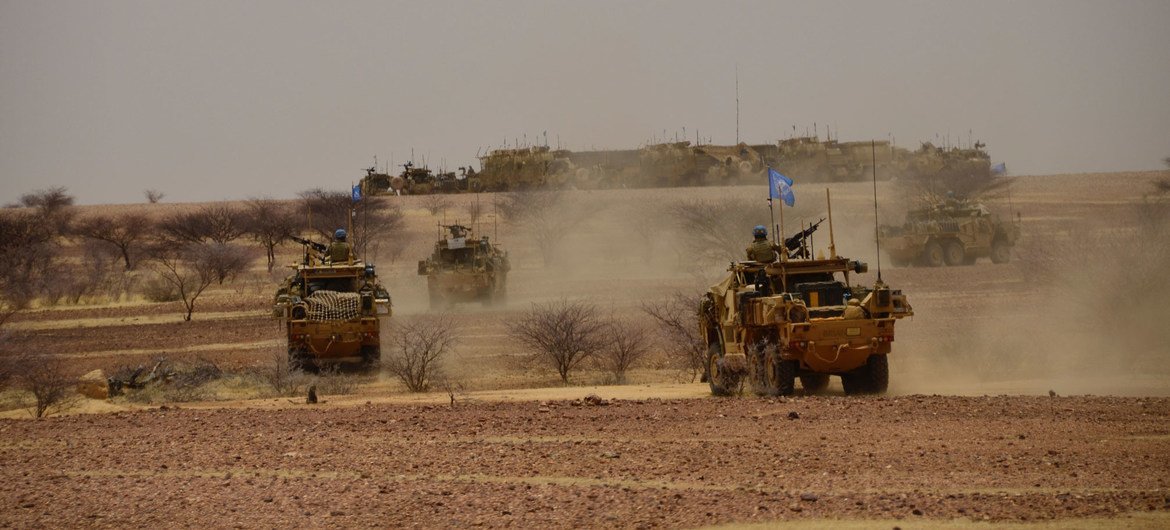
UN peacekeeping missions, such as the one in Mali (MINUSMA, 2013-23), have had to adapt to complex challenges, including harsh environment and myriad armed groups.

Field leadership and flexibility

Mr. Lacroix also highlighted the importance of dynamic mission leadership, calling on senior officials to serve as “steadfast ambassadors for peace” who maintain trust with host governments and conflict actors while adapting to shifting political contexts.

He underscored the importance of regional partnerships, particularly with the African Union (AU). Resolution 2719 (2023), which allows assessed contributions for AU-led operations, was described as a “historic milestone” in UN-AU collaboration.

“Leveraging the investments of troop- and police-contributing countries more purposefully is critical,” he added, noting the example of Pakistan’s dual role as a major troop contributor and elected Security Council member.

Lessons from the cold war

Ms. Pobee’s briefing reinforced these themes while offering historical perspective.

She recalled how during the cold war, despite global tensions, UN special political missions facilitated peaceful dispute resolution, such as diplomatic efforts in Equatorial Guinea in 1969, Bahrain in 1970 and the border dispute between Iraq and Iran in 1974.

She identified several key elements behind those successes: clearly focused, timebound mandates; the pro-active use of the Secretary-General’s good offices; discreet diplomacy and crucially, consent from host governments and conflict parties.

This foundation of trust, she noted, is increasingly absent today, representing a “trust deficit” that complicates peace efforts.

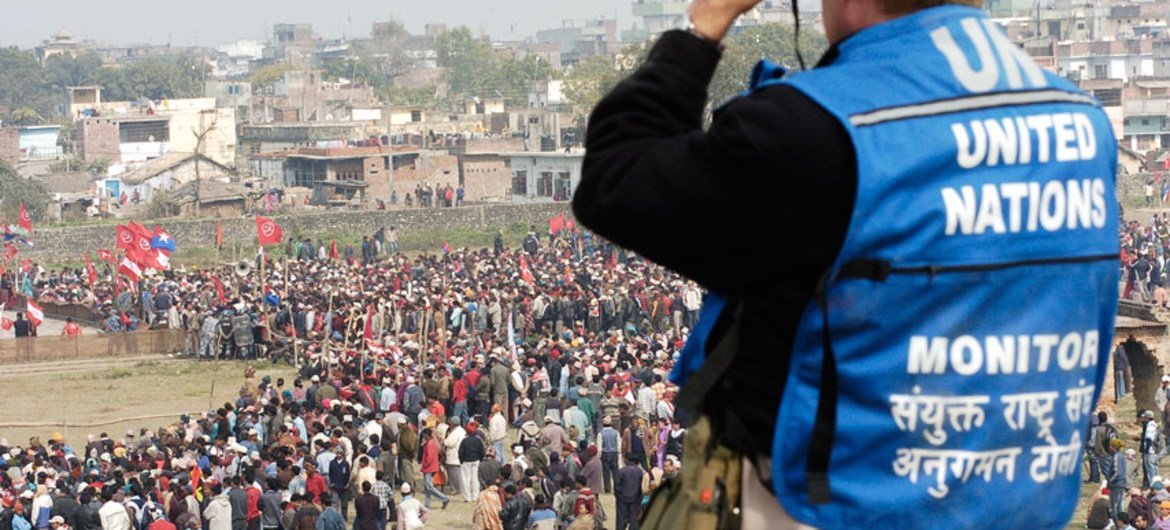
UN special political missions in post‑conflict settings, such as the mission in Nepal (UNMIN, 2007-11) help maintain stability, dialogue and support democratic processes.

A unique tool

Both briefers acknowledged the difficult global context, with deepening Security Council divisions, eroding norms and increasingly complex conflicts involving non-State actors, organized crime and climate-driven risks.

Nonetheless, peace operations, with their combination of civilian and uniformed capabilities, remain indispensable for stabilising fragile settings and enabling political dialogue, they maintained. The longstanding mission in Cyprus was cited as an example of how sustained UN presence can prevent escalation, even amid persistent deadlock.

Mr. Lacroix also urged Member States to pay assessed contributions on time, warning that insufficient resources undermine missions’ ability to fulfil their mandates.

Ms. Pobee added that the UN has repeatedly navigated polarised eras before.

We have been there…but, one clear lesson is that amid acute geopolitical tensions, peace operations have helped Member States mount tailored responses to challenges to international peace and security,” she said.

Source link

Adhering to bans on mines only in peace time will not work: UN rights chief

Estonia, Finland, Latvia, Lithuania, Poland and Ukraine have taken or are considering steps to withdraw from the Convention on the Prohibition of the Use, Stockpiling, Production and Transfer of Anti-Personnel Mines and on their Destruction – known also as the Ottawa Convention, after the Canadian city where the process was launched.

“These weapons risk causing persistent and long-term, serious harm to civilians, including children,” Volker Türk, UN High Commissioner for Human Rights, said in a statement. “Like other international humanitarian law treaties, the Ottawa Convention was principally designed to govern the conduct of parties to armed conflicts.”

“Adhering to them in times of peace only to withdraw from them in times of war or for newly invoked national security considerations seriously undermines the framework of international humanitarian law.”

A threat to civilians

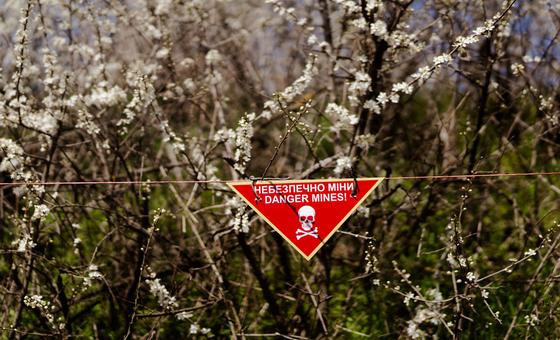
Anti-personnel mines are one of the two main types of mines and target people – as opposed to anti-vehicle mines. However, because both of these mines are triggered automatically, they result in huge numbers of civilian deaths, especially children.

Their deadly risks linger long after hostilities end, contaminating farmland, playgrounds, and homes, and posing a constant threat to unsuspecting civilians.

Agreed in 1997, the Ottawa Convention prohibits signatories from using, stockpiling, producing or transferring anti-personnel mines due to the threat that these weapons pose to civilians, especially children.  

In the two-and-a-half decades since it was passed, the Ottawa Convention has 166 States parties, has led to the a marked reduction in the use of anti-personnel mines.  

Trends reversing

However, in recent years, these positive trends have begun to reverse with the number of civilians killed and injured by mines increasing by 22 per cent in 2024 – 85 per cent of the casualties were civilians and half of them were children.  

Despite progress, some 100 million people across 60 countries still live under the threat of landmines.

In Ukraine, for instance, the UN Mine Action Service (UNMAS) estimates that more than 20 per cent of the country’s land is contaminated – amounting to 139,000 square kilometres.

Similarly, landmines remain still a significant threat in Cambodia, decades after the end of the conflict and years of de-mining efforts.

Uphold international law

Mr. Türk urged all parties to the Ottawa Convention to uphold their international legal obligations regarding anti-personnel mines and on non-signatories to join the Convention.  

“With so many civilians suffering from the use of anti-personnel mines, I call on all States to refrain from leaving any international humanitarian law treaty, and to immediately suspend any withdrawal process that may be underway.”  

Source link

Gaza: UN relief chief welcomes growing support for aid teams to resume vital work

We value the support of more and more Member States who are joining our call: Let us work,” Mr. Fletcher said, his comments coinciding with the announcement that the US and Israeli-backed aid hub in southern Gaza operating independently of the UN had been suspended on Wednesday.

“The world is watching, day after day, horrifying scenes of Palestinians being shot, wounded or killed in Gaza while simply trying to eat,” Mr. Fletcher said.

New Security Council resolution

The development comes ahead of a Security Council meeting on Gaza on Wednesday seeking agreement on a draft resolution calling for an immediate ceasefire and the release of all remaining hostages taken during Hamas-led terror attacks in Israel on 7 October 2023.

The resolution push is the result of lobbying by the body’s 10 non-permanent Members. It remains to be seen if it will garner the support of the US and the four other countries that hold just five permanent seats on the 15-Member body: China, France, the UK and Russia. Any one of them could veto it.

Meanwhile in Gaza, local authorities on Wednesday claimed that at least 12 people including children had been killed in an Israeli strike on a school-turned-shelter in the southern city of Khan Younis.

In his appeal, Mr. Fletcher noted that medical teams had confirmed treating “hundreds of trauma cases” in recent days after footage showed chaotic scenes of Palestinians rushing to take food from the US and Israeli-run aid hubs in southern Gaza.

Yesterday alone, dozens were declared dead at hospitals after Israeli forces said they had opened fire,” Mr. Fletcher continued.

He insisted: “Open the crossings – all of them. Let in lifesaving aid at scale, from all directions. Lift the restrictions on what and how much aid we can bring in. Ensure our convoys aren’t held up by delays and denials.”

‘We are women like you’: UN honours peacekeepers for work in gender empowerment

There, alongside civilian gender units, Ms. Syme met a group of local community members – both men and women. Partway through, she realised something was different.

“The women were not talking,” she told UN News. “They were very quiet.”

Then she remembered that local cultural norms dictated women do not speak in public.

“We are women like you. We want to be able to help, but we don’t know how we can help you,” she told them in a separate meeting. “Can you please tell us what your problem is so we can see how we can help?”

It is for this sort of work founded in community trust building and a relentless belief in the importance of gender perspectives and empowerment in peacekeeping, that the UN will honour two exceptional women peacekeepers on Thursday as part of International Peacekeepers’ Day.

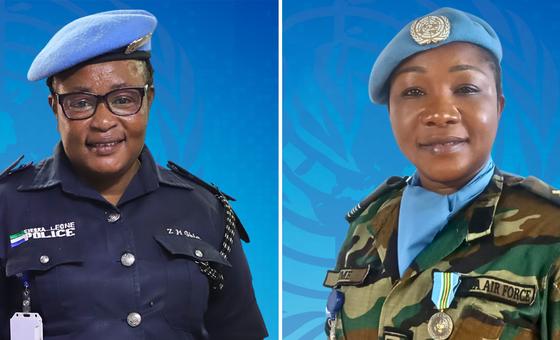
Ms. Syme is this year’s winner of the UN Military Gender Advocate of 2024 Award.

“[Ms. Syme’s] dedication has not only improved the effectiveness of UNISFA’s operations but also ensured that the mission is more reflective of and responsive to the communities it serves,” said Under-Secretary-General for Peace Operations Jean-Pierre Lacroix.

The other honouree is Chief Superintendent Zainab Mbalu Gbla of Sierra Leone who has been named Woman Police Officer of the year for her work with UNISFA.

“Chief Superintendent Gbla embodies the work of the United Nations to improve lives and shape futures,” said Mr. Lacroix.

Gender and peacekeeping

The UN Woman Police Officer of the Year Award was established in 2011 and the UN Military Gender Advocate of the Year Award was first presented five years later.

Both awards recognize peacekeepers whose work has substantially advanced the integration of gender perspectives and empowerment into peacekeeping.

In 2000, the Security Council passed a resolution which affirmed the essential role women play in peacebuilding, peacekeeping and humanitarian responses. Since then, the United Nations has worked to fully integrate gender perspectives into peacekeeping.

According to Ms. Syme, applying gender perspectives should be a “daily task” for all peacekeepers.

“We need to understand the gender dynamics within our area of operation, otherwise, we might not be able to have the right intervention, we might not be able to carry out the right activities,” she said.

Intergenerational legacy

Ms. Gbla experienced the impact of peacekeeping herself as a civilian in Sierra Leone in the wake of a war that ravaged her country.

“I saw people coming from different parts of the world just to bring peace to my country… That’s why I told myself that one day I’d love to be a peacekeeper – to help other people, to return the favour,” Ms. Gbla told UN News.

As a UNISFA gender officer, not only did she create a school programme and female mentorship network where none had existed before, she also worked diligently to ensure that learning was fun, incorporating performing arts and visual aids.

“[The women of Abyei] are ready to work, they are ready to do things for themselves if peace allows them. The children are ready to go to school, if peace allows them,” she said.

A health campaign in Abyei

Ms. Syme’s meeting with the women of Sector North was the beginning of an enormously successful health campaign in the region which discussed harmful practices such as child marriage and female genital mutilation, the two issues which the community women had identified.

The campaign engaged both men and women, and Ms. Syme said that she was deeply impressed and moved by the response of the male leaders who, through the campaign, realized the harm that practices of child marriage and female genital mutilation had caused.

“[The leaders] promised that they are going to revise these cultural practices so that going forward, they will not do it again,” Ms. Syme said.

This campaign happened in June 2024 and has driven Ms. Syme’s work since then, work which includes training over 1,500 UNISFA officials in gender-responsive peacekeeping.

“It has motivated me,” Ms. Syme said. “It has motivated me a lot.”

The future of peacekeeping through gender

Both Ms. Syme and Ms. Gbla will receive their awards on International Peacekeeping Day. This year, Member States and UN officials will be asked to consider the future of peacekeeping.

For both Ms. Syme and Ms. Gbla, the future of peacekeeping and security cannot be disentangled from gender perspectives and empowerment.

“If you don’t know the gender dynamics of the area, if you don’t know who is in charge, if you don’t know what will benefit who…you may think you are providing security, but you are not really providing security,” Ms. Syme said.

Ms. Gbla, in discussing her award, paid homage to all the women who wear a UN uniform, underlining their tireless work in the pursuit of peace.

“Each of us [women] faces unique challenges in our respective missions, yet our collective goal remains the same – to foster peace and protect the vulnerable.”

Source link

Public health champions honoured for work ‘beyond the call of normal duty’

But this is not universal. Many people worldwide struggle – unable to walk into clinics or explain their symptoms: “[These patients] do not line up on waiting lists. They wait, unknowingly, for inside understanding and the courage to seek care,” said Dr. Merete Nordentoft of Denmark, describing the patients with whom she has worked most closely.

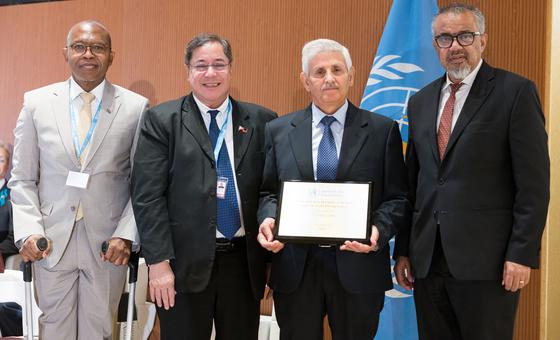
Dr. Nordentoft was one of six public health champions to receive an award on Friday for “outstanding, innovative work in health development”, at the 78th World Health Assembly.

Each was honoured for their contributions to treating underserved communities and advancing the goal of healthcare for all.

“We celebrate the lifelong commitment and the relentless work accomplished by our very own health professionals across member states from every region of the world with one common goal – health for all,” President Teodoro Herbosa who presided over the awards ceremony.

Reaching vulnerable communities

Dr. Nordentoft received the Sasakawa Health Prize for her work on suicide prevention and with young patients undergoing their first psychotic episode. She was the first to receive this prize for mental health work, and emphasized the importance of early interventions which prioritize community-based care.

“With the right support, early enough, recovery is not only possible – it is likely,” Dr. Nordentoft said of her patients.

Many of the other award recipients have also spent their careers focused on healthcare policies and treatments which foreground integrated, community-based care. 

The principles for which Nelson Mandela fought urge us to pursue a policy of cooperation and partnership in sharing knowledge, science and resources – Dr. Majed Zemni

Professor Huali Wang of China and the Geriatric Healthcare Directorate of Kuwait were both awarded the Sheikh Al-Sabah Prize which honours research and policy done to support and advance healthy ageing.

Professor Wang was recognised in part for her work to integrate professional and family support networks for older adults with dementia. She dedicated her award to these families and everyone living with the complex illness.

The Kuwaiti Directorate was also honoured for the way in which they promoted high-quality, integrated care for older adults which “[preserves] the dignity, the rights and [recognises] the invaluable experiences of older persons.”

Dr. Jožica Maučec Zakotnik from Slovenia, who received the United Arab Emirates Foundation Prize, has also worked tirelessly to increase healthcare access and co-developed a new type of free-of-charge health care promotion centre scheme.

“Growing up in a less developed region in Slovenia, I set myself a task that the most disadvantaged communities would be given greater attention,” she said.

‘Force quit button’

Some of the awardees acknowledged that they were receiving these highly coveted awards during a time when global health is facing unprecedented challenges, specifically financial.

The proposed budget before the 78th World Health Assembly has been reduced by over $1.1 billion due to currently projected funding cuts.

“The global health world has just been hit with a ‘force quit’ button and we have been pushed to stop some of the things we really want to do,” said Dr. Helen Rees of South Africa, recipient of the Dr. LEE Jong-wook Memorial Prize for her work in HIV prevention and community-based health services. 

Dr. Majed Zemni of Tunisia received the Nelson Mandela Award for his patient-centred work in forensic medicine and in promoting the integration of medical ethics into policy. In his remarks, he noted the global civil rights icon’s legacy in also fighting for health policies.

“The principles for which Nelson Mandela fought urge us to pursue a policy of cooperation and partnership in sharing knowledge, science and resources,” Dr. Zemni said. 

Continuing the work 

Dr. Rees also emphasized the importance of seizing this moment to reimage global public health and uphold its sustainability.

“What we need now is action. We need good science and evidence-based policies so we can address the needs of all people, including the most vulnerable,” she said.

Dr. Tedros Adhanom Ghebreyesus, World Health Organization (WHO) Director General, also urged all of the recipients to continue their work towards a healthier and fairer world.

“At a time when the world faces many challenges, each of you is an inspiration and a reminder of the progress that can be made to improve health and well-being for all.”

Source link

Trends, benefits, and costs of working remotely

A new assessment indicates that working remotely is a growing trend, and while it is associated with higher organisational commitment, job satisfaction, and job-related well-being, these benefits come at the cost of work intensification and a greater inability to switch off. The findings are published in New Technology, Work and Employment.

“Work is gradually being detached from traditional places such as the office, factory, or shop. Our study also shows that employers benefit from increased effort as workers strive to show that working remotely is not a slacker’s charter,” said Prof. Alan Felstead, co-author of the analysis. “However, remote workers find greater difficulty in redrawing the boundaries between work and non-work life.