Centre to Launch 7th Tranche of Critical Mineral Auctions on March 23

Union Minister of Coal & Mines, G. Kishan Reddy, alongside Minister of State for Coal & Mines, Satish Chandra Dubey, will launch the 7th Tranche of Auction of Critical and Strategic Mineral Blocks on March 23, 2026.

The initiative underscores the growing strategic importance of critical minerals, which are vital to the country’s economic development and mineral security. With the global shift toward clean energy and advanced technologies, demand for minerals such as lithium, graphite, rare earth elements (REE), tungsten, vanadium, and titanium has surged. Given their limited availability and concentrated geographical distribution, securing a resilient supply chain has become a national priority.

In a landmark move to address these challenges, the Government of India amended the Mines and Minerals (Development and Regulation) Act, 1957 (MMDR Act) on August 17, 2023, notifying 24 minerals as critical and strategic. The amendment empowers the Central Government to conduct auctions for Mining Leases and Composite Licences for these resources, with all revenue generated accruing to the respective State Governments.

To date, the Ministry of Mines has successfully concluded six tranches of auctions, resulting in 46 critical and strategic mineral blocks being auctioned—a testament to robust industry participation and growing investor confidence in India’s mineral sector.

The upcoming seventh tranche will offer 19 blocks across multiple states under both Mining Lease and Composite Licence categories. The blocks feature a diverse range of minerals essential for clean energy, advanced technologies, fertilizers, and strategic industries.

The auction framework has been progressively strengthened to enhance transparency, efficiency, and speedy operationalisation of mineral blocks. Recent regulatory reforms, including the Mineral (Auction) Second Amendment Rules, 2025, have streamlined post-auction processes such as the submission of performance security, upfront payments, and issuance of Letters of Intent. Further, the Mineral (Auction) Amendment Rules, 2026 have introduced the provision of Insurance Surety Bonds as an alternative to bank guarantees, offering greater flexibility to bidders.

The auction will be conducted online through a transparent two-stage ascending forward auction process, with the successful bidder selected on the basis of the highest percentage of the value of mineral dispatched quoted.

Also Read:

Japan Launches High-Seas Gamble to Break China’s Grip on Critical Minerals

India’s Wholesale Price Inflation Rises to 1.84% in September

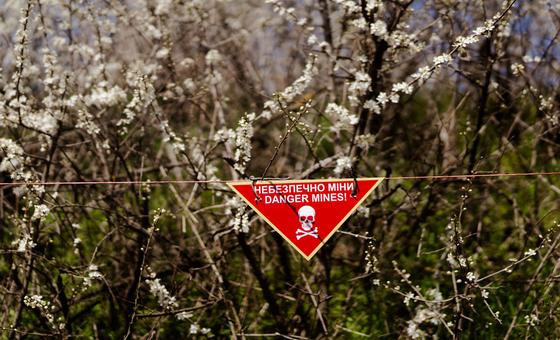
Adhering to bans on mines only in peace time will not work: UN rights chief

Estonia, Finland, Latvia, Lithuania, Poland and Ukraine have taken or are considering steps to withdraw from the Convention on the Prohibition of the Use, Stockpiling, Production and Transfer of Anti-Personnel Mines and on their Destruction – known also as the Ottawa Convention, after the Canadian city where the process was launched.

“These weapons risk causing persistent and long-term, serious harm to civilians, including children,” Volker Türk, UN High Commissioner for Human Rights, said in a statement. “Like other international humanitarian law treaties, the Ottawa Convention was principally designed to govern the conduct of parties to armed conflicts.”

“Adhering to them in times of peace only to withdraw from them in times of war or for newly invoked national security considerations seriously undermines the framework of international humanitarian law.”

A threat to civilians

Anti-personnel mines are one of the two main types of mines and target people – as opposed to anti-vehicle mines. However, because both of these mines are triggered automatically, they result in huge numbers of civilian deaths, especially children.

Their deadly risks linger long after hostilities end, contaminating farmland, playgrounds, and homes, and posing a constant threat to unsuspecting civilians.

Agreed in 1997, the Ottawa Convention prohibits signatories from using, stockpiling, producing or transferring anti-personnel mines due to the threat that these weapons pose to civilians, especially children.  

In the two-and-a-half decades since it was passed, the Ottawa Convention has 166 States parties, has led to the a marked reduction in the use of anti-personnel mines.  

Trends reversing

However, in recent years, these positive trends have begun to reverse with the number of civilians killed and injured by mines increasing by 22 per cent in 2024 – 85 per cent of the casualties were civilians and half of them were children.  

Despite progress, some 100 million people across 60 countries still live under the threat of landmines.

In Ukraine, for instance, the UN Mine Action Service (UNMAS) estimates that more than 20 per cent of the country’s land is contaminated – amounting to 139,000 square kilometres.

Similarly, landmines remain still a significant threat in Cambodia, decades after the end of the conflict and years of de-mining efforts.

Uphold international law

Mr. Türk urged all parties to the Ottawa Convention to uphold their international legal obligations regarding anti-personnel mines and on non-signatories to join the Convention.  

“With so many civilians suffering from the use of anti-personnel mines, I call on all States to refrain from leaving any international humanitarian law treaty, and to immediately suspend any withdrawal process that may be underway.”  

Source link