In a significant move to bolster supply security and accelerate a circular economy, the Ministry of Mines has completed eligibility screening for its incentive programme on critical mineral recycling, clearing 58 companies to participate.
The scheme—backed by a ₹1,500 crore outlay under the National Critical Mineral Mission—was notified on October 2, 2025, alongside detailed operational guidelines. It is designed to build domestic recycling capacity for key materials recovered from lithium-ion batteries, electronic waste and industrial scrap, helping curb import dependence while supporting clean energy and advanced manufacturing.
Applications were invited between October 2, 2025 and April 1, 2026, drawing strong industry interest. Submissions were evaluated by the Project Management Agency at the Jawaharlal Nehru Aluminium Research Development and Design Centre, in line with prescribed criteria.
Following the review, the Executive Committee approved 58 entities in two tranches—20 on March 30, 2026, and 38 on April 29, 2026. Together, these firms have committed an estimated 850 KTPA of recycling capacity and investments of around ₹5,000 crore. The selected participants span battery recycling, e-waste processing and recovery from other waste streams, indicating growing momentum in India’s critical minerals ecosystem.
The programme now moves into the implementation phase, where approved projects will be assessed for financial support based on capacity creation and the start of operations.
Union Minister of Coal & Mines, G. Kishan Reddy, alongside Minister of State for Coal & Mines, Satish Chandra Dubey, will launch the 7th Tranche of Auction of Critical and Strategic Mineral Blocks on March 23, 2026.
The initiative underscores the growing strategic importance of critical minerals, which are vital to the country’s economic development and mineral security. With the global shift toward clean energy and advanced technologies, demand for minerals such as lithium, graphite, rare earth elements (REE), tungsten, vanadium, and titanium has surged. Given their limited availability and concentrated geographical distribution, securing a resilient supply chain has become a national priority.
In a landmark move to address these challenges, the Government of India amended the Mines and Minerals (Development and Regulation) Act, 1957 (MMDR Act) on August 17, 2023, notifying 24 minerals as critical and strategic. The amendment empowers the Central Government to conduct auctions for Mining Leases and Composite Licences for these resources, with all revenue generated accruing to the respective State Governments.
To date, the Ministry of Mines has successfully concluded six tranches of auctions, resulting in 46 critical and strategic mineral blocks being auctioned—a testament to robust industry participation and growing investor confidence in India’s mineral sector.
The upcoming seventh tranche will offer 19 blocks across multiple states under both Mining Lease and Composite Licence categories. The blocks feature a diverse range of minerals essential for clean energy, advanced technologies, fertilizers, and strategic industries.
The auction framework has been progressively strengthened to enhance transparency, efficiency, and speedy operationalisation of mineral blocks. Recent regulatory reforms, including the Mineral (Auction) Second Amendment Rules, 2025, have streamlined post-auction processes such as the submission of performance security, upfront payments, and issuance of Letters of Intent. Further, the Mineral (Auction) Amendment Rules, 2026 have introduced the provision of Insurance Surety Bonds as an alternative to bank guarantees, offering greater flexibility to bidders.
The auction will be conducted online through a transparent two-stage ascending forward auction process, with the successful bidder selected on the basis of the highest percentage of the value of mineral dispatched quoted.
Marking its 30th anniversary, ISA is the world’s authority on the deep-sea beyond national jurisdiction. Washington may have passed an order on deep-sea licensing in international waters earlier this year, but the authority’s chief Leticia Carvalho said the United States, which is not an ISA member, “is going at it alone”.
“The rest of the world is united and cohesive and all behind of the rule of the law and the International Seabed Authority,” Ms. Carvalho told UN News. “ISA is a super power. We have all the knowledge, we have the ability given by the law, we have the mandate.”
Indeed, under international law, the deep seabed beyond national jurisdiction belongs to no single nation, Ms. Carvalho said, inviting the United States to join ISA.
To address these concerns, ISA has been drafting a mining code as a way to ensure that the deep-sea remains protected and does not turn into the “Wild West” of exploitation, she said.
Read our explainer on ISA and why it matters now here.
Costly search for rare minerals
Rare minerals needed to satiate demands for producing tech items from batteries to solar panels have driven interest in the deep-sea and what it offers. From cobalt to zinc, a plethora of rare earth minerals have been observed by explorations of the ocean floor.
ISA has issued 31 contracts for mineral exploration to 21 firms from 20 countries as of 2024, according to the UN’s World Economic Situation and Report 2025. While commercial mining in international waters has not yet commenced, pending the finalisation of an international code for deep-sea mining by the ISA, right now, countries can pursue deep-sea mining within their own territorial waters or “exclusive economic zones”.
Even after the international code is in place, those engaged in deep-sea mining will continue to face major challenges due to high capital requirements and operational costs relative to conventional mining and the enormous technical uncertainties associated with the unique problems surrounding mining on the ocean floor, according to the UN report.
“We must bring together our global efforts in climate action, biodiversity preservation and marine protection,” he said in a message marking ISA’s anniversary, commending its commitment to finding balanced and effective solutions. “The deep ocean remains one of our last frontiers. It holds great promise, but also requires great caution.”
For 30 years, the authority has helped protect this shared realm through peaceful, sustainable and inclusive governance, and today, it is navigating complex challenges with care and clarity, he said, emphasising that “as we mark this milestone, let us advance cooperation grounded in science, and keep working together to safeguard the ocean for the benefit of all people, everywhere.”
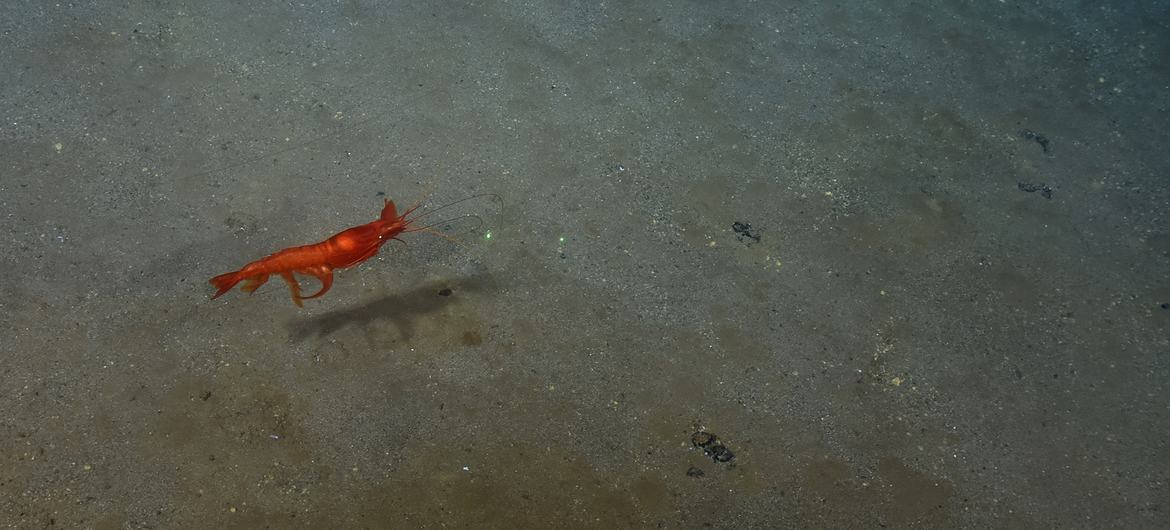
The deep-sea contains a plethora of life and rare earth minerals.
Mining code and more
In addition to achieving progress on a draft mining code at its ongoing annual session at headquarters in Kingston, Jamaica, ISA launched its Deep-Sea Biobank last month in a bid to preserve and share knowledge.
The initiative aims to collect and preserve samples from the ocean floor that will benefit all nations, especially developing countries, Ms. Carvalho said, adding that the goal is to study the minerals, exploration and exploitation potential, but also to preserve and to study biodiversity and genetics.
“The future that I see is we need to really take care, cherish [and] nurture the deep-sea,” Ms. Carvalho said. “The future of ISA is stronger, enhanced, wider and wiser. We will know much more than we know now.”
New Delhi, Sep 12 (IANS) The Union Food Ministry has directed its official canteens and meetings to serve millets in order to promote their consumption, in view of their health benefits.
Millets may be included as one of the snacks/biscuits made of millets, such as ragi biscuits/cookies/ladoos and baked millet chips etc. as snacks to be served in the meetings, it said.
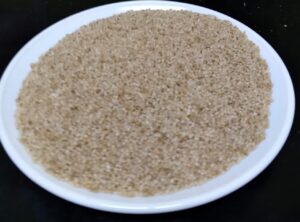
Millet/ragi dosa, millet mix vada, millet mix puri and idli/ragi ladoo etc to be used in the canteens and as far as possible, locally available millet-based products should be used, it said.
The year 2023 will be celebrated as the International Year of Millets (IYoM). The Department of Food and Public Distribution has been actively promoting procurement/ consumption of millets in the country and utilisation of procured millets for distribution in the TPDS/ICDS/MDM Schemes.
The Ministry said that millets’ consumption confers several benefits and helps in managing life style diseases. Due to their high density of nutrients including vitamins, minerals, phyto chemicals and dietary fiber, millets are also excellent grains to alleviate malnutrition and micronutrient deficiency.
Babies and children under three years old are less likely to develop croup if their mothers took fish oil and vitamin D supplements during pregnancy, according to new results from a clinical trial.
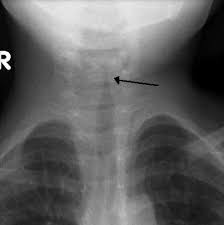
Croup is a viral chest infection that affects young children. It causes a characteristic ‘barking’ cough, a hoarse voice and difficulty breathing. Croup is common and usually mild, but some children will need hospital treatment and breathing support.
The study was presented by Dr Nicklas Brustad, a clinician and postdoctoral researcher working on the Copenhagen Prospective Studies on Asthma in Childhood (COPSAC) at Copenhagen University Hospital, Denmark.
He told the Congress: “There is currently no vaccine against the pathogen that causes this disease. Therefore, other preventive strategies are needed, and measures initiated during pregnancy might be important since croup occurs in babies and young children. For such purpose, there is evidence that both vitamin D and fish oil could have an influence on the immune system.”
croup-chest infection/photo:en.wikipedia.org
The study included 736 pregnant women being cared for by COPSAC from 2010. The women were divided up into four groups. One group were given a high-dose vitamin D supplement (2800 international units per day) and fish oil containing long-chain n-3-polyunsaturated fatty acids (2.4 grams), the second group were given high-dose vitamin D and olive oil, the third group were given standard-dose vitamin D (400 international units per day) and fish oil, and the final group were given standard-dose vitamin D and olive oil. All the women took the supplements daily from their 24th week of pregnancy until one week after their babies were born. Neither the women nor the researchers knew which supplements they were taking until the end of the study.
Researchers monitored the children until they were three years old and any who were suspected of suffering from croup were diagnosed by a doctor or via their medical records. There was a total of 97 cases of croup amongst the children.
Overall, children whose mothers took the fish oil had an 11% risk of croup, compared to 17% in the children whose mothers took olive oil (a 38% decrease). Children whose mothers took high-dose vitamin D had an 11% risk of croup, compared to an 18% risk in those whose mothers took the standard-dose vitamin D (a 40% decrease).
Dr Brustad said: “Our findings suggest that vitamin D and fish oil could be beneficial against childhood croup in sufficiently high doses. These are relatively cheap supplements meaning that this could be a very cost-effective approach to improving young children’s health.
Vitamin D and fish oil can stimulate the immune system to help babies and young children clear infections more effectively.”
The research team working at COPSAC have already investigated other potential benefits of vitamin D and fish oil during pregnancy, including its effects on bone development, the central nervous system, body composition and asthma. They will continue to follow the children in the study and plan to investigate why some children are more prone to infections in childhood than others.
Professor Rory Morty from the University of Heidelberg is chair of European Respiratory Society’s lung and airway developmental biology group and was not involved in the research. He said: “We know that lung health in babies and young children can be influenced during pregnancy. For example, babies whose mothers smoke tend to have worse lung health. We are increasingly seeing that elements of a mother’s diet can also help or hinder a baby’s lung development.
“This research suggests that taking vitamin D and fish oil supplements during pregnancy could have benefits for babies and young children. We would like to see further research in this area to support these findings as this could lead to new recommendations for supplementation during pregnancy. Pregnant women should always speak to their doctor before taking supplements.”