

Babies and children under three years old are less likely to develop croup if their mothers took fish oil and vitamin D supplements during pregnancy, according to new results from a clinical trial.
Croup is a viral chest infection that affects young children. It causes a characteristic ‘barking’ cough, a hoarse voice and difficulty breathing. Croup is common and usually mild, but some children will need hospital treatment and breathing support.
The study was presented by Dr Nicklas Brustad, a clinician and postdoctoral researcher working on the Copenhagen Prospective Studies on Asthma in Childhood (COPSAC) at Copenhagen University Hospital, Denmark.
He told the Congress: “There is currently no vaccine against the pathogen that causes this disease. Therefore, other preventive strategies are needed, and measures initiated during pregnancy might be important since croup occurs in babies and young children. For such purpose, there is evidence that both vitamin D and fish oil could have an influence on the immune system.”

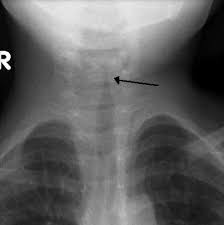
croup-chest infection/photo:en.wikipedia.org
The study included 736 pregnant women being cared for by COPSAC from 2010. The women were divided up into four groups. One group were given a high-dose vitamin D supplement (2800 international units per day) and fish oil containing long-chain n-3-polyunsaturated fatty acids (2.4 grams), the second group were given high-dose vitamin D and olive oil, the third group were given standard-dose vitamin D (400 international units per day) and fish oil, and the final group were given standard-dose vitamin D and olive oil. All the women took the supplements daily from their 24th week of pregnancy until one week after their babies were born. Neither the women nor the researchers knew which supplements they were taking until the end of the study.
Researchers monitored the children until they were three years old and any who were suspected of suffering from croup were diagnosed by a doctor or via their medical records. There was a total of 97 cases of croup amongst the children.

Vitamins-Fish oil supplements/photo:en.wikipedia.org
Overall, children whose mothers took the fish oil had an 11% risk of croup, compared to 17% in the children whose mothers took olive oil (a 38% decrease). Children whose mothers took high-dose vitamin D had an 11% risk of croup, compared to an 18% risk in those whose mothers took the standard-dose vitamin D (a 40% decrease).
Dr Brustad said: “Our findings suggest that vitamin D and fish oil could be beneficial against childhood croup in sufficiently high doses. These are relatively cheap supplements meaning that this could be a very cost-effective approach to improving young children’s health.
Vitamin D and fish oil can stimulate the immune system to help babies and young children clear infections more effectively.”
The research team working at COPSAC have already investigated other potential benefits of vitamin D and fish oil during pregnancy, including its effects on bone development, the central nervous system, body composition and asthma. They will continue to follow the children in the study and plan to investigate why some children are more prone to infections in childhood than others.
Professor Rory Morty from the University of Heidelberg is chair of European Respiratory Society’s lung and airway developmental biology group and was not involved in the research. He said: “We know that lung health in babies and young children can be influenced during pregnancy. For example, babies whose mothers smoke tend to have worse lung health. We are increasingly seeing that elements of a mother’s diet can also help or hinder a baby’s lung development.
“This research suggests that taking vitamin D and fish oil supplements during pregnancy could have benefits for babies and young children. We would like to see further research in this area to support these findings as this could lead to new recommendations for supplementation during pregnancy. Pregnant women should always speak to their doctor before taking supplements.”