UN social policy commission closes with calls to turn pledges into action

Meeting at UN Headquarters, in New York, from 2 to 10 February, the Commission for Social Development marked its first session since the Second World Summit for Social Development, held in Doha last year.

The gathering brought together ministers, senior UN officials, civil society groups and youth representatives to examine how global pledges can be translated into coordinated, inclusive and equitable policies at the national level.

Opening the session, Economic and Social Council (ECOSOC) President Lok Bahadur Thapa stressed that social development policies are where “resilience, social cohesion, and trust are ultimately tested.”

He warned that widening inequalities, demographic change, and rapid digital and green transitions are placing growing strain on societies worldwide. Responding in an integrated, people-centred way, he said, is “not merely a policy choice; it is a moral imperative.”

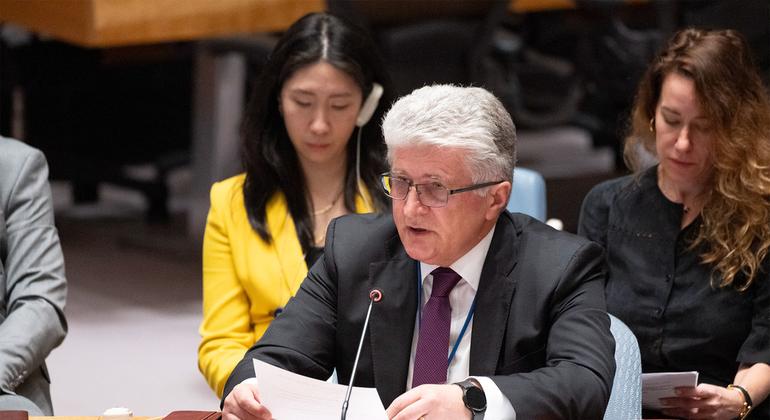
Delegates at the 64th session of the Commission for Social Development.

What is the Commission for Social Development?

The Commission for Social Development is an ECOSOC functional commission and the United Nations’ primary intergovernmental body for social development.

Established in 1946, it has helped shape global policy frameworks on poverty eradication, employment, social protection and inclusion, including by steering follow-up to landmark agreements such as the 1995 Copenhagen Declaration and, more recently, the 2025 Doha Political Declaration.

Click here for UN News special coverage of the Doha Summit

Over the years, the Commission has driven progress on universal social protection, decent work for all, and international focus on groups at risk of exclusion, including persons with disabilities, older persons, youth and families.  

Its conclusions have informed national policies, helped develop social protection floors, and reinforced links between social development and the Sustainable Development Goals.

The Commission meets annually at UN Headquarters, in New York, generally in February.

Click here for more information on the Commission

A post-Doha moment for social policy

This year’s priority themeadvancing social development and social justice through coordinated, equitable and inclusive policies – framed discussions throughout the session, reflecting concerns that fragmented policymaking is slowing progress on poverty eradication, decent work and social inclusion.

Addressing delegates, General Assembly President Annalena Baerbock underscored that social development is not a secondary concern reserved for calmer times, but “the foundation that peace is built upon” and a critical investment in stability.

Ending hunger and poverty, she said, is both a moral obligation and a matter of security, noting how deprivation fuels conflict, migration and instability.

From commitments to delivery

In a message to the Commission, Deputy Secretary-General Amina Mohammed highlighted the shift signalled by the Doha Political Declaration away from incremental progress towards more ambitious, coordinated action.

She pointed to strong civil society engagement – with more than 700 non-governmental organizations (NGOs) registered for the session – and urged governments to match that readiness with concrete delivery.

“If Copenhagen, Doha and the 2030 Agenda are where we drew the map, then the Commission for Social Development sets us on the road,” she said.

Click here to watch the Deputy Secretary-General’s message

Coordinating policies in a changing world

Throughout the session, speakers repeatedly stressed the need for greater policy coherence – aligning employment strategies with universal social protection floors, inclusive education and health systems, and just-transition measures.

The Commission also examined emerging social challenges, including demographic change, labour-market disruption, and the social impacts of digital transformation and artificial intelligence.

Delegates heard that while new technologies carry risks, they can also accelerate progress towards the Sustainable Development Goals (SDGs) if governed inclusively and equitably.

A young boy relaxes in a wicker basket as his family threshes harvested wheat.

Youth mental health in focus

Youth voices featured prominently, reflecting the Commission’s emphasis on inclusion. The launch of the World Youth Report on Youth Mental Health and Well-being highlighted the growing pressures facing young people – from poverty and inequality to climate stress, conflict and digital harms.

Youth delegates and advocates shared lived experiences, describing how uncertainty about the future is eroding trust and well-being among younger generations, while calling for preventive, community-based and youth-responsive approaches.

Resolutions endorsed

At the close of the session, Member States endorsed two draft resolutions – one on advancing social development and social justice through coordinated, equitable and inclusive social policies, and another on the social dimensions of the New Partnership for Africa’s Development.

The resolutions reaffirm commitments made at the 1995 Copenhagen Summit and the 2025 Doha Summit, while emphasizing the need to translate global pledges into concrete national action.

Outcomes from the session will feed into upcoming UN processes, including the High-Level Political Forum on Sustainable Development in July, ECOSOC’s broader work, and the General Assembly’s five-year follow-up towards a high-level review of social development commitments in 2031.

Source link

‘Landlocked to landlinked’: UN summit seeks to turn geography into opportunity

And increasingly, climate change is compounding the problem – damaging roads, disrupting supply chains, and threatening already fragile infrastructure with floods, droughts, and extreme weather.

But as global discussions intensify, a UN conference underway in Turkmenistan is aiming to flip the script – to help transform LLDCs from landlocked to landlinked through smarter more climate resilient infrastructure, streamlined logistics, and stronger regional ties.

As day two of the Third UN Conference on the Landlocked Developing Countries (LLDC3) got underway on Wednesday, the atmosphere at the Awaza Congress Center shifted.

With presidents and heads of government having departed after Tuesday’s opening ceremony, security measures relaxed, making it easier for delegates to move around the venue.

But the pace of the conference didn’t slow. Meeting rooms stayed packed, exhibition stands buzzed with activity, and participants navigated long white-carpeted corridors to attend back-to-back events. A large team of multilingual youth volunteers helped guide attendees through the sprawling complex, keeping the energy high and logistics smooth.

Trade troubles and the ‘geography gap’

The day’s discussions focused on overcoming the disadvantages of geography. The main thematic roundtable was devoted to trade, which is a pressing issue for the world’s 32 LLDCs, which lack direct access to seaports. As a result, they must rely on longer, more complex routes to reach international markets, driving up costs and reducing competitiveness.

And geography isn’t the only hurdle. Many LLDCs struggle with outdated infrastructure and limited use of digital tools that could speed up sluggish transport times. 

These roadblocks don’t just delay trade – they hold back economic growth and widen the gap between LLDCs and other developing nations.

On Tuesday, UN Secretary-General António Guterres told reporters in Awaza that “landlocked developing countries need smart logistics, streamlined systems, and stronger partnerships with transit countries,” adding: “We must cut red tape, digitize border operations, and modernize transport networks to reduce delays and costs.”

The numbers tell the story

The impact of geography shows clearly in the numbers.

Landlocked developing countries make up more than seven per cent of the world’s population, yet in 2024 they accounted for just 1.2 per cent of global merchandise trade. It’s a stark reminder of how physical barriers can translate into economic ones.

The Awaza Programme of Action for 2024–2034, adopted by the UN General Assembly last year, aims to change that reality. But turning ambition into results will take bold, coordinated efforts across borders and sectors.

One phrase echoing through the corridors of the Awaza Congress Center is “from landlocked to landlinked” – a rallying call for transforming geographic disadvantage into opportunity.

Mindset matters

Umberto de Pretto, Secretary General of the International Road Transport Union (IRU), told UN News: “There is proof that if you put the right policies in place … you can be landlinked … I think the biggest impediment for landlocked countries is mindset.”

The IRU, founded in 1947, supports sustainable mobility and logistics worldwide and represents over 3.5 million transport operators in more than 100 countries.

As Mr. de Pretto points out, only 11 of the world’s 32 landlocked developing countries have joined the UN-backed TIR system, which allows goods to move from origin to destination in sealed compartments under a mutually recognized customs procedure.

“The biggest user of the system that we run, the UN Convention called TIR, is Uzbekistan, one of the only two double landlocked countries. So, there is evidence that if you put in place the right policies, your country will be landlinked, not landlocked,” he explained.

Digital tools for smoother transit

New technologies offer additional ways to simplify cargo movement.

“How do you go from paper to moving information digitally across to government authorities? We need things like ‘single window’, where you have a single intake point for electronic information so the government can analyze that information and make decisions earlier,” Ian Saunders, Secretary General of the World Customs Organization, explained.

He shared examples of successful initiatives, such as cargo tracking in East and West Africa and the use of electronic TIR carnets – sometimes called a ‘merchandise passport’ – by private companies in Central Asia. These unique documents guarantee the payment of duties and taxes suspended while goods are in transit.

Climate risks and smarter infrastructure

Another example came from Dmitry Maryasin, Deputy Executive Secretary of the UN Economic Commission for Europe (UNECE).

Speaking with UN News, he noted the 2023 adoption of a roadmap for the digitalization of the Trans-Caspian Corridor. Using UN tools and harmonized regulations, the corridor leverages both land and sea transport – including rail and shipping across the Caspian Sea – to move goods between Asia and Europe.

Climate change is also making cargo transport more difficult. “We’re seeing recurrent road flooding, vulnerability to landslides, mudflows, avalanches, and droughts – all of this is now a reality in Central Asia,” Mr. Maryasin said.

In response, UNECE has developed a transport infrastructure stress-testing tool that factors in climate risks. An online platform based on satellite data has also been launched, allowing users to overlay trade routes and climate hazards on a map to support smarter investment decisions.

“Countries are already using it,” Mr. Maryasin said. Efforts are under way to integrate this platform with a similar one developed by the UN’s ESCAP office, covering South and Southeast Asia.

A Day for LLDCs

Wednesday also marked the first observance of the International Day for the Dissemination of Information on the Special Needs of Landlocked Developing Countries. While each LLDC faces unique development challenges, they also share common priorities. And with nearly 600 million people living in these countries, finding shared solutions is essential.

The message from Awaza is clear: isolation is not destiny. With the right mindset, effective policies, and meaningful partnerships, landlocked countries can become landlinked – and thrive.

LLDC3 continues tomorrow, Thursday 7 August, with roundtables and events on a range of topics, as well as a Women’s Forum. Find all our coverage here.

Source link

Deep-sea must not turn into ‘Wild West’ of rare minerals exploitation, agency head says

Marking its 30th anniversary, ISA is the world’s authority on the deep-sea beyond national jurisdiction. Washington may have passed an order on deep-sea licensing in international waters earlier this year, but the authority’s chief Leticia Carvalho said the United States, which is not an ISA member, “is going at it alone”.

“The rest of the world is united and cohesive and all behind of the rule of the law and the International Seabed Authority,” Ms. Carvalho told UN News. “ISA is a super power. We have all the knowledge, we have the ability given by the law, we have the mandate.”

Indeed, under international law, the deep seabed beyond national jurisdiction belongs to no single nation, Ms. Carvalho said, inviting the United States to join ISA.

To address these concerns, ISA has been drafting a mining code as a way to ensure that the deep-sea remains protected and does not turn into the “Wild West” of exploitation, she said.

Read our explainer on ISA and why it matters now here.

Costly search for rare minerals

Rare minerals needed to satiate demands for producing tech items from batteries to solar panels have driven interest in the deep-sea and what it offers. From cobalt to zinc, a plethora of rare earth minerals have been observed by explorations of the ocean floor.

ISA has issued 31 contracts for mineral exploration to 21 firms from 20 countries as of 2024, according to the UN’s World Economic Situation and Report 2025. While commercial mining in international waters has not yet commenced, pending the finalisation of an international code for deep-sea mining by the ISA, right now, countries can pursue deep-sea mining within their own territorial waters or “exclusive economic zones”.

Even after the international code is in place, those engaged in deep-sea mining will continue to face major challenges due to high capital requirements and operational costs relative to conventional mining and the enormous technical uncertainties associated with the unique problems surrounding mining on the ocean floor, according to the UN report.


‘One of our last frontiers’

UN Secretary-General António Guterres said the international seabed is “the common heritage of humankind, a principle enshrined in the UN Convention on the Law of the Sea, which must continue to guide us”.

“We must bring together our global efforts in climate action, biodiversity preservation and marine protection,” he said in a message marking ISA’s anniversary, commending its commitment to finding balanced and effective solutions. “The deep ocean remains one of our last frontiers. It holds great promise, but also requires great caution.”

For 30 years, the authority has helped protect this shared realm through peaceful, sustainable and inclusive governance, and today, it is navigating complex challenges with care and clarity, he said, emphasising that “as we mark this milestone, let us advance cooperation grounded in science, and keep working together to safeguard the ocean for the benefit of all people, everywhere.”

The deep-sea contains a plethora of life and rare earth minerals.

Mining code and more

In addition to achieving progress on a draft mining code at its ongoing annual session at headquarters in Kingston, Jamaica, ISA launched its Deep-Sea Biobank last month in a bid to preserve and share knowledge.

The initiative aims to collect and preserve samples from the ocean floor that will benefit all nations, especially developing countries, Ms. Carvalho said, adding that the goal is to study the minerals, exploration and exploitation potential, but also to preserve and to study biodiversity and genetics.

“The future that I see is we need to really take care, cherish [and] nurture the deep-sea,” Ms. Carvalho said. “The future of ISA is stronger, enhanced, wider and wiser. We will know much more than we know now.”

Learn more about ISA here.

Source link

UN rights office urges restraint in Kenya as fresh protests turn deadly

Office spokesperson Ravina Shamdasani cited Kenyan police reports of at least 11 deaths, 52 injured police officers, and 567 arrests. The Kenya National Commission on Human Rights reported slightly different figures: at least 10 fatalities, 29 injuries, 37 arrests, and two abductions.

Protests erupted in 16 counties, with police reportedly using live ammunition, rubber bullets, tear gas and water cannons.

Ms. Shamdasani also noted reports of looting and destruction of public and private property in several locations.

Crisis escalation

This week’s violence follows the deaths of 15 protesters and hundreds of injuries during demonstrations on 25 June in Nairobi and elsewhere.

Those protests were initially triggered by the anniversary of last year’s anti-tax demonstrations, which left at least 60 deaths and dozens allegedly abducted by the police.

The protests on Monday marked the 35th anniversary of the 1990 Saba Saba protests, which paved the way to multi-party democracy in Kenya.

Call for accountability

Ms. Shamdasani said that UN High Commissioner for Human Rights Volker Türk, “repeats his call for all reported killings and other alleged violations and abuses of international human rights law, including with respect to use of force, to be promptly, thoroughly, independently and transparently investigated.

She noted that Kenyan police announcement of an investigation into the 25 June incidents and added that the UN human rights office stands ready to support national authorities in their efforts, including on the investigations.

She stressed that under international law, law enforcement may only use lethal force when strictly necessary to protect life from an imminent threat.

High Commissioner Türk also renewed his call for calm, restraint, and full respect for the rights to freedom of expression, association, and peaceful assembly.

It is essential that legitimate grievances at the root of these protests are addressed,” Ms. Shamdasani said.

Source link

US strikes on Iran’s nuclear sites ‘marks perilous turn’: Diplomacy must prevail, says Guterres

After ten days of airstrikes initiated by Israel aimed at crippling Iran’s nuclear programme which have led to deadly daily exchanges of missile fire between Tehran and Tel Aviv, the UN chief said that diplomacy must now prevail.

We now risk descending into a rathole of retaliation after retaliation,” he said, responding to the US intervention overnight in support of Israel’s military campaign, which targeted three facilities involved in uranium enrichment.

Return to serious negotiations essential

We must act – immediately and decisively – to halt the fighting and return to serious, sustained negotiations on the Iran nuclear programme,” Mr. Guterres added.

He told ambassadors the citizens of the wider Middle East region could not endure yet another cycle of destruction. Demanding a ceasefire, he also put Iran on notice that it must “fully respect” the Non-Proliferation Treaty on the development of nuclear weapons as a cornerstone of peace and security worldwide.

Iran has consistently denied the allegation from Israel and others that its ambitions are to become a nuclear armed State, versus developing atomic energy for purely peaceful purposes.

Israel, the US and Iran face a stark choice. “One path leads to a wider war,” the UN chief continued, “deeper human suffering and serious damage to the international order. The other leads to de-escalation, diplomacy and dialogue.”

Grossi warns of major risks following strikes

The head of the UN’s atomic energy watchdog, the IAEA, warned ambassadors the recent military strikes by Israel and now the US on nuclear sites in Iran have badly compromised safety and could pose serious risks if the situation worsens.

International Atomic Energy Agency Director General Rafael Grossi said the attacks had caused “a sharp degradation in nuclear safety and security”, even though there had been no radiation leaks which could potentially impact the public so far.

The IAEA chief warned ambassadors that if the short window of opportunity to return to dialogue closes then the destruction could be “unthinkable” while the global nuclear non-proliferation regime “as we know it could crumble and fall.”

Mr. Grossi confirmed that Iran’s main enrichment facility at Natanz had suffered major damage, including to key power infrastructure and underground halls containing uranium materials.

He said the main concern inside the site was now chemical contamination, which can be dangerous if inhaled or ingested.

Massive radiation leak still possible

He also listed damage at other nuclear-related sites across the country, including Esfahan, Arak and Tehran, adding that while radiation levels outside remained normal, the attacks had raised alarm over Iran’s operational nuclear plant at Bushehr.

Mr. Grossi warned that any strike on Bushehr could trigger a massive radiation release across the region. “The risk is real,” he said. “Military escalation threatens lives and delays the diplomacy that’s needed to resolve this crisis.”

He urged all sides to show restraint and said the IAEA stood ready to send experts back in to help monitor and protect damaged nuclear sites.

Senior political affairs official: ‘No military solution’

Assistant Secretary-General for Political Affairs Miroslav Jenča told ambassadors that the world is facing “a dangerous moment” following the US bombing mission, as Iran considers potential retaliation.

He warned the council that the region risks being “engulfed in further instability and volatility”, with “no military solution to this conflict”.

Mr. Jenča confirmed extensive damage at Iranian sites, citing open-source satellite imagery and Iranian reports that tunnels and buildings at the Fordow nuclear facility had been hit. He urged Tehran to grant IAEA inspectors access “as soon as safety conditions allow”.

Death toll mounting

Hostilities between Iran and Israel are now into their tenth day, and Mr. Jenča said the humanitarian toll is mounting. “Most [of the 430 killed in Iran] have been civilians,” he noted, while also citing Israeli reports of 25 dead and over 1,300 injured.

He also flagged growing threats from non-State armed groups, including the Houthis in Yemen, warning that their retaliation could widen the conflict. Iran’s parliament, meanwhile, has voiced support for closing the crucial trading route through the narrow Strait of Hormuz.

The world will not be spared from the ramifications of this dangerous conflict,” Mr. Jenča said, urging countries to act in line with international law and the UN Charter.

Source link

The battle to quiet the sea: Can the shipping industry turn down the volume?

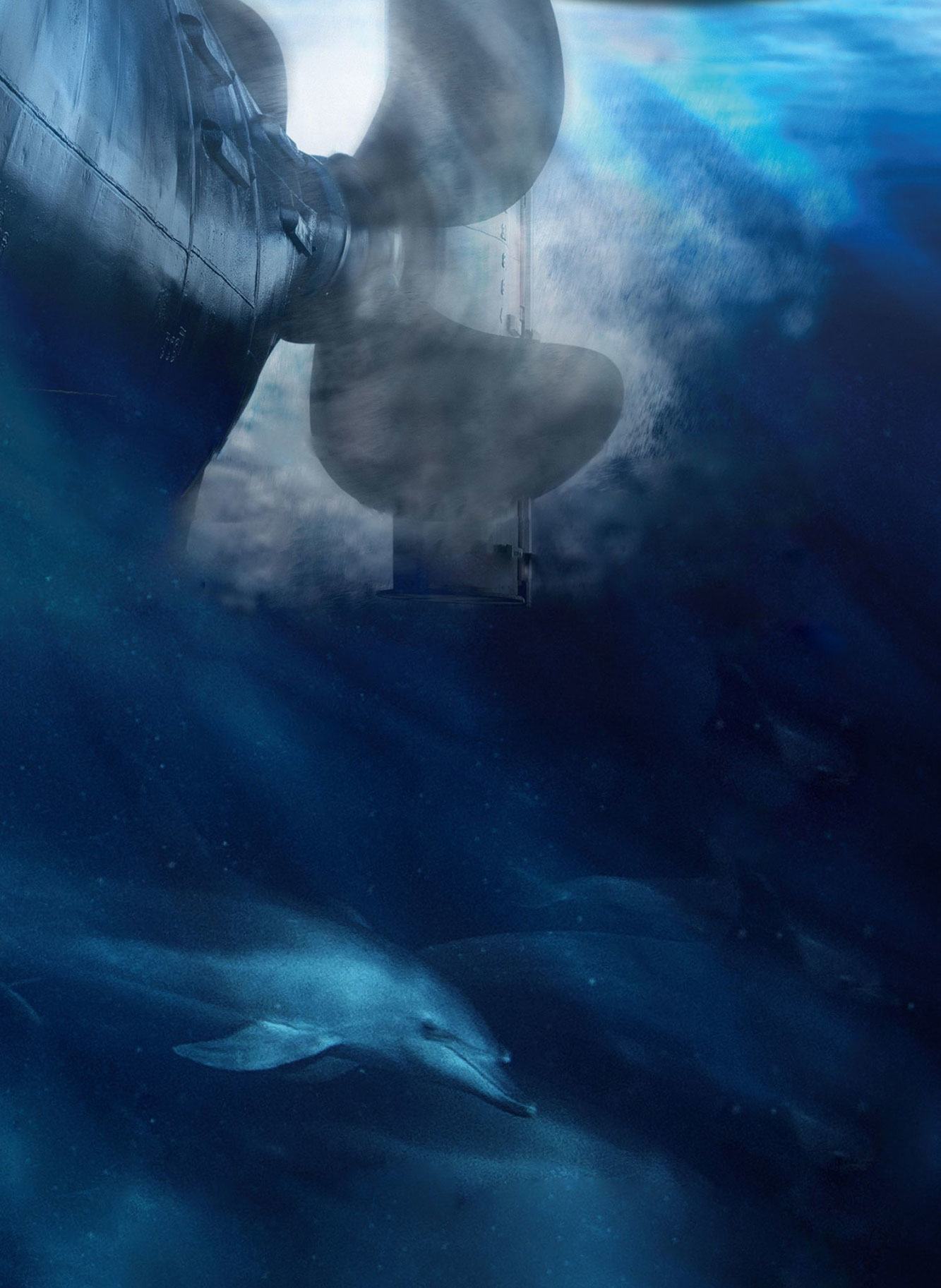
As global trade surges, so does the underwater noise generated by commercial shipping. From the Arctic to the Great Barrier Reef, scientists have documented how this constant mechanical hum can disorient whales, disrupt migration routes, and drown out the acoustic cues that many marine species rely on to survive.

As the issue intensifies, the United Nations agency responsible for regulating international shipping is now focused on reducing underwater noise.

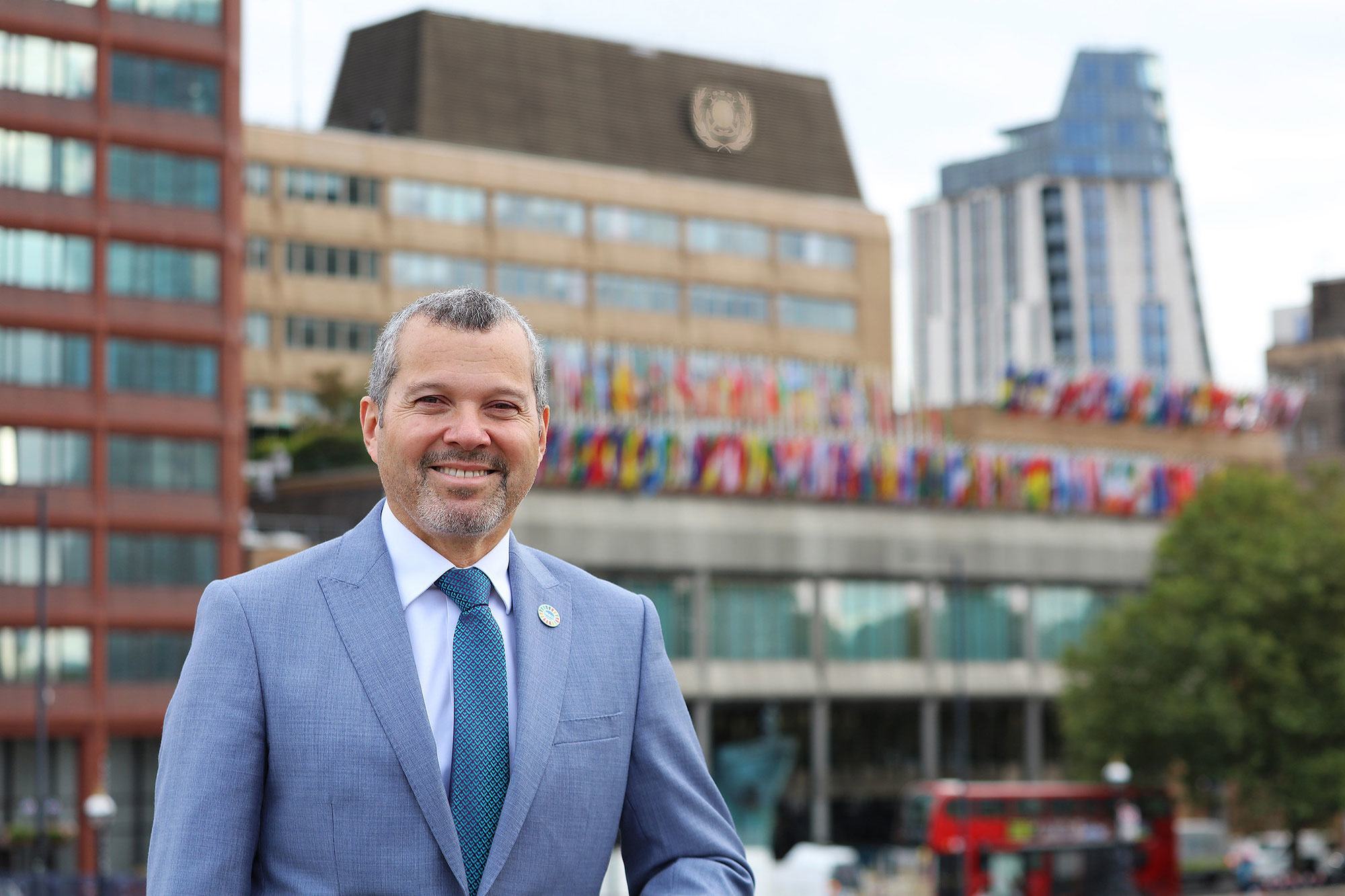
Arsenio Dominguez, Secretary-General of the International Maritime Organization (IMO).

Arsenio Dominguez, Secretary-General of the UN International Maritime Organization (IMO), has recognized underwater-radiated noise as a critical but emerging concern. “We know the negative impact that shipping has at the bottom of the ocean, even though we’re also the main users,” he told UN News in Nice during the third UN Ocean Conference (UNOC3), in Nice. “That’s why we’re taking this very seriously.”

New guidelines

More than 80 per cent of global goods are transported by sea. Propellers, hull vibrations, and engines generate low-frequency sounds that travel vast distances underwater. Unlike oil spills or visible trash, noise pollution leaves no trace – but its impact is no less acute.

To address the issue, the IMO has issued new guidelines for the reduction of ship noise and launched a comprehensive Underwater Radiated Noise (URN) Action Plan.

A three-year “experience building phase,” during which countries are invited to share lessons and help develop best practices about the new guidelines, is currently underway.

“We now have an action plan to develop mandatory mechanisms learning from this,” Mr. Dominguez.

These voluntary guidelines – first adopted in 2014 and updated in 2023 – offer a range of technical recommendations for shipbuilders and operators, including hull design, propeller optimization, and operational measures like speed reduction.

According to the IMO, these changes can significantly reduce noise, especially in “Particularly Sensitive Sea Areas” such as the Galápagos Islands, in Ecuador, and the Tubbataha Reefs, in the Philippines, where marine ecosystems and Indigenous communities are particularly vulnerable.

New technologies and pilot initiatives

Scientists have documented how the constant mechanical hum of ships can disorient whales, disrupt migration routes, and drown out the acoustic cues that many marine species rely on to survive.

The issue of shipborne noise pollution is also gaining traction at UNOC3, as part of its broader discussions on ocean health, marine biodiversity, and the regulation of industrial impacts on the sea. The UN maritime agency is using the gathering to raise the profile of its recently updated guidelines.

Mr. Dominguez pointed to the importance of new technologies in reducing underwater noise: “By enhancing the biofouling and the cleaning of the hulls of the vessels and introducing new technologies, including propellers, we can actually start reducing the negative effects of underwater radiated noise on board the ships.”

He added: “Another measure that is effective is speed optimization. By reducing the speeds of the ship, we also reduce underwater radiated noise.”

Together with the UN Development Programme (UNDP) and the Global Environment Facility (GEF), the IMO has launched an initiative called the GloNoise Partnership, which aims at reducing the acoustic footprint of shipping across in a few pilot countries, including Argentina, Chile, Costa Rica, India, South Africa, and Trinidad and Tobago.

The IMO is on board

“We need to do everything within our power to protect [the ocean],” Mr. Dominguez said. “It’s not just the food that we sometimes have on our plates, but it’s the goods that are transported by sea. And without them, I don’t think the civilizations would actually be able to continue.”

The stakes, he warned, go beyond biodiversity.

“This will have a positive impact in relation to the marine conservations in the ocean… Once we gather all this information, we will be able to enhance the quality of shipping when it comes to its efficiency and reduction of underwater radiating noise.”

As scientists continue to sound the alarm, Mr. Dominguez said the IMO must move faster: “The big message that I will have from everyone participating in [UNOC3] is let’s focus on tangible results. We’ve made the statements in the past. We have made commitments. It’s time to start acting on those commitments and see what has been done and what else needs to be done.”

“We are not against this,” he concluded. “We are on board.”


The world’s oceans are dying. Can a UN summit in Nice turn the tide?

From June 9 to 13, the coastal city of Nice will host the Third United Nations Ocean Conference (UNOC3), a high-level summit co-chaired by France and Costa Rica. Its mission: to confront a deepening ocean emergency that scientists warn is nearing a point of no return.

“The ocean is facing an unprecedented crisis due to climate change, plastic pollution, ecosystem loss, and the overuse of marine resources,” Li Junhua, a senior UN official serving as Secretary-General of the event, told UN News.

“We hope the conference will inspire unprecedented ambition, innovative partnerships, and maybe a healthy competition,” he said, highlighting the need for international cooperation to avoid irreversible damage.

The pressure is on. UNOC3 is bringing together world leaders, scientists, activists, and business executives to tackle the growing crisis in the world’s oceans. The goal: to spark a wave of voluntary pledges, forge new partnerships, and — if organizers succeed — inject a much-needed dose of accountability into the fight against marine degradation.

The week-long talks will culminate in the adoption of a political declaration and the unveiling of the Nice Ocean Action Plan — an effort to match the scale of the crisis and accelerate action to conserve and sustainably use the ocean.

Warming seas, bleaching reefs

The crisis isn’t a distant threat: it’s happening now. In April, global sea surface temperatures hit their second-highest levels ever for that monthaccording to the European Union’s Copernicus Climate Change Service. Meanwhile, the most extensive coral bleaching event in recorded history is underway — sweeping across the Caribbean, the Indian Ocean, and parts of the Pacific. More than a single event, it’s a planetary unraveling.

Coral reefs, which sustain a quarter of all marine species and underpin billions in tourism and fisheries, are vanishing before our eyes. Their collapse could unleash cascading effects on biodiversity, food security, and climate resilience.

And the damage runs deeper still. The ocean continues to absorb more than 90 per cent of excess heat from greenhouse gas emissions — a worldwide service that may be nearing its limits. “Challenges like plastic pollution, overfishing, biodiversity loss, ocean acidification, and warming are all linked to climate change,” Mr. Li warned.

Turning versus tipping points

Still, there have been notable breakthroughs. In 2022, the World Trade Organization struck a far-reaching deal to phase out harmful subsidies that fuel overfishing, offering a rare glimmer of multilateral resolve. The following year, after decades of deadlock, nations adopted the High Seas Treaty, known by the shorthand BBNJ, to safeguard marine life in international waters. That long-awaited agreement is now poised to enter into force at the Nice summit.

But policy alone cannot reverse an ecosystem in free fall. “The global response is insufficient,” Li Junhua cautioned.

Progress, in other words, depends not only on political will but on the resources to match it.

An estimated 60 per cent of the world’s marine ecosystems have been degraded or are being used unsustainably.

A lifeline starved of funds

Despite its vital role in regulating life on Earth — producing half of our oxygen and buffering against climate extremes — the ocean remains chronically underfunded.  Sustainable Development Goal 14 , on ‘Life Below Water’, receives the least resources of the 17 global UN goals Member States agreed to meet by 2030.

The estimated cost to protect and restore marine ecosystems over the next five years is $175 billion annually. “But less than $10 billion was allocated between 2015 and 2019,” Mr. Li noted, signaling the need to move ocean funding from trickle to torrent.

That ambition is at the heart of what the Conference aims to deliver.

The Nice Ocean Action Plan

The theme of UNOC3, Accelerating action and mobilizing all actors to conserve and sustainably use the ocean, reflects a shift from declarations to delivery.

Over five days, participants will grapple with the big questions: how to stem illegal fishing, reduce plastic pollution, and scale sustainable blue economies. Hundreds of new pledges are expected to build on the more than 2,000 voluntary commitments made since the first ocean summit in 2017.

The Nice Ocean Action Plan is set to align with the Kunming-Montreal Global Biodiversity Framework, a 2022 agreement calling for the protection of at least 30 per cent of marine and terrestrial ecosystems by 2030.

Alongside new pledges, the plan will include a formal declaration, which Mr. Li described as a “concise” and “action-oriented” political document.

“The draft political declaration, led by Australia and Cabo Verde, focuses on ocean conservation and sustainable ocean-based economies and includes concrete measures for accelerating action,” the UN official teased.

The rapid loss of biodiversity threatens the livelihood of 3 billion people, including coastal communities.

Crisis by the numbers — and what Nice hopes to deliver

  • Up to 12 million metric tons of plastic enter the ocean every year — the equivalent of a garbage truck every minute.

    At Nice, delegates hope to advance a global agreement to tackle plastic pollution at its source.

  • Over 60 per cent of marine ecosystems are degraded or unsustainably used.

    The summit aims to bolster efforts toward protecting 30 per cent of the ocean by 2030 and to launch a roadmap for decarbonizing maritime transport.

  • Global fish stocks within safe biological limits have plunged from 90 per cent in the 1970s to just 62 per cent in 2021.

    Nice hopes to pave the way for a new international agreement on sustainable fisheries.

  • More than 3 billion people depend on marine biodiversity for their livelihoods.

    In response, the summit seeks to boost financing for blue economies and elevate community-led solutions.

In small developing island states, the ocean is not just an economic engine, it’s a lifeline.

From Paris to Nice

The timing of the summit is intentional. A decade after the landmark Paris Agreement set targets for limiting global warming, UNOC3 is pushing to place the ocean at the center of climate action — not as an afterthought, but as a frontline battlefield.

“UNOC 3 addresses the interconnected crisis facing our oceans,” noted Mr. Li.

The summit also aims to be inclusive, highlighting voices often sidelined in global forums, such as women, Indigenous people, fisherfolk, and coastal communities. “These groups are the first to suffer the impacts of climate change and ocean degradation,” Mr. Li emphasized. “But they are also leaders and problem solvers, so they must be empowered.”

A pivotal moment

Nice isn’t just a scenic backdrop — it’s part of the story. The Mediterranean is warming 20 per cent faster than the global average, making it a so-called climate “hot spot.” For many, the location only sharpens the stakes.

Whether the conference generates real momentum or simply more declarations will depend on what countries, companies, and communities bring to the table.

As delegates descend on the sun-drenched coast of Nice, the sea laps gently at the shores. But the question rising with the tide is anything but gentle: can the world still turn this around?

Source link