‘We are dying’: Gaza’s cancer patients plead for a way out

“We are dying. Every day, between two and three patients die inside this hospital,” says Munther Abu Foul, a cancer patient lying on his bed in Gaza’s largest hospital. “I can’t get out of bed because of the pain. We want a solution – open the crossings.”

His words capture the reality facing thousands of cancer patients across the Strip, where access to specialist care has collapsed and evacuation for treatment abroad remains out of reach for many.

Local health organisations warn that around 11,000 patients are currently deprived of specialised or diagnostic cancer treatment inside Gaza. 

Some 4,000 patients who received medical referrals to hospitals outside the Strip have been waiting for more than two years to travel.

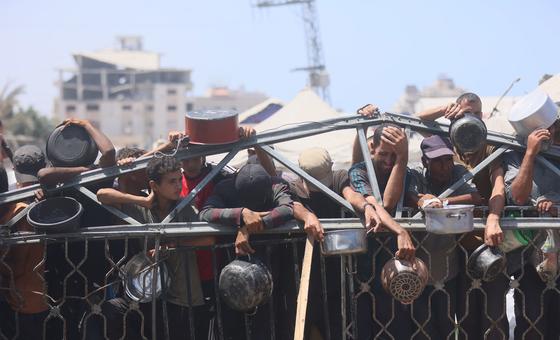
UN News visited Al-Shifa Hospital in Gaza City, documenting the dire conditions inside its oncology department. Patients crowd corridors and wards, waiting for consultations or treatments that are no longer available. 

Essential medicines and equipment are in short supply, while many patients endure chronic pain that leaves them barely able to move.

A man takes care of his brother, a cancer patient at Al-Shifa hospital in Gaza City.

‘Every day, two or three patients die’

Mr. Abu Foul flips through his medical transfer papers, issued long ago for treatment outside Gaza. He has not been able to travel for more than two years.

“The health situation in the Gaza Strip is dilapidated,” he says. “There is no treatment or medicines, and we are dying. Every day, two to three patients die here inside this hospital. I can’t get out of bed because of the pain.”

He appeals directly for help. “We want a solution. Open the crossings properly so that God will release us from this suffering. Everyone will be held accountable.”

Nearby, Mohamed Hammou tends to his elderly mother, who is also battling cancer. He says families are forced to watch loved ones deteriorate without care.

We want a solution. Open the crossings properly so that God will release us from this suffering – Abu Foul

“This is how we stand in front of a patient who is dying, without treatment or any medical facilities that help them recover,” he says. “This does not please God and it does not satisfy people. We call on Islamic, Arab and international nations to look at the sick with mercy.”

A brother in pain

In another ward, Raed Abu Warda cares for his brother Hamid, whose cancer has worsened after long delays in treatment. What began as a small, benign illness has become a life-threatening condition.

“He has been suffering from cancer for two years,” Raed explains. “He waited all this time for the crossing to open so he could be treated outside. His pain has increased, as you can see.”

He gestures towards a wound that has opened beneath his brother’s chin. “The disease has created this wound, and his condition is getting worse every day. I stand watching my brother and mourning his condition because of the pain.”

The health situation in the Gaza Strip is deteriorating for those suffering from life-threatening cancers, despite the limited opening of the Rafah crossing.

The number of patients seeking care at Gaza’s oncology departments continues to rise, even as hospitals face severe shortages of medicines, equipment and specialised staff. For newly diagnosed patients, the future is increasingly uncertain.

Evacuations far short of needs

With the limited reopening of the Rafah crossing, the World Health Organization (WHO) is supporting the evacuation of patients and their companions from Gaza, focusing on ensuring safe transport. Yet the scale of need far outstrips what is currently possible.

All we ask for is a way to live

More than 18,000 patients – including around 4,000 children – are waiting to be evacuated abroad for medical treatment, according to WHO.

The UN Office for the Coordination of Humanitarian Affairs (OCHA) reported last week that Gaza’s Ministry of Health had recorded more than 1,200 patient deaths while people were waiting for medical evacuation. Around 4,000 cancer patients remain on critical waiting lists, trapped between closed crossings and a health system pushed beyond its limits.

For patients like Munther Abu Foul, time is running out. “We are dying,” he repeats. “All we ask for is a way to live.”

Yemen: Children are dying and it’s going to get worse, warns aid veteran

“The simple narrative is, children are dying and it’s going to get worse,” said Julien Harneis, UN Resident and Humanitarian Coordinator in Yemen. “My fear is that we won’t hear about it until the mortality and the morbidity significantly increases in this next year.”

The alert follows an attempt by forces affiliated with the Southern Transitional Council (STC) to expand their presence in the resource-rich and strategically important eastern governorates of Hadramout and Al Mahra, a move reportedly reversed earlier this month by Government-aligned forces backed by Saudi Arabia.

The latest crisis comes after well over a decade of fighting between Houthi-led forces – who control the capital, Sana’a – and the internationally recognized government in Aden, backed by a Saudi-led military coalition. 

Complex operating environment

“It’s an extraordinarily complicated situation,” Mr. Harneis told journalists in Geneva. “Just in the last month in Aden, we went through a situation where you have the Government of Yemen in charge, then over 48 hours, the Southern Transitional [Council] situation took over the whole of the Government of Yemen areas, including areas they’ve never been in.”

Just four weeks later, however, a delegation from the STC released a statement while in Riyadh, Saudi Arabia, announcing that they had in fact “dissolved” their movement, allowing the Government in Yemen to retake the recently captured areas. “But at the same time, we’ve got demonstrations in Aden saying that, ‘No, we’re not [disbanded], we’re still there,’” Mr. Harneis explained.

Last week, UN Special Envoy for Yemen Hans Grundberg told the Security Council that this latest political and security upheaval underscored how quickly stability could unravel without a credible, inclusive political process to bring a negotiated end to the debilitating war.

Securing a peaceful future for the people of Yemen and providing lifesaving help has also been complicated by the ongoing detention of UN staff and diplomatic workers, among others, by Houthi rebels, who are backed by Iran and control Sana’a. 

Mr. Harneis described the torment for the families of the 69 staff members still being held: “It’s terrible for them; some families haven’t seen their loved ones in five years. They don’t know the conditions of their detention, they don’t know where they are, they don’t know if they’re going to be sentenced to death in the coming days.”

Millions going hungry

Latest UN data shows that more than 20 million Yemenis – about half the population – will face acute food insecurity next month, while tens of thousands could face famine-like conditions.

“We are expecting things to be much worse in 2026,” Mr. Harneis said.

A young boy is carried by his mother thorough a neighbourhood in Al Hawtah, Lahj Governate in Yemen.

The country’s health system is also collapsing. More than 450 facilities have already closed and thousands more are at risk of losing funding. Vaccination programmes are also under threat and only two-thirds of Yemen’s children are fully immunised, largely owing to a lack of access in the north.

“The way that economic and political decisions are playing out…food insecurity is only getting worse across all parts of the country”, the UN aid official maintained.

“We’re going to see a major change where the health system is not going to be supported in the way it has been in the past.”

Despite access restrictions, UN partners reached 3.4 million people with food assistance last year, along with emergency support during floods and disease outbreaks. 

The UN has been working in Yemen since the 1960s, helping to make development gains and protect the country’s most vulnerable people. “And then suddenly in the last couple of years this breakdown…inexplicably,” Mr. Harneis said. “That has a terrifying effect on the humanitarian workers.”

Source link

Gaza crisis deepens as UN warns children are ‘dying before reaching hospital’

With 96 per cent of households lacking clean water, many malnourished children are not surviving long enough to receive hospital care.

James Elder, Spokesperson for the UN Children’s Fund (UNICEF), told at a news briefing in Geneva that it would be a mistake to assume the situation is improving.

There’s a sense through the world’s press that things are improving,” he said. “But unless there is sustained humanitarian aid…there will be horrific results.

He emphasised the scale of need: “When food comes in which supports 30,000 children, there are still 970,000 children not getting enough. It is a drop in the ocean.”

Aid still a trickle

The UN relief coordination office, OCHA, said that although unilateral pauses have allowed some aid into Gaza, the current trickle is vastly insufficient.

“There should be hundreds and hundreds of trucks entering Gaza every day, for months or years to come,” said Jens Laerke, OCHA spokesperson. “People are dying every day. This is a crisis, on the brink of famine.

Thousands of tons of pre-funded aid remain stuck just outside the enclave, he added, as bureaucratic delays and lack of safe access continue to block distribution.

Urgent scale-up needed

In New York, UN Deputy Spokesperson Farhan Haq also noted the impediments to bringing in and distributing sufficient aid.

“Massive food shortages continue to impact people’s chances for survival,” he said. “As malnutrition levels rise, children’s immune systems are weakened, hindering their development and growth far into the future.”

Last Thursday alone, 71 kitchens delivered over 270,000 hot meals across Gaza, including 10,000 to health facilities. But that figure falls far short of what’s needed to feed more than two million people.

We need an urgent scale-up of supplies, as well as an environment that allows humanitarians to reach people in need safely, rapidly and efficiently,” Mr. Haq added.

Health challenges continue

Some medicine has entered Gaza in recent days, but supplies remain limited. Health workers continue to operate under extreme pressure and shortages.

The World Health Organization (WHO) reported 46 cases of Guillain-Barré syndrome in July, including two deaths. The condition, which affects the nervous system, has been linked to compromised immunity, poor nutrition and hygiene-related infections.

The situation of pregnant women and nursing mothers is equally alarming. The UN reproductive health agency, UNFPA, said that 40 per cent of pregnant or breastfeeding women are suffering from severe malnutrition, with newborn deaths and stillbirths on the rise.

Meanwhile, three UN fuel tankers reached Gaza City on Monday. The fuel will power critical health, water and sanitation services, but OCHA stressed this only allows operations to run at “bare minimum” capacity.

Source link

People dying from lack of aid every day in Gaza: WFP official

Ross Smith, director of emergency preparedness and response, briefed journalists in New York in the wake of a deadly incident on Sunday in which dozens of civilians were killed and injured while waiting to access food as a WFP convoy was entering northern Gaza.

“Yesterday’s incident is one of the greatest tragedies we’ve seen for our operations in Gaza and elsewhere while we’re trying to work,” he said, speaking from Rome.

“And it’s completely avoidable, and it’s an absolute tragedy,” he added.

Famine conditions and malnutrition

Gaza’s population stands at roughly 2.1 million and earlier this year, food security experts warned that one in five people faces starvation.

Mr. Smith said WFP assessments show that a quarter of the population is facing famine-like conditions. Almost 100,000 women and children are suffering from severe acute malnutrition and need treatment as soon as possible.

Pointing to reports, he said “people are dying from lack of humanitarian assistance every day, and we are seeing this escalate day by day.” 

He stressed that food assistance, and humanitarian assistance more broadly, are “the only solution at the moment” for Gaza.

Minimum operating conditions

Mr. Smith said humanitarians have a set of minimum operating conditions that need to be in place for them to work effectively.

These include crossing points into Gaza, “proper routing” inside the enclave so that teams can move independently, and the entry of more than 100 trucks of aid a day.

“We also need to have no armed actors near food distribution points, near our convoys, and near the movement of those convoys from one place to another,” he continued, while underscoring the need to reach people where they are and not in otherwise predetermined locations.

“And I would say above all that we have had agreements in principle on these things, but we have not had adherence to these in practice in Gaza itself. And this is really where the breakdown is, and it’s where we see incidents like (yesterday) take place,” he said.

Ceasefire now

Mr. Smith also highlighted the critical need for a ceasefire “so that we can move effectively.”

In response to a journalist’s question, he said WFP moved more than 200 trucks of assistance per day into Gaza during the ceasefire earlier this year. Since mid-May, it has been able to move less than 10 per cent of what is needed.

He said the UN agency has enough stocks pre-positioned outside Gaza to supply the entire population for two months “if we can get a ceasefire and if we can move.” 

Source link

Gazans dying in search of food, ‘starkest illustration’ of their desperation

The fact that people are now dying every day trying to get food, I think is the starkest illustration of how desperate the situation is,” said Carl Skau, Deputy Executive Director at the UN agency, briefing journalists on his fourth visit to the war-torn enclave.

Earlier this year, food security experts reported that starvation is spreading in Gaza. The entire population, some two million people, is acutely food insecure and half a million are on the brink.

“If anything, it’s much worse now,” said Mr. Skau, who was in Gaza City, Deir Al-Balah and Khan Younis last week. 

Children going hungry

Malnutrition is also surging.  Some 90,000 children are in urgent need of treatment, according to UN child rights agency UNICEF

Today, one in three people goes hungry for days. Mr. Skau said he met many families who told him there are days when their children do not eat at all.

“But the days when they are eating it’s often a hot soup they get from us with just a few lentils or a few pieces of pasta, so certainly not enough,” he said, adding that some mothers discourage their children from playing to conserve energy.

The top official also addressed the widespread displacement in Gaza. In the past he met families who had been forced to flee two or three times, but now “I meet families who have moved two or three times in the past 10 days,” and some who have been uprooted upwards of 20 times. 

Trickle of aid

Meanwhile, outside of the recent 80-day aid blockade, humanitarian response “has never been more constrained.” The amount of assistance humanitarians are able to bring into Gaza is “just a fraction of what’s needed,” at a time when a kilo of wheat flour costs $25.

He added that the operating environment “is just impossible.” Active military operations are occurring in roughly 85 per cent of Gaza’s territory and teams “get stuck waiting for clearances and at checkpoints, often spending between 15 to 20 hours straight in their armoured vehicles trying to escort our convoys.”

Other obstacles include lack of fuel, spare parts for vehicles, and basic communications equipment.  

Engagement with Israel

Mr. Skau said WFP have been actively engaging with the Israeli authorities over the past few weeks and “there were commitments” around issues such as volumes of aid, faster humanitarian movements, and not having the Israel Defense Forces (IDF) present when convoys are moving.

“Now, obviously, the proof is in the pudding,” he said. “We need now to see delivery and implementation on those commitments, and so far, we have not seen enough progress.”

He noted that WFP were allowed to deliver aid through the north on Friday for the first time in several days, which was “a key issue.”

“It’s not only about getting enough volumes, but it’s also to be able to get in through the north because in the north we are able to deliver in a more orderly way,” he said.

He told journalists that “there have been issues with armed elements interfering” in the region, which is unacceptable, but stressed the importance of being able to deliver there “because we think that is the way to also help bring down the levels of desperation and prices.”

Ceasefire now

Mr. Skau stated that the minor progress regarding commitments “is not going to be enough to turn the tide of hunger,” underlining the urgent need for a ceasefire in Gaza.

During the ceasefire earlier this year, WFP facilitated the entry of more than 8,000 trucks into the enclave, opened 25 bakeries and hundreds of soup kitchens, and delivered food packages to more than 1.5 million people.

The agency was also able to stock its warehouses, meaning operations could continue for roughly half of the 80-day blockade.

“We are ready to do that again,” said Mr. Skau.  “We have enough food on the borders to deliver to the entire population for some two months. But obviously we need that ceasefire, and we need conditions within that ceasefire.”

Here, he stressed the need for a humanitarian protocol with a provision that allows for multiple routes and entry points into and inside Gaza – as well as a secure environment for delivery.

Later, Mr. Skau was asked about the talks with Israel.

“I sense the recognition that conditions need to improve,” he said.  “It was also recognised that the UN has a key role to play,” he added. 

“It was very clear in my engagement that they want the UN to continue to be the main track in delivery. 

“And certainly should there be a ceasefire, the indications were that they would want us to be ready to scale up and do what we did last time when we on Day One were ready to bring 600 trucks into Gaza.” 

Source link

The world’s oceans are dying. Can a UN summit in Nice turn the tide?

From June 9 to 13, the coastal city of Nice will host the Third United Nations Ocean Conference (UNOC3), a high-level summit co-chaired by France and Costa Rica. Its mission: to confront a deepening ocean emergency that scientists warn is nearing a point of no return.

“The ocean is facing an unprecedented crisis due to climate change, plastic pollution, ecosystem loss, and the overuse of marine resources,” Li Junhua, a senior UN official serving as Secretary-General of the event, told UN News.

“We hope the conference will inspire unprecedented ambition, innovative partnerships, and maybe a healthy competition,” he said, highlighting the need for international cooperation to avoid irreversible damage.

The pressure is on. UNOC3 is bringing together world leaders, scientists, activists, and business executives to tackle the growing crisis in the world’s oceans. The goal: to spark a wave of voluntary pledges, forge new partnerships, and — if organizers succeed — inject a much-needed dose of accountability into the fight against marine degradation.

The week-long talks will culminate in the adoption of a political declaration and the unveiling of the Nice Ocean Action Plan — an effort to match the scale of the crisis and accelerate action to conserve and sustainably use the ocean.

Warming seas, bleaching reefs

The crisis isn’t a distant threat: it’s happening now. In April, global sea surface temperatures hit their second-highest levels ever for that monthaccording to the European Union’s Copernicus Climate Change Service. Meanwhile, the most extensive coral bleaching event in recorded history is underway — sweeping across the Caribbean, the Indian Ocean, and parts of the Pacific. More than a single event, it’s a planetary unraveling.

Coral reefs, which sustain a quarter of all marine species and underpin billions in tourism and fisheries, are vanishing before our eyes. Their collapse could unleash cascading effects on biodiversity, food security, and climate resilience.

And the damage runs deeper still. The ocean continues to absorb more than 90 per cent of excess heat from greenhouse gas emissions — a worldwide service that may be nearing its limits. “Challenges like plastic pollution, overfishing, biodiversity loss, ocean acidification, and warming are all linked to climate change,” Mr. Li warned.

Turning versus tipping points

Still, there have been notable breakthroughs. In 2022, the World Trade Organization struck a far-reaching deal to phase out harmful subsidies that fuel overfishing, offering a rare glimmer of multilateral resolve. The following year, after decades of deadlock, nations adopted the High Seas Treaty, known by the shorthand BBNJ, to safeguard marine life in international waters. That long-awaited agreement is now poised to enter into force at the Nice summit.

But policy alone cannot reverse an ecosystem in free fall. “The global response is insufficient,” Li Junhua cautioned.

Progress, in other words, depends not only on political will but on the resources to match it.

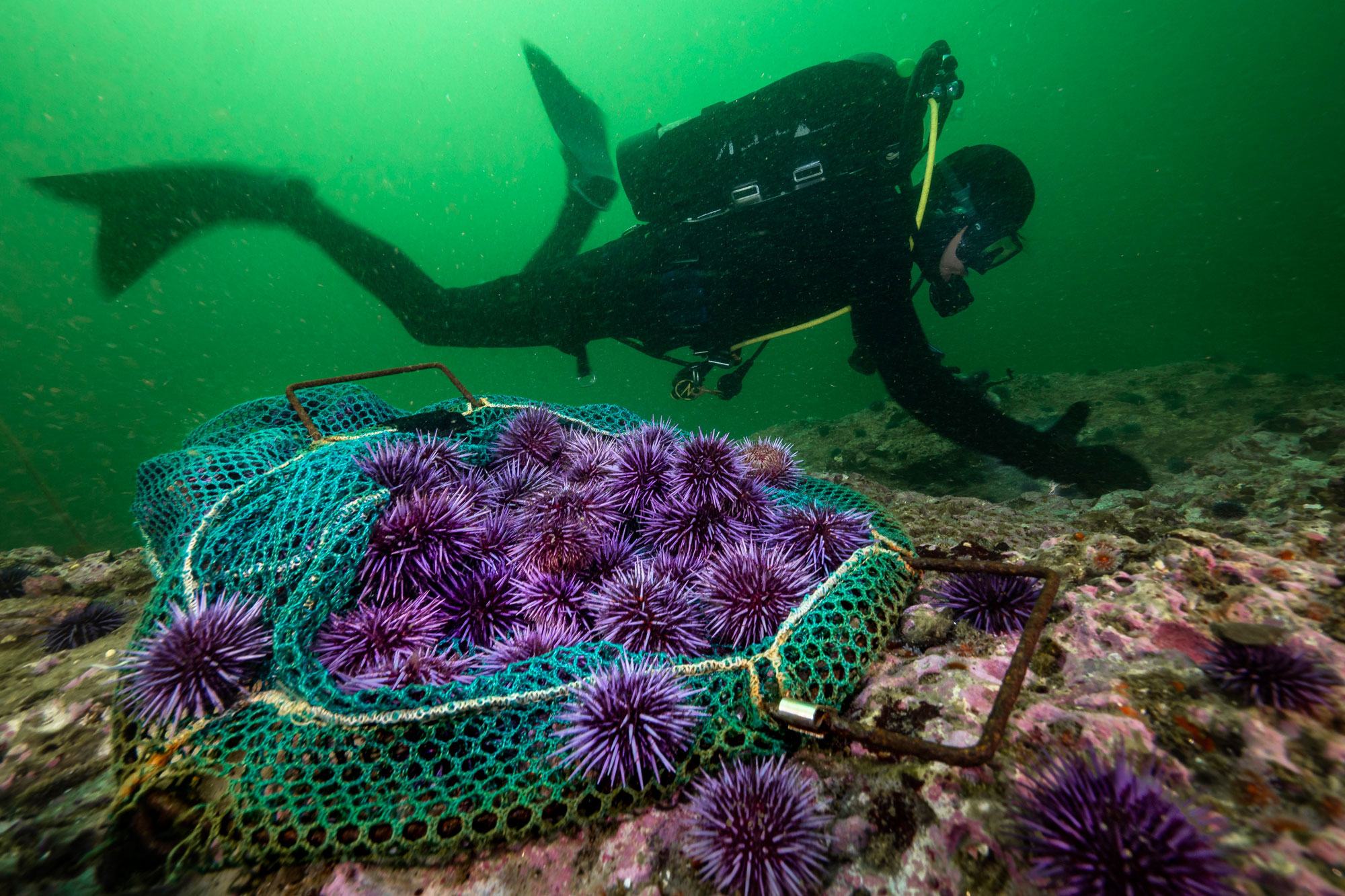
An estimated 60 per cent of the world’s marine ecosystems have been degraded or are being used unsustainably.

A lifeline starved of funds

Despite its vital role in regulating life on Earth — producing half of our oxygen and buffering against climate extremes — the ocean remains chronically underfunded.  Sustainable Development Goal 14 , on ‘Life Below Water’, receives the least resources of the 17 global UN goals Member States agreed to meet by 2030.

The estimated cost to protect and restore marine ecosystems over the next five years is $175 billion annually. “But less than $10 billion was allocated between 2015 and 2019,” Mr. Li noted, signaling the need to move ocean funding from trickle to torrent.

That ambition is at the heart of what the Conference aims to deliver.

The Nice Ocean Action Plan

The theme of UNOC3, Accelerating action and mobilizing all actors to conserve and sustainably use the ocean, reflects a shift from declarations to delivery.

Over five days, participants will grapple with the big questions: how to stem illegal fishing, reduce plastic pollution, and scale sustainable blue economies. Hundreds of new pledges are expected to build on the more than 2,000 voluntary commitments made since the first ocean summit in 2017.

The Nice Ocean Action Plan is set to align with the Kunming-Montreal Global Biodiversity Framework, a 2022 agreement calling for the protection of at least 30 per cent of marine and terrestrial ecosystems by 2030.

Alongside new pledges, the plan will include a formal declaration, which Mr. Li described as a “concise” and “action-oriented” political document.

“The draft political declaration, led by Australia and Cabo Verde, focuses on ocean conservation and sustainable ocean-based economies and includes concrete measures for accelerating action,” the UN official teased.

The rapid loss of biodiversity threatens the livelihood of 3 billion people, including coastal communities.

Crisis by the numbers — and what Nice hopes to deliver

  • Up to 12 million metric tons of plastic enter the ocean every year — the equivalent of a garbage truck every minute.

    At Nice, delegates hope to advance a global agreement to tackle plastic pollution at its source.

  • Over 60 per cent of marine ecosystems are degraded or unsustainably used.

    The summit aims to bolster efforts toward protecting 30 per cent of the ocean by 2030 and to launch a roadmap for decarbonizing maritime transport.

  • Global fish stocks within safe biological limits have plunged from 90 per cent in the 1970s to just 62 per cent in 2021.

    Nice hopes to pave the way for a new international agreement on sustainable fisheries.

  • More than 3 billion people depend on marine biodiversity for their livelihoods.

    In response, the summit seeks to boost financing for blue economies and elevate community-led solutions.

In small developing island states, the ocean is not just an economic engine, it’s a lifeline.

From Paris to Nice

The timing of the summit is intentional. A decade after the landmark Paris Agreement set targets for limiting global warming, UNOC3 is pushing to place the ocean at the center of climate action — not as an afterthought, but as a frontline battlefield.

“UNOC 3 addresses the interconnected crisis facing our oceans,” noted Mr. Li.

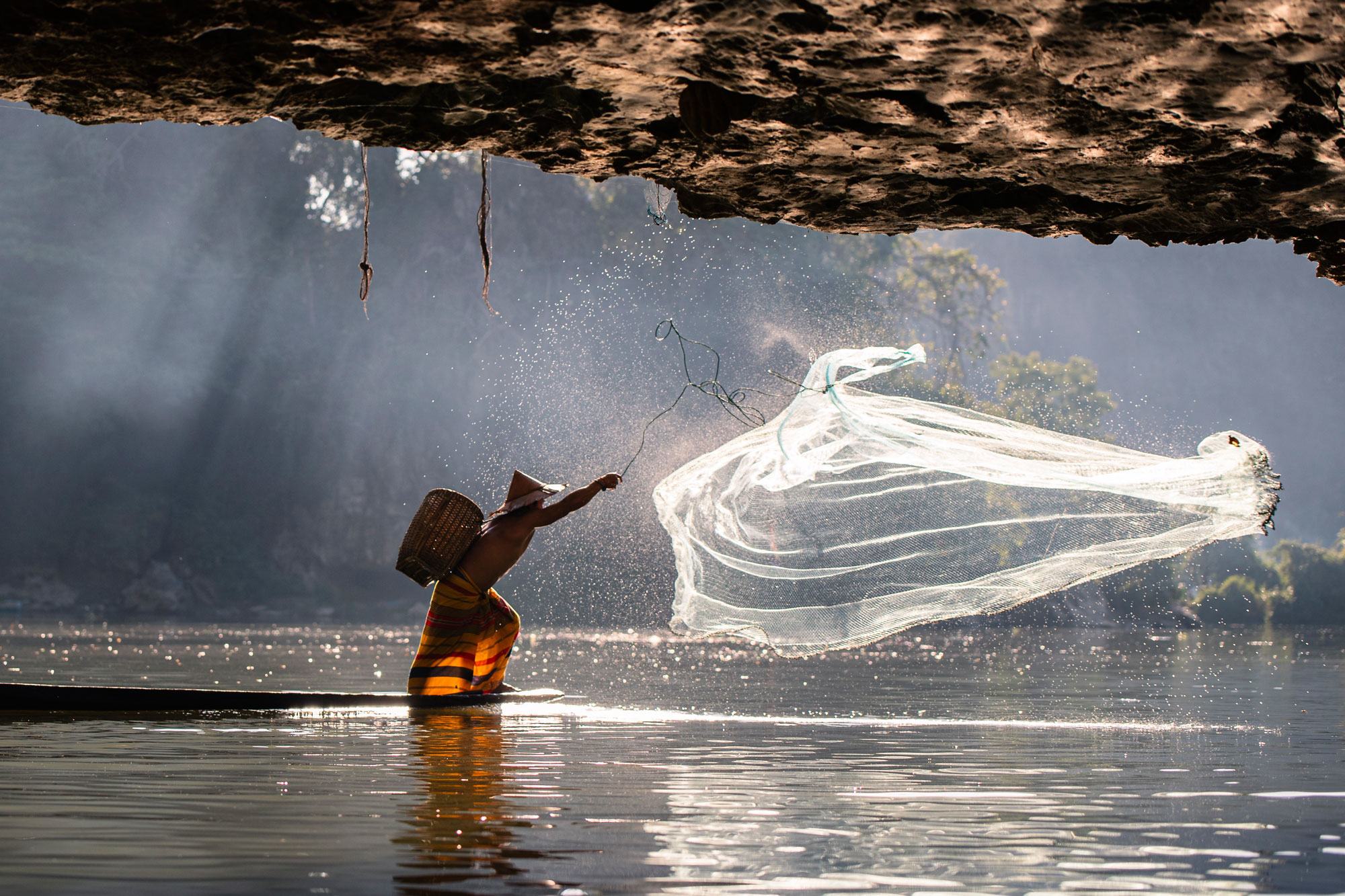
The summit also aims to be inclusive, highlighting voices often sidelined in global forums, such as women, Indigenous people, fisherfolk, and coastal communities. “These groups are the first to suffer the impacts of climate change and ocean degradation,” Mr. Li emphasized. “But they are also leaders and problem solvers, so they must be empowered.”

A pivotal moment

Nice isn’t just a scenic backdrop — it’s part of the story. The Mediterranean is warming 20 per cent faster than the global average, making it a so-called climate “hot spot.” For many, the location only sharpens the stakes.

Whether the conference generates real momentum or simply more declarations will depend on what countries, companies, and communities bring to the table.

As delegates descend on the sun-drenched coast of Nice, the sea laps gently at the shores. But the question rising with the tide is anything but gentle: can the world still turn this around?


Source link