How AI, gaming and virtual worlds are reshaping Holocaust remembrance

“At the moment, we have an incredibly dispersed and diverse landscape of memory-making, and the more digital we get, the most diverse it gets,” Professor Victoria Grace Richardson-Walden, Director of the Landecker Digital Memory Lab at the University of Sussex, told UN News.

As Holocaust survivors age and first-hand testimony becomes rarer, educators, researchers and designers are increasingly turning to emerging technologies to preserve memory, foster empathy and engage younger generations far beyond museums and classrooms with narrative-driven games and immersive virtual spaces allowing users to not only observe history but interact with it.

© World Jewish Congress/Ohad Kab

Landecker Digital Memory Lab, University of Sussex, participates at a panel discussion: “Technology, Memory, and the Future of Holocaust Remembrance”, at UN Headquarters in New York.

The challenge is no longer whether new technologies should be used, but whether they will be used thoughtfully enough to ensure that memory endures for generations to come as these modern tools open new – and sometimes uncomfortable – questions about interactivity, responsibility and historical truth.

From taboo to tool: ‘Video games and the Holocaust are mainstream’

Long considered the last taboo of Holocaust representation, video games are now increasingly part of the conversation as research-led approaches have seen studios starting to work closely with historians, educators and archives, opening space for designers like Luc Bernard, whose The Light in the Darkness video game follows a Jewish family in Nazi-occupied France.

It doesn’t have a Hollywood ending; I decided to show the real story, which was that most Jews during the Holocaust were murdered.

“It doesn’t have a Hollywood ending; I decided to show the real story, which was that most Jews during the Holocaust were murdered,” said Mr. Bernard, who is currently working on the director’s cut, funded by the Claims Conference and META, which will include the original vision he intended with extra scenes going deeper into the story.

“It’s no longer a taboo subject,” Mr. Bernard said. “Video games and the Holocaust are mainstream.” 

The Light in the Darkness has reached audiences well beyond traditional educational settings, with the average gamer age of 35 among players from countries such as Saudi Arabia that have engaged strongly with the story, he said.

“People relate to the characters, and it’s resonated more with them than even movies around the Holocaust,” he said. “That’s just the power of videogames or any form of art. It depends on how you direct it.”

© World Jewish Congress/Ohad Kab

Luc Bernard, game designer, participates at panel discussion “Technology, Memory, and the Future of Holocaust Remembrance” at UN Headquarters in New York.

Building resilient digital memory

The current landscape requires a fundamental rethink of how Holocaust memory is produced and sustained in the digital age, from interactivity to what it means when users engage with the past in these spaces, said Ms. Richardson-Walden, whose work brings together educators, researchers, policymakers, technology companies and memory institutions worldwide.

Indeed, collaboration is essential, including to ensure Holocaust memory remains resilient as digital formats multiply, she added.

“Without all coming together, we are wasting resources, we are spreading our human resources, our financial resources, our technologies and our time really thinly,” she cautioned, adding that one of the greatest risks lies not in technology itself but in how digital projects are funded.

In addition, short-term initiatives, from apps to virtual exhibitions, are often expensive and quickly become obsolete as software changes causing projects to “break and disappear” alongside the digitised materials, metadata and knowledge behind it, she said. “It’s just all gone.”

Rethinking interactivity and risk: ‘You can’t change the narrative’

Instead, Ms. Richardson-Walden called for investment in shared digital infrastructure. Aligned databases, common standards and permanent digital expertise within institutions would allow memory organizations to adapt quickly as new technologies emerge, whether in gaming, virtual reality or artificial intelligence (AI).

Interactivity is often misunderstood, particularly in discussions about video games, with fears that users might be able to make changes to what happened in the Holocaust, she said.

“But, anyone in the gaming industry understands that is an illusion of agency,” she said. “You can’t change the narrative.”

The Light in the Darkness: Director’s Cut.

AI risks: Catching up with the tech world

At the same time, Ms. Richardson-Walden warned of genuine risks in the current digital environment, especially with the rapid spread of generative AI. Holocaust-related content circulates widely online, making it vulnerable to monetisation without historical understanding or ethical oversight.

“People know the Holocaust performs well online,” she explains. “Holocaust is a well-talked-about subject. People know about it. People want to talk about it, which is great, but also a problem in this sphere because that means it can be monetised.”

Listen to an interview with Professor Victoria Grace Richardson-Wald: 

Pointing to the mass production of AI images on social media, she said “we need to find a way to catch up with the tech world’s speed slightly because otherwise the policy, the discussions we’re having will be so far behind the reality that they’ll become kind of meaningless.”

Catching up with the tech world

Both Mr. Bernard and Ms. Richardson-Walden emphasised that responsibility for digital Holocaust memory extends beyond individual creators, with technology companies, funders and governments working with educators and creatives to develop ethical, sustainable approaches. 

“These conversations used to happen in fringe spaces,” Mrs. Richardson-Walden says, following a panel debate around technology, memory and the future of Holocaust Remembrance at the UN Headquarters in New York.

Connective Holocaust Commemoration Expo 2025 at the University of Sussex, UK.

Now, international forums, including the United Nations, have an important role in turning discussion into coordinated action, 

Watch the Technology, Memory and the Future of Holocaust Remembrance panel discussion at the UN here.

Source link

UN watchdog warns Ukraine war remains world’s biggest threat to nuclear safety

Addressing the International Atomic Energy Agency (IAEA) Board of Governors, Director General Rafael Grossi said the agency remains focused on preventing a nuclear accident as fighting continues to endanger critical infrastructure.

“The conflict in Ukraine is about to enter its fifth year,” Mr. Grossi said. “It continues to pose the world’s biggest threat to nuclear safety.

IAEA teams remain deployed at all nuclear power plants affected by the conflict and publish regular updates on nuclear safety and security conditions.

The Board of Governors is the IAEA’s main decision-making body, bringing together representatives of 35 countries to oversee nuclear safety, security and safeguards, and to guide the work of the UN nuclear watchdog. Its current membership includes, among others Russia, the United States, United Kingdom, and France.

Off-site power a critical safety lifeline

Mr. Grossi stressed that a central safety requirement is reliable off-site power – the electricity a plant receives from the national grid. Without it, nuclear sites must rely on backup systems to run cooling and other essential safety functions.

“There must be secure off-site power supply from the grid for all nuclear sites,” he said, pointing to the IAEA’s “Seven Pillars” guidance for nuclear safety during armed conflict, where off-site power is pillar number four.

He also cited Principle 3 of the IAEA’s Five Principles for protecting the Zaporizhzhya Nuclear Power Plant (ZNPP) that “all efforts should be made to ensure off-site power remains available and secure at all times.”

Mr. Grossi said both sets of guidance have broad international support, including from the parties directly involved, and that he has repeatedly called for adherence to them, including at the UN Security Council.

Progress at Zaporizhzhya amid ongoing risks

He reported recent progress at ZNPP, where Europe’s biggest plant was reconnected on 19 January to its last remaining 330-kilovolt backup power line after repairs were carried out under a temporary ceasefire negotiated with Ukrainian and Russian counterparts.  

The line had been damaged and disconnected since 2 January, reportedly due to military activity.

Until the reconnection, ZNPP relied on its last remaining 750-kilovolt main line to provide off-site power for safety systems needed to cool its six shutdown reactors and spent fuel pools. IAEA teams are also monitoring the plant’s ability to manage winter conditions, including keeping water in cooling and sprinkler ponds from freezing.

Beyond the plants themselves, Mr. Grossi warned that Ukraine’s electrical substations are also crucial to nuclear safety. “Damage to them undermines nuclear safety and must be avoided,” he said. An IAEA expert mission is now assessing 10 substations vital to nuclear safety amid ongoing strikes on the country’s power infrastructure.

Other nuclear sites also affected

IAEA teams have also reported military activity near other nuclear facilities, including the Chornobyl site, where damage to a critical substation disrupted multiple power lines and forced temporary reliance on emergency diesel generators. The affected lines have since been reconnected.

Mr. Grossi said the IAEA has shown how international institutions can help reduce risks and provide predictability in a volatile war. But, he added, technical measures have limits.

“The best way to ensure nuclear safety and security,” he said, “is to bring this conflict to an end.

Source link

Tobacco control efforts protect three-quarters of the world’s population, WHO report finds

The World Health Organization (WHO) published its 2025 report on the Global Tobacco Epidemic on Monday, focusing on the six policies outlined in the WHO MPOWER tobacco control measures.

Since 2007, 155 countries have implemented at least one of those policy prescriptions which has resulted in over 6.1 billion people – that’s three-quarters of the world’s population – now benefitting: however, major gaps still remain.

Here are the six policy recommendations: 

  • Monitoring tobacco use and prevention policies;
  • Protecting people from tobacco smoke with smoke-free air legislation;
  • Offering help to quit tobacco use;
  • Warning about the dangers of tobacco with pack labels and mass media;
  • Enforcing bans on tobacco advertising, promotion and sponsorship; and
  • Raising taxes on tobacco.

Striking Gains

Some 110 countries now require graphic health warnings on tobacco packaging and WHO’s new report reveals the strategy has delivered striking gains in the fight against consumption.

As one of the key measures under the WHO Framework Convention on Tobacco Control (FCTC), graphic health warnings make the harms of tobacco visibly clear and difficult to ignore.

There has also been a growing trend to regulate the use of e-cigarettes or ENDS – Electronic Nicotine Delivery Systems – with the number of countries regulating or banning ENDS increasing from 122 in 2022, to 133 in 2024.

Major Gaps

Although very effective, 110 countries have failed to launch any anti-tobacco campaigns since 2022, despite the grim statistic that around 1.3 million people continue to die from second-hand smoke every year.

Forty countries still have not adopted a single MPOWER measure and over 30 countries are still allowing cigarette sales without mandatory health warnings. The UN health agency is calling for urgent action in areas where momentum is lagging.

Government must act boldly to close remaining gaps, strengthen enforcement, and invest in the proven tools that save lives,” said Ruediger Krech, WHO’s Director of Health Promotion. 

The world’s oceans are dying. Can a UN summit in Nice turn the tide?

From June 9 to 13, the coastal city of Nice will host the Third United Nations Ocean Conference (UNOC3), a high-level summit co-chaired by France and Costa Rica. Its mission: to confront a deepening ocean emergency that scientists warn is nearing a point of no return.

“The ocean is facing an unprecedented crisis due to climate change, plastic pollution, ecosystem loss, and the overuse of marine resources,” Li Junhua, a senior UN official serving as Secretary-General of the event, told UN News.

“We hope the conference will inspire unprecedented ambition, innovative partnerships, and maybe a healthy competition,” he said, highlighting the need for international cooperation to avoid irreversible damage.

The pressure is on. UNOC3 is bringing together world leaders, scientists, activists, and business executives to tackle the growing crisis in the world’s oceans. The goal: to spark a wave of voluntary pledges, forge new partnerships, and — if organizers succeed — inject a much-needed dose of accountability into the fight against marine degradation.

The week-long talks will culminate in the adoption of a political declaration and the unveiling of the Nice Ocean Action Plan — an effort to match the scale of the crisis and accelerate action to conserve and sustainably use the ocean.

Warming seas, bleaching reefs

The crisis isn’t a distant threat: it’s happening now. In April, global sea surface temperatures hit their second-highest levels ever for that monthaccording to the European Union’s Copernicus Climate Change Service. Meanwhile, the most extensive coral bleaching event in recorded history is underway — sweeping across the Caribbean, the Indian Ocean, and parts of the Pacific. More than a single event, it’s a planetary unraveling.

Coral reefs, which sustain a quarter of all marine species and underpin billions in tourism and fisheries, are vanishing before our eyes. Their collapse could unleash cascading effects on biodiversity, food security, and climate resilience.

And the damage runs deeper still. The ocean continues to absorb more than 90 per cent of excess heat from greenhouse gas emissions — a worldwide service that may be nearing its limits. “Challenges like plastic pollution, overfishing, biodiversity loss, ocean acidification, and warming are all linked to climate change,” Mr. Li warned.

Turning versus tipping points

Still, there have been notable breakthroughs. In 2022, the World Trade Organization struck a far-reaching deal to phase out harmful subsidies that fuel overfishing, offering a rare glimmer of multilateral resolve. The following year, after decades of deadlock, nations adopted the High Seas Treaty, known by the shorthand BBNJ, to safeguard marine life in international waters. That long-awaited agreement is now poised to enter into force at the Nice summit.

But policy alone cannot reverse an ecosystem in free fall. “The global response is insufficient,” Li Junhua cautioned.

Progress, in other words, depends not only on political will but on the resources to match it.

An estimated 60 per cent of the world’s marine ecosystems have been degraded or are being used unsustainably.

A lifeline starved of funds

Despite its vital role in regulating life on Earth — producing half of our oxygen and buffering against climate extremes — the ocean remains chronically underfunded.  Sustainable Development Goal 14 , on ‘Life Below Water’, receives the least resources of the 17 global UN goals Member States agreed to meet by 2030.

The estimated cost to protect and restore marine ecosystems over the next five years is $175 billion annually. “But less than $10 billion was allocated between 2015 and 2019,” Mr. Li noted, signaling the need to move ocean funding from trickle to torrent.

That ambition is at the heart of what the Conference aims to deliver.

The Nice Ocean Action Plan

The theme of UNOC3, Accelerating action and mobilizing all actors to conserve and sustainably use the ocean, reflects a shift from declarations to delivery.

Over five days, participants will grapple with the big questions: how to stem illegal fishing, reduce plastic pollution, and scale sustainable blue economies. Hundreds of new pledges are expected to build on the more than 2,000 voluntary commitments made since the first ocean summit in 2017.

The Nice Ocean Action Plan is set to align with the Kunming-Montreal Global Biodiversity Framework, a 2022 agreement calling for the protection of at least 30 per cent of marine and terrestrial ecosystems by 2030.

Alongside new pledges, the plan will include a formal declaration, which Mr. Li described as a “concise” and “action-oriented” political document.

“The draft political declaration, led by Australia and Cabo Verde, focuses on ocean conservation and sustainable ocean-based economies and includes concrete measures for accelerating action,” the UN official teased.

The rapid loss of biodiversity threatens the livelihood of 3 billion people, including coastal communities.

Crisis by the numbers — and what Nice hopes to deliver

  • Up to 12 million metric tons of plastic enter the ocean every year — the equivalent of a garbage truck every minute.

    At Nice, delegates hope to advance a global agreement to tackle plastic pollution at its source.

  • Over 60 per cent of marine ecosystems are degraded or unsustainably used.

    The summit aims to bolster efforts toward protecting 30 per cent of the ocean by 2030 and to launch a roadmap for decarbonizing maritime transport.

  • Global fish stocks within safe biological limits have plunged from 90 per cent in the 1970s to just 62 per cent in 2021.

    Nice hopes to pave the way for a new international agreement on sustainable fisheries.

  • More than 3 billion people depend on marine biodiversity for their livelihoods.

    In response, the summit seeks to boost financing for blue economies and elevate community-led solutions.

In small developing island states, the ocean is not just an economic engine, it’s a lifeline.

From Paris to Nice

The timing of the summit is intentional. A decade after the landmark Paris Agreement set targets for limiting global warming, UNOC3 is pushing to place the ocean at the center of climate action — not as an afterthought, but as a frontline battlefield.

“UNOC 3 addresses the interconnected crisis facing our oceans,” noted Mr. Li.

The summit also aims to be inclusive, highlighting voices often sidelined in global forums, such as women, Indigenous people, fisherfolk, and coastal communities. “These groups are the first to suffer the impacts of climate change and ocean degradation,” Mr. Li emphasized. “But they are also leaders and problem solvers, so they must be empowered.”

A pivotal moment

Nice isn’t just a scenic backdrop — it’s part of the story. The Mediterranean is warming 20 per cent faster than the global average, making it a so-called climate “hot spot.” For many, the location only sharpens the stakes.

Whether the conference generates real momentum or simply more declarations will depend on what countries, companies, and communities bring to the table.

As delegates descend on the sun-drenched coast of Nice, the sea laps gently at the shores. But the question rising with the tide is anything but gentle: can the world still turn this around?

Source link

A historic course correction: how the world’s shipping sector is setting sail for net zero

Every day, tens of thousands of massive ships criss-cross the world’s oceans, transporting grain, clothing, electronics, cars, and countless other products. Nearly 90 per cent of global cargo is moved this way. But this vital industry comes with an added cost: international shipping is responsible for three per cent of global greenhouse gas emissions, which are heating the planet.

For years, ship emissions were a complex and often postponed topic in international climate discussions. But that changed in April 2025 when the International Maritime Organization (IMO), the UN body overseeing global shipping regulations, approved a historic plan to make the industry net-zero by around mid-century.

“This demonstrates that multilateralism and the United Nations are still relevant and important in these particular times,” Arsenio Dominguez, IMO’s Secretary-General, told UN News. He reflected on the tense and often emotional negotiations at the Marine Environment Protection Committee’s 83rd session, calling the approval a commitment by IMO and the shipping sector to combat climate change.

The deal, dubbed the IMO Net-Zero Framework, marked the culmination of years of painstaking talks between member States, including small island nations at risk from rising seas and the world’s largest shipping nations.

“I could spend hours just telling you in detail all those great moments working very closely with the delegates of all the member states at IMO in order to get this agreement,” Mr. Dominguez recalled. “That collaborative approach, to see all the member states gathering and rallying each other to get this deal in place, is something that I will always remember.”

Arsenio Dominguez, Secretary-General of the International Maritime Organization (IMO).

A breakthrough years in the making

The 2025 breakthrough did not happen overnight. The IMO’s work to tackle emissions spans more than a decade. In 2011, it rolled out the first mandatory energy efficiency measures for ships. Then, in 2018, member countries agreed on the Initial IMO Strategy on Reduction of GHG Emissions from Ships, marking the first international targets to cut the sector’s climate impact.

Building on that progress, IMO ramped up ambition in 2023 and set clear goals: reduce emissions by at least 20 per cent by 2030 and 70 per cent by 2040, and phase in zero or near-zero emission fuels. The 2025 Net-Zero Framework transforms these plans into binding regulation.

“We’re focusing first on 2030, meeting those goals of reducing emissions by at least 20 per cent, and achieving at least a five per cent uptake of alternative fuels, because it’s going to pave the way for the next set of actions and demonstrate what other mechanisms or measures we need to put in place,” Mr. Dominguez said.

Shipping containers at a port in the Democratic Republic of São Tomé and Príncipe.

The machinery of global commerce

What’s at stake is more than just the environment – it’s the very machinery of global commerce. In 2023, maritime trade volumes soared past 12 billion tonnes of cargo, UN data shows. “Even the chair you are sitting on right now was likely transported by ship,” remarked Mr. Dominguez. “Things move around by ship because it’s the most efficient method of mass transportation. But that comes with responsibility and some drawbacks”.

Although the shipping sector has been ‘slow’ to regulate its climate impact, the 2025 framework is changing that with two key measures: a global fuel standard to reduce greenhouse gas intensity and a pricing mechanism for ships exceeding emission thresholds.

Polluters will need to purchase ‘remedial units’ or offset their excess emissions by investing in the IMO Net-Zero Fund. Ships adopting zero or near-zero emissions technologies can earn surplus credits, creating an incentive to clean up. A shipowner exceeding their emissions limit might buy credits from another ship that has outperformed its targets or contribute to the fund.

Revenues from the fund will be used to reward low-emission ships and help developing countries with capacity building, technology transfer, and access to alternative fuels.

Oversight by member States and IMO will ensure accountability for the new measures. “We work with the member States, particularly small island developing states and least developed countries, to enhance the implementation of IMO instruments,” Mr. Dominguez explained.

Certification, verification, audits, and reporting processes will monitor compliance. “Everything gets reported to the Organization, and from there we take additional measures.”

Balancing climate action and trade

The measures will cover large ocean-going ships that exceed 5,000 gross tonnes, which are responsible for about 85 per cent of industry emissions.

When asked about potential impacts on supply chains and consumer prices, particularly for countries heavily reliant on imports, the IMO chief emphasised that they have carried out a comprehensive impact assessment.

“There is a cost to pay when it comes to decarbonizing and protecting the environment. There has also been a cost to polluting the environment. So, all these rules, of course, are going to have an impact. What we looked at is reducing that impact as much as possible. If there is an impact, the financial measures and pricing mechanisms will support the industry’s transition’’.

Innovation will play a major role, and some promising technologies include ammonia and hydrogen fuels, wind propulsion, solar-assisted shipping, and onboard carbon capture. “Our rules are there to foster innovation and not to limit it,” Mr. Dominguez said, explaining that the Organization is carrying out an initial analysis. “We are rediscovering the existence of wind in the shipping industry, if I may say it like that…We have to be open to everything that’s happening out there. There’s a lot of work going on alternative fuels.”

This transition will also require investment in training and safety measures for seafarers as these alternative fuels are adopted, he warned. “We have to pay paramount importance when it comes to the people.”

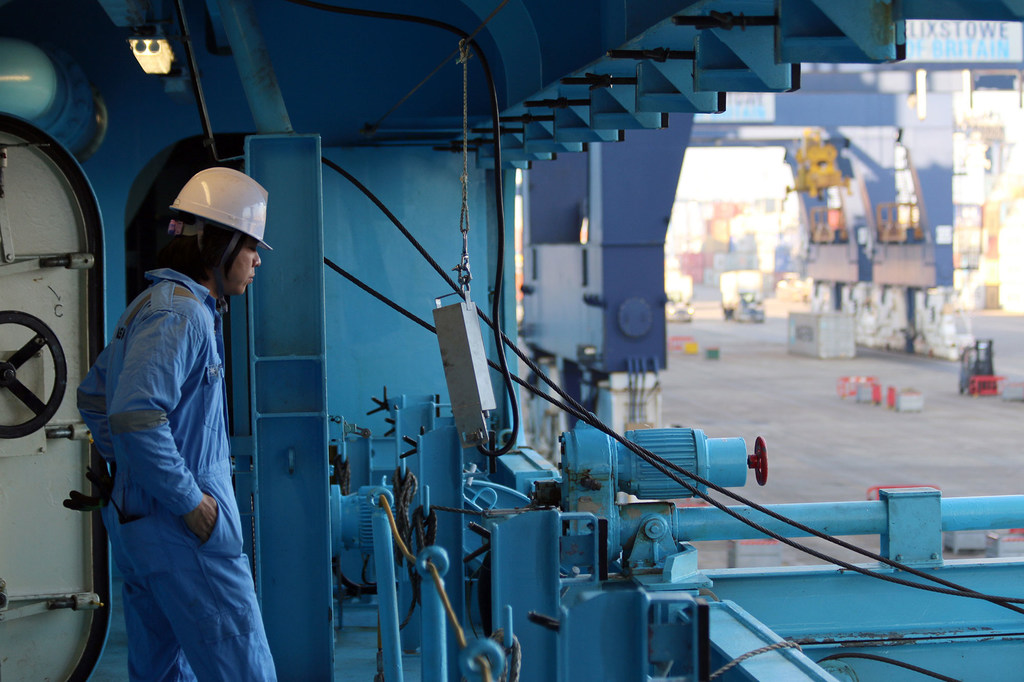
A seafarer on board a ship at Felixstowe Port in England.

An industry in transition

The framework sets a strict timeline: industry emissions must drop by at least 20 per cent (striving for 30 per cent) by 2030, by at least 70 per cent (striving for 80 per cent) by 2040, and reach net-zero by around 2050. The first compliance year will be 2028.

“The end goal of the main objective of the strategy is to decarbonize to reach net zero by around 2050. But it doesn’t mean that we’re not doing anything between,” Mr. Dominguez stressed. “This is a progressive approach.”

The IMO has also committed to constant review and refinement. “For us, it’s not just about the next step,” Mr. Dominguez said. “It will be a constant process of analysis, review, and engagement to gather the experience and expertise needed to tweak or provide any additional support that may be required’’.

Beyond emissions

While greenhouse gases dominate the headlines, Mr. Dominguez explained that shipping’s environmental footprint extends beyond CO₂. “There’s so much more that this Organization [does],” he said.

IMO measures address issues like biofouling, which is the accumulation of aquatic organisms like algae and barnacles on the hulls of ships, increasing drag and fuel consumption; underwater noise, which can disturb marine life; and ballast water management, which prevents invasive species from being transported across the globe.

“We always take into account that ships touch many parts of the environment, and we need to protect them,” he added.

The road ahead

When UN News asked about the framework’s adoption at IMO’s extraordinary session in October, Mr. Dominguez stated: “Of course, I’m confident because we just demonstrated that multilateralism is still relevant, that IMO is ready to meet its commitments”.

He explained that the next step will be addressing concerns and developing guidelines for implementing the new measures, including the pricing mechanism.

“That is going to help us meet the very ambitious timeframe that member states are committed to, so that as soon as these amendments enter into force in 2027, we can start demonstrating with tangible results what the shipping industry means when it talks about decarbonization.”

For Mr. Dominguez and many observers, the agreement represents a rare victory for multilateralism – and a new beginning for a critical but long-overlooked sector. “It’s not if we get it right. We are getting it right,” he said. “This is a process, a transition. We’re taking the first steps now that will lead us to the main goal.”


8 million teens in world’s wealthiest countries functionally illiterate: UNICEF

Comparing data from 2018 and 2022, UNICEF found that the pandemic worsened existing trends: children are underperforming in school, more likely to be overweight or obese, and generally less satisfied with their lives.

This data sets a “worrying benchmark for children’s wellbeing,” said Bo Viktur Nylund, Director of UNICEF’s research office, Innocenti.

UNICEF ranked the Netherlands and Denmark, followed by France, as the top three places to be a child.

In contrast, Mexico, Türkiye and Chile were ranked the lowest, based on measures of mental well-being, physical health, and skills.

Academic decline

UNICEF warned that many of the world’s wealthiest countries experienced “sharp” declines in children’s academic skills following the pandemic, notably in reading and maths skills.

As school shutdowns forced remote learning, children are now estimated to be from seven to 12 months behind where they should be in academic terms.

These setbacks were more severe for children from disadvantaged families, the report underscores.

Across 43 countries, an estimated eight million 15-year-olds were assessed as not functionally literate and numerate. That means around half of the age group surveyed could not understand a basic text, raising the alarm over long term development.

Mental health

Raising concerns around mental health, UNICEF pointed out that in 14 of 32 countries with available data, children’s life satisfaction deteriorated during the COVID pandemic, while adolescent suicide rates plateaued – reversing a previous downward trend.

The number of children aged five to 19 who were overweight rose with those from lower socioeconomic backgrounds facing worse outcomes in terms of mental and physical health.

Prioritising children

Mr. Nylund, called on countries going forward to adopt a “coherent” and ”holistic” approach that addresses “every stage” of children’s lives.

Notably, UNICEF recommends countries include children in decision-making, promoting youth voices and agency across the board.

The agency warns that hard-won gains in child well-being across wealthy countries are becoming “increasingly vulnerable” and urges governments to focus interventions on disadvantaged groups to ensure more equitable educational outcomes.

Source link