Shipping faces ‘stormy seas’ as trade slows and costs rise

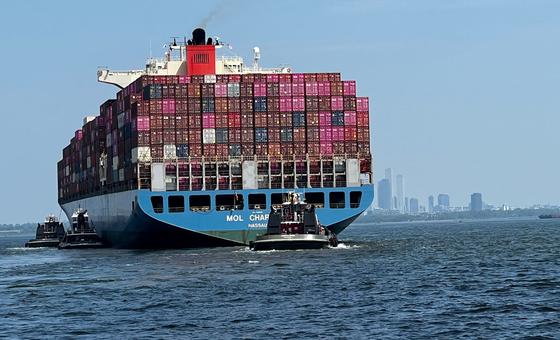
After firm expansion last year, seaborne trade volumes are forecast to rise by just 0.5 per cent in 2025, the slowest pace in years, according to the agency’s Review of Maritime Transport 2025, launched in Geneva.

The slowdown comes as geopolitical tensions, new trade barriers and climate pressures reshape shipping routes, push up costs and expose vulnerabilities in the global economy.

The transitions ahead – to zero carbon, to digital systems, to new trade routes – must be just transitions,” said UNCTAD Secretary-General Rebeca Grynspan. “They must empower, not exclude. They must build resilience, not deepen vulnerability.”

Routes in flux, costs rising

Shipping carries over 80 per cent of the world’s merchandise for export and import, making it a critical barometer of global commerce.

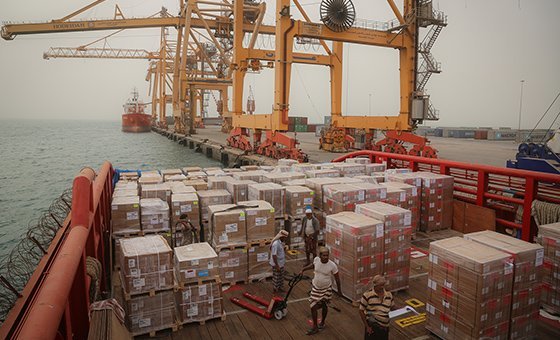
UNCTAD reported that rerouting caused by crises in the Red Sea in 2024 and continuing tensions near the Strait of Hormuz have forced ships onto longer journeys, adding delays and costs.

At the Geneva launch, Regina Asariotis, Chief of UNCTAD’s Trade Logistics Branch, warned that vulnerable economies are paying the heaviest price:

“The global environment has become more complex. Geopolitical tensions are forcing costly reroutings, tariffs are disrupting trade flows, and freight rates are high and volatile.

Small island developing States, least developed countries, and net food importing nations are the most vulnerable, because higher freight costs quickly translate into more expensive imports and food insecurity.”

Ports under pressure

Global ports are struggling with congestion, longer waiting times and the pressure to modernise. UNCTAD highlighted the urgent need to invest in digital systems such as maritime single windows and port community platforms to cut costs and delays.

But many developing countries continue to lag behind in digitalisation. With cyber threats on the rise, the report warns that cybersecurity has become a critical priority for maritime logistics.

Climate challenge

The shipping industry’s greenhouse gas emissions rose by five per cent in 2024, the report said. Yet only eight per cent of the world fleet’s tonnage is currently equipped to use alternative fuels.

The International Maritime Organization will consider a Net-Zero Framework in October, including a global fuel standard and carbon pricing mechanism. UNCTAD says clear regulatory signals, fleet renewal and new fuel infrastructure are vital to reduce emissions.

Human cost at sea

Beyond trade flows and emissions, the report stressed the human toll. Seafarer abandonment cases reached a record high in 2024, leaving crews stranded without pay or support.

Amendments to the Maritime Labour Convention entering into force in 2027 will strengthen rights to repatriation and shore leave, but UNCTAD stressed that effective enforcement is essential.

Policy priorities

The review calls for governments and industry to work together on:

  • Stable trade policies to reduce uncertainty and restore confidence in supply chains;
  • Investment in sustainable, green and resilient port and shipping infrastructure;
  • Faster digitalisation and stronger cybersecurity;
  • Fleet renewal and cleaner fuels; and
  • Support for vulnerable economies to mitigate higher costs.

“Persistent high transport costs risk hitting developing countries the hardest,” Ms. Grynspan said. “Maritime transport must be resilient, inclusive and sustainable if we are to weather the turbulent waters ahead.”

UN chief condemns latest Houthi attacks on Red Sea shipping

According to news reports, the Yemen-based rebel group – which has been battling the internationally-recognised Government for control of the country since the early 2010s – attacked the Liberian-flagged, Greek-operated Eternity C on Monday and again on Tuesday, causing it to sink on Wednesday morning.

Four crew members are reported to have died.

With 15 crew still missing as of Friday, the group also reportedly took an unspecified number of the seafarers to what rebels described as a “safe location.”

Weekend assault

This came after the Houthis launched missiles and drones at another Liberian-flagged, Greek-operated cargo ship in the Red Sea on Sunday, Magic Seas. The crew was forced to abandon ship, but all 22 members were rescued, according to reports.

Since the start of the war in Gaza in October 2023, the Houthis have targeted Israeli and commercial ships in the Red Sea deemed to be en route to Israel, in solidarity with Palestinians in the enclave.

In May, following US airstrikes on Houthi strongholds and missile infrastructure, the group agreed a deal with Washington to stop targeting US warships – however, they did not pledge to end attacks on other vessels allegedly linked to Israel.

Strong condemnation: Guterres

UN Spokesperson Stéphane Dujarric read a statement from Secretary-General António Guterres on Friday at UN Headquarters, saying the UN chief “strongly condemns the resumption of Houthi attacks on civilian vessels transiting the Red Sea, especially the attacks that took place over 6 to 8 July 2025.”

Mr. Guterres said the “unacceptable” attacks endangered the safety and security of crewmembers, violated freedom of navigation, disrupted maritime transport, and posed serious environmental, economic, and humanitarian risks.

Mr. Guterres also emphasised that international law must be respected by all parties, stressing that UN Security Council resolution 2768 related to Houthi attacks against merchant and commercial vessels must be fully respected.

The United Nations remains committed to continuing its efforts towards broader de-escalation in the region as well as continued engagement with Yemeni, regional and international actors to secure a sustainable and peaceful resolution to the conflict in Yemen,” he concluded.

Source link

The battle to quiet the sea: Can the shipping industry turn down the volume?

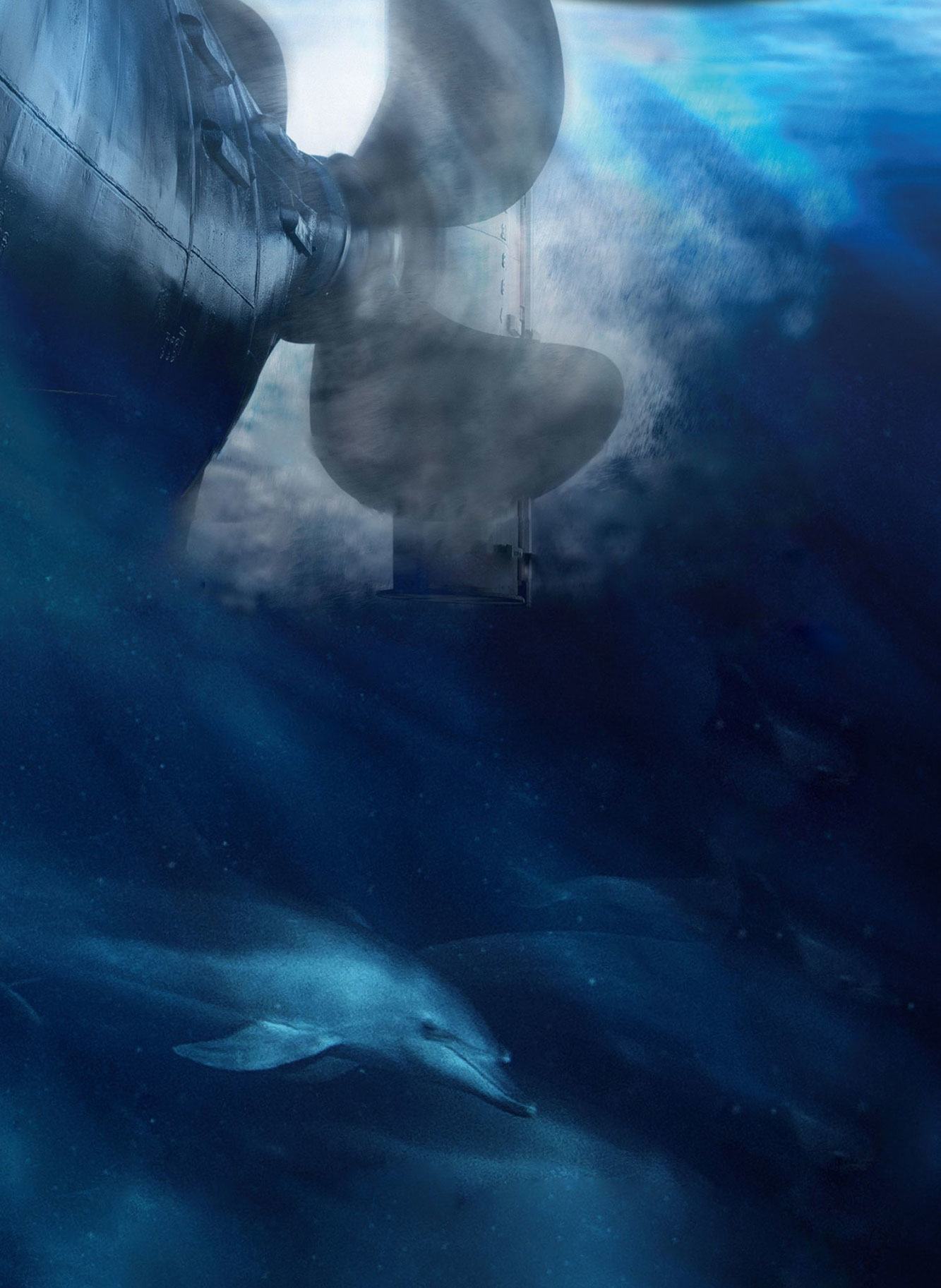
As global trade surges, so does the underwater noise generated by commercial shipping. From the Arctic to the Great Barrier Reef, scientists have documented how this constant mechanical hum can disorient whales, disrupt migration routes, and drown out the acoustic cues that many marine species rely on to survive.

As the issue intensifies, the United Nations agency responsible for regulating international shipping is now focused on reducing underwater noise.

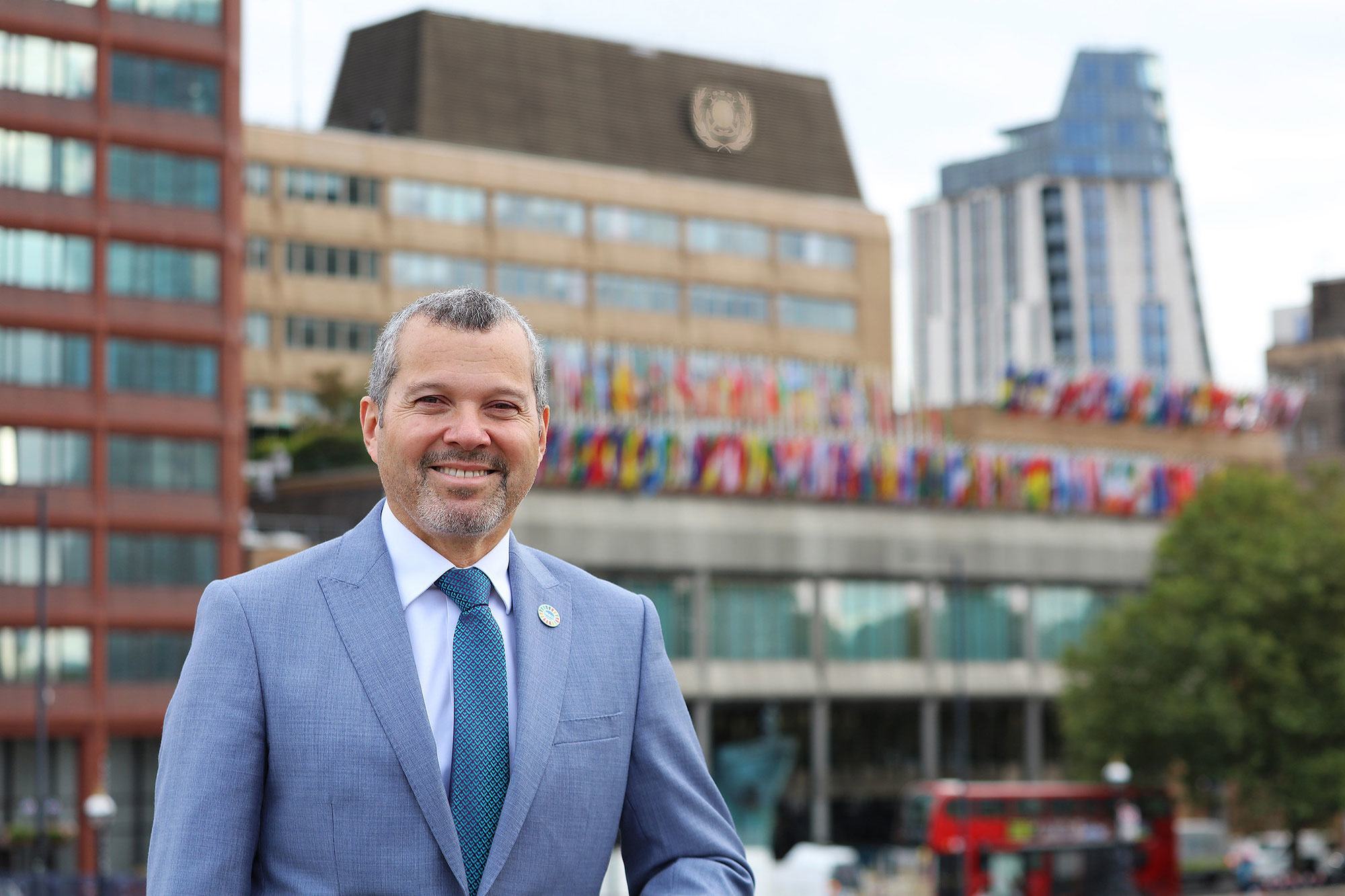
Arsenio Dominguez, Secretary-General of the International Maritime Organization (IMO).

Arsenio Dominguez, Secretary-General of the UN International Maritime Organization (IMO), has recognized underwater-radiated noise as a critical but emerging concern. “We know the negative impact that shipping has at the bottom of the ocean, even though we’re also the main users,” he told UN News in Nice during the third UN Ocean Conference (UNOC3), in Nice. “That’s why we’re taking this very seriously.”

New guidelines

More than 80 per cent of global goods are transported by sea. Propellers, hull vibrations, and engines generate low-frequency sounds that travel vast distances underwater. Unlike oil spills or visible trash, noise pollution leaves no trace – but its impact is no less acute.

To address the issue, the IMO has issued new guidelines for the reduction of ship noise and launched a comprehensive Underwater Radiated Noise (URN) Action Plan.

A three-year “experience building phase,” during which countries are invited to share lessons and help develop best practices about the new guidelines, is currently underway.

“We now have an action plan to develop mandatory mechanisms learning from this,” Mr. Dominguez.

These voluntary guidelines – first adopted in 2014 and updated in 2023 – offer a range of technical recommendations for shipbuilders and operators, including hull design, propeller optimization, and operational measures like speed reduction.

According to the IMO, these changes can significantly reduce noise, especially in “Particularly Sensitive Sea Areas” such as the Galápagos Islands, in Ecuador, and the Tubbataha Reefs, in the Philippines, where marine ecosystems and Indigenous communities are particularly vulnerable.

New technologies and pilot initiatives

Scientists have documented how the constant mechanical hum of ships can disorient whales, disrupt migration routes, and drown out the acoustic cues that many marine species rely on to survive.

The issue of shipborne noise pollution is also gaining traction at UNOC3, as part of its broader discussions on ocean health, marine biodiversity, and the regulation of industrial impacts on the sea. The UN maritime agency is using the gathering to raise the profile of its recently updated guidelines.

Mr. Dominguez pointed to the importance of new technologies in reducing underwater noise: “By enhancing the biofouling and the cleaning of the hulls of the vessels and introducing new technologies, including propellers, we can actually start reducing the negative effects of underwater radiated noise on board the ships.”

He added: “Another measure that is effective is speed optimization. By reducing the speeds of the ship, we also reduce underwater radiated noise.”

Together with the UN Development Programme (UNDP) and the Global Environment Facility (GEF), the IMO has launched an initiative called the GloNoise Partnership, which aims at reducing the acoustic footprint of shipping across in a few pilot countries, including Argentina, Chile, Costa Rica, India, South Africa, and Trinidad and Tobago.

The IMO is on board

“We need to do everything within our power to protect [the ocean],” Mr. Dominguez said. “It’s not just the food that we sometimes have on our plates, but it’s the goods that are transported by sea. And without them, I don’t think the civilizations would actually be able to continue.”

The stakes, he warned, go beyond biodiversity.

“This will have a positive impact in relation to the marine conservations in the ocean… Once we gather all this information, we will be able to enhance the quality of shipping when it comes to its efficiency and reduction of underwater radiating noise.”

As scientists continue to sound the alarm, Mr. Dominguez said the IMO must move faster: “The big message that I will have from everyone participating in [UNOC3] is let’s focus on tangible results. We’ve made the statements in the past. We have made commitments. It’s time to start acting on those commitments and see what has been done and what else needs to be done.”

“We are not against this,” he concluded. “We are on board.”


A historic course correction: how the world’s shipping sector is setting sail for net zero

Every day, tens of thousands of massive ships criss-cross the world’s oceans, transporting grain, clothing, electronics, cars, and countless other products. Nearly 90 per cent of global cargo is moved this way. But this vital industry comes with an added cost: international shipping is responsible for three per cent of global greenhouse gas emissions, which are heating the planet.

For years, ship emissions were a complex and often postponed topic in international climate discussions. But that changed in April 2025 when the International Maritime Organization (IMO), the UN body overseeing global shipping regulations, approved a historic plan to make the industry net-zero by around mid-century.

“This demonstrates that multilateralism and the United Nations are still relevant and important in these particular times,” Arsenio Dominguez, IMO’s Secretary-General, told UN News. He reflected on the tense and often emotional negotiations at the Marine Environment Protection Committee’s 83rd session, calling the approval a commitment by IMO and the shipping sector to combat climate change.

The deal, dubbed the IMO Net-Zero Framework, marked the culmination of years of painstaking talks between member States, including small island nations at risk from rising seas and the world’s largest shipping nations.

“I could spend hours just telling you in detail all those great moments working very closely with the delegates of all the member states at IMO in order to get this agreement,” Mr. Dominguez recalled. “That collaborative approach, to see all the member states gathering and rallying each other to get this deal in place, is something that I will always remember.”

Arsenio Dominguez, Secretary-General of the International Maritime Organization (IMO).

A breakthrough years in the making

The 2025 breakthrough did not happen overnight. The IMO’s work to tackle emissions spans more than a decade. In 2011, it rolled out the first mandatory energy efficiency measures for ships. Then, in 2018, member countries agreed on the Initial IMO Strategy on Reduction of GHG Emissions from Ships, marking the first international targets to cut the sector’s climate impact.

Building on that progress, IMO ramped up ambition in 2023 and set clear goals: reduce emissions by at least 20 per cent by 2030 and 70 per cent by 2040, and phase in zero or near-zero emission fuels. The 2025 Net-Zero Framework transforms these plans into binding regulation.

“We’re focusing first on 2030, meeting those goals of reducing emissions by at least 20 per cent, and achieving at least a five per cent uptake of alternative fuels, because it’s going to pave the way for the next set of actions and demonstrate what other mechanisms or measures we need to put in place,” Mr. Dominguez said.

Shipping containers at a port in the Democratic Republic of São Tomé and Príncipe.

The machinery of global commerce

What’s at stake is more than just the environment – it’s the very machinery of global commerce. In 2023, maritime trade volumes soared past 12 billion tonnes of cargo, UN data shows. “Even the chair you are sitting on right now was likely transported by ship,” remarked Mr. Dominguez. “Things move around by ship because it’s the most efficient method of mass transportation. But that comes with responsibility and some drawbacks”.

Although the shipping sector has been ‘slow’ to regulate its climate impact, the 2025 framework is changing that with two key measures: a global fuel standard to reduce greenhouse gas intensity and a pricing mechanism for ships exceeding emission thresholds.

Polluters will need to purchase ‘remedial units’ or offset their excess emissions by investing in the IMO Net-Zero Fund. Ships adopting zero or near-zero emissions technologies can earn surplus credits, creating an incentive to clean up. A shipowner exceeding their emissions limit might buy credits from another ship that has outperformed its targets or contribute to the fund.

Revenues from the fund will be used to reward low-emission ships and help developing countries with capacity building, technology transfer, and access to alternative fuels.

Oversight by member States and IMO will ensure accountability for the new measures. “We work with the member States, particularly small island developing states and least developed countries, to enhance the implementation of IMO instruments,” Mr. Dominguez explained.

Certification, verification, audits, and reporting processes will monitor compliance. “Everything gets reported to the Organization, and from there we take additional measures.”

Balancing climate action and trade

The measures will cover large ocean-going ships that exceed 5,000 gross tonnes, which are responsible for about 85 per cent of industry emissions.

When asked about potential impacts on supply chains and consumer prices, particularly for countries heavily reliant on imports, the IMO chief emphasised that they have carried out a comprehensive impact assessment.

“There is a cost to pay when it comes to decarbonizing and protecting the environment. There has also been a cost to polluting the environment. So, all these rules, of course, are going to have an impact. What we looked at is reducing that impact as much as possible. If there is an impact, the financial measures and pricing mechanisms will support the industry’s transition’’.

Innovation will play a major role, and some promising technologies include ammonia and hydrogen fuels, wind propulsion, solar-assisted shipping, and onboard carbon capture. “Our rules are there to foster innovation and not to limit it,” Mr. Dominguez said, explaining that the Organization is carrying out an initial analysis. “We are rediscovering the existence of wind in the shipping industry, if I may say it like that…We have to be open to everything that’s happening out there. There’s a lot of work going on alternative fuels.”

This transition will also require investment in training and safety measures for seafarers as these alternative fuels are adopted, he warned. “We have to pay paramount importance when it comes to the people.”

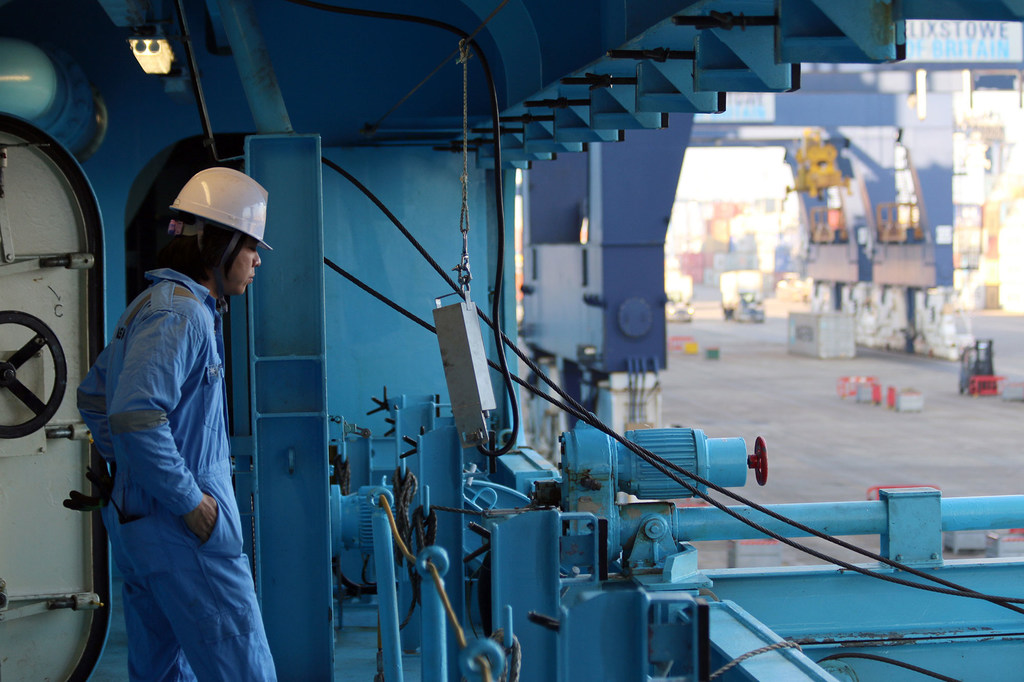
A seafarer on board a ship at Felixstowe Port in England.

An industry in transition

The framework sets a strict timeline: industry emissions must drop by at least 20 per cent (striving for 30 per cent) by 2030, by at least 70 per cent (striving for 80 per cent) by 2040, and reach net-zero by around 2050. The first compliance year will be 2028.

“The end goal of the main objective of the strategy is to decarbonize to reach net zero by around 2050. But it doesn’t mean that we’re not doing anything between,” Mr. Dominguez stressed. “This is a progressive approach.”

The IMO has also committed to constant review and refinement. “For us, it’s not just about the next step,” Mr. Dominguez said. “It will be a constant process of analysis, review, and engagement to gather the experience and expertise needed to tweak or provide any additional support that may be required’’.

Beyond emissions

While greenhouse gases dominate the headlines, Mr. Dominguez explained that shipping’s environmental footprint extends beyond CO₂. “There’s so much more that this Organization [does],” he said.

IMO measures address issues like biofouling, which is the accumulation of aquatic organisms like algae and barnacles on the hulls of ships, increasing drag and fuel consumption; underwater noise, which can disturb marine life; and ballast water management, which prevents invasive species from being transported across the globe.

“We always take into account that ships touch many parts of the environment, and we need to protect them,” he added.

The road ahead

When UN News asked about the framework’s adoption at IMO’s extraordinary session in October, Mr. Dominguez stated: “Of course, I’m confident because we just demonstrated that multilateralism is still relevant, that IMO is ready to meet its commitments”.

He explained that the next step will be addressing concerns and developing guidelines for implementing the new measures, including the pricing mechanism.

“That is going to help us meet the very ambitious timeframe that member states are committed to, so that as soon as these amendments enter into force in 2027, we can start demonstrating with tangible results what the shipping industry means when it talks about decarbonization.”

For Mr. Dominguez and many observers, the agreement represents a rare victory for multilateralism – and a new beginning for a critical but long-overlooked sector. “It’s not if we get it right. We are getting it right,” he said. “This is a process, a transition. We’re taking the first steps now that will lead us to the main goal.”