Gaza: As aid trucks enter, videos of Israeli hostages and attack on Red Crescent staffers spark outrage

Meanwhile, on Thursday and again on Saturday, Palestinian Islamic Jihad and Hamas militants published disturbing videos of two emaciated Israeli hostages, sparking worldwide outrage and condemnation from UN leaders, including Secretary-General António Guterres on Monday.

The hostages pictured, Rom Braslavsk and Evyatar David, are two of the 49 are still being held in Gaza, including 27 the Israeli military says are dead.

At Monday’s daily briefing in New York, UN Deputy Spokesman Farhan Haq said the Secretary-General “was very shocked by this unacceptable violation of human dignity.”

UN rights chief Volker Türk added in a statement that he was appalled by the humiliating treatment of the hostages. Both he and the Under-Secretary-General for Humanitarian Affairs, Tom Fletcher, reiterated their call for an unconditional, immediate release of all hostages still being held since the 7 October terror attacks.

The High Commissioner said the “intolerable” sight of starvation in Gaza served as another reminder that the violence had to end. “Saving lives must be everyone’s priority.”

He called for Israel to immediately allow and facilitate rapid and unimpeded aid: “Denying civilians access to food may amount to a war crime, as well as potentially a crime against humanity.”

Attack on aid workers

On Sunday, the Israeli military reportedly struck the headquarters of the Palestinian Red Crescent Society in Khan Younis, killing one and injuring three other staff members.  

The facility is marked with the Red Crescent emblem and is thus protected under international humanitarian law.

The UN rights office (OHCHR) in Palestine expressed deep shock and outrage over these killings.

“These workers continue to engage in life-saving efforts putting their own lives at risk,” OHCHR said.

Aid entry  

Amid these controversies, the Director-General of the World Health Organization (WHO), Tedros Adhanom Ghebreyesus, posted on social media on Saturday, saying that since Friday, the agency had brought 24 trucks with medical supplies into Gaza.  

Items included essential medicines, trauma and surgery supplies, treatments for non-communicable disease and laboratory and water testing supplies.  

Mr. Haq also highlighted on Monday that in recent days, the UN and its partners have collected wheat flour, ready-to-eat rations and hot meals from crossing points into Gaza, but most of the cargo was taken by the hungry and desperate before reaching intended destinations.

Additionally, hygiene kits and nutrition supplies, including high-energy biscuits for pregnant and breastfeeding women and infant formula, have entered in the past week.

However, in the second week since the Israeli announcement of tactical pauses to allow safe passages for UN aid convoys, Mr. Haq said realities on the ground remain largely the same.  

This includes many challenges to delivering aid, resulting in the impediment of two of the 11 missions on Sunday and the full passage of only seven.

Famine-like conditions

This aid is still a fraction of what is needed, as a catastrophic food crisis worsens across the Strip.  

The World Food Programme (WFP) said it “is doing everything possible to distribute vital food assistance to families,” but reported on Sunday that over half a million people in Gaza are enduring famine-like conditions.  

The UN aid agency for Palestinians (UNRWA) released an audio of Manar, an employee who works within Gaza, on Monday. She said that “food is never enough,” and that many walk in the heat for hours to search for food and medical supplies.

The Commissioner-General for UNRWA, Philippe Lazzarini, underscored that this near-famine is largely due to deliberate efforts to dismantle the UN-coordinated humanitarian system through the Israeli and US-backed Gaza Humanitarian Foundation (GHF), which is responsible for the killing of nearly 1,400 starving Palestinians near its sites and convoy routes, according to Gaza’s health ministry.

Prioritising the GHF, Israel has prevented UNRWA – “the backbone of humanitarian response” – from bringing in assistance since 2 March, he said. 

Yemen: Security Council extends UN mission in crucial port city amid escalating Red Sea strife

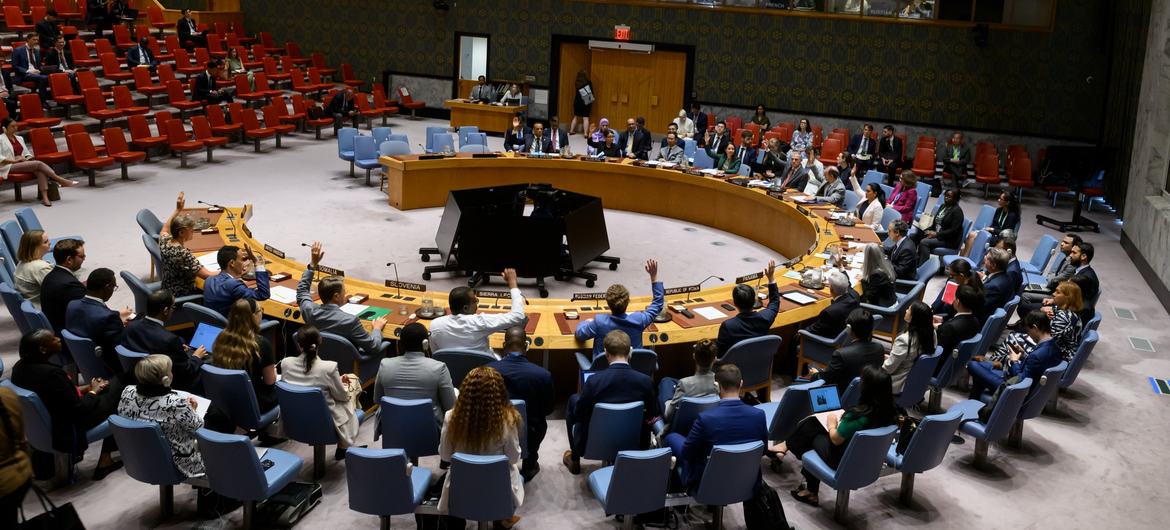
Adopted unanimously, the resolution extending the UN Mission to support the Hudaydah Agreement (UNMHA) until 28 January 2026, underscores the Mission’s critical role in maintaining fragile stability amid signs of renewed military escalation and deepening humanitarian need.

The resolution – 2786 (2025) – reaffirms the Council’s support for the 2018 Stockholm Agreement, including the ceasefire in the Houthi-controlled port city – and demilitarisation of its docks, where the majority of Yemen’s imports and vital aid shipments pass through.

The mission’s future

It also signals a growing debate over the mission’s future, requesting the Secretary-General to submit a review by November to enhance coordination and coherence of UN operations, “bearing in mind challenges” that have directly impeded UNMHA’s capacity to deliver.

The Security Council…expresses its intention to review the full range of options for UNMHA’s mandate, including assessing the future viability and sunsetting of the Mission, and make any necessary adjustments to gain efficiencies and reduce costs or otherwise, as may be required to UN operations in Hudaydah by developments on the ground, including inter alia a durable nationwide ceasefire,” the resolution noted.

UNMHA was established in 2019 to support implementation of the Stockholm Agreement between the Government of Yemen and Ansar Allah (as the Houthis are formally known), which sought to prevent major conflict over the region.

The mission monitors the ceasefire, facilitates redeployments and supports de-escalation through liaison mechanisms between the parties.

Tensions mounting

While the military situation on the ground remains tenuously stable, tensions are mounting on multiple fronts.

According to a letter from the Secretary-General to the 15-member Council in June, a growing number of ceasefire violations – averaging over 100 per day between June 2024 and May 2025 – highlight the fragile state of the region.  

Government-aligned forces fortified positions in anticipation of a possible offensive on the city, while Houthi units increased infiltration attempts and public mobilisation, including military-style youth camps in areas they control.

Security Council unanimously adopts Resolution 2786 (2025) extending until 28 January 2026 the mandate of the UN Mission to support the Hudaydah Agreement (UNMHA).

Deadly Red Sea passage

Compounding this, Houthi attacks on international shipping in the Red Sea have intensified. On 8 July, the commercial vessel Eternity C was sunk, killing several crew members and leaving others missing. This followed the sinking of the Magic Seas vessel two days earlier.

In a statement, UN Special Envoy Hans Grundberg condemned the attacks, calling them violations of international maritime law and warning they risked serious environmental and geopolitical fallout.

He called on Ansar Allah to cease attacks that risk escalating tensions in and around Yemen.

“[He urges them] to build on the cessation of hostilities with the United States in the Red Sea and to provide durable guarantees to the region and the wider international community, ensuring the safety of all those using this critical waterway,” the statement noted.

Significant operational constraints

Within Hudaydah itself, UNMHA faces significant constraints.  

The June letter by the Secretary-General details restrictions by Houthi authorities on UN patrols to the critical Red Sea ports – Hudaydah, Salif and Ras Issa.

Damage from repeated airstrikes, including by the US and Israel in response to Houthi attacks, has left key port infrastructure partially inoperable, disrupting fuel, food and medical imports.

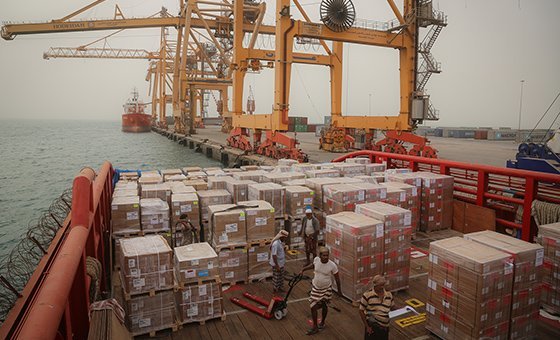
With Hudaydah responsible for 70 per cent of Yemen’s commercial imports and 80 per cent of humanitarian deliveries, the stakes are high.

© UNICEF/Mahmoud Alfilastini

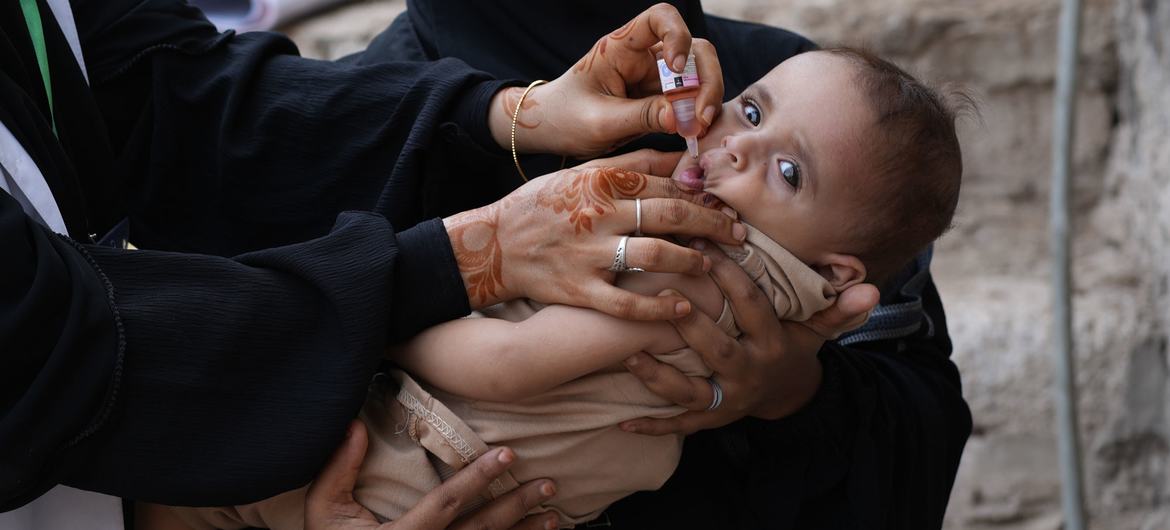
A child receives a polio vaccination in Yemen.

Polio vaccination drive

Meanwhile, a new round of polio vaccinations is underway in Government-controlled areas of southern Yemen, amid mounting concerns over the continued spread of the virus.  

From 12 to 14 July, health workers deployed across 12 governorates, aimed at curbing the outbreak of variant type 2 poliovirus.

The campaign, led by Yemen’s Ministry of Public Health with support from UN Children’s Fund (UNICEF) and World Health Organization (WHO), came as 282 cases have been reported since 2021, with environmental surveillance confirming ongoing transmission.

The campaign is essential to interrupt transmission and protect every child from the debilitating effects of polio,” said Ferima Coulibaly-Zerbo, acting WHO Representative in Yemen.

UNICEF’s Peter Hawkins echoed the urgency, warning of the “imminent threat” to unvaccinated children if immunisation gaps persist.

“But, through vaccination, we can keep our children safe,” he said.

Source link

UN chief condemns latest Houthi attacks on Red Sea shipping

According to news reports, the Yemen-based rebel group – which has been battling the internationally-recognised Government for control of the country since the early 2010s – attacked the Liberian-flagged, Greek-operated Eternity C on Monday and again on Tuesday, causing it to sink on Wednesday morning.

Four crew members are reported to have died.

With 15 crew still missing as of Friday, the group also reportedly took an unspecified number of the seafarers to what rebels described as a “safe location.”

Weekend assault

This came after the Houthis launched missiles and drones at another Liberian-flagged, Greek-operated cargo ship in the Red Sea on Sunday, Magic Seas. The crew was forced to abandon ship, but all 22 members were rescued, according to reports.

Since the start of the war in Gaza in October 2023, the Houthis have targeted Israeli and commercial ships in the Red Sea deemed to be en route to Israel, in solidarity with Palestinians in the enclave.

In May, following US airstrikes on Houthi strongholds and missile infrastructure, the group agreed a deal with Washington to stop targeting US warships – however, they did not pledge to end attacks on other vessels allegedly linked to Israel.

Strong condemnation: Guterres

UN Spokesperson Stéphane Dujarric read a statement from Secretary-General António Guterres on Friday at UN Headquarters, saying the UN chief “strongly condemns the resumption of Houthi attacks on civilian vessels transiting the Red Sea, especially the attacks that took place over 6 to 8 July 2025.”

Mr. Guterres said the “unacceptable” attacks endangered the safety and security of crewmembers, violated freedom of navigation, disrupted maritime transport, and posed serious environmental, economic, and humanitarian risks.

Mr. Guterres also emphasised that international law must be respected by all parties, stressing that UN Security Council resolution 2768 related to Houthi attacks against merchant and commercial vessels must be fully respected.

The United Nations remains committed to continuing its efforts towards broader de-escalation in the region as well as continued engagement with Yemeni, regional and international actors to secure a sustainable and peaceful resolution to the conflict in Yemen,” he concluded.

Source link

At least eight drown in Red Sea as smugglers force migrants overboard

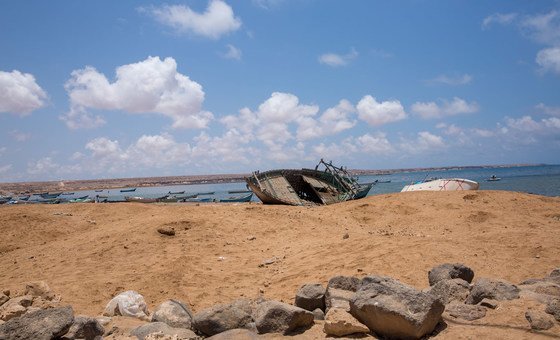
At least eight people are feared dead and 22 others are missing after smugglers stopped a boat carrying around 150 passengers likely bound for Yemen on 5 June.

“These young people were forced into impossible choices by smugglers who show no regard for human life,” said Celestine Frantz, the UN migration agency’s Regional Director for the East, Horn and Southern Africa. “We are doing everything we can to support the survivors and prevent further loss along this deadly route.”

Rescue mission

Search and rescue operations supported by the International Organization for Migration, IOM, have recovered five bodies from the sea near Moulhoulé in northern Djibouti. The confirmed death toll stands at eight but this is expected to rise as search efforts continue.

IOM said that in the days following the incident, many of those rescued were found in the desert by the UN agency’s mobile patrols. They are now receiving urgent medical care at a local hospital and psychosocial support at the IOM-run Migrant Response Center in Obock, Djibouti.

Thousands of migrants from the Horn of Africa risk their lives every year to reach the Gulf States via Yemen where they hope to find work.

So far this year, 272 people have been confirmed dead on the Eastern Mediterranean migrant route which includes the Djibouti to Yemen leg. This includes both land and sea routes, according to IOM data.

“This latest tragedy is part of a series of fatal maritime incidents off the coast of Djibouti, underscoring the urgent need for stronger protection mechanisms for migrants along the migration route between the Horn of Africa and Yemen,” IOM said.
Warning that this latest deadly incident is part of a growing crisis, the UN agency has called for increased international support to strengthen search and rescue operations and expand access to safe migration pathways.

Libya focus

In a related development, IOM reported on Tuesday that the bodies of 10 migrants had washed ashore near Marsa Matrouh in Egypt.

The dead are believed to have set sail from the Libyan coast which is often used by people smugglers to traffic migrants across the Mediterranean Sea to Europe.

More than 32,000 people are known to have drowned in the Mediterranean Sea since 2014 “with an unknown number still missing”, IOM’s Missing Migrants Project said.

Source link