53 migrants die in latest shipwreck tragedy off Libya coast

According to the International Organization for Migration (IOM), the boat overturned in the perishingly cold waters of the central Mediterranean Sea, north of the coastal town of Zuwara last Friday. 

It is just the latest deadly incident involving vulnerable people on the move who are frequently mistreated and trafficked by smuggling gangs that have flourished in Libya since the overthrow of President Muammar Gaddafi in 2011.

IOM said that the Libyan authorities rescued two Nigerian women from last Friday’s shipwreck; one said that her husband had drowned while the other reported that both her babies had died.

The survivors explained that the vessel had been carrying migrants and refugees from several African countries. It had set off from Zawiya at about 11pm on Thursday and began taking on water six hours later, before capsizing.

It is not yet known where the travellers were heading for, but many migrant and refugee boats leaving Libya set sail for the Italian island of Lampedusa, which is around 350 kilometres (220 miles) away from Zawiya. The open rubber dinghies they often sail in are totally unsuitable for such a journey, UN aid teams have often warned.

At least 375 people have been reported dead or missing in January alone in the central Mediterranean, according to IOM, missing migrants database. The UN agency warned that this is just the latest shipwreck to have happened amid severe winter weather, with many more tragedies feared unrecorded.

Smuggling and trafficking networks continue to profit from desperate people by sending them to sea in unseaworthy boats, IOM noted, as it renewed calls for greater international cooperation and safer, legal routes for migration.

So far this year, 781 migrants have been “intercepted and returned” to Libya, the UN agency said, with 244 taken back just last week. This compares with 27,116 last year including 1,314 reported deaths or missing persons.  

Held in detention underground

“IOM does not consider Libya to be a safe port for migrants,” IOM insisted, after highlighting the dangers migrants continue to face following the discovery of more mass graves and detention sites in the east of the country.

“Investigations indicate that the victims had been held in captivity and subjected to torture to coerce ransom payments from their families,” IOM said in a statement, following a raid by the authorities on an illegal detention site in Ajdabiya. 

In Kufra, authorities discovered an underground detention site three metres underground. A total of 221 migrants and refugees were released, including women, children and a one-month-old baby. “Initial information suggests that the migrants had been held for a prolonged period in grossly inhumane conditions,” IOM said.

To help vulnerable people on the move, IOM supports voluntary flights home for foreign nationals. This includes one last week for Pakistani nationals who had reached Tripoli. In late January the agency helped 177 Nigerian migrants return home on another voluntary humanitarian flight

And in a bid to dismantle trafficking networks and support survivors, the UN agency works with national and regional authorities to strengthen cross-border cooperation. 


Source link

World News in Brief: Gaza aid crisis latest, deadly floods in India and Pakistan, funding cuts exacerbate Somalia drought

In an alert from the World Food Programme (WFP), the agency said that half a million people “are on the brink of famine”, a claim backed up by multiple humanitarian agencies. The latest worrying data is showing widespread acute malnutrition.

A ceasefire is the only way to scale up aid deliveries, the UN agency insisted. It explained that although teams are doing everything they can to deliver food assistance, only 47 per cent of the daily target amount is getting in.

No meals, no bread

Unless the fighting stops, organized aid distributions and WFP-supported hot meals and bakeries can’t restart, the agency stated.

The UN relief agency for Palestine refugees, UNRWA, reported on Monday that instead of being able to prepare for the start of a new school year, children in Gaza are instead searching for water and queuing for food while their classrooms have “turned into crowded refuges”.

Three years of schooling has now been lost, the agency stressed in a tweet.

UN chief expresses ‘deep sorrow’ over deadly flash floods in India and Pakistan

UN Secretary-General António Guterres on Monday expressed his deep sorrow at the tragic loss of life due to flash floods in India and Pakistan in recent days, with many still missing and forecasts showing the possibility of further flooding and landslides ahead.

Indian rescue services responded to a deadly flood on Friday which reportedly killed at least 60 after it crashed through a village in the Himalayas while in remote villages of northwestern Pakistan, torrents of water killed more than 300, according to news reports.

Hundreds were also injured, Pakistani authorities reported. Buner district was the worst hit, with more than 200 deaths reported there, said the provincial disaster management authorities.

Standing in solidarity

“The Secretary-General offers his sincere condolences to the victims’ families and stands in solidarity with those affected by this disaster,” said the statement issued by his Spokesperson.

UN country teams in India and Pakistan have also been placed are at the disposal of authorities although no request for assistance has been made so far.

Impacts of Somalia drought made worse by funding cuts: OCHA

In Somalia, severe drought and funding cuts are undermining lifesaving assistance there, the UN aid coordination office, OCHAsaid on Monday.

Because of the reduction in the amount of support for aid work, food assistance has declined, health centres are closing and malnutrition is high, the UN agency warned.

OCHA said that 4.6 million people now face high levels of food insecurity while two million more are at risk from funding cuts.

Funding cuts mean ‘lives lost’

Without scaled-up support, “lives will be lost and progress reversed” across the east African nation, where cash shortfalls have left one million people without food assistance every month.

The global trend seeing less humanitarian assistance has curtailed vital support for healthcare across Somalia. So far this year, it has impacted at least 150 medical facilities and left hundreds of thousands of Somalis without the medical care they need.

OCHA noted that because of the cuts, the number of people being targeted for assistance in Somalia has had to be reduced by a staggering 72 per cent.

Source link

Malnutrition deaths mark ‘latest in the war on children’ in Gaza: UNRWA chief

These young deaths are “the latest in the war on children and childhood in Gaza,” Philippe Lazzarini, head of UN Palestine refugee agency UNRWA, said in a tweet on Wednesday.

The toll also includes some 40,00 boys and girls reported killed or injured due to bombardment and airstrikes, at least 17,000 unaccompanied and separated children, and one million deeply traumatised youngsters who are not getting an education. 

“Children are children,” he said.

 “No one should stay silent when children die, or are brutally deprived of a future, wherever these children are, including in Gaza.”

A sombre reunion

Thousands of sick children in Gaza need urgent medical evacuation, according to UN aid coordination office OCHA.

Olga Cherevko, a spokesperson for the agency, recalled the moment she recognized a young girl requiring treatment in a Gaza hospital after a year’s interval, once again suffering from malnourishment.

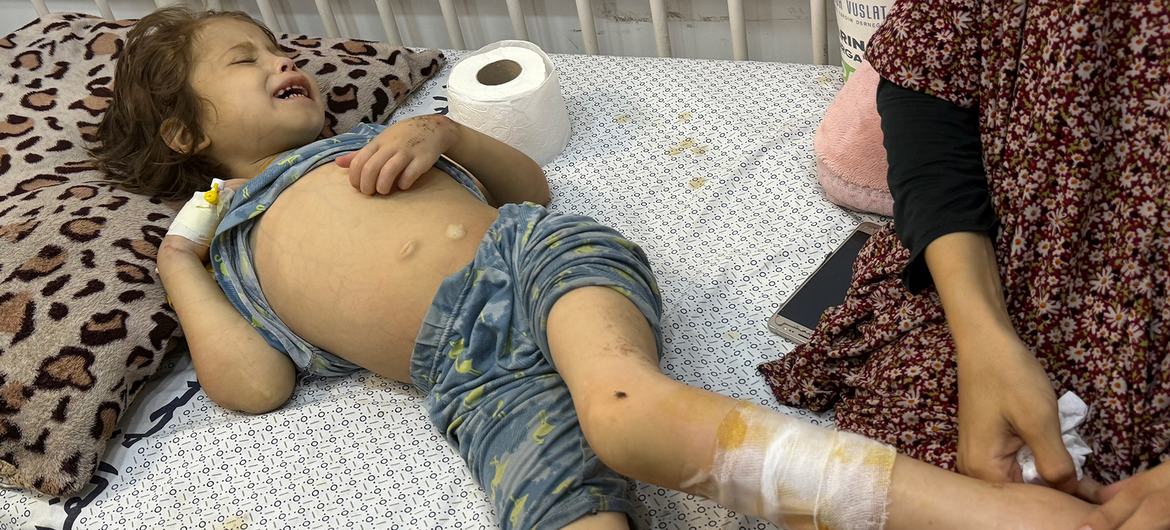
“I remembered her long eyelashes,” the veteran humanitarian told UN News, describing seven-year-old Janah, who she came across at Gaza City’s Patient Friendly Hospital on Tuesday.

“The first time I met her was in the IMC Field Hospital in southern Gaza in April 2024. Back then, she was severely malnourished and was getting treatment. And she gradually became better and was released eventually and went home.”

Seven-year-old Janah is treated at Gaza City’s Patient Friendly Hospital.

Evacuation saves lives

However, Janah was now back in hospital “because the malnutrition became aggravated and the condition that she has also is not properly diagnosed and cannot be properly diagnosed.” 

The girl is on a list of people to be medically evacuated for treatment outside Gaza.  The most recent evacuations took place last week when the World Health Organization (WHO) supported the transfer of 15 critically ill children to Jordan, but more than 14,800 people are still waiting.

Ms. Cherevko stressed the importance of ensuring that evacuations continue to save as many lives as possible.

More aid needed

She also pointed out that for children and adults with pre-existing conditions, their situation becomes worse with malnutrition.

“It wouldn’t be this way if they had proper nutrition, because these conditions existed before the starvation crisis and they weren’t getting as sick as they are now,” she said.

“This is why it’s imperative to make sure that we have proper conditions on the ground for adequate volumes of supplies to be entering – everything from food to medicine to nutrition to shelter,” she continued. 

“And these lifelines have to be really enabled for us to be able to deliver this aid to the people in need.” 

Source link

UN chief condemns latest Houthi attacks on Red Sea shipping

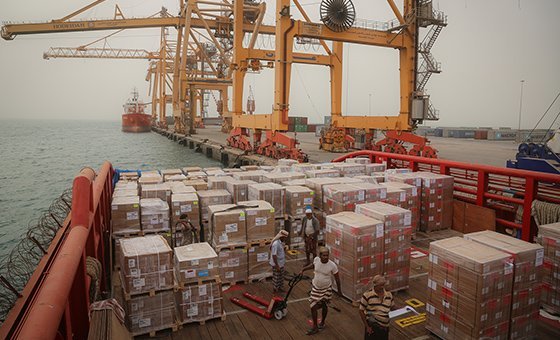
According to news reports, the Yemen-based rebel group – which has been battling the internationally-recognised Government for control of the country since the early 2010s – attacked the Liberian-flagged, Greek-operated Eternity C on Monday and again on Tuesday, causing it to sink on Wednesday morning.

Four crew members are reported to have died.

With 15 crew still missing as of Friday, the group also reportedly took an unspecified number of the seafarers to what rebels described as a “safe location.”

Weekend assault

This came after the Houthis launched missiles and drones at another Liberian-flagged, Greek-operated cargo ship in the Red Sea on Sunday, Magic Seas. The crew was forced to abandon ship, but all 22 members were rescued, according to reports.

Since the start of the war in Gaza in October 2023, the Houthis have targeted Israeli and commercial ships in the Red Sea deemed to be en route to Israel, in solidarity with Palestinians in the enclave.

In May, following US airstrikes on Houthi strongholds and missile infrastructure, the group agreed a deal with Washington to stop targeting US warships – however, they did not pledge to end attacks on other vessels allegedly linked to Israel.

Strong condemnation: Guterres

UN Spokesperson Stéphane Dujarric read a statement from Secretary-General António Guterres on Friday at UN Headquarters, saying the UN chief “strongly condemns the resumption of Houthi attacks on civilian vessels transiting the Red Sea, especially the attacks that took place over 6 to 8 July 2025.”

Mr. Guterres said the “unacceptable” attacks endangered the safety and security of crewmembers, violated freedom of navigation, disrupted maritime transport, and posed serious environmental, economic, and humanitarian risks.

Mr. Guterres also emphasised that international law must be respected by all parties, stressing that UN Security Council resolution 2768 related to Houthi attacks against merchant and commercial vessels must be fully respected.

The United Nations remains committed to continuing its efforts towards broader de-escalation in the region as well as continued engagement with Yemeni, regional and international actors to secure a sustainable and peaceful resolution to the conflict in Yemen,” he concluded.

Source link

Plague of rats and insects provide latest challenge for war-shattered Gazans

One displaced woman told UN News’s correspondent in Gaza: “In all camps, we suffer from biting insects, especially fleas,” adding that “our children suffer from severe pain due to itching and stinging.

“We tried to treat it in simple ways, but the right medicines are not available at the medical centre.”

While biting insects found in Gaza are not immediately life-threatening, the presence of rodents, including rats, can increase the risk of the spread of infectious diseases which the health system in Gaza may be unable to treat.

Inadequate sanitation

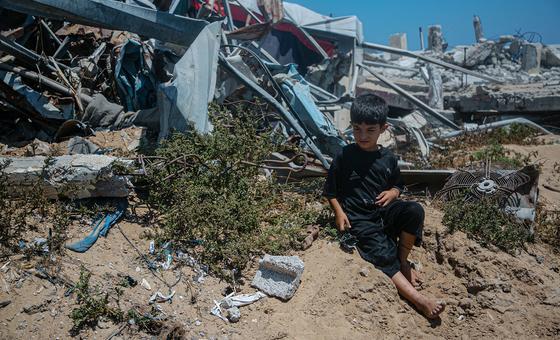
The lack of adequate sanitation, including limited access to clean toilets, general overcrowding as people try to find places to live amongst the rubble of Gaza – and the challenges of removing rubbish from the streets – have amplified the threat posed by rats.

Teams from UNRWA, the UN agency which supports the people of Gaza, have initiated intensive clean-up operations as well as environmental and health awareness campaigns. The number of dermatology consultations in health facilities has also increased.

UNRWA workers are actively moving through tents for displaced people in Khan Younis in the southern part of the Gaza Strip spraying pesticides to counter the spread of insects, fleas and rodents.

Uncollected trash in Gaza is encouraging rats.

UNRWA teams have worked in approximately 50 displacement sites in the Mawasi area of ​​Khan Younis.

They have focused on locations where there is overcrowding, improper waste disposal, the presence of livestock and the lack of hygiene materials.

“Because of the intense heat and sleeping on the sand, we were exposed to biting insects, rodents, and mosquitoes,” said one resident as he watched an UNRWA environmental health officer spraying insecticides around temporary shelters.

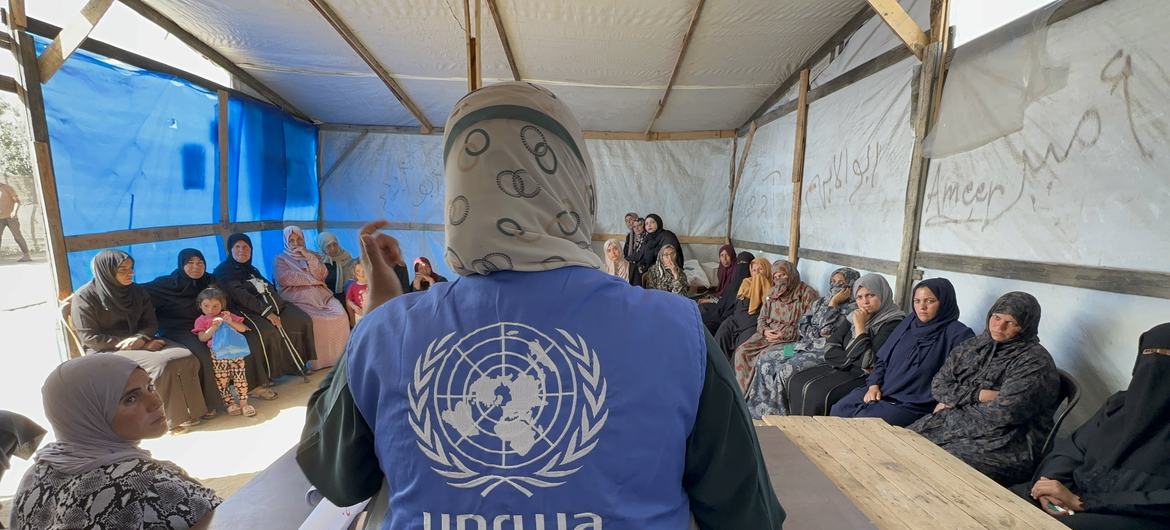
A doctor from UNRWA’s Environmental Health team explains to mothers how to treat insect bites.

Educational Sessions

In a nearby tent, a group of women gathered around awareness-raising instructors from the agency’s Environmental Health Office for an educational session on how to guard against insects and rodents.

The meetings target women, girls and adolescents to familiarize them with how to face this health challenge.

Meanwhile, Gaza continues to struggle since the 7 October 2023 attacks by Hamas on Israel precipitated the shattering conflict.

No humanitarian aid or supplies have entered the Gaza Strip since 2 March 2025, due to Israel’s total blockade.

UNRWA says vital humanitarian supplies, including food, fuel, medical aid and vaccines for children, are almost exhausted.

The agency warned that pesticide stocks are expected to run out within days in southern Gaza, while they have already run out in the central areas and north of the Strip.