Somalia declares drought emergency as millions face hunger after failed rains

On 10 November, the Federal Government of Somalia formally declared a drought emergency and appealed for urgent international assistance as conditions continued to deteriorate across northern, central and southern regions, according to the UN relief coordination office, OCHA.

Puntland is among the worst affected areas, where authorities estimate that nearly one million people need support, including 130,000 in immediate life-threatening need.

A UN assessment mission to Bari and Nugaal regions earlier this month found communities grappling with acute water and food shortages, with residents warning that catastrophe could unfold in the coming months.

“We have not received rain since last year; this is the worst drought in years,” said Abdiqani Osman Omar, the mayor of Shaxda village in Bari region.

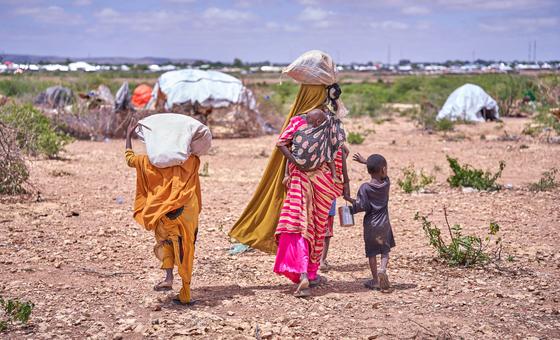
“Hundreds of displaced families moved here three months ago, and more are coming. The new arrivals are mostly women and children as the men have moved to nearby Ethiopia in search of pasture and water.”

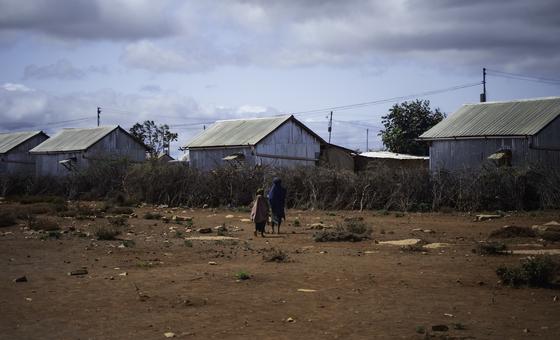
The village has no capacity to support them, he added, stating that even host communities need water and food assistance.

Dried up water sources, abandoned settlements

Across Puntland, water points have dried up, vegetation has withered and once-inhabited pastoral settlements now stand abandoned.

In Dhaxan town, where brief Gu’ season (April-June) showers offered short-lived hope earlier this year, residents are now dependent on expensive trucked water after the local borehole was found to be contaminated.

Community leader Jama Abshir Hersi said around 150 families moved to the town after the rains.

“We used to receive food and nutrition assistance, and medical supplies for our health unit. All that assistance has dwindled,” he said.

Funding shortfalls

Funding shortfalls are compounding the crisis.

As of 23 November, Somalia’s 2025 Humanitarian Response Plan was only 23.7 per cent funded, forcing major reductions in assistance. The number of people receiving emergency food aid plunged from 1.1 million in August to just 350,000 this month.

In Puntland alone, 89 supplementary feeding sites and 198 health and stabilization centres are facing severe supply shortages.

Millions going hungry

The drought is unfolding amid an already dire humanitarian landscape. At least 4.4 million people are projected to face acute food insecurity through December, while 1.85 million children under five are expected to suffer acute malnutrition through mid-2026.

Weather forecasts indicate little immediate relief. The UN Food and Agriculture Organization (FAO) warned that dry and hot conditions are expected to persist across most of the country, particularly in central and northern regions.

“The prevailing high temperatures and poor rain are likely to exacerbate water stress and limit pasture regeneration in most areas,” the agency said.

World News in Brief: Gaza aid crisis latest, deadly floods in India and Pakistan, funding cuts exacerbate Somalia drought

In an alert from the World Food Programme (WFP), the agency said that half a million people “are on the brink of famine”, a claim backed up by multiple humanitarian agencies. The latest worrying data is showing widespread acute malnutrition.

A ceasefire is the only way to scale up aid deliveries, the UN agency insisted. It explained that although teams are doing everything they can to deliver food assistance, only 47 per cent of the daily target amount is getting in.

No meals, no bread

Unless the fighting stops, organized aid distributions and WFP-supported hot meals and bakeries can’t restart, the agency stated.

The UN relief agency for Palestine refugees, UNRWA, reported on Monday that instead of being able to prepare for the start of a new school year, children in Gaza are instead searching for water and queuing for food while their classrooms have “turned into crowded refuges”.

Three years of schooling has now been lost, the agency stressed in a tweet.

UN chief expresses ‘deep sorrow’ over deadly flash floods in India and Pakistan

UN Secretary-General António Guterres on Monday expressed his deep sorrow at the tragic loss of life due to flash floods in India and Pakistan in recent days, with many still missing and forecasts showing the possibility of further flooding and landslides ahead.

Indian rescue services responded to a deadly flood on Friday which reportedly killed at least 60 after it crashed through a village in the Himalayas while in remote villages of northwestern Pakistan, torrents of water killed more than 300, according to news reports.

Hundreds were also injured, Pakistani authorities reported. Buner district was the worst hit, with more than 200 deaths reported there, said the provincial disaster management authorities.

Standing in solidarity

“The Secretary-General offers his sincere condolences to the victims’ families and stands in solidarity with those affected by this disaster,” said the statement issued by his Spokesperson.

UN country teams in India and Pakistan have also been placed are at the disposal of authorities although no request for assistance has been made so far.

Impacts of Somalia drought made worse by funding cuts: OCHA

In Somalia, severe drought and funding cuts are undermining lifesaving assistance there, the UN aid coordination office, OCHAsaid on Monday.

Because of the reduction in the amount of support for aid work, food assistance has declined, health centres are closing and malnutrition is high, the UN agency warned.

OCHA said that 4.6 million people now face high levels of food insecurity while two million more are at risk from funding cuts.

Funding cuts mean ‘lives lost’

Without scaled-up support, “lives will be lost and progress reversed” across the east African nation, where cash shortfalls have left one million people without food assistance every month.

The global trend seeing less humanitarian assistance has curtailed vital support for healthcare across Somalia. So far this year, it has impacted at least 150 medical facilities and left hundreds of thousands of Somalis without the medical care they need.

OCHA noted that because of the cuts, the number of people being targeted for assistance in Somalia has had to be reduced by a staggering 72 per cent.

Source link

A two-way street: Reversing brain drain in Somalia

So the crisis continues. And the brain drain intensifies.  

But what if there was a way to reverse brain drain? This is the question that the International Organization of Migration (IOM) has been asking about Somalia.

“There has been a lot of brain drain in Somalia. How do we bring back those skills that they have been able to achieve in their country of residence to their country of origin?” said Yvonne Jepkoech Chelmio, an IOM official focused on labour and migration in Africa.  

The IOM’s Migration in Africa for Development Programme (MIDA) selects members of the Somali diaspora who are experts in their chosen fields and places them in local hospitals, schools and national ministries in order to build Somalia’s self-sufficiency.

In the past 20 years, MIDA has sponsored the return of over 400 Somalis from 17 different countries. These returnees have worked in many fields — including education and health, as well as climate action, urban planning and the rule of law — all with the hope of advancing sustainable development in Somalia.

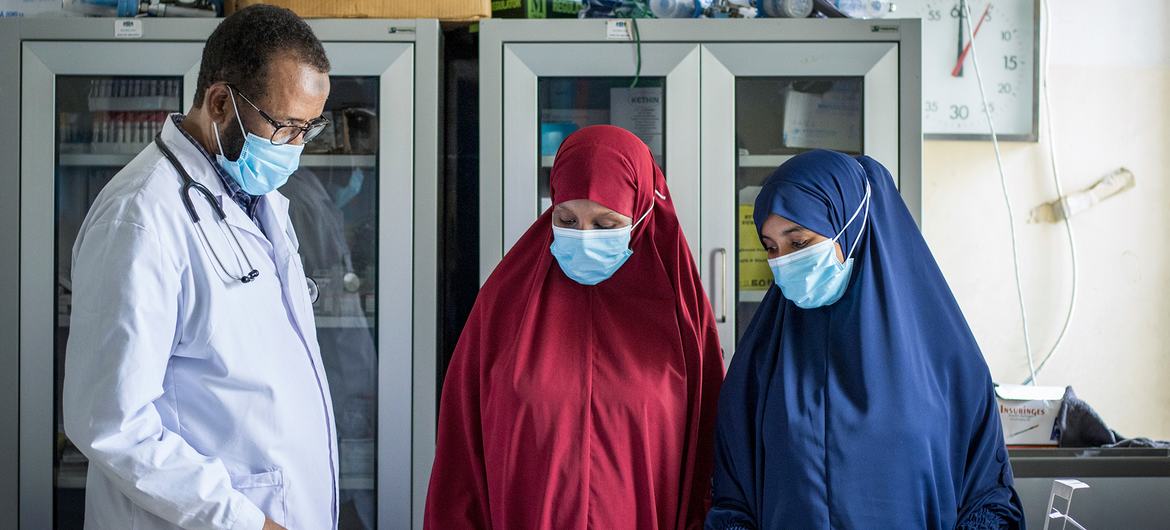
Through the MIDA program, Somali diaspora were placed in hospitals to mentor local doctors.

‘Drivers of change’

The Somali Civil War which began in 1991 provoked mass displacement, both internally and externally. More than 30 years later, the situation has improved but security continues to be an issue, which in turn is imperilling sustainable development.

“What happens in countries like Somalia is someone becomes skilled in a field, educated, they don’t want to stay here. So you lose talent, you lose skill,” said pedagogy expert, Shire Salad, a diaspora participant in the MIDA program who was placed in the Ministry of Education to work alongside their evaluation development team.  

With two million Somalis living abroad, the Somali diaspora has long played an integral role in the country’s economy. The money they send back as remittances sometimes outpaces direct foreign aid, totalling over $2 billion annually and contributing at least one-third of the national GDP.

© IOM/Spotlight Communications

Solar panels provide consistent power to the university in Abudwaq, Galmadug.

But MIDA deviates from a solely economic understanding of the diaspora’s contributions, instead creating avenues for their return which emphasise their technical skills, expertise and international networks. 

“[The diaspora] serve as bridges, as ambassadors, as drivers of change and development actors,” said Nasra Sheikh Ahmed, one of the IOM officials in charge of the programme.

And according to Ms. Ahmed, who is a member of the Somali diaspora herself, one of the most remarkable things about the MIDA programme is that it seizes upon something which already exists — the Somali diaspora wants to return.  

“[The diaspora] still see it as their home. They’re not immigrants in another country. They still see themselves as Somalis. They see themselves as an extension, basically just living somewhere else.”  

Education at the core

While the MIDA programme has operated across many sectors  one of the main sectors on which the MIDA programme has focused is education.  

Mohamed Gure, a professor at Somali National University, participated in the MIDA programme as a local professional who worked alongside members of the diaspora to improve the curriculum for aspiring teachers.  

When Dr. Gure began his studies years ago, he said that there were no programmes in Somalia which offered a doctoral degree in education. So he, like many others, went abroad.

Today, he sees a new sort of problem — not enough Somalis want to become teachers, and those that do believe that they do not need a formal training.  

“Teachers in the classroom do not have training in being a teacher. This will affect the quality of education in Somalia in the long-term,” Dr. Gure said.  

Over the course of a few years, Dr. Gure worked alongside diaspora professionals to develop a new curriculum and create a lasting partnership with the University of Helsinki in Finland.  

For him, the benefits of this new curriculum are already clear — students are learning more, and the online collaborations with students in Helsinki are creating an international network of expertise.

“All this [training] is a resource for the country. All the curricula that were developed for the country will remain. It will be used by lecturers who can train other lecturers,” Dr. Gure said.  

The MIDA program has focused on empowering the education sector in Somalia.

A two-way street

Partnerships, like that which Dr. Gure experienced, are an essential part of the MIDA programme’s long-term impact, ensuring that even after the diaspora professional leave, their contributions remain.  

“We have not just provided skills transfer to two people, but these two people can now transfer to four people. So there’s more sustainability in terms of process,” Ms. Chelmio said.

But this skills transfer is not without challenges. Many of the diaspora who are returning to Somalia have been gone for years, sometimes decades. The Somalia to which they return is quite different from the one they left.  

“Although you may speak the language and you may understand that culture, they still see you as a foreigner,” said Dr. Salad, who left Somalia when he was quite young and “returned with grey hairs.” 

Adapting expertise to the Somali context is essential for sustainable development, and this is something that the local professionals are uniquely equipped to do, creating a two-way street with both parties acting as experts in their own right.

“[The diaspora] don’t understand the context, the dynamic of the country itself. The local expert is able to give the diaspora expert the perspective,” Ms. Chelmio said.  

A future in which Somalis stay

MIDA has, in small ways, reversed the brain drain of the past decades. It has brought back hundreds of diaspora members. And even if they have not stayed, their skills and expertise have.  

But, Somalis are still leaving the country, risking their lives on boats to the Gulf and to Europe out of pure hopelessness And many of them die.  

Dr. Salad hopes that one day for Somalia, there will be no brain drain to reverse.  

“If they had hope in this country, they would have stayed. If they believed this country was going to be a better country, they would have stayed. My hope is that younger generations will have that hope, that they will stay.” 

Source link

World News in Brief: Funding schools in Afghanistan, Seaweed farming in Latin America, drought in Somalia

The agency plans to procure over 1,200 metric tons of fortified biscuits, which will provide 200,000 primary school-aged girls and boys with sustenance for around three months.  

“For many children, the daily snack they receive in the first break of the day is often their only nutritious meal, giving them the energy to stay healthy, focused, and ready to learn,” said Mutinta Chimuka, Deputy Country Director for WFP in Afghanistan.  

Food security  

“WFP in Afghanistan launched its school feeding programme more than two decades ago to link food security and better nutrition with education,” said Ms. Chimuka.

School feeding activities have played a crucial role in improving attendance, retention and learning outcomes.

Primary schools participating in the programme saw enrollment increase by nearly 11 percent in 2024 compared to 2023, while attendance also improved, reaching an average of 87 per cent in the classroom, two percentage points above WFP’s target.

Seaweed farming, a potential key driver of sustainable development in Latin America

In the last decade, seaweed farming grew by 66 percent in Latin America and the Caribbean, a new report from the Food and Agriculture Organization (FAO) has found.

The practice of cultivating and harvesting seaweed or algae in the marine environment offers a relatively low-carbon method to produce highly nutritious food while supporting rural livelihoods, according to international experts gathered at a regional workshop in Chile.  

Seaweed farming is vital to sustainable coastal development in Latin America, experts argue, highlighting its nutritional value and the need for clearer, coordinated regulation.

Untapped potential

Expanding seaweed cultivation holds significant untapped potential for sustainable development in Latin America and the Caribbean.

However, while countries like Brazil, Chile and Venezuela lead production, most initiatives across the region remain small-scale.  

Yet, with a 66 per cent increase over the past decade, experts see major opportunities for growth. Supporting emerging producers, diversifying species and investing in research and technology – including AI and biotechnology – could  deliver both economic and environmental benefits.  

Strengthening community participation, particularly among women and youth, will also be essential. With coordinated action and inclusive policies, seaweed farming could become a key driver of resilient coastal development.

Hundreds of thousands impacted by severe drought in Somalia

Hundreds of thousands of people have been impacted by severe drought in Somalia’s central and northern regions, according to the UN’s humanitarian coordination office, OCHA.  

With food insecurity escalating, dwindling access to water and pasture and major disruption to livelihoods, a joint assessment by UN agencies and partners is currently underway in Puntland and Somaliland to determine key needs.

Wells run dry

An analysis from the Food and Agriculture Organization (FAO) noted that more than 880,000 Somalis are currently living in severely drought-affected areas across 16 districts, humanitarians on the ground reported that water wells have dried up and that more than 160 boreholes are no longer functioning.

Although the UN-managed Somalia Humanitarian Fund is preparing to allocate resources for urgent life-saving assistance, only 17 per cent of the plan has been funded to date. 

Source link

World News in Brief: Hunger in the English- and Dutch-speaking Caribbean, climate and displacement crisis in Somalia, World Breastfeeding Week

Across the region, nations face food-related challenges notably due to geographical remoteness, lack of local available resources and exposure to climate change. 

“The Caribbean is particularly vulnerable to natural hazards and supply chain disruptions, which can cause increases in food prices,” said, Brian Bogart. head of WFP for the region.

“It’s deeply concerning that many people are struggling to afford the food they need,” he said. 

Supply chain challenges

Rising food prices are a major concern for the region, with food inflation consistently outpacing overall inflation rates, with local production efforts challenged by increasing operational costs. 

In 2025, 30 per cent of Caribbean people reported eating less than usual, a trend notably triggered by increased food costs and global geopolitical factors.

As the region significantly relies on imported agricultural inputs, “strengthening and diversifying supply chains and trade routes across the region is essential,” said Mr. Bogart. 

He added that in a region particularly impacted by climate disasters, “these efforts will help make food more accessible and affordable while supporting faster recovery in times of crisis.” 

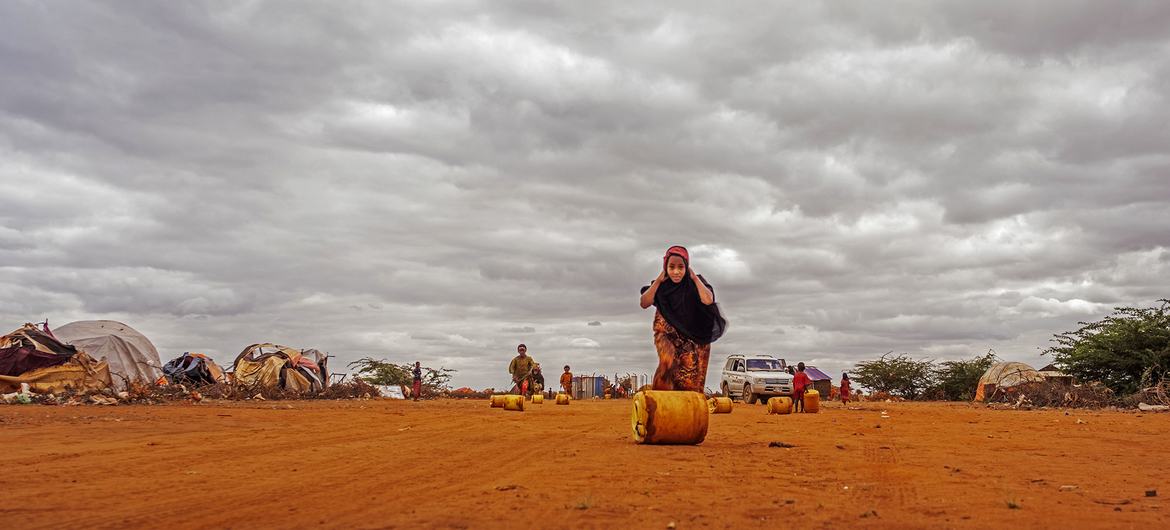
A girl moves a container full of water at a site for displaced people in Dolow, Somalia. (file)

UN migration agency highlights deepening climate and displacement crisis in Somalia

Climate shocks and mass displacement caused by conflict have uprooted some 3.6 million people in Somalia, according to the International Organization for Migration (IOM). 

Almost half the population has been impacted by the climate crisis, the UN agency added.

IOM Deputy Director General Ugochi Daniels concluded a four-day visit to Somalia this week where she expressed solidarity for communities who continue to endure relentless droughts, floods and conflict.

Ms. Daniels also noted that communities are finding solutions to withstand the worst impacts of the climate crisis, but they need international support from the Green Climate Fund urgently.

IOM is active across Somalia in displacement sites and in rural and other fragile areas. Its work includes promoting land restoration and so-called “environmental peacebuilding”, which aims to reduce tensions over shared resources.

Another IOM initiative encourages Somalis to invest in their own development by providing additional funding.

Last year, communities contributed more than half a million dollars toward projects such as solar energy, clean water access and small-scale farming – investments all matched by more than $2 million from IOM. 

World Breastfeeding Week: Invest in health systems and policies to benefit mums and babies

This Friday (1 August) marks the start of World Breastfeeding Week and this year’s theme calls for investing in health systems as well as policies, laws and programmes that prioritize women, babies and breastfeeding.

The World Health Organization (WHO) said investing in breastfeeding support is one of the most powerful tools policy-makers have to improve public health, strengthen economies, and secure the well-being of future generations.

The UN agency explained that breastfeeding protects child health and improves survival, especially in the first months of life.  For infants, breastmilk is more than food: it also provides protection against many common illnesses like diarrhoea, pneumonia and infections.

Mothers also benefit as breastfeeding reduces the risk of postpartum haemorrhage, as well as breast and ovarian cancers, heart disease, and type 2 diabetes.

WHO urges governments to allocate dedicated funding for breastfeeding support, including for when new mums come home, along with maternity protections like paid leave after giving birth. 

Source link

World News in Brief: Violence in Somalia, cholera in Haiti, tax support for sustainable development

Clashes intensified in the town of Mahas in the Hiraan region, Hirshabelle state, on 26 July forcing the entire population – over 28,000 people – to flee their homes. 

Another 38,000 people were displaced in the Gedo region, Jubaland state, between 23 and 26 July, some of whom crossed into Kenya. 

Security concerns have forced seven health facilities in the Hiraan region to suspend operations, leaving thousands of people without essential healthcare and emergency services. Humanitarian access also has been restricted, particularly in areas that were already hard to reach.  

OCHA noted that only a limited number of aid partners are able to operate in these locations given the insecurity as well as financial constraints. Meanwhile, affected communities urgently need shelter, food, clean water, healthcare and protection. 

The situation is unfolding as aid agencies grapple with severe funding cuts. A $1.4 billion humanitarian plan for Somalia this year is around 16 per cent funded, with $229 million received to date.

Cholera haunts displaced families in Haiti

Cholera continues to impact the fragile public health system in Haiti, particularly in sites hosting displaced people where there is limited access to safe water and sanitation.

The Caribbean country is confronting multiple political, security and socio-economic crises, including rampant gang activity mainly in the capital, Port-au-Prince.  

The UN World Health Organization (WHO) said that between 13 and 19 July, 34 new suspected cholera cases were reported across six of the nation’s 10 departments. Most were linked to displacement sites. 

Five active transmission hotspots have been identified, including in Port-au-Prince and in the northern regions. 

Since December 2024, over 2,800 suspected cholera cases have been recorded across Haiti, with 91 laboratory-confirmed cases and 36 fatalities. 

Despite funding shortfalls, UN humanitarian partners continue to carry out key cholera prevention and response activities. 

Families in Artibonite department received water purification tablets and oral rehydration salt, for example, while partners in central Haiti have installed handwashing stations and scaled up community outreach. 

Experts to help countries create tax policies that advance sustainable development

Secretary-General António Guterres has appointed 25 experts to a UN committee to help countries design tax policies that advance their social, environmental and economic development objectives. 

The UN Committee of Experts on International Cooperation in Tax Matters supports governments in navigating complex policy trade-offs.  Its work provides countries with practical options and tools based on real-world experiences from tax systems across the globe. 

The 25 experts, who will serve for the 2025-2029 term, have diverse expertise in tax policy design and administration, as well as international tax cooperation. 

They represent various geographical regions and tax systems, and the majority are women, reflecting the UN’s commitment to strengthening inclusivity in tax leadership. 

Source link

Power to the people; funding community-led development in Somalia

In the heart of Galmudug State, Somalia, the dream of two young women, Iftin and Aminaa, to attend university in Abudwaq was fraught with challenges.

Frequent power cuts and a long, dark and possibly dangerous road between the campus and town made it nearly impossible for them and other girls to attend evening classes.

Determined to find a solution, they approached the International Organization for Migration’s (IOM) Co-Funding System (CFS), which provides matching funding for community-led projects and which is designed to empower local communities in Somalia to take charge of their development and recovery.

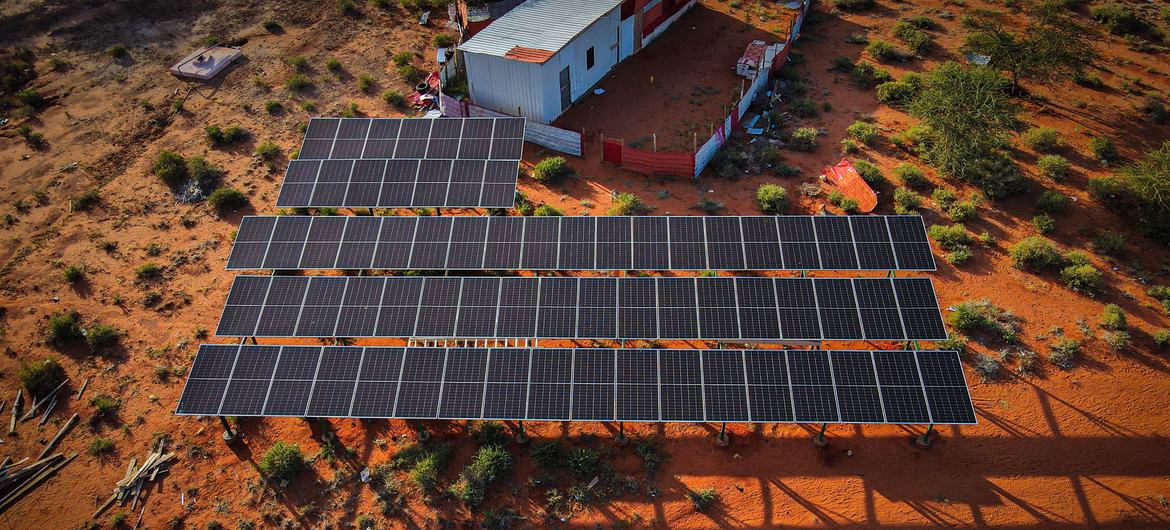
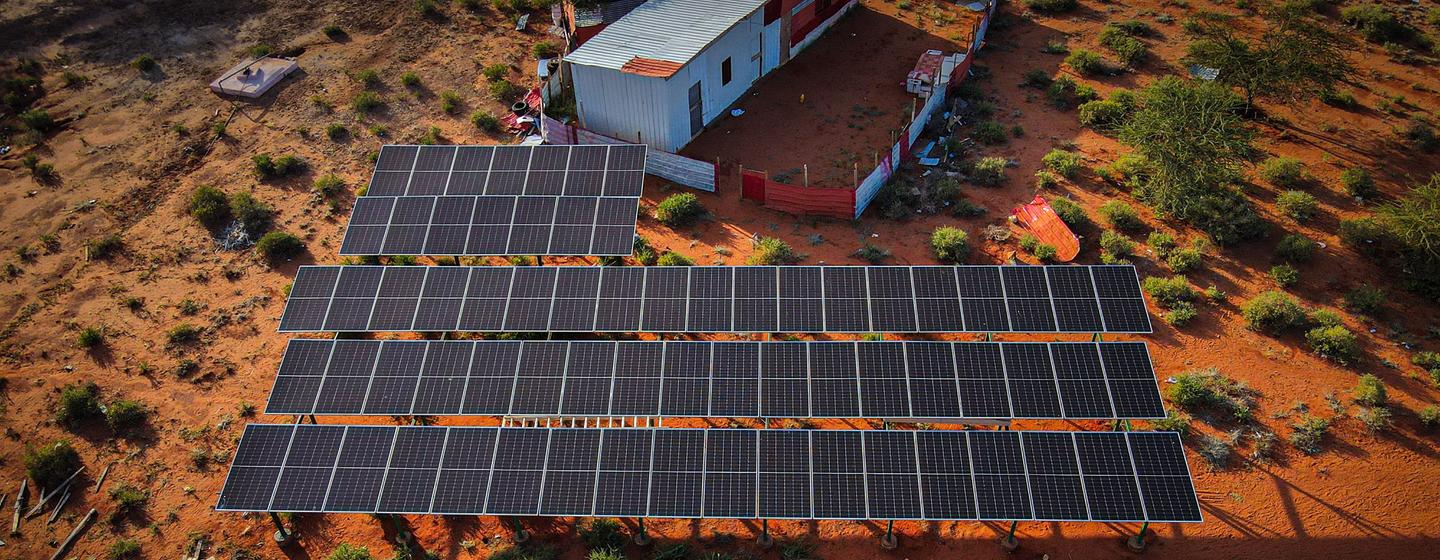
© IOM/Spotlight Communications

Solar panels provide consistent power to the university in Abudwaq, Galmadug.

Rallying 19 other women students, Iftin and Aminaa submitted a simple yet transformative proposal….. to crowdfund for solar streetlights and a solar energy system for the school.

By July 2022, the girls had raised $10,000. IOM matched this amount and added $50,000 more.

The result was a well-lit and secure road from Abudwaq town to the university and a fully functional solar energy system.

The system now powers the university around the clock with clean energy.

The impact didn’t stop there.

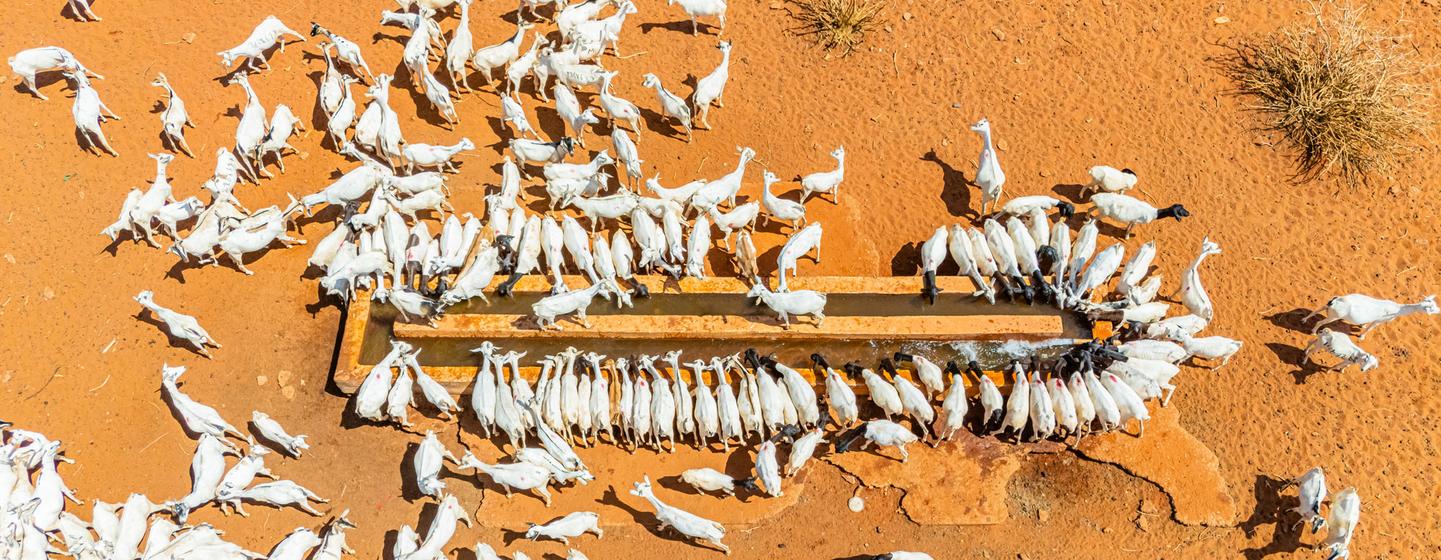
The community later decided to connect a nearby borehole to the system, providing clean, free water to all of Abudwaq and nearby pastoralist communities, who now bring their livestock to drink and graze near the water source.

Animals water at a borehole powered by solar energy.

“Abudwaq was not one of our original target locations,” explained Mohamed Mohamud Hussein, an IOM officer working on community-based planning. “But we considered the proposal because it was well thought out, transformational for the community, and aligned with the CFS’s mandate and priorities around ownership and sustainability.”

Iftin and Aminaa’s determination set an example for other communities across Somalia.

Community power

Piloted by IOM in 2021, the CFS has become one of Somalia’s most innovative recovery tools. It puts power in the hands of local communities.

By the end of 2024, 42 projects had been completed, reaching over 580,000 people across 22 districts in central Somalia.

Nine more are ongoing. Close to 1,600 community and diaspora members contributed, raising over $500,000, which IOM matched with $2.3 million.

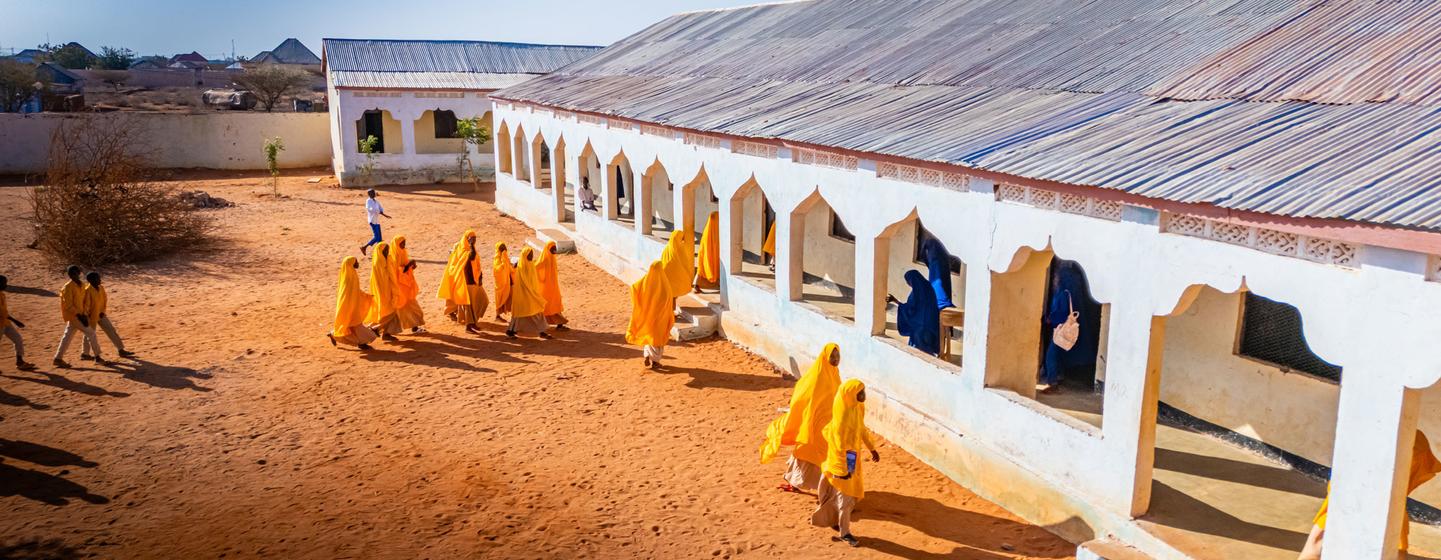
Even in fragile settings, collective action is making a difference. In Farjano, a settlement for internally displaced persons in Galmudug State, the construction of a new primary school did more than provide classrooms. It has restored hope.

A new primary school was built in Farjano financed by IOM’s Co-Funding System.

“For the very first time, all my children could go to school – and it was free,” said Shamso, a mother of three.

In Mataban, a newly built youth stadium fostered unity and a sense of shared identity. Groups that had once avoided each other began to spend time together. “The stadium brought us together in ways we never imagined,” said Mustaf, a resident of Mataban. “It’s not just for sports – it’s where our community feels united.”

By requiring communities to identify their needs and raise initial funds, the CFS takes a bottom-up rather than traditional top-down approach to development.

It ensures that projects are not only community-driven but also have a higher chance of long-term success and impact

The Fourth International Conference on Financing for Development (FFD4) which begins in Sevilla, Spain on 30 June, aims to reform financing at all levels, and will no doubt consider the local solutions and community-driven initiatives which have proven so successful in Somalia.

Source link

What is Cyclone Sagar?

Indian Met Department has issued an alert to Tamil Nadu, Kerala, Karnataka, Goa, Maharasthra and the Lakshadweep over the cyclone ‘Sagar’, which is building up over the Arabian Sea with potential to hit the coastal region of northern Indian Ocean on Saturday.

Formerly known as 01A, Tropical Cyclone Sagar, quickly formed in the Indian Ocean and strengthened into a tropical storm on May 16 at 3:35 a.m. IST as shown in the resolution imaging captured by the spectroradiometer aboard NASA’s Aqua satellite.

It showed thunderstorms at minus 80 degrees Celsius, which means very strong storms with a potential for heavy rainfall in the Arabian Sea with maximum sustained winds near 46 miles per hour (40 knots). Located near 13.0 degrees north latitude and 48.6 degrees east longitude, or approximately 229 nautical miles east of Aden, Yemen.

When captured NASA-NOAA’s Suomi NPP satellite appeared more organized and has been strengthening since May 17. On Friday, May 18 the Visible Infrared Imaging Radiometer Suite (VIIRS) instrument aboard NASA-NOAA’s Suomi NPP satellite captured a true-color image of Tropical Cyclone Sagar showing the center above the Gulf of Aden, affecting Yemen and Somalia.

At 1:30 p.m IST, the Tropical Cyclone Sagar was centered near 11.6 degrees north latitude and 45.9 degrees east longitude, approximately 89 nautical miles southeast of Aden, Yemen, registering maximum sustained winds up at 69 mph (50 knots/111 kph). Currently, Sagar is moving to the west-southwest at 6.9 mph (6 knots/11.1 kph).

Sagar is likely to threaten Yemen, Somalia and Djibouti with waves as high as 17 feet, before hitting the Indian west coast on Saturday. The Indian Meteorological Department (IMD) has issued an advisory that said: “Strong winds reaching upto 75-85 kmph and 95 kmph covering the Gulf of Aden and adjoining south-western Arabian Sea area are very likely duting the next 12 hours. It may then gradually decrease ato 65-75 kmph during the next 12 hours.”

Fishermen are advised not to venture into the high seas of the Gulf of Aden or west-central and south-west Arabian Sea in the next 48 hours.