World News in Brief: Hunger in the English- and Dutch-speaking Caribbean, climate and displacement crisis in Somalia, World Breastfeeding Week

Across the region, nations face food-related challenges notably due to geographical remoteness, lack of local available resources and exposure to climate change. 

“The Caribbean is particularly vulnerable to natural hazards and supply chain disruptions, which can cause increases in food prices,” said, Brian Bogart. head of WFP for the region.

“It’s deeply concerning that many people are struggling to afford the food they need,” he said. 

Supply chain challenges

Rising food prices are a major concern for the region, with food inflation consistently outpacing overall inflation rates, with local production efforts challenged by increasing operational costs. 

In 2025, 30 per cent of Caribbean people reported eating less than usual, a trend notably triggered by increased food costs and global geopolitical factors.

As the region significantly relies on imported agricultural inputs, “strengthening and diversifying supply chains and trade routes across the region is essential,” said Mr. Bogart. 

He added that in a region particularly impacted by climate disasters, “these efforts will help make food more accessible and affordable while supporting faster recovery in times of crisis.” 

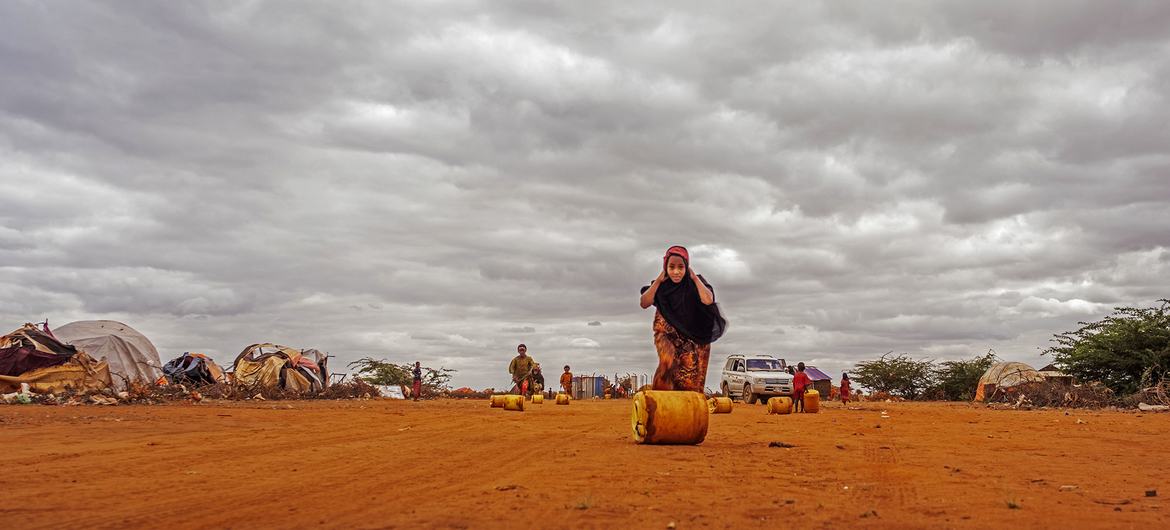
A girl moves a container full of water at a site for displaced people in Dolow, Somalia. (file)

UN migration agency highlights deepening climate and displacement crisis in Somalia

Climate shocks and mass displacement caused by conflict have uprooted some 3.6 million people in Somalia, according to the International Organization for Migration (IOM). 

Almost half the population has been impacted by the climate crisis, the UN agency added.

IOM Deputy Director General Ugochi Daniels concluded a four-day visit to Somalia this week where she expressed solidarity for communities who continue to endure relentless droughts, floods and conflict.

Ms. Daniels also noted that communities are finding solutions to withstand the worst impacts of the climate crisis, but they need international support from the Green Climate Fund urgently.

IOM is active across Somalia in displacement sites and in rural and other fragile areas. Its work includes promoting land restoration and so-called “environmental peacebuilding”, which aims to reduce tensions over shared resources.

Another IOM initiative encourages Somalis to invest in their own development by providing additional funding.

Last year, communities contributed more than half a million dollars toward projects such as solar energy, clean water access and small-scale farming – investments all matched by more than $2 million from IOM. 

World Breastfeeding Week: Invest in health systems and policies to benefit mums and babies

This Friday (1 August) marks the start of World Breastfeeding Week and this year’s theme calls for investing in health systems as well as policies, laws and programmes that prioritize women, babies and breastfeeding.

The World Health Organization (WHO) said investing in breastfeeding support is one of the most powerful tools policy-makers have to improve public health, strengthen economies, and secure the well-being of future generations.

The UN agency explained that breastfeeding protects child health and improves survival, especially in the first months of life.  For infants, breastmilk is more than food: it also provides protection against many common illnesses like diarrhoea, pneumonia and infections.

Mothers also benefit as breastfeeding reduces the risk of postpartum haemorrhage, as well as breast and ovarian cancers, heart disease, and type 2 diabetes.

WHO urges governments to allocate dedicated funding for breastfeeding support, including for when new mums come home, along with maternity protections like paid leave after giving birth. 
Source link

Gaza: Strikes on houses and tents responsible for over half of deaths this week

629 Palestinians were reportedly killed over the past week, according to OHCHR in the Occupied Palestinian Territory.  

At least 358 were killed because of attacks targeting houses and tents for displaced people, with children and women accounting for at least 148 of the victims.

“The high number of strikes on shelters, in the context of the existing destruction of infrastructure in Gaza, raises grave concerns that not all strikes were targeting military objectives,” OHCHR said.

Journalists under fire

Furthermore, nine Palestinian journalists were killed last week, making it one of the deadliest for the profession since the conflict began in October 2023.

Although journalists have a deep sense of duty to their work, “they, too, are displaced, tired and hungry like the rest of the population of Gaza,” OHCHR said.

“However, it appears that in many instances, these journalists may have been deliberately targeted with the intention of limiting the flow of information on what is happening in Gaza and the scale of the impact that this war is having on civilians.”

The office said international journalists must be allowed into Gaza and their safety ensured.

Aid on the move

Meanwhile, lifesaving aid is making its way across the enclave following a nearly 80-day blockade.

UN aid coordination office OCHA confirmed that 90 trucks carrying nutrition supplies, flour, medicines and other critical stocks left the Kerem Shalom border crossing on Wednesday for multiple destinations inside Gaza.

Among the supplies were more than 500 pallets containing items such as ready-to-use therapeutic food and nutritional supplements which were offloaded at a warehouse in Deir Al-Balah belonging to the UN Children’s Fund (UNICEF).

The contents are being unpacked and repackaged into smaller loads for onward transportation to distribution points.

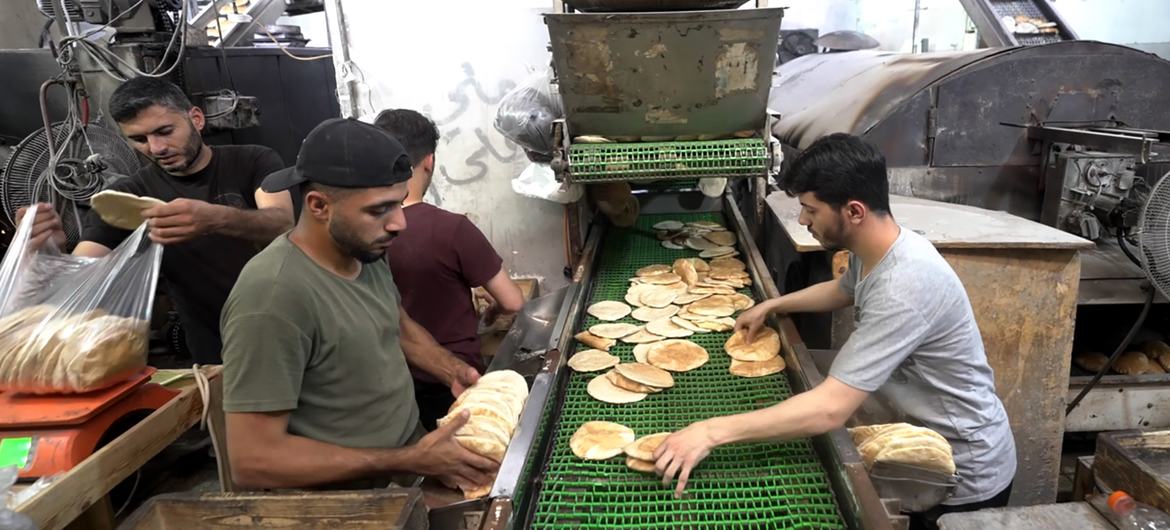
Workers pack freshly baked bread into bags for distribution at Al-Banna Bakery in Deir al-Balah, Gaza.

Famine risk persists

A handful of bakeries in south and central Gaza, supported by the UN World Food Programme (WFP), are also now operational and are back to baking bread, which is being distributed via community kitchens.

“However, after nearly 80 days of a total blockade of humanitarian assistance, families still face a high risk of famine, and far more aid is urgently needed into the Gaza Strip,” said Mr. Dujarric.

Food security experts recently warned that Gaza’s entire population, over two million people, are at risk of famine, with nearly half a million facing starvation.

Humanitarians underlined the critical need for Israel to facilitate the movement of aid convoys, including from southern Gaza into the north, so that all supplies can reach people in need wherever they are. 

“We also need to ensure the use of secure routes from Kerem Shalom onward into Gaza, as we did last night,” the Spokesperson said.

Strikes and shelling continue

Meanwhile, military operations continue across Gaza, with reports of strikes, shelling and fresh ground incursions.

The Al Awda hospital in North Gaza caught fire on Thursday, reportedly after being attacked. The medicine warehouse was heavily damaged, according to initial reports.

“Through coordination with Israeli authorities, OCHA facilitated the access of the Palestinian Civil Defense to the area, where they spent hours working to extinguish the fire,” said Mr. Dujarric.

He added that water wells in some areas of Gaza are shutting down as no fuel has been allowed in since the blockade.

“OCHA reports that Israeli authorities continue to deny our attempts to deliver fuel from areas where coordination is required,” he said. 

Healthcare under attack

The World Health Organization (WHO) warned that Israel’s intensified military operations continue to threaten Gaza’s already weakened health system. 

Four major hospitals have had to suspend medical services in the past week due to their proximity to hostilities or evacuation zones, and attacks. 

Only 19 out of 36 hospitals remain operational. Twelve provide a variety of health services, while the rest are only able to provide basic emergency care. 

WHO has recorded 28 attacks on healthcare in Gaza over the past week, and 697 attacks since October 2023. 

Source link

World News in Brief: Terror-crime link alarm, child detention in Australia, judiciary in Maldives, Protection of Civilians Week

In recent years, criminal and terrorist groups have seized “every” opportunity afforded by growing instability to “entrench, expand, and escalate,” said Ghada Waly, in her opening remarks to the Commission on Crime Prevention and Criminal Justice, in Vienna.

Challenges such as human and drug trafficking, smuggling of cultural and commercial goods, and environmental crimes are on the agenda during the four-day conference which focuses on “evolving and emerging” forms of organised crime.

Emerging threats

The world faces a “fundamental challenge to security, prosperity, and the rule of law,” the Executive Director said, with the link between criminal and terrorist groups becoming a growing concern.

While new technology serves as an enabler for criminal networks, justice systems around the world are being “starved” of the resources and conditions they need to provide equal access to justice.

She said, with criminal threats evolving, it was “certainly not the time to scale back global investment in crime prevention and criminal justice, both politically and financially,” emphasising the importance of multilateral cooperation.

Australia justice system in spotlight over child offenders’ reform

To Australia, where top independent rights experts have expressed concern at proposed legal reforms that could increase penalties for children.

In most Australian states, criminal responsibility begins at 10, allowing youngsters to be incarcerated for a wide range of crimes, if convicted.

Already, disproportionately large numbers of Aboriginal and Torres Strait Islander children continue to be jailed in Australia, according to rights experts Jill Edwards and Albert Barume.

The Special Rapporteurs – who are appointed by and report to the Human Rights Council – have insisted that “many new or proposed” laws across the country are incompatible with rights of the child.

Queensland crackdown

These include the so-called “Adult crime, Adult time” legal reform in the state of Queensland.

If adopted later this week, it could result in children serving longer jail time for dozens of criminal offences.

“The first goal should always be keeping children out of prison,” the rights experts said. They emphasised the excessive impact of the Queensland bill on indigenous children and the risk of creating “a future under-class of Australians”.

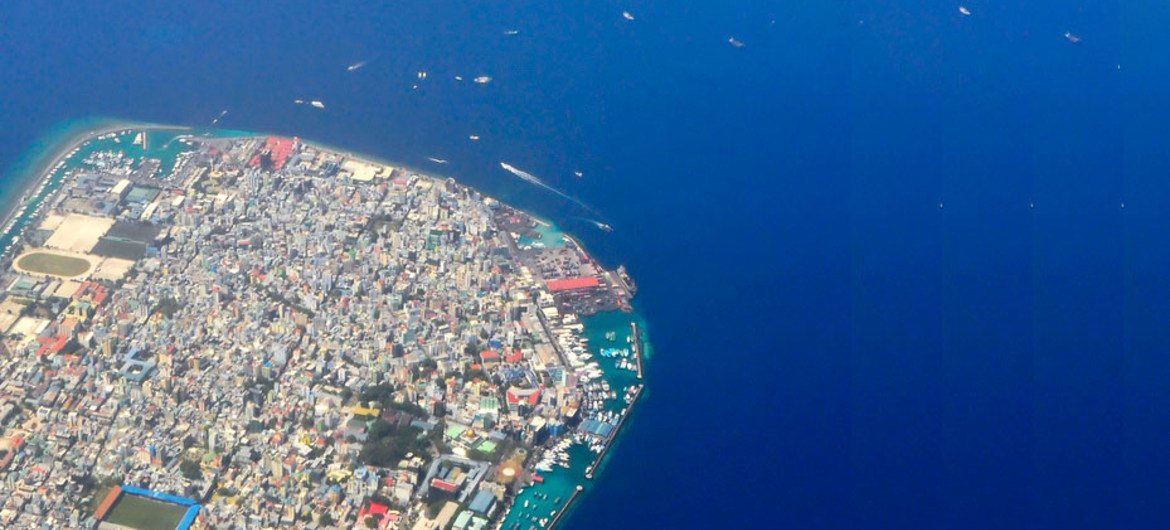
Aerial view of Malé, the capital of the Maldives.

Maldives’ dismissal of Supreme Court judges raises concern, UN rights office warns

The UN human rights office warned Monday that the dismissal by the Maldives authorities of two Supreme Court justices could jeopardise the independence of the judiciary.

The South Asian island nation launched probes into both judges in February 2025.

At the same time, the Maldives’ parliament adopted a bill to reduce the size of the Supreme Court bench from seven to five judges.

A third Supreme Court justice also resigned, while a fourth judge – the Chief Justice – has since retired.

The investigation against the judges raises questions about how it was conducted, the UN human rights office, OHCHR, said in a statement.

Judicial independence

“We remind the authorities of their commitment to maintain and protect an independent judiciary, in line with the Maldives’ Constitution and international human rights obligations,” said OHCHR spokesperson Jeremy Laurence.

“Checks and balances between the different branches of the State, including a strong and independent judiciary, play a vital role in ensuring fidelity to the rule of law by all branches of Government and the effective protection of human rights,” Mr. Laurence added.

Previously, independent rights expert Margaret Satterthwaite expressed concern about reports that lawyers for the Maldives Supreme Court justices who were under investigation “were not given the opportunity to speak at the disciplinary proceedings and that these were not public”.

Ms. Satterthwaite reports to the Human Rights Council on the independence of judges and lawyers; she is not a UN staff member.

Protection of Civilians week will work to address ‘culture of impunity’

Over 50,000 civilians have been killed in Gaza since October 2023. In Sudan, the figure is around 18,000 in the past two years – and in Ukraine, the total is 12,000, since Russia’s full-scale invasion.

During Protection of Civilians Week, from 19 to 23 May, these preventable deaths and displacements will be the focus as the United Nations, its Member States and civil society affiliates gather to discuss ways of preventing future armed conflicts.

The eighth annual PoC Week – which is coordinated by the Office for the Coordination of Humanitarian Affairs (OCHA), Switzerland, the Centre for Civilians in Conflict, and the International Committee of the Red Cross – will focus on the theme of “Tools to Further the Protection of Civilians.”

International guarantees, national violations

International humanitarian and human rights law establishes clear guidelines which protect civilians during armed conflicts.

However, OCHA noted that increasingly there is a “culture of impunity” surrounding the enforcement of these laws, with disregard for them spreading and the application of them increasingly politicised.

“Despite clear protections under international humanitarian and human rights law, civilians continue to suffer the brunt of conflict,” OCHA said, outlining the week ahead.

This is particularly concerning given that civilian deaths have been increasing. In the past decade, the world has experienced a surge in armed conflicts, disrupting what had previously been a 20-year decline.

Between 2022 and 2023, there was a 72 per cent increase in the number of civilian deaths according to UN estimates.

Throughout the week, individual member state missions are also hosting a variety of informal consultations. The calendar for the week is here.

Source link

One hour of exercise a week can prevent depression

A landmark study led by the Black Dog Institute has revealed that regular exercise of any intensity can prevent future depression – and just one hour can help.

Published today in the American Journal of Psychiatry, the results show even small amounts of exercise can protect against depression, with mental health benefits seen regardless of age or gender.

In the largest and most extensive study of its kind, the analysis involved 33,908 Norwegian adults who had their levels of exercise and symptoms of depression and anxiety monitored over 11 years.

The international research team found that 12 percent of cases of depression could have been prevented if participants undertook just one hour of physical activity each week.

“We’ve known for some time that exercise has a role to play in treating symptoms of depression, but this is the first time we have been able to quantify the preventative potential of physical activity in terms of reducing future levels of depression,” said lead author Associate Professor Samuel Harvey from Black Dog Institute and UNSW.

“These findings are exciting because they show that even relatively small amounts of exercise – from one hour per week – can deliver significant protection against depression.

“We are still trying to determine exactly why exercise can have this protective effect, but we believe it is from the combined impact of the various physical and social benefits of physical activity.

“These results highlight the great potential to integrate exercise into individual mental health plans and broader public health campaigns. If we can find ways to increase the population’s level of physical activity even by a small amount, then this is likely to bring substantial physical and mental health benefits.”

The findings follow the Black Dog Institute’s recent Exercise Your Mood campaign, which ran throughout September and encouraged Australians to improve their physical and mental wellbeing through exercise.

Researchers used data from the Health Study of Nord-Trøndelag County (HUNT study) – one of the largest and most comprehensive population-based health surveys ever undertaken – which was conducted between January 1984 and June 1997.

A healthy cohort of participants was asked at baseline to report the frequency of exercise they participated in and at what intensity: without becoming breathless or sweating, becoming breathless and sweating, or exhausting themselves. At follow-up stage, they completed a self-report questionnaire (the Hospital Anxiety and Depression Scale) to indicate any emerging anxiety or depression.

The research team also accounted for variables which might impact the association between exercise and common mental illness. These include socio-economic and demographic factors, substance use, body mass index, new onset physical illness and perceived social support.

Results showed that people who reported doing no exercise at all at baseline had a 44% increased chance of developing depression compared to those who were exercising one to two hours a week.

However, these benefits did not carry through to protecting against anxiety, with no association identified between level and intensity of exercise and the chances of developing the disorder.

According to the Australian Health Survey, 20 percent of Australian adults do not undertake any regular physical activity, and more than a third spend less than 1.5 hours per week being physically active. At the same time, around 1 million Australians have depression, with one in five Australians aged 16-85 experiencing a mental illness in any year.

“Most of the mental health benefits of exercise are realised within the first hour undertaken each week,” said Associate Professor Harvey.

“With sedentary lifestyles becoming the norm worldwide, and rates of depression growing, these results are particularly pertinent as they highlight that even small lifestyle changes can reap significant mental health benefits.”