Prison breaks and renewed clashes raise alarm in northeast Syria

Secretary-General António Guterres is following the continuing violence “with great concern,” Deputy UN Spokesperson Farhan Haq said on Tuesday in New York. 

The Secretary-General called for full respect for international law and the protection of civilians while also stressing the importance of securing detention facilities. 

He urged the parties to continue dialogue, move forward in good faith, and work together to secure the implementation of all agreements. 

Fearing for families 

The UN human rights office, OHCHR, was “concerned about reports of renewed fighting between the Syrian Army and the SDF, despite the 18 January ceasefire agreement,” Spokesperson Ravina Shamdasani said earlier in Geneva. 

Rolando Gómez of the UN Information Service (UNIS) there described the overall situation as “worrying, in particular the damage to critical infrastructure.”   

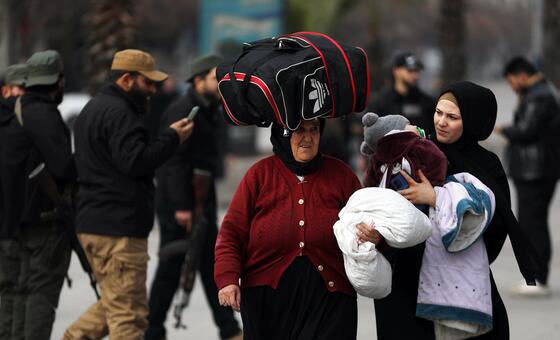
He expressed concern for families unable to leave conflict areas and those who have been newly displaced.  

A fragile transition 

Syria remains on a fragile path to political transition following the fall of the Assad regime in December 2024 and nearly 14 years of civil war.   

The transitional government has been taking back territory in the northeast under Kurdish control and fighting has occurred in Aleppo, Raqqa, Deir-ez-Zor and Al Hassakeh governorates. 

Speaking in New York, Syria’s UN ambassador Ibrahim Olabi told journalists that the government and the SDF had reached “a common understanding” on several issues regarding the future of Al Hassakeh governorate. 

The SDF will be granted “a four-day period for internal consultations to develop a detailed plan for the practical mechanisms for integrating the area,” he said during a media stakeout at UN Headquarters. 

Syrian troops will not enter Al Hassakeh and Qamishli cities and will remain on their outskirts until a plan is finalised.

ISIL detention camps 

Northeast Syria is home to several prisons holding thousands of ISIL fighters. The terrorist group, also known as Daesh, once controlled large swaths of the country and neighbouring Iraq in its attempt to establish an Islamist caliphate, committing mass executions, rape, forced recruitment and other atrocities along the way. 

Tens of thousands of civilians with suspected ties to the militants, mainly women and children, are housed in separate detention camps such as notorious Al-Hol camp – home to over 30,000 people.   

Ceasefire and clashes 

The ceasefire announced on Sunday followed weeks of deadly fighting.  The truce calls for the authorities to take over SDF-controlled areas and for its forces to be integrated into the national army, among other points. 

Clashes resumed a day later during which roughly 120 ISIL fighters escaped from the prison in Al-Shaddadi city, according to media reports, though most have been captured. 

Ms. Shamdasani recalled that OHCHR has long stated that any integration of security forces into Syrian State institutions, particularly SDF forces, “must take place within a proper human rights-based vetting process to ensure that any individuals involved in human rights violations or abuses are not integrated.”   

Humanitarian support 

Meanwhile, humanitarians have been providing assistance in the four affected governorates, incluidng trauma care, water and hygiene support, and psychosocial support, the UN aid coordination office OCHA reported on Monday. 

Public services have been suspended in Deir-ez-Zor city and key transport routes temporarily closed, leaving civilians cut off from education and healthcare. 

Furthermore, damage to critical infrastructure in Raqqa city has curtailed access between neighbourhoods and disrupted the main water supply. 

OCHA noted that people continue to flee Raqqa and Tabqa cities, as well as Thawra town, and are heading towards Al Hassakeh and Qamishli governorates.  

Hundreds of families remain unable to leave Tabqa and are sheltering in public facilities. 

Assessments are underway to determine people’s needs as humanitarians continue to call for sustained, safe access to the population. 

Source link

Yemen: UN Sounds Alarm as Famine, Fighting, Detentions Exacerbate Crisis

UN Special Envoy Hans Grundberg told the Security Council on Monday that the turmoil in Yemen cannot be seen in isolation.

“Yemen is both a mirror and a magnifier of the region’s volatility,” he said, noting that progress toward peace is hampered by regional rivalries, cross-border dynamics, and internal divisions.

Mr. Grundberg highlighted a dangerous escalation in hostilities, noting repeated attacks on civilians and critical infrastructure. Military clashes in Al Dhale’, Ma’rib, and Ta’iz underscore the risk that miscalculations could trigger a return to full-scale conflict.

The Houthis, also known as Ansar Allah, have been fighting Yemeni Government forces, backed by a Saudi-led coalition, for control of the country for over a decade.

Hans Grundberg, UN Special Envoy for Yemen, briefs the Security Council on the situation in Yemen. He warned that Yemen’s conflict is unravelling within an already volatile regional landscape.

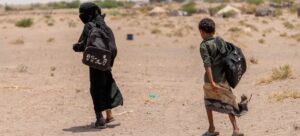
© UNICEF/Ahmed Al-Basha A girl and her brother walk home after attending classes at a UNICEF-supported educational tent. Millions of children in Yemen are out of school due to displacement and conflict-damaged schools. (file photo)

“Against the backdrop of the war in Gaza, we are seeing an alarming and dangerous intensification of hostilities between Ansar Allah and Israel,” he said, noting that a number of civilians were reportedly killed and injured, and critical infrastructure struck.

The Special Envoy warned that the current cycle of violence is dragging Yemen further from a peace process that could deliver sustainable, long-term peace and economic growth.

“This escalatory cycle must end…we need to get the focus back on Yemen – focus on both its internal challenges and on unlocking its great potential,” he stressed.

Spiralling humanitarian situation

The humanitarian situation is equally dire. UN Emergency Relief Coordinator Tom Fletcher told the Council that Yemen remains the third most food-insecure country in the world, with 17 million people already struggling to eat and an additional one million expected to face extreme hunger before February next year.

“Seventy per cent of households do not have enough food to meet daily needs – this is the highest rate ever recorded,” he said.

Mr. Fletcher highlighted that one in five households goes a full day without any food, while two million women and girls have lost access to reproductive health services amid funding shortfalls.

Despite funding gaps and a challenging operating environment, humanitarians continue to deliver aid where possible. In Hajjah, Amran, and Ma’rib, organizations have provided food, water, health, and nutrition services to tens of thousands.

More than 172,000 people affected by flooding received non-food items, shelter, hygiene kits, and clean water.

But Mr. Fletcher warned that ongoing hostilities, infrastructure damage, and the detention of UN staff severely hamper operations.

Twenty-two UN personnel have been recently arbitrarily detained by Ansar Allah; though one staff member was released, over 40 remain in detention, including a colleague who died while in custody.

Both top UN officials emphasised the urgent need for dialogue and adherence to international law. Special Envoy Grundberg urged Yemeni leaders to step back from unilateral actions and pursue a nationwide ceasefire, economic reforms, and inclusive political engagement.

Mr. Fletcher called for the immediate release of all detained aid workers and a secure operating environment, warning that funding cuts and conflict-related obstacles are costing lives.

“Detaining humanitarian staff does not help the people of Yemen. It does not feed the hungry, heal the sick, nor protect those displaced by floods or fighting,” he said.

“The people of Yemen, wherever they may live, must receive the humanitarian aid that they need. They deserve a future of greater security, justice and opportunity.”

WHO sounds alarm as mental health conditions soar past one billion worldwide

Disorders such as anxiety and depression are exacting a heavy toll on individuals, families and economies, yet most countries are failing to provide adequate support.

Mental health problems are widespread across every society and age group and remain the second leading cause of long-term disability. They drive up healthcare costs for families and governments while costing the global economy an estimated $1 trillion each year in lost productivity, UN health experts said.

Way off track

The findings are detailed in two new reports: World mental health today and the Mental Health Atlas 2024.

Together, they show that while there has been some progress since 2020, the world is still far off track in tackling the scale of the crisis. The reports will help to inform debate at a UN high-level meeting on noncommunicable diseases and mental health, to be held late this month in New York.

Transforming mental health services is one of the most pressing public health challenges,” said WHO Director-General Dr Tedros Adhanom Ghebreyesus.

Investing in mental health means investing in people, communities and economies, an investment no country can afford to neglect. Every leader has a responsibility to act urgently and to ensure mental health care is treated not as a privilege, but as a basic right.”

Troubling gaps, uneven progress

The reports highlight several stark findings:

  • Women are disproportionately affected by mental health conditions, with anxiety and depression most common among both sexes.
  • Suicide claimed an estimated 727,000 lives in 2021 and is a leading cause of death among young people. On current trends, the world will fall far short of the UN target to reduce suicide deaths by a third by 2030, managing only a 12 per cent reduction.
  • Median government spending on mental health remains at just two per cent of health budgets, unchanged since 2017. While high-income countries spend up to $65 per person on mental health, low-income countries spend as little as four cents.
  • The mental health workforce is dangerously thin in many regions. There are just 13 mental health workers for every 100,000 people worldwide.
  • Fewer than one in 10 countries has fully moved to community-based care, with most still relying heavily on psychiatric hospitals. Almost half of inpatient admissions are involuntary, and more than one in five patients remain hospitalised for over a year.

Despite these challenges, there have been some positive developments. More countries are integrating mental health into primary healthcare and expanding early intervention programmes in schools and communities.

Over 80 per cent of countries now include mental health and psychosocial support in emergency response, up from less than 40 per cent in 2020. Telehealth services are also becoming more widely available, though access is still uneven.

Call for systemic change

WHO is urging governments to step up investment and reform, warning that the current pace of progress is too slow to meet global goals. Key priorities include:

  • Fairer financing of mental health services
  • Stronger legal protection and rights-based legislation
  • Greater investment in the mental health workforce
  • Accelerated shift towards community-based, person-centred care

The UN health agency stresses that mental health should be treated as a fundamental human right. Without urgent action, millions will continue to suffer without support, and societies will bear rising social and economic costs.

For more information on how the UN overall is advocating for more resources to support mental health and wellbeing, check out this story from our colleagues at www.un.org

Gaza: Alarm over Israeli move to deregister NGOs

The development – which also applies to the occupied West Bank – is a result of the Israeli requirement introduced on 9 March impacting international non-governmental organizations (NGOs).

“Unless urgent action is taken…most international NGO partners could be de-registered by 9 September or sooner – forcing them to withdraw all international staff and preventing them from providing critical, lifesaving humanitarian assistance to Palestinians,” said UN and partner aid organizations that are known collectively as the Humanitarian Country Team in the Occupied Palestinian Territory (OPT).

Many UN agencies still operate in Gaza, working closely with NGO partners to reach the war-torn enclave’s most vulnerable people. International NGOs are key as they provide critical support to Palestinian NGOs in the form of supplies, funding and technical support.

Collective call

“Without this cooperation, their operations will be severed, cutting off even more communities from food, medical care, shelter and critical protection services,” said the Humanitarian Country Team, which is overseen by the UN’s top aid official in OPT and includes heads of UN agencies and more than 200 local and international NGOs.

Already, NGOs which have not registered under the new system are prohibited from sending any supplies to Gaza.

Just last month, Israeli authorities rejected repeated requests by 29 of them to ship humanitarian aid to Gaza, citing the organizations as “not authorised”.

“This policy has already prevented the delivery of lifesaving aid including medicine, food, and hygiene items,” the humanitarian collective said. “This most profoundly affects women, children, older people, and persons with disabilities, further aggravating the risk of being subjected to abuse and exploitation.”

In a statement urging Israel to reconsider its demand for sensitive employee information from NGOs, the humanitarian country team insisted that impeding its work violates international law “when we are receiving daily reports of death by starvation as Gaza faces famine conditions”.

Convoy tragedy

Meanwhile inside Gaza, reports on Wednesday indicated that at least 20 people were killed and dozens more injured in central Gaza after a convoy of aid trucks overturned into a crowd.

The incident happened in southern Deir Al-Balah, central Gaza, on Tuesday, according to the local authorities. Further reports indicated that desperate people seeking aid had climbed onto the lorries before the drivers lost control.

In its latest aid update, the UN aid coordination office, OCHA, noted that a full 90 per cent of aid brought into Gaza since 20 July has been “offloaded by hungry crowds or looted by armed gangs”.

People who approach aid convoys near Israeli military checkpoints continue to be killed and wounded, OCHA said.

It cited the health authorities which reported that between 27 May and 4 August, there have been 1,516 fatalities and more than 10,000 injuries at militarised distribution sites or along humanitarian aid convoy routes.

Sudan: UN sounds the alarm as health and food crises worsen across the country

As conflict between rival militaries rages on, millions of people keep on being displaced.

While the UN and its partners continue to provide assistance to newly displaced families in North Darfur, “nearly 60 per cent of displaced families still lack adequate shelter support,” said Deputy Spokesman for the Secretary-General, Farhan Haq, at a daily press briefing on Monday.

In Abu Shouk camp in El Fasher, the North Darfur capital, displaced families are facing acute shortages of food and medicine, with local sources reporting four hunger-related deaths last week, as food insecurity continues to worsen across the entire country.

In North Darfur state notably, low cereal supply, poor harvests and a prolonged food deficit have severely affected food availability.

Health crisis

Meanwhile, cholera cases continue to rise in Tawila. More than 1,500 suspected and confirmed serious infections have been reported since June, with over 500 people currently receiving treatment.

While local authorities have introduced emergency measures, including market closures and a ban on public gatherings, humanitarian organizations urgently require $120 million to scale up life-saving support in Tawila over the next three months.

“This funding is essential to contain the outbreak and sustain critical services,” according to OCHA.

Meanwhile, in Port Sudan, the main entry point for humanitarian personnel and supplies, a sharp increase in heatstroke cases linked to extreme temperature and prolonged power outages is raising concerns, as one death was recorded over the past two days.

Food crisis

In El Fasher, food prices continue to rise to alarming levels.  The Integrated Food Security Phase Classification (IPC) has  already identified famine conditions in multiple areas of North Darfur and the eastern Nuba Mountains, with more locations at risk.

In May, the average cost of the local food basket in El Fasher was more than six times the national average, as the city recorded the highest prices for nearly all essential items among assessed localities.

An IPC alert earlier this month noted that Sudan’s food security and nutrition situation is set to further deteriorate over the lean season from July to October, notably in areas of active conflict with limited access and experiencing high levels of displacement. 

Source link

UN sounds alarm over Syria as sectarian clashes and Israeli strikes escalate

The Druze-majority Sweida governorate, long relatively insulated from earlier phases of Syria’s 14‑year conflict, has now become a flashpoint.

Briefing an emergency meeting of the Security Council, UN Assistant Secretary‑General Khaled Khiari painted a grim picture: hundreds of casualties among soldiers and civilians –including women, children and the elderly – alongside reports of mass displacement, attacks on infrastructure, and hospitals “at or near capacity” amid power and water cuts.

There were further alarming reports of civilians, religious figures and detainees being subjected to extrajudicial executions and humiliating and degrading treatment,” he said.

Violent reprisals and looting have devastated communities, with graphic footage circulating widely on social media amplifying fear and anger.

He urged all parties to protect civilians and civilian infrastructure.

Timeline of escalation

12 July: Series of mutual kidnappings in Sweida escalate into armed clashes between Bedouin tribes and Druze armed groups.

14 July: Syrian security forces deploy to “halt clashes” and “restore order”. At least 10 personnel reportedly killed by Druze armed groups, others abducted. Reports surface of the abuses against civilians as forces enter Sweida.

Clashes intensify, leaving hundreds dead or wounded among security forces and Druze fighters, casualties also reported among Druze and Bedouin civilians, including women, children and the elderly. Sectarian rhetoric surges on social media.

15-16 July: Hundreds of Druze from the occupied Syrian Golan and Syria gather on both sides of the ceasefire line, in the presence of the Israel Defense Forces (IDF), expressing solidarity with the Druze community in Sweida.

Israeli airstrikes compound crisis

Against this backdrop, Israel, “pledging to protect” the Druze community launched “escalatory” strikes on Syrian territory, Mr. Khiari said.

Between 12 and 16 July, air raids targeted Damascus authorities’ forces and official buildings, military installations and the vicinity of the Presidential Palace.

In addition to violating Syria’s sovereignty and territorial integrity, Israel’s actions undermine efforts to build a new Syria at peace with itself and the region, and further destabilise Syria at a sensitive time,” Mr. Khiari said.

He urged both Israel and Syria to uphold the 1974 Disengagement of Forces Agreement and “refrain from any action that would further undermine it and the stability on the Golan.”

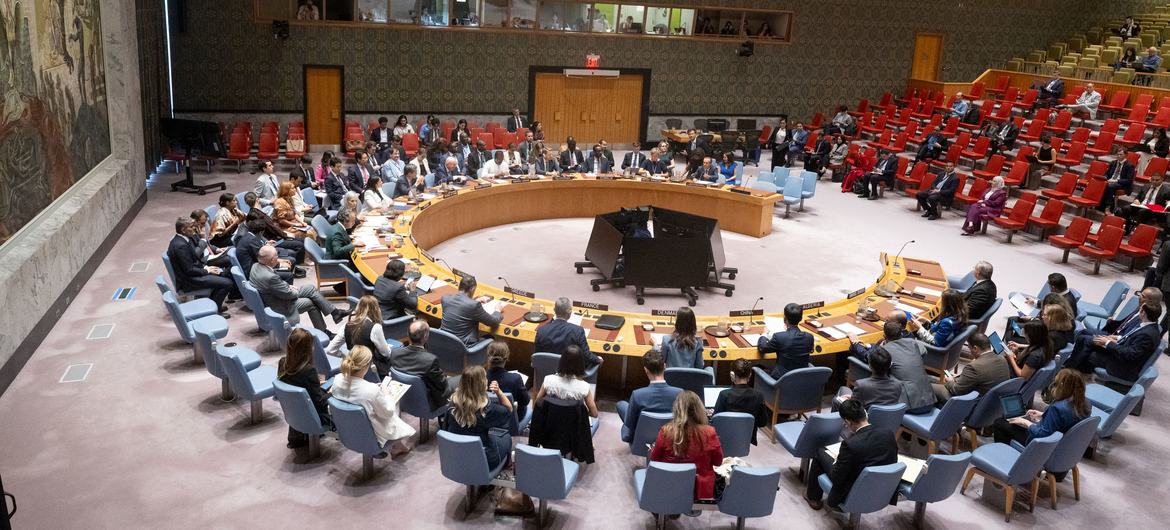
A wide view of the UN Security Council meeting on the situation in Syria.

Humanitarian fallout

According to the UN Office for the Coordination of Humanitarian Affairs (OCHA) there are severe disruption to supply routes, with insecurity and road closures blocking aid deliveries. The UN World Health Organization (WHO) dispatched trauma care supplies to Daraa, but Sweida remains inaccessible.

Mr. Khiari stressed the need for humanitarian access and called on Damascus to ensure any investigations into alleged abuses are “transparent and in line with international standards.”

Call for genuine reconciliation

Reaffirming the Security Council’s March call for an inclusive, Syrian-owned political process under resolution 2254, Mr. Khiari warned: “Security and stability in Sweida, and indeed in post-Assad Syria can only be achieved through genuine reconciliation and with the participation of all components of Syria’s diverse society.

He urged all Syrian stakeholders to commit to dialogue and emphasised the UN’s support for an inclusive and credible political transition that ensures accountability, fosters national healing and lays the foundation for Syria’s long-term recovery and prosperity.

Only then, can Syria truly emerge from the legacy of conflict and embrace a peaceful future,” he concluded.

ASG Khiari briefs the Security Council.

Source link

UN rights office sounds the alarm over forced displacement in the West Bank

Israeli authorities have stepped up measures to transfer large numbers of people from long-standing Palestinian towns and communities, according to OHCHR’s office in the Occupied Palestinian Territory.

On 18 June, the High Planning Council in the Israeli Civil Administration issued a directive to reject all building and planning permits submitted by Palestinians in Masafer Yatta, South Hebron Hills, in the area referred by the Israeli authorities as Firing Zone 918.

The decision was based on the grounds that the Israeli army needs the area for “military training,” the rights office said.

Demolitions on the rise

In recent months, Israel has dramatically ramped up home demolitions, as well as the arbitrary arrest and ill-treatment of Palestinians and human rights defenders. This is happening alongside intensifying movement restrictions in and around Masafer Yatta, to force Palestinians out, the office noted.

At the same time, Israeli settlers from nearby outposts have carried out daily attacks and harassment of Palestinians, including older people, women and children, to force them to leave.

“The recent directive by the Israeli Civil Administration effectively paves the way for the Israeli army to demolish existing structures in the area and expel the approximately 1,200 Palestinians, who have been living there for decades,” OHCHR said.

“This would amount to forcible transfer, which is a war crime. It could also amount to a crime against humanity if committed as part of a widespread or systematic attack directed against any civilian population, with knowledge of the attack.”

Some 6,463 Palestinians have been forcibly displaced following the demolition of their homes by Israel between 7 October 2023 and 31 May 2025, according to the UN humanitarian affairs office, OCHA,

This figure does not include the approximately 40,000 Palestinians displaced from three refugee camps in Jenin and Tulkarem as a result of intensive Israeli operations in the northern West Bank since January.

During the same period, over 2,200 Palestinians were forcibly displaced by settler attacks and access restrictions.

More communities at risk

OHCHR added that countless other Palestinian communities face the same fate of forced displacement. It said that on 10 June, the Jerusalem municipality reportedly issued demolition notices for the entire village of An Nu’man, home to 150 people. 

The village, which is located near Bethlehem, was cut off from the rest of the West Bank by the construction of the separation wall and incorporated into Israel’s unilaterally declared boundaries of the Jerusalem municipality. Most Palestinians were not provided with Jerusalem identification cards, effectively rendering them unable to access services in either East Jerusalem or the rest of the West Bank. 

“These demolition notices appear to be another step by Israel to compound the coercive environment and forcibly transfer Palestinians from the village and consolidate the annexation of this land,” the office said.

Evictions in East Jerusalem

Meanwhile, Palestinians in occupied East Jerusalem also face the ongoing threat of forced eviction from their homes and lands. 

OHCHR said that on 16 and 22 June, the Israeli Supreme Court endorsed the eviction of five Palestinian families, 37 people, from their homes in the Batn El Hawa neighbourhood of Silwan based on discriminatory laws that permit Jewish individuals to reclaim property lost in the 1948 war, while denying Palestinians the same rights. 

Additionally, the Israel Land Authority issued eviction notices on 11 June for residencies in Umm Tuba.  The 150 Palestinians affected were informed that the land was registered to the Jewish National Fund under the “settlement of land title”. 

“These evictions form part of a concerted campaign by the Israeli State and settler organisations, which target Palestinian neighbourhoods to seize Palestinian homes and expand Jewish settlements,” OHCHR said.

The office stressed that these acts violate international law, which prohibits the confiscation of private property in occupied territory, as highlighted by the advisory opinion of the International Court of Justice (ICJ) last July. 

Source link

Why is the manosphere on the rise? UN Women sounds the alarm over online misogyny

With more than 5.5 billion people connected online – nearly all of them active on social media – digital platforms have become central to how people interact, UN Women highlights.

However, they are also being weaponised to spread misogyny and hate. Once confined to fringe internet forums, the manosphere now reaches into schoolyards, workplaces, and is sometimes upending intimate personal relationships.

“We are seeing an increasing trend of young men and boys looking to influencers for guidance on issues like dating, fitness, and fatherhood,” said Kalliopi Mingeirou, Chief of the Ending Violence Against Women and Girls Section at UN Women.

Looking for answers to feel more secure about themselves, these boys encounter “strength” in online communities who also promote harmful attitudes that distort masculinity and fuel misogyny.

Boys are looking for ‘validation online’

“These spaces are really taking advantage of those insecurities and a need for validation…very often circulating messages that are very dismissive of women and girls’ positions in society and are often very misogynistic, portraying a very bad picture of women’s rights activists, for example,” Ms. Mingeirou told UN News.

According to the Movember Foundation, a leading men’s health organization and partner of UN Women, two-thirds of young men regularly engage with masculinity influencers online.

While some content offers genuine support, much of it promotes extreme language and sexist ideology, reinforcing the idea that men are victims of feminism and modern social change.

The most recent UN Secretary-General’s report on violence against women and girls notes that groups within the manosphere are united in their rejection of feminism and their portrayal of women as manipulative or dangerous.

These narratives are increasingly being amplified by social media algorithms that reward provocative and polarizing content.

Misogynistic content harms girls and boys

Stressing that anonymity makes amplification of sexist and hate speech on platforms easier, Ms. Mingeirou told us the abuse not only damages their mental and physical wellbeing but also poses “a serious risk for democracy in general”.

“Women and girls are feeling less comfortable to be exposed to the risks and threats when they engage in digital platforms – and we often see women journalists, women politicians who tend to not engage, because they are afraid of the impact it has on them”.

Underlying that stereotypes create anxiety and harm boys and men alike, Ms. Mingeirou added that safe spaces need to be created, so everyone can look for guidance without being subjected to harmful content.

A threat beyond the internet

The manosphere’s toxic narratives are no longer confined to obscure online spaces. Their influence is seeping into broader culture and politics, trivializing gender-based violence and reinforcing discriminatory stereotypes.

In extreme cases, these ideologies intersect with other forms of radicalization, including racism, homophobia, and authoritarianism. Misogyny online quickly becomes misogyny offline.

“We have growing evidence that in some of the community mass shootings or extreme incidents against the community, very often the perpetrators were also heavily engaged in such misogynistic online platforms, conveying messaging connecting with broader ideologies that puts all of us at risk”, Ms. Mingeirou continued.

These communities do not all speak with one voice, but they are united in portraying feminism as dangerous, women as manipulative, and men as victims of social change. Their ideas are gaining ground, particularly among boys and young men, amplified by algorithms that prioritize sensational and extreme content. The manosphere’s narratives are no longer confined to niche corners of the internet. They are shaping how people think, how they vote, and how they treat others.

© Unsplash/John Schnobrich

With more than 5.5 billion people connected online, digital platforms have become central to how people interact.

A rights-based response

As the world marks the 30th anniversary of the Beijing Declaration and Platform for Action, UN Women is warning that the rise of online misogyny poses a direct threat to the progress made toward gender equality.

In response, the agency is scaling up efforts to counter toxic digital environments. Their multi-pronged approach includes:

  • Research and data collection on the spread and impact of online hate.
  • Policy advocacy for digital safety and regulation.
  • Support for survivors of online abuse.
  • Public education campaigns challenging toxic masculinity.
  • Youth-focused programming aimed at building digital resilience and promoting gender equality.
  • Calling on the media to take a more active role in addressing this issue.

Education as Prevention

Ultimately, education is one of the most effective tools for dismantling the foundation of misogynistic ideology. Talking to children and adolescents about gender equality, healthy relationships, and digital citizenship is crucial to preventing harmful attitudes from taking root.

“It’s not just about protecting girls,” Ms. Mingeirou said. “It’s about creating a world where boys and girls alike can grow up free from the toxic pressures of harmful gender expectations.”

Source link

World Environment Day: UN sounds alarm on plastic pollution crisis

Between 19 and 23 million tonnes of plastic waste leak into aquatic ecosystems annually, and without urgent action, this figure is expected to rise by 50 per cent by 2040.

Plastic pollution is contaminating every corner of the planet, threatening ecosystems, wildlife, and human health. Microplastics are found in food, water and air, with the average person estimated to ingest over 50,000 plastic particles each year, and far more when inhalation is included.

If the climate crisis goes unaddressed, with plastic pollution as a major driver, air pollution levels exceeding safe thresholds could rise by 50 per cent within a decade. Meanwhile, plastic pollution in marine and freshwater environments may triple by 2040.

Global action day

To rally momentum, the UN Environment Programme (UNEP) is leading the 52nd annual World Environment Day on 5 June, the world’s largest platform for environmental outreach.

This year’s commemoration is hosted by Jeju, Republic of Korea, under the theme #BeatPlasticPollution. Since launching in 2018, the UNEP-led campaign has advocated for a just and inclusive transition away from plastic dependency.

The day brings together governments, businesses, communities, and individuals in a shared mission to protect and restore the planet, while advancing progress towards the Sustainable Development Goals (SDGs), especially those linked to climate action and sustainable consumption.

Towards a treaty

A major focus of the day is the ongoing push for a global treaty to end plastic pollution. Countries are currently negotiating an international, legally binding agreement, with the next round of talks scheduled for August.

UN Secretary-General António Guterres called for an “ambitious, credible and just agreement” that addresses the full lifecycle of plastics, reflects community needs, aligns with the SDGs and is implemented quickly and fully.

UNEP Executive Director Inger Andersen echoed the call, urging nations to unite around innovative solutions and alternatives to plastic use.

World Environment Day serves as a catalyst for action, driving attention toward the UN Environment Assembly later this year – where hopes are high that nations will finalise concrete steps to curb plastic pollution and address the broader climate emergency. 

Source link

Civilians ‘trapped and terrorised’: UN sounds alarm over collapse of critical protections

Speaking at a high-level open debate in the Security Council on protection of civilians in armed conflict on Thursday, UN Emergency Relief Coordinator Tom Fletcher described a grim picture of accelerating harm, disintegrating norms and growing impunity.

The scaffolding built last century to protect us from inhumanity is crumbling,” he said.

“Those who will die as a result need us to act.”

Chilling numbers

According to UN figures, civilians accounted for most of the deaths in 14 armed conflicts last year, while displacement reached a record 122 million people globally.

Attacks on hospitals, schools, water systems and power grids also surged, leaving millions without essential services.

UN staff members and aid workers were caught in the crossfire, with over 360 aid workers killed – at least 200 in Gaza and at least 54 in Sudan – mostly national staff.

Warfare transforming

Mr. Fletcher warned that new technologies, including artificial intelligence (AI), are transforming warfare in ways that could further erode human oversight and legal accountability, while proliferation of misinformation is costing lives.

“False narratives and disinformation have undermined humanitarian operations and eroded trust in humanitarian actors…while those trying to report on the plight of civilians were also harmed,” he said.

According to UNESCO, the UN focal agency on protection of the press, at least 53 journalists were killed in armed conflict last year.

We are witnessing, therefore, an unravelling of the protection of civilians and respect for international humanitarian law.”

Women’s bodies are battlegrounds

UN Women Executive Director Sima Bahous expanded on the gendered dimensions of civilian harm, saying over 612 million women and girls are living in conflict zones today.

They are not simply collateral damage but direct targets of bombs, missiles and policies.

“Conflict-related sexual violence is a protection crisis that warrants its own attention,” she said, describing a growing pattern of “reproductive violence” and pointing to blockades on medical supplies, bombed maternity wards and skyrocketing maternal death.

In Gaza, over 28,000 women and girls have been killed since October 2023 – an average of one every hour, she said.

Tens of thousands have given birth under bombardment and siege, without anaesthetics, without postpartum care or clean water, and while being malnourished, displaced and traumatised.”

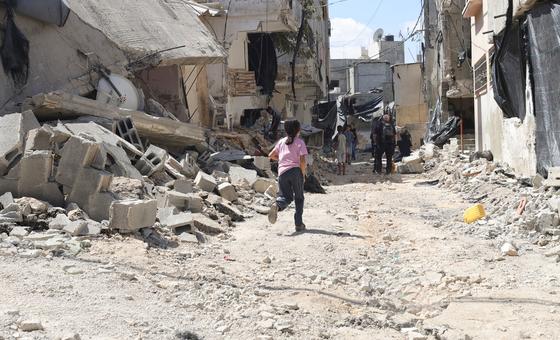
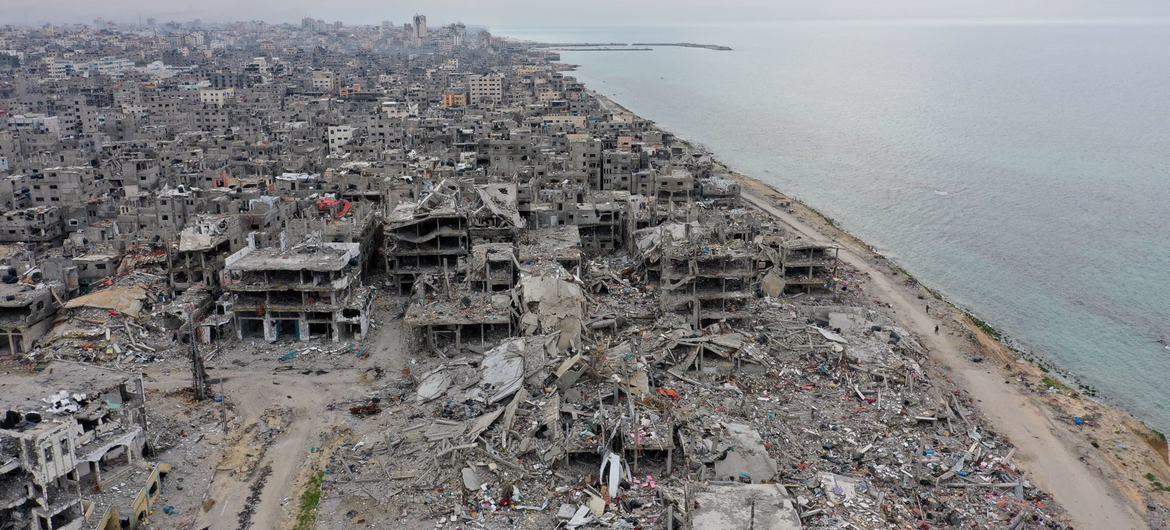
Destruction in northern Gaza.

Hold perpetrators accountable

Ms. Bahous urged the Security Council to recognise reproductive violence as a distinct category of harm and bring those responsible to justice.

She also highlighted the mental health impacts of conflict on women and girls – from depression and trauma to domestic violence and suicidal thoughts.

The threats extend into the digital sphere, where women activists and journalists are being pushed out of public life by online abuse, deepfakes and disinformation campaigns.

Enforce compliance with law

Both Mr. Fletcher and Ms. Bahous called for urgent action.

UN Member States must enforce compliance with international humanitarian law, fight impunity, and empower civilians – especially women – as agents of their own protection and bringing change.

Mr. Fletcher emphasised that even lawful military actions can cause disproportionate civilian suffering.

“[We need a] more comprehensive and people-centred approach,” he said, urging strong policy and operational measures to protect civilians and a deeper understanding of patterns of life and harm.

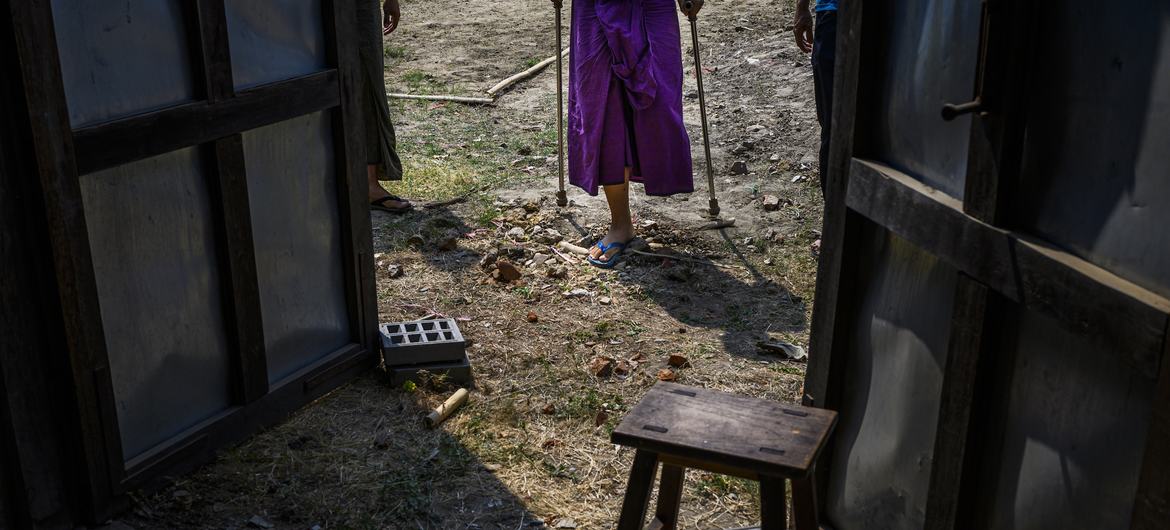
A child who lost his left leg after accidentally stepping on a landmine in his family’s paddy fields in central Myanmar.

Protection and peace inseparable

Recalling Security Council resolution 1325 on women, peace and security, Ms. Bahous called for sustained investment in women’s organizations, which are on the frontlines – protecting civilians – men, women, children and the elderly alike.

“Yet, they are under siege,” she said, noting that continued funding cuts will cost us the very women driving peace and recovery in the world’s most fragile contexts.

She concluded stressing that protection of women and their participation in peace “are inseparable”.

“The most effective shield we can offer women and girls is their own power, their own voices, and their own leadership…there is no pathway to peace that does not begin with the protection of women and girls.

Source link

90 days to economic collapse: UN and experts sound alarm over security at sea

Addressing a high-level debate of the Security Council, António Guterres said that oceans and seas are “sending a clear SOS,” as maritime spaces face escalating pressure from both traditional threats and new dangers – including piracy, armed robbery, trafficking, terrorism, cyberattacks and territorial disputes.

“From time immemorial, maritime routes have bound the world together,” he said.

“But maritime spaces are increasingly under strain…and without maritime security, there can be no global security.

Spike in piracy, attacks

The Secretary-General pointed to a sharp spike in piracy and armed robbery at sea in early 2025, citing International Maritime Organization (IMO) figures showing a 47.5 per cent increase in reported incidents compared to the same period last year.

The rise was most pronounced in Asia, especially in the busy Straits of Malacca and Singapore.

He also highlighted continued attacks on shipping in the Red Sea and Gulf of Aden by Houthi forces, disruptions in the Black Sea, and growing criminal networks trafficking drugs and people across the Gulf of Guinea, the Mediterranean and the Atlantic.

The debate was a signature event of the Greek presidency of the Council. Prime Minister Kyriakos Mitsotakis held the gavel, and several ministers were in the chamber.

A 90-day countdown to collapse

Melina Travlos, President of the Union of Greek Shipowners, delivered a stark warning to Council members: if the global shipping system grinds to a halt, the world economy will collapse in just 90 days.

She described shipping as “the silent guardian of global welfare,” noting that 90 per cent of international trade and more than 12 billion tonnes of goods depend on maritime transport each year.

Shipping unites the world, not occasionally, but consistently,” she said, calling for greater protection of seafarers and maritime infrastructure amid increasing and more complex threats.

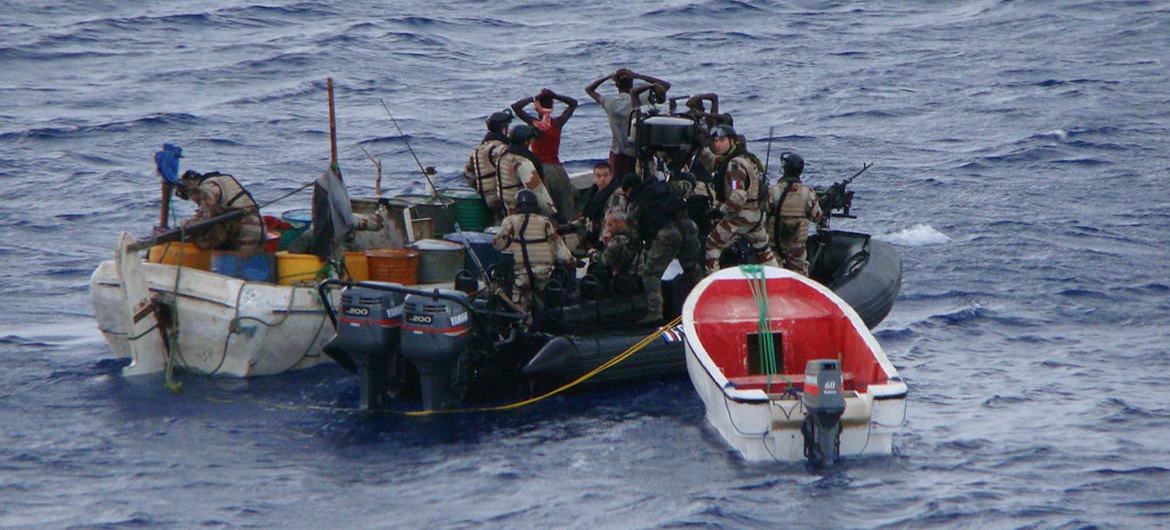
Security forces board a boat suspected of piracy in the Gulf of Guinea. (file)

One ship, six days, billions lost

Christian Bueger, a professor of international relations at the University of Copenhagen, reminded ambassadors that in 2021, a single ship – the Ever Given – blocked the Suez Canal for six days, costing the global economy billions.

Never before in history have we been as dependent on the sea as we are today,” he said, citing a 300 per cent rise in maritime trade since the 1990s.

Mr. Bueger urged Member States to adopt a more systematic, evidence-based approach to maritime security, urging a global response that is as interconnected as the threats it faces.

Uphold law of the sea

In his remarks, Secretary-General Guterres laid out a three-pronged strategy to strengthen maritime security – highlighting that decisive, coordinated global action is needed regardless of individual flashpoints or shipping disruptions.

These include upholding international law, tackling the root causes of maritime insecurity, and strengthening global partnerships.

He called on all nations to uphold international law, especially the UN Convention on the Law of the Sea (UNCLOS), the international treaty that sets the legal framework for all maritime activities and regulates the use of ocean and its resources.

This framework is only as strong as States’ commitment to full and effective implementation,” he said.

“All States must live up to their obligations.”

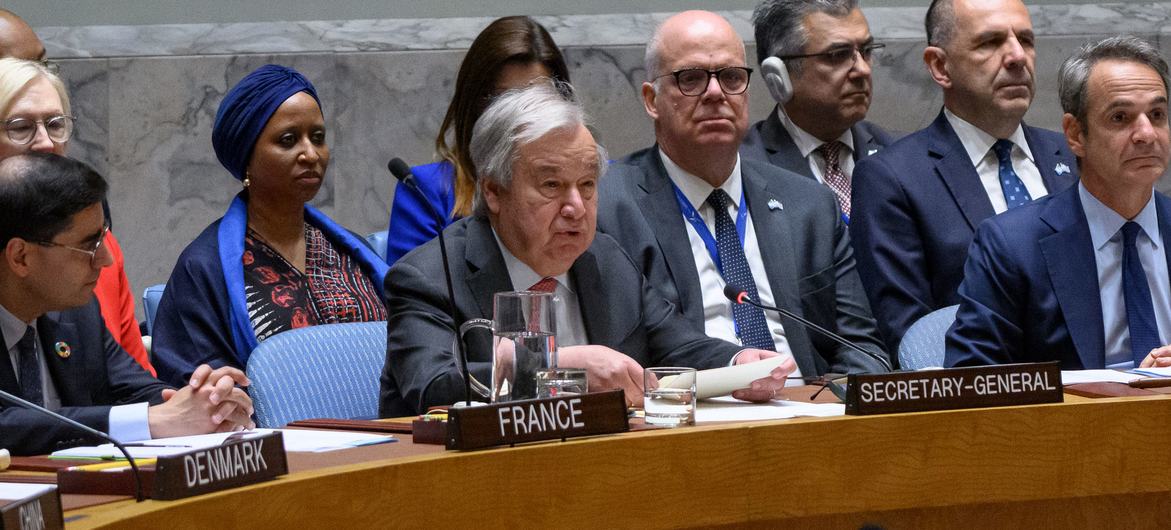
Secretary-General António Guterres (centre) addresses the UN Security Council meeting on strengthening maritime security through international cooperation for global stability under maintenance of international peace and security.

Prioritise investment

On root causes, he urged investment in coastal communities, judicial reform and building maritime capacity in developing countries — from surveillance to port security.

Alongside this, weak governance, rising poverty and lack of opportunities must be addressed.

The UN chief stressed that lasting solutions would require cooperation from governments, regional bodies, the private sector and civil society – including women and girls, who are disproportionately affected by maritime crime.

Collectively, we must do more to reduce the likelihood that desperate people will turn to crime and other activities that threaten maritime security and degrade our ocean environment,” he said.

“The United Nations system stands ready to support Member States to ensure peaceful, secure, and prosperous maritime spaces for generations to come.”

Source link

World News in Brief: Terror-crime link alarm, child detention in Australia, judiciary in Maldives, Protection of Civilians Week

In recent years, criminal and terrorist groups have seized “every” opportunity afforded by growing instability to “entrench, expand, and escalate,” said Ghada Waly, in her opening remarks to the Commission on Crime Prevention and Criminal Justice, in Vienna.

Challenges such as human and drug trafficking, smuggling of cultural and commercial goods, and environmental crimes are on the agenda during the four-day conference which focuses on “evolving and emerging” forms of organised crime.

Emerging threats

The world faces a “fundamental challenge to security, prosperity, and the rule of law,” the Executive Director said, with the link between criminal and terrorist groups becoming a growing concern.

While new technology serves as an enabler for criminal networks, justice systems around the world are being “starved” of the resources and conditions they need to provide equal access to justice.

She said, with criminal threats evolving, it was “certainly not the time to scale back global investment in crime prevention and criminal justice, both politically and financially,” emphasising the importance of multilateral cooperation.

Australia justice system in spotlight over child offenders’ reform

To Australia, where top independent rights experts have expressed concern at proposed legal reforms that could increase penalties for children.

In most Australian states, criminal responsibility begins at 10, allowing youngsters to be incarcerated for a wide range of crimes, if convicted.

Already, disproportionately large numbers of Aboriginal and Torres Strait Islander children continue to be jailed in Australia, according to rights experts Jill Edwards and Albert Barume.

The Special Rapporteurs – who are appointed by and report to the Human Rights Council – have insisted that “many new or proposed” laws across the country are incompatible with rights of the child.

Queensland crackdown

These include the so-called “Adult crime, Adult time” legal reform in the state of Queensland.

If adopted later this week, it could result in children serving longer jail time for dozens of criminal offences.

“The first goal should always be keeping children out of prison,” the rights experts said. They emphasised the excessive impact of the Queensland bill on indigenous children and the risk of creating “a future under-class of Australians”.

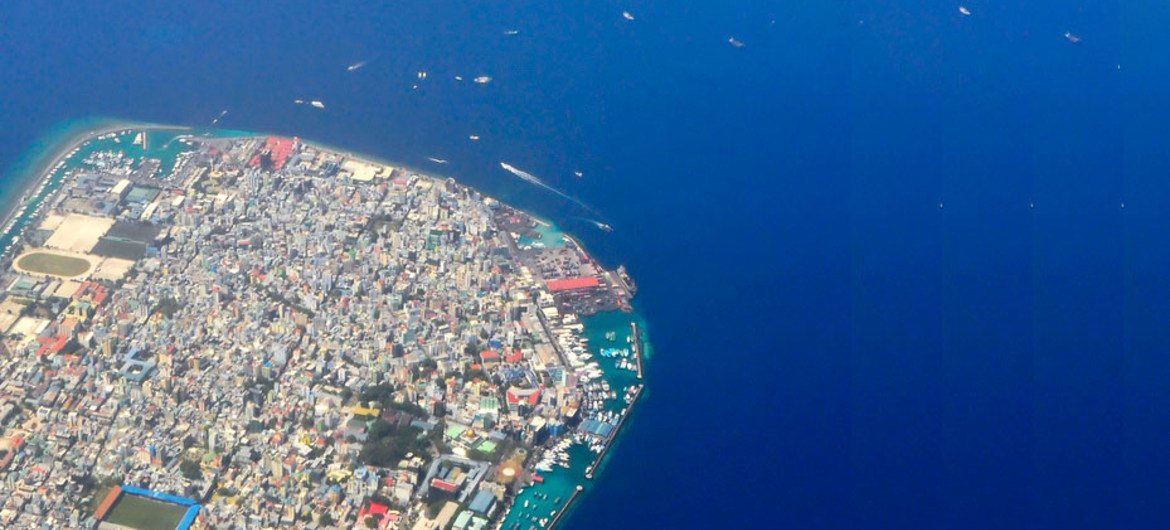
Aerial view of Malé, the capital of the Maldives.

Maldives’ dismissal of Supreme Court judges raises concern, UN rights office warns

The UN human rights office warned Monday that the dismissal by the Maldives authorities of two Supreme Court justices could jeopardise the independence of the judiciary.

The South Asian island nation launched probes into both judges in February 2025.

At the same time, the Maldives’ parliament adopted a bill to reduce the size of the Supreme Court bench from seven to five judges.

A third Supreme Court justice also resigned, while a fourth judge – the Chief Justice – has since retired.

The investigation against the judges raises questions about how it was conducted, the UN human rights office, OHCHR, said in a statement.

Judicial independence

“We remind the authorities of their commitment to maintain and protect an independent judiciary, in line with the Maldives’ Constitution and international human rights obligations,” said OHCHR spokesperson Jeremy Laurence.

“Checks and balances between the different branches of the State, including a strong and independent judiciary, play a vital role in ensuring fidelity to the rule of law by all branches of Government and the effective protection of human rights,” Mr. Laurence added.

Previously, independent rights expert Margaret Satterthwaite expressed concern about reports that lawyers for the Maldives Supreme Court justices who were under investigation “were not given the opportunity to speak at the disciplinary proceedings and that these were not public”.

Ms. Satterthwaite reports to the Human Rights Council on the independence of judges and lawyers; she is not a UN staff member.

Protection of Civilians week will work to address ‘culture of impunity’

Over 50,000 civilians have been killed in Gaza since October 2023. In Sudan, the figure is around 18,000 in the past two years – and in Ukraine, the total is 12,000, since Russia’s full-scale invasion.

During Protection of Civilians Week, from 19 to 23 May, these preventable deaths and displacements will be the focus as the United Nations, its Member States and civil society affiliates gather to discuss ways of preventing future armed conflicts.

The eighth annual PoC Week – which is coordinated by the Office for the Coordination of Humanitarian Affairs (OCHA), Switzerland, the Centre for Civilians in Conflict, and the International Committee of the Red Cross – will focus on the theme of “Tools to Further the Protection of Civilians.”

International guarantees, national violations

International humanitarian and human rights law establishes clear guidelines which protect civilians during armed conflicts.

However, OCHA noted that increasingly there is a “culture of impunity” surrounding the enforcement of these laws, with disregard for them spreading and the application of them increasingly politicised.

“Despite clear protections under international humanitarian and human rights law, civilians continue to suffer the brunt of conflict,” OCHA said, outlining the week ahead.

This is particularly concerning given that civilian deaths have been increasing. In the past decade, the world has experienced a surge in armed conflicts, disrupting what had previously been a 20-year decline.

Between 2022 and 2023, there was a 72 per cent increase in the number of civilian deaths according to UN estimates.

Throughout the week, individual member state missions are also hosting a variety of informal consultations. The calendar for the week is here.

Source link

‘On thin ice’: UN chief sounds alarm over rapid Himalayan glacier melt

António Guterres issued the warning in a video message to the inaugural Sagarmatha Sambaad, or “Everest Dialogue,” convened by the Government of Nepal in Kathmandu.

Record temperatures have meant record glacier melt,” he said.

“Nepal today is on thin ice – losing close to one-third of its ice in just over thirty years. And your glaciers have melted 65 per cent faster in the last decade than in the one before.”

Named after Mount Everest (Sagarmatha in Nepali), the international platform convened ministers, parliamentarians, climate experts, and civil society to focus on climate change, mountain ecosystems, and sustainability.

Secretary-General’s video message.

Two billion futures at stake

Glaciers in the region have served for centuries as vital freshwater reservoirs. Their accelerated melt now threatens not only local communities but vast populations downstream who rely on Himalayan-fed rivers.

Reduced water flow in river systems such as the Ganges, Brahmaputra and Indus threatens not only water but also food production for nearly two billion people across South Asia.

Combined with saltwater intrusion, this could trigger collapsing deltas and mass displacement, the UN chief warned.

“We would see low-lying countries and communities erased forever,” he said.

Children raise their voices

Ahead of the summit, Nepal’s children and youth stepped into the spotlight with their own call to action.

In a declaration submitted to the dialogue, over 100 children and young people demanded urgent and inclusive climate action that recognizes them as rights-holders and climate actors – not just passive victims.

Among their key demands: ensuring child participation in climate decisions, supporting youth-led programmes, and promoting their innovations and climate action.

The climate crisis is a child rights crisis – disproportionately impacting their health, nutrition, education and well-being,” said Alice Akunga, head of the UN Children’s Fund (UNICEF) in Nepal, which supported the deliberations.

“Listening to the voices of the ‘future of humanity’ is critical to designing and implementing meaningful and lasting solutions to address the adverse effects of climate change on children and youth.”

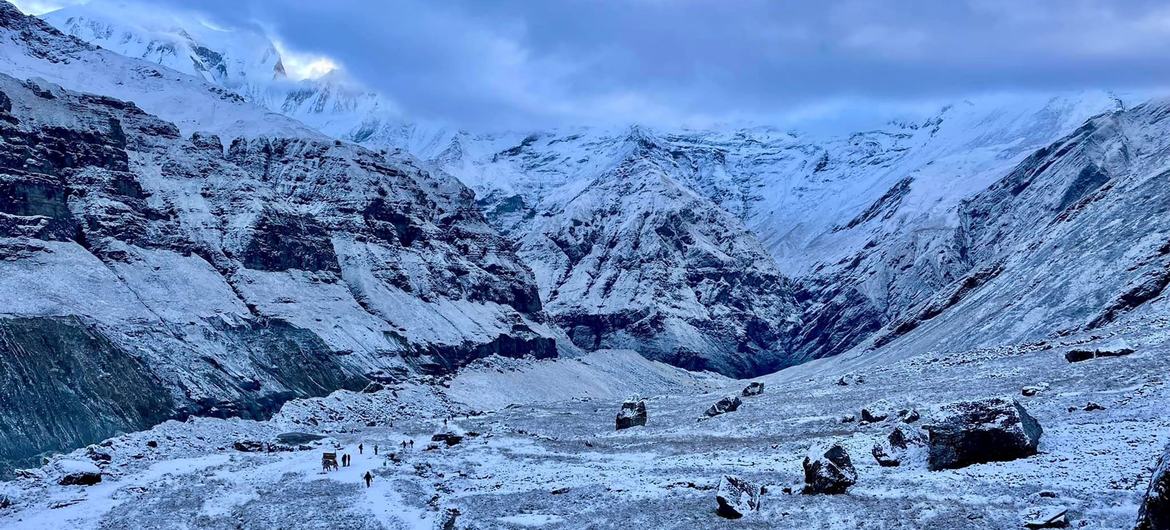
Glaciers in the high Himalayas, like those in Nepal’s Langtang region (pictured), feed major South Asian river systems sustaining tens of millions of lives and livelihoods downstream

Stop the madness

In his message, Mr. Guterres reiterated his call on the world to “stop the madness” of fossil fuel-driven global warming, a warning he made during his previous visit to the Everest region in 2023.

At the time, he stood amid glacial basins in the Himalayas, warning that the “rooftops of the world” were rapidly vanishing.

“And that is why you are gathered together focused on Sambaad – dialogue,” the UN chief said on Friday, applauding Nepal’s climate leadership, including reforestation programmes, early warning systems and its goal to achieve net-zero emissions by 2045.

Act now

The world must act without delay to limit global temperature rise to 1.5°C, he continued – the target set by the Paris Agreement on climate change – with the biggest emitters leading the way.

This includes investing in renewable energy, fulfilling the $1.3 trillion climate finance goal agreed at COP29, doubling adaptation finance to at least $40 billion this year as pledged by developed countries, and providing robust, sustained support to the Loss and Damage Fund.

Achieving these goals demands bold collaboration,” Mr. Guterres concluded. “The United Nations is your ally in this essential task.”