Ethiopia: Türk fears new crisis in Tigray amid renewed fighting

“The situation remains highly volatile and we fear it will further deteriorate, worsening the region’s already precarious human rights and humanitarian situation,” Mr. Türk said, following clashes in recent days between the Ethiopian army and regional forces.

The development comes against a backdrop of deadly conflict in Tigray from 2020 to 2022 between Government troops and separatist Tigray forces, following rising tensions between national and regional authorities.

That conflict – in which Eritrean soldiers reportedly participated – is believed to have killed tens of thousands and uprooted more than two million civilians, of whom one million remain internally displaced today.

Intensifying fighting  

According to the UN human rights office (OHCHR), the latest escalation saw clashes between the Ethiopian National Defence Forces (ENDF) and the regional Tigray Security Forces (TSF) intensify on 26 January, close to the Amhara border. The TSF withdrew from the Tselemti area on 1 February, OHCHR said.

“Drones, artillery and other powerful weapons were used by both sides,” Mr. Türk said in a statement. “Civilians are once again caught between escalating tensions, with both TSF and ENDF reportedly carrying out arrests for perceived affiliation with the opposing side. This must stop,” he insisted.

Meanwhile, in Tigray’s south and southeast near the Afar border, clashes between the TSF and the “Tigray Peace Forces”, a rival faction, continue unabated, the High Commissioner noted.

Both sides must step back from the brink and work to resolve their differences through political means,” he said. “Alleged serious violations or abuses must be promptly and independently investigated, irrespective of the perpetrators.”

Dire consequences

Briefing journalists in Geneva, the High Commissioner’s spokesperson, Ravina Shamdasani warned that new clashes could erupt “at any point” with dire consequences for civilians. She highlighted his call to all parties to recommit to the Pretoria Agreement calling for an end to hostilities, signed in 2022. 

The hostile parties should also ensure the return of internally displaced people to their homes, among other confidence-building measures, Ms. Shamdasani continued.

“This is something that was part of the agreement, but it hasn’t proceeded as smoothly as it should,” she noted.

The High Commissioner also warned that recent tensions between Ethiopia and neighbouring Eritrea risked worsening the already serious human rights and humanitarian challenges in both countries and across the wider Horn of Africa.

There have been reports regarding the presence of Eritrean troops and heightened tensions between those two countries,” Ms. Shamdasani said, pointing to “disagreements…particularly regarding the situation in Tigray”. 

She added: “We’re calling for these disagreements to be resolved through political dialogue and not resort to violence. We all saw what happened in 2020, 2021, when there was a full-blown conflict in the Tigray region, which led to we still don’t know how many deaths…We cannot afford a return to that.”

Source link

Yemen: UN Sounds Alarm as Famine, Fighting, Detentions Exacerbate Crisis

UN Special Envoy Hans Grundberg told the Security Council on Monday that the turmoil in Yemen cannot be seen in isolation.

“Yemen is both a mirror and a magnifier of the region’s volatility,” he said, noting that progress toward peace is hampered by regional rivalries, cross-border dynamics, and internal divisions.

Mr. Grundberg highlighted a dangerous escalation in hostilities, noting repeated attacks on civilians and critical infrastructure. Military clashes in Al Dhale’, Ma’rib, and Ta’iz underscore the risk that miscalculations could trigger a return to full-scale conflict.

The Houthis, also known as Ansar Allah, have been fighting Yemeni Government forces, backed by a Saudi-led coalition, for control of the country for over a decade.

Hans Grundberg, UN Special Envoy for Yemen, briefs the Security Council on the situation in Yemen. He warned that Yemen’s conflict is unravelling within an already volatile regional landscape.

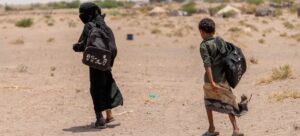
© UNICEF/Ahmed Al-Basha A girl and her brother walk home after attending classes at a UNICEF-supported educational tent. Millions of children in Yemen are out of school due to displacement and conflict-damaged schools. (file photo)

“Against the backdrop of the war in Gaza, we are seeing an alarming and dangerous intensification of hostilities between Ansar Allah and Israel,” he said, noting that a number of civilians were reportedly killed and injured, and critical infrastructure struck.

The Special Envoy warned that the current cycle of violence is dragging Yemen further from a peace process that could deliver sustainable, long-term peace and economic growth.

“This escalatory cycle must end…we need to get the focus back on Yemen – focus on both its internal challenges and on unlocking its great potential,” he stressed.

Spiralling humanitarian situation

The humanitarian situation is equally dire. UN Emergency Relief Coordinator Tom Fletcher told the Council that Yemen remains the third most food-insecure country in the world, with 17 million people already struggling to eat and an additional one million expected to face extreme hunger before February next year.

“Seventy per cent of households do not have enough food to meet daily needs – this is the highest rate ever recorded,” he said.

Mr. Fletcher highlighted that one in five households goes a full day without any food, while two million women and girls have lost access to reproductive health services amid funding shortfalls.

Despite funding gaps and a challenging operating environment, humanitarians continue to deliver aid where possible. In Hajjah, Amran, and Ma’rib, organizations have provided food, water, health, and nutrition services to tens of thousands.

More than 172,000 people affected by flooding received non-food items, shelter, hygiene kits, and clean water.

But Mr. Fletcher warned that ongoing hostilities, infrastructure damage, and the detention of UN staff severely hamper operations.

Twenty-two UN personnel have been recently arbitrarily detained by Ansar Allah; though one staff member was released, over 40 remain in detention, including a colleague who died while in custody.

Both top UN officials emphasised the urgent need for dialogue and adherence to international law. Special Envoy Grundberg urged Yemeni leaders to step back from unilateral actions and pursue a nationwide ceasefire, economic reforms, and inclusive political engagement.

Mr. Fletcher called for the immediate release of all detained aid workers and a secure operating environment, warning that funding cuts and conflict-related obstacles are costing lives.

“Detaining humanitarian staff does not help the people of Yemen. It does not feed the hungry, heal the sick, nor protect those displaced by floods or fighting,” he said.

“The people of Yemen, wherever they may live, must receive the humanitarian aid that they need. They deserve a future of greater security, justice and opportunity.”

Mounting civilian casualties in Sudan as fighting intensifies

It has now been 842 days since conflict between troops from the military government and their former allies-turned-rivals in the paramilitary Rapid Support Forces erupted in Sudan, turning the country into the world’s largest humanitarian crisis.  

Heavy fighting continues in North Darfur State, with multiple civilian casualties reported in recent days – most notably during clashes in the state capital, El Fasher, on 1 and 2 August – following earlier violence between armed groups near the Abu Shouk camp for displaced people, which currently hosts 25,000 residents.  

Starvation threat

One year after famine was confirmed in Zamzam camp on the outskirts of El Fasher, the city remains under siege, with no food aid deliveries entering by road, leaving residents of the regional capital increasingly facing starvation.  

Prices of food items such as sorghum and wheat are more than four times higher than elsewhere in the country, while many families are unable to afford even the most basic items.  

“Limited cash assistance continues, but it is nowhere near enough to meet rising needs,” said Deputy UN Spokesperson Farhan Haq on Monday during the daily briefing in New York.  

Cholera menace continues

Meanwhile, cholera continues to spread across Darfur, with nearly 1,200 cases reported – around 300 of them children – in the locality of Tawila since late June.  

In South Darfur, health authorities have reported more than 1,100 suspected cases and 64 deaths since late May, as “shortages of medical supplies, clean water and sanitation services are severely hampering the humanitarian response,” said Mr. Haq.  

The UN Children’s Fund (UNICEF) warns that the lives of more than 640,000 under-fives are at heightened risk of violence, disease and hunger in the region.

Compounded crisis

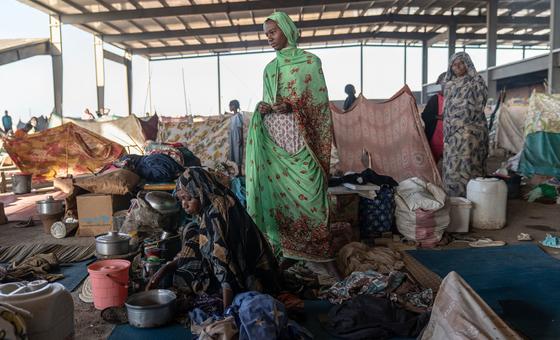
In Blue Nile State, floods in Ed Damazine displaced more than 100 people and destroyed at least 200 tents at Al-Karama camp on 1 August, further compounding the challenges facing people who fled their homes due to conflict.  

Meanwhile, in Khartoum State, the presence of deadly landmines in multiple locations adds a dangerous new layer to the threats already faced daily by civilians.  

As OCHA’s Director of Operations, Edem Wosornu, visits Sudan this week to assess the humanitarian situation, the agency has called for sustained and expanded humanitarian access along with greater international support for the most vulnerable. 

Source link

Scores killed in Sudan’s Kordofan region as fighting intensifies

Amid ongoing communication disruptions in the area, confirming the exact civilian death toll remains difficult, but reports indicate that at least 300 people – including children and pregnant women – were killed in attacks on villages in Bara locality, North Kordofan State, between 10 and 13 July.

During the same period, a series of attacks – including an air strike on a school sheltering displaced families – reportedly killed more than 20 people, in the villages of Al Fula and Abu Zabad in West Kordofan State.  

OCHA is also alarmed by reports of renewed shelling in Al Obeid, the capital of North Kordofan State, “deepening fears and insecurity among civilians,” the humanitarian coordination agency reported.  

Tragic civilian toll

With thousands of people reportedly killed since the beginning of the conflict between former military allies-turned rivals over two years ago, the crisis in Sudan continues to take a devastating toll on civilians. 

These incidents are yet another tragic reminder of the relentless toll the conflict is taking on civilians across Sudan,” OCHA reported.

The office emphasises that civilians and civilian infrastructures – including schools, homes, shelters and humanitarian assets – must never be targeted, and called on all parties to the conflict to “fully respect their obligations under international humanitarian law.”

Toll from displacement

Described as “the largest as well as the fastest growing displacement crisis globally,” by the UN refugee agency (UNHCR) in February 2025, displacement continues amid the fighting.

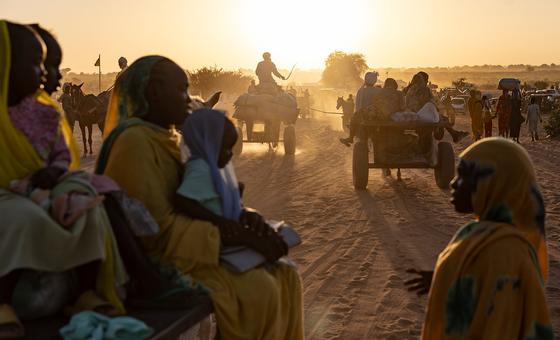
People fleeing North Kordofan, as well as El Fasher in North Darfur State, continue to seek shelter in the rest of Sudan, including Northern State, with humanitarian partners on the ground reporting more than 3,000 displaced people arriving in the locality of Ad-Dabbah since June.

Although some have received food assistance, the steady influx of newly displaced families is putting additional strain on already stretched resources.  

With the rainy season approaching, OCHA warned that further hardship is likely, particularly as heavy rain and strong winds destroyed shelters and food supplies for about 2,700 displaced people in eastern Sudan this past Sunday. 

Source link

Sudan: ‘Fighting shows no signs of abating,’ senior UN official tells Security Council

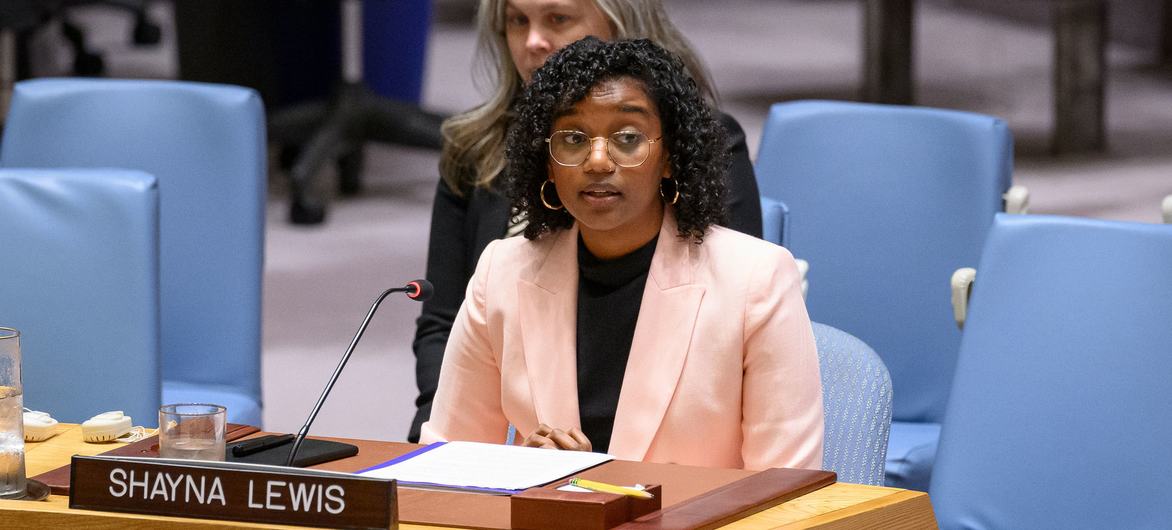
On Friday, the UN Security Council heard sobering briefings from Martha Ama Akyaa Pobee, UN Assistant Secretary-General for Africa, and Shayna Lewis, Sudan Specialist and Senior Advisor with Preventing and Ending Mass Atrocities (PAEMA), a US-based organization.

Ms. Pobee stressed that front lines continue to shift as the RSF and SAF press on with their military objectives, warning, “the warring parties appear unrelenting in their resolve to pursue military objectives.”

She noted the growing use of advanced weaponry, including long-range drones, which have expanded the violence into previously stable areas.

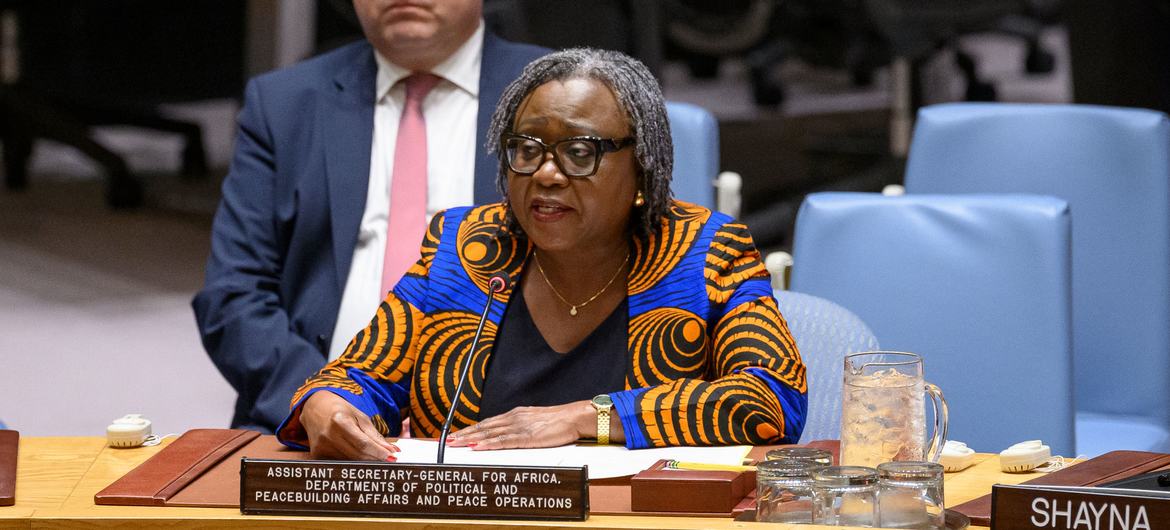
Martha Ama Akyaa Pobee, Assistant Secretary-General for Africa in the UN Department of Political and Peacebuilding Affairs and Peace Operations, briefs the Security Council meeting on the situation in Sudan.

Ms. Pobee further warned of the conflict spilling further into the region, citing recent reports of violent clashes in the tri-border area between Sudan, Libya and Egypt, involving the SAF, RSF and forces affiliated with the Libyan National Army.

Human rights violations

Ms. Pobee also referenced UN human rights reports documenting a tripling of arbitrary civilian killings between February and April this year.

“Entrenched impunity is fuelling these and other gross human rights violations and abuses. All parties to the conflict must be held accountable,” she stressed.

Ms. Lewis’s briefing focused on the worsening humanitarian situation, highlighting the over 15 million children now in need of assistance due to ongoing attacks on civilians.

Shayna Lewis, Senior Advisor and Sudan Specialist at Preventing and Ending Mass Atrocities (PAEMA), addresses the Security Council meeting on the situation in Sudan.

Returning from a recent visit to Sudan, she shared accounts of severely injured children in hospitals and stressed that up to 80 per cent of health facilities in conflict areas are no longer functioning.

She also cited examples of indiscriminate attacks on hospitals by both the SAF and RSF, including a suspected SAF drone strike on 21 June that hit a hospital in West Kordofan, killing over 40 people and destroying critical lifesaving equipment.

Both Ms. Lewis and Ms. Pobee raised alarm over the warring parties’ widespread use of sexual and gender-based violence against women and girls across Sudan.

Government of Hope

Despite the ongoing violence and human rights abuses, Ms. Pobee underscored the significance of the new “Government of Hope.”

On 31 May, a new interim Prime Minister was inaugurated, announcing reform plans and immediately appointing a cabinet of professional technocrats.

Ms. Pobee also acknowledged the efforts of the Personal Envoy of the UN Secretary-General for Sudan, Ramtane Lamamra, who has been engaging with the Prime Minister, civilian groups and the warring parties.

Through this crucial communication, the Personal Envoy is helping these stakeholders work toward an inclusive political resolution.

“I urge this Council – once again – to unite in lending full support to Personal Envoy Lamamra’s efforts, and to use its influence with the parties and their external backers to press for a genuine commitment to dialogue and de-escalation,” Ms. Pobee said.

Ambassadors also heard a briefing from the Chair of the Sudan Sanctions Committee, established by the Council pursuant to Resolution 1591 (2005), on the work of the Committee. Following the open briefing, the Council held closed consultations during which Personal Envoy Lamamra also briefed members.

Source link

Resettlement changed her life. Now she’s fighting for others to have the same chance

Currently, she’s a qualified refugee and human rights lawyer in New Zealand – but on Tuesday she recalled becoming displaced aged 14 and described the harrowing limbo that followed.

Invisible and alone

“I grew up invisible to the world,” she said. “Without rights, opportunities, or safety.”

That all changed in 2018, when her family was offered resettlement in New Zealand – a decision she said gave her back dignity, hope, and a future.

Today, she advocates for others as a legal professional and helps shape global resettlement policy as an advisor to the Core Group on Resettlement and Complementary Pathways (CRCP) which is supported by UN refugee agency, UNHCR.

Ms. Changezi’s powerful testimony set the tone for the release of the agency’s Projected Global Resettlement Needs 2026 report.

Syrians on the move

UNHCR estimates that 2.5 million refugees will require resettlement next year, a decrease from the 2.9 million estimated for 2025.

While this marks a shift – mainly due to changed conditions in Syria that are allowing for some voluntary returns – the figure remains historically high.

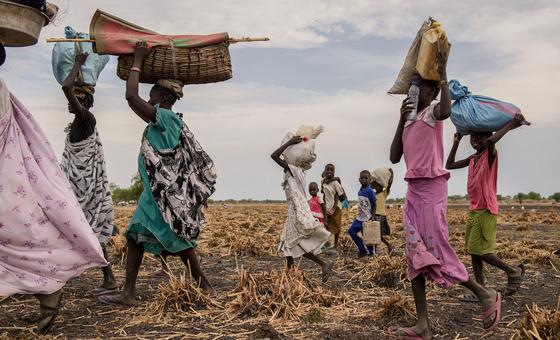
The largest groups in need include Afghans, Syrians, South Sudanese, Sudanese, Rohingya and Congolese refugees. Major countries of asylum like Iran, Türkiye, Pakistan, Ethiopia and Uganda continue to host large refugee populations, with many individuals facing urgent needs that resettlement can address.

Resettlement offers not only protection, but also a pathway to dignity and inclusion,” said UNHCR spokesperson Shabia Mantoo. “It is a demonstration of meaningful international solidarity,” she added.

Worrisome decline

Yet the message from UNHCR was also one of concern. Resettlement quotas for 2025 are expected to fall to their lowest level in two decades — below even the disruptions seen during the COVID-19 pandemic. This decline threatens to undo progress and places vulnerable refugees at greater risk.

In that context, Ms. Changezi’s story became more than a personal account – it was a rallying call. “Resettlement is more than a humanitarian act,” she told journalists. “It is a strategic investment in our shared future.”

Contributing to host societies

Ms. Changezi emphasized that refugees are not defined by their vulnerability. Across the globe, resettled refugees are rebuilding communities, launching businesses, and strengthening social and economic systems in their new homes. “We offer solutions. We drive innovation,” she insisted.

UNHCR is urging states to not only maintain their existing resettlement programmes but to expand them – swiftly and ambitiously. It is also calling for more flexible and responsive systems that can meet the needs of refugees across different regions and contexts.

Despite the challenges, over 116,000 refugees were resettled through UNHCR-supported programmes last year.

The international target for 2026 is to resettle 120,000 individuals – a goal UNHCR says is well within reach if states act decisively.

Ms. Changezi closed her remarks with a reminder that the promise of resettlement is not abstract. “Multiply my story across millions,” she said. “The long-term impact is extraordinary – not just for refugees, but for the societies that embrace them.”

Source link

UN rights chief calls on South Sudan’s warring parties to end renewed fighting

At least 75 civilians have been killed in hostilities between the national army (SSPDF) and the Sudan People’s Liberation Army-In Opposition (SPLA-IO) – which is both a political party and militia group loyal to First Vice President Riek Machar – and their respective allied armed groups, said UN human rights office, OHCHR, in a press release.

Thousands have been displaced from their homes.

South Sudan was plunged into civil war in 2013 between supporters of the President Salva Kiir and his rival Mr. Machar but a 2018 peace accord led to a fragile power-sharing agreement.

Escalating hostilities “portend a real risk of further exacerbating the already dire human rights and humanitarian situation,” said Volker Türk, head of the UN human rights office (OHCHR), urging all parties to the conflict to “urgently pull back from the brink.”

Intensifying hostilities

The latest armed violence erupted in February when a militia group identified as the White Army reportedly launched a series of attacks in Upper Nile State, OHCHR said.

Hostilities intensified between 3 May and 20 May with reports of indiscriminate aerial bombardments and river and ground offensives by the SSPDF on SPLA-IO positions in the states of Jonglei and Upper Nile.

Civilian displacement further increased on 21 May because of the SPLA-IO and allies’ counter-offensive in Jonglei State.

I urge all parties to uphold the 2018 peace agreement,” said the UN human rights chief, calling for the warring parties to “ensure protection of civilians and civilian objects,” and facilitating “humanitarian access in line with their obligations under international law.”

Concern of arbitrary detention

Between 5 and 26 March, at least 55 high-ranking government officials affiliated with the SPLM-IP, among them civilians, have been arrested across the country. Notably, South Sudan’s first vice-president, ministers, members of parliament and military officers were among the dozens of politicians who have been detained.

“I am concerned that many of the detentions are arbitrary in nature,” Mr Türk said, as these arrests were conducted without warrant or due process.”

Mr Türk called for the immediate and unconditional release of those arbitrarily detained, as he urged for authorities to grant the UN Mission in South Sudan (UNMISS) access to National Security Service detention sites to assess the welfare of those detained there.

Finally, the UN also urged the authorities to take “prompt, effective and meaningful” steps to halt the spread of hate speech in the country.

Source link

Exhausted Sudanese flee into Chad as fighting escalates

Nearly 20,000 people – mainly traumatized women and children – have reached Chad in the past two weeks, according to the UN refugee agency, UNCHR.

Most arrived in Chad with nothing – no food, money or identification,” said Magatte Guisse, UNHCR Representative in Chad. “Several wounded individuals, including children and elderly women, reportedly fell from vehicles during the chaotic escape.”

Chad is one of the poorest countries in the world and already hosts 1.3 million refugees.

This includes nearly 800,000 people from Sudan since war broke out between the Sudanese Armed Forces and paramilitary Rapid Support Forces in April 2023, after a breakdown in transition to civilian rule.  

Heavy fighting in Sudan has devastated much of the country, likely killed tens of thousands and displaced almost nine million people, UN agencies say.

No food, no money

In Chad, the Tine border crossing in Wadi Fira Province has seen the sharpest spike in new arrivals, with more than 6,000 people in just two days,

Sudanese refugees are exposed to robbery and extortion at checkpoints – and many have also witnessed men being killed, women and girls sexually abused, and homes burned to the ground.

The refugee agency reported that armed groups have extorted, robbed or sexually assaulted around 76 per cent of the newly arrived refugees.

A nation of 19 million people where resources are already strained, Chad is overstretched and needs “increased solidarity and immediate funding, to ensure these vulnerable populations receive the protection and assistance they need, now”.

Renewed attacks on Port Sudan 

In a related development, a third day of drone strikes hit the international airport and a power station in Port Sudan, the UN’s humanitarian hub for coordinating aid operations across Sudan.

The city is the current seat of government and until this weekend had been largely spared from the violence that is ongoing in Khartoum, Darfur and elsewhere. Thousands of people fleeing the war have also sought shelter in Port Sudan.

Port Sudan airport is a lifeline for humanitarian operations, serving as the primary entry point for aid personnel, medical supplies and other lifesaving relief that is coming into Sudan,” said Jens Laerke, spokesperson for the UN aid coordination office, OCHA. The airport is “immensely important”, he told journalists in Geneva.

According to reports, the Red Sea city suffered a complete power outage after drone strikes hit a large power station on Tuesday. Other strikes reportedly hit an army base in the city centre, a fuel depot and a hotel close to the airport, which is located near to the presidential palace.

These attacks have increased the “already severe” lack of aid access and delivery challenges facing humanitarian teams across the country, explained Mr. Laerke, adding that such violence is prohibited under international humanitarian law. 

It is widely believed that the paramilitary Rapid Support Forces are responsible for the attacks. No UN facilities or operations have been impacted but UN Humanitarian Air Service flights in and out of the city have been paused.

Source link