World News in Brief: Türk slams relentless Russian attacks, Gaza update, Cyclone Gezani hits Madagascar

His reaction followed overnight attacks on energy infrastructure in Kyiv, Dnipro and the key port city of Odesa.

Nearly 8,800 multistorey buildings in Kyiv, Kharkiv and Odesa are without heating.

In Kharkiv, temperatures are forecast to drop to minus 10°C or 14°F on Thursday evening, said Viktoriia Andrievska from the UN aid coordination office, OCHA.

“Without heating or electricity, homes will turn freezing, basic services will stop, for example, the lifts will stop working, and people, especially older residents and families with children, will struggle to stay warm and safe,” she said.

Illegal strikes

In his statement, the UN human rights chief emphasised the lasting impact of “large-scale” attacks by Russia on Ukrainian energy infrastructure, which he stressed are prohibited under international law.

“Millions of households struggle with only a few hours of electricity each day,” Mr. Türk said, noting that unheated schools have been forced to shut and medical care has been impacted too.

International efforts to end the war in Ukraine continue, meanwhile, with Moscow announcing on Thursday that it expected the “next round” of talks “to take place shortly”, according to a Kremlin spokesperson.

Gaza: Another UN worker is killed, says UNRWA

Another UN worker has been killed in Gaza, despite a ceasefire agreement between Hamas fighters and the Israeli military.

According to the UN agency for Palestine refugees, UNRWA, a staff member was killed during Israeli airstrikes on Tuesday, reportedly after an attack by Hamas militants in Rafah.

UNRWA said that the Israeli strikes in Gaza City and shelling in Khan Younis killed at least four Palestinians, including their colleague, as he was hit while out walking on Salah Eddin Street in central Gaza.

Nearly 400 staffers killed

Since the war began, 391 UNRWA staff and partners have been killed.

In other Gaza news, Israeli forces have demolished a United Nations school in Jabalia in northern Gaza, it has been confirmed.

According to UNRWA, the school was one of a number of facilities it has behind the so-called “Yellow Line” of concrete blocks that separates the Israel Defense Forces from the people of Gaza.

Between January and February, eight UNRWA schools in the militarised area have been reportedly demolished by Israeli forces, the UN agency said.

Cyclone Gezani displaces thousands in northeastern Madagascar

Tropical Cyclone Gezani has killed at least 31 people and displaced thousands after making landfall in Madagascar on 10 February, bringing winds exceeding 195 km/h, heavy flooding and widespread destruction across eastern and central regions.

According to local authorities, four people remain missing and 35 have been injured. Preliminary reports indicate that more than 250,000 people have been affected, with nearly 7,000 displaced. 

Over 65,000 homes have been flooded, damaged or destroyed, and around 600 classrooms have been partially or completely rendered unusable.

UN emergency teams deployed

The UN International Organization for Migration (IOM) has deployed emergency teams to Toamasina to support authorities as displaced families shelter in 28 evacuation centres across 16 districts. A national state of emergency has been declared.

“The scale of devastation…has left families struggling to cope with urgent needs and heavy losses,” said IOM Chief of Mission Roger Charles Evina.

The Government is leading search-and-rescue operations and delivering emergency shelter and food assistance, including the distribution of 800 metric tonnes of rice, with support from UN agencies and partners.

A $3 million allocation from the UN Central Emergency Response Fund will assist more than 90,000 people as additional donor funding supports early response efforts.

The UN aid coordination office, OCHA, warned that the cyclone could also affect central and southern Mozambique in the coming days.

Source link

Ethiopia: Türk fears new crisis in Tigray amid renewed fighting

“The situation remains highly volatile and we fear it will further deteriorate, worsening the region’s already precarious human rights and humanitarian situation,” Mr. Türk said, following clashes in recent days between the Ethiopian army and regional forces.

The development comes against a backdrop of deadly conflict in Tigray from 2020 to 2022 between Government troops and separatist Tigray forces, following rising tensions between national and regional authorities.

That conflict – in which Eritrean soldiers reportedly participated – is believed to have killed tens of thousands and uprooted more than two million civilians, of whom one million remain internally displaced today.

Intensifying fighting  

According to the UN human rights office (OHCHR), the latest escalation saw clashes between the Ethiopian National Defence Forces (ENDF) and the regional Tigray Security Forces (TSF) intensify on 26 January, close to the Amhara border. The TSF withdrew from the Tselemti area on 1 February, OHCHR said.

“Drones, artillery and other powerful weapons were used by both sides,” Mr. Türk said in a statement. “Civilians are once again caught between escalating tensions, with both TSF and ENDF reportedly carrying out arrests for perceived affiliation with the opposing side. This must stop,” he insisted.

Meanwhile, in Tigray’s south and southeast near the Afar border, clashes between the TSF and the “Tigray Peace Forces”, a rival faction, continue unabated, the High Commissioner noted.

Both sides must step back from the brink and work to resolve their differences through political means,” he said. “Alleged serious violations or abuses must be promptly and independently investigated, irrespective of the perpetrators.”

Dire consequences

Briefing journalists in Geneva, the High Commissioner’s spokesperson, Ravina Shamdasani warned that new clashes could erupt “at any point” with dire consequences for civilians. She highlighted his call to all parties to recommit to the Pretoria Agreement calling for an end to hostilities, signed in 2022. 

The hostile parties should also ensure the return of internally displaced people to their homes, among other confidence-building measures, Ms. Shamdasani continued.

“This is something that was part of the agreement, but it hasn’t proceeded as smoothly as it should,” she noted.

The High Commissioner also warned that recent tensions between Ethiopia and neighbouring Eritrea risked worsening the already serious human rights and humanitarian challenges in both countries and across the wider Horn of Africa.

There have been reports regarding the presence of Eritrean troops and heightened tensions between those two countries,” Ms. Shamdasani said, pointing to “disagreements…particularly regarding the situation in Tigray”. 

She added: “We’re calling for these disagreements to be resolved through political dialogue and not resort to violence. We all saw what happened in 2020, 2021, when there was a full-blown conflict in the Tigray region, which led to we still don’t know how many deaths…We cannot afford a return to that.”

Source link

‘Human rights cannot wait’: Türk launches $400 million appeal for 2026

He warned Member States that with crises mounting, the world cannot afford a human rights system in crisis. 

The cost of our work is low; the human cost of underinvestment is immeasurable,” he said. 

“In times of conflict and in times of peace, we are a lifeline for the abused, a megaphone for the silenced, a steadfast ally to those who risk everything to defend the rights of others.”

Documenting violations, supporting survivors 

Last year, UN human rights staff in 87 countries observed more than 1,300 trials, supported 67,000 survivors of torture, documented tens of thousands of human rights violations, and contributed to the release of more than 4,000 people from arbitrary detention

They also documented civilian casualties and informed humanitarian responses through risk analysis and early warning in 21 armed conflicts around the world.  

For example, the UN Human Rights Monitoring Mission in Ukraine (HRMMU) is the only organization that has maintained a comprehensive record of civilian casualties since Russia first invaded the country in 2014. 

“In Sudan, we are providing vital support to survivors of sexual violence and other horrific atrocities, paving the way for justice and accountability,” he said. 

Aligning economic policies with human rights  

The High Commissioner also stressed that addressing inequalities and respecting economic and social rights are vital to peace and stability.  

“Human rights make economies work for everyone, rather than deepening exclusion and breeding instability,” he said. 

His office worked with more than 35 governments in 2025, helping them to align all economic policies with human rights. He cited the example of Djibouti, where staff helped conduct a human rights analysis of the health budget, with a focus on people with disabilities.  

‘Delivering under strain’ 

Mr. Türk thanked the 113 funding partners – including governments, multilateral donors and private entities – who contributed to OHCHR’s 2025 budget. 

“But at the same time, I have to say – and you know it from our previous encounters – that we are currently in survival mode, we are delivering under strain,” he said. 

He outlined several consequences of reduced funding.  For example, the Office reduced presence in 17 countries, wiping out programmes critical for endangered, threatened, or marginalised communities such as Indigenous People. Roughly 300 staff out of 2,000 were laid off. 

“At a time when truth is being eroded by disinformation and censorship, we had to curtail our support for its guardians – journalists and human rights defenders. Less support for civic space means more surveillance and more repression.”  

‘Ambitious, agile and creative’ 

OHCHR “will need to be even more ambitious, agile, and creative” in 2026, he said. 

The UN General Assembly has approved a regular budget of $224.3 million, which is based on assessed contributions from Member States. This amount is 10 per cent lower than in 2025

Through the 2026 appeal, OHCHR is requesting an additional $400 million in voluntary contributions. 

“Historically, human rights account for an extremely small portion of all UN spending. We need to step up support for this low-cost, high-impact work that helps stabilise communities, builds trust in institutions, and supports lasting peace,” said Mr. Türk. 

“And we need more unearmarked and timely contributions so we can respond quickly, as human rights cannot wait.” 

Source link

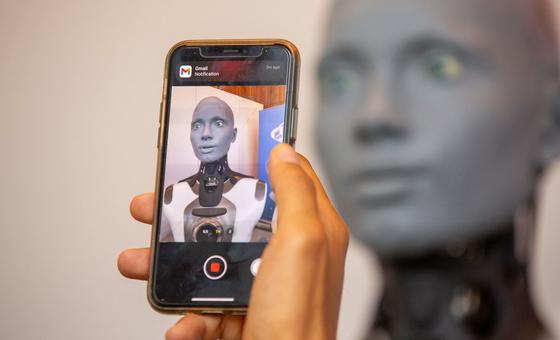
Human rights must anchor the digital age, says UN’s Türk

Digital technologies have the potential to drive progress and strengthen rights, including connecting people, improving access to health and education, and much more.

But the pace of their evolution also poses serious risks, warned Volker Türk, UN High Commissioner for Human Rights – from restrictions on free expression and privacy violations to discrimination and growing threats to our shared sense of truth and reality.

It is precisely in the face of massive change, that we need more human rights, not less,” he said on Monday, addressing a high-level event on the twentieth anniversary of the World Summit on the Information Society (WSIS) in Geneva.

Prioritising rights

In this time of sweeping change, human rights must be prioritised and used as the blueprint for action.

States’ legal obligations and companies’ duties to respect human rights offer guidance to tackle disinformation and protect our data from illicit use,” Mr. Türk stressed.

Such guidance also helps counter algorithmic bias, digital hate speech, and fosters trust and inclusive digital decision-making.

Role of WSIS

Founded in 2001, the inaugural WSIS was held in two phases in December 2003 (Geneva) and November 2005 (Tunis).

Since then, the forum has brought together diverse stakeholders to collaborate on digital governance and promote a digital landscape that is people-centred, inclusive and development-oriented.

“[The WSIS] helped create a space for States, technology companies, civil society, and others to harness the power of information and communication technologies for development,” said Mr. Türk.

Looking forward

The High Commissioner stressed that the coming months will see critical decisions on regulating the digital sphere, including new UN mechanisms on AI and data governance.

We have a window of opportunity to make a difference,” he concluded.

“We must join forces – States, technology companies, international organizations, civil society, and others – to work towards an inclusive and open digital environment for everyone, everywhere.”

Source link

‘Behind each crisis, people are suffering,’ Türk tells Human Rights Council

We are on an indefensible path of escalating conflict and open disregard for international human rights and humanitarian law,” said Volker Türk, addressing the UN Human Rights Council in Geneva.

Offering a global overview, he painted a stark picture of a world in crisis – with surging armed conflict, deepening climate disruption, emerging technological threats, and a worrying rise in authoritarianism.

Spiralling conflicts

Conflicts around the world are spiralling, as civilians are deliberately attacked and starvation and rape is used as weapons of war by parties. Yet, “accountability is often absent,” said Mr. Türk, who heads the office of human rights, OHCHR.  

From Ukraine to Myanmar, conflicts are plunging countries deeper into chaos and lawlessness.  

In Sudan, the number of arbitrary killings of civilians as rival militaries battle for control, tripled between February and April, OHCHR reports.  

In Gaza, “Israel has weaponised food and blocked lifesaving aid,” Mr. Türk continued, calling for an “immediate ceasefire leading to a two-State solution, with Gaza as an integral part of a Palestinian State.”  

Describing the military escalation between Israel and Iran as “deeply worrying,”  Mr. Türk appealed “for de-escalation and urgent diplomatic negotiations to end these attacks and find a way forward.”  

“This violence must end,” he said.  

Civil society under attack

Around the world, at least 625 human rights defenders and media workers were killed or disappeared in 2024, OHCHR has reported.  

That is one every 14 hours,” the human rights chief said.  

In many places around the world, civil society and the media are being vilified, harassed and silenced; yet it is civil society and the media who play a vital role holding power to account.  

As investigating and reporting human rights abuses and violations are necessary tools to mitigate conflict and build peace, Mr. Türk said he was “deeply disturbed” by attacks on the international institutions, including the International Criminal Court (ICJ).  

“Sanctioning judges and prosecutors at national, regional or international levels, for doing their jobs, is an assault on the rule of law and corrodes justice,” he said.  

Persecuted minorities

From anti-immigrant rhetoric to hate speech targeting the LGBTIQ+ community, one in five people across 119 countries reported experiencing discrimination in the past year, OHCHR said.  

Discrimination is neither rare nor random, it is widespread,” said Mr. Türk.  

For instance, data gathered by the UN shows that women face discrimination at more than double the level experienced by men.  

Highlighting the war on women and girls in Afghanistan, the de facto authorities continue to enforce a systematic policy of erasing women and girls from public life, he continued.  

In these troubled times, “we need governments and societies to stand up for human rights, in word and deed,” concluded Mr. Türk.  

Source link

UN’s Türk criticises ‘draconian’ decree limiting dissent in Mali

Volker Türk on Friday called the decree “draconian” and urged Mali’s Transitional President, General Assimi Goïta, to reverse the decree issued earlier this week.

Signed on 13 May, the decree dissolves all political parties and “organizations of a political nature” nationwide. It was preceded by the repeal of legislation that had safeguarded political participation.

Any restrictions of political participation must be consistent with Mali’s international human rights law obligations,” High Commissioner for Human Rights Türk said.

He urged the transitional authorities to release those who have been arrested on politically motivated grounds and to fully restore political rights in the country.

Erosion of civic space

The clampdown comes amid a broader erosion of civic space in Mali since the military seized power in successive coups in 2020 and 2021.

According to media reports, the government’s move was read out on state television on Tuesday and cited the need to curb the “proliferation” of political parties.

At least three opposition members were reportedly arrested following protests against the decree, with their whereabouts currently unknown – part of what Mr. Türk described as a troubling pattern of enforced disappearances dating back to at least 2021.

A group of UN independent rights experts also condemned the developments in a separate statement last week, warning that the decree and accompanying legislation represent “a direct violation of basic human rights.”

Elections in question

The experts – who are independent of the UN and serve in their personal capacity – criticised the transitional authorities for using the 2021 national consultations, the Assises Nationales de la Refondation and April 2025 consultation on review of the Charter of Political Parties, as justification for authoritarian measures.

Several political parties boycotted those consultations, citing fears they were being used as a pretext to dismantle political opposition.

Among the recommendations emerging from those meetings, the Council of Ministers reportedly discussed naming Gen. Goïta as president for a renewable five-year term – without holding elections.

The UN has urged the transitional authorities to refrain from extending the transition period again and to publish an electoral timetable without delay.

High Commissioner Türk recalled Gen. Goïta’s instructions to the Cabinet of Ministers in November 2024 to create conditions for “transparent and peaceful elections,” a promise that now appears increasingly hollow.

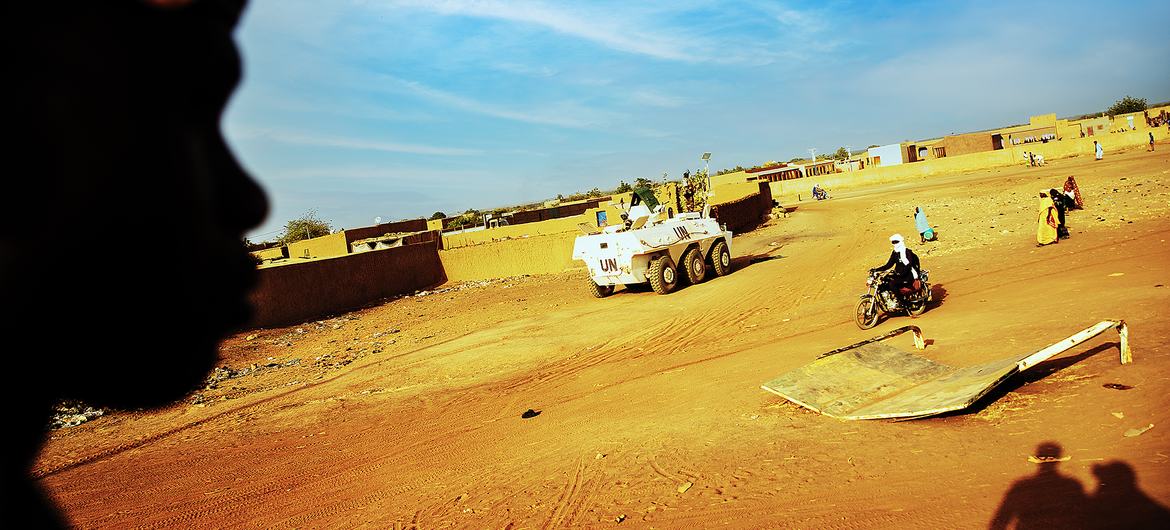
A MINUSMA patrol in the town of Ménaka, eastern Mali. The mission closed at the end of 2023. (file photo)

Spiralling security situation

Beyond political repression, Mali is grappling with worsening security conditions following the closure of the UN peacekeeping mission, MINUSMA, at the end of 2023.

According to credible information received by the UN rights office, OHCHR, violations and abuses increased by nearly 120 per cent between 2023 and 2024.

The withdrawal of French forces and the European Union Training Mission in Mali in 2022 also contributed to the deteriorating security situation across the West African landlocked country.

Civilians across the country continue to face deadly attacks – including killings, abduction, and sexual and gender-based violence – by extremist groups including Jama’at Nusrat al-Islam wal-Muslimin (JNIM) and the Islamic State – Sahel Province.

Government forces, allegedly accompanied by foreign military personnel widely referred to either as “Africa Corps” or “Wagner,” have also been accused of serious abuses. Last month, dozens of civilians were reportedly killed in the southwestern Kayes region after being detained by Malian forces and foreign partners.

Bring perpetrators to justice

Mr. Türk underscored the need to ensure accountability for rights violations and abuses.

The multiple investigations announced by the Malian authorities into these killings must be prompt, impartial and meet international standards, he said, “with a view to ensuring victims’ rights to truth, justice and reparations.”

Source link

World News in Brief: South Sudan urged to avoid slide to war, Türk calls on EU not to weaken landmark law, Ukraine and Mali updates

The Quartet is calling on the country’s leaders to end hostilities and return to dialogue to fully implement the 2018 peace agreement known as the Revitalized Agreement on the Resolution of the Conflict in the Republic of South Sudan (R-ARCSS).

South Sudan, the world’s youngest nation, gained independence in 2011 but soon descended into a brutal civil war. A 2018 peace agreement has held together but now threatens to fully unwind between the president and his vice presidential rival.

Regional pressure

In recent weeks, the Quartet has observed air and ground attacks that have led to loss of life, the destruction of homes, and the displacement of civilians. Humanitarian facilities have also been targeted, while hate speech and ethnic tensions are on the rise.

The Quartet welcomed a recent joint visit by the African Union and IGAD to South Sudan as a sign of regional support for peace. It also called on all sides to cooperate with ceasefire monitors investigating recent violence.

South Sudan’s leaders must commit to inclusive dialogue, the release of political detainees, and renewed efforts to carry out the peace deal, the Quartet stressed.

A return to war would betray the people’s hope for peace and stability, they warned. Only a political solution can ensure free and fair elections at the end of the current transitional period.

UN rights chief urges EU not to weaken landmark corporate responsibility law

UN human rights chief Volker Türk has called on the European Union to protect a key law that holds large companies accountable for human rights and environmental harm.

The EU’s Corporate Sustainability Due Diligence Directive (CSDDD), adopted last year, requires businesses to identify and address any negative impact their activities may have on people or the planet.

But changes now being discussed in Brussels as part of a broader reform package could weaken the law, Mr. Türk warned on Wednesday.

“The CSDDD, by far the most ambitious business and human rights regulatory initiative anywhere in the world, has rightly been welcomed by companies, policy makers, civil society, and national human rights institutions alike,” he said.

“A large number of businesses have already taken steps to ensure they comply with it.”

Detailed review

UN human rights office, OHCHR, has published a detailed review of the EU proposal, pointing to ways it could undermine this groundbreaking directive.

Mr. Türk urged lawmakers to keep the law in line with global standards, such as the UN Guiding Principles on Business and Human Rights.

“While some streamlining… could be advantageous, it would be counterproductive to water down its alignment with international standards,” he said.

April deadliest month for civilians in Ukraine since September

April was the deadliest month for civilians in Ukraine since September 2024, with at least 209 people killed and 1,146 injured, the UN Human Rights Monitoring Mission in Ukraine (HRMMU) reported on Wednesday.

In its monthly update, the Mission said that 97 per cent of casualties occurred in areas controlled by Ukraine, with nearly half caused by missile and loitering munitions attacks by Russian forces.

“Kryvyi Rih, Sumy, Dnipro, Zaporizhzhia, Kyiv, and Kharkiv all endured devastating attacks,” said Danielle Bell, Head of HRMMU. “The sharp rise in casualties was mainly due to the intensified use of ballistic missiles in major cities.”

Among the deadliest incidents:

  • On 4 April, a missile strike on Kryvyi Rih killed 20 civilians and injured 63.
  • On Palm Sunday (13 April), two missiles hit Sumy, killing at least 31 and injuring 105.
  • A 24 April attack on Kyiv killed 11 and injured 81.

Children were especially affected. At least 19 were killed and 78 injured in April – the highest monthly total since June 2022.

The wave of attacks continued into May, with cities including Kharkiv, Odesa and Kyiv again coming under fire.

UN experts raise alarm over Mali’s suspension of political parties

Independent UN human rights experts have strongly criticised Mali’s military authorities for suspending all political parties and activities, calling the move a clear violation of basic rights.

© MINUSMA/Harandane Dicko

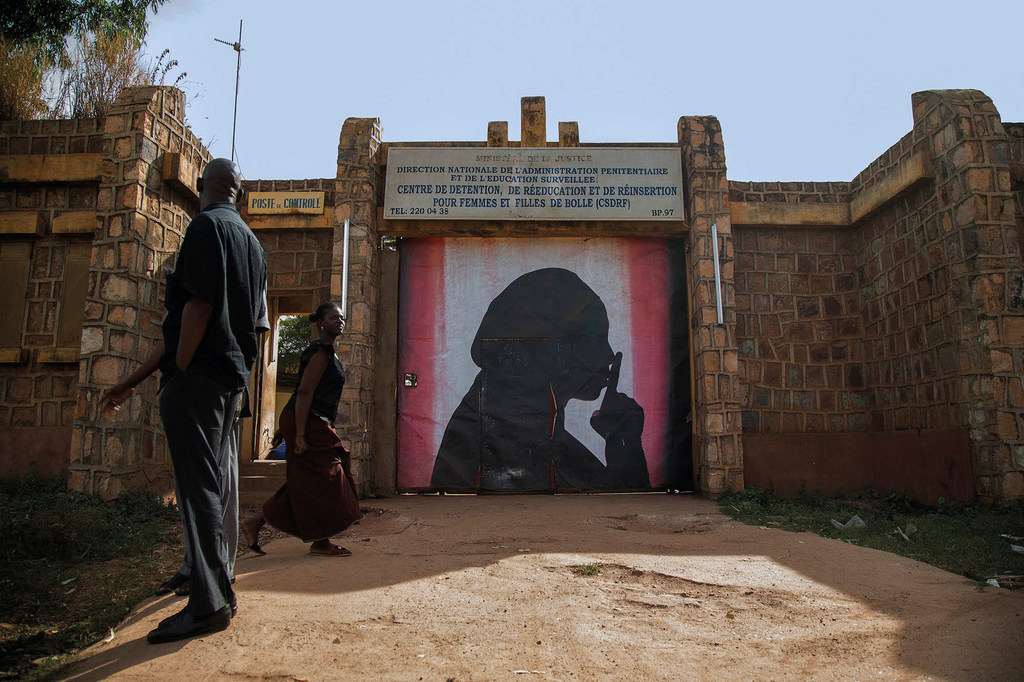
A detention centre in Bamako, Mali. (file)

The decision, announced on 7 May via state television, halts political activity “until further notice.” The junta, which took power following coups in 2020 and 2021, said the suspension was necessary to maintain public order.

The three UN Human Rights Council-appointed experts described it as a direct violation of human rights and called for the order’s immediate repeal.

They also called on the National Transitional Council to strike down a bill introduced on 30 April, which repealed legislation governing how political parties operate.

“If passed into law, the 30 April bill will place Mali in contravention of its human rights obligations, notably on freedoms of association and expression,” the experts stressed.”

Protests

In response to the 30 April bill, opposition parties organised a pro-democracy rally in the capital Bamako on 3 May which drew hundreds of demonstrators. The parties reportedly demanded a timeline to end military rule and a return to constitutional order.

Another protest is planned for Friday to oppose the decree against political parties.

The experts said Malian authorities must work to counteract “the current climate of suppression of the civic space”.

“The right to peacefully assembly is essential to the health of a vibrant political community,” the experts said. “The Malian Transitional authorities must scrupulously respect it and abstain from acts of intimidation and repression that risk the physical integrity and the rights of demonstrators.”

Special Rapporteurs and Independent Experts are appointed by the Geneva-based Human Rights Council. They serve in their individual capacity, independent of the UN system and national governments. They are not UN staff and draw no salary


Source link