
‘Human rights cannot wait’: Türk launches $400 million appeal for 2026

He warned Member States that with crises mounting, the world cannot afford a human rights system in crisis. 

The cost of our work is low; the human cost of underinvestment is immeasurable,” he said. 

“In times of conflict and in times of peace, we are a lifeline for the abused, a megaphone for the silenced, a steadfast ally to those who risk everything to defend the rights of others.”

Documenting violations, supporting survivors 

Last year, UN human rights staff in 87 countries observed more than 1,300 trials, supported 67,000 survivors of torture, documented tens of thousands of human rights violations, and contributed to the release of more than 4,000 people from arbitrary detention

They also documented civilian casualties and informed humanitarian responses through risk analysis and early warning in 21 armed conflicts around the world.  

For example, the UN Human Rights Monitoring Mission in Ukraine (HRMMU) is the only organization that has maintained a comprehensive record of civilian casualties since Russia first invaded the country in 2014. 

“In Sudan, we are providing vital support to survivors of sexual violence and other horrific atrocities, paving the way for justice and accountability,” he said. 

Aligning economic policies with human rights  

The High Commissioner also stressed that addressing inequalities and respecting economic and social rights are vital to peace and stability.  

“Human rights make economies work for everyone, rather than deepening exclusion and breeding instability,” he said. 

His office worked with more than 35 governments in 2025, helping them to align all economic policies with human rights. He cited the example of Djibouti, where staff helped conduct a human rights analysis of the health budget, with a focus on people with disabilities.  

‘Delivering under strain’ 

Mr. Türk thanked the 113 funding partners – including governments, multilateral donors and private entities – who contributed to OHCHR’s 2025 budget. 

“But at the same time, I have to say – and you know it from our previous encounters – that we are currently in survival mode, we are delivering under strain,” he said. 

He outlined several consequences of reduced funding.  For example, the Office reduced presence in 17 countries, wiping out programmes critical for endangered, threatened, or marginalised communities such as Indigenous People. Roughly 300 staff out of 2,000 were laid off. 

“At a time when truth is being eroded by disinformation and censorship, we had to curtail our support for its guardians – journalists and human rights defenders. Less support for civic space means more surveillance and more repression.”  

‘Ambitious, agile and creative’ 

OHCHR “will need to be even more ambitious, agile, and creative” in 2026, he said. 

The UN General Assembly has approved a regular budget of $224.3 million, which is based on assessed contributions from Member States. This amount is 10 per cent lower than in 2025

Through the 2026 appeal, OHCHR is requesting an additional $400 million in voluntary contributions. 

“Historically, human rights account for an extremely small portion of all UN spending. We need to step up support for this low-cost, high-impact work that helps stabilise communities, builds trust in institutions, and supports lasting peace,” said Mr. Türk. 

“And we need more unearmarked and timely contributions so we can respond quickly, as human rights cannot wait.” 

Source link

Building healthy bridges towards peace: WHO launches $1 billion appeal

“This appeal is a call to stand with people living through conflict, displacement and disaster to give them not just services, but the confidence that the world has not turned its back on them,” WHO Director-General Tedros Adhanom Ghebreyesus said.

The 2026 appeal seeks to respond to 36 emergencies worldwide, including 14 “grade 3” crises requiring the highest level of organizational response at a time of stinging funding cuts as humanitarian and health financing is experiencing its sharpest decline in a decade, the agency said.

“Around one quarter of a billion people are living through humanitarian crises that have stripped away safety, shelter and access to healthcare [while] global defence spending now exceeds $2.5 trillion a year,” Tedros said at the launch in Geneva.

‘Not charity’

With the requested resources, WHO can sustain lifesaving care in the world’s most severe emergencies while “building a bridge towards peace”, said the lead agency for health response in humanitarian settings, which coordinates more than 1,500 partners across 24 crisis settings globally, ensuring that national authorities and local partners remain at the centre of emergency efforts.

“It is not charity,” the WHO chief said.

“It is a strategic investment in health and security. Access to healthcare restores dignity, stabilises communities and offers a pathway toward recovery.”

Priority response areas

As global humanitarian financing continues to contract, the 2026 appeal comes at a time of converging global pressures as protracted conflicts, escalating climate change impacts and recurrent infectious disease outbreaks drive increasing demand for health emergency support.

WHO’s priority emergency response areas will include Afghanistan, the Democratic Republic of the Congo, Haiti, Myanmar, the Occupied Palestinian Territory, Somalia, South Sudan, Sudan, Syria, Ukraine and Yemen.

Efforts will also address ongoing outbreaks of cholera and mpox.

‘Forced to make difficult choices’

“Renewed commitments and solidarity are urgently needed to protect and support the people living in the most fragile and vulnerable settings,” WHO said.

With shrinking funding, WHO and other humanitarian partners have been “forced to make difficult choices” to prioritise the most critical interventions, the UN agency said, adding that what remains are the most impactful activities, including:

  • keeping essential health facilities operational
  • delivering emergency medical supplies and trauma care
  • preventing and responding to outbreaks
  • restoring routine immunisation
  • ensuring access to sexual and reproductive, maternal and child health services in fragile and conflict-affected settings.

Emergency services reach millions

Early, predictable investment enables WHO and partners to respond immediately when crises develop, reducing death and disease, containing outbreaks and preventing health risks from escalating into wider humanitarian and health security emergencies with far greater human and financial costs, the agency said.

In 2025, WHO and partners supported 30 million people funded through its annual emergency appeal. These resources helped to:

  • deliver lifesaving vaccination to 5.3 million children
  • enable 53 million health consultations
  • support more than 8,000 health facilities
  • facilitate the deployment of 1,370 mobile clinics

Last year, humanitarian funding fell below 2016 levels, leaving WHO and partners able to reach only one third of the 81 million people originally targeted to receive humanitarian health assistance.

Find out more about WHO’s efforts here.

Source link

World News in Brief: UN Support Office in Haiti, Goodwill Ambassador Theo James in Syria, urgent appeal for millions in DR Congo

The office established through a resolution in September, will provide support to the new Gang Suppression Force and the UN political mission in the country (BINUH).

The Spokesperson’s updates included that Stephen McOwan has been selected as interim director of the office and he joined some 37 staff members already up and running in Port-au-Prince over the weekend. 

Furthermore, a second office was established in Santo Domingo, capital of the neighbouring Dominican Republic last week, to provide resources, finance and travel services.

The country will also serve as a designated medical evacuation destination should the organization need it. 

Mr. Dujarric added that the first air asset to be delivered, a helicopter, is now in Port-au-Prince, while more equipment is coming from the UN Logistics Base in Brindisi and from the UN’s now closed mission in Iraq (UNAMI).

Goodwill Ambassador Theo James ‘hopeful’ after visit to Syria 

Walking through Damascus, the Syrian capital currently being rebuilt after years of conflict, British actor Theo James contemplated his own grandfather’s journey years ago, who was welcomed in Syria after escaping war in Greece. 

“It’s a reminder that we all have the choice to provide safety to those fleeing conflict and persecution,” said the Hollywood star and UN refugee agency (UNHCR) Goodwill Ambassador. 

Renewed clashes over the past weeks in northeast Syria have forced thousands to flee their homes, a year after the fall of the Bashar al-Assad regime. 

Mr. James visited the country this week in his capacity as a top advocate for UNHCR’s work, which is on the ground providing assistance to Syrian families. He visited Damascus, Zabadani and Eastern Ghouta, meeting families who have recently returned home.

Optimism despite crisis 

“I am hopeful for the future after meeting with Syrians who chose to return to their homes – though for many people, not much is left,” said Mr. James. 

However, almost 90 per cent of the population needs humanitarian assistance, according to UNHCR.

Mr. James added that much of the infrastructure is destroyed and access to basic services remains limited, among other struggles. 

“That’s why UNHCR’s work in Syria is critical to ensure that those who return receive support,” he said.

New funding appeal for DR Congo 

The Democratic Republic of Congo (DRC) and the humanitarian community have launched an urgent appeal for $1.4 billion to support millions in the country this year, the UN aid coordination (OCHA) agency announced on Wednesday. 

In what OCHA characterised as one of the ‘most neglected humanitarian crises’, nearly 15 million people are in need of aid. Due to limited funding, however emphasis is on reaching the 7.3 million most vulnerable, down from 11 million last year.

Impossible choices

The UN Humanitarian Coordinator in the DRC, Bruno Lemarquis, said “the combination of immense needs and limited resources, forces us to make extremely difficult, sometimes impossible, choices.” 

The funding appeal focuses exclusively on areas affected by three major shocks: conflict, climate hazards, and recurrent epidemics. It covers 228 health zones, compared to 332 in 2025.  

This drastic reduction comes in a humanitarian context that is already deeply disrupted, particularly in the east where the situation has continued to deteriorate since January 2025 following an offensive by M23 rebels.

Source link

World News In Brief: Iran sanctions, Yemen floods appeal, new SDG advocates

“I can tell you that the Secretary-General is aware that today, the Security Council received this joint letter from the three countries,” UN Spokesperson Stéphane Dujarric told journalists.

The three European nations were signatories to the 2015 Joint Comprehensive Plan of Action (JCPOA), an agreement that granted Iran sanctions relief in exchange for strict limits on uranium enrichment, stockpile levels and centrifuge use, alongside robust monitoring and verification by the International Atomic Energy Agency (IAEA).

Snapback clause

The agreement includes a so-called “snapback mechanism” that allows for the reinstatement of sanctions within 30 days if Iran is found to be non-compliant. 

“The Secretary-General urges the JCPOA participants and the Security Council to continue negotiations to find a diplomatic solution that ensures the peaceful nature of the Iranian nuclear programme and brings about economic benefits to the people of Iran,” Mr. Dujarric said.

He said the coming weeks offer “a window of opportunity” to deescalate tensions and pursue a peaceful resolution.

The Secretary-General also underscored the urgency of avoiding a renewed military conflict, and prioritising dialogue. 

In Yemen, IOM appeals for support amid deadly flooding

The UN migration agency, IOM, appealed on Thursday for international support for war-ravaged Yemen, after violent storms devastated communities, destroying homes and sweeping away livelihoods.

Latest assessments by the International Organization for Migration across 73 displacement sites indicate that well over 46,000 people have been affected.

Yemen has been in crisis since Houthi rebels took up arms against the internationally-recognised Government, seizing control of the capital Sanna’a in 2014.

An uneasy truce largely holds but clashes continue internally, together with Houthi attacks on Red Sea shipping and exchanges of airstrikes with Israel rooted in the Gaza conflict.

‘Another devastating blow’

“The floods in Yemen are another devastating blow for families who have already lost so much,” said Abdusattor Esoev, IOM’s Chief of Mission in Yemen.

The governorates of Ibb, Sana’a, Ma’rib, Al Hodeidah, and Ta’iz are among the worst hit, with floods damaging homes, farmland, and public infrastructure.

The latest crisis in Yemen mirrors last year’s devastating floods, which caused widespread damage and loss of life.

This year’s storms have been even more intense and demonstrate how climate change is deepening vulnerabilities across the country and pushing communities further into crisis, IOM said.

UN chief welcomes two new sustainability advocates

The UN chief welcomed two new Sustainable Development Goals (SDGs) advocates on Thursday: Masai Ujiri, Co-Founder of Giants of Africa and former Vice-Chairman and President of the Toronto Raptors; and Muniba Mazari – an award-winning advocate for disability rights, inclusion, and gender equality.

“The SDG Advocates play a vital role in inspiring global action and ambition to achieve the Sustainable Development Goals,” said Secretary-General António Guterres.

Through his non-profit Giants of Africa, Mr Ujiri uses basketball as a transformative tool to create opportunities for youth across Africa and beyond.

“Sport doesn’t just unite people – it breaks down barriers, builds hope and transforms entire communities,” he said.

Pakistan’s ‘Iron Lady’

Ms Mazari, known as the “Iron Lady of Pakistan” has inspired millions through her personal story and her commitment to championing marginalised communities after a spinal cord injury left her using a wheelchair.

“Inclusion is not a privilege; it is a right. I am proud to be an SDG Advocate and to elevate the voices of those who are often unheard,” she said.

Mr Ujiri and Ms Mazari join a global cohort of leaders committed to accelerating progress and inspiring action across all 17 SDGs.
Source link

Brutal cuts mean brutal choices warns UN relief chief, launching ‘survival appeal’

“We have been forced into a triage of human survival,” said Mr. Fletcher. “The math is cruel, and the consequences are heartbreaking. Too many people will not get the support they need, but we will save as many lives as we can with the resources we are given.”

New priorities

The appeal aims to reprioritise individual country plans in pursuit of two main goals: first, to reach people and places facing the most urgent humanitarian needs, and second, to prioritise life-saving support based on existing planning for the 2025 humanitarian response.  

This is intended to ensure that limited resources are directed where they can do the most good, as quickly as possible.

Rather than limiting lifesaving aid to a predetermined matrix, humanitarian partners are focused on addressing the most urgent needs in ways that respect the dignity of affected people, allowing them to choose what they need most, OCHA said.

The appeal prioritises but does not replace the Global Humanitarian Overview 2025 (GHO), launched last December, which covers 180 million vulnerable people across 70 countries. The GHO calls for $44 billion, but at the halfway point of the year, less than 13 per cent of that amount has been received.

A call for global solidarity

“Brutal funding cuts leave us with brutal choices,” said Fletcher. “All we ask is one per cent of what you chose to spend last year on war. But this isn’t just an appeal for money – it’s a call for global responsibility, for human solidarity, for a commitment to end the suffering.” 

Source link

DR Congo crisis: Aid teams appeal for support to help displaced communities left with nothing

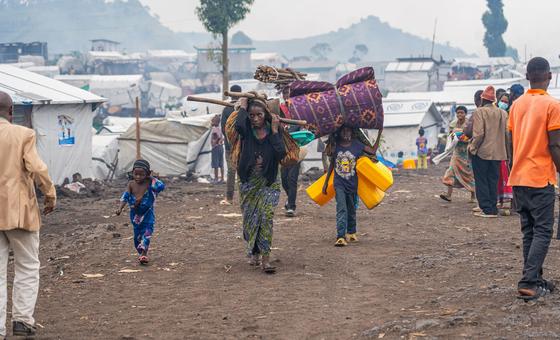
Since the beginning of the year, Rwanda-backed M23 fighters have swept across eastern DRC, taking key cities including Goma and Bukavu. The violence has displaced more than one million people in Ituri, North Kivu and South Kivu provinces.

Speaking from the village of Sake in North Kivu, UNDP Resident Representative Damien Mama described meeting a woman whose house had been destroyed after she fled the advancing fighters in January.

Cut off from livelihoods

“You know, with five children, you can imagine what this represents,” Mr. Mama said. “She was telling me that [her family] were given food and temporary shelter; but what she needs is to go back to her farm to continue farming, to continue her activities, and also have her home rebuilt.”

All those newly displaced by the M23 rebel advance are in addition to the five million people already living in displacement camps in eastern DRC.

Health workers have repeatedly warned that the crowded and unsanitary conditions provide ideal conditions for the spread of diseases including mpox, cholera and measles.

Given the scale of need it is urgent that small businesses get the help they need to get up and running again “providing income-generating activities for the women and the youth creating jobs”, the UNDP official insisted.

“The economy has suffered a lot,” he explained. “The banks have closed, businesses have been destroyed, and many are now operating under 30 per cent of their capacity, which is a major blow to their businesses.”

Support for women and girls

At the same time, the UN agency remains committed to helping the many women and girls impacted by alarming levels of sexual violence.

This echoes an alert issued last month by the UN Children’s Fund (UNICEF), that during the most intense phase of this year’s conflict, a child was raped every half an hour.

In the next five months, UNDP intends to support the creation of 1,000 jobs and restore basic infrastructure, benefiting about 15,000 people.

To do this, the UN agency will need $25 million.

“We have so far secured $14 million thanks to [South] Korea, Canada, UK as well as Sweden; and our call will be to encourage other countries and donors to provide us with [the] $11 million gap.”

Source link