Gaza: Ceasefire urgently needed as civilians left with ‘no safe place’ to go

“We are witnessing a dangerous escalation in Gaza City, where Israeli forces have stepped up their operations and ordered everyone to move south,” said the Humanitarian Country Team in the Occupied Palestinian Territory.

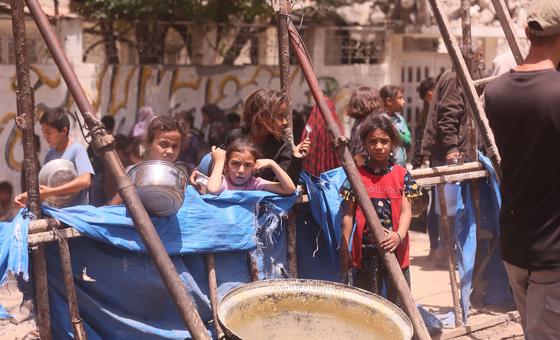
Nearly one million people are now left with no safe or viable options – neither the north nor the south offers safety.

The warning comes two weeks after famine was confirmed in Gaza Governorate.

Starving and exhausted

According to latest figures from the World Health Organization-led Health Cluster, 361 Palestinians have died due to malnutrition since the war began nearly two years ago, including 130 children.

Over half a million people are in living with catastrophic conditions marked by starvation, destitution, and death.

Civilians who try to leave northern Gaza face dangerous and barely passable roads, overcrowded shelters, and prohibitive transport costs – sums that most families simply cannot afford.

“Survivors in Gaza are exhausted,” aid agencies said, underscoring that both civilians and the health infrastructure they rely on “must never be targeted.”

Hospitals overwhelmed

Hospitals are overwhelmed and collapsing under the strain.

Al-Shifa and Al-Ahli facilities in Gaza City are operating at nearly three-times capacity, with mass casualty incidents averaging eight per day.

If a wider Israeli offensive proceeds, the Gaza Strip could lose half its remaining hospital beds, the health agencies warned.

Aid restrictions continue

The Humanitarian Country Team also noted ongoing Israeli impediments on aid, stating that “current levels of humanitarian support are wholly insufficient.”

Fuel, water, and supply routes must remain open and uninterrupted, agencies said, warning of “devastating consequences” if access is further obstructed.

“To families in Gaza: the humanitarian community will remain in Gaza City for as long as we can and will remain across the Strip, doing all we can to bring aid and deliver lifesaving services,” they said.

To the international community: Act. Call for an immediate ceasefire. Uphold international humanitarian law, including the release of hostages and those arbitrarily detained. This catastrophe is human-made, and responsibility rests with us all.”

Source link

Landlocked but not left behind: UN summit in Turkmenistan wraps with bold new roadmap

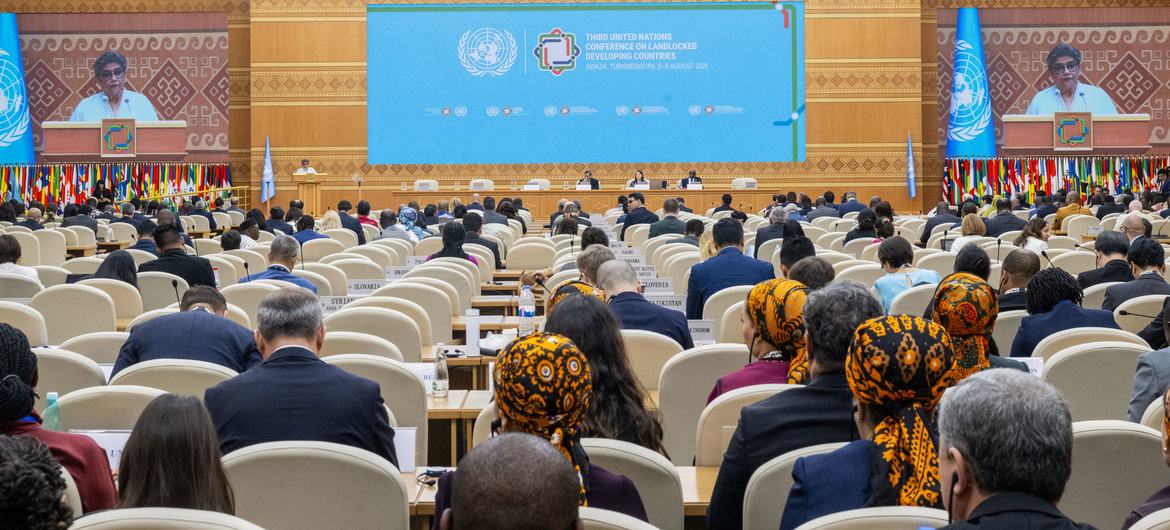
Held under the theme Driving Progress Through Partnerships, the four-day forum known as LLDC3, brought together Heads of State, senior UN officials, development partners, and private sector leaders to tackle persistent challenges faced by LLDCs, including high trade costs, inadequate infrastructure, and vulnerability to climate change.

Anchored by the Awaza Programme of Action for 2024–2034, which was adopted by the UN General Assembly last year, the new ‘Awaza Declaration’ outlines a unified strategy across five priority areas:

  1. Structural economic transformation;
  2. Trade and regional integration;
  3. Transport and infrastructure;
  4. Climate change adaptation and disaster risk reduction; and
  5. Mobilizing finance and partnerships.

The Awaza Declaration marks a turning point. It is a blueprint for action, not just words,” said Under Secretary-General Rabab Fatima.

“With targeted investments in infrastructure, trade facilitation, and climate resilience, we can unlock the potential of LLDCs and ensure no one is left behind.”

Ms. Fatima, who also serves as the UN High Representative for the Least Developed Countries, Landlocked Developing Countries, and Small Island Developing States (UN-OHRLLS), said the conference would be remembered as a defining moment in the LLDC journey, ushering in a new era of bold partnerships and decisive action.

“It is this spirit…of solidarity, partnership, and shared purpose that will carry us forward. A future where we are not divided by geography, but connected through ideas, trade and innovation,” she said. 

Let us make the promise of ‘land-linked’ not only a phrase but a new way of life…the UN stands ready to support this decade of delivery,” she added.

A call for investment and inclusion

The Declaration calls for increased investments from multilateral development banks, stronger South-South cooperation, and broader inclusion of LLDC interests in global trade and climate agendas.

It also emphasizes the importance of monitoring implementation and ensuring that LLDCs themselves lead the process, coordinated by UN-OHRLLS.

Turkmenistan’s initiatives

As host country, Turkmenistan presented several initiatives aligned with the Conference’s goals, including the Global Atlas for Sustainable Transport Connectivity, the Global Hydrogen Energy Transition Programme, and the Caspian Environmental Initiative.

“The Awaza Declaration reflects our shared vision of partnership and progress,” said Gurbanguly Mälikgulyýewiç Berdimuhamedow, National Leader of the Turkmen People and Chairman of the People’s Council of Turkmenistan.

“Together – transit countries, development partners, and the private sector – we can overcome geographical constraints and build sustainable prosperity for our peoples.”

What’s next?

The Awaza Declaration represents a major step forward for LLDCs and a renewed symbol of global solidarity – turning a geographical disadvantage into a shared advantage.

Implementation will be tracked by the UN General Assembly through annual LLDC ministerial meetings.

Key upcoming platforms to advance LLDC priorities include:

  • The 2025 UN climate conference in Brazil (COP30);
  • The next meeting of the UN Conference on Trade and Development (UNCTAD); and
  • The 2027 Global Mountain Summit in Kyrgyzstan.

A mid-term review of the Awaza Programme of Action is scheduled for 2030.

Rabab Fatima (on screen), Under Secretary-General and High Representative for the Least Developed Countries, Landlocked Developing Countries and Small Island Developing States, holds a wrap-up press conference at the Third UN Conference on the Landlocked Developing Countries (LLDC3).

Cooperation begins with neighbours

At a wrap-up press briefing, Aksoltan Ataeva, Permanent Representative of Turkmenistan to the United Nations, said that for his country, “hosting LLDC3 is not only a significant political event, but it also reflects Turkmenistan’s foreign policy philosophy: to be a bridge, not a barrier.

UN Resident Coordinator in Turkmenistan Dmitry Shlapachenko told UN News the Conference was especially important for the region, bringing together several Central Asian heads of state.

Global partnerships matter – but real cooperation starts with neighbours.

Mr. Shlapachenko shared an example cited by the UN Secretary-General in meetings with Central Asian leaders:

“Before Portugal and Spain joined the European Union, trade between them was minimal. But once they became part of the EU, 40 per cent of all goods exported by Portugal went to Spain. This really improved life for [the people of both countries]. I think it’s very important to keep this in mind when we talk about Central Asia.”

There is still a lot to be done here, but we are moving in the right direction,” he added.

UN Resident Coordinator in Uzbekistan Sabine Machl noted that UN country teams in Central Asia regularly meet to coordinate their work. Uzbekistan, one of only two double landlocked countries in the world (alongside Liechtenstein), faces unique challenges – but also opportunities.

“As the United Nations country team in Uzbekistan, for the next five years, what we want to do is to harness the demographic dividend by investing in the people of Uzbekistan,” she said.

“That’s our one strategic priority. Because Uzbekistan has a very young population – 60 per cent of the population is under 30 years old.”

In Lesotho, a landlocked African country, water is a major opportunity. UN Resident Coordinator Amanda Khozi Mukawashi told UN News that the country wants to share its abundant water and other resources – but needs investment.

“Lesotho has got water. It’s one of its biggest natural assets; lots of water that flows from Lesotho and saves lives in neighboring countries like Namibia, Botswana, and so on,” she said.

“What they’re trying to do is to look for investment, to develop the infrastructure so that they can produce renewable energy, hydropower.”

She added that Lesotho could use its wind and solar resources not just for its own industrial development, but to export into a region facing challenges in both water and energy.

These and other ideas were discussed on the sidelines of the Conference and will continue to be advanced at future forums.

Farewell to Awaza

On Friday, Awaza – nesteled on the shores of the Caspian Sea, the world’s largest inland body of water – bid farewell to its guests with a ceremonial lowering of the UN and Turkmenistan flags, which had been raised at the start of the week.

Awaza will be remembered as a defining moment for the journey of LLDCs – not only for the great success of the Conference itself, but as the beginning of a new era of ambitious partnerships and decisive action,” said Ms. Fatima, wrapping up the forum.

The Third UN Conference on Least Developed Countries opened in Awaza, Turkmenistan on Tuesday, 5 August.

UN News was on the ground in Awaza, bringing you all the highlights and discussions. Find all our coverage here.

Source link

She fought for the girl the world left behind: Natalia Kanem’s UN legacy

She returns, over and over, to a single image: that of a ten-year-old girl – standing on the edge of adolescence, her future uncertain, and her rights still in grave doubt.

“Will she be able to stay in school, graduate, and make her way through the world?” Dr. Kanem wonders. “Or is she going to be derailed by things like child marriage, female genital mutilation, or abject poverty?”

That seismic question and that girl – not one child in particular, but an emblem of the millions worldwide whose future is at risk – have become the touchstone of Dr. Kanem’s nearly eight-year tenure as Executive Director of the UN’s sexual and reproductive health agency, formally known as the UN Population Fund (UNFPA).

From her early days working on the frontlines in East Africa to overseeing a $1.7 billion agency with operations in more than 150 countries, Dr. Kanem has shepherded UNFPA through global shifts, political headwinds, and ideological pushback.

Most of all, she has led a fierce revolution in the lives of millions of women and girls.

This month, she is stepping down from her post ahead of schedule. “It’s time to pass on the baton,” the 70-year-old told her staff – a 5,000-strong workforce – in a videotaped address earlier this year. “I have pledged to do everything in my capacity to keep positioning UNFPA to continue to do great things.”

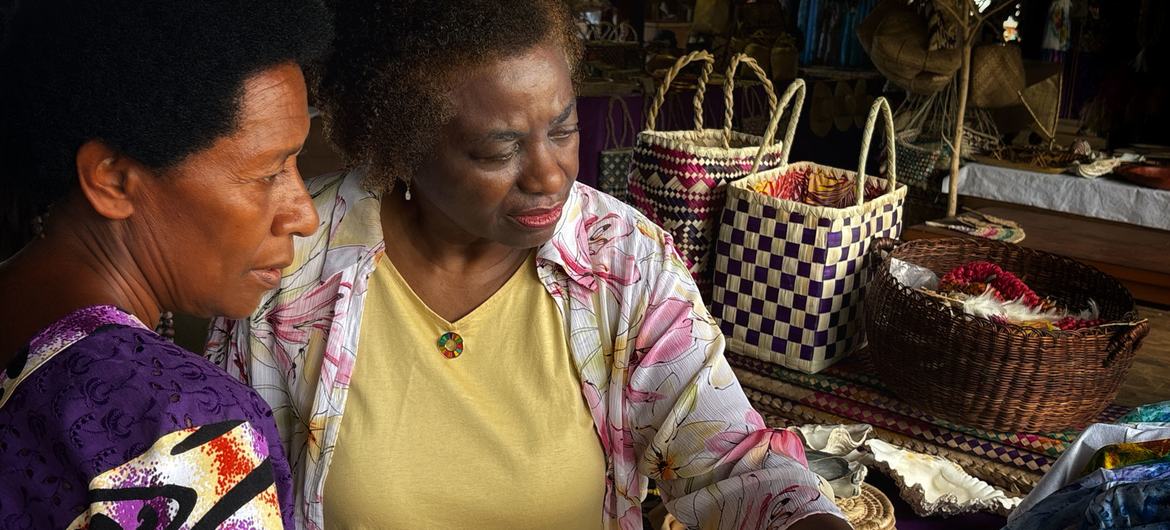
UNFPA Executive Director Natalia Kanem (centre) visits the Mamas Market in Port Vila, Vanuatu.

Roots and ascent

Born in Panama and trained as a medical doctor, Dr. Kanem joined UNFPA in 2014 after a career in philanthropy. Her decision to serve “the noble purpose of the United Nations” first led her to East Africa and Tanzania, where she was struck by the quiet heroism of field staff. “It’s really at the country level where we prove our worth,” she told UN News.

But the job was not easy. In 2017, when she took the reins of the agency, Dr. Kanem inherited an organization grappling with waning visibility, unstable funding, and persistent pushback from conservative viewpoints. Still, UNFPA grew – not just in budget, but in stature.

“When I came, the narrative was, ‘We’re a small organization, beleaguered, nobody understands what we do,’” she said. “Now, I think it’s clearer.”

That clarity came, in part, from what Dr. Kanem calls “thought leadership.”

Whether challenging misconceptions about fertility or confronting gender-based violence enabled by technology, she pushed UNFPA to the frontlines of global discourse. “We exist in a marketplace of ideas,” she explained. “And we have to tell the truth in a way that’s compelling enough so we can garner the allies this movement requires.”

Under her leadership, the agency trained hundreds of thousands of midwives, distributed billions of contraceptives, and expanded humanitarian operations to reach women and girls in the most fragile settings – from the Rohingya camps in Bangladesh’s Cox’s Bazar to war-scarred Ukraine and cholera-stricken Haiti.

UNFPA’s presence in crisis zones was not only logistical, but symbolic. In Sudan, Syria, and Gaza, a simple tent stocked with menstrual pads, a blanket, and a bar of soap could serve as sanctuary. “It represents the respite that a woman needs in a time of crisis,” she said. “You know, we call our kits ‘dignity kits’ for that reason.”

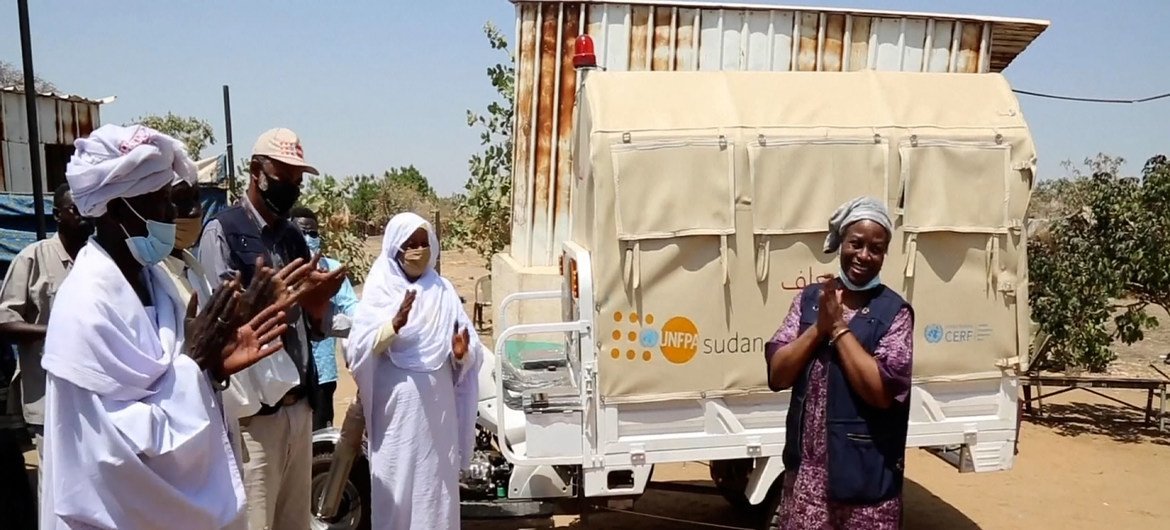
UNFPA Executive Director, Natalia Kanem (right), visits Sudan in March 2021.

Shifting the conversation

Beyond delivering services, Dr. Kanem elevated UNFPA’s role as a thought leader in a polarised world. She steered the agency into difficult public conversations – about teen pregnancy, climate anxiety, fertility rates, and online harassment – with an unflinching insistence on rights.

“The 10-year-old girl exists,” she said. “What her parents and her religious leaders and her community think is vital for her to be well prepared, for her to know what to do when she’s challenged by coercive practices.”

That leadership extended to data. Under Dr. Kanem, UNFPA invested heavily in supporting national censuses and building dashboards to help lawmakers shape reproductive health policy with real-time insight.

This year’s State of World Population report, the agency’s annual deep dive into demographic trends, reframed conventional narratives around so-called “population collapse” – noting that many women and men delay having children not out of ideology, but because they cannot afford to raise them.

Dr. Kanem praised the altruism of young people who say they’re choosing not to have children for fear of worsening the climate crisis. But that’s not what the data shows.

“The world replacement fertility rate is not endangering the planet,” she explained. “The facts really say: you can have as many children as you can afford.”

A rights-based compass in turbulent times

Dr. Kanem’s tenure coincided with mounting attacks on reproductive rights, rising nationalism, and growing scepticism of multilateral institutions. She faced years of US funding cuts – including under the current administration – even as demand for UNFPA’s services surged.

“UNFPA has more money than we’ve ever had,” she noted. “But it’s never going to be enough to stop the flow of need.”

Resources alone won’t secure the agency’s future – credibility and persistence are just as vital. “The multilateral system itself has come under question at a time when it is needed now more than ever,” she warned. “We do have to prove ourselves each and every day. And when we make mistakes, we’ve got to get up and rectify them and find partners who are going to be allies.”

One such partner has been the private sector. In 2023, UNFPA teamed up with tech firms to launch a development impact bond in Kenya, delivering mobile-based sexual health services to prevent teenage pregnancy and new HIV infections among adolescent girls.

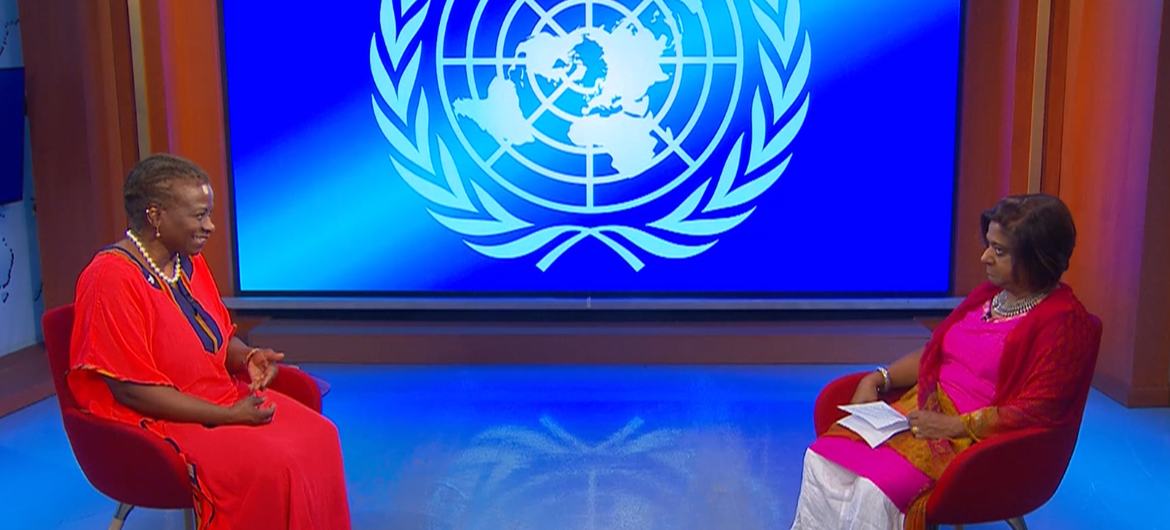
Dr. Natalia Kanem, head of the United Nations Population Fund (left) talks to UN News and Media Deputy Director Mita Hosali.

Changing mindsets

UNFPA has long worked to end harmful practices such as female genital mutilation (FGM) and child marriage. Under Dr. Kanem, that work became as much about shifting mindsets as changing laws.

“Yes, absolutely,” she said when asked if progress was real. “It’s been very important to see religious leaders and traditional leaders standing against certain practices… and to work with school systems so that the girls themselves will understand the risks and be able to take better decisions about their options.”

The coronavirus“>COVID-19 pandemic, she admitted, was a setback. With schools closed, some communities increased the number of weddings and FGM ceremonies. But in many countries – including populous Indonesia – UNFPA has seen the practice decline, in part thanks to youth advocates speaking out from within their own communities.

New generation, next chapter

Looking ahead, Dr. Kanem didn’t dwell on uncertainty. She spoke instead of possibility. “We’ve transformed ourselves, modernized ourselves,” she said. “There’s just unlimited possibility for UNFPA.”

Her own future includes what she calls a “mini-sabbatical” – more time for music, her family, and, finally, herself. But she won’t stay silent for long. “I know that my passion for issues of women and girls is not going to recede,” she said. “It’s been a labour of love.”

Her parting thought? One final return to the girl at the centre of it all.

“When that 10-year-old girl succeeds, everyone succeeds,” she said. “It is a better world.”

Source link

DR Congo crisis: Aid teams appeal for support to help displaced communities left with nothing

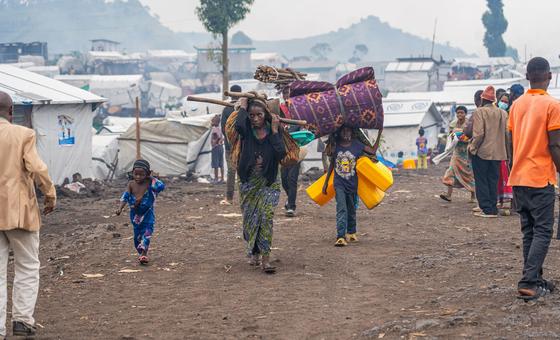
Since the beginning of the year, Rwanda-backed M23 fighters have swept across eastern DRC, taking key cities including Goma and Bukavu. The violence has displaced more than one million people in Ituri, North Kivu and South Kivu provinces.

Speaking from the village of Sake in North Kivu, UNDP Resident Representative Damien Mama described meeting a woman whose house had been destroyed after she fled the advancing fighters in January.

Cut off from livelihoods

“You know, with five children, you can imagine what this represents,” Mr. Mama said. “She was telling me that [her family] were given food and temporary shelter; but what she needs is to go back to her farm to continue farming, to continue her activities, and also have her home rebuilt.”

All those newly displaced by the M23 rebel advance are in addition to the five million people already living in displacement camps in eastern DRC.

Health workers have repeatedly warned that the crowded and unsanitary conditions provide ideal conditions for the spread of diseases including mpox, cholera and measles.

Given the scale of need it is urgent that small businesses get the help they need to get up and running again “providing income-generating activities for the women and the youth creating jobs”, the UNDP official insisted.

“The economy has suffered a lot,” he explained. “The banks have closed, businesses have been destroyed, and many are now operating under 30 per cent of their capacity, which is a major blow to their businesses.”

Support for women and girls

At the same time, the UN agency remains committed to helping the many women and girls impacted by alarming levels of sexual violence.

This echoes an alert issued last month by the UN Children’s Fund (UNICEF), that during the most intense phase of this year’s conflict, a child was raped every half an hour.

In the next five months, UNDP intends to support the creation of 1,000 jobs and restore basic infrastructure, benefiting about 15,000 people.

To do this, the UN agency will need $25 million.

“We have so far secured $14 million thanks to [South] Korea, Canada, UK as well as Sweden; and our call will be to encourage other countries and donors to provide us with [the] $11 million gap.”

Source link