Landlocked but not left behind: UN summit in Turkmenistan wraps with bold new roadmap

Held under the theme Driving Progress Through Partnerships, the four-day forum known as LLDC3, brought together Heads of State, senior UN officials, development partners, and private sector leaders to tackle persistent challenges faced by LLDCs, including high trade costs, inadequate infrastructure, and vulnerability to climate change.

Anchored by the Awaza Programme of Action for 2024–2034, which was adopted by the UN General Assembly last year, the new ‘Awaza Declaration’ outlines a unified strategy across five priority areas:

  1. Structural economic transformation;
  2. Trade and regional integration;
  3. Transport and infrastructure;
  4. Climate change adaptation and disaster risk reduction; and
  5. Mobilizing finance and partnerships.

The Awaza Declaration marks a turning point. It is a blueprint for action, not just words,” said Under Secretary-General Rabab Fatima.

“With targeted investments in infrastructure, trade facilitation, and climate resilience, we can unlock the potential of LLDCs and ensure no one is left behind.”

Ms. Fatima, who also serves as the UN High Representative for the Least Developed Countries, Landlocked Developing Countries, and Small Island Developing States (UN-OHRLLS), said the conference would be remembered as a defining moment in the LLDC journey, ushering in a new era of bold partnerships and decisive action.

“It is this spirit…of solidarity, partnership, and shared purpose that will carry us forward. A future where we are not divided by geography, but connected through ideas, trade and innovation,” she said. 

Let us make the promise of ‘land-linked’ not only a phrase but a new way of life…the UN stands ready to support this decade of delivery,” she added.

A call for investment and inclusion

The Declaration calls for increased investments from multilateral development banks, stronger South-South cooperation, and broader inclusion of LLDC interests in global trade and climate agendas.

It also emphasizes the importance of monitoring implementation and ensuring that LLDCs themselves lead the process, coordinated by UN-OHRLLS.

Turkmenistan’s initiatives

As host country, Turkmenistan presented several initiatives aligned with the Conference’s goals, including the Global Atlas for Sustainable Transport Connectivity, the Global Hydrogen Energy Transition Programme, and the Caspian Environmental Initiative.

“The Awaza Declaration reflects our shared vision of partnership and progress,” said Gurbanguly Mälikgulyýewiç Berdimuhamedow, National Leader of the Turkmen People and Chairman of the People’s Council of Turkmenistan.

“Together – transit countries, development partners, and the private sector – we can overcome geographical constraints and build sustainable prosperity for our peoples.”

What’s next?

The Awaza Declaration represents a major step forward for LLDCs and a renewed symbol of global solidarity – turning a geographical disadvantage into a shared advantage.

Implementation will be tracked by the UN General Assembly through annual LLDC ministerial meetings.

Key upcoming platforms to advance LLDC priorities include:

  • The 2025 UN climate conference in Brazil (COP30);
  • The next meeting of the UN Conference on Trade and Development (UNCTAD); and
  • The 2027 Global Mountain Summit in Kyrgyzstan.

A mid-term review of the Awaza Programme of Action is scheduled for 2030.

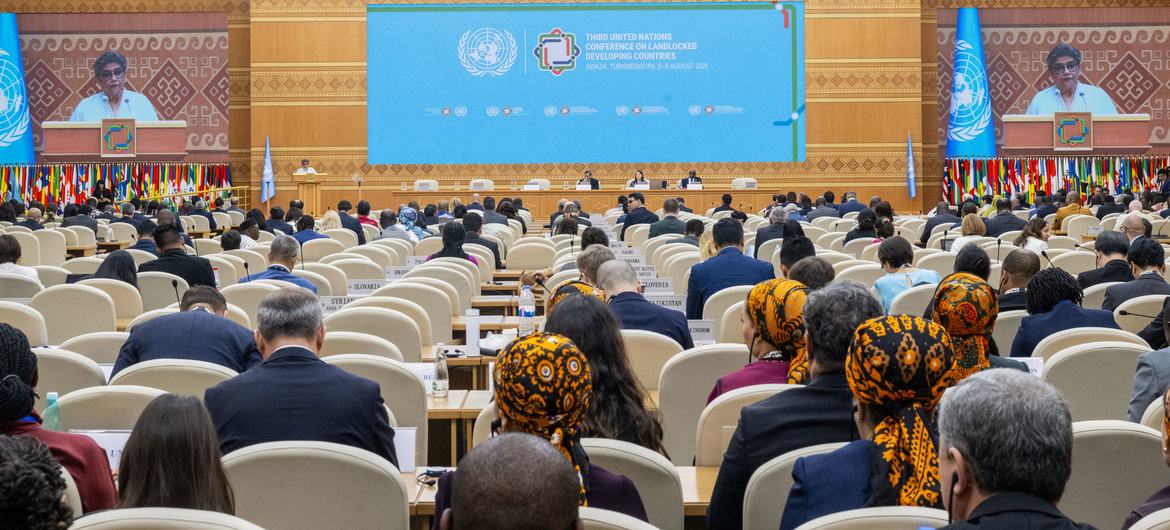
Rabab Fatima (on screen), Under Secretary-General and High Representative for the Least Developed Countries, Landlocked Developing Countries and Small Island Developing States, holds a wrap-up press conference at the Third UN Conference on the Landlocked Developing Countries (LLDC3).

Cooperation begins with neighbours

At a wrap-up press briefing, Aksoltan Ataeva, Permanent Representative of Turkmenistan to the United Nations, said that for his country, “hosting LLDC3 is not only a significant political event, but it also reflects Turkmenistan’s foreign policy philosophy: to be a bridge, not a barrier.

UN Resident Coordinator in Turkmenistan Dmitry Shlapachenko told UN News the Conference was especially important for the region, bringing together several Central Asian heads of state.

Global partnerships matter – but real cooperation starts with neighbours.

Mr. Shlapachenko shared an example cited by the UN Secretary-General in meetings with Central Asian leaders:

“Before Portugal and Spain joined the European Union, trade between them was minimal. But once they became part of the EU, 40 per cent of all goods exported by Portugal went to Spain. This really improved life for [the people of both countries]. I think it’s very important to keep this in mind when we talk about Central Asia.”

There is still a lot to be done here, but we are moving in the right direction,” he added.

UN Resident Coordinator in Uzbekistan Sabine Machl noted that UN country teams in Central Asia regularly meet to coordinate their work. Uzbekistan, one of only two double landlocked countries in the world (alongside Liechtenstein), faces unique challenges – but also opportunities.

“As the United Nations country team in Uzbekistan, for the next five years, what we want to do is to harness the demographic dividend by investing in the people of Uzbekistan,” she said.

“That’s our one strategic priority. Because Uzbekistan has a very young population – 60 per cent of the population is under 30 years old.”

In Lesotho, a landlocked African country, water is a major opportunity. UN Resident Coordinator Amanda Khozi Mukawashi told UN News that the country wants to share its abundant water and other resources – but needs investment.

“Lesotho has got water. It’s one of its biggest natural assets; lots of water that flows from Lesotho and saves lives in neighboring countries like Namibia, Botswana, and so on,” she said.

“What they’re trying to do is to look for investment, to develop the infrastructure so that they can produce renewable energy, hydropower.”

She added that Lesotho could use its wind and solar resources not just for its own industrial development, but to export into a region facing challenges in both water and energy.

These and other ideas were discussed on the sidelines of the Conference and will continue to be advanced at future forums.

Farewell to Awaza

On Friday, Awaza – nesteled on the shores of the Caspian Sea, the world’s largest inland body of water – bid farewell to its guests with a ceremonial lowering of the UN and Turkmenistan flags, which had been raised at the start of the week.

Awaza will be remembered as a defining moment for the journey of LLDCs – not only for the great success of the Conference itself, but as the beginning of a new era of ambitious partnerships and decisive action,” said Ms. Fatima, wrapping up the forum.

The Third UN Conference on Least Developed Countries opened in Awaza, Turkmenistan on Tuesday, 5 August.

UN News was on the ground in Awaza, bringing you all the highlights and discussions. Find all our coverage here.

Source link

Facing rising risks, landlocked nations launch climate alliance at UN summit

Operating within the UN Framework Convention on Climate Change (UNFCCC), the group aims to amplify their voices in global climate talks, where their distinct vulnerabilities have long been overlooked.

Disproportionate climate risks

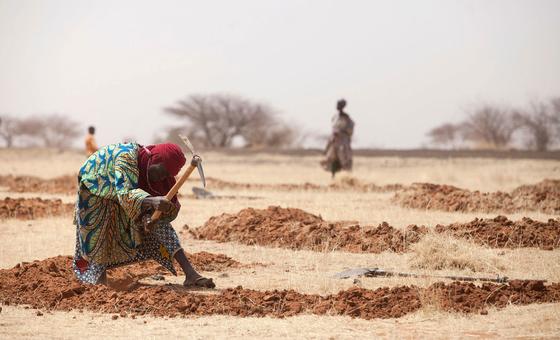
Although LLDCs account for approximately 12 per cent of the world’s land surface, they have experienced nearly 20 per cent of the world’s droughts and landslides over the past decade – underscoring their disproportionate exposure to climate-related disasters.

Lacking access to the sea, these countries rely heavily on neighboring transit states, which further increases their vulnerability to climate-induced disruptions.

The Awaza Programme of Action is not the first global framework to address the development needs of LLDCs, but for the first time, such an action plan includes a strong focus on adaptation to climate-related disasters.

A call for resilience and preparedness

Natalia Alonso Cano, Chief of the UN Office for Disaster Risk Reduction (UNDRR) Regional Office for Europe and Central Asia, emphasized this in an interview with UN News.

LLDCs, she said, face overlapping risks: over half of their territory is classified as dryland; many are in mountainous regions; and some sit in seismically active zones.

“Landlocked countries in general, they suffer about three times the economic losses compared to the global average,” she said. “Also, the mortality rates [when disasters strike these countries] much higher than the global average. Such big difference explained by a combination of this vulnerability, but also a combination of exacerbating impacts.”

Limited capacity, growing challenges

Landlocked developing countries often struggle to respond to climate challenges due to limited financial capacity, dependence on undiversified, commodity-based economies, and weak governance. In 2024, one-third of LLDCs were either in conflict or considered unstable.

The new 10-year UN action plan aims to support LLDCs in climate adaptation, sustainable development, and disaster risk reduction.

“We know that early warning saves lives. It’s a fact,” Ms. Alonso Cano explained. “When you can communicate to the communities affected that something is going to happen and they need to prepare – to evacuate, for example – they need to do certain things. If they know what they need to do, that’s part of the early warning system. Obviously, it saves lives, and it saves livelihoods as well.”

She gave an example of drought preparedness: “If there [is] a systemic drought in an area, you work in the preparedness with the communities, they can, for example, take certain measures, reduce maybe the amount of cattle in the case of that, they can congregate towards points of water, etc. There are a number of measures to address that.”

Ms. Alonso Cano stressed the need for long-term planning: “We need to take into account what is going to happen in 10, 20, 30 years. And climate change will become more extreme – we know this for sure.”

Women and girls at the forefront

Within LLDCs, women and girls are particularly at risk, making gender a key concern at Thursday’s events at LLDC3 in Awaza. One highlight was a Women Leaders’ Forum, opened by UN Under Secretary-General Rabab Fatima, who emphasized that sustainable development cannot be achieved without the full participation of women and girls.

Ms. Fatima, the High Representative for the Least Developed Countries, Landlocked Developing Countries and Small Island Developing States, noted progress over the last 25 years: women now occupy one-third of parliamentary seats in LLDCs, compared to just 7.8 per cent in 2000.

“This is higher than the global average,” she said, adding that 11 of the world’s 54 female speakers of parliament come from LLDCs.

Persistent gender gaps

Yet challenges remain. “Progress is uneven and far too slow. One in four women in LLDCs live in extreme poverty – that is nearly 75 million women; and nearly half – about 150 million – face food insecurity.”

Employment statistics show wide gender disparities. While 80 per cent of women in LLDCs work informally, without contracts or protections, the global average is 56 percent. One in three girls in LLDCs marries early – nearly twice the global rate – and only one in three completes secondary education. In addition, just 36 per cent of women in these countries have access to the internet.

“That is why gender-responsive industrial and development policies are so important,” Ms. Fatima stressed. “These policies must be tailored to national contexts, and industrial development in rural areas, business support, formalization of employment, and strengthened partnerships must be priorities.”

Digital inclusion for women and girls

She also called for improved internet access and education for women and girls.

The International Telecommunication Union (ITU), a UN specialized agency, is addressing these challenges.

Dr. Cosmas Luckysin Zavazava, Director of the ITU Telecommunication Development Bureau, told UN News that while some regions such as the CIS have achieved gender parity in internet access, LLDCs still face major barriers.

“That’s why we’ve developed special programmes for women and girls in this region,” he said. “It’s not just about access, but also about building coding skills and introducing girls to fields like robotics. Our programmes aim to motivate young women and girls to pursue careers in STEM sectors.”

Turning point for action

As the Awaza conference nears its conclusion, participants are expected on Friday to reaffirm their political commitment to the Awaza Programme of Action, which was adopted by the UN General Assembly in 2024.

The time has come for implementation – or as High Representative Rabab Fatima put it, “Let this forum be a turning point.

Source link

Landlocked nations ‘invisible to much of the world’: UN trade and development chief

At a major UN conference underway this week in Awaza, Turkmenistan, calls are growing to tackle the high trade costs, investment gaps and growing digital divide that continue to hold these countries back.

Despite progress in some areas, landlocked developing nations – from Bolivia to Bhutan and Burkina Faso – account for just 1.2 per cent of global exports, even though they represent over seven per cent of the world’s countries. Their populations face some of the highest levels of poverty, food insecurity and economic vulnerability anywhere.

These countries are invisible to much of the world,” not able to draw the attention needed to their unique challenges, said Rebeca Grynspan Secretary-General of the UN trade and development body, UNCTAD, speaking to UN News on the margins of the third UN Conference on Landlocked Developing Countries (LLDC3).

Without international attention and coordinated action, they will remain stuck in structural limbo, she emphasised.

High costs, low returns

One of the most persistent challenges they face is geography itself.

Without direct access to seaports, they must rely on neighbouring transit countries to move goods – often through outdated or inefficient infrastructure.

This translates into trade costs that are, on average, 1.4 times higher than those of coastal countries, according to UNCTAD. In some cases, export procedures can stretch into weeks or months due to border delays, fragmented regulations and limited digital systems.

Ms. Grynspan highlighted that in customs procedures, digital tools can cut waiting times at borders from three days to three hours. To that end, regional agreements and digital initiatives have emerged as lifelines.

UNCTAD head Rebeca Grynspan speaking to UN News.

One standout example is the Framework Agreement on Facilitation of Cross-Border Paperless Trade, championed by the UN Economic and Social Commission for Asia and the Pacific (ESCAP). Now in force among several Asia-Pacific countries, it helps reduce paperwork, automate customs and harmonise standards, making processes faster, cheaper and more transparent.

Paperless trade also has the potential to reduce corruption and ease language-related challenges.

ESCAP estimates that implementing cross-border paperless trade measures could reduce trade costs by up to 30 per cent for countries in the region without direct sea access and increase export potential for the whole of Asia and the Pacific by nearly $260 billion.

Infrastructure and integration

Even when goods reach border crossings, weak domestic transport networks further slow trade down. Roads and railways are often underdeveloped, underfunded or vulnerable to climate shocks.

Regional infrastructure – like the African North Corridor – is crucial,” Ms. Grynspan said, citing examples where wait times at borders have dropped by more than 150 per cent due to corridor investment and coordination.

But infrastructure alone is not enough – it must be paired with digital systems and strong regional partnerships.

“For landlocked countries, regional integration is very important because when you integrate regionally, you are in a better position because goods pass through you…[making you] part of global value chains with value added.”

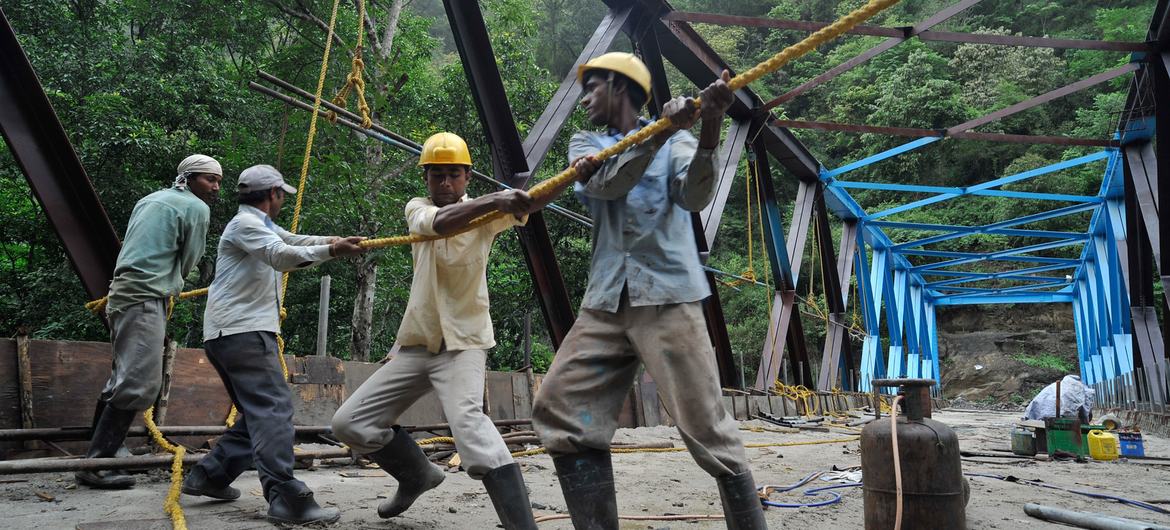
In landlocked countries like Bhutan (pictured), roads are a vital lifeline. But limited and costly transport infrastructure restricts mobility, inflates trade costs, and hinders access to markets, education, and healthcare.

Escaping the commodity trap

Another structural challenge is heavy dependence on commodities. Over 80 per cent of landlocked developing countries rely on raw materials like minerals, oil or agricultural goods, making them highly exposed to global price swings and long-term decline in terms of trade.

You educate your people, but then they have nowhere to work because commodities do not give you the quality jobs that you need for the future,” said Ms. Grynspan.

The path forward lies in economic diversification, especially toward value-added manufacturing, digital services and knowledge-based sectors – industries that are less constrained by geography.

The investment conundrum

Yet to realise that potential, these countries need investment and they are not getting enough.

Despite more than 135 legal and policy reforms aimed at attracting foreign capital, foreign direct investment has declined by an average of 2 per cent over the past decade.

ESCAP’s analysis confirms this gap: landlocked countries in Asia are receiving far less infrastructure investment per person compared with coastal countries, even though their transport requirements are proportionally higher.

Governments are trying to make their countries more attractive [but] investment is not coming in,” Ms. Grynspan said.

High risk factors, lack of guarantees, and a reliance on short-term financing are deterring investors.

Multilateral development banks need to help us,” she added. “We need long-term, affordable financing and lowered cost of capital.” 

Source link

‘Landlocked to landlinked’: UN summit seeks to turn geography into opportunity

And increasingly, climate change is compounding the problem – damaging roads, disrupting supply chains, and threatening already fragile infrastructure with floods, droughts, and extreme weather.

But as global discussions intensify, a UN conference underway in Turkmenistan is aiming to flip the script – to help transform LLDCs from landlocked to landlinked through smarter more climate resilient infrastructure, streamlined logistics, and stronger regional ties.

As day two of the Third UN Conference on the Landlocked Developing Countries (LLDC3) got underway on Wednesday, the atmosphere at the Awaza Congress Center shifted.

With presidents and heads of government having departed after Tuesday’s opening ceremony, security measures relaxed, making it easier for delegates to move around the venue.

But the pace of the conference didn’t slow. Meeting rooms stayed packed, exhibition stands buzzed with activity, and participants navigated long white-carpeted corridors to attend back-to-back events. A large team of multilingual youth volunteers helped guide attendees through the sprawling complex, keeping the energy high and logistics smooth.

Trade troubles and the ‘geography gap’

The day’s discussions focused on overcoming the disadvantages of geography. The main thematic roundtable was devoted to trade, which is a pressing issue for the world’s 32 LLDCs, which lack direct access to seaports. As a result, they must rely on longer, more complex routes to reach international markets, driving up costs and reducing competitiveness.

And geography isn’t the only hurdle. Many LLDCs struggle with outdated infrastructure and limited use of digital tools that could speed up sluggish transport times. 

These roadblocks don’t just delay trade – they hold back economic growth and widen the gap between LLDCs and other developing nations.

On Tuesday, UN Secretary-General António Guterres told reporters in Awaza that “landlocked developing countries need smart logistics, streamlined systems, and stronger partnerships with transit countries,” adding: “We must cut red tape, digitize border operations, and modernize transport networks to reduce delays and costs.”

The numbers tell the story

The impact of geography shows clearly in the numbers.

Landlocked developing countries make up more than seven per cent of the world’s population, yet in 2024 they accounted for just 1.2 per cent of global merchandise trade. It’s a stark reminder of how physical barriers can translate into economic ones.

The Awaza Programme of Action for 2024–2034, adopted by the UN General Assembly last year, aims to change that reality. But turning ambition into results will take bold, coordinated efforts across borders and sectors.

One phrase echoing through the corridors of the Awaza Congress Center is “from landlocked to landlinked” – a rallying call for transforming geographic disadvantage into opportunity.

Mindset matters

Umberto de Pretto, Secretary General of the International Road Transport Union (IRU), told UN News: “There is proof that if you put the right policies in place … you can be landlinked … I think the biggest impediment for landlocked countries is mindset.”

The IRU, founded in 1947, supports sustainable mobility and logistics worldwide and represents over 3.5 million transport operators in more than 100 countries.

As Mr. de Pretto points out, only 11 of the world’s 32 landlocked developing countries have joined the UN-backed TIR system, which allows goods to move from origin to destination in sealed compartments under a mutually recognized customs procedure.

“The biggest user of the system that we run, the UN Convention called TIR, is Uzbekistan, one of the only two double landlocked countries. So, there is evidence that if you put in place the right policies, your country will be landlinked, not landlocked,” he explained.

Digital tools for smoother transit

New technologies offer additional ways to simplify cargo movement.

“How do you go from paper to moving information digitally across to government authorities? We need things like ‘single window’, where you have a single intake point for electronic information so the government can analyze that information and make decisions earlier,” Ian Saunders, Secretary General of the World Customs Organization, explained.

He shared examples of successful initiatives, such as cargo tracking in East and West Africa and the use of electronic TIR carnets – sometimes called a ‘merchandise passport’ – by private companies in Central Asia. These unique documents guarantee the payment of duties and taxes suspended while goods are in transit.

Climate risks and smarter infrastructure

Another example came from Dmitry Maryasin, Deputy Executive Secretary of the UN Economic Commission for Europe (UNECE).

Speaking with UN News, he noted the 2023 adoption of a roadmap for the digitalization of the Trans-Caspian Corridor. Using UN tools and harmonized regulations, the corridor leverages both land and sea transport – including rail and shipping across the Caspian Sea – to move goods between Asia and Europe.

Climate change is also making cargo transport more difficult. “We’re seeing recurrent road flooding, vulnerability to landslides, mudflows, avalanches, and droughts – all of this is now a reality in Central Asia,” Mr. Maryasin said.

In response, UNECE has developed a transport infrastructure stress-testing tool that factors in climate risks. An online platform based on satellite data has also been launched, allowing users to overlay trade routes and climate hazards on a map to support smarter investment decisions.

“Countries are already using it,” Mr. Maryasin said. Efforts are under way to integrate this platform with a similar one developed by the UN’s ESCAP office, covering South and Southeast Asia.

A Day for LLDCs

Wednesday also marked the first observance of the International Day for the Dissemination of Information on the Special Needs of Landlocked Developing Countries. While each LLDC faces unique development challenges, they also share common priorities. And with nearly 600 million people living in these countries, finding shared solutions is essential.

The message from Awaza is clear: isolation is not destiny. With the right mindset, effective policies, and meaningful partnerships, landlocked countries can become landlinked – and thrive.

LLDC3 continues tomorrow, Thursday 7 August, with roundtables and events on a range of topics, as well as a Women’s Forum. Find all our coverage here.

Source link

UN urges MPs to deliver on development promises for 600 million in landlocked nations

Speaking at Monday’s Parliamentary Forum of the Third UN Conference on LLDCs, senior UN leaders stressed that political will, matched with national legislative action, is essential if a new decade-long development plan is to make a real difference.

There are 32 such countries globally, home to over half a billion people. Many are also among the world’s least developed, hindered by high transport costs, limited access to global markets, and heightened vulnerability to climate impacts.

Cost burden

“These challenges are persistent and structural,” said High Representative Rabab Fatima who leads the office championing LLDCs. “They stem not just from being landlocked but from limited infrastructure, narrow export bases, and lack of access to finance.”

The figures, she said, tell a stark story: LLDCs account for seven per cent of the world’s population but only one per cent of global GDP. Trade costs are 30 per cent higher than for coastal states. Just 61 per cent of LLDC populations have electricity access, compared to 92 per cent globally — and fewer than 40 per cent are connected to the internet.

“These are not just statistics. They reflect real human challenges,” said Ms. Fatima.

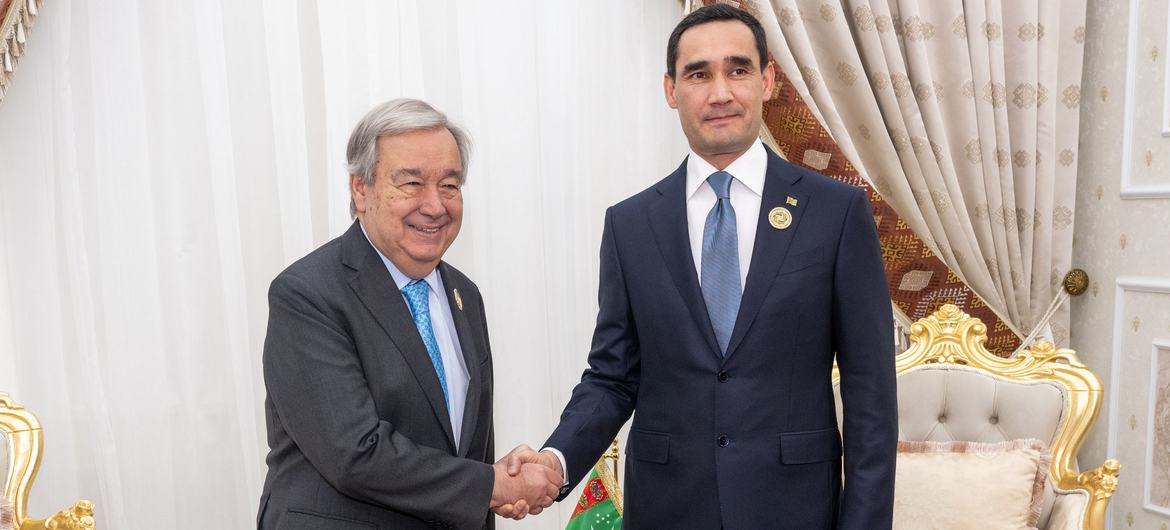
UN Secretary-General António Guterres (left) meets President Serdar Gurbangulyýewiç Berdimuhamedow of Turkmenistan, during his visit for the Third United Nations Conference on Landlocked Developing Countries being held in Awaza.

Be ‘champions of change’

She described the Awaza Programme of Action as “a milestone” and “a clear roadmap” to help transform structural disadvantages into opportunities. But she stressed that delivering on its goals requires action at the national level.

“Parliaments have a decisive role,” Ms. Fatima said. She urged lawmakers to align national strategies with the programme, secure financing, promote trade and integration, support good governance, and form parliamentary groups dedicated to implementation.

“You are lawmakers, you are budget-makers — and champions of change. Your leadership is essential to ensure that the Awaza Programme delivers tangible and lasting results for the 600 million people of LLDCs,” she told delegates.

Foundational role

President of the UN General Assembly Philémon Yang echoed her message, highlighting that “parliaments are essential to translating global commitments into measurable national progress.”

He emphasised that parliaments provide the legal framework for development in areas like infrastructure, innovation, and trade — and that they also hold the purse strings for key sectors such as education, healthcare, and climate action.

Addressing the urgency of environmental responsibility, Mr. Yang cited the July 2025 advisory opinion of the International Court of Justice (ICJ), which affirmed that climate action is a legal duty of all states.

Stronger cooperation

“Parliaments monitor government performance and ensure the efficient use of public funds,” Mr. Yang said. “Beyond policy and budgets, they are the bridge between the State and citizens.”

He also called for stronger inter-parliamentary cooperation — regionally and globally — to address the shared and specific challenges faced by LLDCs.

Concluding, Mr. Yang reaffirmed the UN General Assembly’s role as “the parliament of humanity,” committed to tracking progress and keeping LLDCs on the global development agenda.

“Let us strengthen this partnership between national parliaments and our global institutions,” he said, “so that we can deliver on the promise of sustainable development — a promise grounded in peace, prosperity, and dignity for everyone, everywhere.”

Source link

Geography shouldn’t define destiny: UN summit on landlocked nations opens in Turkmenistan

Urging global leaders to rethink development for landlocked nations, the UN chief declared: “We gather today to reaffirm a fundamental truth: geography should never define destiny.”

According to the UN Development Programme, of the 32 landlocked developing countries (LLDCs) worldwide, 16 are in Africa, 10 in Asia, four in Europe, and two in Latin America. Together, they are home to over 500 million people.

Trade barriers, debt distress, and deep inequality

Mr. Guterres outlined the “daunting challenges” LLDCs continue to face – steep barriers to trade, high transport costs, and limited access to global markets. He warned that the debt burden of these countries has reached “dangerous and unsustainable levels.”

Although LLDCs account for seven per cent of the world’s population, they represent just over one percent of global economic output and trade. “This is a stark example of deep inequalities that perpetuate marginalization,” said the Secretary-General, attributing this to “an unfair global economic and financial architecture that does not reflect the realities of today’s interconnected world”, as well as to the legacy of colonialism.

Decade of ambition: the Awaza Programme of Action

The task before the conference, known as LLDC3 and running in Awaza through Friday, is to find solutions to these challenges.

“LLDC3 is about launching a new decade of ambition – through the Awaza Programme of Action and its deliverables – and fully unlocking the development potential of landlocked developing countries,” said Mr. Guterres.

Adopted by the UN General Assembly in December 2024, that action plan represents a renewed and strengthened global commitment to support LLDCs’ development aspirations.

Four priorities for progress

The Secretary-General outlined four key priorities:

  1. Accelerate Economic Diversification & Digital Transformation
    • Invest in value-added industries, local innovation, and inclusive growth.
    • Bridge the digital divide to unlock AI, e-commerce, and smart logistics.
  2. Strengthen Trade, Transit & Regional Connectivity
    • Upgrade infrastructure and simplify cross-border procedures.
    • Integrate LLDCs into global value chains and reform trade systems.
  3. Advance Climate Action & Resilience
    • Double adaptation finance and build climate-resilient infrastructure.
    • Support LLDCs in green transitions with technology and partnerships.
  4. Mobilize Financing & Partnerships
    • Reform global financial systems to ensure fair, accessible funding.
    • Scale concessional finance and unlock climate investment at speed.

“The success of landlocked developing countries is essential to the success of the 2030 Agenda,” Mr. Guterres stressed.

“We have the knowledge, and we have the tools … Together, we can transform geography from a barrier to a bridge – connecting not just markets, but the peoples and cultures that give meaning to development.”

Speaking to reporters later, Mr. Guterres emphasized that the conference reflects a new era of cooperation taking shape across Central Asia – one grounded in mutual trust, shared priorities, and growing regional solidarity.
 
“At a time when multilateral cooperation is being tested, this spirit of partnership is more essential than ever,” he said.

Regional challenges, global solidarity

The session opened with a welcome from Turkmenistan’s President, Serdar Berdimuhamedov, who highlighted national initiatives to strengthen international cooperation in healthcare, climate action, and environmental protection.

He also drew attention to regional challenges such as the drying of the Aral Sea and falling water levels in the Caspian Sea, which is the world’s largest enclosed body of water and the setting for the Third UN LLDC Conference.

In his remarks, UN General Assembly President Philemon Yang noted the “rapidly approaching deadline for the 2030 Agenda” and called for decisive action and a renewed commitment to multilateralism and foundational values.

He emphasized that the three pillars of the UN Charter – peace, development, and human dignity – must remain at the heart of all efforts, and that actions must reflect the promise to leave no one behind.

Noting LLDCs’ vulnerability to climate change and structural challenges, Mr. Yang said these countries “must never lack access to opportunity, prosperity, or hope,” and called for international solidarity, infrastructure investment, and the practical realization of freedom of transit.

He also announced that the General Assembly had proclaimed 6 August as the International Day of Awareness on Landlocked Developing Countries, to be observed annually.

“The General Assembly will continue to serve as a global platform in support of these countries,” he said, emphasizing the importance of monitoring the Awaza Programme of Action and preparing for its high-level review in 2029.

Turning vulnerability into opportunity

Also addressing the opening session, Lok Bahadur Thapa, President of the UN Economic and Social Council, said LLDC3 is “a pivotal moment” for the 32 landlocked nations striving to overcome structural barriers to development.

Hailing from Nepal, which is both landlocked and least developed, he emphasized that the Awaza Programme of Action must serve as a “bold, ambitious, actionable, and future-oriented blueprint” to turn vulnerability into opportunity for over 570 million people.

Mr. Thapa underscored the urgency of addressing the “growing complexity, scale and urgency” of challenges facing LLDCs, including debt distress, climate impacts, and infrastructure gaps. Mr. Thapa urged the creation of an infrastructure investment facility for LLDCs, along with scaled-up climate finance, increased concessional resources, and accelerated technology transfer.

He also stressed the importance of regional cooperation and sustainable transport, praised Turkmenistan’s leadership, and reaffirmed ECOSOC’s commitment to advancing the Awaza Programme of Action – pledging to integrate LLDC priorities such as food security, youth empowerment, and climate resilience across all ECOSOC discussions and processes.

LLDC3 continues tomorrow, Wednesday 6 August, with roundtables and events on a range of topics, including connectivity and transport, South-South cooperation, youth engagement and more. Find all our coverage here.

Source link

Awaza gears up to host UN conference on landlocked developing countries

More than 20 heads of state and government and some 3,000 delegates from international organizations, civil society, youth, academia and the private sector are expected to attend the conference.

UN News is on the ground in Awaza, reporting on the event as it unfolds.

At the flag-raising, Foreign Minister Rashid Meredov formally welcomed participants. “Welcome to Awaza. I wish all participants success in the Conference,” he said.

UN High Representative Rabab Fatima expressed hope that the gathering would help “strengthen and expand partnerships among nations.”

Shared challenges and solutions

The opening ceremony, on Tuesday, will be attended by UN Secretary-General António Guterres, arriving from Almaty, Kazakhstan, where he spoke at the new Centre for Sustainable Development Goals for Central Asia and Afghanistan.

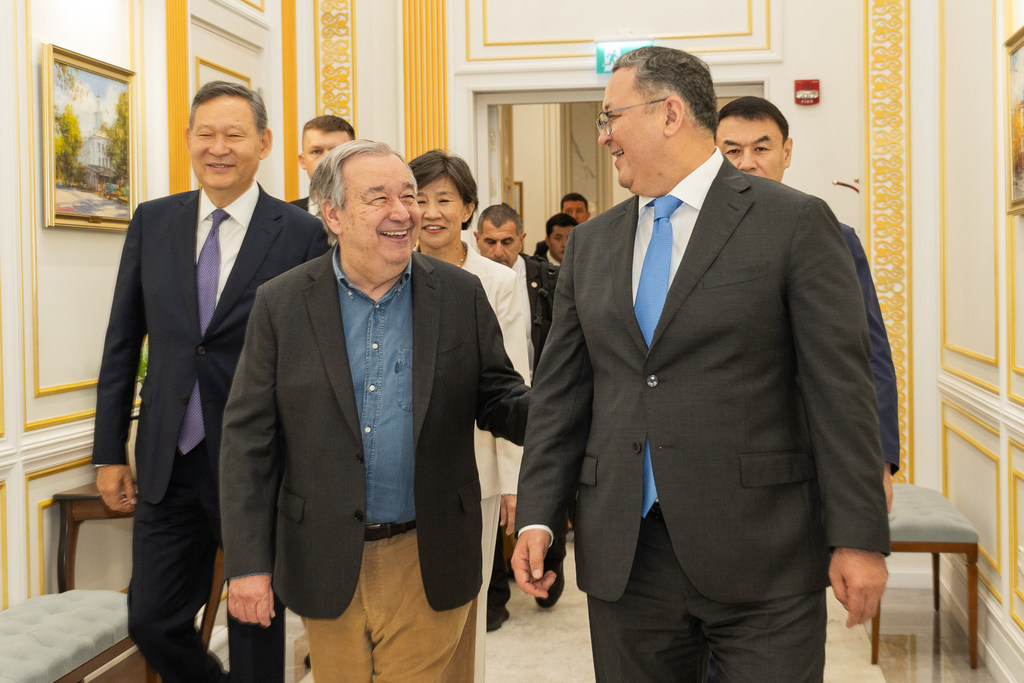
UN Secretary-General António Guterres (centre), alongside Deputy Prime Minister and Minister of Foreign Affairs Murat Nurtleu (left), and Permanent Representative of Kazakhstan to the UN Kairat Umarov (right), arriving in Almaty, Kazakhstan.

This Centre symbolizes the new era of cooperation in Central Asia – grounded in shared priorities and solutions,” he said.

Warning of “complex and interlinked challenges” including stalled poverty reduction, rising hunger and accelerating climate impacts, he stressed that Central Asia is already experiencing melting glaciers, shrinking water supplies and growing trade barriers.

The Centre, he added, can become “a vital pioneer” for implementing the Programme of Action for Landlocked Developing Countries, turning geographic constraints into opportunities through regional cooperation.

A city transformed

Awaza, a national tourist zone on Turkmenistan’s Caspian coast, has been transformed into a global forum.

Final deliveries of water stations, security scanners, screens and technical equipment continued Sunday at the large sports complex-turned-conference venue. UN technical staff and local teams worked around the clock to set up cameras, plenary halls and logistics for dozens of side events.

“A massive preparatory effort has been carried out jointly with the UN to create the necessary conditions for delegates and all participants,” said Aksoltan Atayeva, Turkmenistan’s Permanent Representative to the UN. “We take our responsibility seriously and are doing everything possible to ensure the best conditions and successful work.”

Final preparations being made at the venue of the LLDC3 conference in Awaza, Turkmenistan.

Beyond meetings

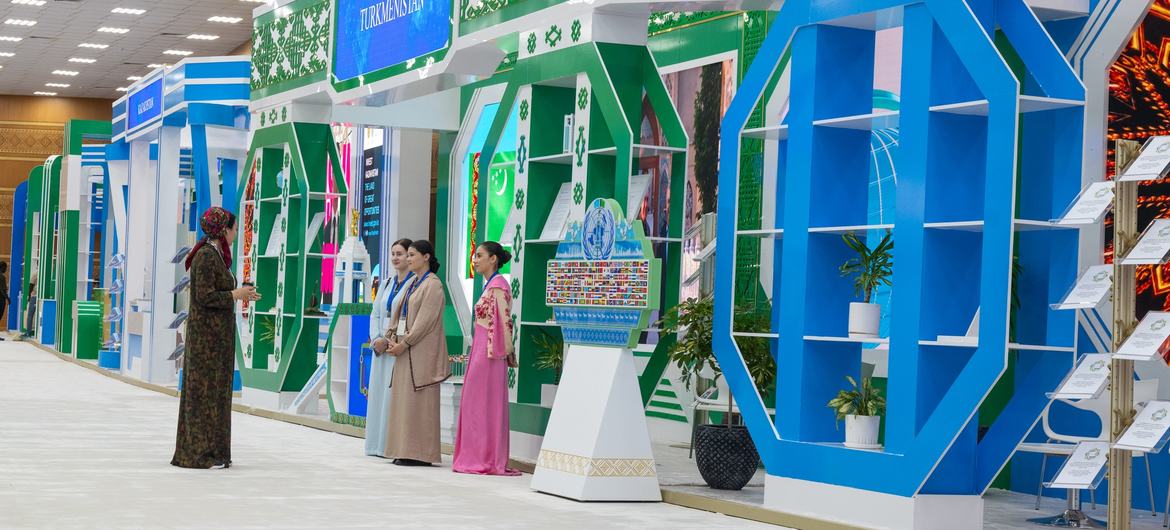
In a nearby pavilion, countries prepared exhibitions highlighting progress in transport, energy and communications.

“The Kazakhstan-Turkmenistan-Iran railway and the Turkmenistan-Afghanistan-Pakistan-India gas pipeline are among the key projects,” Annaberdi Kashanov at the Turkmenistan pavilion, told UN News.

There are 32 landlocked developing countries worldwide, home to over 500 million people. Many are also among the world’s least developed countries, facing structural challenges such as high transport costs, limited market access and vulnerability to climate shocks.

Robust infrastructure and improved connectivity remain critical to overcoming these barriers, facilitating trade and integration into global markets.

The LLDC3 conference aims to promote global partnerships to accelerate inclusive and sustainable development.

Source link