‘Human rights cannot wait’: Türk launches $400 million appeal for 2026

He warned Member States that with crises mounting, the world cannot afford a human rights system in crisis. 

The cost of our work is low; the human cost of underinvestment is immeasurable,” he said. 

“In times of conflict and in times of peace, we are a lifeline for the abused, a megaphone for the silenced, a steadfast ally to those who risk everything to defend the rights of others.”

Documenting violations, supporting survivors 

Last year, UN human rights staff in 87 countries observed more than 1,300 trials, supported 67,000 survivors of torture, documented tens of thousands of human rights violations, and contributed to the release of more than 4,000 people from arbitrary detention

They also documented civilian casualties and informed humanitarian responses through risk analysis and early warning in 21 armed conflicts around the world.  

For example, the UN Human Rights Monitoring Mission in Ukraine (HRMMU) is the only organization that has maintained a comprehensive record of civilian casualties since Russia first invaded the country in 2014. 

“In Sudan, we are providing vital support to survivors of sexual violence and other horrific atrocities, paving the way for justice and accountability,” he said. 

Aligning economic policies with human rights  

The High Commissioner also stressed that addressing inequalities and respecting economic and social rights are vital to peace and stability.  

“Human rights make economies work for everyone, rather than deepening exclusion and breeding instability,” he said. 

His office worked with more than 35 governments in 2025, helping them to align all economic policies with human rights. He cited the example of Djibouti, where staff helped conduct a human rights analysis of the health budget, with a focus on people with disabilities.  

‘Delivering under strain’ 

Mr. Türk thanked the 113 funding partners – including governments, multilateral donors and private entities – who contributed to OHCHR’s 2025 budget. 

“But at the same time, I have to say – and you know it from our previous encounters – that we are currently in survival mode, we are delivering under strain,” he said. 

He outlined several consequences of reduced funding.  For example, the Office reduced presence in 17 countries, wiping out programmes critical for endangered, threatened, or marginalised communities such as Indigenous People. Roughly 300 staff out of 2,000 were laid off. 

“At a time when truth is being eroded by disinformation and censorship, we had to curtail our support for its guardians – journalists and human rights defenders. Less support for civic space means more surveillance and more repression.”  

‘Ambitious, agile and creative’ 

OHCHR “will need to be even more ambitious, agile, and creative” in 2026, he said. 

The UN General Assembly has approved a regular budget of $224.3 million, which is based on assessed contributions from Member States. This amount is 10 per cent lower than in 2025

Through the 2026 appeal, OHCHR is requesting an additional $400 million in voluntary contributions. 

“Historically, human rights account for an extremely small portion of all UN spending. We need to step up support for this low-cost, high-impact work that helps stabilise communities, builds trust in institutions, and supports lasting peace,” said Mr. Türk. 

“And we need more unearmarked and timely contributions so we can respond quickly, as human rights cannot wait.” 

Source link

80 million more children benefiting from school meals, WFP reports

The number of children receiving school meals through government-led programmes has gone up by 20 per cent since 2020, found the latest edition of the WFP’s flagship biennial report The State of School Feeding Worldwide.

Now, nearly 80 million more children are able to enjoy nutritious meals at school, bringing the global total to approximately 466 million.

Beyond health and diet, national programmes can benefit employment, agriculture, and other sectors.

“School meals are so much more than just a plate of nutritious food – important as that is. For the vulnerable children who receive them, they are a pathway out of poverty and into a new world of learning and opportunity,” said Ms. McCain.

“They are proven to be one of the smartest, most cost-effective investments any nation can make to improve the long-term health, education and economic prosperity of future generations,” she added.

Example of what’s possible

The increase in the number of children receiving school meals comes thanks to the expansion of these programmes internationally, and especially by countries that are part of the School Meals Coalition, a network led by over 100 governments with the WFP as its secretariat.

Global funding for school meals has more than doubled, rising from $43 billion in 2020 to $84 billion last year. Africa is leading the surge with an additional 20 million children in the continent now fed through national programmes but domestic funding still remains lower in low-income countries.

“The surge in nationally funded school meal programmes is a powerful sign of what’s possible, even in challenging times. But in low-income countries, where needs are greatest, progress remains at risk as global aid shifts and domestic resources fall short,” said Carmen Burbano, director of school meals at WFP.

Meals improve learning outcomes

Children who are hungry might not attend school or could struggle to focus even if they do, according to the report. Providing meals at school can both incentivize attendance and help students stay engaged and more easily absorb educational material.

The report found that school meals are a significantly more effective way to improve the quality of education compared to other popular programmes and policies like teacher training and tech inputs.

A nutritious diet has also been associated with an increased attention span, higher cognitive function and better attendance.

“It’s only now that we’re really recognizing that the wellbeing of school children and adolescents is key to their learning ability,” said Professor Donald Bundy, co-editorial lead for the report, at a press briefing on Wednesday.

A catalyst for the economy

The report estimates that delivering school meals to 466 million children generates around 7.4 million cooking jobs globally, with further employment across logistics, farming, and supply chains.

On a national level, school meal programmes typically generate approximately 1,500 jobs for every 100,000 children.

Preliminary findings in some African countries suggest that the programmes are cost-beneficial in terms of the gains obtained in the education, health and nutrition sectors. In Malawi, for example, every $1 invested brought economic benefits ranging to $2 to $18 depending on the district.

Local procurement of school food can also create reliable and predictable markets for smallholders and family farmers, which ultimately encourages crop diversification, boosts rural economies, and fosters sustainable agricultural practices.

Funding cuts could push 6 million more children out of school, warns UNICEF

Official Development Assistance (ODA) for education is projected to fall by $3.2 billion – a 24 per cent drop from 2023 – with just three donor governments accounting for nearly 80 per cent of the cuts.

Such a decline would push the number of out-of-school children worldwide from 272 million to 278 million, UNICEF said – the equivalent of shutting every primary school in Germany and Italy combined.

“Every dollar cut from education is not just a budgetary decision, it’s a child’s future hanging in the balance,” said UNICEF Executive Director Catherine Russell.

Children in crisis hit hardest

The heaviest impact is expected in regions that are already vulnerable. West and Central Africa could see 1.9 million children lose access to school, while 1.4 million more could be pushed out across the Middle East and North Africa.

In total, 28 countries stand to lose at least a quarter of the education aid they rely on. Côte d’Ivoire and Mali face some of the steepest risks, with enrolment projected to fall by 340,000 and 180,000 students respectively.

Primary education will be hit hardest, with funding expected to drop by one-third. UNICEF warns this could deepen the global learning crisis and cost those children affected an estimated $164 billion in lost lifetime earnings.

In humanitarian contexts, the cuts could be devastating. In the Rohingya refugee response, 350,000 children risk losing access to basic schooling permanently.

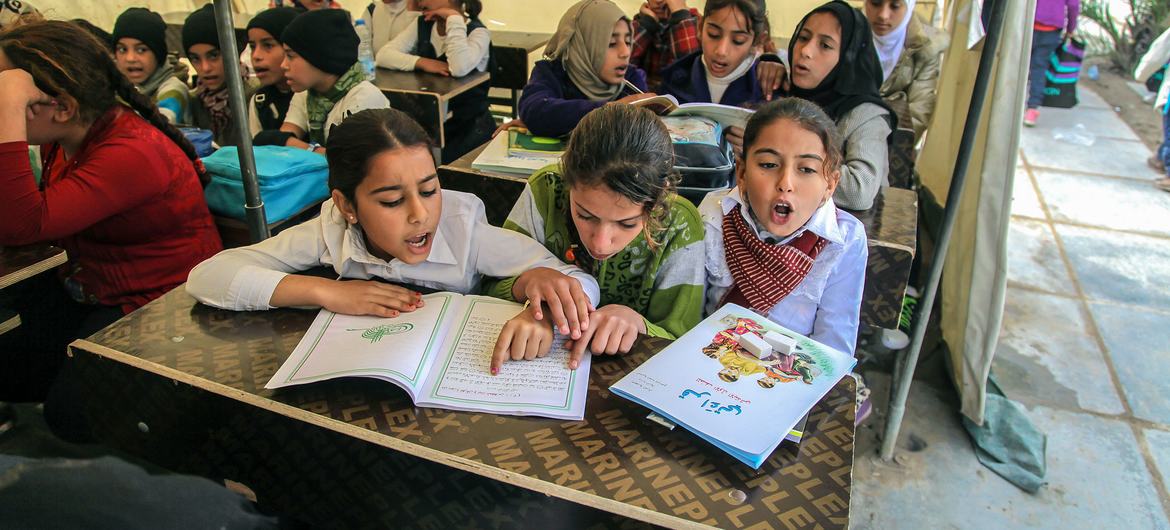
Displaced children in a classroom in Baghdad, Iraq.

Call to protect education

The crisis will also threaten vital services. School feeding programmes – sometimes a child’s only reliable meal – could see funding halved, while support for girls’ education is likely to shrink. At least 290 million children who remain in classrooms could also face a decline in learning quality.

UNICEF is calling on donors to direct at least half of all education aid to least developed countries, safeguard humanitarian funding, and prioritise early years and primary schooling. It also urges reforms to make financing more efficient and sustainable.

“Education, especially in emergency settings, often serves as a lifeline,” Ms Russell said. “Investing in children’s education is one of the best investments in the future – for everyone.”

Source link

Sudan: A staggering 30 million are in need, as war grinds on

Edem Wosornu, Director of Operations and Advocacy for the humanitarian affairs office, OCHA, briefed journalists on her recent visit to Sudan and neighbouring Chad – a critical entry point for aid and a haven for some 850,000 people who have fled fighting between the Sudanese army and the Rapid Support Forces (RSF) militia. 

The war erupted in April 2023 and has created one of the world’s largest humanitarian crises, with some 30 million people needing assistance.  

Homes, hospitals and schools have been destroyed, and basic services have ceased. Malnutrition and food insecurity are on the rise.

Aid trucks waiting

Ms. Wosornu voiced concern over the situation in El Fasher, which has been under siege for 500 days, with fresh shelling reported that morning. The North Darfur capital is also in the grip of deadly cholera which “doesn’t care whether you’re in uniform or a civilian”.

She said some 70 trucks from the World Food Programme (WFP), the UN Children’s Fund (UNICEF), and the World Health Organization (WHO) are waiting in Nyala, South Darfur, to enter the city.

Meanwhile, two other cities – Kadugli in South Kordofan state and El Obeid in North Kordofan – are also under siege.

“We have some good news”, Ms. Worsonu said, announcing that UNICEF trucks have delivered assistance to hundreds of thousands of people in Kadugli in recent days. 

Khartoum now ‘a ghost town’

The senior OCHA official recalled that Sudan was once the “breadbasket” of the Horn of Africa, but last year famine conditions were reported in the Zamzam camp in North Darfur. 

The current lean season finds some 680,000 people nationwide in a state of catastrophic food insecurity.

Although fighting has died down in the capital, Khartoum, she said the sheer scale and destruction is devastating, with “streets and buildings littered with explosive remnants of war”. The once vibrant city is now “completely a ghost town” with a “palpable sense of trauma everywhere”. 

However, she also witnessed signs of hope.  She saw “a city trying to come back to life, people sweeping the streets, a population determined to come back to what they once were. But it will take, of course, many, many, many years.”

In Chad, she thanked the authorities for their support, including ensuring that the Adre border with Sudan remains open. 

The war has made travel within Sudan extremely difficult, so humanitarian aid has to go from Douala in Cameroon through Chad’s capital, N’Djamena, and onto several more cities before arriving at Adre for entry into Darfur – “a mammoth effort”, she said.

More funding and aid access

Ms. Wosornu concluded by making four “key asks” to the international community, including for sustained improvements in aid access and more funding. 

“What we need is 55 cents per person, per day. That’s it for Sudan,” she said. 

Harder to deliver were her final plea to the warring parties for a lasting peace and an end to the fighting.

“Our humanitarian partners are also saying that this needs to stop so we can continue to deliver assistance,” she said. “Because after the war and everything has stopped, and when the guns are silenced, people still need recovery.”  

Source link

UN urges MPs to deliver on development promises for 600 million in landlocked nations

Speaking at Monday’s Parliamentary Forum of the Third UN Conference on LLDCs, senior UN leaders stressed that political will, matched with national legislative action, is essential if a new decade-long development plan is to make a real difference.

There are 32 such countries globally, home to over half a billion people. Many are also among the world’s least developed, hindered by high transport costs, limited access to global markets, and heightened vulnerability to climate impacts.

Cost burden

“These challenges are persistent and structural,” said High Representative Rabab Fatima who leads the office championing LLDCs. “They stem not just from being landlocked but from limited infrastructure, narrow export bases, and lack of access to finance.”

The figures, she said, tell a stark story: LLDCs account for seven per cent of the world’s population but only one per cent of global GDP. Trade costs are 30 per cent higher than for coastal states. Just 61 per cent of LLDC populations have electricity access, compared to 92 per cent globally — and fewer than 40 per cent are connected to the internet.

“These are not just statistics. They reflect real human challenges,” said Ms. Fatima.

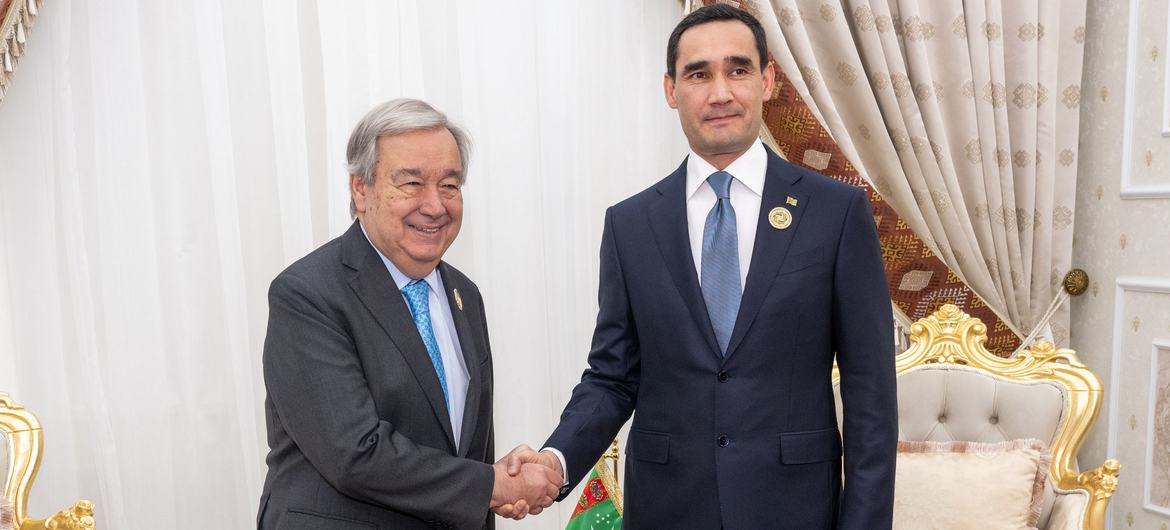
UN Secretary-General António Guterres (left) meets President Serdar Gurbangulyýewiç Berdimuhamedow of Turkmenistan, during his visit for the Third United Nations Conference on Landlocked Developing Countries being held in Awaza.

Be ‘champions of change’

She described the Awaza Programme of Action as “a milestone” and “a clear roadmap” to help transform structural disadvantages into opportunities. But she stressed that delivering on its goals requires action at the national level.

“Parliaments have a decisive role,” Ms. Fatima said. She urged lawmakers to align national strategies with the programme, secure financing, promote trade and integration, support good governance, and form parliamentary groups dedicated to implementation.

“You are lawmakers, you are budget-makers — and champions of change. Your leadership is essential to ensure that the Awaza Programme delivers tangible and lasting results for the 600 million people of LLDCs,” she told delegates.

Foundational role

President of the UN General Assembly Philémon Yang echoed her message, highlighting that “parliaments are essential to translating global commitments into measurable national progress.”

He emphasised that parliaments provide the legal framework for development in areas like infrastructure, innovation, and trade — and that they also hold the purse strings for key sectors such as education, healthcare, and climate action.

Addressing the urgency of environmental responsibility, Mr. Yang cited the July 2025 advisory opinion of the International Court of Justice (ICJ), which affirmed that climate action is a legal duty of all states.

Stronger cooperation

“Parliaments monitor government performance and ensure the efficient use of public funds,” Mr. Yang said. “Beyond policy and budgets, they are the bridge between the State and citizens.”

He also called for stronger inter-parliamentary cooperation — regionally and globally — to address the shared and specific challenges faced by LLDCs.

Concluding, Mr. Yang reaffirmed the UN General Assembly’s role as “the parliament of humanity,” committed to tracking progress and keeping LLDCs on the global development agenda.

“Let us strengthen this partnership between national parliaments and our global institutions,” he said, “so that we can deliver on the promise of sustainable development — a promise grounded in peace, prosperity, and dignity for everyone, everywhere.”

Source link

1.3 million Sudanese return home, offering fragile hope for recovery

“The thousands of people seeking to return home are driven by hope, resilience and an enduring connection to their country,” said Othman Belbeisi, regional director of the International Organization of Migration (IOM).  

While this development does offer hope, many of these people are returning to states and cities whose resources have been devastated by over two years of war.  

Since conflict broke out in April 2023, over 12 million Sudanese have been forcibly displaced, representing the largest displacement crisis in the world.

One-third of these displaced people have fled into neighbouring countries such as Chad and South Sudan, which are increasingly struggling to support the influx of refugees.  

“Not only do [the returnees] mark a hopeful but fragile shift, they also indicate already stretched host countries under increasing strain,” said Mamadou Dian Balde, the regional coordinator for the UN’s refugee agency, UNHCR.  

‘A race against time’

IOM emphasized that for these returns to accord with international law, they must be voluntary and dignified. Most of the 1.3 million Sudanese returnees are heading to Khartoum, Al Jazirah and Sennar states where the impact of the conflict is still very acute.  

In Khartoum specifically, many buildings — including the UNHCR office — are in ruins and public infrastructure, such as roads and power plants, has been compromised or destroyed.  

“Without urgent action, people will be coming back to cities that are in ruins. We are in a race against time to clear the rubble and provide water, power and healthcare,” said Abdallah Al Dardair, director of the Arab States for the UN Development Programme (UNDP).  

Additionally, Khartoum is already housing many internally displaced people and people who had formerly sought asylum in Sudan before the war broke out.  

Returnees also face danger from unexploded ordnance and high rates of gender-based and sexual violence against women and girls. To address the psychosocial and protection needs of these women and girls, safe spaces have been set up in Khartoum and Al Jazirah states.

Key to recovery 

In highlighting the hope that these returns signal, Mr. Belbeisi emphasized that returnees must be seen as active participants in the recovery of conflict-ridden Sudan.  

“Those heading home are not passive survivors, they are vital to Sudan’s recovery. Yes, the humanitarian situation is dire, but with the right support, returnees can revive local economies, restore community life, and foster hope where it’s needed most,” he said.

However, humanitarian work in and around Sudan is drastically underfunded — only 23 per cent of the estimated $4.2 billion dollars needed for the next year has been received, meaning that life-saving services may have to be scaled back.  

“More than evidence of people’s desire to return to their homeland, these returns are a desperate call for an end to the war so that people can come back and rebuild their lives,” Mr. Balde said.   

Source link

Gang violence displaces a record 1.3 million Haitians

This represents a 24 per cent increase from December 2024 according to the UN agency, which also noted that this increase has produced the largest number of people displaced by violence on record there.

Behind these numbers are so many individual people whose suffering is immeasurable; children, mothers, the elderly, many of them forced to flee their homes multiple times, often with nothing, and now living in conditions that are neither safe nor sustainable,” said Amy Pope, IOM Director General.

Existential challenges

These figures were released just ahead of a meeting on Wednesday at UN Headquarters in New York organized by the Economic and Social Council (ECOSOC) and the Peacebuilding Commission (PBC) examining how peace and stability can return to the island nation, following years of chaos and crisis.

The meeting discussed ways of consolidating peace at the local level and reducing the violence, particularly through the involvement of women and youth in local initiatives.

At a press conference prior to the meeting, ECOSOC President Bob Rae stated that the current situation in Haiti was “truly existential.” 

“It’s important that we have a meaningful discussion about what we can do together to address these problems,” he said, emphasizing that it’s “not just about increasing firepower.” 

Joining the briefing via videoconference, the Special Representative of the Secretary-General for Haiti, María Isabel Salvador, also stressed that this is a “multifaceted crisis” which must be addressed with similarly multifaceted and dynamic solutions.

“We believe that the international community’s response must match the scale, urgency, and complexity of the challenge. That’s why strong international security support must be accompanied by peacebuilding measures, humanitarian action and political support that could ultimately allow Haiti to make progress on the path to sustainable development.”

According to her, one way to reduce violence in Haiti is by empowering communities themselves, especially women and children, to lead bold new initiatives.

Violence spreads

Haiti has been experiencing a resurgence of violence since mid-February. According to the IOM, while Port-au-Prince remains the epicentre of the crisis with 85 per cent controlled by gangs, violence extending beyond the capital has intensified in the past few months.

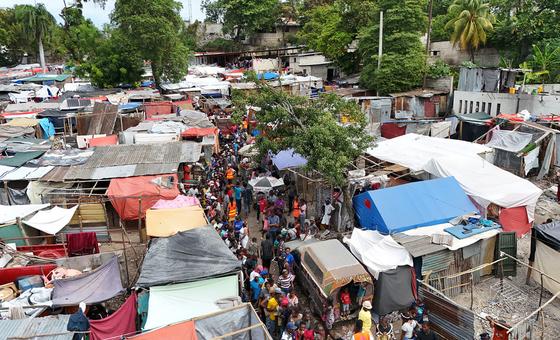
Recent attacks in the Centre and Artibonite departments have forced tens of thousands of other residents to flee, many now living in precarious conditions and temporary shelters.

“Although about a quarter of all internally displaced people still live in the capital, a growing number of people are fleeing to other parts of the country in search of safety,” IOM said.

In the Artibonite department in western Haiti, over 92,000 people have been displaced – largely because of violence in Petite Rivière.

In the Centre department, the situation is even more “alarming” with a total of 147,000 displaced. This number has doubled from 68,000 in the past few months as a result of fighting in towns like Mirebalais and Saut-d’Eau.

As more and more people are forced to flee, the number of spontaneous displacement sites is also increasing. Since December, these sites have increased from 142 to 246.

Around 83 per cent of refugees are staying with host families, putting a strain on already overstretched households, particularly in rural communities.

Pay attention and act

Armed violence continues to severely disrupt access to basic services, according to UN aid coordination office, OCHA, creating a “a deepening humanitarian crisis.”

“We must act urgently. The strength of the Haitian people is impressive, but resilience cannot be their only refuge. This crisis cannot become the new normal,” added Ms. Pope.

The President of the General Assembly, Philémon Yang, spoke at the ECOSOC meeting about the importance of adjusting “not just our attention but our action” and coordinating efforts across the UN to maximize impact.

We must do our utmost to ensure that Haiti is not abandoned to a future of fear and despair but instead is embraced by a global commitment to peace, opportunity and dignity,” he said.

Source link

The world pledged to end child labour by 2025: So why are 138 million kids still working?

There are 10,000 children in Madagascar who, like Tenasoa, work in the largely unregulated mica industry. The silicate is used in paints, car parts, and cosmetics – to add a “shimmer” effect. 

Alongside parents and grandparents, these children toil in dangerous conditions, inhaling harmful dust particles and entering structurally unsound tunnels. Many of them have dropped out of school – if they ever went at all. 

If we don’t work, we don’t eat,” Soja, Tenasoa’s grandfather, said. “It’s very simple. Men, women and children must all work to survive.”

In 2015, the United Nations set a goal to end child labour worldwide by 2025 but progress has been slow and halting, according to the Child Labour Report released on Wednesday by the International Labour Organization (ILO) and the UN Children’s Fund (UNICEF).

The report estimates that 138 million children – a 12 million decrease from 2020 – are still engaged in child labour, leading both ILO and UNICEF to call for the rapid acceleration of progress.

The findings of our report offer hope and show that progress is possible … But we must not be blindsided by the fact that we still have a long way to go,” ILO Director-General Gilbert F. Houngbo said.

Hazardous work

Since 2000, the number of children in child labour has been reduced by over 100 million, a promising decrease which proves that the world has a “blueprint” to end child labour. Much work remains, however.

“Far too many children continue to toil in mines, factories or fields, often doing hazardous work to survive,” said Catherine Russell, Executive Director of UNICEF.

Child labour does not refer to all work done by children. Rather, it is work which deprives children of their childhood and is often dangerous to their health and development.

It is important to understand that [child labour] is not household chores, it is not children helping their parents around the house…We are talking about work that is oftentimes hazardous,” Benajamin Smith, an ILO child labour expert told UN News.

Of the 138 million children in child labour, 54 million work in hazardous conditions, including mines.

Honorine, aged 13, is one of these children. She works from 10am to 5pm every day in a gravel quarry in Benin. Paid by the number of buckets of gravel she collects, she is saving her wages, hoping to train to be a hairdresser one day.

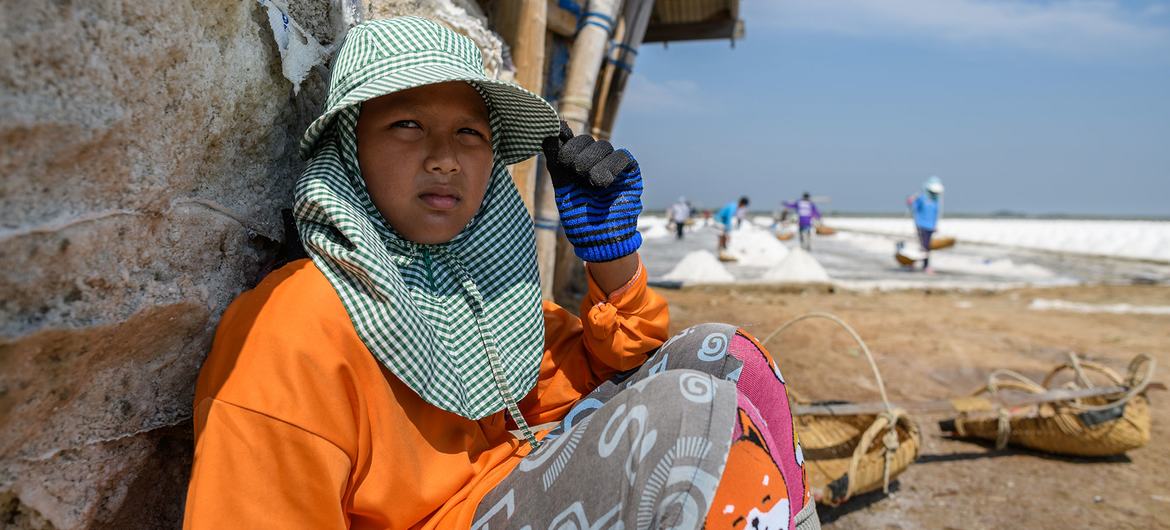
A young boy in Thailand takes a break while working in intense heat as a labourer.

Behind the statistics

The report notes that child labour is intergenerational. Children in child labour systems often struggle to access education, something which in turn compromises their future opportunities and creates a cycle of poverty and deprivation.

Federico Blanco, ILO expert and lead author of the Child Labour Report, noted that it is important to think of child labour as not just statistical.

“Behind every number, let’s remind ourselves that there is a child whose right to education, protection and decent future is being denied,” Mr Blanco said.

Nur, a 13-year-old Rohingya refugee in Bangladesh, was pulled out of school by his parents in order to help support his family financially. A case worker at a nearby UNICEF-funded centre identified Nur and convinced his family to put him back into school.

“I once dreamt of becoming a teacher. I thought I would never be able to become one. But now I feel that I can learn and become a teacher like I always wanted to,” Nur said.

‘A holistic approach’

In the report, UNICEF and ILO called for integrated policy solutions which work across governmental sectors, addressing the problem from an educational, economic and social perspective.

The report also highlighted that ending child labour cannot be accomplished without also thinking about the conditions that drive families to send their children to work – namely, poverty.

Upholding parents’ rights – including the right to collectively bargain, the right to safe work – is also key for ending child labour.

“The ILO looks at [child labour] in quite a holistic way because it is just as important [for] tackling child labour to make sure that the adults have good working conditions because poverty is really at the heart of child labour,” Mr Smith said.

Taking a country-driven approach is especially important due to regional disparities in child labour – the report noted that while all regions saw decreased numbers, Sub-Saharan Africa accounts for two-thirds of child labour worldwide.

Childhood dreams – underfunded and unfulfilled

Attempts to end child labour face significant headwinds as a result of funding shortages.

“Global funding cuts threaten to roll back hard-earned gains. We must recommit to ensuring that children are in classrooms and playgrounds, not at work,” Ms. Russell said.

Adwara, aged 10, dreams of being in class. He attended school for a few years and tried to balance work and school but with eight siblings, helping support his family was non-negotiable. Eventually, his teacher told him not to return – he was missing too much school.

Now, he works in a gold mine in Ethiopia, earning approximately $35 per day: “I’d like to go to school,” he said. “I’d like to become someone.”

Source link

8 million teens in world’s wealthiest countries functionally illiterate: UNICEF

Comparing data from 2018 and 2022, UNICEF found that the pandemic worsened existing trends: children are underperforming in school, more likely to be overweight or obese, and generally less satisfied with their lives.

This data sets a “worrying benchmark for children’s wellbeing,” said Bo Viktur Nylund, Director of UNICEF’s research office, Innocenti.

UNICEF ranked the Netherlands and Denmark, followed by France, as the top three places to be a child.

In contrast, Mexico, Türkiye and Chile were ranked the lowest, based on measures of mental well-being, physical health, and skills.

Academic decline

UNICEF warned that many of the world’s wealthiest countries experienced “sharp” declines in children’s academic skills following the pandemic, notably in reading and maths skills.

As school shutdowns forced remote learning, children are now estimated to be from seven to 12 months behind where they should be in academic terms.

These setbacks were more severe for children from disadvantaged families, the report underscores.

Across 43 countries, an estimated eight million 15-year-olds were assessed as not functionally literate and numerate. That means around half of the age group surveyed could not understand a basic text, raising the alarm over long term development.

Mental health

Raising concerns around mental health, UNICEF pointed out that in 14 of 32 countries with available data, children’s life satisfaction deteriorated during the COVID pandemic, while adolescent suicide rates plateaued – reversing a previous downward trend.

The number of children aged five to 19 who were overweight rose with those from lower socioeconomic backgrounds facing worse outcomes in terms of mental and physical health.

Prioritising children

Mr. Nylund, called on countries going forward to adopt a “coherent” and ”holistic” approach that addresses “every stage” of children’s lives.

Notably, UNICEF recommends countries include children in decision-making, promoting youth voices and agency across the board.

The agency warns that hard-won gains in child well-being across wealthy countries are becoming “increasingly vulnerable” and urges governments to focus interventions on disadvantaged groups to ensure more equitable educational outcomes.

Source link

More than 50 million in West and Central Africa at risk of hunger

More than 36 million are struggling to meet their basic food needs, which is projected to rise to over 52 million during the lean season from June to August, latest analysis reveals.

This includes almost three million people facing emergency conditions, and 2,600 people in Mali who are at risk of catastrophic hunger.

Although needs are at a historic high, resources are limited, with millions of lives at stake. 

Without immediate funding, WFP will be forced to scale down even further both in the number of people reached and the size of food rations distributed,” said Margot van der Velden, Regional Director for West and Central Africa. 

‘Extremely difficult and dire’ 

In 2019, only four per cent of the population was food insecure compared to 30 per cent today, according to Ollo Sib, a senior research adviser with WFP.

“We hope that our voice will be heard because this food security situation in the Sahel remains extremely difficult and dire,” he said, speaking from Dakar to journalists in Geneva.

Mr. Sib recently travelled to some of the affected areas, such as communities in northern Ghana grappling with unprecedented drought.

“They were forced to replant two to three times, and for them, each failed sowing is an additional financial burden as the cost of fertilisers and seeds were extremely high in those locations,” he said.

The assessment team also went to northern Mali, which is the only place in the region where people are facing catastrophic food security conditions.

“We had the opportunity to interact with pastoralist elders who typically sell their livestock to buy cereals,” he said. 

“This year they were worried because the cost of food rose by 50 per cent compared to the five-year average. But at the same time, they are not able to access markets to sell their goods.” 

Fighting, food inflation and floods

WFP said unyielding conflict is among the factors driving deepening hunger in West and Central Africa.  

Fighting has displaced more than 10 million of the most vulnerable people across the region, including more than two million refugees and asylum seekers, in Chad, Cameroon, Mauritania and Niger. 

Nearly eight million more have been internally displaced, mainly in Nigeria and Cameroon. 

Meanwhile, food inflation exacerbated by rising food and fuel costs are pushing hunger levels to new highs.

At the same time, recurrent extreme weather “erodes the ability of families to feed themselves,” WFP said. 

© WFP/Desire Joseph Ouedraogo

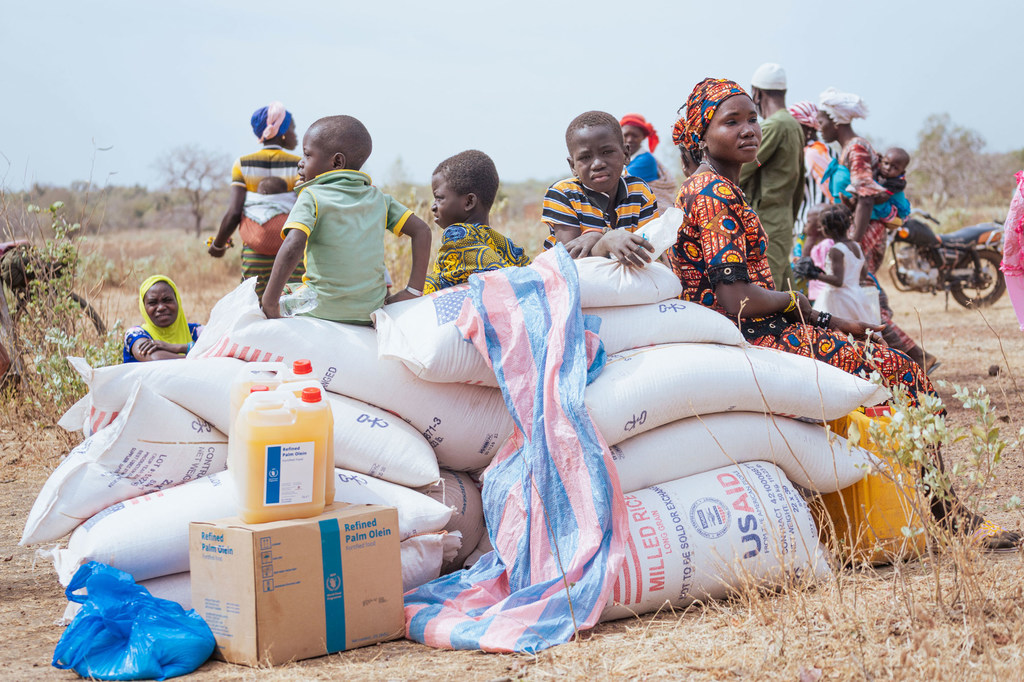
Vulnerable populations in Morolaba, Burkina Faso, receive emergency airlifted food assistance.

Five million at risk

WFP stands ready to respond and scale up vital assistance in West Africa and the Sahel. The UN agency is seeking $710 million to support its life-saving operations through the end of October.

The aim is to reach almost 12 million people this year with critical assistance.

So far, teams have already reached three million of the most vulnerable including refugees, internally displaced people, malnourished children under five, and pregnant or breastfeeding women and girls.

The agency said that five million risk losing assistance unless urgent funding is found.

Address root causes

WFP also called for governments and partners to invest in sustainable solutions aimed at building resilience and reducing long-term dependency on aid.

Since 2018, the UN agency has been working with regional governments to address the root causes of hunger through a programme that has rehabilitated over 300,000 hectares of land to support over four million people in more than 3,400 villages. 

Source link