Syria: Deadly sectarian violence displaces thousands in Sweida; healthcare attacked

Since 13 July, around 176,000 people have been displaced from Sweida,  according to the UN Office for the Coordination of Humanitarian Affairs (OCHA).

Mostly migrating to neighbouring Dar’a and Rural Damascus governorates, civilians are fleeing violent clashes between Bedouin tribal fighters, Syrian caretaker government forces and Druze militias.

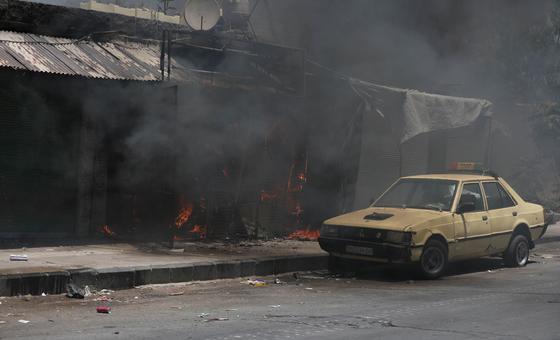
Meanwhile in the north of the country, local authorities reported that a large explosion struck an ammunition depot in Ma’arrat Tasmarin, in Idleb Governorate, on Thursday, reportedly killing six people and injuring at least 140 others.

Although Syrian Civil Defense teams attempted to evacuate people and transfer the injured for medical care, secondary explosions in the vicinity significantly hindered emergency response efforts.

Attacks on healthcare

In Sweida, health facilities are under immense strain, with staff operating in extremely difficult conditions, while access to healthcare remains a challenge.

As WHO confirmed five attacks on healthcare, including the killing of at least two doctors, the organization also reported on the obstructions to and targeting of ambulances as well as the temporary occupation of hospitals.

“We know healthcare must never be a target. In fact, health facilities, patients and health workers must be actively protected,” said Dr. Christina Bethke, WHO acting representative in Syria, speaking from Damascus to journalists at the UN in Geneva on Friday.

Dr. Bethke said that Sweida’s hospitals are facing shortages of staff, electricity, water, and basic supplies, with the morgue at the city’s main hospital reaching capacity earlier this week.

“Ensuring that doctors, nurses and supplies can reach people safely is not just vital for saving lives, it is a responsibility under international law that all sides must uphold,” Dr. Bethke said.

Limited access

As different groups control different pathways, poor security conditions are restricting access to Sweida, limiting the ability of the UN and partners to deliver aid to those affected by the violence.

While access to the city remains limited, WHO has been able to deliver vital supplies to health facilities in Dar’a and Damascus governorates, including trauma supplies, essential medicine and hospital support.

In response to rising violence both in Sweida and in the north, UN humanitarian coordinator in Syria Adam Abdelmoula  launched an extension of the 2025 humanitarian appeal, which is currently less than 12 per cent funded. 
Source link

Gang violence displaces a record 1.3 million Haitians

This represents a 24 per cent increase from December 2024 according to the UN agency, which also noted that this increase has produced the largest number of people displaced by violence on record there.

Behind these numbers are so many individual people whose suffering is immeasurable; children, mothers, the elderly, many of them forced to flee their homes multiple times, often with nothing, and now living in conditions that are neither safe nor sustainable,” said Amy Pope, IOM Director General.

Existential challenges

These figures were released just ahead of a meeting on Wednesday at UN Headquarters in New York organized by the Economic and Social Council (ECOSOC) and the Peacebuilding Commission (PBC) examining how peace and stability can return to the island nation, following years of chaos and crisis.

The meeting discussed ways of consolidating peace at the local level and reducing the violence, particularly through the involvement of women and youth in local initiatives.

At a press conference prior to the meeting, ECOSOC President Bob Rae stated that the current situation in Haiti was “truly existential.” 

“It’s important that we have a meaningful discussion about what we can do together to address these problems,” he said, emphasizing that it’s “not just about increasing firepower.” 

Joining the briefing via videoconference, the Special Representative of the Secretary-General for Haiti, María Isabel Salvador, also stressed that this is a “multifaceted crisis” which must be addressed with similarly multifaceted and dynamic solutions.

“We believe that the international community’s response must match the scale, urgency, and complexity of the challenge. That’s why strong international security support must be accompanied by peacebuilding measures, humanitarian action and political support that could ultimately allow Haiti to make progress on the path to sustainable development.”

According to her, one way to reduce violence in Haiti is by empowering communities themselves, especially women and children, to lead bold new initiatives.

Violence spreads

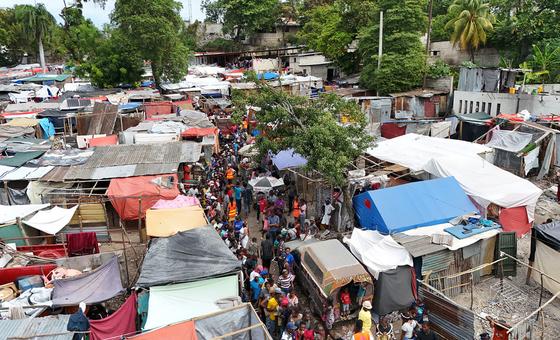
Haiti has been experiencing a resurgence of violence since mid-February. According to the IOM, while Port-au-Prince remains the epicentre of the crisis with 85 per cent controlled by gangs, violence extending beyond the capital has intensified in the past few months.

Recent attacks in the Centre and Artibonite departments have forced tens of thousands of other residents to flee, many now living in precarious conditions and temporary shelters.

“Although about a quarter of all internally displaced people still live in the capital, a growing number of people are fleeing to other parts of the country in search of safety,” IOM said.

In the Artibonite department in western Haiti, over 92,000 people have been displaced – largely because of violence in Petite Rivière.

In the Centre department, the situation is even more “alarming” with a total of 147,000 displaced. This number has doubled from 68,000 in the past few months as a result of fighting in towns like Mirebalais and Saut-d’Eau.

As more and more people are forced to flee, the number of spontaneous displacement sites is also increasing. Since December, these sites have increased from 142 to 246.

Around 83 per cent of refugees are staying with host families, putting a strain on already overstretched households, particularly in rural communities.

Pay attention and act

Armed violence continues to severely disrupt access to basic services, according to UN aid coordination office, OCHA, creating a “a deepening humanitarian crisis.”

“We must act urgently. The strength of the Haitian people is impressive, but resilience cannot be their only refuge. This crisis cannot become the new normal,” added Ms. Pope.

The President of the General Assembly, Philémon Yang, spoke at the ECOSOC meeting about the importance of adjusting “not just our attention but our action” and coordinating efforts across the UN to maximize impact.

We must do our utmost to ensure that Haiti is not abandoned to a future of fear and despair but instead is embraced by a global commitment to peace, opportunity and dignity,” he said.

Source link

Deadly flooding in Nigeria displaces thousands

Nigerian officials estimate that over 500 people are still missing and presumed dead, according to news reports.

Deputy Secretary-General Amina Mohammed, a former Nigerian Government minister, said she was heartbroken at the extent of the loss and damage.

“My deepest condolences to all those affected – especially the families who have lost loved ones. My prayers are with you,” she said.

UN relief operation 

United Nations agencies and partners are working alongside the Nigerian Government to provide essential humanitarian aid to individuals and households in Niger State who have been affected.

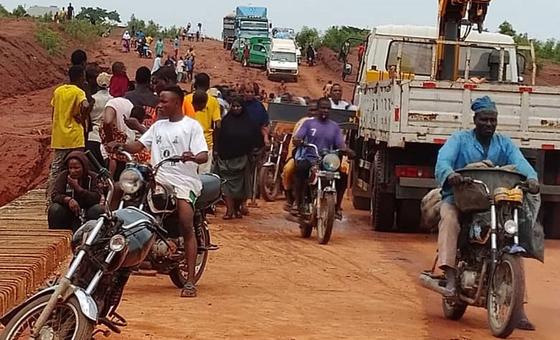
Beginning 29 May, heavy rains in the Local Government Area of Mokwa – known as a trading hub – prompted flash flooding which flattened entire neighbourhoods.

Hundreds were killed, thousands displaced and key roads and bridges were damaged, disrupting movement and economic activity.

Nigeria’s rainy season extends from April-October, making it particularly prone to flooding, which has become more severe in recent years.

Climate change factor

In 2024, a flood in September killed 230 people in Borno state in eastern Nigeria and displaced over 600,000 people. In 2022, severe flooding across the country impacted 34 out of the 36 states, killed hundreds and displaced more than 1.3 million.

A recent report from the UN weather agency (WMO) said the worsening severity is related to climate change and increasing surface and water temperatures, all of which is taking a high toll throughout the African continent.

Agencies on the ground

According to UN Spokesperson Stéphane Dujarric Nigerian authorities are leading recovery efforts and UN agencies and partners are providing supplementary assistance.

The World Health Organization (WHO) is preparing to ship medicine and medical equipment to supplement and support existing primary care systems.

For their part, the International Organization for Migration (IOM) is providing materials for temporary shelter and other non-essential food items.

The UN reproductive health agency (UNFPA) is working to establish temporary clinics and safe spaces for women and girls displaced by the flooding. In these spaces, women can access maternal and reproductive health services, dignity kits and psychosocial assistance. UNFPA is also working to deploy midwives and nurses.

Mohammed M. Malik Fall, resident and humanitarian coordinator in Nigeria, commended Government efforts to respond to the humanitarian situation in Mokwa and said that the UN “stands ready to support the response.”