Global health systems ‘at risk’ as funding cuts bite, warns WHO

This is occurring as the risk from pandemics, drug-resistant infections and fragile health services are on the rise, said the WHO Director-General.

Addressing the WHO Executive Board in Geneva, Tedros Adhanom Ghebreyesus stressed the impact of workforce reductions last year due to “significant cuts to our funding,” which have had significant consequences.

Sudden and severe cuts to bilateral aid have also caused huge disruptions to health systems and services in many countries,” he told health ministers and diplomats, describing 2025 as “one of the most difficult years” in the agency’s history.

While WHO had managed to keep its lifesaving work going, Tedros said the funding crisis exposed deeper vulnerabilities in global health governance, particularly in low and middle-income countries struggling to maintain essential services.

What’s on the agenda?

The WHO Executive Board has a sweeping agenda covering pandemic preparedness, immunisation, antimicrobial resistance, mental health and health emergencies in conflict zones.

Key issue: Members are also reviewing budget pressures, governance reform and formal withdrawal notifications from the United States and Argentina.

Why it matters: The discussions come as global health risks rise, even as international cooperation and predictable financing are under strain.

What’s next: Outcomes from this week’s meeting will be forwarded to the World Health Assembly in May, shaping WHO’s direction amid mounting geopolitical and public health pressures.

Click here for more information on the session, and here for our recent coverage of key global health issues.

High stakes

The WHO funding crisis is part of a broader retreat from international health financing, forcing countries to make difficult choices, he added.

“In response to funding cuts, WHO is supporting many countries to sustain essential health services, and to transition away from aid dependency towards self-reliance,” Tedros said, pointing to domestic resource mobilisation – including higher health taxes on tobacco, alcohol and sugary drinks – as a key strategy.

Yet the scale of unmet needs remains vast.

According to WHO, 4.6 billion people still lack access to essential health services, while 2.1 billion face financial hardship because of health costs. At the same time, the world faces a projected shortage of 11 million health workers by 2030, more than half of them nurses.

Deeper crisis averted

Tedros said WHO has avoided a more severe financial shock only because Member States have agreed to increase mandatory assessed contributions, reducing the agency’s reliance on voluntary, earmarked funding.

“If you had not approved the increase in assessed contributions, we would have been in a far worse situation than we are,” he told the Board.

Thanks to those reforms, WHO has mobilised about 85 per cent of the resources needed for its core budget for 2026-27. But Tedros cautioned that the remaining gap will be “hard to mobilise,” particularly in a difficult global funding environment.

“Although 85 per cent sounds good – and it is – the environment is very difficult,” he said, warning of “pockets of poverty” in underfunded priority areas such as emergency preparedness, antimicrobial resistance and climate resilience.

WHO Director-General Tedros Adhanom Ghebreyesus. (file photo)

Gains have been made

Despite the financial climate, notable games have been made in recent months.

Tedros highlighted the adoption last year of the Pandemic Agreement and amended International Health Regulations (IHR), aimed at strengthening preparedness in the wake of COVID-19.

WHO also expanded disease surveillance, rolled out artificial intelligence (AI)-powered epidemic intelligence systems, and supported countries in responding to hundreds of health emergencies in 2025 – many of which never reached public attention because outbreaks were contained early.

However, one in six bacterial infections globally are now resistant to antibiotics, Tedros said, describing the trend as concerning and accelerating in some regions.

‘Solidarity is the best immunity’

“The pandemic taught all of us many lessons – especially that global threats demand a global response,” said Tedros. “Solidarity is the best immunity.”

He warned that without predictable and sufficient financing, the world risks being less prepared – not more – for the next health emergency.

“This is your WHO,” Tedros told the Board, “Its strength is your unity. Its future is your choice.

World News in Brief: Winter attacks in Ukraine, looming food aid cuts in Nigeria, drought in Kenya

They include attacks in Odesa region on Wednesday that killed a 17-year-old boy, according to UN child rights agency UNICEF which called for an “end to attacks on civilian areas and the infrastructure children rely on.” 

The UN Office for the Coordination of Humanitarian Affairs (OCHA) reported that attacks on the southeastern city of Kryvyi Rih on Wednesday had recommenced on Thursday. 

Aid deliveries 

“Teams delivered shelter materials to cover damaged homes and provided protection services to the affected residents,” OCHA said in a tweet, stressing that “the cold weather is worsening the needs, requiring urgent aid.” 

Russia continues to target energy infrastructure in Ukraine, knocking  out heat, electricity and water supply, UN human rights chief Volker Türk said on Tuesday. 

“Civilians are bearing the brunt of these attacks. They can only be described as cruel. They must stop,” he said. 

Nigeria: Looming food aid cuts put one million at risk 

More than a million people in northeast Nigeria could lose emergency food and nutrition assistance unless funding can be found “within weeks”, the World Food Programme (WFPwarned on Thursday. 

Nigeria is facing one of the worst hunger crises in recent times, with nearly 35 million people projected to face acute and severe food insecurity during the lean season. 

They include roughly 15,000 people in Borno state who risk falling into catastrophic hunger, which is one step away from famine. These are the worst levels of hunger recorded in a decade, WFP said.  

The crisis is unfolding amid renewed violence in the north which has devastated rural communities, displaced families and destroyed food reserves. 

‘Catastrophic’ consequences 

“Now is not the time to stop food assistance,” said David Stevenson, WFP’s Nigeria Country Director.  

He warned of “catastrophic humanitarian, security and economic consequences” for Nigeria’s most vulnerable people, who had been forced to flee their homes in search of food and shelter.   

WFP is urgently seeking $129 million to sustain its operations in the northeast over the next six months, warning that this work could shut down unless funds are received.   

People living in Turkana in northern Kenya are dealing with the impact of drought.

Kenya drought impacts over two million people 

More than two million people in Kenya are facing worsening food insecurity in the wake of the October to December 2025 rainy season – among the driest on record, the World Health Organization (WHOsaid on Thursday. 

The prolonged drought has led to rising malnutrition rates, increased risk of disease outbreaks and disrupted access to essential health services. 

Regional drought 

The impacts are also being felt in neighbouring Somalia, Tanzania and Uganda, where millions more people are at risk due to similar weather patterns and water shortages. 

In Kenya, 10 counties are currently experiencing drought conditions, one of which is in the “alarm” phase. Furthermore, another 13 counties in the Arid and Semi-Arid Lands (ASAL) regions are showing signs of drought stress. 

While severe, the emergency was part of a known seasonal risk, WHO said.  The UN agency has supported the Kenyan authorities including by providing cholera kits, pneumonia kits and essential supplies, as well as pre-positioning equipment in high-risk counties before the drought intensified. 

WHO stressed the need to mobilize urgently to ensure both people and livestock have access to adequate food supply and safe water, and to prevent the situation from worsening. 


Source link

World News in Brief: Food insecurity in Lebanon, Libya migrants freed, UNHCR tackles multiple emergencies – despite cuts

According to the latest UN-backed IPC Food Security Phase Classification report, around 874,000 people are facing crisis or emergency levels of acute food insecurity between November 2025 and March 2026. 

Certain districts and areas have been more severely affected, particularly parts of Baalbek and El Hermel, Akkar, Baabda, Zahle, Saida, Bint Jbeil, Marjayoun, El Nabatieh, Tyre, and refugee communities.

This is the first assessment to include people who arrived from Syria after December 2024, recognising shifting displacement patterns and new vulnerabilities. 

Assistance is essential 

Looking ahead, the situation is expected to worsen rapidly due to a combination of factors, including reduced food assistance, economic pressures, and rising living costs.

Between April and July 2026, food insecurity will rise to 961,000 people, nearly 18 per cent of the population, according to the IPC report. 

“People’s needs remain high, and predictable assistance will be essential to help people meet basic food needs and prevent further deterioration.” said Anne Valand, WFP representative and country director in Lebanon. 

Migrants freed from abusive detention sites in eastern Libya

The UN migration agency (IOM) has deployed emergency teams to eastern Libya to assist hundreds of migrants released from illegal detention sites where they were held in appalling conditions.

Libyan authorities last week closed an unlawful detention facility in Ajdabiya, leading to the release of 195 migrants and the recovery of 21 bodies from a nearby burial site. 

Initial investigations indicate the victims had been held captive and subjected to torture to extort ransom payments from their families.

Buried underground

In a separate operation in Kufra, security forces uncovered an underground detention site three metres below ground. 

A total of 221 migrants and refugees were freed, including women and children, among them a one-month-old baby. At least ten people were transferred to hospital for urgent treatment after being held for prolonged periods in grossly inhumane conditions.

“These shocking cases highlight the severe risks faced by migrants who fall prey to criminal networks operating along migration routes,” said Nicoletta Giordano, IOM’s Chief of Mission in Libya.

IOM teams are providing medical screenings, referring urgent cases to hospitals and distributing warm clothing to survivors. 

The agency welcomed efforts by Libyan authorities to rescue victims and launch investigations, while stressing the need to strengthen protection systems, dismantle trafficking networks and ensure accountability for perpetrators.

UNHCR responds to mounting crises despite funding shortfalls

Despite severe funding shortfalls, the UN refugee agency, UNHCR, responded to a surge of complex emergencies and deepening long-running crises last year, according to its newly released 2025 Impact Report: Response to New Emergencies and Protracted Crises.

Throughout 2025, agency teams provided protection and assistance in some of the world’s most volatile settings. 

They supported people fleeing renewed violence in eastern Democratic Republic of the Congo into Burundi and Uganda, assisted those escaping fresh fighting in and beyond South Sudan, and helped millions of Afghans returning or being forced back from Iran and Pakistan.

Protracted crises also worsened. Ongoing conflict in Sudan, intensified attacks on Ukraine and escalating violence in Colombia triggered repeated displacement, further eroding already fragile living conditions.

Positive response

“In 2025, displacement occurred amid protracted conflict, recurrent disasters, and new outbreaks of violence,” said Ayaki Ito, UNHCR’s Director of Emergency and Programme Support.

“In this environment, UNHCR teams continued to respond to the needs of people forced to flee, even as severe resource constraints limited our capacity.”

Emergency support included clean water for half a million people in Sudan, cash assistance for Afghan and Syrian returnees, and more than a million services for displaced people inside Ukraine and in neighbouring host countries.

UNHCR warned that humanitarian needs are set to rise further in 2026 as conflicts continue to drive displacement affecting nearly 52 million people.

You can find additional background on UNHCR’s emergency response work, here.
 

Source link

Aid cuts push millions in West and Central Africa deeper into hunger

The UN World Food Programme (WFP) issued the warning on Friday, citing latest analysis from the food security framework Cadre Harmonisé, the regional equivalent of the Integrated Food Security Phase Classification (IPC) that uses a one to five scale – with five spelling catastrophe/famine – to inform response.

It projects that 13 million children are also expected to suffer from malnutrition this year while over three million people will face emergency levels of food insecurity – more than double the 1.5 million in 2020.

Nigeria, Chad, Cameroon, and Niger account for 77 per cent of the food insecurity figures, including 15,000 people in Nigeria’s Borno state at risk of catastrophic hunger for the first time in nearly a decade.

Although a combination of conflict, displacement, and economic turmoil has been driving hunger in West and Central Africa, the slashes to humanitarian funding are now pushing communities beyond their ability to cope.

“The reduced funding we saw in 2025 has deepened hunger and malnutrition across the region,” said Sarah Longford, WFP Deputy Regional Director.

“As needs outpace funding, so too does the risk of young people falling into desperation.”

Rations reduced, hunger soars

WFP urgently requires more than $453 million over the next six months to continue its humanitarian assistance across the region, where the impacts of the aid budget cuts are evident.

In Mali, when families received reduced food rations, areas experienced a nearly 65 per cent surge in acute hunger (IPC 3+) since 2023, compared with a 34 per cent decrease in communities that received full rations.

Continued insecurity has disrupted critical supply lines to major cities – including for food – and 1.5 million of the country’s most vulnerable people are on track to face crisis levels of hunger.

Malnutrition levels deteriorate

In Nigeria, funding shortfalls last year forced WFP to scale down nutrition programmes, affecting more than 300,000 children.  Since then, malnutrition levels in several northern states have deteriorated from “serious” to “critical.”

The UN agency will only be able to reach 72,000 people in Nigeria in February, down from the 1.3 million assisted during the 2025 lean season.

Meanwhile, more than half a million vulnerable people in Cameroon are at risk of being cut off from assistance in the coming weeks.

‘Paradigm shift’ needed

WFP underscored the importance of having adequate funding for its operations, which have helped to improve food security in the region.

For example, teams have worked with local communities in five countries to rehabilitate 300,000 hectares of farmland to support more than four million people in over 3,400 villages.

WFP programmes have also supported infrastructure development, school meals, nutrition, capacity building and seasonal aid to help families manage extreme weather and security risks, stabilise local economies and reduce dependency on aid.

“To break the cycle of hunger for future generations, we need a paradigm shift in 2026,” Ms. Longford said.

She urged governments and their partners to step up investment in preparedness, anticipatory action, and resilience-building to empower local communities.

World News in Brief: Pakistan floods, countries lag on climate reporting, concern over attack on peacekeepers in south Lebanon, cuts hit human rights investigations

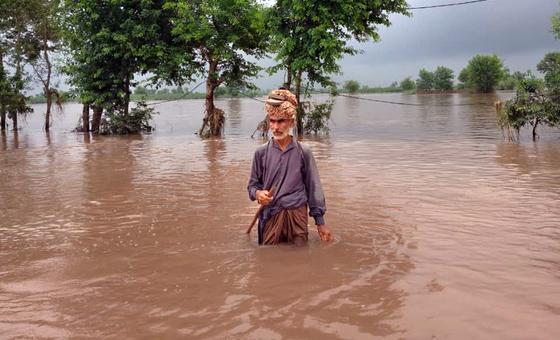
In a statement released by his Spokesperson, the UN chief noted that the disaster driven by severe monsoon conditions had been exacerbated by climate change, impacting around 1.5 million people.

Hundreds of thousands of people need humanitarian aid while more than 3,000 homes, over 400 schools and some 40 health facilities have suffered some level of damage.

Solidarity with the people

“The Secretary-General commends Pakistani authorities for relocating more than one million people in Punjab. He expresses his solidarity with the Government and people of Pakistan, extends his heartfelt condolences to the families of those who have lost their lives, and wishes a swift recovery to those who have been injured.”

The UN and other humanitarian organizations are working closely with the Pakistani authorities to assess the full impact of the floods on communities, identify further needs and also address any gaps in the response.

The UN’s Emergency Relief Coordinator, Tom Fletcher, has released $600,000 from the Regional Humanitarian Pooled Fund for relief and recovery efforts, and discussions are underway with the Government on a specific response plan.

Dozens of countries lag on climate reporting, warns UN climate chief

UN Climate Change Executive Secretary Simon Stiell has warned that 37 countries have yet to submit one or more mandatory reports under the Paris Agreement’s transparency framework, stressing that “no country can be left behind.”

Speaking at the Global Transparency Forum in Songdo, Republic of Korea, the UNFCCC chief said the Enhanced Transparency Framework (ETF) is not just technical bookkeeping but “a vital enabling tool” for stronger climate action.

It helps governments attract investment, design more ambitious policies and accelerate progress on clean energy and resilience, he added.

‘Smart investment’

To date, more than 100 nations have submitted their first Biennial Transparency Reports (BTRs), which Mr Stiell called a “smart investment” bringing economic and social benefits.

Over 10,000 experts from 140 developing countries have received training on the ETF, with 1,200 certified reviewers and 1,400 officials now using its tools.

The first global synthesis of BTRs will be published ahead of November’s COP30 climate change conference in Brazil, offering an early snapshot of progress on mitigation, adaptation and support. Mr Stiell said the findings would guide the next Global Stocktake.

“What is measured can be acted upon. What is reported helps build trust. And what is shared becomes a force for change,” he stressed.

Lebanon: UN voices serious concern over Israeli attack on peacekeepers

The UN has expressed serious concern over an Israeli attack on peacekeepers clearing roadblocks in southern Lebanon on Tuesday.

Briefing reporters in New York on Wednesday, UN Spokesperson Stéphane Dujarric said Israeli military drones had dropped grenades in the vicinity of peacekeepers serving with the UN mission, UNIFIL, “who were carrying out mandated tasks in support of implementation of Security Council resolution 1701.”

That’s the resolution which authorises peacekeepers to monitor the cessation of hostilities agreement between Israel and Hezbollah of 2006 and support the Lebanese armed forces as Israel withdrew from southern Lebanon. UNIFIL patrols the Blue Line of separation.

In a statement on social media, UNIFIL described the drone attack as one of the most serious on its personnel since the cessation of hostilities agreement between the two sides last November. The mission stressed that Israeli forces had been informed in advance of the road clearance work.

Drones crossed into Israel

“One grenade impacted within 20 metres and three within approximately 100 metres of UN personnel and vehicles,” said the UN Spokesperson.

“The drones were then observed returning south of the Blue Line. Thankfully, none of our colleagues were injured.”

The Secretary-General stresses that any acts which endanger peacekeepers’ lives are “completely unacceptable”, Mr. Dujarric continued.

UN chief António Guterres is also demanding that the parties uphold their responsibilities “to ensure the safety and security of the peacekeepers and inviolability of UN premises.”

Funding cuts hampering the work of the Human Rights Council, says President

The Human Rights Council is set to meet on Monday in Geneva – an opportunity for UN Member States to discuss action to address conflicts around the world, as well as other issues of global importance, from climate change to disability rights.

Important as this work is, it’s feared that cost-cutting measures that are already affecting UN agencies and bodies like the Council could limit its reach, President Jürg Lauber told journalists on Wednesday.

This includes independent rights investigators known as Special Rapporteurs, he said: “When the Council decides to have an investigative mechanism or a special rapporteur or an issue, they need resources,” he said.

Research, travel impacted

“They need they get support from the Secretariat to do research, to write reports. They need to travel to a country to see the situation. There’s also less money available, which means they don’t get necessarily all the research and assistance they need to do their work,” he continued.

Mr. Lauber said it was “very clear” that dwindling financial resources were impacting meetings during Council sessions and the basic implementations of investigative mandates.

He added that the funding cuts could also prevent people or groups in countries of concern from sharing their testimonies with investigators.

And he noted that reduced funding could also limit how much technical support and advice the Council is able to give to governments seeking to promote and protect human rights.

Source link

Funding cuts could push 6 million more children out of school, warns UNICEF

Official Development Assistance (ODA) for education is projected to fall by $3.2 billion – a 24 per cent drop from 2023 – with just three donor governments accounting for nearly 80 per cent of the cuts.

Such a decline would push the number of out-of-school children worldwide from 272 million to 278 million, UNICEF said – the equivalent of shutting every primary school in Germany and Italy combined.

“Every dollar cut from education is not just a budgetary decision, it’s a child’s future hanging in the balance,” said UNICEF Executive Director Catherine Russell.

Children in crisis hit hardest

The heaviest impact is expected in regions that are already vulnerable. West and Central Africa could see 1.9 million children lose access to school, while 1.4 million more could be pushed out across the Middle East and North Africa.

In total, 28 countries stand to lose at least a quarter of the education aid they rely on. Côte d’Ivoire and Mali face some of the steepest risks, with enrolment projected to fall by 340,000 and 180,000 students respectively.

Primary education will be hit hardest, with funding expected to drop by one-third. UNICEF warns this could deepen the global learning crisis and cost those children affected an estimated $164 billion in lost lifetime earnings.

In humanitarian contexts, the cuts could be devastating. In the Rohingya refugee response, 350,000 children risk losing access to basic schooling permanently.

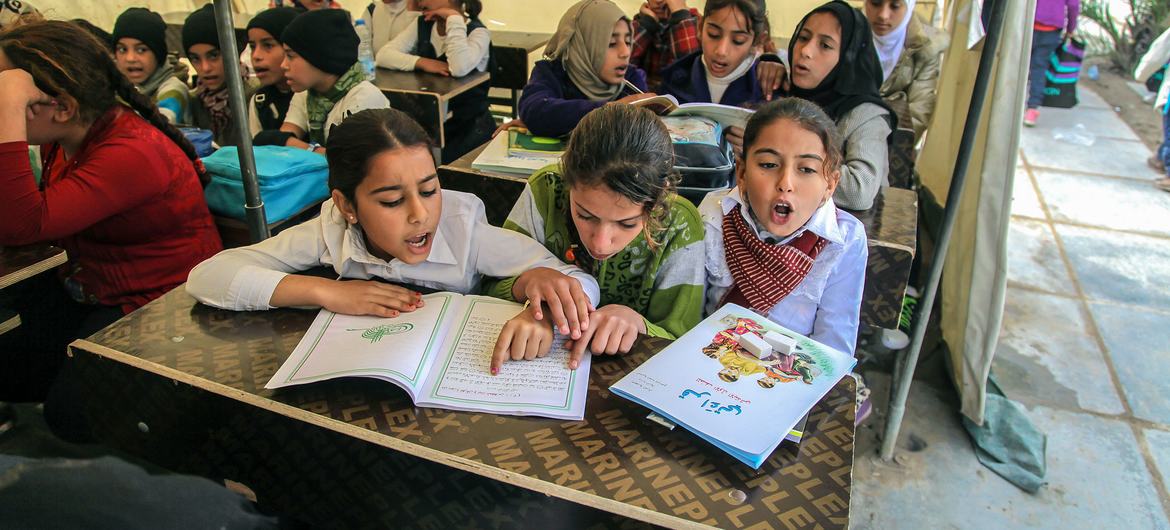
Displaced children in a classroom in Baghdad, Iraq.

Call to protect education

The crisis will also threaten vital services. School feeding programmes – sometimes a child’s only reliable meal – could see funding halved, while support for girls’ education is likely to shrink. At least 290 million children who remain in classrooms could also face a decline in learning quality.

UNICEF is calling on donors to direct at least half of all education aid to least developed countries, safeguard humanitarian funding, and prioritise early years and primary schooling. It also urges reforms to make financing more efficient and sustainable.

“Education, especially in emergency settings, often serves as a lifeline,” Ms Russell said. “Investing in children’s education is one of the best investments in the future – for everyone.”

Source link

World News in Brief: Gaza aid crisis latest, deadly floods in India and Pakistan, funding cuts exacerbate Somalia drought

In an alert from the World Food Programme (WFP), the agency said that half a million people “are on the brink of famine”, a claim backed up by multiple humanitarian agencies. The latest worrying data is showing widespread acute malnutrition.

A ceasefire is the only way to scale up aid deliveries, the UN agency insisted. It explained that although teams are doing everything they can to deliver food assistance, only 47 per cent of the daily target amount is getting in.

No meals, no bread

Unless the fighting stops, organized aid distributions and WFP-supported hot meals and bakeries can’t restart, the agency stated.

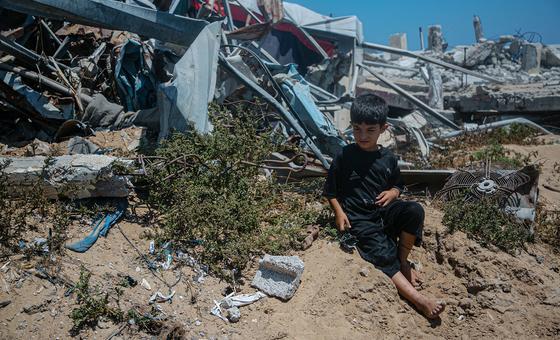
The UN relief agency for Palestine refugees, UNRWA, reported on Monday that instead of being able to prepare for the start of a new school year, children in Gaza are instead searching for water and queuing for food while their classrooms have “turned into crowded refuges”.

Three years of schooling has now been lost, the agency stressed in a tweet.

UN chief expresses ‘deep sorrow’ over deadly flash floods in India and Pakistan

UN Secretary-General António Guterres on Monday expressed his deep sorrow at the tragic loss of life due to flash floods in India and Pakistan in recent days, with many still missing and forecasts showing the possibility of further flooding and landslides ahead.

Indian rescue services responded to a deadly flood on Friday which reportedly killed at least 60 after it crashed through a village in the Himalayas while in remote villages of northwestern Pakistan, torrents of water killed more than 300, according to news reports.

Hundreds were also injured, Pakistani authorities reported. Buner district was the worst hit, with more than 200 deaths reported there, said the provincial disaster management authorities.

Standing in solidarity

“The Secretary-General offers his sincere condolences to the victims’ families and stands in solidarity with those affected by this disaster,” said the statement issued by his Spokesperson.

UN country teams in India and Pakistan have also been placed are at the disposal of authorities although no request for assistance has been made so far.

Impacts of Somalia drought made worse by funding cuts: OCHA

In Somalia, severe drought and funding cuts are undermining lifesaving assistance there, the UN aid coordination office, OCHAsaid on Monday.

Because of the reduction in the amount of support for aid work, food assistance has declined, health centres are closing and malnutrition is high, the UN agency warned.

OCHA said that 4.6 million people now face high levels of food insecurity while two million more are at risk from funding cuts.

Funding cuts mean ‘lives lost’

Without scaled-up support, “lives will be lost and progress reversed” across the east African nation, where cash shortfalls have left one million people without food assistance every month.

The global trend seeing less humanitarian assistance has curtailed vital support for healthcare across Somalia. So far this year, it has impacted at least 150 medical facilities and left hundreds of thousands of Somalis without the medical care they need.

OCHA noted that because of the cuts, the number of people being targeted for assistance in Somalia has had to be reduced by a staggering 72 per cent.

Source link

Aid cuts leave refugee agency unable to shelter six in 10 fleeing war in Sudan

Globally, $1.4 billion of the agency’s programmes are being shuttered or put on hold, UNHCR said in a new report.

“We can’t stop water, you can’t stop sanitation, but we’re having to take decisions when it comes, for example, to shelter,” said UNHCR Director of External Relations, Dominique Hyde.

“We’re have people arriving on a daily basis from Sudan, from the Darfur regions…arriving in Chad, not able to be given any shelter.”

In an urgent appeal for flexible funding from donors, Ms. Hyde noted that up to 11.6 million refugees and others risk losing access this year to direct humanitarian assistance from UNHCR. The figure represents about one-third of those reached by the organization last year.

On the Sudan-Chad border, the UN agency is now unable to provide “even basic shelter” to more than six in 10 refugees fleeing the conflict. Thousands more vulnerable people have been left stranded in remote border locations in South Sudan, too. “If we just had a bit more support, we could get them to settlements,” she insisted.

Because of the funding cuts, basic activities have already been hit hard. These include refugee registration, child protection, legal counselling and prevention of and responses to gender-based violence.

Every aid sector hit

In South Sudan, 75 per cent of safe spaces for women and girls supported by UNHCR have closed, leaving up to 80,000 refugee women and girls without access to medical care, psychosocial support, legal aid, material support or income-generating activities. This includes survivors of sexual violence, UNHCR noted.

“Behind these numbers are real lives hanging in the balance,” Ms. Hyde said.

“Families are seeing the support they relied on vanish, forced to choose between feeding their children, buying medicines or paying rent, while hope for a better future slips out of sight. Every sector and operation has been hit and critical support is being suspended to keep life-saving aid going.”

Libya influx

Many of those impacted by the war in Sudan have taken the decision to move from Chad and Egypt to Libya, into the hands of people smugglers who dangerously overload boats with desperate people seeking to cross the Mediterranean Sea to Europe.

“What we’re observing now is that in terms of arrivals in Europe of…Sudanese refugees, [it] has increased since the beginning of the year by about 170 per cent compared to the first six months of 2024,” said UNHCR spokesperson Olga Sarrado.

Support slashed from Niger to Ukraine

In camps hosting Myanmar’s Rohingya refugees in Bangladesh, education for some 230,000 children could now be suspended. Meanwhile in Lebanon “UNHCR’s entire health programme is at risk of being shuttered by the end of the year”, Ms. Hyde continued.

In Niger and other emergency settings, cuts in financial aid for shelter have left families in overcrowded structures or at risk of homelessness. In Ukraine, financial aid has also been slashed, “leaving uprooted families unable to afford rent, food or medical treatment”, Ms. Hyde noted.

Assistance to returning Afghans has also become another victim of the global aid cuts. Around 1.9 million Afghan nationals have returned home or been forced back since the start of the year, “but financial aid for returnees is barely enough to afford food, let alone rent, undermining efforts to ensure stable reintegration”, UNHCR said.

Legal aid halted

Overall, several UNHCR operations hit by severe funding gaps have now had to curtail investments in strengthening asylum systems and promoting regularization efforts.

In Colombia, Ecuador, Costa Rica and Mexico, any prolonged lack of legal status means prolonged insecurity for people on the move, the UN agency said. This results in deepening poverty “as refugees are excluded from formal employment and greater exposure to exploitation and abuse,” Ms. Hyde explained.

Approximately one in three of the agency’s 550 offices around the world has been impacted by the cuts, Ms. Hyde told journalists in Geneva:

“We’re not in a position to do so much contingency planning; what we’re able to do is make decisions on priorities – and at this point the priorities as I mentioned are dramatic.”

For 2025 UNHCR needs $10.6 billion. Only 23 per cent of this amount has been provided.

“Against this backdrop, our teams are focusing efforts on saving lives and protecting those forced to flee,” Ms. Hyde said. “Should additional funding become available, UNHCR has the systems, partnerships and expertise to rapidly resume and scale up assistance.”

Source link

World News in Brief: Haiti funding cuts bite, civilian suffering intensifies in Myanmar, Belarus deaths in custody alert

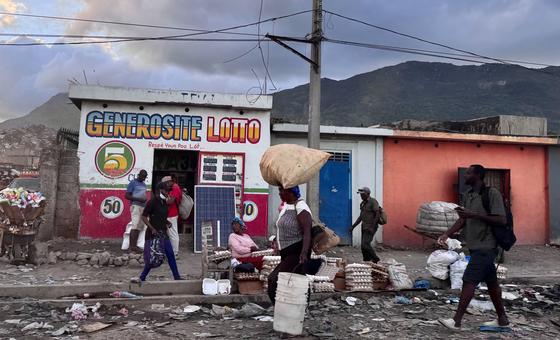
Ongoing violence is compounding the country’s food crisis, disrupting local food production in critical areas such as the commune of Kenscoff and the Artibonite department, often considered the breadbaskets of Haiti.

While the UN and its partners are responding “wherever and whenever possible,” UN Spokesperson Stéphane Dujarric said this Wednesday that humanitarians have only been able to reach 38 per cent of the population they aim to support.

Multiple roadblocks

“This is due to ongoing violence and insecurity, severe underfunding of the response, and the obvious access challenges,” he said.

Over halfway through the year, Haiti is the least-funded of the many humanitarian appeals that the UN coordinates – despite shortfalls for food security in the country being at extreme levels – with just over two per cent of the $425 million needed this year received to date.

Myanmar: Intensifying conflict impedes humanitarian aid

Almost four months after Myanmar’s devastating earthquake, the UN is deeply concerned over the plight of civilians caught up in the country’s devastating and continuing conflict between the military regime and opposition armed groups.

As fighting intensifies, civilians are particularly vulnerable, with increasing attacks on infrastructure.

According to reports, an air strike hit a monastery in Sagan Township in Sagaing Region on 11 July, killing 22 people and injuring at least 50 others. The monastery had been providing shelter to displaced people who had fled nearby villages.

A displacement camp in North Shan State was also reportedly hit by an airstrike over the weekend.

‘Broader pattern’

“These incidents are part of a broader pattern of attacks affecting people across Myanmar,” said Mr. Dujarric, with frequent reports of people being killed, injured or displaced by violence.

Such insecurity also impacts the ability of humanitarian teams to reach people in need: with one in three people now facing acute hunger, and the current monsoon season having caused flooding, “the UN urgently calls on all parties to respect human rights and international humanitarian law,” he said.

Belarus: Rights experts urge probe into deaths in custody of opposition activists

Top independent human rights experts called on Belarus on Wednesday to launch urgent investigations into the deaths of several people jailed for political dissent.

The experts – who are known as Special Rapporteurs – highlighted the case of 61-year-old businessman Valiantsin Shtermer. He died in May 2025 while serving his sentence in a so-called “Correctional Colony” in Šklou.

Mr. Shtermer had been jailed for making critical remarks about Russia’s full-scale invasion of Ukraine. Despite his serious medical condition, he was allegedly denied adequate care in prison.

Fifty-year-old opposition activist Vitold Ashurak meanwhile, also died shortly after being placed in an isolation in the same prison.

According to the Special Rapporteurs, Mr. Ashurak was a member of the Belarusian National Front who was jailed for violating public order during protests related to the disputed 2020 presidential elections.

We must not ignore these deaths

“These deaths must not be ignored,” said the experts, who added that there were strong grounds to believe that they resulted from abuse or neglect linked to the exercise of fundamental rights.

“It is of the utmost importance to thoroughly investigate the alleged instances of ill-treatment and neglect that resulted in the deaths of Shtermer, Ashurak, Puškin and other persons designated as political prisoners by human rights defenders,” the Human Rights Council appointed experts underscored.

“There are strong reasons to believe that these individuals lost their lives in retaliation for exercising their civil and political rights, including the rights to freedom of expression and peaceful assembly.”

The independent experts voiced concern that some opposition figures had been stigmatised and labelled as “extremists” or even “terrorists”.

Special Rapporteurs report regularly to the Human Rights Council. They are not UN staff and do not receive payment for their work.

Source link

UNHCR forced to make deep cuts, despite rising needs worldwide

This will entail cutting just under half of all senior positions at the agency’s Geneva headquarters and regional bureaux. 

Around 3,500 permanent staff posts have been discontinued, hundreds of temporary staff positions have been terminated, and some offices have been downsized or closed worldwide.

According to the report, decisions on where to cut costs were guided by the priority to maintain operations in regions with the most urgent refugee needs.

Financial realities

The announcement follows a warning in March from UNHCR that severe funding cuts were putting millions of refugee lives at risk, with immediate and devastating consequences.

The agency anticipates it will end the year with available funding at roughly the same level as a decade ago – despite the number of refugees forced to flee having nearly doubled in that time to over 122 million.

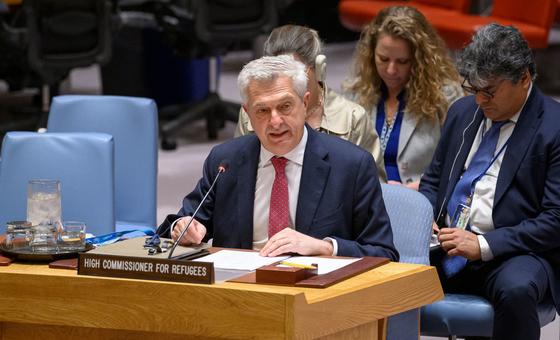
“In light of difficult financial realities, UNHCR is compelled to reduce the overall scale of its operations,” said Filippo Grandi, the United Nations High Commissioner for Refugees. “We will focus our efforts on activities that have the greatest impact for refugees, supported by streamlined headquarters and regional bureau structures.” 

‘Unshakeable’ commitment to refugees

Despite the prioritisation of refugee needs, key programmes – including financial assistance to vulnerable families, health, education, and water and sanitation – have been significantly impacted. 

In response, UNHCR is coordinating with UN partners, aid groups and host countries to mitigate the impact on those who rely on its support by streamlining operations, exploring new models and utilising technology to enhance efficiency.

“Even as we face painful cuts and lose so many dedicated colleagues, our commitment to refugees remains unshakeable,” said Mr. Grandi. 

“Although resources are scarcer and our capacity to deliver is reduced, we will continue to work hard to respond to emergencies, protect the rights of refugees and pursue solutions.”  

Source link

Brutal cuts mean brutal choices warns UN relief chief, launching ‘survival appeal’

“We have been forced into a triage of human survival,” said Mr. Fletcher. “The math is cruel, and the consequences are heartbreaking. Too many people will not get the support they need, but we will save as many lives as we can with the resources we are given.”

New priorities

The appeal aims to reprioritise individual country plans in pursuit of two main goals: first, to reach people and places facing the most urgent humanitarian needs, and second, to prioritise life-saving support based on existing planning for the 2025 humanitarian response.  

This is intended to ensure that limited resources are directed where they can do the most good, as quickly as possible.

Rather than limiting lifesaving aid to a predetermined matrix, humanitarian partners are focused on addressing the most urgent needs in ways that respect the dignity of affected people, allowing them to choose what they need most, OCHA said.

The appeal prioritises but does not replace the Global Humanitarian Overview 2025 (GHO), launched last December, which covers 180 million vulnerable people across 70 countries. The GHO calls for $44 billion, but at the halfway point of the year, less than 13 per cent of that amount has been received.

A call for global solidarity

“Brutal funding cuts leave us with brutal choices,” said Fletcher. “All we ask is one per cent of what you chose to spend last year on war. But this isn’t just an appeal for money – it’s a call for global responsibility, for human solidarity, for a commitment to end the suffering.” 

Source link

AIDS still killing one person every minute as funding cuts stall progress

More than 30 million people are receiving lifesaving treatment worldwide however, making the UN’s AIDS response a “clear example of a multilateral success,” said Amina Mohammed, UN Under Secretary-General on Thursday, as the General Assembly reviewed progress being made to end AIDS and prevent HIV infections.

‘Series of threats’

Global commitment is fading. Funding is falling. And HIV services and systems to deliver them are being disrupted,” she said, highlighting the “series of threats” that could undo all the progress achieved in the fight against HIV in past decades.

As funding dwindles, clinics are closing and treatment supplies are diminishing, putting already vulnerable populations such as adolescent girls and young women, at greater risk of contracting the disease.

As funding from PEPFAR – the US programme leading global efforts to combat HIV in Africa – faces the risk of permanent cuts, the UN global programme on HIV/AIDS (UNAIDS) warns of devastating consequences.

Without continued support, an estimated four million additional AIDS-related deaths and more than six million new infections could occur by 2029.

‘Keep up the fight’

We cannot let short-term cuts destroy long-term progress,” said Ms. Mohammed. “We need to keep fighting.”

The funding crisis must be urgently addressed. With half of sub-Saharan African countries spending more on debt servicing than on healthcare, Ms. Mohammed stressed the need for debt relief, tax reform, and increased international support.

Low and middle-income countries need sustainable HIV financing and stronger national leadership in the fight against AIDS,” she said.

She also called for an end to attacks on human rights, warning that punitive laws, vigilante violence, and hate speech against marginalised groups worsen stigma and drive people away from lifesaving services. “Protecting health means protecting human rights,” she said.

Many community-led organizations are now being defunded and dismantled, just when their work is needed most. Ms. Mohammed urged the UN and its partners to support these groups and their vital contributions.

“The end of AIDS is not a mystery,” she said, adding that while eliminating the disease by 2030 is still achievable, “success is not guaranteed.”

Funding cuts in Afghanistan mean ‘lives lost and lives less lived’

Many women came to the clinic who had walked multiple hours to receive maternal care – some of them with their newborns and some heavily pregnant.

And then there were the health workers themselves, committed to serving those in need in hard-to-reach areas of the impoverished Taliban-controlled nation.

‘Off the radar’

These were some of the scenes witnessed up close by Andrew Saberton, Deputy Executive Director with the UN’s reproductive health agency (UNFPA), on a mission to assess the impact of the recent steep funding cuts.

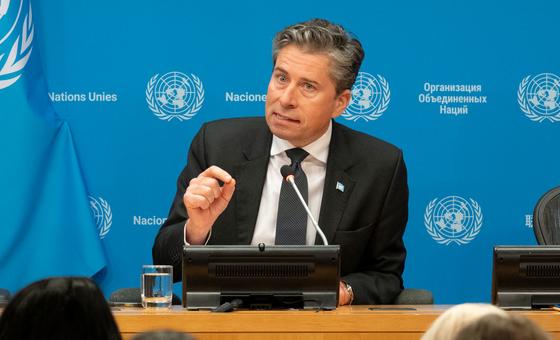
“I saw and understood the devastating impacts that the massive cuts to UNFPA will have in one of the world’s greatest humanitarian crises, a crisis which may be off the radar of the news but remains one of the world’s greatest crises,” Mr. Saberton told journalists in New York on Wednesday.

During his trip, the senior official visited UN-supported services in Kabul, Bamyan and the border between Afghanistan and Pakistan.

He hoped to understand the difference that UNFPA is making in Afghanistan while also getting a better sense of the impact of funding cuts.

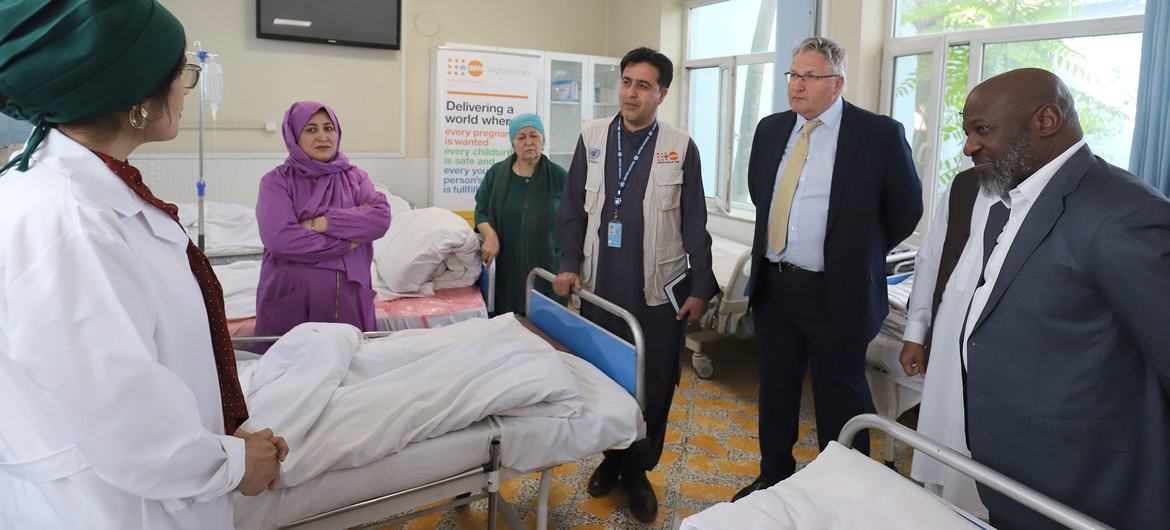
Andrew Saberton (second right), UNFPA Deputy Executive Director for Management, visits the obstetric fistula ward in Kabul, Afghanistan, where survivors receive care.

Budget slashed

The United States has recently announced cuts of approximately $330 million to UNFPA worldwide, $102 million of which will directly impact UNFPA’s work in Afghanistan, according to Mr. Saberton.

Most of this funding would have been used towards the provision of family health and mobile care, both of which are essential in Afghanistan which already has one of the highest maternal mortality rates in the world.

This funding would also have gone towards the providing much needed psychosocial support.

He estimates that 6.9 million women and children in Afghanistan will be affected by the cuts. Moreover, UNFPA will only be able to support approximately 400 of the current 900 health clinics that it supports in Afghanistan, each of which provides life-saving care.

Providing aid with few resources

Despite these challenges, Saberton emphasized that UNFPA will remain in Afghanistan and will continue providing life-saving care.

“UNFPA will be staying to deliver, but we cannot sustain our response without help. We need urgent support to keep these services running and to protect the dignity, health and lives of Afghan women and newborns,” he said.

Source link

As funding cuts bite, UN chief announces new dawn for peacekeeping

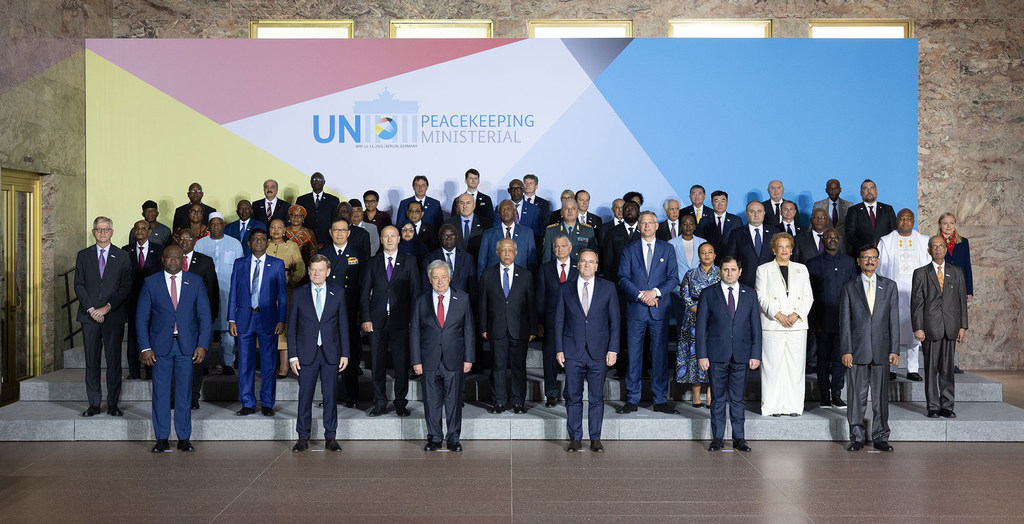
Addressing the UN Peacekeeping Ministerial 2025 in the German capital, the Secretary-General told dozens of ministers from more than 130 countries that peacekeepers remain key to “help countries move from conflict to peace.”

“In trouble spots around the world, blue helmets can mean the difference between life and death,” he insisted. “They are also a clear demonstration of the power of multilateral action to maintain, achieve and sustain peace.”

Despite the proven value of peacekeeping missions in ensuring a durable peace in countless countries from Cambodia to Liberia and Timor Leste, Mr. Guterres warned that today’s challenges have made this task much harder.

“We are now facing the highest number of conflicts since the founding of the United Nations and record numbers of people fleeing across borders in search of safety and refuge,” he said, before alluding to additional obstacles caused by an absence of political support for peacekeeping mandates.

The UN’s peacekeeping budget runs on a July-June cycle and has unpaid arrears of $2.7 billion.

Practical approach

To counter this and in the face of “dramatic financial constraints” now affecting the UN in its entirety, the Secretary-General announced an urgent review of operations to inspire a new peacekeeping model that is “fit for the future.”

In coming years, “a clear exit strategy” for peacekeepers will be key, Mr. Guterres said, as well as working with Member States and the Security Council “to ensure that any new mandates “are prioritized and achievable with the resources available.”

Other clues about what UN peacekeeping 2.0 could look like post-reform might be gleaned from the missions that the UN chief referred to in his speech in Germany.

Active missions such as UNIFIL in Lebanon have already shown that it is possible to adapt to today’s challenges while still ensuring peace and aid deliveries, Mr. Guterres noted.

And in a nod to MINUSCA in the Central African Republic, the Secretary-General highlighted its work in protecting civilians “and assisting the government to extend its reach beyond the capital where people are in desperate need.”

In the Democratic Republic of the Congo, too and despite ongoing fighting there, peacekeepers from MONUSCO also remain in the field and protect vulnerable populations, the UN chief maintained.

As Member States prepared to announce financial pledges for peacekeeping on Wednesday, Mr. Guterres stressed that the overall budget for missions represented only 0.5 per cent of global military spending.

Peacekeeping “is only as strong as Member States’ commitment to it,” stressed Mr. Guterres.

Amid massive cuts to UN funding by Member States, it remains to be seen if the upbeat mood in Berlin translates into desperately needed financial support for the global body’s peacekeeping operations.

“UN peacekeeping today is more vibrant than ever,” insisted Boris Pistorius, Minister of Defence of Germany. “It is and will remain a cornerstone of international stability. Let us commit to making it even more effective for the sake of those who depend on it.”

Cutbacks

The UN chief’s push to streamline the global body comes a day after his call to push ahead with major efficiency improvements and cost-cutting in response to the chronic liquidity crisis caused by Member States falling into arrears.

Important as these sweeping structural reforms are – with potential staff downsizing of up to 20 per cent – they are not the answer to the failure of some countries to pay the Organization to fulfil the mandates they have given it, Mr. Guterres insisted.

According to information provided by the UN Controller to the General Assembly’s Fifth Committee (Administrative and Budgetary), only $1.8 billion has been received against the $3.5 billion regular budget assessments for 2025 – a shortfall of around 50 per cent.

In the budget line for unpaid assessments these amounted to $2.4 billion on 30 April, with the United States owing about $1.5 billion, China $597 million, Russia $72 million, Saudi Arabia $42 million, Mexico $38 million and Venezuela $38 million. An additional $137 million has yet to be paid by other Member States.

For International Tribunals, total contributions outstanding totalled $79 million on 30 April.

© Bundeswehr/Jana Neumann

At the 2025 UN Peacekeeping Ministerial in Berlin, Secretary General António Guterres underscored the vital role of UN peacekeeping and urged Member States to help shape peace operations fit for the future.

Source link

Lives of pregnant women and newborns at risk as funding cuts impact midwifery support

But despite their critical role, UN support for midwifery is under serious threat due to severe funding cuts.

Each year, three-quarters of all maternal deaths occur in just 25 countries, the majority of them located in sub-Saharan Africa and South Asia, according to the UN reproductive health agency, UNFPA

Midwives are often the first and only responders delivering life-saving care to pregnant women and their newborns in crisis settings, where the risk of dying during pregnancy or childbirth doubles.

Funding cuts are now forcing UNFPA to scale back its support for midwifery. In eight of the affected countries the agency will only be able to fund 47 per cent of the 3,521 midwives it had intended to support in 2025.

On the frontline

In times of crisis, women often lose critical access to vital maternity services. Coming to the rescue in the direst of circumstances and serving as a lifeline to pregnant women, “midwives save lives,” said Natalia Kanem, Executive Director of UNFPA.

UN support for midwives in humanitarian settings includes training, providing supplies and equipment and in some cases transportation for mobile health clinics. All this is having to be cut back amid the funding cuts. 

When crises strike and systems break down, midwives step up,” said UNFPA, marking International Day of the Midwife.

Funding cuts

Amid a global shortage of nearly one million midwives, rising death rates among women and newborns in conflict zones and fragile contexts are now being reported following budget cuts.

“We’re lacking everything, from blood bags to medicines. With the support of UNFPA and other partners, we can still provide services – but for how long?said Fabrice Bishenge, Director of Kyeshero General Hospital in eastern DR Congo.

Deaths during childbirth in fragile and conflict-affected settings now account for 60 per cent of all maternal deaths globally. Worldwide, deep funding cuts only exacerbate this trend. In Yemen, for instance, over 590,000 women of childbearing age are expected to lose access to a midwife.

© UNICEF/Mukhtar Neikrawa

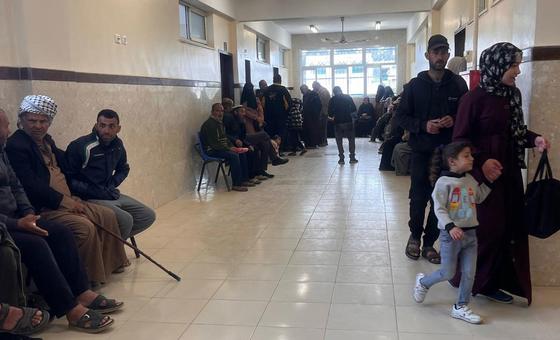
The waiting room of a maternity hospital in Herat Province, Afghanistan.

New initiative

In light of the current funding crisis, UNFPA and partners recently launched the Global Midwifery Accelerator — a coordinated initiative to scale up midwife-led care in countries with the highest maternal mortality rates.

The initiative sets out a cost-effective roadmap focused on saving lives and strengthening national health systems, even in the most fragile contexts.

Making an urgent call for greater funding, training, and advocacy for midwifery, UNFPA stressed that universal midwife-led health coverage could avert two-thirds of maternal and newborn deaths, reduce healthcare costs, and lead to more productive workforces. 

WHO chief laments most disruptive cuts to global health funding ‘in living memory’

We are living through the greatest disruption to global health financing in memory,” said WHO Director-General Dr Tedros Adhanom Ghebreyesus.

He cautioned that abrupt withdrawals of funding are jeopardising hard-won medical progress, including efforts to combat tropical diseases, which are now re-emerging in some regions.

This is just the tip of the iceberg,” he told journalists at WHO headquarters in Geneva.

Outbreaks intensify

Since January, Angola has been facing its worst cholera outbreaks in 20 years, with over 17,000 cases and more than 550 deaths recorded so far. 

Inadequate access to safe water, hygiene and sanitation is fuelling the outbreak. 

As WHO and partners carry out a large-scale vaccination campaign on the ground, one of their priorities is to bring the death rate down, said Tedros. 

Amid funding cuts, advances in tackling neglected tropical diseases affecting over one billion people, are disproportionately impacting the poorest and most marginalized communities.

Reduced access

In many countries where insecurity is rife and hospitals are being targeted, access to healthcare has been severely reduced, Tedros continued. 

On April 22, one of Haiti’s largest public hospitals, Hôpital Universitaire de Mirebalais, was forced to shut down due to violence. In the capital Port-au-Prince, more than 40 per cent of health facilities remain closed, he said.  

Needless deaths

Turning to the Gaza blockade, he said the situation there was “catastrophically bad,” with the violence “driving an influx of casualties to a health system that is already on its knees.” 

While essential medicines, and trauma and medical supplies, are running out, “people are dying from preventable diseases while medicines wait at the border,” said Tedros. 

Reiterating the UN’s call for a ceasefire, Tedros added that “peace is the best medicine.” 

Source link

Millions will die from funding cuts, says UN aid chief

“Cutting funding for those in greatest need is not something to boast about…the impact of aid cuts is that millions die,” warned Emergency Relief Coordinator Tom Fletcher.

Speaking from an overcrowded hospital in Kandahar in southern Afghanistan where three or four patients have to share a bed, Mr. Fletcher warned that the financial crisis has already forced UN aid teams to close 400 primary health centres across the country so far.

His warning echoes dire announcements of drastic cost-cutting measures in response to chronic – and now acute – funding shortfalls, including an end to selected aid programmes by numerous UN relief agencies. These include the World Food Programme (WFP), the World Health Organization (WHO), the UN Children’s Fund (UNICEF), the UN aid coordination office (OCHA), the UN refugee agency (UNHCR) and UNAIDS.

Life-or-death call

Back in Afghanistan, the reality of funding cuts continues to play out in its hospitals “where you can see doctors making the most horrific decisions about which lives to save and which lives not to save”, Mr. Fletcher said at Mirwais Regional Hospital.

The lack of investment in aid relief has also affected female Afghan health workers whose salaries are being cut by up to two-thirds, Mr. Fletcher continued. The plight of women in the country is well documented and has been condemned by the international community, having deteriorated following numerous prohibitive edicts issued by the de facto authorities who overran Kabul in 2021.

As part of his official visit to Afghanistan, Mr. Fletcher met de facto provincial governor Mullah Shirin Akhund to discuss the need to address Afghanistan’s humanitarian crisis. It comes after more than four decades of conflict that have left almost half the population – some 22.9 million people – needing humanitarian assistance to survive.

Women’s key role

In earlier talks during his official visit, Mr. Fletcher stressed that development was not possible without girls’ education and their full participation in the country’s economy.

Amid soaring malnutrition, a lack of basic services and dire economic forecasts, Afghanistan has few resources to cope with the arrival of a growing number of Afghan refugees sent back by neighbouring countries including Pakistan and Iran.

The scale of the pushbacks is enormous, with more than 250,000 Afghans returned in April alone, including 96,000 who were forcibly deported. On Tuesday, the UN refugee agency, UNHCR, voiced particular alarm over the fate of women and girls, who face increasing repression under Taliban rule.

While in Kandahar, Mr. Fletcher also visited a reception centre where the UN and humanitarian partners provide support, including health check-ups and cash. He said that the closure of hundreds of health facilities in the region had denied more than three million people access to primary care.

Largely eradicated diseases at risk of returning due to budget cuts

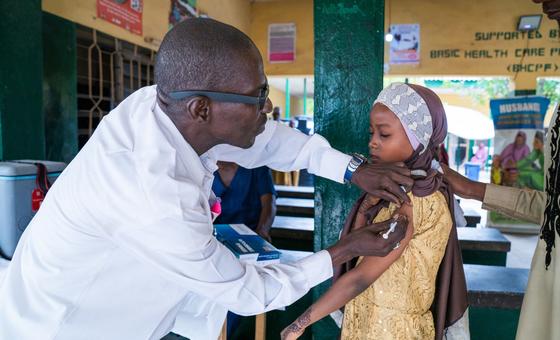
Cuts to global health funding are leading to a rise in outbreaks of diseases that vaccines had nearly wiped out, the UN health agency, WHO, is warning on Thursday.

In Africa’s “meningitis belt”, which spans parts of sub-Saharan Africa, vaccination campaigns had successfully eliminated meningitis A. Similarly, improved routine immunization and emergency vaccine stockpiles drastically reduced cases of yellow fever and related deaths.

But this progress is now at risk. “Funding cuts to global health have put these hard-won gains in jeopardy,” warned Tedros Adhanom Ghebreyesus, Director-General of the World Health Organization.

Outbreaks on the rise

In 2023, measles cases were estimated at more than 10.3 million – a 20 per cent increase compared to 2022.

WHO, UN Children’s Fund UNICEF and their partners warned in a statement marking the beginning of World Immunization Week that this upward trend is expected to continue into 2025.

Yellow fever is also making a comeback. After years of declining cases in Africa thanks to improved vaccine access, 2025 has already seen a rise in outbreaks across the continent. Cases have also been confirmed in the Americas.

Misinformation threat

Vaccination efforts are increasingly under pressure due to a combination of misinformation, population growth, humanitarian crises, and funding cuts.

Earlier this month, a WHO review across 108 countries found that nearly half are experiencing moderate to severe disruptions to vaccination campaigns, routine immunisations, and supply chains due to falling donor support.

The global funding crisis is severely limiting our ability to vaccinate over 15 million vulnerable children in fragile and conflict-affected countries against measles,” said Catherine Russell, Executive Director of UNICEF.

Vaccines offer high returns

Vaccines save around 4.2 million lives each year, protecting against 14 different diseases. Almost half of those lives are saved in Africa.

Despite this, falling investment now risks the re-emergence of diseases once thought to be under control.

Health experts emphasise that immunization is one of the most cost-effective health interventions. Every $1 invested in vaccines brings an estimated return of $54 through better health and economic productivity.

UNICEF, WHO, and their partners are calling on parents, the public, and political leaders to support immunization programmes and ensure long-term investment in vaccines and public health systems.

Source link