Security Council to meet following Russia’s violation of Polish airspace, as concern mounts over drone warfare

The meeting was requested by Poland after reporting that at least 19 violations by Russian drones of its territory overnight into Wednesday during a large-scale missile and drone strike against Ukraine.

The episode marked the most serious such incursion since the start of Russia’s full-scale invasion of Ukraine in 2022.  

While Poland and its NATO allies reportedly downed several of the drones, the incident has heightened tensions across the region – and put the new threats posed by drone warfare at the heart of diplomatic debate.

Russia’s Defence Ministry said the strikes were aimed at Ukraine’s military-industrial targets and that it did not intend drones to stray across the border.

UN political chief to brief

UN’s political official, Rosemary DiCarlo, is expected to brief ambassadors. Poland’s deputy foreign minister will attend, alongside regional states and the European Union.

The incident has raised deep concern over spillover of the conflict in Ukraine.

Stay with UN News as we bring you live coverage of the meeting…

Rise of the drone

The reported incursion into Polish airspace highlights the growing role of drones in modern conflict.

Relatively inexpensive and easy to deploy, drones are increasingly supplementing – and in some cases supplanting – conventional military hardware.  

Armies, armed groups and militias worldwide are rapidly adapting to their use, allowing for strikes and reconnaissance with lower risk to personnel.

However, malfunctions, loss of control and human error can lead to unintended strikes or impacts – especially when they’re deployed in towns and cities as opposed to the battlefield.

Analysts also say drones blur the line between traditional military operations and asymmetric warfare, raising the risk of unintended escalation across borders.

Read more in our explainer, here.

Source link

World News in Brief: Pakistan floods, countries lag on climate reporting, concern over attack on peacekeepers in south Lebanon, cuts hit human rights investigations

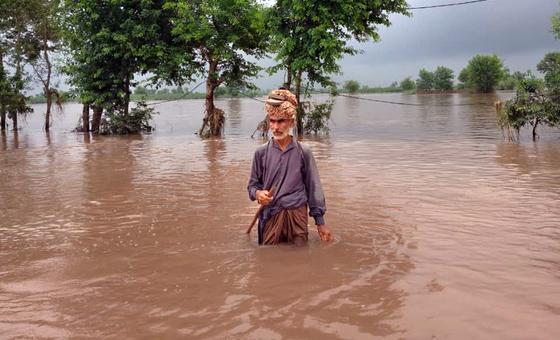
In a statement released by his Spokesperson, the UN chief noted that the disaster driven by severe monsoon conditions had been exacerbated by climate change, impacting around 1.5 million people.

Hundreds of thousands of people need humanitarian aid while more than 3,000 homes, over 400 schools and some 40 health facilities have suffered some level of damage.

Solidarity with the people

“The Secretary-General commends Pakistani authorities for relocating more than one million people in Punjab. He expresses his solidarity with the Government and people of Pakistan, extends his heartfelt condolences to the families of those who have lost their lives, and wishes a swift recovery to those who have been injured.”

The UN and other humanitarian organizations are working closely with the Pakistani authorities to assess the full impact of the floods on communities, identify further needs and also address any gaps in the response.

The UN’s Emergency Relief Coordinator, Tom Fletcher, has released $600,000 from the Regional Humanitarian Pooled Fund for relief and recovery efforts, and discussions are underway with the Government on a specific response plan.

Dozens of countries lag on climate reporting, warns UN climate chief

UN Climate Change Executive Secretary Simon Stiell has warned that 37 countries have yet to submit one or more mandatory reports under the Paris Agreement’s transparency framework, stressing that “no country can be left behind.”

Speaking at the Global Transparency Forum in Songdo, Republic of Korea, the UNFCCC chief said the Enhanced Transparency Framework (ETF) is not just technical bookkeeping but “a vital enabling tool” for stronger climate action.

It helps governments attract investment, design more ambitious policies and accelerate progress on clean energy and resilience, he added.

‘Smart investment’

To date, more than 100 nations have submitted their first Biennial Transparency Reports (BTRs), which Mr Stiell called a “smart investment” bringing economic and social benefits.

Over 10,000 experts from 140 developing countries have received training on the ETF, with 1,200 certified reviewers and 1,400 officials now using its tools.

The first global synthesis of BTRs will be published ahead of November’s COP30 climate change conference in Brazil, offering an early snapshot of progress on mitigation, adaptation and support. Mr Stiell said the findings would guide the next Global Stocktake.

“What is measured can be acted upon. What is reported helps build trust. And what is shared becomes a force for change,” he stressed.

Lebanon: UN voices serious concern over Israeli attack on peacekeepers

The UN has expressed serious concern over an Israeli attack on peacekeepers clearing roadblocks in southern Lebanon on Tuesday.

Briefing reporters in New York on Wednesday, UN Spokesperson Stéphane Dujarric said Israeli military drones had dropped grenades in the vicinity of peacekeepers serving with the UN mission, UNIFIL, “who were carrying out mandated tasks in support of implementation of Security Council resolution 1701.”

That’s the resolution which authorises peacekeepers to monitor the cessation of hostilities agreement between Israel and Hezbollah of 2006 and support the Lebanese armed forces as Israel withdrew from southern Lebanon. UNIFIL patrols the Blue Line of separation.

In a statement on social media, UNIFIL described the drone attack as one of the most serious on its personnel since the cessation of hostilities agreement between the two sides last November. The mission stressed that Israeli forces had been informed in advance of the road clearance work.

Drones crossed into Israel

“One grenade impacted within 20 metres and three within approximately 100 metres of UN personnel and vehicles,” said the UN Spokesperson.

“The drones were then observed returning south of the Blue Line. Thankfully, none of our colleagues were injured.”

The Secretary-General stresses that any acts which endanger peacekeepers’ lives are “completely unacceptable”, Mr. Dujarric continued.

UN chief António Guterres is also demanding that the parties uphold their responsibilities “to ensure the safety and security of the peacekeepers and inviolability of UN premises.”

Funding cuts hampering the work of the Human Rights Council, says President

The Human Rights Council is set to meet on Monday in Geneva – an opportunity for UN Member States to discuss action to address conflicts around the world, as well as other issues of global importance, from climate change to disability rights.

Important as this work is, it’s feared that cost-cutting measures that are already affecting UN agencies and bodies like the Council could limit its reach, President Jürg Lauber told journalists on Wednesday.

This includes independent rights investigators known as Special Rapporteurs, he said: “When the Council decides to have an investigative mechanism or a special rapporteur or an issue, they need resources,” he said.

Research, travel impacted

“They need they get support from the Secretariat to do research, to write reports. They need to travel to a country to see the situation. There’s also less money available, which means they don’t get necessarily all the research and assistance they need to do their work,” he continued.

Mr. Lauber said it was “very clear” that dwindling financial resources were impacting meetings during Council sessions and the basic implementations of investigative mandates.

He added that the funding cuts could also prevent people or groups in countries of concern from sharing their testimonies with investigators.

And he noted that reduced funding could also limit how much technical support and advice the Council is able to give to governments seeking to promote and protect human rights.


Source link

Security Council voices deep concern over deadly escalation in Syria’s Sweida region

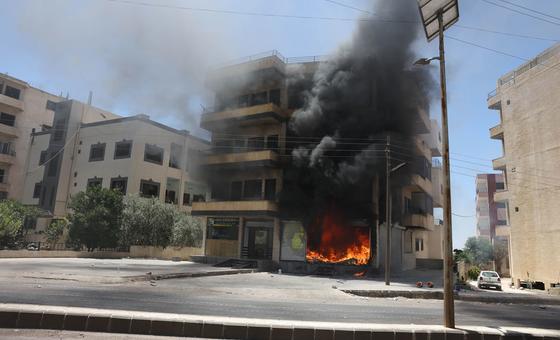
Unrest began on 12 July when mutual kidnappings escalated into armed conflict between Druze groups and Bedouin tribes, drawing in Syrian security forces.

The violence spiralled, with reports of extrajudicial executions, desecration of corpses and looting. Footage circulated widely on social media fanned sectarian tensions and disinformation.

Nearly 200,000 displaced

In a presidential statement adopted on Sunday, ambassadors said they were “deeply concerned” by the recent fighting, which has included “mass killings” and led to the internal displacement of some 192,000 people.

The Council “strongly condemns the violence perpetrated against civilians…and calls on all parties to adhere to the ceasefire arrangement and to ensure the protection of the civilian population.”

The 15-member body reminded all sides of their obligations under human rights and international humanitarian law, stressing in particular the duty to “respect and protect” all medical and humanitarian personnel.

Council members urged all parties to allow “full, safe, rapid and unhindered humanitarian access” to affected communities in the heavily-Druze Sweida area and across Syria, in line with the principles of humanity, neutrality, impartiality and independence.

They also underscored the need to ensure the humane treatment of all combatants, including those who have surrendered, are wounded, detained, or have laid down their arms.

Protection for all

The statement called on the Syrian interim authorities to protect all Syrians “regardless of ethnicity or religion” and warned that “there can be no meaningful recovery in Syria without genuine safety and protection for all Syrians.”

The Council welcomed the interim authorities’ condemnation of the violence and their commitment to investigate those responsible, but urged them to ensure “credible, swift, transparent, impartial, and comprehensive investigations… in line with international standards.”

Reaffirming resolutions including 2254 (2015), the Council reiterated its “strong commitment to the sovereignty, independence, unity, and territorial integrity of the Syrian Arab Republic” and called on all States to avoid “negative or destructive interference” that could further destabilise the country.

The statement also recalled the 1974 Disengagement Agreement and the mandate of the UN Disengagement Observer Force (UNDOF) tmonitoring and patrolling the contested Golan on the Syria-Israel border, urging all parties to abide by its terms to maintain calm.

On the threat of terrorism, the Council cited the latest report of its Analytical Support and Sanctions Monitoring Team, voicing “grave concern over the acute threat posed by foreign terrorist fighters” in Syria. It urged the country to take decisive measures against ISIL (Da’esh) and Al-Qaida, in line with relevant resolutions.

Looking ahead, the Council repeated its call for “an inclusive, Syrian-led and Syrian-owned political process” based on resolution 2254, to safeguard the rights of all Syrians and enable them to “peacefully, independently and democratically determine their futures.”

Source link

UN voices concern over Greece’s suspension of asylum applications

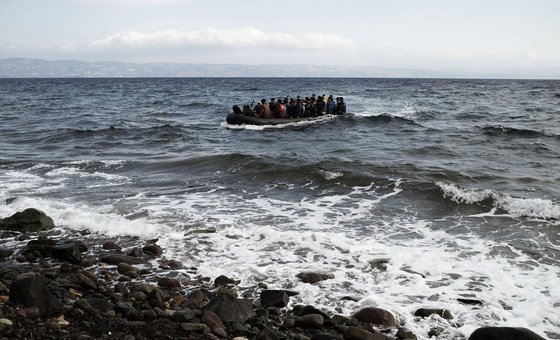
The move, currently being debated in the Greek Parliament, would halt asylum registration for three months and allow for the return of new arrivals without assessing their claims. It follows a recent rise in landings on the southern islands of Gavdos and Crete.

While acknowledging the strain of managing new arrivals, UNHCR said such measures must remain within the boundaries of international and European law.

“States have the right to manage borders and address irregular migration,” the agency said in a statement. “Controlling a State’s borders, however, must be in line with international and European law.”

A fundamental right

The right to seek asylum, UNHCR underscored, is “a fundamental human right enshrined in international, European and national law – and applies to everyone regardless of how or where they arrive in a country.”

“Even at times of migratory pressure,” the statement continued, “States must ensure that people seeking asylum have access to asylum procedures.”

The proposed Greek legislation would deny asylum seekers the ability to lodge applications and instead provide for their return, prompting fears of so-called refoulement – the forced return of individuals to countries where they may face threats to life or freedom.

Source link