
Security Council to meet following Russia’s violation of Polish airspace, as concern mounts over drone warfare

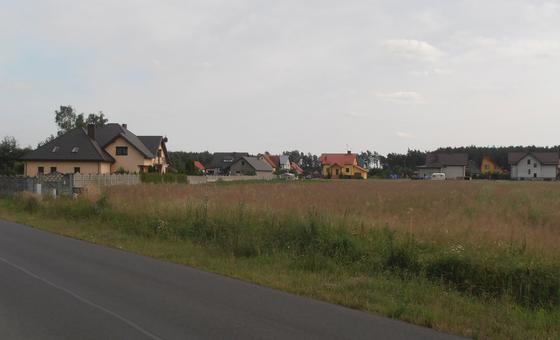
The meeting was requested by Poland after reporting that at least 19 violations by Russian drones of its territory overnight into Wednesday during a large-scale missile and drone strike against Ukraine.

The episode marked the most serious such incursion since the start of Russia’s full-scale invasion of Ukraine in 2022.  

While Poland and its NATO allies reportedly downed several of the drones, the incident has heightened tensions across the region – and put the new threats posed by drone warfare at the heart of diplomatic debate.

Russia’s Defence Ministry said the strikes were aimed at Ukraine’s military-industrial targets and that it did not intend drones to stray across the border.

UN political chief to brief

UN’s political official, Rosemary DiCarlo, is expected to brief ambassadors. Poland’s deputy foreign minister will attend, alongside regional states and the European Union.

The incident has raised deep concern over spillover of the conflict in Ukraine.

Stay with UN News as we bring you live coverage of the meeting…

Rise of the drone

The reported incursion into Polish airspace highlights the growing role of drones in modern conflict.

Relatively inexpensive and easy to deploy, drones are increasingly supplementing – and in some cases supplanting – conventional military hardware.  

Armies, armed groups and militias worldwide are rapidly adapting to their use, allowing for strikes and reconnaissance with lower risk to personnel.

However, malfunctions, loss of control and human error can lead to unintended strikes or impacts – especially when they’re deployed in towns and cities as opposed to the battlefield.

Analysts also say drones blur the line between traditional military operations and asymmetric warfare, raising the risk of unintended escalation across borders.

Read more in our explainer, here.
Source link

Ukraine: Toddler among four children killed in Russia’s attacks on Kyiv

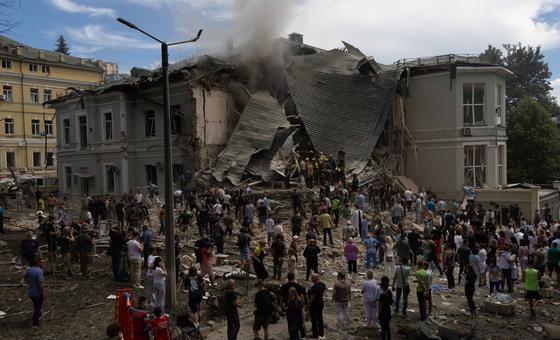
The youngest victim of the bombing raid was two-and-a-half years old, according to the UN Children’s Fund, UNICEF, which released video footage showing smoke billowing from a Kyiv apartment block with a massive hole where its roof had been.

Leading condemnation of the attacks, the UN Secretary-General said that targeting civilians and civilian infrastructure violated international humanitarian law. [They] are “unacceptable and must end immediately”, followed by a ceasefire resulting in a “just, comprehensive, and sustainable peace in Ukraine”, he insisted, in a statement issued by his Spokesperson. 

Eyewitness testimony

Speaking to UN News after visiting the shattered building and its residents, UNICEF Representative, Munir Mammadzade, insisted that nowhere in Ukraine is safe today. The air-raid alert in Kyiv lasted almost 12 hours, he noted.

The senior UN official also condemned the “continuous attacks” reportedly involving ballistic missiles and drones by Russia, which launched a full-scale invasion of Ukraine in February 2022.

“I’m just back from one of the sites that were impacted, severely…and still, the search and rescue operation is continuing,” he said. “Across the city, there were four kids confirmed killed and more than 10 injured; most likely these numbers will go up.”

Media reports indicated further damage to civilian infrastructure including Ukraine’s railways. Russian attacks have also continued closer to the front line, targeting key energy infrastructure ahead of winter, Mr. Mammadzade warned.

Winter is main threat

In Kyiv and in frontline areas, plummeting temperatures are “the biggest challenge”, the UNICEF senior official insisted, in an appeal to donors and partners to support the UN agency’s winterization plan by contributing more to its Ukraine humanitarian fund, which faces a 40 per cent funding shortfall.

People within 10 kilometres (around six miles) of the front line “require immediate support”, the UNICEF official said, so that “families and children can survive and most importantly, have their livelihoods protected”.

Back to school

The development comes as the country’s children prepare to return to school against a backdrop of ever-present air-raid sirens that are “becoming kind of a norm”, even if the impact of the war on many youngsters’ mental health is as serious as it is common.

“We know that even if war ends today, [it] will be for generations to come,” Mr. Mammadzade explained, pointing to sudden mood swings linked to post-traumatic stress and feelings of hopelessness among children he has met in frontline areas including Donetsk, Sumy and Kharkiv.

“What they basically fear the most is about their lives and unfortunately, quite often, they mention to us that they don’t have dreams or any hopes,” he continued. “What they only need is peace – and this peace to happen as soon as possible – so that they can go back to normalcy.”

In his renewed call for a ceasefire, the Secretary-General insisted that it should fully uphold Ukraine’s “sovereignty, independence and territorial integrity, within its internationally recognized borders, in line with the UN Charter, international law and relevant UN resolutions”.

Source link