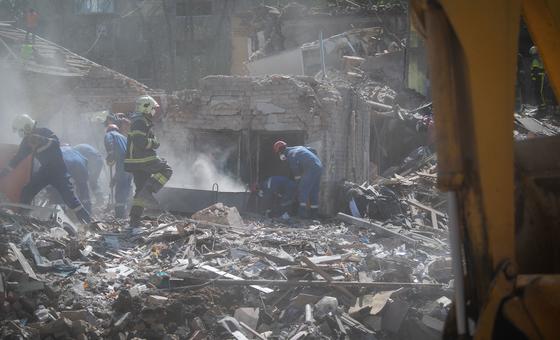
Ukraine: Civilians injured, miners killed, in separate Russian attacks

Matthias Schmale was “appalled” by the attacks in Dnipro, Kharkiv and Kyiv, noting that many more people in several regions – including Dnipro, Odesa and Vinnitsya – are facing power outages. 

“Systematic attacks by the Russian Federation Armed Forces on critical infrastructure affect the daily lives of millions and cause life-threatening conditions for the most vulnerable, including older people and children,” he said in a statement posted on social media. 

He recalled that international humanitarian law prohibits attacks on civilian infrastructure. 

Keeping families warm 

In the face of the “incessant attacks” on Ukraine’s energy infrastructure, the UN children’s agency (UNICEF) is scaling up efforts to help keep critical services running amid freezing temperatures. 

Since November, UNICEF has delivered 106 mid- and large-capacity generators across the country to support water utilities and district heating companies.  

An additional 149 generators will be released over the coming weeks to further boost operations and strengthen back-up power solutions. 

“Across the country, vital services for children and families are strained and parents are struggling to keep their children warm, prepare hot food, and access regular running water,” said Munir Mammadzade, UNICEF Representative to Ukraine. 

These generators will help the brave technicians on the ground to keep systems running to keep the heating on, hospitals open and water flowing.”  

Miners killed in drone attack 

Meanwhile, UN human rights monitors confirmed that a Russian drone attack on Sunday in the Dnipropetrovsk region near the frontline in eastern Ukraine killed and injured coal mine workers commuting home after completing their shift. 

The attack occurred in the city of Ternivka, and 12 civilians were killed and 16 wounded, according to local authorities. 

“This incident highlights the dangers civilians face when hostilities extend into areas of everyday life, even well beyond the active fighting zone,” said Danielle Bell, Head of the UN Human Rights Monitoring Mission in Ukraine (HRMMU). 

Deadly explosion 

The mine employees were travelling by bus on a regular commuter route through Ternivka, approximately 65 kilometres from the frontline, when multiple Russian drones struck the road near the vehicle over several minutes. 

The bus windows were blown out in the explosion, killing and injuring passengers. Other civilians driving nearby, as well as people who rushed to help, were also reportedly among the casualties. 

Simply trying to return home 

UN rights monitors visited the scene on Monday and interviewed witnesses.  They observed two craters, in front of and behind the destroyed bus, along with remnants of the drones used in the attack. 

One of the injured coal miners described climbing out of a bus window after the first explosion.  He heard screams from inside the bus, and then a second explosion shortly afterwards. 

He told the UN team that “this is all wrong” adding that “we are ordinary coal mine workers. People were simply returning to their homes, to their families.” 

Source link

UN’s Guterres condemns gang attack in Haiti that killed at least 40

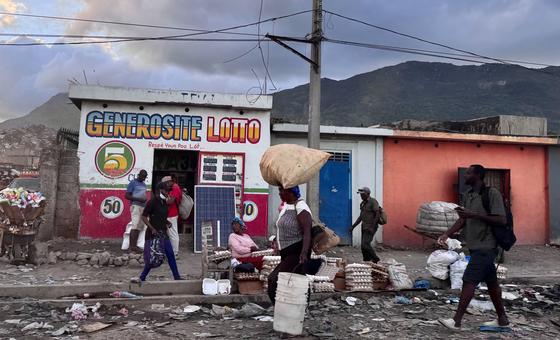
Representational Picture: Civilians left with no space safe to live in Haiti

The overnight assault on September 11 is the latest in a string of brutal incidents and ongoing gang violence that have plagued Haiti since last year.  In a statement issued by his spokesperson, Mr. Guterres expressed “condolences” to the victims’ families and urged Haitian authorities to pursue justice.

“The Secretary-General is alarmed by the levels of violence rocking Haiti,” said Stéphane Dujarric. “He calls on Member States to expedite support for the Multinational Security Support mission to assist the Haitian National Police.”

Just two weeks ago, Mr. Guterres addressed the UN Security Council, painting a grim picture of Haiti’s unraveling state. “State authority is crumbling,” he said, as armed groups tighten their grip on Port-au-Prince and surrounding regions, forcing families to flee and disrupting daily life.

With six million people in need of aid and 1.3 million displaced, Haiti’s humanitarian crisis is deepening. Yet less than 10 percent of the $908 million appeal has been funded. “Shamefully overlooked and woefully underfunded,” the UN chief said, warning that 1.7 million people may receive no assistance at all.

Violence unabated turns risky in future

The latest massacre in Labodrie, where dozens were killed this week, underscores the growing brutality of gangs such as Viv Ansanm, which now dominate major neighborhoods and supply routes. Kidnappings, extortion, and targeted attacks have surged, forcing families to abandon homes and seek refuge in makeshift shelters.

Since the 2021 assassination of President Jovenel Moïse, Haiti has struggled to restore political order. A Transitional Presidential Council governs today, but its legitimacy is widely questioned. Elections have been repeatedly delayed, fueling frustration and allowing gangs to fill the vacuum.

The Haitian National Police remain outnumbered and outgunned, even as international backers try to bolster its capacity. A U.N.-authorized security mission led by Kenya has deployed, but with limited personnel and resources, its ability to restore order remains in doubt. Proposals to expand the force to 5,500 troops are still under discussion.

The humanitarian fallout is staggering. According to U.N. estimates, nearly 1.3 million Haitians are displaced within the country. Food insecurity has reached emergency levels, with shortages worsened by blocked roads, gang control of supply chains, and inflation that has put basic staples out of reach for many. Hospitals and clinics are closing or operating at half capacity due to insecurity and lack of supplies.

International donors, including the United States, Canada, and members of CARICOM, have pledged support, but relief has been slow to materialize on the ground. Washington sees the crisis not only as a humanitarian catastrophe but also as a potential migration trigger that could push thousands toward U.S. shores.

Analysts warn that without a decisive and coordinated effort, Haiti risks sliding further into state collapse. “The longer the vacuum persists, the more gangs will consolidate power and the harder it will be to rebuild institutions,” a regional expert noted.

For now, ordinary Haitians face the brunt of the crisis, caught between a fragile state, predatory gangs, and an international community struggling to mount an effective response.


Sudan’s people tortured and killed in ‘slaughterhouses’, rights probe says

Shortly after presenting a mandated report to the Human Rights Council in Geneva on Tuesday, chair of the Fact-Finding Mission on Sudan, Mohamed Chande Othman, insisted that both the Sudanese Armed Forces (SAF) and Rapid Support Forces (RSF) militia had carried out atrocity crimes.

Among the testimonies gathered for the report, survivors from RSF detention sites described the locations as “slaughterhouses”.

Tortured, staved, denied medical care

In one notorious RSF facility, dozens of detainees died between June and October this year after being tortured, denied food and medical care, the independent rights expert said.

Equally, in SAF-run detention facilities, “civilians were also subjected to torture, including electric shock, sexualized abuse and they were held in cells so overcrowded that some prisoners had to sleep standing,” he added.

In addition, girls as young as 12 were forced into marriage, “sometimes under the threat of death to their families”, the fact-finding mission chair continued.

“Men and boys were also subjected to sexualized torture and such acts are rooted in racism, prejudice and impunity and they devastate entire communities.”

Highlighting the lack of diplomatic solutions to the conflict which began in April 2023, and its massive impact of the war on civilians, report co-author Mona Rishmawi insisted that “everybody knows you cannot rape, you cannot loot, you cannot destroy property. You cannot starve people…But if there is no accountability, of course they will continue doing it.”

Extermination goal

Asked why the report had decided not to describe what has been happening in Sudan as genocide, Ms. Rishmawi replied that the evidence “basically looks at more or less the same kind of violations as genocide”.

She added: “You kill, [you provide] no food, no water, you don’t allow food production. You don’t allow access to food, to markets…and you don’t allow access to humanitarian aid. What you do want is to kill the population…So, the effect of this is really the crime against humanity…of extermination.”

Hunger crisis

The investigative body created by the Human Rights Council in October 2023 highlighted the devastating humanitarian emergency that has resulted from the war.

“In displacement camps such Zamzam and Abu Shouk, witnesses describe children dying of hunger and dehydration in the streets, including people eating animal food,” said Joy Ngozi Ezeilo, Expert Member of the Fact-Finding Mission.

Addressing the council earlier, fact-finding mission chair Mr. Othman insisted that the war was “destroying not only lives but also the means of survival”, with hospitals, markets, water and electricity systems – and even humanitarian convoys – systematically attacked.

“Markets, the backbone of food access, have been repeatedly bombed,” he said, adding that in October 2024, SAF airstrikes on El Koma market killed at least 45 civilians.

Dying of thirst

“Two months later, Kabkabiya market was struck, killing more than 100. In March this year, SAF bombed Tora market during peak hours, killing and injuring hundreds.”

The mission report underscored how the RSF had also shelled markets, pillaged entire areas and destroyed Zamzam camp’s market.

RSF drone strikes hit the Merowe Dam and water towers, leaving communities without drinking water, while “one mother told us she lost all four of her children to thirst while fleeing”, said Mr. Othman, who like the other members of the panel is an independent human rights expert and not a UN staff member.

Source link

Ukraine: Toddler among four children killed in Russia’s attacks on Kyiv

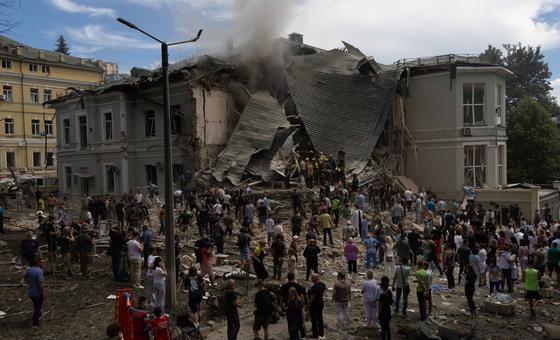
The youngest victim of the bombing raid was two-and-a-half years old, according to the UN Children’s Fund, UNICEF, which released video footage showing smoke billowing from a Kyiv apartment block with a massive hole where its roof had been.

Leading condemnation of the attacks, the UN Secretary-General said that targeting civilians and civilian infrastructure violated international humanitarian law. [They] are “unacceptable and must end immediately”, followed by a ceasefire resulting in a “just, comprehensive, and sustainable peace in Ukraine”, he insisted, in a statement issued by his Spokesperson. 

Eyewitness testimony

Speaking to UN News after visiting the shattered building and its residents, UNICEF Representative, Munir Mammadzade, insisted that nowhere in Ukraine is safe today. The air-raid alert in Kyiv lasted almost 12 hours, he noted.

The senior UN official also condemned the “continuous attacks” reportedly involving ballistic missiles and drones by Russia, which launched a full-scale invasion of Ukraine in February 2022.

“I’m just back from one of the sites that were impacted, severely…and still, the search and rescue operation is continuing,” he said. “Across the city, there were four kids confirmed killed and more than 10 injured; most likely these numbers will go up.”

Media reports indicated further damage to civilian infrastructure including Ukraine’s railways. Russian attacks have also continued closer to the front line, targeting key energy infrastructure ahead of winter, Mr. Mammadzade warned.

Winter is main threat

In Kyiv and in frontline areas, plummeting temperatures are “the biggest challenge”, the UNICEF senior official insisted, in an appeal to donors and partners to support the UN agency’s winterization plan by contributing more to its Ukraine humanitarian fund, which faces a 40 per cent funding shortfall.

People within 10 kilometres (around six miles) of the front line “require immediate support”, the UNICEF official said, so that “families and children can survive and most importantly, have their livelihoods protected”.

Back to school

The development comes as the country’s children prepare to return to school against a backdrop of ever-present air-raid sirens that are “becoming kind of a norm”, even if the impact of the war on many youngsters’ mental health is as serious as it is common.

“We know that even if war ends today, [it] will be for generations to come,” Mr. Mammadzade explained, pointing to sudden mood swings linked to post-traumatic stress and feelings of hopelessness among children he has met in frontline areas including Donetsk, Sumy and Kharkiv.

“What they basically fear the most is about their lives and unfortunately, quite often, they mention to us that they don’t have dreams or any hopes,” he continued. “What they only need is peace – and this peace to happen as soon as possible – so that they can go back to normalcy.”

In his renewed call for a ceasefire, the Secretary-General insisted that it should fully uphold Ukraine’s “sovereignty, independence and territorial integrity, within its internationally recognized borders, in line with the UN Charter, international law and relevant UN resolutions”.

Source link

Gaza: Nearly 1,400 Palestinians killed while seeking food, as UN warns airdrops are no solution

Between 30 and 31 July alone, 105 Palestinians were killed and at least 680 more injured along the convoy routes in the Zikim area in North Gaza, southern Khan Younis, and in the vicinity of the GHF sites in Middle Gaza and Rafah, the office (OHCHR) said in a press release issued on Friday

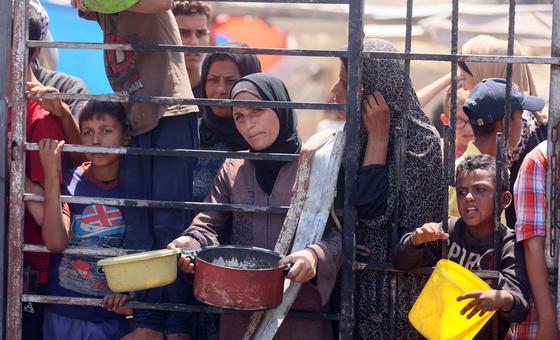
In total, since 27 May, at least 1,373 Palestinians have been killed while seeking food; 859 in the vicinity of the GHF sites and 514 along the routes of food convoys.

OHCHR noted that most of the killings were committed by the Israeli military, and that while it is aware of the presence of other armed elements in the same areas, it does not have information indicating their involvement in the killings.

“[The office] has no information that these Palestinians were directly participating in hostilities or posed any threat to Israeli security forces or other individuals. Each person killed or injured had been desperately struggling for survival, not only for themselves, but also for their families and dependents,” it said.

Uphold international law

The office emphasized that intentionally directing attacks against civilians not taking direct part in hostilities and intentionally using starvation of civilians as a method of warfare by depriving them of objects indispensable to their survival, including willfully impeding relief supplies, are war crimes.  

“If part of a systematic or widespread attack on the civilian population, these may also constitute crimes against humanity,” OHCHR added, noting that the cumulative impact of these incidents and humanitarian access restrictions.

“Each of these killings must be promptly and independently investigated, and those responsible held to account. Urgent measures must be put in place to prevent recurrence,” it said.

Airdrops not effective

Meanwhile, the UN Relief and Works Agency for Palestine Refugees (UNRWA), underscored the need to open road crossings to supply aid at scale across the Gaza Strip.

“Airdrops are at least 100 times more costly than trucks. Trucks carry twice as much aid as planes,” UNRWA Commissioner-General Philippe Lazzarini said on social media.  

“If there is political will to allow airdrops – which are highly costly, insufficient and inefficient, there should be similar political will to open the road crossings,” he stressed.

Mr. Lazzarini further noted that UNRWA has 6,000 trucks loaded with aid stuck outside Gaza waiting permission to enter.  

During the ceasefire earlier this year, UNRWA and other UN agencies were able to bring in 500 to 600 trucks of aid each day.  

“Aid reached the entire population of Gaza in safety and dignity. It succeeded to reverse the deepening starvation without any aid diversion,” the UNRWA head said.

“Let us go back to what works and let us do our job.” 

Source link

Haiti: More than 1,500 killed between April and June, UN report finds

These numbers are similar to those from the first quarter of 2025 when 1,617 people were killed and 580 were injured.  

“Gang attacks in the Artibonite and Centre departments, and in the capital, continue to cause serious human rights violations and exacerbate an already dire humanitarian crisis,” said Ulrika Richardson, the UN Resident and Humanitarian Coordinator in Haiti.  

Gangs within and beyond the capitol

President Jovenel Moïse’s assassination in 2021 triggered widespread gang violence in the capital of Port-au-Prince. Today, the UN estimates that gangs control at least 85 per cent of the city.  In the past few months, many have begun to expand their influence in the Centre and Artibonite departments.  

In June alone, 45,000 people were displaced in Centre and Artibonite, meaning that the total number of displaced people across these two departments totals over 240,000, according to the International Organization for Migration (IOM).  

Between April and June, security forces were able to slow down the gang’s expansion in the capital, but the UN office in Haiti, BINUH.  noted that the situation still remains exceptionally volatile.  

As they expand their territory, gangs have committed human rights violations, according to the UN, including gang rape, extrajudicial killings, child exploitations, trafficking and murder.

“Gang members continued to resort to murders, gang rapes, and kidnappings to maintain their control over populations living in areas under their influence,” BINUH said.  

Different perpetrators

The UN has long warned that gangs are not the only groups committing human rights abuses and violations in Haiti — government security forces and local self-defence groups have also committed violations.  

Of the 1,520 people killed and 609 injured between April and June, most were in the capital or the Centre and Artibonite departments, with 24 per cent of them killed or injured by gangs.  

Security operations against gangs accounted for 64 per cent of the deaths and injuries during this period, with 73 documented cases of summary executions and one-third of the deaths occurring as a result of explosive drones.  

Self-defence groups, which have formed as a reaction against the gangs and security force’s inability to contain them, were responsible for 12 per cent of those killed and injured.  

Respect human rights

The humanitarian situation in Haiti is increasingly dire, with over 1.3 million people displaced and half of the population facing food insecurity.  

With the humanitarian response plan only 8 per cent funded, the UN Office for the Coordination of Humanitarian Affairs (OCHA) is calling on the international community to step up financial support.  

The report also urged the international community to continue to increase support for Haiti’s fight against gangs.  

“The report calls on the Haitian government, with the support of the international community, to strengthen the fight against gangs while strictly respecting human rights and standards on the use of force,” the UN Mission in Haiti said.  

Source link

Syria crisis: Hundreds killed in ongoing violence, hospitals overwhelmed

Briefing reporters in Geneva, UN human rights office, OHCHR, spokesperson Ravina Shamdasani highlighted “credible” reports of “widespread violations and abuses, including summary executions and arbitrary killings, kidnappings, destruction of private property and looting of homes” in the city of Sweida.

“Among the reported perpetrators were members of the security forces and individuals affiliated with the interim authorities, as well as other armed elements from the area, including the Druze and Bedouin,” she said.

Many hospitals are struggling to cope with the influx of injured, the UN refugee agency UNHCR also noted.

Forced to flee

On Friday morning, OHCHR colleagues reported that clashes were continuing and that “a lot of people are trying to flee or have fled the area”, Ms. Shamdasani continued.

Latest updates from the UN humanitarian affairs coordination office, OCHA, on Thursday indicated that nearly 2,000 families had been displaced from areas affected by the fighting.

Hundreds have reportedly been killed since sectarian violence involving the Druze and Bedouin communities erupted on 12 July, triggering an intervention by Syrian security forces.

OHCHR’s Ms. Shamdasani highlighted an incident on 15 July in which at least 13 people were killed when “armed individuals affiliated with the interim authorities deliberately opened fire at a family gathering”.

Briefing an emergency meeting of the Security Council in New York on Thursday, UN Assistant Secretary-General Khaled Khiari also referenced reports of “civilians, religious figures and detainees being subjected to extrajudicial executions and humiliating and degrading treatment”. He urged all parties to protect civilians and civilian infrastructure.

Rumours and fact-checking

Ms. Shamdasani stressed that the UN human rights office has been trying to verify the information through “contacts on the ground…families of people who were killed, eyewitnesses”, but that obtaining reliable estimates of the death toll remains challenging.

“There are lots of videos circulating,” she said. “Some claim to be fighters who are in the area filming the abuses and violations they’re carrying out. We are trying to verify some of these videos, but there’s a lot of disinformation out there and a lot of it is being used to incite further violence to inflame tensions.”

The OHCHR spokesperson also expressed concern about reports of civilian casualties resulting from Israel’s airstrikes on Sweida, Dara’a and central Damascus.

“Attacks such as the one on Damascus on Wednesday pose great risks to civilians and civilian objects,” she warned, calling for the strikes to cease.

Israel had launched the strikes pledging to protect the Druze community.

The violence and displacement have sparked “considerable” humanitarian needs, with the health and aid systems struggling to keep up, said William Spindler of the UN refugee agency UNCHR.

“Many of the hospitals have been overwhelmed by the number of people who have been injured in the recent fighting,” he said.

According to OCHA, the UN World Health Organization (WHO) has dispatched enough trauma and emergency surgery kits for 1,750 interventions to the area, but many “remain undelivered due to access constraints”.

Since the displaced had to flee at very short notice, they are in desperate need of essentials – blankets, jerry cans, solar lamps – but providing these items has been a challenge.

Too risky to enter

“We have this in stock and we are ready to deliver them as soon as the security allows it,” Mr. Spindler said. “For now, this has not been possible.”

Mr. Spindler also warned of water shortages due to electricity outages. He said that people are unable to buy bottled water or food because of the insecurity.

UNHCR has an office in rural Sweida and Mr. Spindler expressed concern about the impact of the hostilities on the agency’s operations, infrastructure and personnel.

“We know that humanitarian infrastructure has been affected,” he said, describing an incident on 15 July in which a warehouse of the Syrian Arab Red Crescent was severely damaged by shelling.

The UNHCR spokesperson called on all parties to the conflict to respect and protect humanitarian premises, personnel and assets “in accordance with international humanitarian law”.

Sudan: UNICEF condemns weekend attacks that killed 35 children

At least 24 boys, 11 girls and two pregnant women reportedly were among the victims of the violence, which occurred over the weekend in communities around the city of Bara, including the villages of Shag Alnom and Hilat Hamid. 

UNICEF fears that with dozens more injured and many still missing, the number of child casualties could rise further.

‘A complete disregard for human life’

“These attacks are an outrage,” Executive Director Catherine Russell said in a statement issued on Tuesday.

“They represent a terrifying escalation of violence, and a complete disregard for human life, international humanitarian law, and the most basic principles of humanity.”

Former allies turned rivals – the Sudanese Armed Forces (SAF) and the paramilitary Rapid Support Forces (RSF) – have been battling for control of the country since April 2023 and fighting has intensified recently in the Kordofan region which encompasses three states.

End the violence now

“UNICEF condemns the attacks in the strongest possible terms,” said Ms. Russell.

She called on all parties to end the violence immediately and to uphold their obligations under international law, including international humanitarian law, as well as the principles of distinction, proportionality and precaution.

The UNICEF chief stressed that civilians – particularly children – must never be targeted. Furthermore, all alleged violations must be independently investigated, and those responsible held to account.

Impunity cannot be tolerated for violations of international law, especially when children’s lives are at stake,” she said.

Ms. Russell extended the agency’s deepest condolences to the families of the victims, and to anyone impacted by this heinous violence.

No child should ever experience such horrors,” she said. “Violence against children is unconscionable and must end now.” 

Source link

Scores killed in Sudan’s Kordofan region as fighting intensifies

Amid ongoing communication disruptions in the area, confirming the exact civilian death toll remains difficult, but reports indicate that at least 300 people – including children and pregnant women – were killed in attacks on villages in Bara locality, North Kordofan State, between 10 and 13 July.

During the same period, a series of attacks – including an air strike on a school sheltering displaced families – reportedly killed more than 20 people, in the villages of Al Fula and Abu Zabad in West Kordofan State.  

OCHA is also alarmed by reports of renewed shelling in Al Obeid, the capital of North Kordofan State, “deepening fears and insecurity among civilians,” the humanitarian coordination agency reported.  

Tragic civilian toll

With thousands of people reportedly killed since the beginning of the conflict between former military allies-turned rivals over two years ago, the crisis in Sudan continues to take a devastating toll on civilians. 

These incidents are yet another tragic reminder of the relentless toll the conflict is taking on civilians across Sudan,” OCHA reported.

The office emphasises that civilians and civilian infrastructures – including schools, homes, shelters and humanitarian assets – must never be targeted, and called on all parties to the conflict to “fully respect their obligations under international humanitarian law.”

Toll from displacement

Described as “the largest as well as the fastest growing displacement crisis globally,” by the UN refugee agency (UNHCR) in February 2025, displacement continues amid the fighting.

People fleeing North Kordofan, as well as El Fasher in North Darfur State, continue to seek shelter in the rest of Sudan, including Northern State, with humanitarian partners on the ground reporting more than 3,000 displaced people arriving in the locality of Ad-Dabbah since June.

Although some have received food assistance, the steady influx of newly displaced families is putting additional strain on already stretched resources.  

With the rainy season approaching, OCHA warned that further hardship is likely, particularly as heavy rain and strong winds destroyed shelters and food supplies for about 2,700 displaced people in eastern Sudan this past Sunday. 

Source link

Gaza: UNICEF mourns seven children killed queuing for water

The incident occurred in central Gaza on Sunday, according to media reports, which said that four other people also lost their lives due to the Israeli airstrike. 

The Israeli military said it had been targeting a terrorist but a “technical error” saw the munition stray off course.

Uphold protection of children

UNICEF Executive Director Catherine Russell noted that the incident came just days after several women and children were killed while lining up for nutritional supplies.

The Israeli authorities must urgently review the rules of engagement and ensure full compliance with international humanitarian law, notably the protection of civilians, including children,” she wrote in a statement posted on X.

The UN has repeatedly deplored the killing of Palestinians seeking food aid amid the dire humanitarian situation in Gaza, where food security experts have warned that the entire population, some 2.1 million people, is not getting enough to eat.

The risk of famine remains, according to UNICEF. In June, more than 5,800 children were diagnosed with malnutrition, including more than 1,000 children with severe acute malnutrition, representing an increase for the fourth consecutive month. 

Stockpiles of food available

Meanwhile, “truckloads of food and medical supplies are waiting in warehouses” just outside the enclave, UN Palestine refugee agency UNRWA said in a tweet.

It included a quote from one of its health workers who said that “in the past, I only saw such cases of malnutrition in textbooks and documentaries.  Today, I am treating them face to face in the health centre.”

UNRWA appealed for starvation of civilians to stop and for the siege to be lifted.  

Let the UN, including UNRWA, do its lifesaving work,” the tweet said.

The small quantities of aid and critical supplies that have entered Gaza so far are nowhere near enough to meet the immense needs, the UN humanitarian affairs office, OCHA, said later on Monday. 

It called for Israel to allow the urgent entry of aid at scale through all possible routes and corridors.  

Healthcare under attack

OCHA said health teams continue to suffer some of the worst impacts of the hostilities, with the Ministry of Health reporting on Sunday that another doctor had been killed over the previous 24 hours. 

Although the health system has been decimated and is on the brink of collapse, hospitals continue to respond to mass casualty incidents as much as they can.

The Israeli authorities have continued to issue displacement orders amid the ongoing hostilities and destruction, the agency added.

On Friday, a displacement order was put out for the Rimal area of Gaza city where some 70,000 people were staying at a dozen displacement sites.

Today, more than 86 per cent of Gaza’s territory is either under displacement orders or located within the Israeli-militarized zone. 

West Bank annexation ‘well underway’

Separately, UNRWA also highlighted the situation of Palestinians in the occupied West Bank against the backdrop of the war in Gaza.

Agency chief Philippe Lazzarini told an international conference in Switzerland on Monday that “annexation is well underway.”

UNRWA said “this is not just destruction: it is part of systematic forced displacement, a violation of international law, and a form of collective punishment.”

In January, Israeli forces launched operations in Tulkarm and Jenin in the West Bank, which UNRWA has previously said are the most extensive in two decades.

Humanitarians reported last week that the operations are causing massive destruction and displacement while attacks by Israeli settlers have intensified.

The high levels of violence continue, with OCHA reporting that two Palestinian men, one of whom was a US national, were killed near Ramallah on Friday during a settler attack.

Overall, more than 700 settler attacks have been recorded in the West Bank during the first half of this year. Over 200 communities have been affected, primarily in Ramallah, Nablus and Hebron governorates

Gaza: Over 400 Palestinians killed around private aid hubs, UN rights office says

The alert comes nearly a month since the Israeli and US-backed Gaza Humanitarian Foundation (GHF) started operating on 27 May in select hubs, bypassing the UN and other established NGOs.

Its food distribution points have been associated frequently with confusion and shooting as desperate and hungry Gazans rush to fetch supplies, said UN human rights office spokesperson Thameen Al-Keetan.

“Israel’s militarized humanitarian assistance mechanism is in contradiction with international standards on aid distribution,” he insisted. “The weaponization of food for civilians, in addition to restricting or preventing their access to life-sustaining services, constitutes a war crime and, under certain circumstances, may constitute elements of other crimes under international law.”

In its latest update on the emergency, the UN aid coordination office, OCHA, reported that “scores of people of all ages are being killed and injured every day” in the shattered enclave.

“Humanitarian operations of sufficient scale are not facilitated, leaving unaddressed the critical needs of those who have so far survived,” it said.

Shelled or shot 

In Geneva, meanwhile, OHCHR’s Mr. Al-Keetan explained that private aid hub victims were either “shelled or shot” by the Israel Defense Forces. They have endangered civilians and contributed to the “catastrophic humanitarian situation in Gaza”, he maintained.

At least 93 people have also been reportedly killed by the Israeli army while attempting to approach the few remaining aid convoys of the UN and other aid partners still operating in Gaza.

In a previous alert, the UN human rights office has condemned the possible summary execution of Palestinian staff associated with the Gaza Humanitarian Foundation by armed men allegedly affiliated with Hamas.

“These killings must end immediately, and those responsible held to account,” the UN office said in a statement.

Most vulnerable miss out

The OHCHR spokesperson noted that women and children, along with older people and those with disabilities continue to face “multiple challenges” accessing food in Gaza today.

Looting of aid convoys is now commonplace in Gaza after more than 20 months of daily Israeli bombardment as a result of a near-total blockade on humanitarian supplies including food, fuel and medicine.

The result is that Gaza’s most vulnerable individuals are unable to access any of this diverted aid, the UN human rights office told UN News.

To date, at least 3,000 Palestinians have been injured in incidents associated with the non-UN aid hubs and looting.

“Desperate, hungry people in Gaza continue to face the inhumane choice of either starving to death or risk being killed while trying to get food,” the UN human rights office explained.

Ongoing aid obstacles

Although the UN and other aid providers still function in Gaza, they are reliant on the Israeli authorities to facilitate their missions. On Saturday and Sunday, only eight out of 16 requests for humanitarian operations were approved, aid teams reported.

“Half of [the missions] were denied outright, hindering the tracking of water and fuel, the provision of nutrition services and the retrieval of the bodies,” said Alessandra Vellucci, Director of the Information Service at UN Geneva.

Her comments followed a warning from the UN’s top aid official in Gaza on Sunday who described dire scenes and “carnage”.

“It is weaponized hunger. It is forced displacement. It’s a death sentence for people just trying to survive. All combined, it appears to be the erasure of Palestinian life from Gaza,” said OCHA’s Head of Office in the Occupied Palestinian Territory, Jonathan Whittall.

Telecommunications have now been restored across Gaza after damaged fibre cables were repaired at the weekend.

“For the first time in days, humanitarian teams have had more than 24 hours of relatively stable connectivity – something that is essential to coordinate emergency relief and save lives,” OCHA said in Monday evening’s update.

But without urgent fuel deliveries, telecommunications “will go down again very soon”, the UN aid wing warned.

Fuel crisis

“Fuel is also needed to keep emergency rooms running, power ambulances, and operate water desalination and pumping stations,” it explained.

“Right now, teams on the ground are rationing what little fuel remains and working to retrieve stocks stored inside Gaza, in areas that are hard to reach.”

Access to Nasser Medical Complex is also limited because there is not enough fuel for transportation “and health workers and patients fear for their safety”, OCHA continued.

“Last week, in Khan Younis, in-patient admissions at field hospitals increased threefold, largely due to access challenges at Nasser, which also saw an influx of trauma patients and has been overwhelmed since.”

Most of Gaza remains under displacement orders issued by the Israeli military, including another one on Monday for two neighbourhoods in Khan Younis city, reportedly following Palestinian rocket fire from these areas.

“These neighbourhoods were already subject to earlier displacement orders and include two hospitals – Al Amal and Nasser,” OCHA said. “While Israeli authorities have clarified that the hospitals are not required to evacuate, OCHA says the designation is nonetheless hindering access to those critical facilities for both patients and medical staff.”

UN condemns ‘heinous’ terrorist attack at Damascus church that killed dozens

More than 60 churchgoers were also wounded in the attack, which is reported to be the first in the Syrian capital since rebel groups ousted former president Bashar al-Assad in December, ending more than a decade of civil war.

A gunman opened fire inside the Greek Orthodox St. Elias Church in the Dweila neighbourhood before detonating an explosive vest, according to media reports.  

Photos and video from inside the church showed a heavily damaged altar and pews covered in broken glass.

UN chief demands accountability

UN Secretary-General António Guterres strongly condemned the attack, expressing his deepest condolences to the families of those killed and wishing a swift recovery to the injured.

All perpetrators of terrorism must be held accountable,” Stéphane Dujarric, his spokesperson, said on Monday.

Mr. Guterres noted that the Syrian interim authorities had attributed the attack to the terrorist group, ISIL – also known as Da’esh – based on preliminary investigations, and he called for a thorough and impartial probe.

The Secretary-General reaffirms the commitment of the United Nations to supporting the Syrian people in their pursuit of peace, dignity, and justice,” Mr. Dujarric added.

Call for justice

UN Special Envoy for Syria Geir Pedersen echoed the condemnation, denouncing the bombing “in the strongest possible terms.”

He urged authorities to investigate the attack and ensure accountability.

He also called for unity in rejecting terrorism, extremism, incitement, and the targeting of any community in Syria, which has been a patchwork of different faiths throughout its history.

No place for extremism

Adam Abdelmoula, the UN Resident and Humanitarian Coordinator in Syria, described the incident as a “deliberate attack on a place of worship” and stressed that it had targeted civilians, including women and children, gathered in prayer.

There is no room for violence and extremism,” he said, urging solidarity as Syria moves toward recovery and reconciliation.

Mr. Abdelmoula reiterated the UN’s continued support for the Syrian people and called for all possible steps to be taken to protect civilians, prevent future attacks, and bring those responsible to justice.

Source link

More Gazans killed trying to get food, healthcare near to ‘full disaster’

 “We are walking the fine grey line between operational capacity and full disaster, every day,” said Dr Thanos Gargavanis, WHO trauma surgeon and emergency officer, speaking from the enclave.

The veteran UN medic’s comments came amid new reports on Tuesday morning that more Palestinians had been killed trying to access food, this time near an aid distribution site in Khan Younis in southern Gaza.

The mass casualty event left “hundreds of casualties, completely overwhelming Nasser Medical Complex” in Khan Younis, said WHO’s Representative in the occupied Palestinian territory, Dr Rik Peeperkorn.

No-go zone

Across Gaza today, health services are “barely available” and difficult to access, Dr Peeperkorn said, since more than 80 per cent of Gaza’s territory is under evacuation orders.

“The shrinking humanitarian space makes every health activity way more difficult than the previous day,” Dr Gargavanis added.

Nasser Medical Complex is the largest referral hospital in Gaza and the only remaining main hospital in Khan Younis. It is situated within the evacuation zone announced by the Israeli military on 12 June.

The nearby Al-Amal Hospital – operated by the Palestinian Red Crescent Society (PRCS) – continues to provide services to patients already there, but it is unable to admit anyone else because of ongoing military operations.

“It is what we call a completely minimal functional hospital,” Dr Peeperkorn said.

Deadly impact of fuel shortages

Only 17 of Gaza’s 36 hospitals are currently partially functional, medical supplies are critically low and no fuel has entered the Strip for more than 100 days.

The latest mass casualty event is just the latest involving Gazans trying to access aid amid ongoing severe restrictions placed on the amount of aid allowed into the Strip by Israel.

On Monday, more than 200 patients arrived at the Red Cross Field Hospital in Al Mawasi – the highest number received by the facility in a single mass casualty incident. Of that number, 28 patients were reportedly declared dead, WHO’s Dr Peeperkorn said.

Just one day earlier, on 15 June, the same hospital received at least 170 patients, who reportedly had been trying to access a food distribution site.

“The recent food distribution initiatives by non-UN actors every time result in mass casualty incidents,” WHO’s Dr Gargavanis insisted.

Private aid plan fallout

Since late May, the UN and humanitarian partners have been sidelined in Gaza as a new aid distribution model backed by Israel and the United States began operations under the framework of the Gaza Humanitarian Foundation (GHF), which uses private military contractors. 

The WHO trauma surgeon highlighted a “constant correlation” between the locations of food distribution spots and the mass casualty incidents in Rafah, in Khan Younis and along the Netzarim corridor.

Asked about the type of injuries sustained by those seeking aid, and who is responsible, Dr Garavanis stressed that WHO is not a forensic agency.

“We’re not in a position to clearly identify from the nature of the injury” who has caused it, he said. “What we can say, though, is that we’re talking of gunshot wound injuries, and we’re talking of very few incidents of shrapnel injuries.”

The UN has repeatedly warned that the new aid distribution system does not meet humanitarian principles of humanity, impartiality, independence and neutrality. The global body has also called for aid restrictions to be lifted.

Dr Peeperkorn insisted that the WHO must be facilitated to move supplies into Gaza in a cost-effective manner “via all possible routes” to prevent further shutdowns of medical services. He said that 33 WHO trucks with supplies are waiting at Al Arish in Egypt to be granted passage into the enclave, with another 15 standing by in the occupied West Bank.

Source link

Number of aid workers killed in Gaza conflict, highest in UN history: Guterres

Ahead of a memorial service at Headquarters in New York, Secretary-General António Guterres told journalists that the men and women being honoured “were not just names on a list” but “extraordinary individuals – each one a story of courage, compassion, and service.”

“They were driven by the pursuit of peace. By the urgency to ease human suffering. And by the conviction that every person, everywhere, deserves dignity and protection,” he said, speaking in front of the Security Council chamber.

He acknowledged that the past year has been especially devastating for UN humanitarian workers. 

“More than one in every 50 UNRWA staff in Gaza has been killed in this atrocious conflict. This is the highest staff death toll in United Nations history,” he said.

Some were killed delivering life-saving aid; others alongside their families; others while shielding the vulnerable.”

‘No room for impunity’

The Secretary-General said the sacrifice of all 168 fallen colleagues is a tragedy but also a reminder of the responsibility carried by every staff member every day.

It is important for the world to see this, he added, “because as we mourn those lost, we must also recognize the living.”

Mr. Guterres saluted staff members still serving in crisis zones across the globe for their courage and resilience.

“And to the world, I say: We will not grow numb to suffering. We will not accept the killing of UN personnel,” he stressed.

“We will not accept the killing of humanitarians, journalists, medical workers, or civilians as the new normal anywhere and under any circumstances. There must be no room for impunity.”

Remembering lives lost

Since 2011, the UN has held an annual service at Headquarters to honour personnel who have lost their lives in the line of duty during the previous year.

Those who paid the ultimate price in 2024 worked with UNRWA, the UN Secretariat, the UN refugee agency UNHCR, the UN Office for Project Services (UNOPS), and the World Food Programme (WFP).

They came from 31 countries and were teachers, engineers, doctors, administrators, humanitarians, peacekeepers, and more. Above all, they were sons and daughters, husbands and wives, fathers and mothers, and brothers and sisters.

Shortly after the press briefing, the Secretary-General joined some of their relatives, UN staff members and senior officials for the memorial service in the Trusteeship Council. Many others across the world followed the event online.

‘They were the best of us’

The Secretary-General noted that working for the UN “is far more than just a job” – it’s a calling. 

“All our fallen colleagues answered the call to serve humanity,” he said. “They did so in their own ways – without fanfare – and with determination.  They represented humanity in action.” 

He remarked that “at a time when some may question international cooperation or the very notion of multilateralism, we would all do well to remember these lives taken far too soon.”

“Let us take inspiration from how they lived,” he said. “And let us vow that the memory and mission of our fallen colleagues will endure. They were the best of us. Let them live on through our work.”

Legacy lives on

The president of the UN Staff Union in New York, Narda Cupidore, echoed this message.  She said they embodied the mission of the whole UN “and they paid the ultimate price.” 

“Let this honouring be more than a moment of silence,” she said. “Let it be a call for action. A call to protect those who serve. A call to ensure that anyone who serves under the blue flag does so with the full protection, support and respect.”

Ms. Cupidore said the legacy of the fallen colleagues “lives on in our work, in our advocacy and in our unshakeable belief that the world is worth striving for.” 

Source link

Five humanitarians killed in ‘horrendous’ attack on aid convoy in Sudan

The World Food Programme (WFP) and the United Nations Children’s Fund (UNICEF) condemned the attack on the joint humanitarian convoy and reminded the international community that under humanitarian law, aid must be able to move securely.  

“Aid convoys must be protected and parties have the obligation to allow and facilitate rapid and unimpeded passage of humanitarian relief for civilians in need,” the two agencies said in a joint press release.

UN Spokesperson Stéphane Dujarric reiterated this sentiment, saying that the United Nations condemns this “horrendous attack in the strongest possible terms.”  

‘Devastating’ attack  

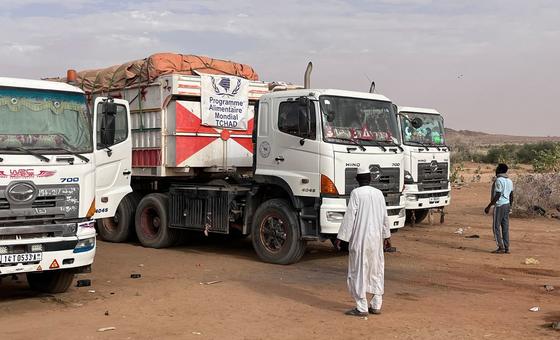
According to WFP and UNICEF, the aid convoy had travelled over 1,800 kilometres from Port Sudan, which has itself endured ongoing drone strikes.  

The 15 trucks were carrying vital nutritional supplies to North Darfur, a region in which hundreds of thousands of internally displaced people are at high risk of malnutrition and starvation. 

The agencies noted that all parties on the ground had been notified about the convoy and its movements. 

“They were 80 kilometres from El Fasher, parked on the side of the road, waiting for clearance, and they were attacked,” said Mr. Dujarric. 

This would have been the first convoy to reach El Fasher in over a year. In April, the city and the nearby Zamzam displacement camp were attacked, displacing hundreds of thousands, many of whom had already been displaced.  

The attack on the convoy comes amidst a two-year conflict which has ravaged Sudan, displacing over nine million people. Famine has been declared in multiple places, including in El Fasher, and many more regions remain at risk.   

Broader attacks on aid 

The attack on the convoy comes amidst other attacks on humanitarian operations and civilians and civilian infrastructure in Sudan.  

Last week, the WFP premises in El Fasher were bombed and damaged and an international hospital in Al Obeid also experienced a deadly drone strike. 

Civilian infrastructure around the country continues to be targeted, including electricity infrastructure in Khartoum. The damage of this infrastructure in the capital has worsened an already spreading cholera outbreak in the city.   

WFP and UNICEF reiterated that attacks on humanitarian activities and personnel are unacceptable and must stop immediately.  

“Attacks on humanitarian staff, aid, operations as well as civilians and civilian infrastructure in Sudan have continued for far too long with impunity,” they said.  

Source link

In Baghdad, Guterres affirms UN will never forget staff killed in Canal Hotel attack

António Guterres was speaking during a wreath-laying ceremony at a memorial in Baghdad to honour the victims of the 19 August 2003 Canal Hotel bombing – the worst terrorist attack in UN history.

Twenty-two people were killed, including the then UN Special Representative for Iraq, Sergio Vieira de Mello.  More than 100 others were injured, and several survivors attended the ceremony.

Families still mourning

Mr. Guterres told the audience that “22 years is a long time, but we will never forget the colleagues who were killed that day in the bombing at the Canal Hotel.”

These staff members “were sons, daughters, mothers, fathers and friends who are, to this day, mourned by those they knew and loved,” he said.

“We will always remember their leader, Sergio Vieira de Mello, who was also killed in the attack. We will stand with the survivors whose lives were changed forever,” he added.

“And we will remember the courageous colleagues and others who rushed to help on that terrible day, and in the days and weeks after — showing us the very best of the humanitarian spirit.”

A tribute and reminder

Mr. Guterres said the memorial stands as a tribute to their lives and their contributions to the people of Iraq.  It also serves as a reminder of how far the country has come since 2003.

He noted that the women and men of the United Nations have worked tirelessly together with the brave and resilient people of Iraq to support their quest for stability, development and peace.

He stressed that above all, the memorial is “a clear reminder of the vital work that our organization does around the world — and the dangers our people face in carrying out that work.”

Remembering humanitarians worldwide

Five years after the attack the UN General Assembly adopted a resolution designating 19 August as World Humanitarian Day.

This date “has been forever transformed from a day of unimaginable horror and tragedy here in Iraq into a global day of solemn remembrance for all humanitarians — inside and outside the organization,” Mr. Guterres said.

“Their bravery, dedication, and belief that a better future is possible will always inspire us. And like those whose lives were lost on 19 August 2003, their sacrifices and contributions to our world — and to our vital cause of peace — will never be forgotten.”

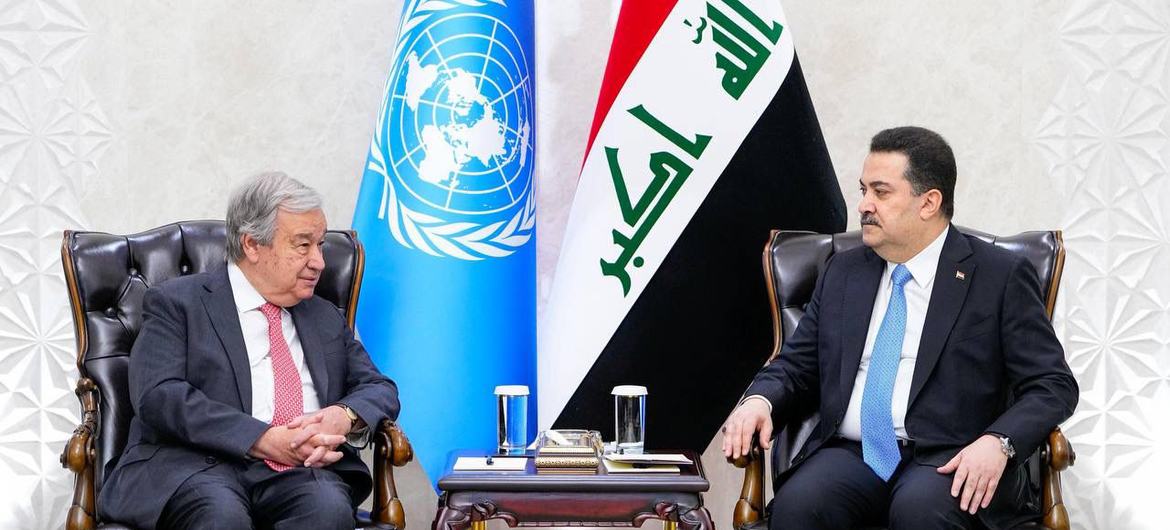
The UN Secretary-General meets with H.E. Mr. Mohammed Shia’ Al Sudani, Prime Minister of the Republic of Iraq.

Meeting with Iraqi Prime Minister

The Secretary-General was in Baghdad to attend the League of Arab States Summit. He also met with senior Iraqi officials, including Prime Minister Mohammed Shia Al-Sudani.

During talks on Sunday, they discussed developments in Iraq and the region, as well as the remaining period of the UN Assistance Mission for Iraq (UNAMI).

The Secretary-General reaffirmed that the UN remains fully committed to continuing to support the Government and people of Iraq following the mission’s departure.

UNAMI has been in the country since 2003 and is working to conclude its mandate by the end of the year.

Source link

Civilians killed in drone strike in eastern Ukraine: UN rights monitors

At least nine people were killed and seven injured when a Russian drone struck a minibus near the town of Bilopillia in the Sumy region, according to local authorities.

HRMMU monitors are in the process of gathering additional information on the circumstances of the attack and its victims.

Preliminary reports suggest that the minibus was carrying civilian evacuees from an area close to the frontline, the majority of whom were women.

‘A stark reminder’

“With nine civilians reported killed, this would be the deadliest attack in weeks,” said Danielle Bell, Head of HRMMU.

“This is a stark reminder that civilians continue to be killed and injured on a daily basis across Ukraine.”

If confirmed, the strike would represent the deadliest attack since 24 April, when at least 11 civilians were killed and 81 injured in the capital, Kyiv.

HRMMU said that while the number of civilian casualties in May has been somewhat lower than in April, it continues to document daily civilian casualties, particularly along the frontline.

Source link

Hundreds killed in Sudan’s camps for displaced people

Violent clashes between armed militias and forces of the military Government have escalated dramatically across North Darfur in recent weeks as Sudan marked two years of civil war.

The El Fasher and Zamzam camps for internally displaced persons (IDPs) who were forced to flee their homes because of the conflict, were disproportionately affected.

“The bombs were falling on the hospital. The sick and their mothers were killed. Those of us who survived left with only our children on our backs,” said Hawa, a mother of three who was inside a hospital in the Zamzam camp during the shelling, speaking to the UN Children’s Emergency Fund (UNICEF).

Horror and displacement

The attacks have destroyed critical infrastructure, halted water trucking services, and led to the collapse of already fragile health services, according to the UN.

Zamzam IDP camp, which prior to the recent shelling housed at least 400,000 people, has now been nearly emptied. The UN has reported that over 332,000 people have fled the camp.

Humanitarian organisations are warning of increasing reports of sexual violence, the targeting of civilians, and forced recruitment – particularly by elements of the Rapid Support Forces (RSF) militia.

Aid under strain

The sudden and massive influx of IDPs into already overwhelmed towns and host communities is increasing the strain on health services, water infrastructure, and local food systems.

While IDP camps face soaring demand for emergency shelters, clean water, food, and protection services, fuel shortages have led to the near-total suspension of water trucking operations in many areas, including El Fasher.

The sick and their mothers were killed. Those of us who survived left with only our children on our backs

In Central Darfur, health partners report rising levels of malnutrition, especially among children.

In the past, we had three to four meals per day. For the past two years, giving [my children] one meal a day is a miracle,” Hawa recounted.

Although the UN is currently delivering life-saving food assistance in Tawila — North Darfur, an immediate scale-up in humanitarian assistance is needed to prevent tens of thousands of newly-displaced people from falling further into acute vulnerability.

UN agencies and their partners are urgently appealing for increased funding to avert further loss of life and irreversible humanitarian consequences.

Source link

Kuwait Fire Tragedy Claims 49 Lives of Indian Migrant Workers

The death toll from a devastating fire that engulfed a six-floor building in the al-Mangaf area has surged to 49, as reported by Kuwait’s state news agency Kuna, citing the Interior Ministry. The blaze, which erupted while residents were asleep, primarily housed migrant workers, according to local media.

Eyewitnesses recounted harrowing scenes of residents leaping from the burning building in a bid to escape. Kuwait’s Emir Meshal Al Ahmad has ordered a thorough investigation to ascertain the cause of the inferno and to hold accountable those responsible, Kuna revealed.

Interior Ministry spokesman Nasser Abu Salib emphasized that stringent actions would be taken against the building’s proprietors. Meanwhile, efforts are underway to identify the victims and probe the circumstances surrounding the tragedy.

Initial reports had estimated the death toll at over 35, with most fatalities attributed to smoke inhalation, as confirmed by a security official. The Health Ministry disclosed that 43 individuals had been hospitalized for treatment.

In response to the catastrophe, Indian Prime Minister Narendra Modi convened a review meeting, extending condolences to the families of the deceased and announcing ex-gratia relief of Rs 2 lakh from the Prime Minister Relief Fund for affected Indian nationals.

Modi directed swift government assistance and dispatched Minister of State (MoS) for External Affairs to Kuwait to oversee relief efforts and facilitate the repatriation of victims’ remains. Key officials including External Affairs Minister S. Jaishankar and National Security Advisor Ajit Doval were present at the meeting to address the unfolding crisis.

60 Killed, 100 Injured in Moscow Terror Attack on Mall, India Condemns

Indian Prime Minister Narendra Modi extended solidarity with Russia and condemned the terrorist attack that claimed over 60 lives and injured several others. “We strongly condemn the heinous terrorist attack in Moscow. Our thoughts and prayers are with the families of the victims. India stands in solidarity with the government and the people of the Russian Federation in this hour of grief,” PM Modi stated in a post on social media.

The attack unfolded at a concert hall in Moscow on Friday, where terrorists opened fire on the crowd, resulting in more than 60 fatalities and over 100 injuries. The assailants also set fire to the venue in a brazen act of violence.

ISIS has reportedly claimed responsibility for the attack which saw the gunmen storming the Crocus City Hall in Moscow at around 8 p.m. (local time) at a concert of rock band Piknik that was about to begin.

The attackers, who had not attempted to take hostages or make any statements but shot people indiscriminately, have barricaded themselves inside the burning building. The toll is expected to go up, the Investigative Committee of Russia (ICR) was quoted by the media as saying.

The United States said it had warned earlier in March about a possible terrorist attack targeting “large gatherings” in Moscow, the White House said Friday, hours after the attack. “Earlier this month, the US government had information about a planned terrorist attack in Moscow — potentially targeting large gatherings, to include concerts” and Washington “shared this information with Russian authorities,” National Security Council spokeswoman Adrienne Watson said.

Watson said the administration of US President Joe Biden was complying with a long-standing “duty to warn” policy, in which the United States alerts nations or groups when it receives intelligence of specific threats to kidnap or kill multiple victims.

Russian Foreign Ministry spokeswoman Maria Zakharova said, “The Russian Foreign Ministry is receiving phone calls with condolences from ordinary citizens from all around the globe following the horrible tragedy at the Krokus City Hall venue in Moscow. They are expressing the strongest condemnation of this bloody terrorist attack, transpiring right before the eyes of the entire world.”