Ukraine: Civilians injured, miners killed, in separate Russian attacks

Matthias Schmale was “appalled” by the attacks in Dnipro, Kharkiv and Kyiv, noting that many more people in several regions – including Dnipro, Odesa and Vinnitsya – are facing power outages. 

“Systematic attacks by the Russian Federation Armed Forces on critical infrastructure affect the daily lives of millions and cause life-threatening conditions for the most vulnerable, including older people and children,” he said in a statement posted on social media. 

He recalled that international humanitarian law prohibits attacks on civilian infrastructure. 

Keeping families warm 

In the face of the “incessant attacks” on Ukraine’s energy infrastructure, the UN children’s agency (UNICEF) is scaling up efforts to help keep critical services running amid freezing temperatures. 

Since November, UNICEF has delivered 106 mid- and large-capacity generators across the country to support water utilities and district heating companies.  

An additional 149 generators will be released over the coming weeks to further boost operations and strengthen back-up power solutions. 

“Across the country, vital services for children and families are strained and parents are struggling to keep their children warm, prepare hot food, and access regular running water,” said Munir Mammadzade, UNICEF Representative to Ukraine. 

These generators will help the brave technicians on the ground to keep systems running to keep the heating on, hospitals open and water flowing.”  

Miners killed in drone attack 

Meanwhile, UN human rights monitors confirmed that a Russian drone attack on Sunday in the Dnipropetrovsk region near the frontline in eastern Ukraine killed and injured coal mine workers commuting home after completing their shift. 

The attack occurred in the city of Ternivka, and 12 civilians were killed and 16 wounded, according to local authorities. 

“This incident highlights the dangers civilians face when hostilities extend into areas of everyday life, even well beyond the active fighting zone,” said Danielle Bell, Head of the UN Human Rights Monitoring Mission in Ukraine (HRMMU). 

Deadly explosion 

The mine employees were travelling by bus on a regular commuter route through Ternivka, approximately 65 kilometres from the frontline, when multiple Russian drones struck the road near the vehicle over several minutes. 

The bus windows were blown out in the explosion, killing and injuring passengers. Other civilians driving nearby, as well as people who rushed to help, were also reportedly among the casualties. 

Simply trying to return home 

UN rights monitors visited the scene on Monday and interviewed witnesses.  They observed two craters, in front of and behind the destroyed bus, along with remnants of the drones used in the attack. 

One of the injured coal miners described climbing out of a bus window after the first explosion.  He heard screams from inside the bus, and then a second explosion shortly afterwards. 

He told the UN team that “this is all wrong” adding that “we are ordinary coal mine workers. People were simply returning to their homes, to their families.” 

Source link

Massive Anti-Immigration Rally in London Turns Violent, 26 Police Officers Injured

London witnessed one of its largest far-right demonstrations in recent memory on Saturday, as a march led by activist Tommy Robinson spiraled into violence, leaving at least 26 police officers injured and resulting in 25 arrests.

According to the Metropolitan Police, clashes erupted when sections of Robinson’s supporters attempted to push through barriers separating them from a counter-protest organized by the group Stand Up to Racism. Officers were reportedly punched, kicked, and struck with bottles before riot police were dispatched to regain control.

Authorities confirmed that four officers sustained serious injuries, including broken teeth, a concussion, a suspected broken nose, and a spinal injury. Reinforcements carrying riot shields and helmets were rushed to the scene to contain escalating tensions.

Crowd estimates placed attendance at between 110,000 and 150,000, making it one of the biggest far-right gatherings in the UK in recent years. Organizers, however, claimed turnout was even higher, branding it the “Unite the Kingdom” march. Robinson hailed the event as a “tidal wave of patriotism” and described it as the beginning of a “cultural revolution.”

Robinson, born Stephen Yaxley-Lennon, is the founder of the nationalist and anti-Islam English Defence League. He has long been a controversial figure in British politics and remains one of the most prominent voices on the UK’s far-right.

The rally drew prominent figures from across Europe’s far-right networks and even saw a surprise video address from billionaire Elon Musk. In his message, Musk criticized Britain’s political leadership, argued that citizens were “scared to exercise their free speech,” and urged a push for political change.

Police said more than 1,600 officers were deployed across London to manage the rally, which coincided with several other major public events including football matches and concerts. Authorities confirmed that investigations into the violence were underway and that additional arrests were likely.

Attacks across Gaza intensify amid fear and hunger: ‘Leave me here,’ injured girl told fleeing family

A 14-year-old girl with cerebral palsy who depends on a wheelchair was among crowds fleeing Israeli military aircraft operations east of Rafah in Gaza on 13 October 2023, said committee member Muhannad Salah Al-Azzeh, who presented a report on the occupied Palestinian territories on Wednesday in Geneva. In the melee, she lost her wheelchair.

She was crawling on the sand and asking her family, telling them ‘you can leave me here’ because she felt that she was slowing them down,” he said.

Indeed, some people are unaware of evacuation orders being given in Gaza due to their disabilities since the start of the nearly two-year-long war triggered by the Hamas-led attack on Israel.

“This is one of the most serious issues because in regular situations, personal disabilities are excluded in emergencies, more excluded,” he said. “It’s more complicated for them.”

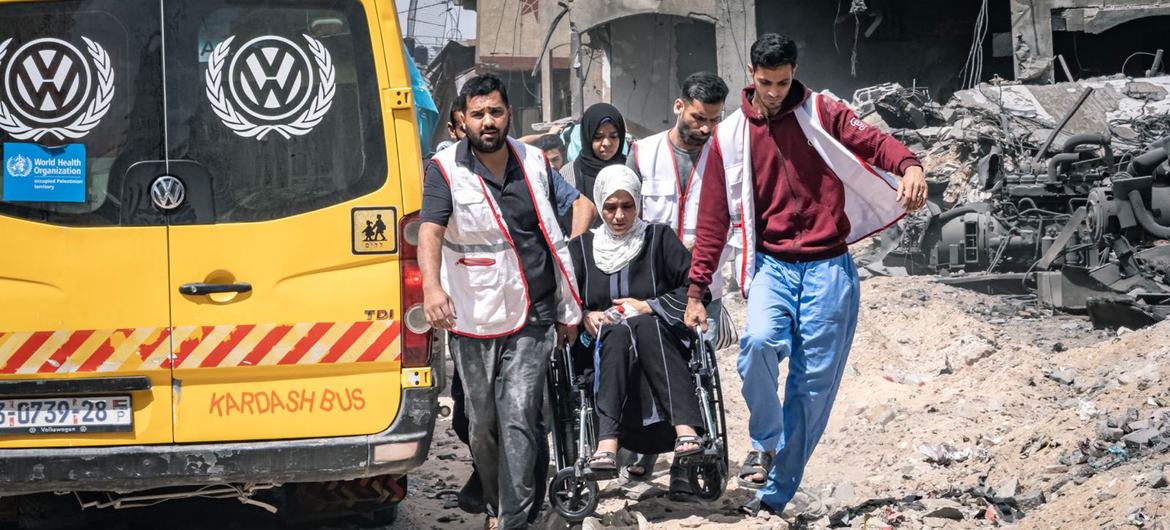
A woman in a wheelchair is carried across rubble.

States fail to protect rights of persons with disabilities

Following extensive interviews with individuals, delegations and organizations working in Gaza and the West Bank, the UN committee submitted a series of recommendations and serious concerns to Israel and the Palestinian Authority.

The situation in Gaza is a grave concern, Mr. Al-Azzeh stated.

“What we are witnessing there is highly concerning for us,” he warned. “We do believe that all the State parties to the Convention on the Rights of Persons with Disabilities, they really failed in one way or another to fulfill their obligations to protect and to ensure the minimum protection of persons with disabilities in the emergency situation.”

Citing grim cases reported to the committee since the start of war, he said in one instance, prolonged electricity shutdowns in Rafah left a mother unable to receive evacuation messages on her mobile phone, and she and her children subsequently died in an Israeli strike.

Nine-year-old Noor’s parents, who are deaf, have heavily relied on her to survive Israeli tank shelling and attacks. She has had to learn new signing vocabulary for the language of war, including tanks, armed quadcopters, shrapnel and aircraft, the committee representative said.

There are dozens of examples of people like Abdulrahman Al-Gharbawi, with cerebral palsy and a lower limb disability, he said. 

All nine times the 27-year-old graphic designer’s family has been forcibly displaced since the start of the war, his mother would carry his wheelchair while his father and brother would carry him.

‘Horrific’ situation in Gaza City

The UN Office for the Coordination of Humanitarian Affairs (OCHA) warned on Wednesday that further intensification of the continued offensive on Gaza City, amid ongoing famine, will push civilians – already battered and bereaved – into an even deeper catastrophe that world leaders must act decisively to prevent.

“Partners supporting displacement sites warned that the escalating hostilities in Gaza City are having horrific humanitarian consequences for people living at these sites, many of whom were previously displaced from North Gaza,” the UN agency said. “They say that many households are unable to move due to high costs and a lack of safe space to move to, with older people and those with disabilities especially affected.”

Partners report that between 14 and 31 August, more than 82,000 new displacements have been recorded, including nearly 30,000 movements from north to south, OCHA stated.

Chronic aid delivery obstacles

Meanwhile, humanitarian efforts continue to face chronic obstacles. While a trickle of aid is getting into the war-torn Gaza Strip, steep challenges remain, according to OCHA’s latest situation report.

Between 17 and 30 August, partners continued daily convoys to uplift humanitarian food aid from the Kerem Shalom and Zikim crossings, bringing more than 6,900 metric tonnes of wheat flour, food parcels and bulk food supplies into Gaza through the UN-coordinated aid mechanism, OCHA reported.

“However, nearly all of this aid was offloaded by hungry crowds or looted by organized groups along convoy routes, preventing targeted household distributions and delivery to partner warehouses,” the UN agency stated.

Since 20 July, when regular food cargo shipments from Gaza’s crossings resumed, less than 40 per cent of the 2,000 metric tonnes of food supplies required daily to meet basic humanitarian food assistance needs could enter the Strip, OCHA said.

Daily, civilians continue to be killed and injured by military forces or due to violence erupting among desperate crowds while trying to access aid, including in the militarised zone near checkpoints waiting for aid convoys and at non-humanitarian militarised distribution sites,” the UN agency reported.

‘Two per cent of food aid reached warehouses’

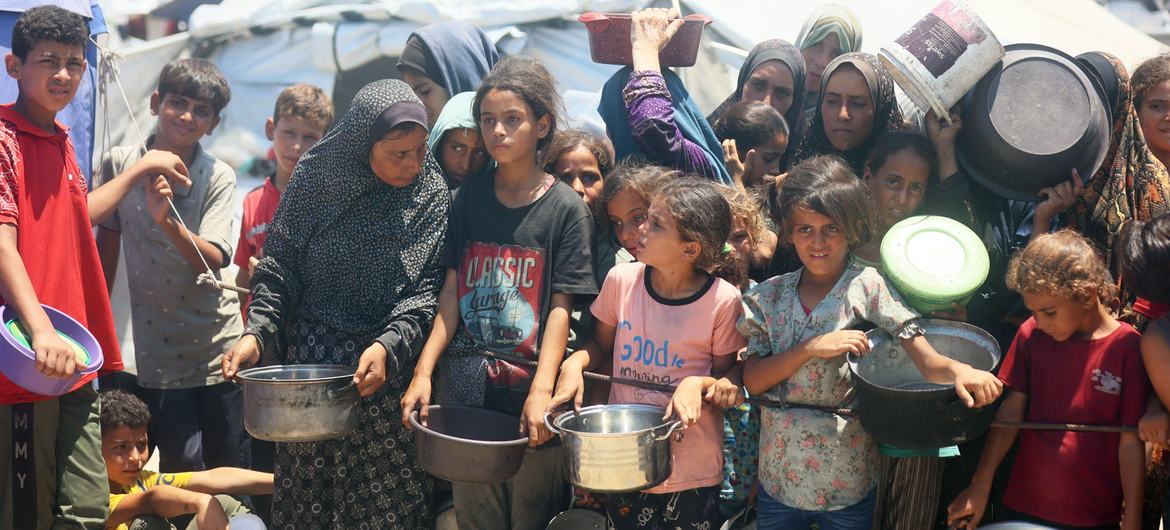
As of 30 August, 99 kitchens supported by 19 partners were preparing and distributing 468,000 meals daily across the Gaza Strip, with 155,000 in the north and 313,000 in central and southern Gaza, according to the OCHA report.

“Partners relied on the two per cent of food aid that safely reached warehouses, coupled with resources secured locally from markets,” the UN agency said.

“While representing an 80 per cent increase compared to the 260,000 daily meals prepared in early August, this remains far below the over one million meals produced in April with the humanitarian and commercial food stocks and cooking gas entered during the ceasefire.”

Families and children seeking food from a community kitchen in western Gaza City in late July. (file)

Famine response

The UN and partners continued integrated famine response efforts come on the heels of the UN-backed global hunger experts’ report finding famine conditions in parts of Gaza last month.

Efforts included scaling up cooked meal provision, promoting small-scale home gardening and community oven initiatives, expanding cash and voucher assistance and strengthening real-time monitoring and analysis systems.

“Intense advocacy continues with the Israeli authorities to increase the volume of humanitarian and commercial goods approved for entry, with a focus on fresh produce and fortified food, nutrition, health and cooking gas,” OCHA said in its report.

© UNICEF/Mohammed Nateel

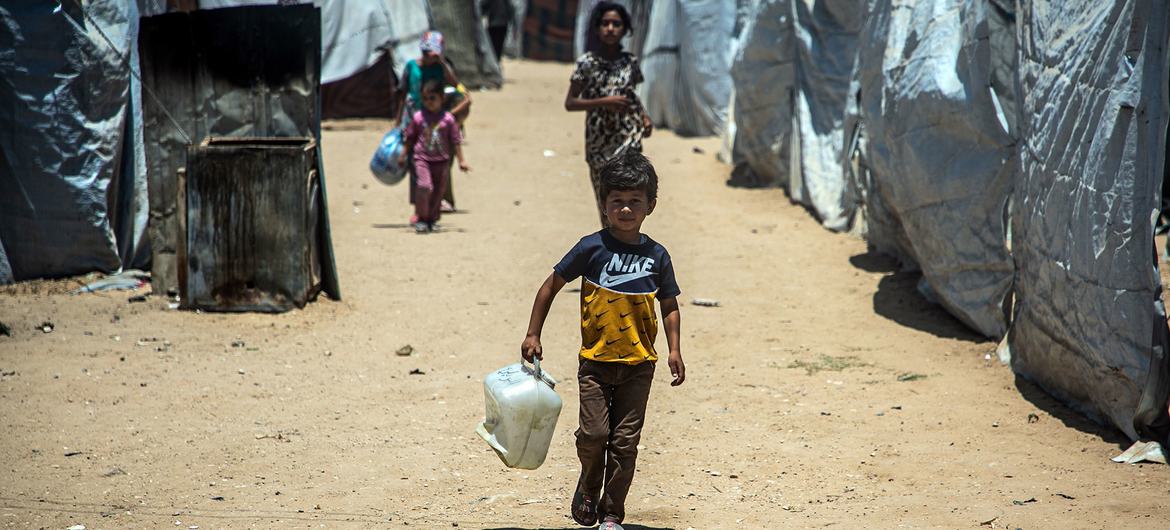
Access to safe drinking water in the Gaza Strip has been severely compromised due to the ongoing war.

New supplies and critical shortages

For the first time in over five months, concentrated fodder for livestock owners entered Gaza. Approximately 60 metric tonnes were distributed to 600 livestock holders in Deir Al-Balah, OCHA said.

However, despite sustained advocacy, cooking gas has not entered Gaza for more than five months and is no longer available in markets, the UN agency stated.

“Firewood has also become increasingly unaffordable,” according to the agency. “Many people are reduced to using waste and scrap wood as alternative cooking sources, exacerbating health and environmental risks.”

Meanwhile, the UN relief agency for Palestine refugees’ (UNRWA) health facilities continue to serve around 132,000 patients with non-communicable diseases despite facing dire shortages of medical supplies. Insulin stocks will be exhausted within one to two weeks, leaving at least 16,000 diabetic patients without an essential part of their treatment, OCHA reported.

Access to clean water is severely limited. At the same time, hospitals remain lacking in essential supplies and continue to face overcrowding as daily attacks are seeing a rise in the numbers of dead and injured.

Source link

Gaza: Hospitals ‘at near-total collapse’, staff overwhelmed by the injured

Meanwhile, UN agencies confirmed the deaths of three Palestinians from Guillain-Barré Syndrome (GBS), a rare auto-immune disease that can cause sudden muscle weakness and even paralysis.

Before war erupted in Gaza in October 2023, only a handful of cases surfaced every year.

Mass casualties now the norm

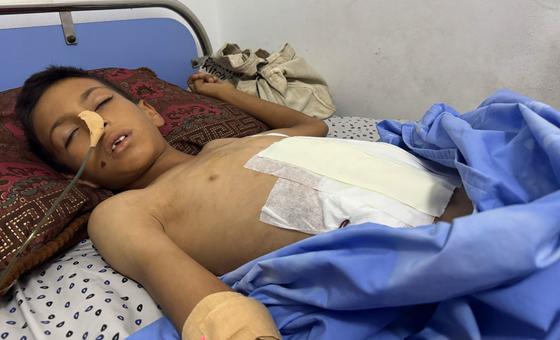
“Hospitals are overwhelmed by mass casualty incidents, with an average of eight incidents per day,” said the UN aid coordination agency, OCHA, citing health partners.

In an update on the dire health crisis in Gaza, OCHA noted that specialised rehabilitation facilities were also overstretched handling complex trauma injuries and cases of Guillain-Barré.

To date, three deaths out of around 64 cases of GBS have been confirmed by the health authorities in Gaza. Two of the deceased were children.

According to the UN World Health Organization (WHO), 30 per cent of GBS patients require intensive care but there is no available stock of the primary medication needed to treat it, intravenous immunoglobulin.

Aid-drops are inadequate: WFP

In a related development, the UN World Food Programme (WFP) echoed repeated calls for aid to flood into Gaza, as opposed to the very limited amounts being allowed by the Israeli authorities.

We can’t airdrop our way out of an unfolding famine. Not in Gaza,” insisted Cindy McCain, WFP Executive Director in a social media post late Wednesday.

The UN agency chief underscored that “500,000 people are starving today” and the only way to help them is to get food to them at scale and by land.

“We can’t afford to wait; Gaza is out of food and out of time,” Ms. McCain said.

WHO stocks destroyed

The destruction of WHO’s main medical warehouse in an attack on Deir Al-Balah late last month continues to impact lifesaving care.

In particular, the critical shortage of antibiotics has hampered treatment of meningitis, whose numbers are now in the hundreds – “the highest number recorded since the beginning of the escalation”, the OCHA update noted.

Isolation measures have been implemented, including the separation of the external department at Al Khair Hospital from the Nasser Medical Complex and the establishment of isolation tents at Al Aqsa Hospital to safely manage suspected cases.

Explosive weapons such as bombs and grenades have accounted for 83 per cent of medical consultations, said OCHA.

It cited partner NGO Médecins Sans Frontières (MSF) whose data covered more than 200,000 medical consultations in six MSF-supported health facilities in Gaza in 2024.

It cited partner NGO Médecins Sans Frontières (MSF) whose data covered more than 200,000 medical consultations in six MSF-supported health facilities in Gaza in 2024.

What is Guillain-Barré Syndrome?

Guillain-Barré Syndrome (GBS) is a neurological and autoimmune disease that affects the nervous system and causes progressive muscle paralysis. It is not contagious and is often triggered by a prior infection – viral or bacterial – that  disrupts the immune system.

In most cases, patients can recover fully within a few weeks. But WHO stressed that even in the best healthcare settings, three to five per cent of patients die from complications of the disease, such as respiratory muscle paralysis, sepsis, pulmonary embolism, or cardiac arrest.

There have been several outbreaks of infectious diseases in Gaza since war erupted following Hamas-led terror attacks in Israel, including polio, cholera, hepatitis A and scabies.

Source link

Journalists being forgotten on the frontline, warns injured war reporter

“I believe in nothing right now. Our press vests are turning us into targets and it’s becoming a death sentence for us,” Christina Assi told UN News recently.

On 13 October 2023, Ms. Assi – who was working as a photojournalist for Agence France Presse (AFP) – lost her right leg after two Israeli air strikes targeted the exposed hillside where she and other colleagues were observing the ongoing conflict between Israeli forces and Hezbollah militants.

This year’s commemoration of World Press Freedom Day on 3 May was marked with sorrow as nearly 300 journalists have been killed in recent conflicts. 

Ms. Assi stands among the few survivors, and she never imagined that she would be targeted simply for doing her job.

The day of the attack

She recounted the harrowing events of that day – one of her first major assignments, which quickly became the most traumatic experience of her life.

“It was starting to get dark and that’s when we were about to leave and then suddenly, out of nowhere, we were targeted,” she said.

“The first time I was on the ground, I couldn’t really understand what was happening, and I was screaming for help. So, my colleague Dylan rushed to help me and put a tourniquet on me. But then, like 40 to 47 seconds later, we were targeted again.”

After the second strike, Ms. Assi found herself alone beside a burning car. Bleeding and gravely injured, she had no choice but to crawl away to save her life.

“My press vest was too heavy, and the camera belt was suffocating,” she recalled. In that moment, she began to lose faith in international laws and conventions.

“As journalists, we are left alone,” she said. “Our press vests are turning us into targets—it’s becoming a death sentence for us.”

The silence of the international community

For Ms. Assi, the international community’s response to the attack – including condemnations and UN calls for investigation – has been utterly ineffective.

“I do believe that we need more than words. We need concrete action and something to happen where that should lead to justice in one way or another. If it’s not now, then later,” she said.

She strongly condemns the impunity with which attacks on journalists continue. “Our cases are being dismissed as collateral damage when, in fact, they are not. These are war crimes, and there should be a real investigation.”

The forgotten journalists of Gaza

Ms. Assi also emphasized that the same impunity applies to Palestinian journalists in Gaza, who have been documenting the war there since day one.

“They’ve been silenced, targeted in every possible way. It’s all over social media and in the news—and yet nothing has been done. No action has been taken to protect these journalists,” she said.

She pointed out that the lack of international presence hasn’t stopped the violence. “Even with the limited footage we’ve received, it’s clear how horrific everything is. But the world hasn’t reacted the way it should have. No one has even tried to stop it.”

Carrying the flame

Nearly a year after losing her leg, Ms. Assi carried the Olympic torch in the French city of Vincennes, ahead of the Paris Games in July 2024.

It was more than a symbolic gesture but a powerful opportunity to pay tribute to her colleague, Reuters journalist Issam Abdallah, who was killed in the same attack. 

“It was a great opportunity for us to honour all the fallen journalists and let the world and the international community and the Europeans and all those who didn’t know about what happened to us, let them know about what happened,” she said.  

Source link

Ujjain Mahakal Temple witnesses fire during ‘Bhasma Aarti’ time, 14 priests injured

A blaze erupted within the inner sanctum of Ujjain’s revered Mahakal Temple on Monday morning, leaving 13 priests wounded during the traditional ‘bhasma aarti’ ceremony. Ujjain Collector Neeraj Kumar Singh confirmed the incident, stating that a thorough investigation has been initiated.

“Thirteen priests sustained burn injuries and are currently receiving medical attention at the district hospital here. A magisterial probe has been launched,” Singh informed ANI.

Witnesses recounted that colored ‘gulal’ was being dispersed within the sanctum as part of the Holi festivities when an individual inadvertently cast it onto an earthen lamp, believed to have ignited the flames due to potentially reactive chemicals within the ‘gulal.’

Among the injured is Sanjay Guru, the chief priest overseeing the ‘bhasma aarti.’ Presently, nine individuals are reported to be in critical condition and have been transferred to Indore for specialized care.

Superintendent of Police Pradeep Sharma conveyed insights from an injured party, suggesting that ‘gulal’ had been mistakenly tossed onto priest Sanjeev, precipitating the fire upon contact with the lamp.

Mahakal temple corridor

In May 2023, the Mahakal Lok Temple corridor, which was unveiled by Prime Minister Narendra Modi in October 2022, witnessed six out of the seven Saptrishi statues displaced and two of them severely damaged after a massive thunderstorm. on May 29, 2023.

Usually, no minister or political leader prefers to stay in Ujjain as the popular belief is that Mahakal or Lord Shiva is known to be the ruler of Ujjain, hence, no other ruler can spend the night here.


Massive 7.6-magnitude earthquake hits Papua New Guinea, 4 dead, several others seriously injured

Port Moresby, Sep 12 (IANS) At least four people killed and several others seriously injured after a massive 7.6-magnitude earthquake hit Papua New Guinea (PNG), authorities said on Monday.

The UN Office for the Coordination of Humanitarian Affairs’ regional branch in the Asia-Pacific said that among the fatalities were one in the Rai Coast district of the Madang province, and three in the town of Wau of the Morobe province, reports Xinhua news agency.

All were buried in landslides.

Some other people in Morobe were injured due to falling structures or debris, and there was damage reported to health centres, homes, rural roads and highways, according to the provincial disaster management agency.

The regional power grid, Internet cables, and the regional highway were damaged, but regional commercial airports have remained in operation, said the report.

Parts of the Highlands Highway, which connects the second largest city of Lae to the Highlands provinces, were damaged.

Areas along Markham and Ramu in Eastern Highlands were espeinjuredcially affected.

Local newspaper Post-Courier reported on Monday that many shops in Lae remained closed due to their stock being damaged.

PNG Prime Minister James Marape said that national and provincial disaster agencies had begun to assess the damage done to buildings and infrastructure such as roads and power supplies.

Marape said the estimated cost of the damage would not be known until at least Tuesday but assured the public that no expense would be spared to “restore our services and our people’s livelihoods”.

PNG is one of the world’s most geologically and seismically active areas and is usually hit with more than 100 earthquakes of magnitude 5 or greater each year.