Guterres condemns detention of more UN staff in Yemen

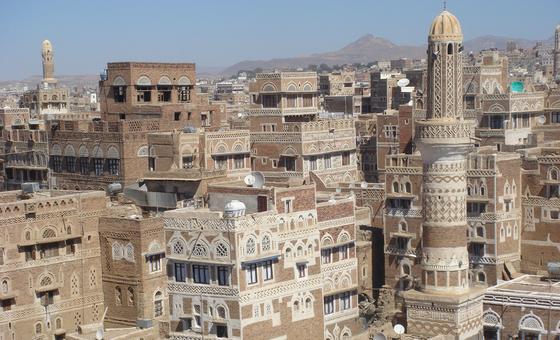
He said the Houthis entered the premises of the World Food Programme (WFP) in the capital, Sana’a, and seized UN property, in addition to attempting to enter other UN premises in the city.

The Houthis, also known as Ansar Allah, have been battling Yemeni Government forces, backed by a Saudi-led coalition, for control of the country for over a decade.

Since October 2023, they also have been targeting Israel as well as commercial ships in the Red Sea, in solidarity with the Palestinian cause in Gaza.

Release all detained personnel

Mr. Guterres strongly reiterated his demand for the immediate and unconditional release of the staff members and all other personnel from the UN, international and national non-governmental organizations, civil society and diplomatic missions, who have been arbitrarily detained for over a year and those held since 2021 and 2023.

“The personnel of the UN and its partners must never be targeted, arrested or detained while carrying out their duties for the UN,” he said.

“The safety and security of UN personnel and property as well as the inviolability of UN premises must be guaranteed at all times.”

The Secretary-General added that the UN will continue to work tirelessly to secure the release of the detained staff members and, together with its partners, will continue to support the people of Yemen and their aspirations for a just and lasting peace.

UN envoy concerned

Meanwhile, the UN Special Envoy for Yemen said on Sunday that he was “following with great concern” recent developments in the country, where Houthi-controlled areas have continued to be subject to Israeli strikes following Ansar Houthi attacks against Israel.

Hans Grundberg reiterated that Yemen cannot afford to become a battleground for a broader geopolitical conflict, stressing that these attacks need to stop.

The Special Envoy continues to urge all sides to use available diplomatic channels to de-escalate the situation.

Mr. Grundberg was also deeply concerned by the civilian deaths and injuries in the recent Israeli attacks. Additionally, according to Houthi statements, several senior Houthi officials and political interlocutors were killed and injured.

He called on all sides to protect civilians and civilian infrastructure, in line with international law.

Source link

UN rights chief decries ‘relentless intensification’ of US sanctions against International Criminal Court staff

His call comes a day after four more Court personnel – two judges and two deputy prosecutors – were slapped with sanctions in connection with efforts to investigate alleged war crimes committed by the US and Israel.

This follows sanctions imposed earlier on four other judges and the ICC Prosecutor. Measures imposed could include blocking financial access to property or assets in the US, as well as travel bans.

‘Assault on the rule of law’

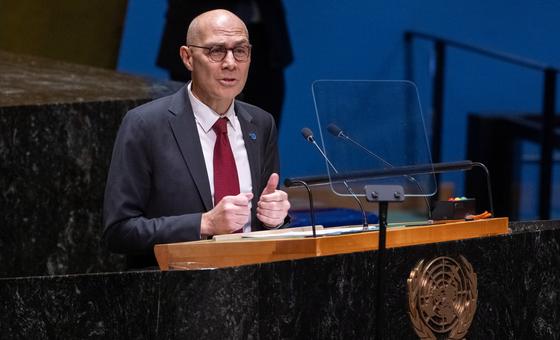
The relentless intensification of US reprisals against international institutions and their personnel must stop,” said Mr. Türk. 

“Sanctioning judges and prosecutors at national, regional or international levels, for fulfilling their mandate in accordance with international law standards, is an assault on the rule of law and corrodes justice.”

The sanctions stem from an executive order signed by US President Donald Trump in February in response to the UN-backed Court issuing arrest warrants for Israeli Prime Minister Benjamin Netanyahu and former defense minister Yoav Gallant for alleged war crimes and crimes against humanity in Gaza.

The ICC is also probing war crimes allegedly committed in Afghanistan by all sides during years of conflict, including the US, following the allied invasion of the country in October 2001.

Neither the US nor Israel are party to the Rome Statute, the treaty that established the ICC.

It’s time countries step up

Mr. Türk called for the withdrawal of the sanctions against the ICC personnel and those targeting the Special Rapporteur on the human rights situation in the Occupied Palestinian Territory.

The independent expert, Francesca Albanese, receives her mandate from the UN Human Rights Council in Geneva. For more details, read our story here.

“In the meantime, I call on States to take immediate steps to protect all of them, including by taking measures to encourage corporations operating within their jurisdiction not to implement the sanctions against these individuals,” Mr. Türk said.

States need to step up to defend the institutions they have created to uphold and defend human rights and the rule of law. Those working to document, investigate and prosecute serious violations of international law should not have to work in fear.”

About the International Criminal Court

The ICC investigates and tries individuals charged with genocide, war crimes, crimes against humanity and the crime of aggression. Read our explainer here.

Some of the cases include situations in Sudan, the Democratic Republic of the Congo and Libya. 

In March 2023, the Court issued an arrest warrant for Russian President Vladimir Putin in connection with alleged war crimes concerning the deportation and “illegal transfer” of children from occupied Ukraine.

The ICC was established in 2002 and is based in The Hague, in the Netherlands.  

Source link

Gaza: Hospitals ‘at near-total collapse’, staff overwhelmed by the injured

Meanwhile, UN agencies confirmed the deaths of three Palestinians from Guillain-Barré Syndrome (GBS), a rare auto-immune disease that can cause sudden muscle weakness and even paralysis.

Before war erupted in Gaza in October 2023, only a handful of cases surfaced every year.

Mass casualties now the norm

“Hospitals are overwhelmed by mass casualty incidents, with an average of eight incidents per day,” said the UN aid coordination agency, OCHA, citing health partners.

In an update on the dire health crisis in Gaza, OCHA noted that specialised rehabilitation facilities were also overstretched handling complex trauma injuries and cases of Guillain-Barré.

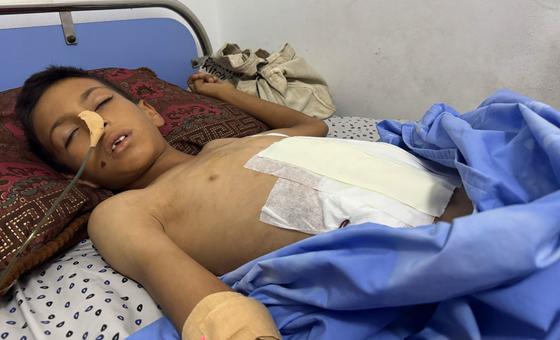
To date, three deaths out of around 64 cases of GBS have been confirmed by the health authorities in Gaza. Two of the deceased were children.

According to the UN World Health Organization (WHO), 30 per cent of GBS patients require intensive care but there is no available stock of the primary medication needed to treat it, intravenous immunoglobulin.

Aid-drops are inadequate: WFP

In a related development, the UN World Food Programme (WFP) echoed repeated calls for aid to flood into Gaza, as opposed to the very limited amounts being allowed by the Israeli authorities.

We can’t airdrop our way out of an unfolding famine. Not in Gaza,” insisted Cindy McCain, WFP Executive Director in a social media post late Wednesday.

The UN agency chief underscored that “500,000 people are starving today” and the only way to help them is to get food to them at scale and by land.

“We can’t afford to wait; Gaza is out of food and out of time,” Ms. McCain said.

WHO stocks destroyed

The destruction of WHO’s main medical warehouse in an attack on Deir Al-Balah late last month continues to impact lifesaving care.

In particular, the critical shortage of antibiotics has hampered treatment of meningitis, whose numbers are now in the hundreds – “the highest number recorded since the beginning of the escalation”, the OCHA update noted.

Isolation measures have been implemented, including the separation of the external department at Al Khair Hospital from the Nasser Medical Complex and the establishment of isolation tents at Al Aqsa Hospital to safely manage suspected cases.

Explosive weapons such as bombs and grenades have accounted for 83 per cent of medical consultations, said OCHA.

It cited partner NGO Médecins Sans Frontières (MSF) whose data covered more than 200,000 medical consultations in six MSF-supported health facilities in Gaza in 2024.

It cited partner NGO Médecins Sans Frontières (MSF) whose data covered more than 200,000 medical consultations in six MSF-supported health facilities in Gaza in 2024.

What is Guillain-Barré Syndrome?

Guillain-Barré Syndrome (GBS) is a neurological and autoimmune disease that affects the nervous system and causes progressive muscle paralysis. It is not contagious and is often triggered by a prior infection – viral or bacterial – that  disrupts the immune system.

In most cases, patients can recover fully within a few weeks. But WHO stressed that even in the best healthcare settings, three to five per cent of patients die from complications of the disease, such as respiratory muscle paralysis, sepsis, pulmonary embolism, or cardiac arrest.

There have been several outbreaks of infectious diseases in Gaza since war erupted following Hamas-led terror attacks in Israel, including polio, cholera, hepatitis A and scabies.

Source link

Gaza: UN staff now fainting from hunger, exhaustion; WHO worker detained

Doctors, nurses, journalists, humanitarians, among them UNRWA staff, are hungryfainting due to hunger and exhaustion while performing their duties,” said Juliette Touma, Director of Communications with the UN agency for Palestine refugees, UNRWA. 

Speaking from Amman, she stressed that seeking food “has become as deadly as the bombardments.”

The development comes as the UN human rights office, OHCHR, announced on Tuesday that more than 1,000 Palestinians have now been killed by the Israeli military while trying to get food in Gaza since the so-called Gaza Humanitarian Foundation (GHF) started operating on 27 May. 

“As of 21 July, we have recorded 1,054 people killed in Gaza while trying to get food,” said OHCHR spokesperson Thameen Al-Kheetan; “766 of them were killed in the vicinity of GHF sites and 288 near UN and other humanitarian organizations’ aid convoys.” 

Mr. Al-Kheetan noted that the finding came from “multiple reliable sources on the ground, including medical teams, humanitarian and human rights organizations. It is still being verified in line with our strict methodology.”

The Foundation’s hubs are supported by the US and Israeli authorities and started operating in southern Gaza on 27 May, bypassing the UN and other established NGOs. 

Aid relief is not a job for mercenaries

“The so-called GHF distribution scheme is a sadistic death-trap,” UNRWA’s Ms. Touma said. “Snipers open fire randomly on crowds, as if they’re given a licence to kill.” 

Quoting a statement by UNRWA head Philippe Lazzarini, Ms. Touma called the scheme a “massive hunt of people in total impunity.”

“This cannot be our new norm. Humanitarian assistance is not the job of mercenaries,” she added.

The UNRWA spokesperson insisted that the UN and its humanitarian partners have the expertise, experience and available resources to provide safe, dignified and at-scale assistance. 

“We have proven it time and again during the last ceasefire,” she said.

Living conditions in the Strip have reached a new low as prices for basic commodities have increased by around 4,000 per cent. For Gaza’s inhabitants who have lost their homes and been displaced multiple times, they have no income and find themselves completely deprived of essentials.

A child waits for food in Gaza.

$200 for a bag of flour

Ms. Touma highlighted the testimony of a colleague on the ground who had to walk for hours to buy a bag of lentils and some flour, paying almost $200 for it. 

On Monday, the UN World Food Programme (WFP) said that a quarter of Gaza’s population faces famine-like conditions. Almost 100,000 women and children are suffering from severe acute malnutrition and need treatment as soon as possible.

Vital everyday items such as diapers are scarce and costly, at about $3 each. Mothers have resorted to using plastic bags instead, while one father “said that he had to cut one of his last shirts to give his daughter sanitary pads,” Ms. Touma said.

“We at UNRWA have stocks of hygiene supplies, including diapers for babies and for adults waiting outside the gates of Gaza,” Ms. Touma stressed, insisting that the agency has 6,000 trucks loaded with food, medicines and hygiene supplies waiting in Egypt and in Jordan to be allowed into the enclave.

Urgent ceasefire call

She reiterated the UN’s calls for “a deal that would bring a ceasefire, that would release the hostages, that would bring in a standard flow of humanitarian supplies into Gaza under the management of the United Nations, including UNRWA.”

Humanitarian operations in the enclave are being pushed into an “ever-shrinking space”, said World Health Organization (WHO) spokesperson Tarik Jašarević.

Briefing journalists in Geneva, he condemned three attacks on Monday on a building housing WHO staff in Deir Al-Balah in central Gaza, as well as the “mistreatment of those sheltering there and the destruction of its main warehouse.”

“Staff and their families, including children, were exposed to grave danger and traumatized after airstrikes caused a fire and significant damage,” Mr. Jašarević said, adding that Israeli military entered the premises, “forcing women and children to evacuate on foot” towards the coastal shelter of Al Mawasi amid active conflict. 

Screened at gunpoint

The WHO spokesperson said that staff and family members were “handcuffed, stripped, interrogated on the spot and screened at gunpoint.” Two staff and two family members were detained and while three were later released, one WHO staff member remains in detention for reasons unknown to the organization.

Mr. Jašarević called for the release of the detained staff member and insisted that “no one should be held without charges and without due process.”

The latest evacuation order for the area has impacted several WHO premises and compromised its presence on the ground, “crippling efforts to sustain a collapsing health system,” Mr. Jašarević added, and “pushing survival further out of reach for more than two million people.” 

The Israeli military operation in Deir Al-Balah on Monday also caused an explosion and fire inside WHO’s main warehouse, which is located within the evacuation zone in the central Gazan city – “part of a pattern of systematic destruction of health facilities,” the agency’s spokesperson said.

According to Gaza’s health authorities, since the start of the war in October 2023 some 1,500 health workers have been killed in the Strip. Some 94 per cent of all health facilities have been damaged and half of Gaza’s hospitals are “not functional at all,” Mr. Jašarević said. 

“The chance to prevent loss of lives and reverse immense damage to the health system slips further out of reach every day,” he stressed.

Visa denials 

Spotlighting further challenges to the humanitarian operation in Gaza, the WHO spokesperson pointed to an increase in the denial of visas by the Israeli authorities for emergency medical teams seeking to enter the Strip since the breakdown of the latest ceasefire between Israel and Hamas on 18 March. 

He said that 58 international staff for the emergency medical teams, including surgeons and critical medical specialists, have been denied access.

UNRWA’s Ms. Touma highlighted the fact that ever since the agency’s Commissioner-General was denied entry to Gaza in March 2024, he has not been allowed back into the Strip. He has also not received a visa from Israel to enter the occupied West Bank, including East Jerusalem, for more than a year. 

The UNRWA spokesperson also deplored the lack of access for international media to the enclave. 

“It certainly is time, if not long overdue, for international media to go into Gaza precisely to look into the facts and to help with reporting first-hand information on the horrors that people in Gaza are living through,” she said. 

In Baghdad, Guterres affirms UN will never forget staff killed in Canal Hotel attack

António Guterres was speaking during a wreath-laying ceremony at a memorial in Baghdad to honour the victims of the 19 August 2003 Canal Hotel bombing – the worst terrorist attack in UN history.

Twenty-two people were killed, including the then UN Special Representative for Iraq, Sergio Vieira de Mello.  More than 100 others were injured, and several survivors attended the ceremony.

Families still mourning

Mr. Guterres told the audience that “22 years is a long time, but we will never forget the colleagues who were killed that day in the bombing at the Canal Hotel.”

These staff members “were sons, daughters, mothers, fathers and friends who are, to this day, mourned by those they knew and loved,” he said.

“We will always remember their leader, Sergio Vieira de Mello, who was also killed in the attack. We will stand with the survivors whose lives were changed forever,” he added.

“And we will remember the courageous colleagues and others who rushed to help on that terrible day, and in the days and weeks after — showing us the very best of the humanitarian spirit.”

A tribute and reminder

Mr. Guterres said the memorial stands as a tribute to their lives and their contributions to the people of Iraq.  It also serves as a reminder of how far the country has come since 2003.

He noted that the women and men of the United Nations have worked tirelessly together with the brave and resilient people of Iraq to support their quest for stability, development and peace.

He stressed that above all, the memorial is “a clear reminder of the vital work that our organization does around the world — and the dangers our people face in carrying out that work.”

Remembering humanitarians worldwide

Five years after the attack the UN General Assembly adopted a resolution designating 19 August as World Humanitarian Day.

This date “has been forever transformed from a day of unimaginable horror and tragedy here in Iraq into a global day of solemn remembrance for all humanitarians — inside and outside the organization,” Mr. Guterres said.

“Their bravery, dedication, and belief that a better future is possible will always inspire us. And like those whose lives were lost on 19 August 2003, their sacrifices and contributions to our world — and to our vital cause of peace — will never be forgotten.”

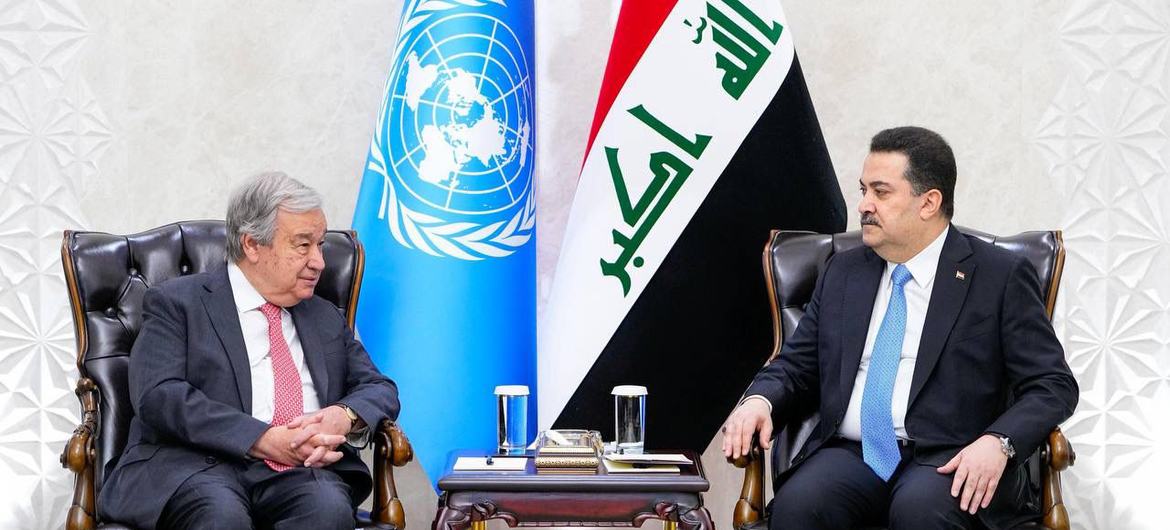
The UN Secretary-General meets with H.E. Mr. Mohammed Shia’ Al Sudani, Prime Minister of the Republic of Iraq.

Meeting with Iraqi Prime Minister

The Secretary-General was in Baghdad to attend the League of Arab States Summit. He also met with senior Iraqi officials, including Prime Minister Mohammed Shia Al-Sudani.

During talks on Sunday, they discussed developments in Iraq and the region, as well as the remaining period of the UN Assistance Mission for Iraq (UNAMI).

The Secretary-General reaffirmed that the UN remains fully committed to continuing to support the Government and people of Iraq following the mission’s departure.

UNAMI has been in the country since 2003 and is working to conclude its mandate by the end of the year.

Source link