World News in Brief: Türk slams relentless Russian attacks, Gaza update, Cyclone Gezani hits Madagascar

His reaction followed overnight attacks on energy infrastructure in Kyiv, Dnipro and the key port city of Odesa.

Nearly 8,800 multistorey buildings in Kyiv, Kharkiv and Odesa are without heating.

In Kharkiv, temperatures are forecast to drop to minus 10°C or 14°F on Thursday evening, said Viktoriia Andrievska from the UN aid coordination office, OCHA.

“Without heating or electricity, homes will turn freezing, basic services will stop, for example, the lifts will stop working, and people, especially older residents and families with children, will struggle to stay warm and safe,” she said.

Illegal strikes

In his statement, the UN human rights chief emphasised the lasting impact of “large-scale” attacks by Russia on Ukrainian energy infrastructure, which he stressed are prohibited under international law.

“Millions of households struggle with only a few hours of electricity each day,” Mr. Türk said, noting that unheated schools have been forced to shut and medical care has been impacted too.

International efforts to end the war in Ukraine continue, meanwhile, with Moscow announcing on Thursday that it expected the “next round” of talks “to take place shortly”, according to a Kremlin spokesperson.

Gaza: Another UN worker is killed, says UNRWA

Another UN worker has been killed in Gaza, despite a ceasefire agreement between Hamas fighters and the Israeli military.

According to the UN agency for Palestine refugees, UNRWA, a staff member was killed during Israeli airstrikes on Tuesday, reportedly after an attack by Hamas militants in Rafah.

UNRWA said that the Israeli strikes in Gaza City and shelling in Khan Younis killed at least four Palestinians, including their colleague, as he was hit while out walking on Salah Eddin Street in central Gaza.

Nearly 400 staffers killed

Since the war began, 391 UNRWA staff and partners have been killed.

In other Gaza news, Israeli forces have demolished a United Nations school in Jabalia in northern Gaza, it has been confirmed.

According to UNRWA, the school was one of a number of facilities it has behind the so-called “Yellow Line” of concrete blocks that separates the Israel Defense Forces from the people of Gaza.

Between January and February, eight UNRWA schools in the militarised area have been reportedly demolished by Israeli forces, the UN agency said.

Cyclone Gezani displaces thousands in northeastern Madagascar

Tropical Cyclone Gezani has killed at least 31 people and displaced thousands after making landfall in Madagascar on 10 February, bringing winds exceeding 195 km/h, heavy flooding and widespread destruction across eastern and central regions.

According to local authorities, four people remain missing and 35 have been injured. Preliminary reports indicate that more than 250,000 people have been affected, with nearly 7,000 displaced. 

Over 65,000 homes have been flooded, damaged or destroyed, and around 600 classrooms have been partially or completely rendered unusable.

UN emergency teams deployed

The UN International Organization for Migration (IOM) has deployed emergency teams to Toamasina to support authorities as displaced families shelter in 28 evacuation centres across 16 districts. A national state of emergency has been declared.

“The scale of devastation…has left families struggling to cope with urgent needs and heavy losses,” said IOM Chief of Mission Roger Charles Evina.

The Government is leading search-and-rescue operations and delivering emergency shelter and food assistance, including the distribution of 800 metric tonnes of rice, with support from UN agencies and partners.

A $3 million allocation from the UN Central Emergency Response Fund will assist more than 90,000 people as additional donor funding supports early response efforts.

The UN aid coordination office, OCHA, warned that the cyclone could also affect central and southern Mozambique in the coming days.

Source link

Sudan: Guterres calls for ceasefire in El Fasher, deplores ‘relentless’ militia attacks

António Guterres said he was “appalled by the relentless attacks” by the Rapid Support Forces (RSF) militia on the North Darfur state capital, UN Spokesperson Stéphane Dujarric said in a statement.

The paramilitary group and the Sudanese Armed Forces (SAF) have been battling for control of devastated country since April 2023 and El Fasher has been the epicentre of fighting for more than 500 days.

Shelling, incursions and summary executions

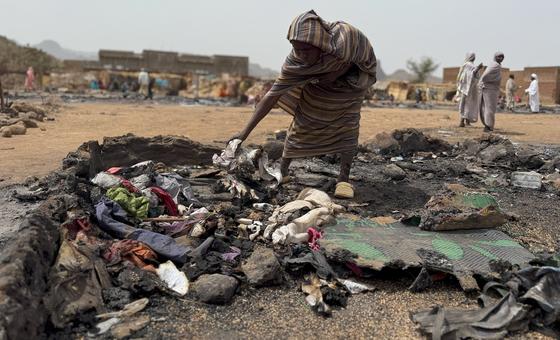
Recent weeks have seen near-continuous shelling in the city and repeated deadly incursions into the adjoining Abu Shouk displacement camp, where famine conditions were identified last December.

Since 11 August, the UN has documented the killing of at least 125 civilians in the El Fasher area, including summary executions – although the actual number is likely to be higher.

“The Secretary-General is alarmed at the grave risks of serious violations of international humanitarian law as well as violations and abuses of international human rights law, including ethnically motivated ones,” said Mr. Dujarric.

Aid awaiting entry

Meanwhile, supplies are pre-positioned near El Fasher, but the UN and partners continue to face obstacles in moving them into the city.  

Some 70 trucks of humanitarian assistance are currently waiting in Nyala, South Darfur, a top official with the UN aid coordination office OCHA said on Thursday in New York.

Mr. Dujarric also noted that repeated attacks on humanitarian personnel and assets in North Darfur have occurred over recent months.

Ceasefire and a lasting peace

“The Secretary-General calls for an immediate ceasefire in and around the El Fasher area,” he said.

Furthermore, the UN chief “insists that immediate steps must be taken to protect civilians and enable the safe, unhindered and sustained delivery of humanitarian assistance into the area, and to allow any civilians seeking to leave the area voluntarily to do so safely.” 

 In the interim, the Secretary-General’s Personal Envoy for Sudan, Ramtane Lamamra, continues to engage the warring parties and “stands ready to support genuine efforts to halt the violence and establish an inclusive political process that the people of Sudan demand.” 
Source link

UN rights chief decries ‘relentless intensification’ of US sanctions against International Criminal Court staff

His call comes a day after four more Court personnel – two judges and two deputy prosecutors – were slapped with sanctions in connection with efforts to investigate alleged war crimes committed by the US and Israel.

This follows sanctions imposed earlier on four other judges and the ICC Prosecutor. Measures imposed could include blocking financial access to property or assets in the US, as well as travel bans.

‘Assault on the rule of law’

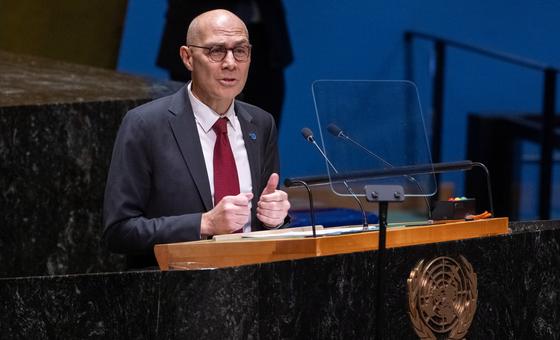
The relentless intensification of US reprisals against international institutions and their personnel must stop,” said Mr. Türk. 

“Sanctioning judges and prosecutors at national, regional or international levels, for fulfilling their mandate in accordance with international law standards, is an assault on the rule of law and corrodes justice.”

The sanctions stem from an executive order signed by US President Donald Trump in February in response to the UN-backed Court issuing arrest warrants for Israeli Prime Minister Benjamin Netanyahu and former defense minister Yoav Gallant for alleged war crimes and crimes against humanity in Gaza.

The ICC is also probing war crimes allegedly committed in Afghanistan by all sides during years of conflict, including the US, following the allied invasion of the country in October 2001.

Neither the US nor Israel are party to the Rome Statute, the treaty that established the ICC.

It’s time countries step up

Mr. Türk called for the withdrawal of the sanctions against the ICC personnel and those targeting the Special Rapporteur on the human rights situation in the Occupied Palestinian Territory.

The independent expert, Francesca Albanese, receives her mandate from the UN Human Rights Council in Geneva. For more details, read our story here.

“In the meantime, I call on States to take immediate steps to protect all of them, including by taking measures to encourage corporations operating within their jurisdiction not to implement the sanctions against these individuals,” Mr. Türk said.

States need to step up to defend the institutions they have created to uphold and defend human rights and the rule of law. Those working to document, investigate and prosecute serious violations of international law should not have to work in fear.”

About the International Criminal Court

The ICC investigates and tries individuals charged with genocide, war crimes, crimes against humanity and the crime of aggression. Read our explainer here.

Some of the cases include situations in Sudan, the Democratic Republic of the Congo and Libya. 

In March 2023, the Court issued an arrest warrant for Russian President Vladimir Putin in connection with alleged war crimes concerning the deportation and “illegal transfer” of children from occupied Ukraine.

The ICC was established in 2002 and is based in The Hague, in the Netherlands.  

Source link

UN warns of escalating human toll in Ukraine amid relentless aerial attacks, mounting aid shortfall

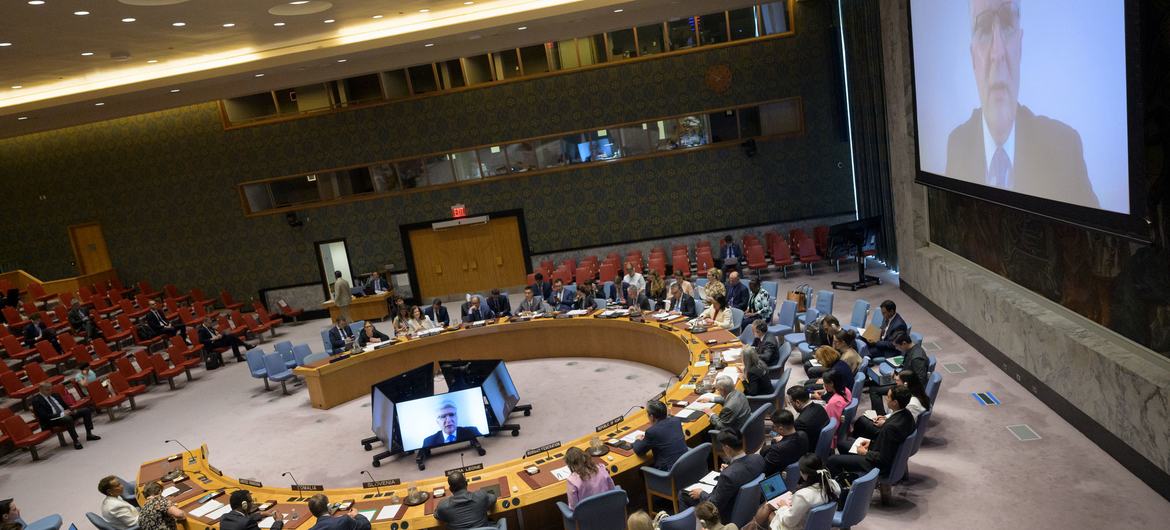
“Nowhere is safe in Ukraine,” said Miroslav Jenča, Assistant Secretary-General for Europe at the UN Department of Political Affairs (UNDPPA).

Citing figures from the UN human rights office, OHCHR, he said civilian casualties reached a three-year high in June, with 6,754 civilians killed or injured in the first half of 2025 alone.

Russian forces launched over 5,000 long-range munitions against Ukraine so far in July, including a record-breaking 728 drones in a single day. Major cities such as Kyiv and Odesa have been hit by swarms of missiles and drones.

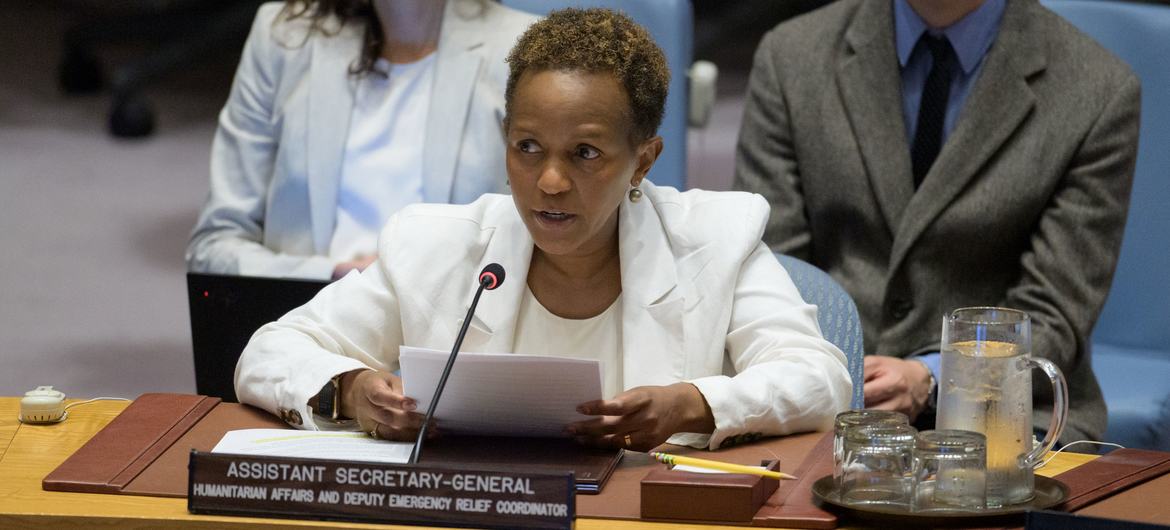
Assistant Secretary-General for Humanitarian Affairs Joyce Msuya echoed those words, saying “there is no safe place left in Ukraine” as the use of explosive weapons in populated areas has left cities reeling.

A rehabilitation centre for persons with disabilities in Kharkiv, maternity wards, schools, and energy infrastructure have all come under fire in recent weeks.

Joyce Msuya, UN Deputy Emergency Relief Coordinator, briefs the Security Council meeting on maintenance of peace and security of Ukraine.

Spiralling humanitarian situation

The humanitarian impact is worsening sharply, she continued.

“Nearly 13 million people need assistance, but limited funding means we can reach only a fraction of them,” Ms. Msuya warned. As of now, only 34 per cent of the $2.6 billion required for this year’s humanitarian response has been received.

Ukraine’s displacement crisis also continues to grow. Over 3.7 million people remain displaced within the country, while nearly six million are refugees abroad. More than 26,000 people have newly registered at transit centres since April alone.

Strikes in Russia

The senior UN officials also expressed concern over reported civilian casualties from Ukrainian drone strikes inside Russia, including in Belgorod, Kursk and Moscow.

While the UN could not independently verify these incidents, Mr. Jenča reiterated: “International law clearly prohibits attacks against civilians and civilian infrastructure. We strongly condemn all such attacks – wherever they occur.”

Concerns over nuclear safety

Attacks near Ukraine’s nuclear facilities have further alarmed the UN.

Earlier this month, drone strikes hit Enerhodar, where Zaporizhzhia Nuclear Power Plant staff live, and drones have been detected near other operating plants.

“Any nuclear incident must be avoided at all costs,” Mr. Jenča said.

ASG Miroslav Jenča (on screen) briefs the Security Council meeting on the maintenance of peace and security of Ukraine.

Political momentum needed

While some diplomatic movement continues – including recent prisoner exchanges and talks in Istanbul – UN officials called for intensified political will toward a ceasefire.

“The heartbreaking and rising human toll of the past nearly three-and-a-half years of war underscores the urgency of a complete, immediate and unconditional ceasefire,” Mr. Jenča said, “as the first step towards a just and lasting peace.”

Source link