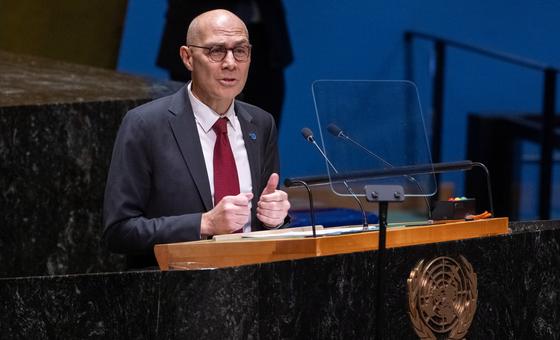
Amid escalating attacks in Gaza, UN rights chief calls on US to withdraw sanctions against Palestinian rights groups

The measures announced on Thursday target Al-Haq group, the Palestinian Centre for Human Rights (PCHR) and Al-Mezan Center for Human Rights, in relation to their support of the work of the International Criminal Court (ICC) on the situation in the Occupied Palestinian Territory, following other sanctions imposed by the US Government in June on renowned Palestinian non-governmental organization (NGO) Addameer.

For decades now, these NGOs have been performing vital human rights work, particularly on accountability for human rights violations,” that is “all the more important when international humanitarian and human rights laws are being violated systematically in Gaza and the West Bank, including East Jerusalem”.

Mr. Türk urged the US to immediately withdraw its sanctions “as well as the ones imposed earlier on the UN Special Rapporteur on the situation of human rights in the Palestinian territory occupied since 1967, and on multiple Judges and Prosecutors of the ICC.”

He added that the sanctions will have a “chilling effect” not only on civil society in the Occupied Palestinian Territory and Israel, but potentially worldwide.

Attacks, famine spread across Gaza

The ongoing Israeli offensive to take full control of Gaza City further intensified on Friday, increasing civilian casualties and attacking facilities on which they depend to survive, the UN Spokesperson Stéphane Dujarric said during a press briefing at UN Headquarters.

Earlier on Friday, Israeli forces attacked a high-rise building that they say was used to launch attacks against them, damaging tents sheltering displaced people nearby, according to initial information collected by the UN aid coordination office (OCHA).

“Our humanitarian colleagues tell us that in the north, people are simply exhausted; they can’t afford to move south, not only because displacement sites are overcrowded, but also because transport can cost up to $1,000,” Mr. Dujarric said, announcing that nearly 41,000 people have been displaced from Gaza City since 14 August.

‘Catastrophe Israel could have prevented’: WHO chief

Reminding that the offensive is running alongside the spread of famine, World Health Organization (WHO) chief Tedros Adhanom Ghebreyesus said it was “a catastrophe that Israel could have prevented and could stop at any time.”

Starvation ‘will not make Israel safer’

Starvation of civilians as a method of war is a war crime that can never be tolerated. Doing so in one conflict risks legitimising its use in future conflicts.”

Since the conflict began in October 2023, at least 370 people have died from malnutrition in Gaza, including more than 300 just in the past two months, according to the UN health agency, which said the lack of food and clean water and cramped living conditions are leaving people with weakened immune systems.

It’s also exposing the population to more disease, with more than 100 cases of Guillain-Barré Syndrome, including 11 deaths, reported in the last month.

“The most intolerable part of this man-made disaster is that it could be stopped right now,” he said.

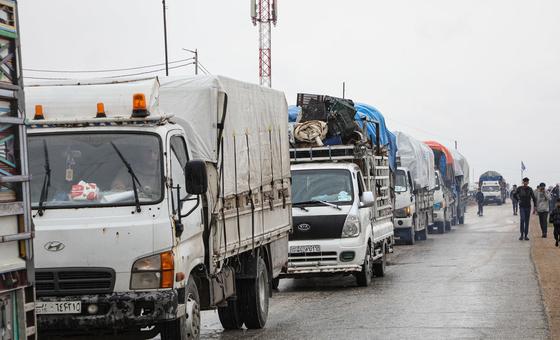
“People are starving to death while the food that could save them sits on trucks a short distance away. And for what? The starvation of the people of Gaza will not make Israel safer, nor will it facilitate the release of the hostages.”

While WHO is doing the best it can to alleviate suffering in Gaza, supporting medical evacuations of over 7,640 patients, more than 15,000 others need urgent specialised care, including 3,800 children.

More than 700 people have died while waiting for evacuations, Tedros said, calling for countries to “open their arms to these critically ill patients” and on Israel to allow people to be treated in the nearby West Bank and East Jerusalem.

“Above all, we call on the Government of Israel to end this inhumane war,” he said. “If it will not, I call on its allies to use their influence to stop it.”

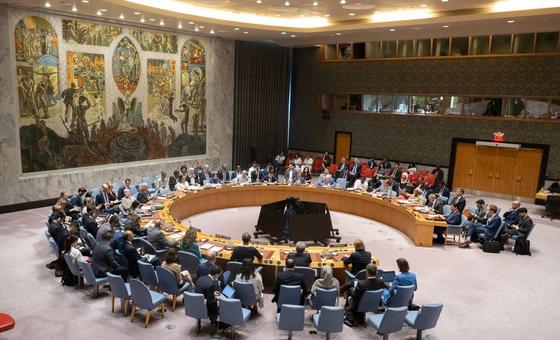
World News In Brief: Iran sanctions, Yemen floods appeal, new SDG advocates

“I can tell you that the Secretary-General is aware that today, the Security Council received this joint letter from the three countries,” UN Spokesperson Stéphane Dujarric told journalists.

The three European nations were signatories to the 2015 Joint Comprehensive Plan of Action (JCPOA), an agreement that granted Iran sanctions relief in exchange for strict limits on uranium enrichment, stockpile levels and centrifuge use, alongside robust monitoring and verification by the International Atomic Energy Agency (IAEA).

Snapback clause

The agreement includes a so-called “snapback mechanism” that allows for the reinstatement of sanctions within 30 days if Iran is found to be non-compliant. 

“The Secretary-General urges the JCPOA participants and the Security Council to continue negotiations to find a diplomatic solution that ensures the peaceful nature of the Iranian nuclear programme and brings about economic benefits to the people of Iran,” Mr. Dujarric said.

He said the coming weeks offer “a window of opportunity” to deescalate tensions and pursue a peaceful resolution.

The Secretary-General also underscored the urgency of avoiding a renewed military conflict, and prioritising dialogue. 

In Yemen, IOM appeals for support amid deadly flooding

The UN migration agency, IOM, appealed on Thursday for international support for war-ravaged Yemen, after violent storms devastated communities, destroying homes and sweeping away livelihoods.

Latest assessments by the International Organization for Migration across 73 displacement sites indicate that well over 46,000 people have been affected.

Yemen has been in crisis since Houthi rebels took up arms against the internationally-recognised Government, seizing control of the capital Sanna’a in 2014.

An uneasy truce largely holds but clashes continue internally, together with Houthi attacks on Red Sea shipping and exchanges of airstrikes with Israel rooted in the Gaza conflict.

‘Another devastating blow’

“The floods in Yemen are another devastating blow for families who have already lost so much,” said Abdusattor Esoev, IOM’s Chief of Mission in Yemen.

The governorates of Ibb, Sana’a, Ma’rib, Al Hodeidah, and Ta’iz are among the worst hit, with floods damaging homes, farmland, and public infrastructure.

The latest crisis in Yemen mirrors last year’s devastating floods, which caused widespread damage and loss of life.

This year’s storms have been even more intense and demonstrate how climate change is deepening vulnerabilities across the country and pushing communities further into crisis, IOM said.

UN chief welcomes two new sustainability advocates

The UN chief welcomed two new Sustainable Development Goals (SDGs) advocates on Thursday: Masai Ujiri, Co-Founder of Giants of Africa and former Vice-Chairman and President of the Toronto Raptors; and Muniba Mazari – an award-winning advocate for disability rights, inclusion, and gender equality.

“The SDG Advocates play a vital role in inspiring global action and ambition to achieve the Sustainable Development Goals,” said Secretary-General António Guterres.

Through his non-profit Giants of Africa, Mr Ujiri uses basketball as a transformative tool to create opportunities for youth across Africa and beyond.

“Sport doesn’t just unite people – it breaks down barriers, builds hope and transforms entire communities,” he said.

Pakistan’s ‘Iron Lady’

Ms Mazari, known as the “Iron Lady of Pakistan” has inspired millions through her personal story and her commitment to championing marginalised communities after a spinal cord injury left her using a wheelchair.

“Inclusion is not a privilege; it is a right. I am proud to be an SDG Advocate and to elevate the voices of those who are often unheard,” she said.

Mr Ujiri and Ms Mazari join a global cohort of leaders committed to accelerating progress and inspiring action across all 17 SDGs.

Source link

UN rights chief decries ‘relentless intensification’ of US sanctions against International Criminal Court staff

His call comes a day after four more Court personnel – two judges and two deputy prosecutors – were slapped with sanctions in connection with efforts to investigate alleged war crimes committed by the US and Israel.

This follows sanctions imposed earlier on four other judges and the ICC Prosecutor. Measures imposed could include blocking financial access to property or assets in the US, as well as travel bans.

‘Assault on the rule of law’

The relentless intensification of US reprisals against international institutions and their personnel must stop,” said Mr. Türk. 

“Sanctioning judges and prosecutors at national, regional or international levels, for fulfilling their mandate in accordance with international law standards, is an assault on the rule of law and corrodes justice.”

The sanctions stem from an executive order signed by US President Donald Trump in February in response to the UN-backed Court issuing arrest warrants for Israeli Prime Minister Benjamin Netanyahu and former defense minister Yoav Gallant for alleged war crimes and crimes against humanity in Gaza.

The ICC is also probing war crimes allegedly committed in Afghanistan by all sides during years of conflict, including the US, following the allied invasion of the country in October 2001.

Neither the US nor Israel are party to the Rome Statute, the treaty that established the ICC.

It’s time countries step up

Mr. Türk called for the withdrawal of the sanctions against the ICC personnel and those targeting the Special Rapporteur on the human rights situation in the Occupied Palestinian Territory.

The independent expert, Francesca Albanese, receives her mandate from the UN Human Rights Council in Geneva. For more details, read our story here.

“In the meantime, I call on States to take immediate steps to protect all of them, including by taking measures to encourage corporations operating within their jurisdiction not to implement the sanctions against these individuals,” Mr. Türk said.

States need to step up to defend the institutions they have created to uphold and defend human rights and the rule of law. Those working to document, investigate and prosecute serious violations of international law should not have to work in fear.”

About the International Criminal Court

The ICC investigates and tries individuals charged with genocide, war crimes, crimes against humanity and the crime of aggression. Read our explainer here.

Some of the cases include situations in Sudan, the Democratic Republic of the Congo and Libya. 

In March 2023, the Court issued an arrest warrant for Russian President Vladimir Putin in connection with alleged war crimes concerning the deportation and “illegal transfer” of children from occupied Ukraine.

The ICC was established in 2002 and is based in The Hague, in the Netherlands.  

Source link

International Criminal Court: New US sanctions ‘a flagrant attack’ on judicial independence

The sanctions target judges Kimberly Prost of Canada and Nicolas Guillou of France, as well as two deputy prosecutors: Nazhat Shameem Khan of Fiji and Mame Mandiaye Niang of Senegal.

This follows earlier measures against four other judges and the ICC prosecutor.

Affront to victims

In a press statement announcing the new round of sanctions, US Secretary of State Marco Rubio said the ICC “is a national security threat that has been an instrument for lawfare against the United States and our close ally Israel.”

The UN-backed court denounced the sanctions as “a flagrant attack against the independence of an impartial judicial institution”.  

Furthermore, “they constitute also an affront against the Court’s States Parties, the rules-based international order and, above all, millions of innocent victims across the world.”

Investigating grave crimes

The ICC investigates the gravest crimes of concern to the international community, namely genocide, war crimes, crimes against humanity and the crime of aggression. Read our explainer here.

It is based in The Hague, in the Netherlands, and was established under a 1998 treaty known as the Rome Statute which came into force four years later.  The United States and Israel are not among the 125 States that are party to the treaty.

Last November, the ICC issued arrest warrants for Israeli Prime Minister Benjamin Netanyahu and former defence minister Yoav Gallant, together with a former Hamas commander, in connection with the conflict in Gaza, citing allegations of war crimes and crimes against humanity. 

It is also probing war crimes allegedly committed in Afghanistan by all sides during years of conflict, including the US, following the allied invasion of the country in May 2003.

Strong and undeterred

The Court reiterated that it “stands firmly behind its personnel and victims of unimaginable atrocities” and “will continue fulfilling its mandates, undeterred, in strict accordance with its legal framework as adopted by the States Parties and without regard to any restriction, pressure or threat.”

The ICC called upon “States Parties and all those who share the values of humanity and the rule of law to provide firm and consistent support to the Court and its work carried out in the sole interest of victims of international crimes.”

The UN underlined the key role that the ICC has in international criminal justice and expressed concern over the imposition of further sanctions.

The decision imposes severe impediments on the functioning of the office of the prosecutor and respect for all the situations that are currently before the court,” UN Spokesman Stéphane Dujarric told journalists in New York.

“Judicial independence is a basic principle that must be respected, and these types of measures undermine the foundation of international justice.” 

Source link

UN calls for reversal of US sanctions on Special Rapporteur Francesca Albanese

They’re calling for the decision to be reversed, warning it could undermine the wider international human rights system.

The sanctions were announced by US Secretary of State Marco Rubio on Wednesday under a Presidential Executive Order.

Mr. Rubio alleged that Ms. Albanese had “directly engaged with the International Criminal Court (ICC) in efforts to investigate, arrest, detain, or prosecute nationals of the United States or Israel, without the consent of those two countries,” which he called a “gross infringement” on national sovereignty.

The US and Israel are not parties to the Rome Statute, the international treaty that established the ICC.

Dangerous precedent and unacceptable

Reacting to the announcement, UN Spokesperson Stéphane Dujarric said that the imposition of sanctions on Special Rapporteurs sets a “dangerous precedent.”

The use of unilateral sanctions against Special Rapporteurs or any other UN expert or official is unacceptable,” he said on Thursday at his regular news briefing in New York.

He also highlighted the independent mandate and role of the Special Rapporteurs, noting that Member States “are perfectly entitled to their views and to disagree with” the experts’ reports.

“But we encourage them to engage with the UN’s human rights architecture,” he added.

Call for reversal

In a statement issued on Thursday, UN High Commissioner for Human Rights Volker Türk called for the “prompt reversal” of the sanctions against the Human Rights Council-appointed Special Rapporteur “in response to work she has undertaken under the mandate” she is tasked with.

Even in face of fierce disagreement, UN Member States should engage substantively and constructively, rather than resort to punitive measures,” he said.

The UN rights chief also called for an end to attacks and threats against mandate holders appointed by the council, as well as key institutions like the ICC.

The solution is not less, but more, debate and dialogue on the very real human rights concerns they address,” Mr. Türk urged.

Cooperation, not reprisal

Jürg Lauber, President of the UN Human Rights Council, also voiced regret over the punitive move by the US.

In a statement, he highlighted that Special Rapporteurs “are an essential instrument” in fulfilling the Council’s mandate and urged all nations to “fully cooperate” with them.

I call on all UN Member States…to refrain from any acts of intimidation or reprisal against them,” he said.

Independent Special Rapporteurs

Special Rapporteurs are appointed under what is known as the Special Procedures of the Human Rights Council.

They are independent experts appointed to monitor and report on human rights issues worldwide. These experts serve in their personal capacity, are not UN staff and receive no financial remuneration for their work.

They regularly report to the Geneva-based council as well as to the UN General Assembly in New York.

In addition to the mandate on the occupied Palestinian territory, mandates exist to monitor human rights in countries such as Iran, the Democratic People’s Republic of Korea and Afghanistan. In all there are 46 thematic and 14 different country-based mandates.

World News in Brief: ‘Indifference and impunity’ in Sudan, ICC judges speak out against sanctions, respiratory diseases overlooked in Europe

Tom Fletcher noted that over 30 million people require humanitarian assistance. Moreover, with famine declared in multiple places and over 14.6 million people displaced, Sudan represents the largest humanitarian crisis in the world.

“Again and again, the international community has said that we will protect the people of Sudan. The people of Sudan should ask us if, when and how we will start to deliver on that promise,” the relief chief said.

When will the international community fully fund aid efforts in Sudan?

When will accountability for the violence in Sudan happen?

He called on the international community to stop acting with ‘indifference and impunity’ towards Sudan,

Health system ‘smashed to pieces’

Since the conflict in Sudan broke out in April 2022, civilian infrastructure across the country has been damaged or destroyed, including health facilities and water and sanitation systems. 

The health system in particular has been “smashed to pieces,” according to Mr. Fletcher, leading to increasingly dire measles and cholera outbreaks.

The cholera outbreak, which began in July 2024 and is now confirmed in 13 of Sudan’s 18 states, has infected more than 74,000 people in total and killed 1,826.

“I have seen first-hand the devastation caused by the cholera outbreak in Khartoum, where the health system has been devastated by conflict and is struggling to cope with the tremendous demand on health facilities,” Dr. Shible Sahbni, WHO representative in Sudan.

The World Health Organization (WHO), in partnership with the Sudanese Ministry of Health, is launching a 10-day cholera vaccination campaign in Khartoum State.

The campaign will aim to reach 2.6 million people in an effort to contain the cholera outbreak in the state.

“The vaccines will help stop cholera in its tracks as we strengthen other response interventions,” said Dr. Sahbni.


ICC judges express support for colleagues sanctioned by US

Judges at the International Criminal Court (ICC) expressed solidarity with their colleagues who have recently been sanctioned by the United States Government, describing the move as “coercive measures aimed at undermining the independence of the judiciary.”

“The Judges stand united and will continue to exercise their functions independently, impartially and conscientiously, fulfilling the demands of the rule of law,” they said in a statement on Thursday.

The US announced sanctions on 6 June against four judges from Benin, Peru, Slovenia and Uganda. The justices are currently overseeing a 2020 case which alleges war crimes in Afghanistan committed by the US and Afghan armies and the 2024 ICC arrest warrants issued for sitting Israeli Prime Minister Benjamin Netanyahu and former Defence Minister Yoav Gallant.

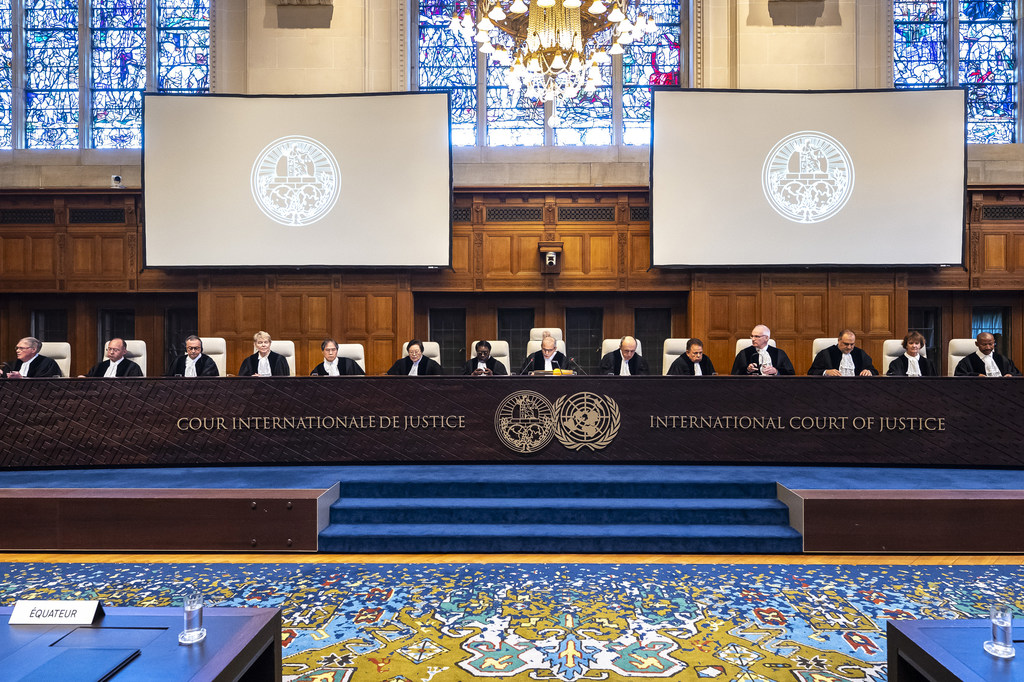
The International Court of Justice

The UN Human Rights Chief Volter Türk previously said that he was “deeply disturbed” by these sanctions, arguing that they corroded international governance and justice.

No improper influence

The ICC is an independent judicial body established under the Rome Statute, adopted in 1998. Although not part of the United Nations, the ICC works closely with it under a cooperative framework.

In the statement, the Judges said that they decide, and will continue to decide, cases based on facts and without regard to threats, restrictions or improper influence issued “from any quarter or for any reason.”

“The Judges reaffirm that they are equal in the performance of their functions and that they will always uphold the principle of equality before the law.”

Over 80 Million Europeans suffering from overlooked chronic respiratory diseases

Chronic respiratory diseases such as asthma are vastly underestimated, underdiagnosed and poorly managed in Europe – affecting 80 million people and costing $21 billion a year, the UN World Health Organization (WHO) said on Thursday.

A new report by WHO Europe and the European Respiratory Society highlights how smoking and air pollution are driving the growing crisis.

“We take 22,000 breaths a day, yet respiratory health remains one of the most neglected areas in global health,” said Professor Silke Ryan, President of the European Respiratory Society.

6th leading cause of death

Data analysis shows that chronic respiratory illnesses are the sixth leading cause of death in Europe. They are often misdiagnosed owing to weak diagnostic systems, limited training and inadequate health data.

Although effective treatments are available, asthma-related deaths remain high among young people, while chronic obstructive pulmonary disease is responsible for eight in 10 respiratory disease deaths.

As preparations begin for the 2025 UN High-Level Meeting on non-communicable diseases, WHO Europe urged governments to prioritize chronic respiratory disease, set measurable targets and tackle root causes like tobacco and air pollution.

Source link

Sanctions relief for Syria offers ‘powerful message of hope,’ says UN migration agency

After more than a decade of conflict and severe economic stagnation, lifting the punitive measures will encourage long-term recovery and peacebuilding in Syria, Amy Pope, IOM Director-General, said in a statement.

“The lifting of sanctions sends a powerful message of hope to millions of displaced Syrians, both within the country and across the region,” she said.

$800 billion lost

UN estimates suggest that the Syrian economy lost over $800 billion during the 14-year civil war. 

According to a UN Development Programme (UNDP) report, if the current annual growth rate continues, Syria’s economy will not return to its pre-conflict gross domestic product (GDP) levels until 2080.

The sanctions relief from the US, UK and EU – covering around $15 billion in restricted assets and trade measures – could unlock important investment opportunities for rebuilding key infrastructure, IOM said.

Most of these sanctions were originally imposed during the Assad era and have long been blamed for Syria’s hindering economic recovery.

Alongside the sanctions relief, Saudi Arabia and Qatar pledged to pay $15.5 million of Syria’s arrears to the World Bank. Together with Türkiye, they also offered to fund public salaries and support energy infrastructure.

These changes reflect “momentum from re-engagement and reconstruction,” IOM added.

A country torn apart

The Syrian conflict, which began March 2011 after pro-democracy protests against Bashar Al-Assad, lasted almost 14 years. During this time, tens of thousands of Syrians were killed and countless more disappeared. The fighting and insecurity also displaced more than 10 million civilians – within the country or as refugees outside its borders.

Poverty rates tripled, affecting 90 per cent of the population, with 66 per cent living in extreme poverty.

Since the end of the war in December 2024 with the overthrow of the Assad regime, half a million Syrian refugees have returned. A further 1.5 million internally displaced persons (IPDs) have also returned to their places of origin.

They returned home amidst great hope for the future of Syria, but also severe economic projections.

“Hope must be matched with concrete support,” Director General Pope said. “Syrians need not just the ability to return but the means to rebuild their lives in safety and dignity.”

Moving from relief to resilience

The UN estimates that over 16.5 million Syrians – roughly 70 per cent of the population – continue to require humanitarian assistance.

But funding shortfalls have complicated aid efforts. Already in the last week of May, only 10 per cent of the estimated $2 billion needed between January and June to assist eight million Syrians has been received.

Ms. Pope noted that it is important for the Syrian people and economy to begin moving towards longer-term solutions outside of humanitarian aid.

“While humanitarian assistance remains critical, IOM urges donors and development partners to expand their focus to medium- and long-term recovery. A transition from relief to resilience is not only necessary – it is urgent,” she said. 

Source link