World News in Brief: Gaza humanitarian update, more killings in Sudan, ending impunity in Myanmar

Multiple strikes overnight into Friday were reported in the Jabalya Al Balad and An Nazla neighbourhoods, the UN Office for the Coordination of Humanitarian Affairs (OCHA) said in its latest update.

As a result, around 900 people reportedly fled towards the Sheikh Radwan neighbourhood and western Gaza City.

Safe passage, more aid

The UN and partners again reminded parties to the conflict of their obligation to protect civilians, in line with international law, including humanitarian workers and people who cannot or choose not to move. 

“Those fleeing must be allowed to do so safely. They must also be allowed to return if they wish to do so, as the situation allows,” OCHA said.

The agency underscored the need to ensure that people have access to aid and basic services, whether they leave or stay.

Supplies also must be allowed to enter the Gaza Strip through all available crossings and corridors, and humanitarians must have safe, predictable and sustained access to deliver aid at scale.

Hospitals under strain

Meanwhile, as strikes continue to intensify across the enclave, casualties are flooding hospital emergency departments.  

Humanitarians warned that the expansion of military operations would further cripple the collapsing healthcare system. 

Nearly half of all hospitals and field hospitals are located in Gaza City, accounting for some 40 per cent of bed capacity in the entire enclave.  Additionally, many medical facilities in the south are operating several times over their bedspace capacity.

Humanitarians stressed that access to healthcare must be immediately restored to avert more preventable deaths. 

Sudan: UN rights office horrified by recent killings in El Fasher 

Recent brutal attacks by the paramilitary Rapid Support Forces (RSF) in Sudan have left at least 89 people dead in North Darfur state, the UN human rights office, OHCHR, said on Friday

The RSF have been battling the Sudanese Armed Forces (SAF) for control of the country for more than two years.

OHCHR said RSF attacks on the besieged North Darfur capital El Fasher and the adjoining Abu Shouk camp for displaced people resulted in the killing of at least 89 civilians, though the actual number could be higher.

The attacks took place over a 10-day period ending on 20 August.

Apparent summary executions 

At least 32 civilians were killed in attacks between 16 and 20 August, while at least 57 were killed in previous attacks on 11 August.

OHCHR was particularly horrified that 16 of the most recent killings appear to have been summary executions, Spokesman Jeremy Laurence told journalists in Geneva.

“Most of the victims were killed in Abu Shouk camp and belonged to the African Zaghawa tribe, according to information gathered by our Office,” he said.

“In another case in the El Fasher area, a victim was asked which tribe he belonged to. He was killed after responding that he was from the African Berti tribe.” 

Meanwhile, the humanitarian situation in El Fasher has reached a critical stage after more than a year of siege, and there is growing risk of famine in the city and other areas of North Darfur.

OHCHR was appalled by two separate attacks on UN humanitarian convoys in North Darfur this month and in June, saying such attacks only worsen the human rights situation for civilians.

© UNICEF/Ilvy Njiokiktjien

Ending impunity for violence critical for Rohingya in Myanmar

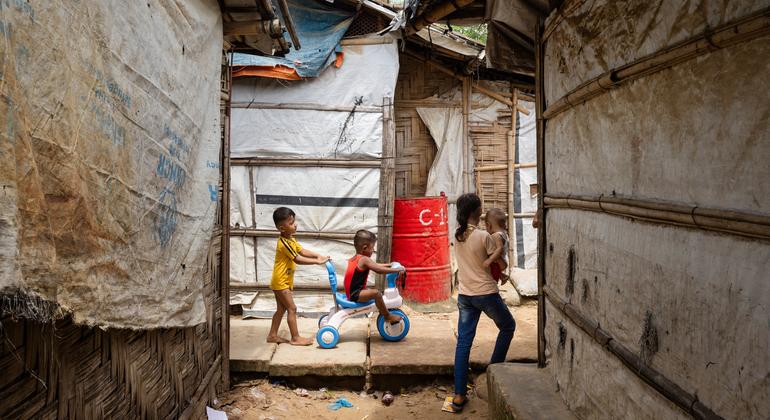
The UN human rights office has also called for ending impunity in the violence against the Rohingya people in Myanmar and ensuring their rights to security, citizenship and equality.

It said the Rohingya – a mostly Muslim minority community in predominantly Buddhist Myanmar – continue to suffer, eight years after a deadly crackdown by the military.

More than 700,000 fled to Bangladesh in the wake of the assault which began on 25 August 2017, joining others who had escaped earlier waves of attacks. 

Break the cycle

OHCHR said that ending impunity and ensuring the Rohingya’s rights to security, citizenship and equality, are essential for breaking the cycle of violence.

The Rohingya mainly live in Myanmar’s Rakhine state, and the office noted that the human rights and humanitarian situation there have sharply deteriorated since November 2023, further deepening the already life-threatening conditions they face.

OHCHR urged the international community to step up support for the Rohingya by increasing humanitarian funding to secure access to basic needs, essential services, and to ensure accountability. 

Source link

UN says Sri Lanka has ‘historic opportunity’ to end impunity, deliver justice

The 26-year conflict, from 1983 to 2009, pitted Government forces against the separatist Liberation Tigers of Tamil Eelam (LTTE) – more commonly referred to as the Tamil Tigers – who sought an independent state for the island’s Tamil minority in the north and east.

The civil war claimed an estimated 80,000 to 100,000 lives, and thousands more were forcibly disappeared, their fates still unknown. Hundreds of thousands were also displaced from their homes.  

The final months were among the bloodiest, with tens of thousands of civilians killed in indiscriminate shelling, extrajudicial executions, and other violations of international law committed by both sides.

Turn pledges into results

In a new report issued on Wednesday, UN human rights chief Volker Türk said the Government’s pledges to deliver justice, restore the rule of law, and eliminate discrimination and divisive politics must finally yield concrete results.

Today, an opportunity presents itself for Sri Lanka to break from the past,” he said. “It now needs a comprehensive roadmap to translate these commitments into results.

The report follows Mr. Türk’s recent visit to Sri Lanka, where he met officials, civil society, victims’ groups, political parties and religious leaders, and travelled to Trincomalee, Jaffna and Kandy – among the worst-affected areas.

It calls for a clear acknowledgment of the violations, abuses and crimes committed – including during the civil war – and recognition of the State’s responsibility and that of its security forces personnel as well as non-state armed groups, including the LTTE.

The pain and suffering of victims remains palpable and their demands for truth and justice must be addressed,” Mr. Türk stressed.

Call for sweeping reforms

The report recommends comprehensive security sector reform and broader constitutional, legal and institutional changes to meet international human rights obligations. It welcomes the planned creation of an independent Public Prosecutor’s office.

It also urges the establishment of a dedicated judicial mechanism, including an independent special counsel, to handle cases involving serious human rights violations and grave breaches of international humanitarian law.

Other recommendations include the release of military-held land in the north and east, repeal of the Prevention of Terrorism Act (PTA), and the release of long-term PTA detainees – some imprisoned for decades.

The report further calls for amendments or repeal of several restrictive laws, including those relating to data and online safety, NGOs, and civil and political rights.

International support

While the primary responsibility for investigating and prosecuting crimes lies with the Government, the report calls for complementary international support.

It urges UN Member States to contribute to accountability and reconciliation efforts, leveraging OHCHR’s strengthened capacity to undertake related work.

These measures are crucial to realizing the Government’s vision of ‘national unity’ and above all ensuring there can never be recurrence of past violations,” Mr. Türk said.

Source link

World News in Brief: ‘Indifference and impunity’ in Sudan, ICC judges speak out against sanctions, respiratory diseases overlooked in Europe

Tom Fletcher noted that over 30 million people require humanitarian assistance. Moreover, with famine declared in multiple places and over 14.6 million people displaced, Sudan represents the largest humanitarian crisis in the world.

“Again and again, the international community has said that we will protect the people of Sudan. The people of Sudan should ask us if, when and how we will start to deliver on that promise,” the relief chief said.

When will the international community fully fund aid efforts in Sudan?

When will accountability for the violence in Sudan happen?

He called on the international community to stop acting with ‘indifference and impunity’ towards Sudan,

Health system ‘smashed to pieces’

Since the conflict in Sudan broke out in April 2022, civilian infrastructure across the country has been damaged or destroyed, including health facilities and water and sanitation systems. 

The health system in particular has been “smashed to pieces,” according to Mr. Fletcher, leading to increasingly dire measles and cholera outbreaks.

The cholera outbreak, which began in July 2024 and is now confirmed in 13 of Sudan’s 18 states, has infected more than 74,000 people in total and killed 1,826.

“I have seen first-hand the devastation caused by the cholera outbreak in Khartoum, where the health system has been devastated by conflict and is struggling to cope with the tremendous demand on health facilities,” Dr. Shible Sahbni, WHO representative in Sudan.

The World Health Organization (WHO), in partnership with the Sudanese Ministry of Health, is launching a 10-day cholera vaccination campaign in Khartoum State.

The campaign will aim to reach 2.6 million people in an effort to contain the cholera outbreak in the state.

“The vaccines will help stop cholera in its tracks as we strengthen other response interventions,” said Dr. Sahbni.


ICC judges express support for colleagues sanctioned by US

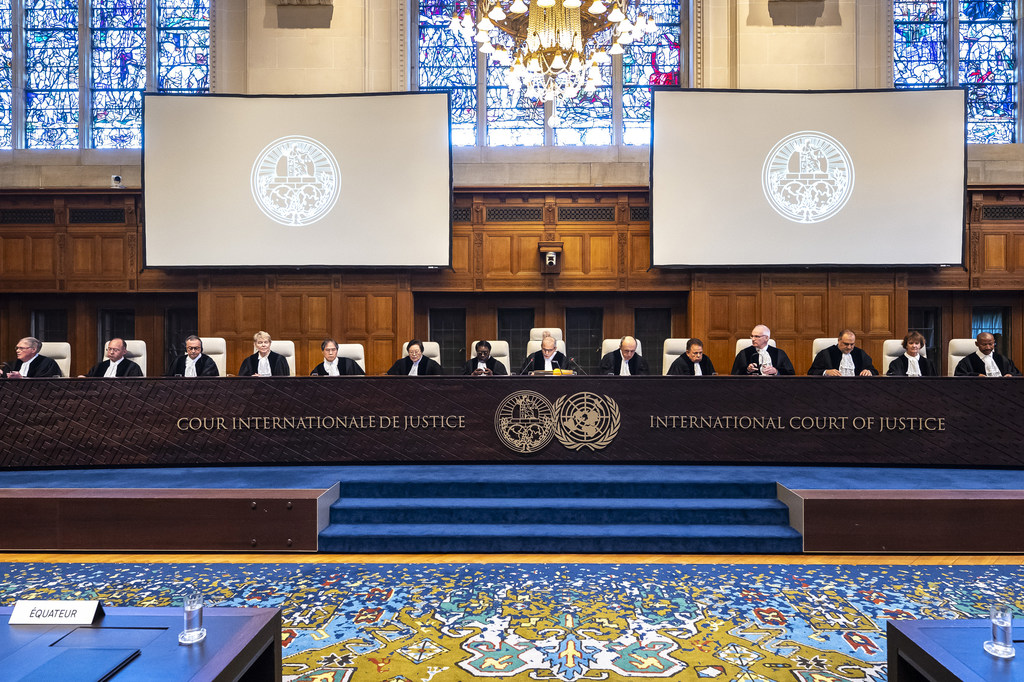
Judges at the International Criminal Court (ICC) expressed solidarity with their colleagues who have recently been sanctioned by the United States Government, describing the move as “coercive measures aimed at undermining the independence of the judiciary.”

“The Judges stand united and will continue to exercise their functions independently, impartially and conscientiously, fulfilling the demands of the rule of law,” they said in a statement on Thursday.

The US announced sanctions on 6 June against four judges from Benin, Peru, Slovenia and Uganda. The justices are currently overseeing a 2020 case which alleges war crimes in Afghanistan committed by the US and Afghan armies and the 2024 ICC arrest warrants issued for sitting Israeli Prime Minister Benjamin Netanyahu and former Defence Minister Yoav Gallant.

The International Court of Justice

The UN Human Rights Chief Volter Türk previously said that he was “deeply disturbed” by these sanctions, arguing that they corroded international governance and justice.

No improper influence

The ICC is an independent judicial body established under the Rome Statute, adopted in 1998. Although not part of the United Nations, the ICC works closely with it under a cooperative framework.

In the statement, the Judges said that they decide, and will continue to decide, cases based on facts and without regard to threats, restrictions or improper influence issued “from any quarter or for any reason.”

“The Judges reaffirm that they are equal in the performance of their functions and that they will always uphold the principle of equality before the law.”

Over 80 Million Europeans suffering from overlooked chronic respiratory diseases

Chronic respiratory diseases such as asthma are vastly underestimated, underdiagnosed and poorly managed in Europe – affecting 80 million people and costing $21 billion a year, the UN World Health Organization (WHO) said on Thursday.

A new report by WHO Europe and the European Respiratory Society highlights how smoking and air pollution are driving the growing crisis.

“We take 22,000 breaths a day, yet respiratory health remains one of the most neglected areas in global health,” said Professor Silke Ryan, President of the European Respiratory Society.

6th leading cause of death

Data analysis shows that chronic respiratory illnesses are the sixth leading cause of death in Europe. They are often misdiagnosed owing to weak diagnostic systems, limited training and inadequate health data.

Although effective treatments are available, asthma-related deaths remain high among young people, while chronic obstructive pulmonary disease is responsible for eight in 10 respiratory disease deaths.

As preparations begin for the 2025 UN High-Level Meeting on non-communicable diseases, WHO Europe urged governments to prioritize chronic respiratory disease, set measurable targets and tackle root causes like tobacco and air pollution.

Source link