World News in Brief: ‘Indifference and impunity’ in Sudan, ICC judges speak out against sanctions, respiratory diseases overlooked in Europe

Tom Fletcher noted that over 30 million people require humanitarian assistance. Moreover, with famine declared in multiple places and over 14.6 million people displaced, Sudan represents the largest humanitarian crisis in the world.

“Again and again, the international community has said that we will protect the people of Sudan. The people of Sudan should ask us if, when and how we will start to deliver on that promise,” the relief chief said.

When will the international community fully fund aid efforts in Sudan?

When will accountability for the violence in Sudan happen?

He called on the international community to stop acting with ‘indifference and impunity’ towards Sudan,

Health system ‘smashed to pieces’

Since the conflict in Sudan broke out in April 2022, civilian infrastructure across the country has been damaged or destroyed, including health facilities and water and sanitation systems. 

The health system in particular has been “smashed to pieces,” according to Mr. Fletcher, leading to increasingly dire measles and cholera outbreaks.

The cholera outbreak, which began in July 2024 and is now confirmed in 13 of Sudan’s 18 states, has infected more than 74,000 people in total and killed 1,826.

“I have seen first-hand the devastation caused by the cholera outbreak in Khartoum, where the health system has been devastated by conflict and is struggling to cope with the tremendous demand on health facilities,” Dr. Shible Sahbni, WHO representative in Sudan.

The World Health Organization (WHO), in partnership with the Sudanese Ministry of Health, is launching a 10-day cholera vaccination campaign in Khartoum State.

The campaign will aim to reach 2.6 million people in an effort to contain the cholera outbreak in the state.

“The vaccines will help stop cholera in its tracks as we strengthen other response interventions,” said Dr. Sahbni.


ICC judges express support for colleagues sanctioned by US

Judges at the International Criminal Court (ICC) expressed solidarity with their colleagues who have recently been sanctioned by the United States Government, describing the move as “coercive measures aimed at undermining the independence of the judiciary.”

“The Judges stand united and will continue to exercise their functions independently, impartially and conscientiously, fulfilling the demands of the rule of law,” they said in a statement on Thursday.

The US announced sanctions on 6 June against four judges from Benin, Peru, Slovenia and Uganda. The justices are currently overseeing a 2020 case which alleges war crimes in Afghanistan committed by the US and Afghan armies and the 2024 ICC arrest warrants issued for sitting Israeli Prime Minister Benjamin Netanyahu and former Defence Minister Yoav Gallant.


The International Court of Justice

The UN Human Rights Chief Volter Türk previously said that he was “deeply disturbed” by these sanctions, arguing that they corroded international governance and justice.

No improper influence

The ICC is an independent judicial body established under the Rome Statute, adopted in 1998. Although not part of the United Nations, the ICC works closely with it under a cooperative framework.

In the statement, the Judges said that they decide, and will continue to decide, cases based on facts and without regard to threats, restrictions or improper influence issued “from any quarter or for any reason.”

“The Judges reaffirm that they are equal in the performance of their functions and that they will always uphold the principle of equality before the law.”

Over 80 Million Europeans suffering from overlooked chronic respiratory diseases

Chronic respiratory diseases such as asthma are vastly underestimated, underdiagnosed and poorly managed in Europe – affecting 80 million people and costing $21 billion a year, the UN World Health Organization (WHO) said on Thursday.

A new report by WHO Europe and the European Respiratory Society highlights how smoking and air pollution are driving the growing crisis.

“We take 22,000 breaths a day, yet respiratory health remains one of the most neglected areas in global health,” said Professor Silke Ryan, President of the European Respiratory Society.

6th leading cause of death

Data analysis shows that chronic respiratory illnesses are the sixth leading cause of death in Europe. They are often misdiagnosed owing to weak diagnostic systems, limited training and inadequate health data.

Although effective treatments are available, asthma-related deaths remain high among young people, while chronic obstructive pulmonary disease is responsible for eight in 10 respiratory disease deaths.

As preparations begin for the 2025 UN High-Level Meeting on non-communicable diseases, WHO Europe urged governments to prioritize chronic respiratory disease, set measurable targets and tackle root causes like tobacco and air pollution.

Source link

Largely eradicated diseases at risk of returning due to budget cuts

Cuts to global health funding are leading to a rise in outbreaks of diseases that vaccines had nearly wiped out, the UN health agency, WHO, is warning on Thursday.

In Africa’s “meningitis belt”, which spans parts of sub-Saharan Africa, vaccination campaigns had successfully eliminated meningitis A. Similarly, improved routine immunization and emergency vaccine stockpiles drastically reduced cases of yellow fever and related deaths.

But this progress is now at risk. “Funding cuts to global health have put these hard-won gains in jeopardy,” warned Tedros Adhanom Ghebreyesus, Director-General of the World Health Organization.

Outbreaks on the rise

In 2023, measles cases were estimated at more than 10.3 million – a 20 per cent increase compared to 2022.

WHO, UN Children’s Fund UNICEF and their partners warned in a statement marking the beginning of World Immunization Week that this upward trend is expected to continue into 2025.

Yellow fever is also making a comeback. After years of declining cases in Africa thanks to improved vaccine access, 2025 has already seen a rise in outbreaks across the continent. Cases have also been confirmed in the Americas.

Misinformation threat

Vaccination efforts are increasingly under pressure due to a combination of misinformation, population growth, humanitarian crises, and funding cuts.

Earlier this month, a WHO review across 108 countries found that nearly half are experiencing moderate to severe disruptions to vaccination campaigns, routine immunisations, and supply chains due to falling donor support.

The global funding crisis is severely limiting our ability to vaccinate over 15 million vulnerable children in fragile and conflict-affected countries against measles,” said Catherine Russell, Executive Director of UNICEF.

Vaccines offer high returns

Vaccines save around 4.2 million lives each year, protecting against 14 different diseases. Almost half of those lives are saved in Africa.

Despite this, falling investment now risks the re-emergence of diseases once thought to be under control.

Health experts emphasise that immunization is one of the most cost-effective health interventions. Every $1 invested in vaccines brings an estimated return of $54 through better health and economic productivity.

UNICEF, WHO, and their partners are calling on parents, the public, and political leaders to support immunization programmes and ensure long-term investment in vaccines and public health systems.

Source link

Detecting Alzheimer’s disease in the blood using Digital ICA

Researchers from Hokkaido University and Toppan have developed a method to detect build-up of amyloid β in the brain, a characteristic of Alzheimer’s disease, from biomarkers in blood samples.

Alzheimer’s disease is a neurodegenerative disease, characterised by a gradual loss of neurons and synapses in the brain. One of the primary causes of Alzheimer’s disease is the accumulation of amyloid β (Aβ) in the brain, where it forms plaques. Alzheimer’s disease is mostly seen in individuals over 65 years of age, and cannot currently be stopped or reversed. Thus, Alzheimer’s disease is a major concern for nations with ageing populations, such as Japan.

A team of scientists from Hokkaido University and Toppan, led by Specially Appointed Associate Professor Kohei Yuyama at the Faculty of Advanced Life Science, Hokkaido University, have developed a biosensing technology that can detect Aβ-binding exosomes in the blood of mice, which increase as Aβ accumulates in the brain. Their research was published in the journal Alzheimer’s Research & Therapy.

Alzheimer’s disease model mice (Photo: Kohei Yuyama)./CREDIT:Kohei Yuyama

When tested on mice models, the Aβ-binding exosome Digital ICATM (idICA) showed that the concentration of Aβ-binding exosomes increased with the increase in age of the mice. This is significant as the mice used were Alzheimer’s disease model mice, where Aβ builds up in the brain with age.

In addition to the lack of effective treatments of Alzheimer’s, there are few methods to diagnose Alzheimer’s. Alzheimer’s can only be definitively diagnosed by direct examination of the brain—which can only be done after death. Aβ accumulation in the brain can be measured by cerebrospinal fluid testing or by positron emission tomography; however, the former is an extremely invasive test that cannot be repeated, and the latter is quite expensive. Thus, there is a need for a diagnostic test that is economical, accurate and widely available.

Previous work by Yuyama’s group has shown that Aβ build-up in the brain is associated with Aβ-binding exosomes secreted from neurons, which degrade and transport Aβ to the microglial cells of the brain. Exosomes are membrane-enclosed sacs secreted by cells that possess cell markers on their surface. The team adapted Toppan’s proprietary Digital Invasive Cleavage Assay (Digital ICATM) to quantify the concentration of Aβ-binding exosomes in as little as 100 µL of blood. The device they developed traps molecules and particles in a sample one-by-one in a million micrometer-sized microscopic wells on a measurement chip and detects the presence or absence of fluorescent signals emitted by the cleaving of the Aβ-binding exosomes.

Clinical trials of the technology are currently underway in humans. This highly sensitive idICA technology is the first application of ICA that enables highly sensitive detection of exosomes that retain specific surface molecules from a small amount of blood without the need to learn special techniques; as it is applicable to exosome biomarkers in general, it can also be adapted for use in the diagnosis of other diseases.

Noninvasive eye scan could detect key signs of Alzheimer’s years before patients show symptoms

How ‘Digital mask’ protects patients’ privacy [Details]

Scientists have created a ‘digital mask’ that will allow facial images to be stored in medical records while preventing potentially sensitive personal biometric information from being extracted and shared.

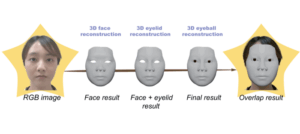
In research published today in Nature Medicine, a team led by scientists from the University of Cambridge and Sun Yat-sen University in Guangzhou, China, used three-dimensional (3D) reconstruction and deep learning algorithms to erase identifiable features from facial images while retaining disease-relevant features needed for diagnosis.

Facial images can be useful for identifying signs of disease. For example, features such as deep forehead wrinkles and wrinkles around the eyes are significantly associated with coronary heart disease, while abnormal changes in eye movement can indicate poor visual function and visual cognitive developmental problems. However, facial images also inevitably record other biometric information about the patient, including their race, sex, age and mood.

Graphic showing digital masking process/Photo:Professor Haotian Lin’s research group

With the increasing digitalisation of medical records comes the risk of data breaches. While most patient data can be anonymised, facial data is more difficult to anonymise while retaining essential information. Common methods, including blurring and cropping identifiable areas, may lose important disease-relevant information, yet even so cannot fully evade face recognition systems.

Due to privacy concerns, people often hesitate to share their medical data for public medical research or electronic health records, hindering the development of digital medical care.

Professor Haotian Lin from Sun Yat-sen University said: “During the COVID-19 pandemic, we had to turn to consultations over the phone or by video link rather than in person. Remote healthcare for eye diseases requires patients to share a large amount of digital facial information. Patients want to know that their potentially sensitive information is secure and that their privacy is protected.”

Professor Lin and colleagues developed a ‘digital mask’, which inputs an original video of a patient’s face and outputs a video based on the use of a deep learning algorithm and 3D reconstruction, while discarding as much of the patient’s personal biometric information as possible – and from which it was not possible to identify the individual.

Deep learning extracts features from different facial parts, while 3D reconstruction automatically digitises the shapes and movement of 3D faces, eyelids, and eyeballs based on the extracted facial features. Converting the digital mask videos back to the original videos is extremely difficult because most of the necessary information is no longer retained in the mask.

Next, the researchers tested how useful the masks were in clinical practice and found that diagnosis using the digital masks was consistent with that carried out using the original videos. This suggests that the reconstruction was precise enough for use in clinical practice.

Compared to the traditional method used to ‘de-identify’ patients – cropping the image – the risk of being identified was significantly lower in the digitally-masked patients. The researchers tested this by showing 12 ophthalmologists digitally-masked or cropped images and asking them to identify the original from five other images. They correctly identified the original from the digitally-masked image in just over a quarter (27%) of cases; for the cropped figure, they were able to do so in the overwhelming majority of cases (91%). This is likely to be an over-estimation, however: in real situations, one would likely have to identify the original image from a much larger set.

The team surveyed randomly selected patients attending clinics to test their attitudes towards digital masks. Over 80% of patients believed the digital mask would alleviate their privacy concerns and they expressed an increased willingness to share their personal information if such a measure was implemented.

Doctor/IANS

Finally, the team confirmed that the digital masks can also evade artificial intelligence-powered facial recognition algorithms.

Professor Patrick Yu-Wai-Man from the University of Cambridge said: “Digital masking offers a pragmatic approach to safeguarding patient privacy while still allowing the information to be useful to clinicians. At the moment, the only options available are crude, but our digital mask is a much more sophisticated tool for anonymising facial images.

“This could make telemedicine – phone and video consultations – much more feasible, making healthcare delivery more efficient. If telemedicine is to be widely adopted, then we need to overcome the barriers and concerns related to privacy protection. Our digital mask is an important step in this direction.”

Exposure to air pollution in infancy alters gut microorganisms, may boost disease risk [Preventive Steps]

Exposure to air pollution in the first six months of life impacts a child’s inner world of gut bacteria, or microbiome, in ways that could increase risk of allergies, obesity and diabetes, and even influence brain development, suggests new CU Boulder research.

“This study adds to the growing body of literature showing that air pollution exposure, even during infancy, may alter the gut microbiome, with important implications for growth and development,” said senior author Tanya Alderete, assistant professor of Integrative Physiology at CU Boulder.

At birth, an infant hosts little resident bacteria. Over the first two to three years of life, exposure to mother’s milk, solid food, antibiotics and other environmental influences shape which microorganisms take hold. Those microbes, and the metabolites, or byproducts, they produce when they break down food or chemicals in the gut, influence a host of bodily systems that shape appetite, insulin sensitivity, immunity, mood and cognition. While many are beneficial, some microbiome compositions have been associated with Chrohn’s disease, asthma, type 2 diabetes, and other chronic illnesses.

Air pollution/photo:en.wikipedia.org

“The microbiome plays a role in nearly every physiological process in the body, and the environment that develops in those first few years of life sticks with you,” said first author Maximilian Bailey, who graduated in May with a master’s in Integrative Physiology and is now a medical student at Stanford University.

Boosting inflammation

For the study, the researchers obtained fecal samples from 103 healthy, primarily breast-fed Latino infants enrolled in the Southern California Mother’s Milk Study and used genetic sequencing to analyze them.

Using their street addresses and data from the U.S. Environmental Protection Agency’s Air Quality System, which records hourly data from monitoring systems, they estimated exposure to PM2.5 and PM10 (fine inhalable particles from things like factories, wildfires and construction sites) and Nitrogen Dioxide (NO2), a gas largely emitted from cars.

“Overall, we saw that ambient air pollution exposure was associated with a more inflammatory gut-microbial profile, which may contribute to a whole host of future adverse health outcomes,” said Alderete.

For instance, infants with the highest exposure to PM2.5 had 60% less Phascolarctobacterium, a beneficial bacterium known to decrease inflammation, support gastrointestinal health and aid in neurodevelopment. Those with the highest exposure to PM10 had 85% more of the microorganism Dialister, which is associated with inflammation.

infant-small child/photo:en.wikipedia.org

Infants are particularly vulnerable to the health hazards of air pollution because they breathe faster and their gut microbiome is just taking shape.

“This makes early life a critical window where exposure to air pollution may have disproportionately deleterious health effects,” they write.

Meantime, Alderete advises everyone to take these steps to reduce their exposure to both indoor and outdoor pollutants:

  • Avoid walking outdoors in high-traffic zones
  • Consider a low-cost air-filtration system, particularly for rooms children spend a lot of time in
  • If you are cooking, open the windows
  • And for new moms, breastfeed for as long as possible

“Breast milk is a fantastic way to develop a healthy microbiome and may help offset some of the adverse effects from environmental exposures,” Alderete said.

Early term babies are at greater risk for diabetes and obesity-related diseases

Early term deliveries impact babies’ long-term health with increased risk of diabetes and obesity-related illnesses as well as a shortened life span, according to a new study by Ben-Gurion University of the Negev (BGU) researchers.

“Early term” is defined as delivery between 37 and 39 weeks. Pregnancy is considered at full term when gestation has lasted between 37 and 42 weeks. Babies born between 39 and 41 weeks of gestation have better outcomes than those born either before or afterward.

In the study, published in the American Journal of Obstetrics and Gynecology, the researchers investigated hospitalizations of children up to age 18 to determine the impact that early-term versus full-term gestation had on pediatric health and hospitalizations. A population-based cohort analysis was conducted of 54,073 early-term deliveries and 171,000 full-term deliveries.

“We found that hospitalizations up to the age of 18 involving endocrine and metabolic morbidity were found to be more common in the early-term group as compared with the full-term group, especially at ages five and older,” says Prof. Eyal Sheiner, M.D., Ph.D., a vice dean of the BGU Faculty of Health Sciences (FOHS) and head of the Department of Obstetrics and Gynecology at Soroka University Medical Center. What’s more, “Obesity was significantly more frequent among the early term.”

The researchers also discovered that children older than five exhibited significantly higher rates of type I diabetes mellitus when born early term.

“Pregnancies ending at early term were more likely to be complicated by hypertensive disorders and maternal diabetes (both gestational and pre-gestational). Deliveries were more often cesarean, and mean birthweight was significantly smaller,” Dr. Sheiner says. “Babies delivered at early term were also more likely to be low birthweight — less than 5.5 pounds (2.5 kilograms).”

These diseases may increase the likelihood of other associated maladies with a detrimental long-term impact on one’s health and well-being, increased lifetime healthcare expenditures and a shorter life span, the researchers conclude.

Life Style Diseases

The Indian Council of Medical Research (ICMR) is conducting a study namely ICMR-INDIAB involving all States and Union Territories – both urban and rural population for ascertaining the exact number of Diabetic patients. 15 States have been covered so far and the prevalence of diabetes varies from 4.3% in Bihar to 13.6% in Chandigarh.

According to report published by International Diabetes Federation (IDF; 6th Edition, 2013), number of people with diabetes (20-79 years) in Urban setting of India were about 30.5 millions in 2013.

As informed by Indian Council of Medical Research (ICMR), current estimates from one-time cross sectional studies conducted in different regions of country indicate that the prevalence of coronary heart disease (CHD) is between 8-10 percent in urbanand 3 to 4 percent in rural India.

As informed by ICMR the estimated prevalence of cancer cases in India during 2013, 2014 and 2015 are 2934314, 3016628 and 3101467 respectively.

Nationwide scientific estimation of number of patients of Chronic Kidney Diseases (CKD) has not been carried out. However, in some of the small population based studies, it was found to be in 0.79 % in North India and 0.16% in South India.

National Center for Disease Informatics and Research (NCDIR), Bengaluru is running Hospital and Population based Cancer Registries. As informed by ICMR some studies have been conducted on NCDs. A study is commissioned to ICMR on Burden of Non-Communicable Diseases and Associated Risk Factors for India (BOD-NCD).

The factors responsible for increase in Lifestyle Diseases (NCDs) are unhealthy diet, lack of physical activity, harmful use of alcohol, overweight, obesity, tobacco use, etc.

Public health is a State subject, however, under National Health Mission(NHM), financial and technical support is provided to States/UTs to strengthen their healthcare systems including setting up of / upgradation of public health facilities, based on the requirements posed by the States/UTs in their Programme Implementation Plans (PIPs).

Government of India is implementing National Programme for Prevention and Control of Cancer, Diabetes, Cardiovascular Diseases and Stroke (NPCDCS) for interventions up to District level under the National Health Mission. Under NPCDCS, diagnosis and treatment facilities are provided through different levels of healthcare by setting up NCD Clinics in District Hospitals and Community Health Centres (CHCs). Intervention of Chronic Kidney Diseases (CKD) has also been included in NPCDCS for proper management.

For early diagnosis, Population-based Screening of common NCDs viz. Diabetes, Hypertension and Common cancers (Oral, Breast, Cervical) is initiated under NHM utilizing the services of the Frontline- workers and Health-workers under existing Primary Healthcare System. This process will also generate awareness on risk factors of common NCDs.

Under strengthening of Tertiary Care for Cancer Centre (TCCC) Scheme, Government of India is assisting States to set up / establish State Cancer Institute (SCI) and Tertiary Care Cancer Centres (TCCCs) in different parts of the country. Support under the National Health Mission (NHM) is also being provided to States for provision of dialysis services free of cost to the poor under Pradhanmantri National Dialysis Programme (PNDP).

The Central Government, through its hospitals augments the efforts of the State Governments for providing health services in the country. Under Pradhan Mantri Swasthya Suraksha Yojana (PMSSY), 6 new AIIMS have been set up and upgradation of identified medical colleges has been undertaken which will also improve health care facilities.

The Minister of State (Health and Family Welfare), Smt Anupriya Patel stated this in a written reply in the Lok Sabha here today.