
Echoes of ‘Stop the Invasion’ Reverberate Across X on All Migrants in US

On the social media platform X, the rallying cry “Stop the Invasion” has exploded into a digital battleground, capturing the raw pulse of America’s polarized immigration debate. What began as a staple in Republican political rhetoric has evolved into a grassroots hashtag and slogan, amassing thousands of posts in recent months.
With U.S. President Donald Trump’s second term underway and promises of mass deportations in full swing, users from Texas suburbs to Minnesota diners are invoking the phrase to demand action, while critics label it a dehumanizing trope that stokes fear and division.The phrase’s resurgence coincides with heightened enforcement efforts by Immigration and Customs Enforcement (ICE), including raids in sanctuary cities and the conversion of warehouses into detention centers at a cost of $38.3 billion.
As border apprehensions dip under Trump’s executive actions, which he touted as fulfilling a 2024 campaign pledge to “stop the invasion of illegals into our country,” X serves as a real-time barometer of public sentiment.
A review of over 50 recent posts reveals a stark divide: fervent calls for walls, deportations, and cultural preservation on one side, and accusations of racism and moral panic on the other.The Slogan’s Political Pedigree“Stop the Invasion” isn’t new to U.S. discourse; it’s a thread woven through decades of conservative messaging on immigration.
Trump’s Amplification Throughout
Trump amplified it during his 2016 and 2024 campaigns, running thousands of Facebook ads in 2019 alone that warned of an “INVASION” at the southern border, often pairing it with images of migrant caravans. By 2024, Trump had invoked “invasion” over 500 times in speeches and posts, framing migrants as “killers” and “animals” to underscore the urgency, according to NYT.

His running mate, Florida Gov. Ron DeSantis, echoed the language in a 2023 campaign plan titled “Mission Stop the Invasion,” proposing military involvement in Mexico to curb drug flows and crossings. In Texas, Gov. Greg Abbott has operationalized the rhetoric through Operation Lone Star, a $11.1 billion initiative launched in 2021 to “stop the invasion.”

Abbott’s efforts, including razor wire and floating buoys in the Rio Grande, have drawn lawsuits from the Biden administration but praise from Trump allies.The slogan’s echoes reach beyond the border. In 1992, California Gov. Pete Wilson ran ads urging Congress to “stop the invasion” of Latino migrants, a tactic that boosted his re-election but deepened ethnic tensions.

Today, it’s a cornerstone of Trump’s “largest deportation operation in American history,” with early 2026 actions targeting criminal noncitizens and suspending asylum claims.

Viral Flashpoints: From Temples to Town Halls

On X, “Stop the Invasion” often pairs with visceral, local grievances, turning policy debates into cultural flashpoints. A February 16 post by Texas GOP operative @Carlos__Turcios went viral with 6,585 likes, decrying a 105-foot Hanuman statue in Sugar Land – the third-largest in the U.S. – as evidence of “Third World Aliens… slowly taking over Texas and America.”

The video, showing the Hindu deity’s installation, sparked a firestorm: supporters like @ma_double replied, “Houston, Texas too. Stop the invasion!” while others, including Indian-American users, fired back that it was “xenophobic fearmongering.”  The post, viewed over 530,000 times, exemplifies how the phrase extends to non-border issues, blending immigration with anxieties over religious and ethnic shifts.

Similar outrage erupted over a Minneapolis restaurant meeting where Somali officials allegedly claimed parts of Minnesota for Somalia.
@DerrickEvans4WV, a former West Virginia lawmaker, shared footage calling it a “sovereignty” threat, prompting @GinoPatti88 to demand: “Stop the invasion. Revoke citizenship. Deport them all back to Somalia.”

The clip amassed 20,802 views, fueling calls for a nationwide immigration freeze.Even non-immigration contexts borrow the language. Rep. Nancy Mace (R-S.C.) used “Stop the Invasion of Women’s Spaces Act” in a February 7 post to ban transgender individuals from female facilities in federal buildings, garnering 2,007 likes. “Men in women’s private spaces is not normal,” she wrote, illustrating the phrase’s rhetorical elasticity.Grassroots users amplify these themes.

Another user @Oilfield_Rando, with 1,504 likes, argued the crisis could end “tomorrow if congress simply suspend[ed] asylum protections,” calling it a “two page bill.” @SitInMyTruck

echoed: “Halt ALL immigration and remove the invaders… There’s no ‘legal’ or ‘illegal’ – it’s just immigration and it’s an invasion that must be reversed.”

In Europe, @JoeyMannarino targeted Spain’s Pedro Sánchez: “The number one priority… must be to defeat Sánchez and close the border from Morocco.”

Dehumanization or Desperate Plea?

Not all reactions are supportive. Critics on X and beyond argue the rhetoric veers into racism, reducing humans to “vermin” or “swarms.” Rev. Dr. Jacqui Lewis posted in 2023 that terms like “infestation” enable violence: “Then you can kill them, and people will cheer.”
Also, @JRubinBlogger, a Washington Post columnist, called Trump’s “infest” language a “full-throttle toward dehumanization,” stripping immigrants of personhood.

Recent posts highlight the human toll. @AlBuffalo2nite criticized a viral narrative using a migrant’s death to shield against enforcement: “Turning personal grief into a political shield… is manipulation.”
@equalityAlec, a civil rights lawyer, decried the “nativist, xenophobic” framing: “The core… is the notion that human beings are worth more or less depending on where they are born.”
@LOPE_64warned: “The first step in dehumanization is language… one day, when this madness is over, everyone will claim they were against it.”

Media analyses reinforce this. A 2025 HuffPost report linked Trump’s “invasion” trope to the 2019 El Paso shooting, where the gunman cited it in his manifesto. The New York Times traced its use in GOP ads, noting parallels to Pete Wilson’s 1992 campaign, which “deepened ethnic tensions.”

The Anti-Defamation League (ADL) flagged it in 2025 white supremacist propaganda, often tied to “white genocide” conspiracies. Defenders push back. @AssociationOfF2F argued: “There’s nothing dehumanizing about enforcing immigration law… It’s about the social and political victimization of the native population.”

@dystopiangf framed opposition as “genocidal,” insisting borders protect a people’s “voice, will, mind, and soul.”

A Nation at the Crossroads

As Trump’s administration ramps up deportations, targeting over 1 million in the first year, “Stop the Invasion” encapsulates a broader reckoning. Polls show 60% of Americans favor stricter enforcement, but 55% also support pathways to citizenship for Dreamers.
On X, the phrase trends weekly, with spikes around ICE operations and viral videos.For users like @theworldofmomus, it’s a “consensus building” moment: “End to… illegal immigration while reducing the flow of legal migration.”
Yet as @MorgothsReview noted, such narratives often “humanize the illegal migrants” at the expense of native stories: “We do not get the story of the last white kid in class.”

The debate rages on X, where algorithms amplify outrage. Whether it’s a clarion call for security or a dog whistle for division, “Stop the Invasion” underscores America’s unresolved soul-searching: Who belongs, and at what cost? As one user put it, “A nation is equivalent to a people’s voice.” In 2026, that voice is louder than ever.

Measles cases drop in 2025 across Europe and Central Asia, but outbreak risks remain

While cases have reduced, the conditions that led to the resurgence of this deadly disease in recent years remain and must be addressed,” said Regina De Dominicis, the UN Children Fund (UNICEF) regional director for Europe and Central Asia.

Fifty-three countries in Europe and Central Asia reported 33,998 measles cases in 2025, down from 127,412 in 2024.

The overall decreasing trend in cases reflects both outbreak response measures and the gradual decline in the number of people susceptible to measles infection as the virus made its way through under-vaccinated communities, according to UN agencies.

Tackling deadly misinformation

However, many cases could have been prevented with higher routine vaccination coverage at community level and more timely response to outbreaks, UN agencies said.

“Until all children are reached with vaccination, and hesitancy fuelled by the spread of misinformation is addressed, children will remain at risk of death or serious illness from measles and other vaccine-preventable diseases,” she warned.

Hans Henri P. Kluge, WHO regional director for Europe, said eliminating measles is essential for national and regional health security, stressing that “in today’s environment of rampant fake news, it’s also crucial that people rely on verified health information from reliable sources such as WHO, UNICEF and national health agencies.”

Measles still present

The number of cases in 2025 still exceeded what has been reported for most years since 2000, and some countries reported more cases in 2025 than in 2024. Measles cases continue to be detected in 2026 in the region, according to WHO.

“Over 200,000 people in our region fell ill with measles in the past three years,” Dr. Kluge said.

“Unless every community reaches 95 per cent vaccination coverage, closes immunity gaps across all ages, strengthens disease surveillance and ensures timely outbreak response, this highly contagious virus will keep spreading.”

Highly contagious

Measles is one of the most contagious viruses affecting people. For every one person who has measles, up to 18 other unvaccinated people will be infected.

This makes measles around 12 times more contagious than influenza. As well as hospitalisation and death, the virus can cause long-term, debilitating health complications.

It can also damage the immune system by “erasing” its memory of how to fight infections for months to even years, leaving measles survivors vulnerable to other diseases and death.

Two doses of measles-containing vaccine provide up to 97 per cent life-long protection against measles

A vaccination rate of 95 per cent with two doses of the measles vaccine in every community each year is needed to prevent measles outbreaks and achieve herd immunity, which protects infants too young for measles vaccination and other people for whom it is not recommended due to medical conditions, like those who are immunocompromised.

Public health priorities

Outbreak preparedness and response alongside the target of measles elimination, remain public health priorities.

UNICEF and WHO work together with governments and with the support of partners, including Gavi, the Vaccine Alliance, and the European Union, to prevent and respond to measles outbreaks by, among other things:

  • engaging with communities
  • training health care workers
  • strengthening immunisation programmes and disease surveillance systems
  • initiating measles vaccination catch-up campaigns

Source link

World News in Brief: ‘Indifference and impunity’ in Sudan, ICC judges speak out against sanctions, respiratory diseases overlooked in Europe

Tom Fletcher noted that over 30 million people require humanitarian assistance. Moreover, with famine declared in multiple places and over 14.6 million people displaced, Sudan represents the largest humanitarian crisis in the world.

“Again and again, the international community has said that we will protect the people of Sudan. The people of Sudan should ask us if, when and how we will start to deliver on that promise,” the relief chief said.

When will the international community fully fund aid efforts in Sudan?

When will accountability for the violence in Sudan happen?

He called on the international community to stop acting with ‘indifference and impunity’ towards Sudan,

Health system ‘smashed to pieces’

Since the conflict in Sudan broke out in April 2022, civilian infrastructure across the country has been damaged or destroyed, including health facilities and water and sanitation systems. 

The health system in particular has been “smashed to pieces,” according to Mr. Fletcher, leading to increasingly dire measles and cholera outbreaks.

The cholera outbreak, which began in July 2024 and is now confirmed in 13 of Sudan’s 18 states, has infected more than 74,000 people in total and killed 1,826.

“I have seen first-hand the devastation caused by the cholera outbreak in Khartoum, where the health system has been devastated by conflict and is struggling to cope with the tremendous demand on health facilities,” Dr. Shible Sahbni, WHO representative in Sudan.

The World Health Organization (WHO), in partnership with the Sudanese Ministry of Health, is launching a 10-day cholera vaccination campaign in Khartoum State.

The campaign will aim to reach 2.6 million people in an effort to contain the cholera outbreak in the state.

“The vaccines will help stop cholera in its tracks as we strengthen other response interventions,” said Dr. Sahbni.


ICC judges express support for colleagues sanctioned by US

Judges at the International Criminal Court (ICC) expressed solidarity with their colleagues who have recently been sanctioned by the United States Government, describing the move as “coercive measures aimed at undermining the independence of the judiciary.”

“The Judges stand united and will continue to exercise their functions independently, impartially and conscientiously, fulfilling the demands of the rule of law,” they said in a statement on Thursday.

The US announced sanctions on 6 June against four judges from Benin, Peru, Slovenia and Uganda. The justices are currently overseeing a 2020 case which alleges war crimes in Afghanistan committed by the US and Afghan armies and the 2024 ICC arrest warrants issued for sitting Israeli Prime Minister Benjamin Netanyahu and former Defence Minister Yoav Gallant.

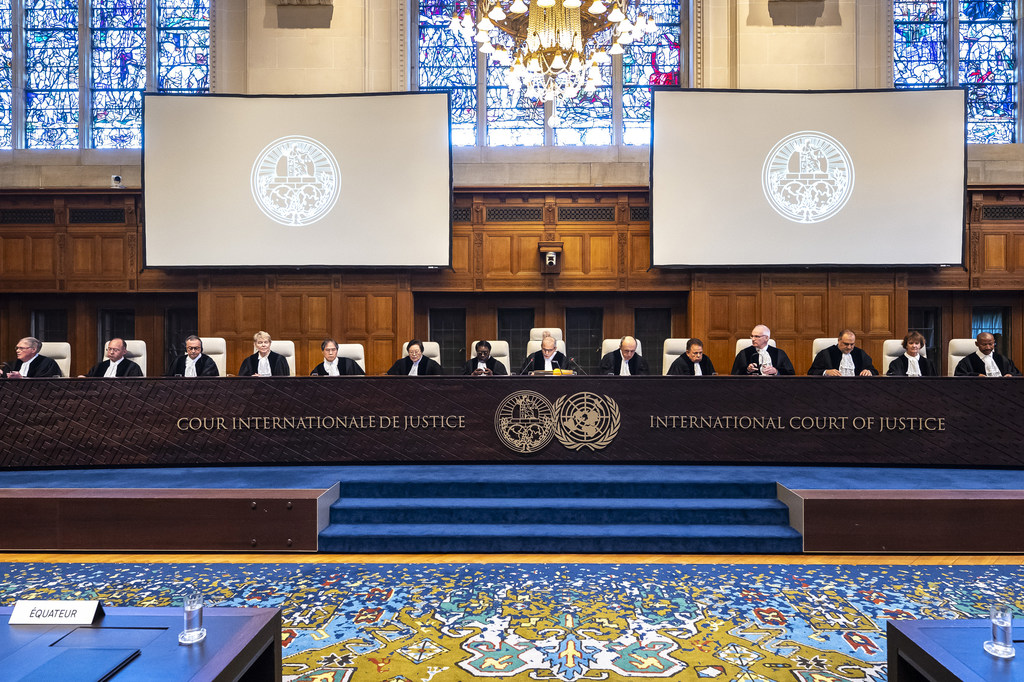
The International Court of Justice

The UN Human Rights Chief Volter Türk previously said that he was “deeply disturbed” by these sanctions, arguing that they corroded international governance and justice.

No improper influence

The ICC is an independent judicial body established under the Rome Statute, adopted in 1998. Although not part of the United Nations, the ICC works closely with it under a cooperative framework.

In the statement, the Judges said that they decide, and will continue to decide, cases based on facts and without regard to threats, restrictions or improper influence issued “from any quarter or for any reason.”

“The Judges reaffirm that they are equal in the performance of their functions and that they will always uphold the principle of equality before the law.”

Over 80 Million Europeans suffering from overlooked chronic respiratory diseases

Chronic respiratory diseases such as asthma are vastly underestimated, underdiagnosed and poorly managed in Europe – affecting 80 million people and costing $21 billion a year, the UN World Health Organization (WHO) said on Thursday.

A new report by WHO Europe and the European Respiratory Society highlights how smoking and air pollution are driving the growing crisis.

“We take 22,000 breaths a day, yet respiratory health remains one of the most neglected areas in global health,” said Professor Silke Ryan, President of the European Respiratory Society.

6th leading cause of death

Data analysis shows that chronic respiratory illnesses are the sixth leading cause of death in Europe. They are often misdiagnosed owing to weak diagnostic systems, limited training and inadequate health data.

Although effective treatments are available, asthma-related deaths remain high among young people, while chronic obstructive pulmonary disease is responsible for eight in 10 respiratory disease deaths.

As preparations begin for the 2025 UN High-Level Meeting on non-communicable diseases, WHO Europe urged governments to prioritize chronic respiratory disease, set measurable targets and tackle root causes like tobacco and air pollution.

Source link

Trumpeting ‘America First’ Theory Far-Fetched But Feasible

US President Donald Trump in his first Presidential address has put “America First”, setting the tone for an inward-looking diplomacy that might radically change the course of world events since the Pearl Harbor attack seven decades ago.

“We assembled here today are issuing a new decree to be heard in every city, in every foreign capital, and in every hall of power. From this day forward, a new vision will govern our land. From this day forward, it’s going to be only America first, America first,” he said in his first Presidential speech.

In domestic politics, what President Trump proclaimed was feasible but in international politics, diplomacy varies from capital to capital and region to region. Depending on where he stands, it changes.

To begin with, going westward, America of Trump may seek more from Japan where it has stationed its war fleet round the clock for a sum. Now this has to be a ransom to sustain what Trump wanted. Will Tokyo, stuck in a stagnated economy, tax its citizens more to pay Uncle Sam?

Australia and New Zealand, who fall in line every time an emergency struck the US in the past, may not benefit from America First policy directly but certainly they can look inward for a domestically centred economic push, instead of looking at Washington DC for succour.

Asia is as divided as ever. China may tremble under the pressure of a constant panic button by an erstwhile businessman who may want more concessions or threaten to replete the markets for ever. China may retaliate in many ways including selling its US dollar reserves which are in plenty. This may be an uphill task but once mooted, even the US economy will shake.

India, being a late entrant into the US-dominated international politics after the Cold War, will have to safeguard its Information Technology companies and contracts whether H1B visa is there or not. The time is for Indian honchos to give room to their US counterparts in office space to thwart any direct attack from Trump. It is going to be a roller-coaster ride for Indian IT companies for the next four years.

Pakistan, whose Prime Minister woke up to a sudden phone call from President-elect Trump, may cosy up to the fact that they have to rein in on Islamic leaders either willingly or unwillingly for the next four years. US troops in Afghan border will remain a direct answer to every word that Trump speaks from now onwards. How Taliban in Kabul outskirts reacts to Trump will shape the drone war in the vicinity of Hindukush mountains.

Middle East will remain the major beneficiary from the Trump Administration as long as the Arabs keep their oil wells in tact and hand over the IS agents in return for business considerations. One pointer is that oil prices will be given a push to touch $100 if diplomacy by business is what Trump means.

More of Israel than Iran in Middle East policy will gain currency again. To achieve this, United Kingdom will have to be roped in and NATO alliance has to remain in its place to keep Russia’s Putin in place. US future with Europe is so intertwined that no President can just distance the siblings here.

Africa in the backyard, as usual, with focus on warlords and military mafia who will resurrect terror and attract Trump’s attention eventually tasting his iron-handed approach. Unlike the previous Bush administration, Trump may be forced to involve more in African affairs, for a change now.

Back to borders with other American nations like Mexico, he may build a wall but how much of the cost will be footed by the Mexican drug mafia, if not the Mexican government, will be the major question. Other Latin Americans may wait in the wings for the next administration to take over in 2021.

All said and done, Trump’s slogan remains the same – “Yes, together, we will make America great again.”

UN Seeks Humanitarian Intervention to Help Syrian Refugees

Razor wire surrounds Debrecen centre for asylum-seekers in eastern Hungary. Parts of the centre are “open” but the facility also contains a unit for detaining asylum-seekers considered at risk of absconding. Photo: IRIN

In the wake of the grim discovery of the bodies of more than 70 people inside a truck abandoned near Austria’s border with Hungary, UN Secretary-General Ban Ki-moon has urged the world to come together to provide comprehensive responses to migration issues, including tackling smugglers and resolving ongoing conflicts, among other root causes.

“I am horrified and heartbroken at the latest loss of lives of refugees and migrants in the Mediterranean and Europe, declared the Secretary-General following the discovery of the bodies in the abandoned vehicle, and upon hearing reports that many of the victims were Syrian asylum seekers – including children.

Meanwhile in Geneva, the Office of the UN High Commissioner for Refugees (UNHCR) spokesperson Melissa Fleming said, “this tragedy shows people smugglers have no regard for human life and are only after profit. It also underscores the desperation of people seeking protection or a new life in Europe.”

Austrian police say that they believe the truck came from Hungary and entered Austria on Wednesday night or early Thursday morning, and that the victims might have been dead for one or two days. Their identity is still unknown but it is presumed that they were being transported by smugglers.

After establishing that there were no survivors, the police closed the truck and moved it to another location for further investigations.

UNHCR expressed its hope that this incident will result in strong cooperation among European police forces, intelligence agencies and international organisations to crack down on the smuggling trade while putting in place measures to protect and care for victims.

Ms. Fleming reiterated UNHCR’s call to European countries to approach the refugee crisis “in a spirit of solidarity and cooperation and to provide those seeking safety in Europe with safe legal alternatives – including resettlement or humanitarian admission programmes, flexible visa policies and family reunification – to dangerous irregular voyages.”

Every day last week, the Hungarian border police intercepted more than 2,000 people crossing the border from Serbia. On Wednesday, police reported 3,241 new arrivals, including 700 children – the highest number in a single day so far this year.

Syrian refugees constitute the majority of the asylum-seekers, many of whom are women and children. They travel in large groups of over 200 – walking along rail tracks or crawling under barbed wire – as work continues on a 175 kilometres long wall at the Hungarian-Serbian border.


With a maximum capacity of 5,000 people, Hungary’s four reception centres are overcrowded, causing long waits and further exacerbating asylum-seekers’ angst. The Hungarian police do not have social workers or enough interpreters in Arabic, Dari, Pashto and Urdu, which makes communication difficult.

According to the latest official statistics, so far this year more than 140,000 people have sought asylum in Hungary, compared to 42,000 people last year. Most of those lodging asylum applications are from Syria, Afghanistan, Iraq and Pakistan, and they include some 7,000 unaccompanied children.


Imagine World Map Without Humans, Here It Is!

An interesting study by Arhus University in Spain has come out with a world map sans humans and how it would have shaped the animal world on Earth, if man had not appeared about 100,000 years ago.


The fact that the greatest diversity of large mammals is found in Africa reflects past human activities – and not climatic or other environmental constraints. This is determined in a new study, which presents what the world map of mammals would look like if modern man (Homo sapiens) had never existed.

In a world without humans, most of northern Europe would probably now be home to not only wolves, Eurasian elk (moose) and bears, but also animals such as elephants and rhinoceroses.

This is demonstrated in a new study conducted by researchers from Aarhus University, Denmark. In a previous analysis, they have shown that the mass extinction of large mammals during the Last Ice Age and in subsequent millennia (the late-Quaternary megafauna extinction) is largely explainable from the expansion of modern man (Homo sapiens) across the world.

In this follow-up study, they investigate what the natural worldwide diversity patterns of mammals would be like in the absence of past and present human impacts, based on estimates of the natural distribution of each species according to its ecology, biogeography and the current natural environmental template. They provide the first estimate of how the mammal diversity world map would have appeared without the impact of modern man.

“Northern Europe is far from the only place in which humans have reduced the diversity of mammals – it’s a worldwide phenomenon. And, in most places, there’s a very large deficit in mammal diversity relative to what it would naturally have been”, says Professor Jens-Christian Svenning, Department of Bioscience, Aarhus University, who is one of the researchers behind the study.