Researchers uncover factors linked to optimal aging

What are the keys to “successful” or optimal aging? A new study followed more than 7000 middle aged and older Canadians for approximately three years to identify the factors linked to well-being as we age.

They found that those who were female, married, physically active and not obese and those who had never smoked, had higher incomes, and who did not have insomnia, heart disease or arthritis, were more likely to maintain excellent health across the study period and less likely to develop disabling cognitive, physical, or emotional problems.

As a baseline, the researchers selected participants who were in excellent health at the start of the approximately three-year period of study. This included the absence of memory problems or chronic disabling pain, freedom from any serious mental illness and absence of physical disabilities that limit daily activities — as well as the presence of adequate social support and high levels of happiness and life satisfaction.

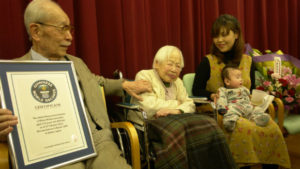
Japan’s oldest woman Misao Owasa receiving Huinness Record for longest living person (http://www.guinnessworldrecords.com)

“We were surprised and delighted to learn that more than 70% of our sample maintained their excellent state of health across the study period,” says the first author, Mabel Ho, a doctoral candidate at the University of Toronto’s Factor-Inwentash Faculty of Social Work (FIFSW) and the Institute of Life Course and Aging. “Our findings underline the importance of a strength-based rather than a deficit-based focus on aging and older adults. The media and research tend to ignore the positive and just focus on the problems.”

There was considerable variation in the prevalence of successful aging based on the respondents’ age at the beginning of the study. Three quarters of the respondents who were aged 55 to 64 at the start of the study period maintained excellent health throughout the study. Among those aged 80 and older, approximately half remained in excellent health.

“It is remarkable that half of those aged 80 and older maintained this extremely high bar of cognitive, physical, and emotional well-being across the three years of the study. This is wonderful news for older adults and their families who may anticipate that precipitous decline is inevitable for those aged 80 and older.”  says Mabel Ho. “By understanding factors associated with successful aging, we can work with older adults, families, practitioners, policymakers, and researchers to create an environment that supports a vibrant and healthy later life.”

Sleep/en.wikipedia.org

Older adults who were obese were less likely to maintain good health in later life. Compared to older adults who were obese, those who had a normal weight were 24% more likely to age optimally.

“Our findings are in keeping with other studies which have found that obesity was related to a range of physical symptoms and cognitive problems and that physical activity also plays a key role in optimal aging,” says co-author David Burnes, Associate Professor at the University of Toronto’s FIFSW and a Canada Research Chair in Older Adult Mistreatment Prevention. “These findings highlight the importance of maintaining an appropriate weight and engaging in an active lifestyle throughout the life course”.

Income was also as an important factor. Only about half of those below the poverty line aged optimally compared to three-quarters of those living above the poverty line.

“Although our study does not provide information on why low income is important, it is possible that inadequate income causes stress and also restricts healthy choices such as optimal nutrition. Future research is needed to further explore this relationship,” says senior author Esme Fuller-Thomson, Director of the Institute for Life Course & Aging and Professor at the University of Toronto’s Factor-Inwentash Faculty of Social Work.


Lifestyle factors are associated with optimal health in later life. Older adults who never smoked were 46% more likely to maintain an excellent state of health compared to current smokers. Previous studies showed that quitting smoking in later life could improve survival statistics, pulmonary function, and quality of life; lower rates of coronary events, and reduce respiratory symptoms. The study found that former smokers did as well as those who had never smoked, underscoring that it is never too late to quit.

The study also found that engaging in physical activity was important in maintaining good health in later life. Older adults who engaged in moderate to strenuous physical activity were 35% to 45% more likely to age well, respectively.

The findings indicated that respondents who never or rarely experienced sleep problems at baseline were 29% more likely to maintain excellent health across the study.

“Clearly, good sleep is an important factor as we age. Sleep problems undermine cognitive, mental, and physical health. There is strong evidence that an intervention called cognitive-behavioral therapy for insomnia (CBT-I) is very helpful for people living with insomnia,” says Esme Fuller-Thomson.

Also Read:

New Algorithm Can Read Your Mind, Shows Study Using Brain Imaging Technology

VMC is biomarker of ageing for nematode; what is its role in Humans?

b-type procyanidin-rich foods consumed in right amounts have multiple health benefits

Mother’s ultra-processed food intake linked to obesity risk in children; Unlikely during peripregnancy

A mother’s consumption of ultra-processed foods appears to be linked to an increased risk of overweight or obesity in her offspring, irrespective of other lifestyle risk factors, suggests a US study.

Researchers suggest that mothers might benefit from limiting their intake of ultra-processed foods, and that dietary guidelines should be refined and financial and social barriers removed to improve nutrition for women of child bearing age and reduce childhood obesity.

According to the World Health Organization, 39 million children were overweight or obese in 2020, leading to increased risks of heart disease, diabetes, cancers, and early death.

Ultra-processed foods, such as packaged baked goods and snacks, fizzy drinks and sugary cereals, are commonly found in modern Western style diets and are associated with weight gain in adults. But it’s unclear whether there’s a link between a mother’s consumption of ultra-processed foods and her offspring’s body weight.

To explore this further, the researchers drew on data for 19,958 children born to 14,553 mothers (45% boys, aged 7-17 years at study enrollment) from the Nurses’ Health Study II (NHS II) and the Growing Up Today Study (GUTS I and II) in the United States.

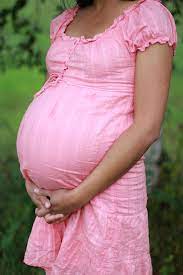
pregnant lady/Commons.wikimedia.org

The NHS II is an ongoing study tracking the health and lifestyles of 116,429 US female registered nurses aged 25-42 in 1989. From 1991, participants reported what they ate and drank, using validated food frequency questionnaires every four years.

The GUTS I study began in 1996 when 16,882 children (aged 8-15 years) of NHS II participants completed an initial health and lifestyle questionnaire and were monitored every year between 1997 and 2001, and every two years thereafter.

In 2004, 10,918 children (aged 7-17 years) of NHS II participants joined the extended GUTS II study and were followed up in 2006, 2008, and 2011, and every two years thereafter.

A range of other potentially influential factors, known to be strongly correlated with childhood obesity, were also taken into account. These included mother’s weight (BMI), physical activity, smoking, living status (with partner or not), and partner’s education, as well as children’s ultra-processed food consumption, physical activity, and sedentary time.

Overall, 2471 (12%) children developed overweight or obesity during an average follow-up period of 4 years.

The results show that a mother’s ultra-processed food consumption was associated with an increased risk of overweight or obesity in her offspring. For example, a 26% higher risk was seen in the group with the highest maternal ultra-processed food consumption (12.1 servings/day) versus the lowest consumption group (3.4 servings/day).

In a separate analysis of 2790 mothers and 2925 children with information on diet from 3 months pre-conception to delivery (peripregnancy), the researchers found that peripregnancy ultra-processed food intake was not significantly associated with an increased risk of offspring overweight or obesity.

This is an observational study, so can’t establish cause and the researchers acknowledge that some of the observed risk may be due to other unmeasured factors, and that self-reported diet and weight measures might be subject to misreporting.

Other important limitations include the fact that some offspring participants were lost to follow-up, which resulted in a few of the analyses being underpowered, particularly those related to peripregnancy intake, and that mothers were predominantly white and from similar social and economic backgrounds, so the results may not apply to other groups.

Nevertheless, the study used data from several large ongoing studies with detailed dietary assessments over a relatively long period, and further analysis produced consistent associations, suggesting that the results are robust.

The researchers suggest no clear mechanism underlying these associations and say the area warrants further investigation.

Nevertheless, these data “support the importance of refining dietary recommendations and the development of programs to improve nutrition for women of reproductive age to promote offspring health,” they conclude.

Also Read:

Air pollution is more dangerous for women than men: Study

Neanderthal gene in modern women helps give birth to more children, says study

Frozen embryo transfers linked with high blood pressure risks in pregnancy; What is sibling comparison?

Boosting physical activity/curbing sitting time likely to lower breast cancer risk:Mendelian randomisation study reveals

Boosting physical activity levels and curbing sitting time are highly likely to lower breast cancer risk, finds research designed to strengthen proof of causation and published online in the British Journal of Sports Medicine.

The findings were generally consistent across all types and stages of the disease, reveals the Mendelian randomisation study, prompting the researchers to recommend a stronger focus on exercise as a way of warding off breast cancer.

Mendelian randomisation is a technique that uses genetic variants as proxies for a particular risk factor—in this case lifelong physical activity levels/sedentary behaviour—to obtain genetic evidence in support of a causal relationship.

Exercise/Photo:en.wikipedia.org

Observational studies show that physical inactivity and sedentary behaviour are linked to higher breast cancer risk, but proving they cause breast cancer is another matter.

The researchers therefore used Mendelian randomisation to assess whether lifelong physical activity and sitting time might be causally related to breast cancer risk in general, and specifically to different types of tumour.

They included data from 130,957 women of European ancestry: 69, 838 of them had tumours that had spread locally (invasive); 6667 had tumours that hadn’t yet done so (in situ); and a comparison group of 54,452 women who didn’t have breast cancer.

Exercise-Yoga/Photo:en.wikipedia.org

The researchers then drew on previously published studies that had used the vast repository of UK Biobank data on potential genetic explanations for overall predisposition to physical activity, vigorous physical activity, or sitting time—as measured by wrist-worn activity trackers—to genetically predict how physically active or inactive their own study participants were.

Next, the researchers estimated overall breast cancer risk, according to whether the women had or hadn’t gone through the menopause; and by cancer type,stage (size and extent of tumour spread), and grade (degree of tumour cell abnormality).

Analysis of the data showed that a higher overall level of genetically predicted physical activity was associated with a 41% lower risk of invasive breast cancer, and this was largely irrespective of menopausal status, tumour type, stage, or grade.

Similarly, genetically predicted vigorous physical activity on 3 or more days of the week was associated with a 38% lower risk of breast cancer, compared with no self-reported vigorous activity. These findings were consistent across most of the case groups.

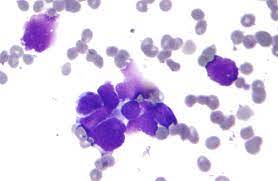
cancer cells/photo:en.wikipedia.org

Finally, a greater level of genetically predicted sitting time was associated with a 104% higher risk of triple negative breast cancer. These findings were consistent across hormone-negative tumour types.

The findings were unchanged after factoring in the production by a single gene of two or more apparently unrelated effects (pleiotropy), such as smoking and overweight, for example.

There are plausible biological explanations for their findings, say the researchers, who point to a reasonable body of evidence indicating numerous causal pathways between physical activity and breast cancer risk, such as overweight/obesity, disordered metabolism, sex hormones, and inflammation.

“Mechanisms linking sedentary time and cancer are likely to at least partially overlap with those underpinning the physical activity relationship,” suggest the researchers.

Their findings provide “strong evidence” that more overall physical activity and less sitting time are likely to reduce breast cancer risk, they say.

And they conclude: “Increasing physical activity and reducing sedentary time are already recommended for cancer prevention. Our study adds further evidence that such behavioural changes are likely to lower the incidence of future breast cancer rates.

“A stronger cancer-control focus on physical activity and sedentary time as modifiable cancer risk factors is warranted, given the heavy burden of disease attributed to the most common cancer in women.”

Sedentary behavior increases risk of death for frail, inactive adults

Sedentary time, for example, time spent sitting, increases the risk of death for middle-aged and older people who are frail and inactive, but does not appear to increase the risk for nonfrail people who are inactive, according to a new study published in CMAJ (Canadian Medical Association Journal).

Many studies have looked at the benefits of physical activity on health, although little data exists on sedentary behaviour and risk of death linked to levels of frailty. Frailty refers to a person’s overall health state, determined by the number of health problems this person has.

To understand if level of frailty and prolonged sitting are linked to a higher risk of death, researchers looked at data on 3141 adults aged 50 and over in the US National Health and Nutrition Examination Survey (NHANES) from 2003/04 and 2005/06. Participants used activity trackers during waking hours and were assessed using a 46-item frailty index; they were then followed until 2011 or date of death.

“We found that in people who scored low on the frailty index, sitting time was not linked to risk of death,” states Dr. Olga Theou, Department of Medicine, Dalhousie University, Halifax, Nova Scotia. “Prolonged sitting was associated with a higher risk of death only in vulnerable or frail people who did not meet the weekly recommendation for 2.5 hours of moderate physical activity.”

The authors note study limitations such as limited activity tracking data for people with higher levels of frailty, which prevented them from segmenting people with severe frailty into one category for analysis.

“Physicians should stress the harms of inactivity with patients, similar to the harms of smoking, to encourage movement,” states Dr. Olga Theou. “Even something as simple as getting up and walking around the house with a walker or cane can benefit frailer people.”

The authors suggest this key public health message should be included in health promotions about the importance of healthy behaviours.

Life Style Diseases

The Indian Council of Medical Research (ICMR) is conducting a study namely ICMR-INDIAB involving all States and Union Territories – both urban and rural population for ascertaining the exact number of Diabetic patients. 15 States have been covered so far and the prevalence of diabetes varies from 4.3% in Bihar to 13.6% in Chandigarh.

According to report published by International Diabetes Federation (IDF; 6th Edition, 2013), number of people with diabetes (20-79 years) in Urban setting of India were about 30.5 millions in 2013.

As informed by Indian Council of Medical Research (ICMR), current estimates from one-time cross sectional studies conducted in different regions of country indicate that the prevalence of coronary heart disease (CHD) is between 8-10 percent in urbanand 3 to 4 percent in rural India.

As informed by ICMR the estimated prevalence of cancer cases in India during 2013, 2014 and 2015 are 2934314, 3016628 and 3101467 respectively.

Nationwide scientific estimation of number of patients of Chronic Kidney Diseases (CKD) has not been carried out. However, in some of the small population based studies, it was found to be in 0.79 % in North India and 0.16% in South India.

National Center for Disease Informatics and Research (NCDIR), Bengaluru is running Hospital and Population based Cancer Registries. As informed by ICMR some studies have been conducted on NCDs. A study is commissioned to ICMR on Burden of Non-Communicable Diseases and Associated Risk Factors for India (BOD-NCD).

The factors responsible for increase in Lifestyle Diseases (NCDs) are unhealthy diet, lack of physical activity, harmful use of alcohol, overweight, obesity, tobacco use, etc.

Public health is a State subject, however, under National Health Mission(NHM), financial and technical support is provided to States/UTs to strengthen their healthcare systems including setting up of / upgradation of public health facilities, based on the requirements posed by the States/UTs in their Programme Implementation Plans (PIPs).

Government of India is implementing National Programme for Prevention and Control of Cancer, Diabetes, Cardiovascular Diseases and Stroke (NPCDCS) for interventions up to District level under the National Health Mission. Under NPCDCS, diagnosis and treatment facilities are provided through different levels of healthcare by setting up NCD Clinics in District Hospitals and Community Health Centres (CHCs). Intervention of Chronic Kidney Diseases (CKD) has also been included in NPCDCS for proper management.

For early diagnosis, Population-based Screening of common NCDs viz. Diabetes, Hypertension and Common cancers (Oral, Breast, Cervical) is initiated under NHM utilizing the services of the Frontline- workers and Health-workers under existing Primary Healthcare System. This process will also generate awareness on risk factors of common NCDs.

Under strengthening of Tertiary Care for Cancer Centre (TCCC) Scheme, Government of India is assisting States to set up / establish State Cancer Institute (SCI) and Tertiary Care Cancer Centres (TCCCs) in different parts of the country. Support under the National Health Mission (NHM) is also being provided to States for provision of dialysis services free of cost to the poor under Pradhanmantri National Dialysis Programme (PNDP).

The Central Government, through its hospitals augments the efforts of the State Governments for providing health services in the country. Under Pradhan Mantri Swasthya Suraksha Yojana (PMSSY), 6 new AIIMS have been set up and upgradation of identified medical colleges has been undertaken which will also improve health care facilities.

The Minister of State (Health and Family Welfare), Smt Anupriya Patel stated this in a written reply in the Lok Sabha here today.