Gaza health system ‘catastrophic’ as hospitals overwhelmed and medicines running out, WHO warns

Fewer than half of Gaza’s hospitals and under 38 per cent of primary healthcare centres are partially functioning – or are doing so at minimal levels – said Dr. Rik Peeperkorn, World Health Organization (WHO) Representative for the West Bank and Gaza.

Bed occupancy in major facilities is exceeding limits by large margins – Shifa Hospital is at 250 per cent capacity, Nasser at 180 per cent, Al-Rantisi at 210 per cent and Al-Ahli at over 300 per cent.

Critical supplies running out

“The critical shortage in medications and consumables continue and have only exacerbated, with 52 per cent of the medicines and 68 per cent of consumables at zero stock,” Dr. Peeperkorn told journalists in Geneva, speaking from Jerusalem.

Hospitals are particularly overwhelmed by injuries from food distribution areas, which are also driving persistent shortages of blood and plasma,” he added, noting that since 27 May, at least 1,655 people have been killed in those areas and more than 11,800 injured.

The crisis has been exacerbated by displacement orders in Gaza City that now place WHO’s own warehouse in an evacuation zone. Hospitals, primary care centres and ambulance facilities are also located inside or near these areas, threatening further disruption to services.

Malnutrition worsening

Hunger and malnutrition are worsening rapidly.

Since the start of 2025, 148 people have died from malnutrition, including 49 children – 39 of them under five years old. Nearly 12,000 children under five were diagnosed with acute malnutrition in July, the highest monthly figure to date, with more than 2,500 suffering from the most severe form.

New threat from meningitis

Disease outbreaks are adding to the pressure.

Suspected meningitis cases reached 452 between July and early August – the highest number since the escalation began. Guillain-Barré syndrome, a rare post-infection disorder, has also surged, with 76 suspected cases since June.

Both conditions are harder to treat due to “zero stocks” of vital medicines, including intravenous immuneoglobulin and anti-inflammatories, Dr. Peeperkorn said.

Access challenges

Access for international medical teams and supplies remains a major obstacle.

Dr. Peeperkorn said that international medics face entry denials, while key items such as ICU equipment, anaesthesia machines and cold chain supplies continue to be held back.

Though WHO managed to bring in 80 trucks of medical supplies since June, he stressed that procedures are slow and unpredictable, with many shipments delayed or denied.

We need multiple crossings into Gaza opened, procedures simplified, and access impediments lifted,” he said. “We hear about more humanitarian supplies being allowed in – but it’s not happening, or it’s happening far too slowly.”

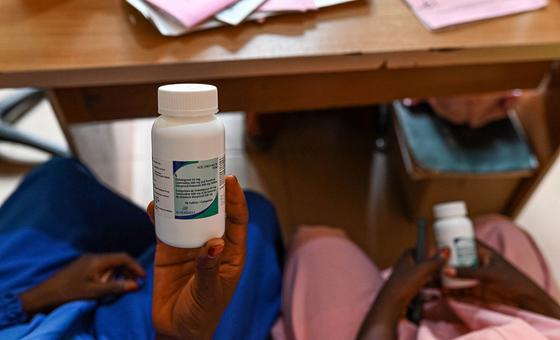
Africa’s push for HIV independence advances with first procurement of locally made medicines

The development marks a milestone for a region that bears nearly 65 per cent of the global HIV burden and has long depended on imports of lifesaving antiretroviral medicines and testing kits. But that may be starting to change.

The human immunodeficiency virus (HIV) weakens the body’s immune system, reducing its ability to fight infections and certain cancers. Without timely intervention, it can progress to acquired immunodeficiency syndrome (AIDS), the most advanced stage of infection.

In 2023, Kenya-based pharmaceutical company Universal Corporation Ltd became the first African manufacturer to receive World Health Organization (WHO) prequalification to produce tenofovir disoproxil fumarate, lamivudine and dolutegravir (TLD) – a first-line antiretroviral therapy for HIV.

Now, in a major step forward, the Global Fund – a worldwide partnership financing HIV, tuberculosis and malaria responses – is procuring this locally produced HIV treatment for Mozambique, making it the first time African-manufactured TLD has been deployed through this channel.

The procurement of the African-manufactured first-line HIV treatment by the Global Fund for Mozambique is a great milestone towards strengthening supply chain systems in Africa,said Meg Doherty, Director of WHO’s Global HIV Programmes.

This will contribute to better health outcomes for people living with HIV who need uninterrupted medicine supplies.

Building regional capacity

WHO says the achievement is part of a broader push to bolster local production capacity and improve access to essential health technologies across Africa.

The UN agency has been partnering with countries, manufacturers and global health organizations – including the Global Fund and Unitaid – to expand quality-assured African manufacturing.

“Local production of quality-assured health products is an urgent priority,” said Rogerio Gaspar, WHO Director for Regulation and Prequalification.

With every African manufacturer that meets WHO prequalification standards, we move closer to a more self-reliant, resilient and equitable health system.

Progress, but structural gaps remain

Despite the milestone, WHO cautioned that production alone is not enough. To ensure long-term sustainability, the agency is calling for advanced market commitments, fair procurement policies and ongoing technical support.

WHO also points to diagnostics as a critical gap. With shifting donor funding, many countries are under pressure to maintain HIV testing programmes, which are the frontline of prevention and treatment.

In a related effort, Codix Bio, a Nigerian diagnostics company, recently received a sublicense to manufacture rapid diagnostic tests for HIV.

Locally produced HIV rapid tests will help increase affordability, and address supply chain vulnerabilities and delays
– WHO Director Meg Doherty

Having locally produced HIV rapid tests will help increase affordability, and more broadly address supply chain vulnerabilities and delays in access to diagnostics,” said Dr. Doherty.

Sustaining impact amid funding strain

As part of its guidance, the UN health agency is also encouraging countries to adopt low-cost, WHO-prequalified rapid HIV tests, especially as the first test in national algorithms, which can significantly cut costs while maintaining service delivery.

While the latest update marks tangible progress, more action is needed.

“Locally manufactured TLD is a major step towards that goal,” WHO said, “but more action is needed.”

Source link

Researchers uncover factors linked to optimal aging

What are the keys to “successful” or optimal aging? A new study followed more than 7000 middle aged and older Canadians for approximately three years to identify the factors linked to well-being as we age.

They found that those who were female, married, physically active and not obese and those who had never smoked, had higher incomes, and who did not have insomnia, heart disease or arthritis, were more likely to maintain excellent health across the study period and less likely to develop disabling cognitive, physical, or emotional problems.

As a baseline, the researchers selected participants who were in excellent health at the start of the approximately three-year period of study. This included the absence of memory problems or chronic disabling pain, freedom from any serious mental illness and absence of physical disabilities that limit daily activities — as well as the presence of adequate social support and high levels of happiness and life satisfaction.

Japan’s oldest woman Misao Owasa receiving Huinness Record for longest living person (http://www.guinnessworldrecords.com)

“We were surprised and delighted to learn that more than 70% of our sample maintained their excellent state of health across the study period,” says the first author, Mabel Ho, a doctoral candidate at the University of Toronto’s Factor-Inwentash Faculty of Social Work (FIFSW) and the Institute of Life Course and Aging. “Our findings underline the importance of a strength-based rather than a deficit-based focus on aging and older adults. The media and research tend to ignore the positive and just focus on the problems.”

There was considerable variation in the prevalence of successful aging based on the respondents’ age at the beginning of the study. Three quarters of the respondents who were aged 55 to 64 at the start of the study period maintained excellent health throughout the study. Among those aged 80 and older, approximately half remained in excellent health.

“It is remarkable that half of those aged 80 and older maintained this extremely high bar of cognitive, physical, and emotional well-being across the three years of the study. This is wonderful news for older adults and their families who may anticipate that precipitous decline is inevitable for those aged 80 and older.”  says Mabel Ho. “By understanding factors associated with successful aging, we can work with older adults, families, practitioners, policymakers, and researchers to create an environment that supports a vibrant and healthy later life.”

Sleep/en.wikipedia.org

Older adults who were obese were less likely to maintain good health in later life. Compared to older adults who were obese, those who had a normal weight were 24% more likely to age optimally.

“Our findings are in keeping with other studies which have found that obesity was related to a range of physical symptoms and cognitive problems and that physical activity also plays a key role in optimal aging,” says co-author David Burnes, Associate Professor at the University of Toronto’s FIFSW and a Canada Research Chair in Older Adult Mistreatment Prevention. “These findings highlight the importance of maintaining an appropriate weight and engaging in an active lifestyle throughout the life course”.

Income was also as an important factor. Only about half of those below the poverty line aged optimally compared to three-quarters of those living above the poverty line.

“Although our study does not provide information on why low income is important, it is possible that inadequate income causes stress and also restricts healthy choices such as optimal nutrition. Future research is needed to further explore this relationship,” says senior author Esme Fuller-Thomson, Director of the Institute for Life Course & Aging and Professor at the University of Toronto’s Factor-Inwentash Faculty of Social Work.


Lifestyle factors are associated with optimal health in later life. Older adults who never smoked were 46% more likely to maintain an excellent state of health compared to current smokers. Previous studies showed that quitting smoking in later life could improve survival statistics, pulmonary function, and quality of life; lower rates of coronary events, and reduce respiratory symptoms. The study found that former smokers did as well as those who had never smoked, underscoring that it is never too late to quit.

The study also found that engaging in physical activity was important in maintaining good health in later life. Older adults who engaged in moderate to strenuous physical activity were 35% to 45% more likely to age well, respectively.

The findings indicated that respondents who never or rarely experienced sleep problems at baseline were 29% more likely to maintain excellent health across the study.

“Clearly, good sleep is an important factor as we age. Sleep problems undermine cognitive, mental, and physical health. There is strong evidence that an intervention called cognitive-behavioral therapy for insomnia (CBT-I) is very helpful for people living with insomnia,” says Esme Fuller-Thomson.

Also Read:

New Algorithm Can Read Your Mind, Shows Study Using Brain Imaging Technology

VMC is biomarker of ageing for nematode; what is its role in Humans?

b-type procyanidin-rich foods consumed in right amounts have multiple health benefits

Cheap Medicines

The Drugs Policy as amended from time to time envisages making available quality medicines at affordable prices to the masses. National Pharmaceuticals Pricing Authority (NPPA) under the Department of Pharmaceuticals has fixed the ceiling price of drugs placed in the first schedule to the Drugs (Prices Control) Order, 2013. In case of non-scheduled formulations, the Maximum Retail Prices (MRP) cannot be increased by more than 10% during the preceding 12 month period.

Public Health and hospitals being a state subject, the States/UTs also take requisite action to ensure the availability of cheap/free medicines for the people. The Central Government, under the National Health Mission (NHM), provides financial and technical support to theStates/UTs for strengthening their healthcare delivery system including support for provision of essential drugs free of cost to those who access public health facilities under the NHM Free Drugs Service Initiative. All the States/UTs have reported that they have notified free drug policy in their respective States/UTs.

The Department of Pharmaceuticals has prepared a Uniform Code for Pharmaceutical Marketing Practices (UCPMP) which has been implemented by pharmaceutical companies with effect from 01.01.2015.

Further, Medical Council of India (MCI) or the appropriate State Medical Councils have been empowered to take disciplinary action against a doctor for violation of the provisions of the Indian Medical Council (Professional Conduct, Etiquette and Ethics) Regulations, 2002.

In order to promote the use of cheap generic drugs in the country including in rural areas and with the objective of making available quality generic drugs at affordable prices to all, 2052 Kendras have been startedin the country under a countrywide campaign in the name of ‘PradhanMantriBhartiyaJanaushadhiPariyojana’ (PMBJP).

Further, the Ministry of Health and Family Welfare has started AMRIT (Affordable Medicines and Reasonable Implants for Treatment) stores where essential life saving medicines and implants including stents are being provided at a substantial discount vis-à-vis the Maximum Retail Price.

The Minister of State (Health and Family Welfare), Sh Faggan Singh Kulaste stated this in a written reply in the Lok Sabha here today.