World News in Brief: Sudan hospitals under fire, world remembers victims of terrorism, DR Congo

A grenade attack inside Zalingei Hospital in Darfur State, led Médecins Sans Frontières (MSF) to suspend all of its activities there yesterday.  

MSF had previously led a cholera emergency response at the medical facility, providing life-saving treatment for 160 patients in the past two weeks alone.  

“The rules of war are clear that the wounded and sick, medical personnel and hospitals be protected at all times,” said UN Spokesperson Stéphane Dujarric, at the regular briefing on Wednesday.  

Do not give up on Sudan

In concert with the Sudanese Ministry of Health and humanitarian partners, the UN continues working to expand access to cholera vaccines across the country, including more than two million reached during a recent campaign across Khartoum, Al Jazirah and Sennar States.

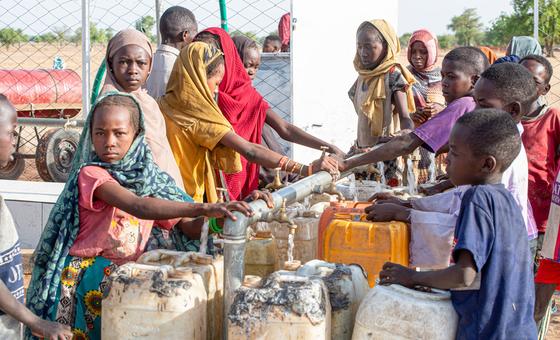
With famine having been confirmed in parts of Sudan, the UN and its partners are also working to deliver food assistance wherever they can — but ongoing conflict has threatened their ability to access some locations.  

For the first time since the conflict began in April 2023, the World Food Programme (WFP) reached rural areas of North Darfur State on 14 August and provided over 50,000 displaced people with food.  

On 19 August, Luca Renda, the Sudan representative of the UN Development Programme (UNDP) in Sudan, lauded the work of humanitarians who continue to provide lifesaving assistance despite extreme risk to their own safety.  

“Sudanese humanitarians continue to deliver. They cross frontlines. They navigate insecurity and bureaucracy. They risk everything to reach people in need. They have not given up and neither must we.”

International Day honours victims of terrorism

Thursday, 21 August, marks the eighth commemoration of the International Day of Remembrance of and Tribute to the Victims of Terrorism.  

Although the violent scourge is condemned worldwide, victims and survivors of terrorism often feel their voices are not heard and struggle to have their needs supported and rights upheld, especially when few Member States have the resources to help them recover.

This year’s theme is United by Hope: Collective Action for Victims of Terrorism, highlighting the power of solidarity among victims to turn pain into purpose and drive meaningful change.

In observance of the day, the UN Office of Counterterrorism will host a virtual event and a panel discussion featuring five survivors of terrorism from different regions.

“On this solemn day, we honour the victims and survivors of terrorism everywhere – saluting their courage, acknowledging their pain, and reaffirming our enduring commitment to peace, justice, and human rights, Secretary-General António Guterres, said in a video message.

Mr. Guterres welcomed the launch of the UN-supported Victims of Terrorism Associations Network, which works to empower victims and amplify their voices.

“Victims of terrorism are showing the way: supporting one another, speaking out, and championing the rights of all those affected,” he continued, urging governments, civil society and the international community to “match their courage.”

DR Congo: Deadly violence continues in the east 

Violence continues in eastern Democratic Republic of the Congo (DRC) in the form of deadly attacks by the Allied Democratic Forces militia across North Kivu between 9 and 16 August.  

“Yesterday, gunfire was reported near the UN Mission’s base in Bayoo and also close to the base of Uganda People’s Defence Forces (UPDF) in Bule, in Ituri Province,” said UN Spokesperson Stéphane Dujarric during Wednesday’s briefing in New York.  

The UN mission, MONUSCO, activated security protocols and deployed patrols to secure the area and nearby sites hosting internally displaced people.

Peacekeeping efforts

Meanwhile, MONUSCO’s Commander led a delegation to Komanda in Ituri Province, to meet community representatives and honour victims of a massacre perpetrated by the ADF in July, which killed hundreds of civilians.  

From 15 to 18 August, at the request of local communities, UN peacekeepers also deployed a Mobile Operating Base in Soleniama, Ituri, to support demobilisation efforts, with the help of religious leaders. 

Source link

Gaza health system ‘catastrophic’ as hospitals overwhelmed and medicines running out, WHO warns

Fewer than half of Gaza’s hospitals and under 38 per cent of primary healthcare centres are partially functioning – or are doing so at minimal levels – said Dr. Rik Peeperkorn, World Health Organization (WHO) Representative for the West Bank and Gaza.

Bed occupancy in major facilities is exceeding limits by large margins – Shifa Hospital is at 250 per cent capacity, Nasser at 180 per cent, Al-Rantisi at 210 per cent and Al-Ahli at over 300 per cent.

Critical supplies running out

“The critical shortage in medications and consumables continue and have only exacerbated, with 52 per cent of the medicines and 68 per cent of consumables at zero stock,” Dr. Peeperkorn told journalists in Geneva, speaking from Jerusalem.

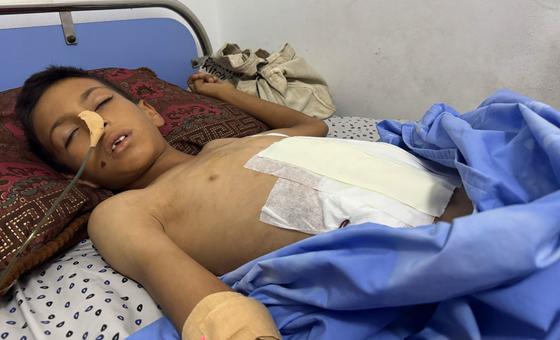
Hospitals are particularly overwhelmed by injuries from food distribution areas, which are also driving persistent shortages of blood and plasma,” he added, noting that since 27 May, at least 1,655 people have been killed in those areas and more than 11,800 injured.

The crisis has been exacerbated by displacement orders in Gaza City that now place WHO’s own warehouse in an evacuation zone. Hospitals, primary care centres and ambulance facilities are also located inside or near these areas, threatening further disruption to services.

Malnutrition worsening

Hunger and malnutrition are worsening rapidly.

Since the start of 2025, 148 people have died from malnutrition, including 49 children – 39 of them under five years old. Nearly 12,000 children under five were diagnosed with acute malnutrition in July, the highest monthly figure to date, with more than 2,500 suffering from the most severe form.

New threat from meningitis

Disease outbreaks are adding to the pressure.

Suspected meningitis cases reached 452 between July and early August – the highest number since the escalation began. Guillain-Barré syndrome, a rare post-infection disorder, has also surged, with 76 suspected cases since June.

Both conditions are harder to treat due to “zero stocks” of vital medicines, including intravenous immuneoglobulin and anti-inflammatories, Dr. Peeperkorn said.

Access challenges

Access for international medical teams and supplies remains a major obstacle.

Dr. Peeperkorn said that international medics face entry denials, while key items such as ICU equipment, anaesthesia machines and cold chain supplies continue to be held back.

Though WHO managed to bring in 80 trucks of medical supplies since June, he stressed that procedures are slow and unpredictable, with many shipments delayed or denied.

We need multiple crossings into Gaza opened, procedures simplified, and access impediments lifted,” he said. “We hear about more humanitarian supplies being allowed in – but it’s not happening, or it’s happening far too slowly.”

Gaza: Hospitals ‘at near-total collapse’, staff overwhelmed by the injured

Meanwhile, UN agencies confirmed the deaths of three Palestinians from Guillain-Barré Syndrome (GBS), a rare auto-immune disease that can cause sudden muscle weakness and even paralysis.

Before war erupted in Gaza in October 2023, only a handful of cases surfaced every year.

Mass casualties now the norm

“Hospitals are overwhelmed by mass casualty incidents, with an average of eight incidents per day,” said the UN aid coordination agency, OCHA, citing health partners.

In an update on the dire health crisis in Gaza, OCHA noted that specialised rehabilitation facilities were also overstretched handling complex trauma injuries and cases of Guillain-Barré.

To date, three deaths out of around 64 cases of GBS have been confirmed by the health authorities in Gaza. Two of the deceased were children.

According to the UN World Health Organization (WHO), 30 per cent of GBS patients require intensive care but there is no available stock of the primary medication needed to treat it, intravenous immunoglobulin.

Aid-drops are inadequate: WFP

In a related development, the UN World Food Programme (WFP) echoed repeated calls for aid to flood into Gaza, as opposed to the very limited amounts being allowed by the Israeli authorities.

We can’t airdrop our way out of an unfolding famine. Not in Gaza,” insisted Cindy McCain, WFP Executive Director in a social media post late Wednesday.

The UN agency chief underscored that “500,000 people are starving today” and the only way to help them is to get food to them at scale and by land.

“We can’t afford to wait; Gaza is out of food and out of time,” Ms. McCain said.

WHO stocks destroyed

The destruction of WHO’s main medical warehouse in an attack on Deir Al-Balah late last month continues to impact lifesaving care.

In particular, the critical shortage of antibiotics has hampered treatment of meningitis, whose numbers are now in the hundreds – “the highest number recorded since the beginning of the escalation”, the OCHA update noted.

Isolation measures have been implemented, including the separation of the external department at Al Khair Hospital from the Nasser Medical Complex and the establishment of isolation tents at Al Aqsa Hospital to safely manage suspected cases.

Explosive weapons such as bombs and grenades have accounted for 83 per cent of medical consultations, said OCHA.

It cited partner NGO Médecins Sans Frontières (MSF) whose data covered more than 200,000 medical consultations in six MSF-supported health facilities in Gaza in 2024.

It cited partner NGO Médecins Sans Frontières (MSF) whose data covered more than 200,000 medical consultations in six MSF-supported health facilities in Gaza in 2024.

What is Guillain-Barré Syndrome?

Guillain-Barré Syndrome (GBS) is a neurological and autoimmune disease that affects the nervous system and causes progressive muscle paralysis. It is not contagious and is often triggered by a prior infection – viral or bacterial – that  disrupts the immune system.

In most cases, patients can recover fully within a few weeks. But WHO stressed that even in the best healthcare settings, three to five per cent of patients die from complications of the disease, such as respiratory muscle paralysis, sepsis, pulmonary embolism, or cardiac arrest.

There have been several outbreaks of infectious diseases in Gaza since war erupted following Hamas-led terror attacks in Israel, including polio, cholera, hepatitis A and scabies.

Source link

Syria crisis: Hundreds killed in ongoing violence, hospitals overwhelmed

Briefing reporters in Geneva, UN human rights office, OHCHR, spokesperson Ravina Shamdasani highlighted “credible” reports of “widespread violations and abuses, including summary executions and arbitrary killings, kidnappings, destruction of private property and looting of homes” in the city of Sweida.

“Among the reported perpetrators were members of the security forces and individuals affiliated with the interim authorities, as well as other armed elements from the area, including the Druze and Bedouin,” she said.

Many hospitals are struggling to cope with the influx of injured, the UN refugee agency UNHCR also noted.

Forced to flee

On Friday morning, OHCHR colleagues reported that clashes were continuing and that “a lot of people are trying to flee or have fled the area”, Ms. Shamdasani continued.

Latest updates from the UN humanitarian affairs coordination office, OCHA, on Thursday indicated that nearly 2,000 families had been displaced from areas affected by the fighting.

Hundreds have reportedly been killed since sectarian violence involving the Druze and Bedouin communities erupted on 12 July, triggering an intervention by Syrian security forces.

OHCHR’s Ms. Shamdasani highlighted an incident on 15 July in which at least 13 people were killed when “armed individuals affiliated with the interim authorities deliberately opened fire at a family gathering”.

Briefing an emergency meeting of the Security Council in New York on Thursday, UN Assistant Secretary-General Khaled Khiari also referenced reports of “civilians, religious figures and detainees being subjected to extrajudicial executions and humiliating and degrading treatment”. He urged all parties to protect civilians and civilian infrastructure.

Rumours and fact-checking

Ms. Shamdasani stressed that the UN human rights office has been trying to verify the information through “contacts on the ground…families of people who were killed, eyewitnesses”, but that obtaining reliable estimates of the death toll remains challenging.

“There are lots of videos circulating,” she said. “Some claim to be fighters who are in the area filming the abuses and violations they’re carrying out. We are trying to verify some of these videos, but there’s a lot of disinformation out there and a lot of it is being used to incite further violence to inflame tensions.”

The OHCHR spokesperson also expressed concern about reports of civilian casualties resulting from Israel’s airstrikes on Sweida, Dara’a and central Damascus.

“Attacks such as the one on Damascus on Wednesday pose great risks to civilians and civilian objects,” she warned, calling for the strikes to cease.

Israel had launched the strikes pledging to protect the Druze community.

The violence and displacement have sparked “considerable” humanitarian needs, with the health and aid systems struggling to keep up, said William Spindler of the UN refugee agency UNCHR.

“Many of the hospitals have been overwhelmed by the number of people who have been injured in the recent fighting,” he said.

According to OCHA, the UN World Health Organization (WHO) has dispatched enough trauma and emergency surgery kits for 1,750 interventions to the area, but many “remain undelivered due to access constraints”.

Since the displaced had to flee at very short notice, they are in desperate need of essentials – blankets, jerry cans, solar lamps – but providing these items has been a challenge.

Too risky to enter

“We have this in stock and we are ready to deliver them as soon as the security allows it,” Mr. Spindler said. “For now, this has not been possible.”

Mr. Spindler also warned of water shortages due to electricity outages. He said that people are unable to buy bottled water or food because of the insecurity.

UNHCR has an office in rural Sweida and Mr. Spindler expressed concern about the impact of the hostilities on the agency’s operations, infrastructure and personnel.

“We know that humanitarian infrastructure has been affected,” he said, describing an incident on 15 July in which a warehouse of the Syrian Arab Red Crescent was severely damaged by shelling.

The UNHCR spokesperson called on all parties to the conflict to respect and protect humanitarian premises, personnel and assets “in accordance with international humanitarian law”.

Gaza: Hospitals rationing critical supplies, ambulances stalling

What little fuel remains is powering essential operations, but it is running out fast, and there are virtually no additional accessible stocks left, UN Spokesperson Stéphane Dujarric said, citing reports from the UN relief coordination office, OCHA.  

“Hospitals are rationing. Ambulances are stalling. Water systems are on the brink. And the deaths this is likely to cause could soon rise sharply unless the Israeli authorities allow new fuel to get in,” said Mr. Dujarric.

“We need fuel urgently and we need it in large quantities to power the most essential parts, notably water desalination, hospitals and telecommunications,” he added, noting fuel has not entered the enclave in the last few months.

Khan Younis displacement

Meanwhile Israeli forces continue to attack civilian infrastructure in Gaza and issue new displacement orders.

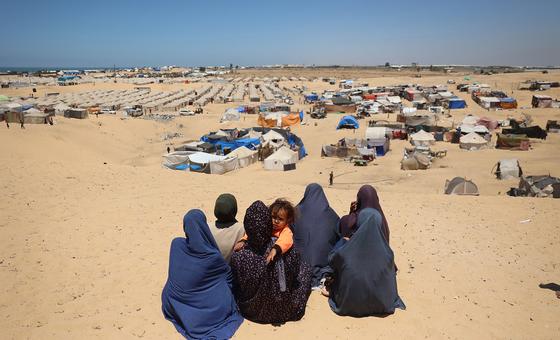
On Tuesday, such orders were issued for parts of Khan Younis, specifically ordering those staying in tents to move, Mr. Dujarric reported.

The map published alongside the order indicates that some areas included had not been subject to displacement orders since before the March ceasefire, he said.

“The issuance of a displacement order does not relieve any party from the imperative to spare civilians, including those who are unable or unwilling to move.”  

Safeguard hospitals

Mr. Dujarric also reiterated the UN World Health Organization’s (WHO) call to protect the Nasser Medical Complex in Khan Younis, warning that the hospital is overwhelmed with trauma injuries at double its capacity.  

In a video message sent from the hospital on Monday, Rik Peeperkorn, WHO representative in the Occupied Palestinian Territory, said the facility is running critically low on trauma supplies, essential medicines, equipment and fuel, and that staff are exhausted.

Humanitarian movements

Meanwhile, OCHA reported that humanitarian movements inside Gaza remain heavily restricted: only four out of 12 attempts on Monday to coordinate movements with the Israeli security authorities were fully facilitated, and just one delivered supplies.

Four more attempts were rejected by Israeli authorities, halting efforts to evacuate patients, retrieve disabled trucks or clear debris.  

Although the remaining four were initially approved, ground-level impediments ultimately undermined the ability to carry out the missions.

Source link

Electronic health records: Quick access to patient’s records improves patient care

When a patient gets transferred from a hospital to a nearby specialist or rehabilitation facility, it is often difficult for personnel at the new facility to access the patient’s electronic health records – which includes important patient-specific information such as their medication history and allergies. This lack of electronic compatibility often leads to wasteful and expensive duplication of tests, X-rays and paperwork that can interfere with the treatment of patients.

A recent study at the University of Missouri highlights how the use of electronic health records have resulted better quality of care – which can direct the next steps of government programs to ensure hospitals use electronic health records in a way that promotes interoperability, or the ability for various health care organizations to quickly access a patient’s records, reduce waste and speed up decision-making to improve patient health outcomes.

So far, the adoption and implementation of electronic health records has been a bumpy road, said Kate Trout, assistant professor in the MU School of Health Professions and lead author on the study. Electronic health records have widely been cited in research literature as the most cumbersome technology ever implemented in the health care industry.

“They have the potential to be very helpful, but in practice they tend to be very disruptive because it’s time consuming to train personnel how to use them. They’re expensive, and there’s always new complicated updates and new forms that come out, and there is often a lack of interoperability for the data to be shared among different health care organizations,” Trout said. “Given the massive national investments, we wanted to see if electronic health records are being utilized in a meaningful way to promote interoperability and ultimately improve quality of care.”

electronic health records/University of Missouri

More than $30 billion has been invested by the federal government in the adoption and use of electronic health records by health care organizations in an attempt to improve the quality of care delivered to patients.

In 2011, Centers for Medicare and Medicaid established the “Meaningful Use” program – now known as the “Promoting Interoperability Program” – which offers financial incentives to health care providers who effectively utilize electronic health records in a way that promotes information sharing, public health reporting and interoperability.

Trout analyzed the impact of electronic health records on mortality rates for patients with various medical procedures and conditions. More than 5 million patients in 300 U.S. hospitals were included in the study, which merged large datasets from the electronic health records, the American Hospital Association and Centers for Medicare and Medicaid.

Three main categories emerged:

  1. hospitals that meet the “Meaningful Use” requirements with their electronic health records,
  2. hospitals that fully implement electronic health records but not in a way that meets the “Meaningful Use” requirements, and
  3. hospitals that have either none or only partially implemented electronic health records.

Trout found that the hospitals that meet the “Meaningful Use” requirements were able to improve quality of care and reduce patient mortality rates to a greater extent than hospitals in the other two groups. While the results show some optimism, Trout cautions that more still needs to be done, including the need to analyze the impact of interoperability and advanced electronic health record functions on quality of care.

“This research highlights the importance of using electronic health records in a way that promotes interoperability to streamline processes, speed up decision-making, reduce wasted time and ultimately improve patient health outcomes,” Trout said. “Ideally, the United States could implement one standardized electronic health records system for everyone to ensure compatibility, so policy makers can hopefully benefit from this research.”

Trout added that with the use of data mining and analytics, electronic health records can be better used going forward to potentially identify patient characteristics that put them at higher risks for possible infections or other conditions.

healthcare

“With this information, are there alerts we can put in after a surgery to ensure we follow up at critical points in time?” Trout said. “Are there certain patient populations that we can use the data to catch them earlier and make sure we give them extra care and not just put them through the same routine protocols as everyone else? That is how we move away from only focusing on implementing the technology and progress toward encouraging innovative ideas that ultimately improve patient health outcomes.”

Trout said this research can be particularly useful for rural hospitals that historically have less resources and lag behind their urban counterparts in adopting health technology like telehealth and electronic health records. There have been many closures of rural hospitals, an issue that has been worsened by the COVID-19 pandemic, and rural patients tend to have more co-morbidities and worse health outcomes.

“I am passionate about helping vulnerable, underserved populations, and our personal health is often tied to where we live and various social determinants of health,” Trout said. “Those ideas are not incorporated into our clinical data yet, but they should be going forward. My overall goal is to harness the data in a way that we can hopefully start to spend less and get more.”

Using machine learning to improve patient care

Doctors are often deluged by signals from charts, test results, and other metrics to keep track of. It can be difficult to integrate and monitor all of these data for multiple patients while making real-time treatment decisions, especially when data is documented inconsistently across hospitals.

In a new pair of papers, researchers from MIT’s Computer Science and Artificial Intelligence Laboratory (CSAIL) explore ways for computers to help doctors make better medical decisions.

One team created a machine-learning approach called “ICU Intervene” that takes large amounts of intensive-care-unit (ICU) data, from vitals and labs to notes and demographics, to determine what kinds of treatments are needed for different symptoms. The system uses “deep learning” to make real-time predictions, learning from past ICU cases to make suggestions for critical care, while also explaining the reasoning behind these decisions.

“The system could potentially be an aid for doctors in the ICU, which is a high-stress, high-demand environment,” says PhD student Harini Suresh, lead author on the paper about ICU Intervene. “The goal is to leverage data from medical records to improve health care and predict actionable interventions.”

Another team developed an approach called “EHR Model Transfer” that can facilitate the application of predictive models on an electronic health record (EHR) system, despite being trained on data from a different EHR system. Specifically, using this approach the team showed that predictive models for mortality and prolonged length of stay can be trained on one EHR system and used to make predictions in another.

ICU Intervene was co-developed by Suresh, undergraduate student Nathan Hunt, postdoc Alistair Johnson, researcher Leo Anthony Celi, MIT Professor Peter Szolovits, and PhD student Marzyeh Ghassemi. It was presented this month at the Machine Learning for Healthcare Conference in Boston.

EHR Model Transfer was co-developed by lead authors Jen Gong and Tristan Naumann, both PhD students at CSAIL, as well as Szolovits and John Guttag, who is the Dugald C. Jackson Professor in Electrical Engineering. It was presented at the ACM’s Special Interest Group on Knowledge Discovery and Data Mining in Halifax, Canada.

Both models were trained using data from the critical care database MIMIC, which includes de-identified data from roughly 40,000 critical care patients and was developed by the MIT Lab for Computational Physiology.

ICU Intervene

Integrated ICU data is vital to automating the process of predicting patients’ health outcomes.

“Much of the previous work in clinical decision-making has focused on outcomes such as mortality (likelihood of death), while this work predicts actionable treatments,” Suresh says. “In addition, the system is able to use a single model to predict many outcomes.”

ICU Intervene focuses on hourly prediction of five different interventions that cover a wide variety of critical care needs, such as breathing assistance, improving cardiovascular function, lowering blood pressure, and fluid therapy.

At each hour, the system extracts values from the data that represent vital signs, as well as clinical notes and other data points. All of the data are represented with values that indicate how far off a patient is from the average (to then evaluate further treatment).

Importantly, ICU Intervene can make predictions far into the future. For example, the model can predict whether a patient will need a ventilator six hours later rather than just 30 minutes or an hour later. The team also focused on providing reasoning for the model’s predictions, giving physicians more insight.

“Deep neural-network-based predictive models in medicine are often criticized for their black-box nature,” says Nigam Shah, an associate professor of medicine at Stanford University who was not involved in the paper. “However, these authors predict the start and end of medical interventions with high accuracy, and are able to demonstrate interpretability for the predictions they make.”

The team found that the system outperformed previous work in predicting interventions, and was especially good at predicting the need for vasopressors, a medication that tightens blood vessels and raises blood pressure.

In the future, the researchers will be trying to improve ICU Intervene to be able to give more individualized care and provide more advanced reasoning for decisions, such as why one patient might be able to taper off steroids, or why another might need a procedure like an endoscopy.

EHR Model Transfer

Another important consideration for leveraging ICU data is how it’s stored and what happens when that storage method gets changed. Existing machine-learning models need data to be encoded in a consistent way, so the fact that hospitals often change their EHR systems can create major problems for data analysis and prediction.

That’s where EHR Model Transfer comes in. The approach works across different versions of EHR platforms, using natural language processing to identify clinical concepts that are encoded differently across systems and then mapping them to a common set of clinical concepts (such as “blood pressure” and “heart rate”).

For example, a patient in one EHR platform could be switching hospitals and would need their data transferred to a different type of platform. EHR Model Transfer aims to ensure that the model could still predict aspects of that patient’s ICU visit, such as their likelihood of a prolonged stay or even of dying in the unit.

“Machine-learning models in health care often suffer from low external validity, and poor portability across sites,” says Shah. “The authors devise a nifty strategy for using prior knowledge in medical ontologies to derive a shared representation across two sites that allows models trained at one site to perform well at another site. I am excited to see such creative use of codified medical knowledge in improving portability of predictive models.”

With EHR Model Transfer, the team tested their model’s ability to predict two outcomes: mortality and the need for a prolonged stay. They trained it on one EHR platform and then tested its predictions on a different platform. EHR Model Transfer was found to outperform baseline approaches and demonstrated better transfer of predictive models across EHR versions compared to using EHR-specific events alone.

In the future, the EHR Model Transfer team plans to evaluate the system on data and EHR systems from other hospitals and care settings.

Both papers were supported, in part, by the Intel Science and Technology Center for Big Data and the National Library of Medicine. The paper detailing EHR Model Transfer was additionally supported by the National Science Foundation and Quanta Computer, Inc.