Violence surges in South Sudan leaving civilians at risk and peacekeepers stretched thin

Briefing ambassadors in the Security Council on Tuesday, UN peacekeeping chief Jean-Pierre Lacroix said instability had risen sharply in recent weeks, driven by political deadlock among signatories to the 2018 Revitalised Peace Agreement and a dangerous escalation in armed confrontations.

Fighting has intensified most dramatically in Jonglei state, where clashes between Government forces and opposition elements displaced more than 280,000 people, according to government sources.

Reports of aerial bombardments, inflammatory rhetoric and severe restrictions on humanitarian access have raised fears of a return to the widespread violence seen in 2013 and 2016.

Communities, Mr. Lacroix said, are once again “on the move,” fleeing areas where fighting has erupted and basic services have collapsed.

Click here to read a summary of threats to South Sudan’s peace process and the converging political, security and humanitarian crises, and their impact on civilians.

Humanitarian statistics for South Sudan as of December 2025.

Crisis unravelling

In late January, Government forces instructed civilians, UN personnel and humanitarian workers to temporarily relocate from several counties in Jonglei, including from the UN Mission in South Sudan (UNMISS) base in Akobo, citing an anticipated military operation.

Although the Government later denied issuing such a directive and reiterated its cooperation with humanitarian partners, the episode underscored the volatility of the situation.

Regional bodies, including the African Union (AU) and the Intergovernmental Authority on Development (IGAD), have voiced alarm at the escalation, stressing that there is no military solution and that the peace agreement remains the only viable framework for stability.

Political deadlock deepens

Mr. Lacroix warned that unilateral initiatives to amend the peace agreement risk undermining its primacy, particularly proposals to defer key transitional tasks such as constitution-making until after elections scheduled for December 2026.

The Sudan People’s Liberation Movement/Army-in-Opposition (SPLM-IO) has said it cannot engage in political dialogue while its leader, First Vice-President Riek Machar, remains subject to ongoing legal proceedings, further complicating efforts to break the stalemate.

Mr. Machar, once an ally of President Salva Kiir, has been under house arrest since March 2025 and reportedly faces charges of murder and treason – which he denies.

The UN Security Council meets on the situation in South Sudan.

Humanitarian crisis worsens

The deteriorating security situation is compounding what Mr. Lacroix described as one of the world’s most dangerous environments for aid workers.

In 2025 alone, 350 attacks on humanitarian personnel and facilities were recorded, a sharp increase from the previous year, as the country grapples with its worst cholera outbreak on record.

Since September 2024, more than 98,000 cholera cases have been reported nationwide, with a resurgence now underway in Jonglei. Flight restrictions and blocked movements are delaying medical evacuations and the delivery of lifesaving supplies.

Recent incidents include an airstrike on a hospital in Lankien on 3 February, which destroyed critical medical stocks and injured staff, and the looting of a health facility in Pieri the same day. Violence has also forced the closure of 24 nutrition sites in Jonglei, cutting off care for nearly 8,000 children, including more than 2,600 suffering from severe acute malnutrition.

Peacekeepers stretched thin

Against this backdrop, UNMISS is grappling with significant funding-driven capacity reductions.

Mr. Lacroix said cost-cutting measures have already reduced protection patrols by up to 40 per cent in some areas and by as much as 70 per cent where bases have closed. Human rights monitoring missions have been cancelled, and tensions have increased in areas left without a UN presence.

At the same time, the Mission has been forced to redeploy forces to hotspots such as Akobo and establish temporary operating bases to deter violence and protect civilians.

“The trends we are currently observing are clear,” Mr. Lacroix said, urging the Security Council and international partners to ensure sustained political and financial support.

The presence of UNMISS continues to matter a lot. It matters to the people that we protect, it matters to our humanitarian partners that we assist, and it matters to the peace process that we actively support and engage in.”

Source link

‘Perfect storm’ of global crises drove years of food price surges: FAO

The report, to be released later this month, reveals how between 2020 and 2024, the world experienced a dramatic increase in food prices driven by a combination of COVID-19 inflation, the war in Ukraine restricting movements on food and commodities, and increasing climate shocks.  

“The episodes described in this publication bring up what we call a perfect storm,” said Mr. Torero Cullen.

Máximo Torero Cullen speaks to journalists at UN Headquarters via video link.

First, he explained that during the COVID-19 pandemic, governments launched fiscal stimulus and relief packages, which increased demand and, thus, global inflation.

Russia’s full-scale invasion of Ukraine compounded this crisis. Before the war began in 2022, Ukraine was a key exporter of wheat, sunflower oil and fertilisers. The war not only restricted these exports but disrupted trade routes and pushed up fuel and input costs, which amplified inflation across the world.

Additionally, increasingly frequent and intense climate shocks in major producing regions – such as droughts, floods and heat waves – further aggravated food inflation.

Worldwide impacts

Only in 2024 did prices return to pre-COVID levels, meaning that households struggled for multiple years to afford food, with major consequences.

As real wages fell while food prices increased, household purchasing power was eroded. Households responded by buying cheaper and less nutritious food, reducing meal frequency, and often prioritising meals for certain family members and reducing intake for women and children.

Mr. Torero Cullen also explained that an increase in food prices directly correlates to an increase in moderate and severe food insecurity. The impacts of this were particularly harsh in Africa and Western Asia, where food imports, dependence and currency depreciation made food even more expensive.

Moreover, as food prices increased, nutrition outcomes among children under five worsened. The SOFI report illustrated that a 10 per cent food price increase led to a 2.7 to 6.1 per cent increase in moderate to severe wasting, which has long-lasting effects on child development and public health systems.  

Notably, these grave impacts were uneven, mostly affecting low-income and African countries – many of which are still seeing worsening figures. During the peak of the crisis in January 2023, some low-income countries experienced food price inflation of up to 30 per cent, compared to 13.6 per cent globally.

Policy recommendations  

Mr. Torero Cullen finished his briefing by outlining the policy prescriptions detailed in the SOFI report.  

He first underscored targeted fiscal support. “Social protection measures are the most effective response to food price spikes,” he explained. “This will protect vulnerable populations without creating long-term fiscal risk or market distortions.”  

He also highlighted avoiding trade disruptions, coordinating monetary and fiscal policies, improving market transparency, and institutional preparedness as essential components for avoiding future crises.

“This SOFI underscores that inflation can undermine progress. It underlines our vulnerabilities, and it also brings the importance of strengthening resilience, inclusiveness and transparency to be able to avoid and minimize the risk of these problems,” he concluded.  

Source link

As displacement surges in South Sudan, regional humanitarian crisis deepens

Violence between armed groups in Upper Nile state and other flashpoints has crippled essential services, triggered food insecurity and worsened disease outbreaks, including cholera – forcing some to be displaced repeatedly.

Roughly 65,000 have been internally displaced in Upper Nile state alone. 

Access to aid in conflict hotspots is limited, with fighting and movement restrictions cutting off assistance.

Lifesaving supplies, including medicine and healthcare to curb rising cholera cases, have halted, while rains threaten to worsen the crisis, flooding roads and driving up transport costs.

South Sudan has also absorbed over a million people fleeing conflict in Sudan.

Regional crisis

Another 103,000 South Sudanese have sought refuge in neighbouring countries, pushing the total number of South Sudanese refugees to 2.3 million.

“This emergency could not have come at a worse time,” said Mamadou Dian Balde, UNHCR’s Regional Director for the East, Horn of Africa and Great Lakes region.

“Many of the refugees are seeking safety in countries which have challenges of their own or are already dealing with emergencies amidst ongoing brutal funding cuts, straining our ability to provide even basic life-saving assistance.”

Despite the conflict in Sudan, 41,000 South Sudanese have sought refuge there – 26,000 in White Nile state, where over 410,000 South Sudanese already live, many repeatedly displaced due to ongoing violence in their host country.

The surge in arrivals in Sudan has created an urgent need for additional space, while essential services are overwhelmed due to cholera outbreaks and ongoing security challenges.

In the Democratic Republic of the Congo (DRC), 23,000 have arrived amid the country’s own insecurity.

Some 21,000 South Sudanese have sought refuge in Ethiopia. Previously living in makeshift shelters along riverbanks near the border, new arrivals are now receiving UNHCR aid further from the border; however, infrastructure and services in the area remain severely overstretched, worsened by a cholera outbreak.

Uganda, which hosts one million South Sudanese refugees, has taken in 18,000 since March – a 135 per cent year-on-year increase. Nearly 70 per cent are children; many forced to take longer and more hazardous routes to safety.

Call for support

UNHCR is providing refugees with critical relief items, documentation and specialised support to survivors of gender-based violence. 

But to provide necessary support for the next six months – including shelter, water, health and nutrition screening, as well as cash assistance – the agency requires $36 million. 

Calling for an immediate end to hostilities, UNHCR urged all parties to spare civilians further suffering. 

Unrest in Warrap state

In related developments, the UN Mission in South Sudan (UNMISS) voiced deep concern over escalating intercommunal violence in Tonj East county, Warrap state, urging the Government to intervene and deploy security services to address the situation. 

The violence has been driven by attempts to recover stolen cattle and revenge for the previous loss of lives, resulting in more than 80 casualties, although the numbers are yet to be verified. 

UNMISS is intensively engaging with state and local authorities to calm the situation, in addition to increasing patrols, however peacekeepers are experiencing significant challenges reaching some of the impacted areas due to a proliferation of checkpoints manned by armed youth.

Source link

Sudan: Rise in people fleeing to Chad as violence surges

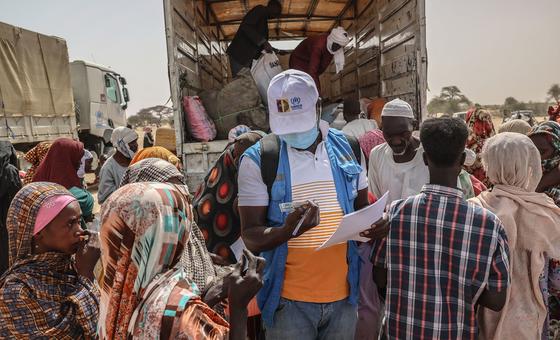
Overall, some 1.2 million Sudanese have found shelter in eastern Chad, mostly after fleeing intensifying violence in their country. 

More than 844,000 crossed the border after war broke out in Sudan in April 2023. Prior to this, Chad was hosting roughly 409,000 Sudanese refugees who had fled earlier conflict in Darfur.

‘A crisis of humanity’

The situation is “a crisis of humanity”, said UNHCR’s Principal Situation Coordinator in Chad, Dossou Patrice Ahouansou.

The latest wave of displacement began in April following attacks by armed groups in North Darfur. Violence has surged since war erupted in Sudan in April 2023 between the Sudanese Armed Forces (SAF) and the paramilitary Rapid Support Forces (RSF).

Camps for people uprooted by the most recent violence have been attacked including Zamzam and Abu Shouk, along with the town of El Fasher, killing more than 300 civilians. 

Last Thursday, the UN World Food Programme’s facility in El Fasher was repeatedly shelled, according to a report from UN aid coordination office OCHA.

A day later, Eldaman International Hospital in Al Obeid was struck by a drone attack, killing at least six health workers and injuring more than 15 others.

Both attacks were reportedly carried out by the RSF.

Exodus and arrival

In just over a month, 68,556 refugees have crossed into Chad’s Wadi Fira and Ennedi Est provinces, at an average of 1,400 new arrivals per day.

More than seven in 10 “report serious human rights violations — physical and sexual violence, arbitrary detention, forced recruitment”, said Mr. Ahouansou.

Based on interviews with 6,810 newly arrived refugees, he said that six out of 10 reported being separated from their family members.

Horrendous testimonies

Mr. Ahouansou spoke of seven-year-old Hawa, whose family home in Zamzam was bombed. After her mother was killed, she fled to the Zamzam camp for internally displaced people. 

“There again had been bombing” and this time it killed Hawa’s father and two brothers, he said. 

With only her 18-year-old sister remaining, Hawa escaped to Chad. She was severely injured and had to have a leg amputated.

“It’s difficult to hear, but this is the reality,” said Mr. Ahouansou, emphasizing that there were thousands facing similar situations.

The UNHCR official also recounted chilling testimonies of forced labour along the perilous journeys, where many reportedly die because of the heat and lack of water.

“When armed groups see you leaving, they decide to let the donkey or the horse go. And you, as a human being, as a man… they will use you as a horse and ask you now to draw all your family members,” he said.

Funding shortfalls

Despite efforts by humanitarian actors and local authorities, the emergency response remains severely underfunded.

Just 14 per cent of shelter needs have been met and refugees receive only five litres of water per person per day — far below the 15–20 litre international standard. Around 239,000 refugees remain stranded at the border.

“The lives and futures of millions of innocent civilians hang in the balance,” said UNHCR spokesperson Eujin Byun, who stressed that this was also a “crisis of women and children” as they make up to nine out of 10 refugees crossing the border.

“Without a significant increase in funding, life-saving assistance cannot be delivered at the scale and at the speed that is required,” Mr. Ahouansou said. 

Source link