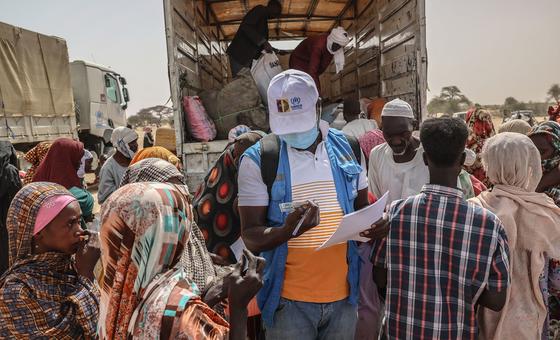
Attacks across Gaza intensify amid fear and hunger: ‘Leave me here,’ injured girl told fleeing family

A 14-year-old girl with cerebral palsy who depends on a wheelchair was among crowds fleeing Israeli military aircraft operations east of Rafah in Gaza on 13 October 2023, said committee member Muhannad Salah Al-Azzeh, who presented a report on the occupied Palestinian territories on Wednesday in Geneva. In the melee, she lost her wheelchair.

She was crawling on the sand and asking her family, telling them ‘you can leave me here’ because she felt that she was slowing them down,” he said.

Indeed, some people are unaware of evacuation orders being given in Gaza due to their disabilities since the start of the nearly two-year-long war triggered by the Hamas-led attack on Israel.

“This is one of the most serious issues because in regular situations, personal disabilities are excluded in emergencies, more excluded,” he said. “It’s more complicated for them.”

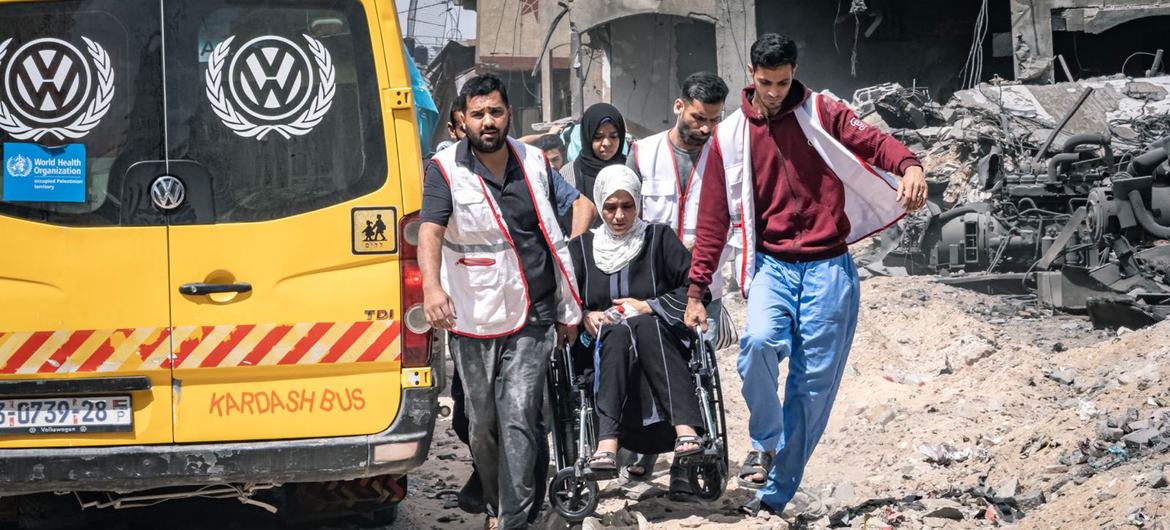
A woman in a wheelchair is carried across rubble.

States fail to protect rights of persons with disabilities

Following extensive interviews with individuals, delegations and organizations working in Gaza and the West Bank, the UN committee submitted a series of recommendations and serious concerns to Israel and the Palestinian Authority.

The situation in Gaza is a grave concern, Mr. Al-Azzeh stated.

“What we are witnessing there is highly concerning for us,” he warned. “We do believe that all the State parties to the Convention on the Rights of Persons with Disabilities, they really failed in one way or another to fulfill their obligations to protect and to ensure the minimum protection of persons with disabilities in the emergency situation.”

Citing grim cases reported to the committee since the start of war, he said in one instance, prolonged electricity shutdowns in Rafah left a mother unable to receive evacuation messages on her mobile phone, and she and her children subsequently died in an Israeli strike.

Nine-year-old Noor’s parents, who are deaf, have heavily relied on her to survive Israeli tank shelling and attacks. She has had to learn new signing vocabulary for the language of war, including tanks, armed quadcopters, shrapnel and aircraft, the committee representative said.

There are dozens of examples of people like Abdulrahman Al-Gharbawi, with cerebral palsy and a lower limb disability, he said. 

All nine times the 27-year-old graphic designer’s family has been forcibly displaced since the start of the war, his mother would carry his wheelchair while his father and brother would carry him.

‘Horrific’ situation in Gaza City

The UN Office for the Coordination of Humanitarian Affairs (OCHA) warned on Wednesday that further intensification of the continued offensive on Gaza City, amid ongoing famine, will push civilians – already battered and bereaved – into an even deeper catastrophe that world leaders must act decisively to prevent.

“Partners supporting displacement sites warned that the escalating hostilities in Gaza City are having horrific humanitarian consequences for people living at these sites, many of whom were previously displaced from North Gaza,” the UN agency said. “They say that many households are unable to move due to high costs and a lack of safe space to move to, with older people and those with disabilities especially affected.”

Partners report that between 14 and 31 August, more than 82,000 new displacements have been recorded, including nearly 30,000 movements from north to south, OCHA stated.

Chronic aid delivery obstacles

Meanwhile, humanitarian efforts continue to face chronic obstacles. While a trickle of aid is getting into the war-torn Gaza Strip, steep challenges remain, according to OCHA’s latest situation report.

Between 17 and 30 August, partners continued daily convoys to uplift humanitarian food aid from the Kerem Shalom and Zikim crossings, bringing more than 6,900 metric tonnes of wheat flour, food parcels and bulk food supplies into Gaza through the UN-coordinated aid mechanism, OCHA reported.

“However, nearly all of this aid was offloaded by hungry crowds or looted by organized groups along convoy routes, preventing targeted household distributions and delivery to partner warehouses,” the UN agency stated.

Since 20 July, when regular food cargo shipments from Gaza’s crossings resumed, less than 40 per cent of the 2,000 metric tonnes of food supplies required daily to meet basic humanitarian food assistance needs could enter the Strip, OCHA said.

Daily, civilians continue to be killed and injured by military forces or due to violence erupting among desperate crowds while trying to access aid, including in the militarised zone near checkpoints waiting for aid convoys and at non-humanitarian militarised distribution sites,” the UN agency reported.

‘Two per cent of food aid reached warehouses’

As of 30 August, 99 kitchens supported by 19 partners were preparing and distributing 468,000 meals daily across the Gaza Strip, with 155,000 in the north and 313,000 in central and southern Gaza, according to the OCHA report.

“Partners relied on the two per cent of food aid that safely reached warehouses, coupled with resources secured locally from markets,” the UN agency said.

“While representing an 80 per cent increase compared to the 260,000 daily meals prepared in early August, this remains far below the over one million meals produced in April with the humanitarian and commercial food stocks and cooking gas entered during the ceasefire.”
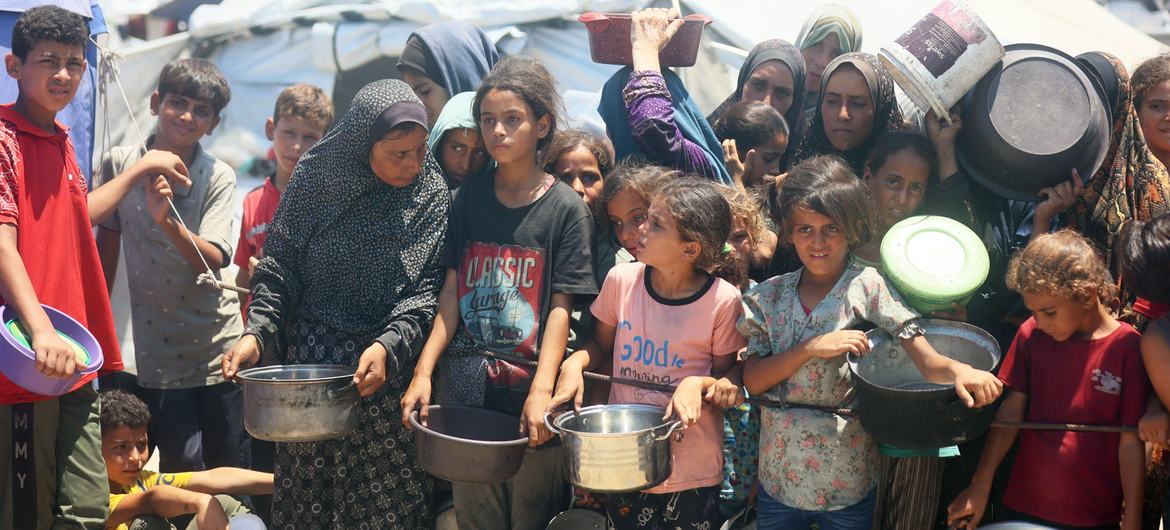
Families and children seeking food from a community kitchen in western Gaza City in late July. (file)

Famine response

The UN and partners continued integrated famine response efforts come on the heels of the UN-backed global hunger experts’ report finding famine conditions in parts of Gaza last month.

Efforts included scaling up cooked meal provision, promoting small-scale home gardening and community oven initiatives, expanding cash and voucher assistance and strengthening real-time monitoring and analysis systems.

“Intense advocacy continues with the Israeli authorities to increase the volume of humanitarian and commercial goods approved for entry, with a focus on fresh produce and fortified food, nutrition, health and cooking gas,” OCHA said in its report.
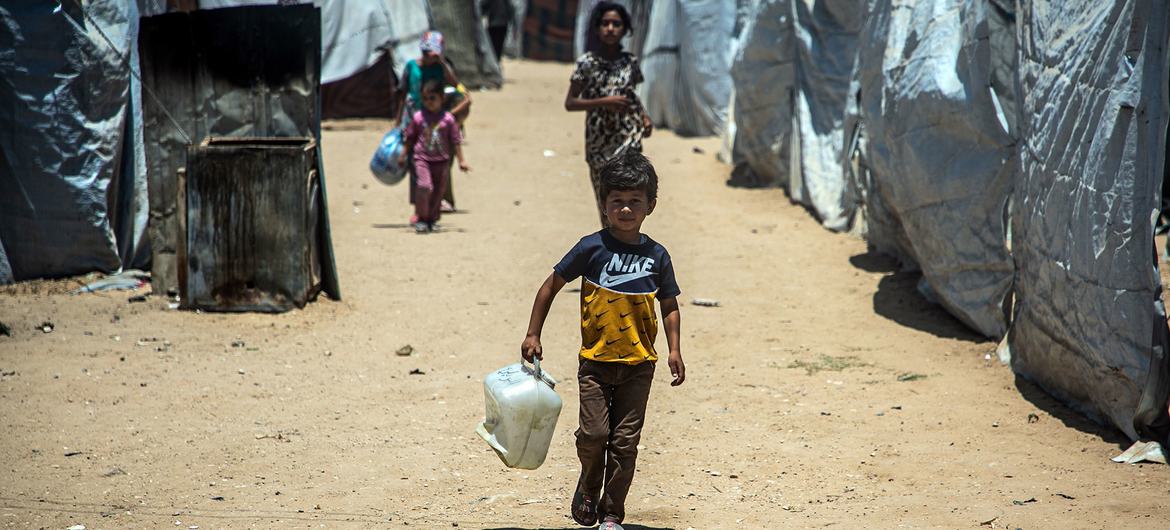
© UNICEF/Mohammed Nateel

Access to safe drinking water in the Gaza Strip has been severely compromised due to the ongoing war.

New supplies and critical shortages

For the first time in over five months, concentrated fodder for livestock owners entered Gaza. Approximately 60 metric tonnes were distributed to 600 livestock holders in Deir Al-Balah, OCHA said.

However, despite sustained advocacy, cooking gas has not entered Gaza for more than five months and is no longer available in markets, the UN agency stated.

“Firewood has also become increasingly unaffordable,” according to the agency. “Many people are reduced to using waste and scrap wood as alternative cooking sources, exacerbating health and environmental risks.”

Meanwhile, the UN relief agency for Palestine refugees’ (UNRWA) health facilities continue to serve around 132,000 patients with non-communicable diseases despite facing dire shortages of medical supplies. Insulin stocks will be exhausted within one to two weeks, leaving at least 16,000 diabetic patients without an essential part of their treatment, OCHA reported.

Access to clean water is severely limited. At the same time, hospitals remain lacking in essential supplies and continue to face overcrowding as daily attacks are seeing a rise in the numbers of dead and injured.

Source link

Aid cuts leave refugee agency unable to shelter six in 10 fleeing war in Sudan

Globally, $1.4 billion of the agency’s programmes are being shuttered or put on hold, UNHCR said in a new report.

“We can’t stop water, you can’t stop sanitation, but we’re having to take decisions when it comes, for example, to shelter,” said UNHCR Director of External Relations, Dominique Hyde.

“We’re have people arriving on a daily basis from Sudan, from the Darfur regions…arriving in Chad, not able to be given any shelter.”

In an urgent appeal for flexible funding from donors, Ms. Hyde noted that up to 11.6 million refugees and others risk losing access this year to direct humanitarian assistance from UNHCR. The figure represents about one-third of those reached by the organization last year.

On the Sudan-Chad border, the UN agency is now unable to provide “even basic shelter” to more than six in 10 refugees fleeing the conflict. Thousands more vulnerable people have been left stranded in remote border locations in South Sudan, too. “If we just had a bit more support, we could get them to settlements,” she insisted.

Because of the funding cuts, basic activities have already been hit hard. These include refugee registration, child protection, legal counselling and prevention of and responses to gender-based violence.

Every aid sector hit

In South Sudan, 75 per cent of safe spaces for women and girls supported by UNHCR have closed, leaving up to 80,000 refugee women and girls without access to medical care, psychosocial support, legal aid, material support or income-generating activities. This includes survivors of sexual violence, UNHCR noted.

“Behind these numbers are real lives hanging in the balance,” Ms. Hyde said.

“Families are seeing the support they relied on vanish, forced to choose between feeding their children, buying medicines or paying rent, while hope for a better future slips out of sight. Every sector and operation has been hit and critical support is being suspended to keep life-saving aid going.”

Libya influx

Many of those impacted by the war in Sudan have taken the decision to move from Chad and Egypt to Libya, into the hands of people smugglers who dangerously overload boats with desperate people seeking to cross the Mediterranean Sea to Europe.

“What we’re observing now is that in terms of arrivals in Europe of…Sudanese refugees, [it] has increased since the beginning of the year by about 170 per cent compared to the first six months of 2024,” said UNHCR spokesperson Olga Sarrado.

Support slashed from Niger to Ukraine

In camps hosting Myanmar’s Rohingya refugees in Bangladesh, education for some 230,000 children could now be suspended. Meanwhile in Lebanon “UNHCR’s entire health programme is at risk of being shuttered by the end of the year”, Ms. Hyde continued.

In Niger and other emergency settings, cuts in financial aid for shelter have left families in overcrowded structures or at risk of homelessness. In Ukraine, financial aid has also been slashed, “leaving uprooted families unable to afford rent, food or medical treatment”, Ms. Hyde noted.

Assistance to returning Afghans has also become another victim of the global aid cuts. Around 1.9 million Afghan nationals have returned home or been forced back since the start of the year, “but financial aid for returnees is barely enough to afford food, let alone rent, undermining efforts to ensure stable reintegration”, UNHCR said.

Legal aid halted

Overall, several UNHCR operations hit by severe funding gaps have now had to curtail investments in strengthening asylum systems and promoting regularization efforts.

In Colombia, Ecuador, Costa Rica and Mexico, any prolonged lack of legal status means prolonged insecurity for people on the move, the UN agency said. This results in deepening poverty “as refugees are excluded from formal employment and greater exposure to exploitation and abuse,” Ms. Hyde explained.

Approximately one in three of the agency’s 550 offices around the world has been impacted by the cuts, Ms. Hyde told journalists in Geneva:

“We’re not in a position to do so much contingency planning; what we’re able to do is make decisions on priorities – and at this point the priorities as I mentioned are dramatic.”

For 2025 UNHCR needs $10.6 billion. Only 23 per cent of this amount has been provided.

“Against this backdrop, our teams are focusing efforts on saving lives and protecting those forced to flee,” Ms. Hyde said. “Should additional funding become available, UNHCR has the systems, partnerships and expertise to rapidly resume and scale up assistance.”

Source link

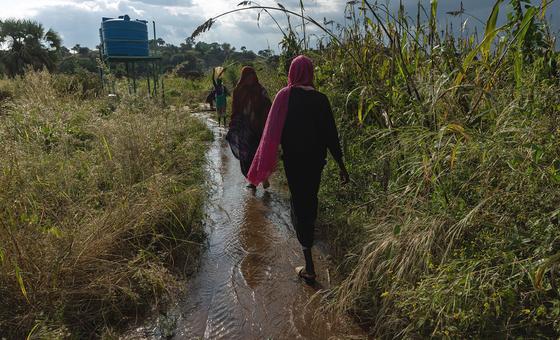
Sudan: Rise in people fleeing to Chad as violence surges

Overall, some 1.2 million Sudanese have found shelter in eastern Chad, mostly after fleeing intensifying violence in their country. 

More than 844,000 crossed the border after war broke out in Sudan in April 2023. Prior to this, Chad was hosting roughly 409,000 Sudanese refugees who had fled earlier conflict in Darfur.

‘A crisis of humanity’

The situation is “a crisis of humanity”, said UNHCR’s Principal Situation Coordinator in Chad, Dossou Patrice Ahouansou.

The latest wave of displacement began in April following attacks by armed groups in North Darfur. Violence has surged since war erupted in Sudan in April 2023 between the Sudanese Armed Forces (SAF) and the paramilitary Rapid Support Forces (RSF).

Camps for people uprooted by the most recent violence have been attacked including Zamzam and Abu Shouk, along with the town of El Fasher, killing more than 300 civilians. 

Last Thursday, the UN World Food Programme’s facility in El Fasher was repeatedly shelled, according to a report from UN aid coordination office OCHA.

A day later, Eldaman International Hospital in Al Obeid was struck by a drone attack, killing at least six health workers and injuring more than 15 others.

Both attacks were reportedly carried out by the RSF.

Exodus and arrival

In just over a month, 68,556 refugees have crossed into Chad’s Wadi Fira and Ennedi Est provinces, at an average of 1,400 new arrivals per day.

More than seven in 10 “report serious human rights violations — physical and sexual violence, arbitrary detention, forced recruitment”, said Mr. Ahouansou.

Based on interviews with 6,810 newly arrived refugees, he said that six out of 10 reported being separated from their family members.

Horrendous testimonies

Mr. Ahouansou spoke of seven-year-old Hawa, whose family home in Zamzam was bombed. After her mother was killed, she fled to the Zamzam camp for internally displaced people. 

“There again had been bombing” and this time it killed Hawa’s father and two brothers, he said. 

With only her 18-year-old sister remaining, Hawa escaped to Chad. She was severely injured and had to have a leg amputated.

“It’s difficult to hear, but this is the reality,” said Mr. Ahouansou, emphasizing that there were thousands facing similar situations.

The UNHCR official also recounted chilling testimonies of forced labour along the perilous journeys, where many reportedly die because of the heat and lack of water.

“When armed groups see you leaving, they decide to let the donkey or the horse go. And you, as a human being, as a man… they will use you as a horse and ask you now to draw all your family members,” he said.

Funding shortfalls

Despite efforts by humanitarian actors and local authorities, the emergency response remains severely underfunded.

Just 14 per cent of shelter needs have been met and refugees receive only five litres of water per person per day — far below the 15–20 litre international standard. Around 239,000 refugees remain stranded at the border.

“The lives and futures of millions of innocent civilians hang in the balance,” said UNHCR spokesperson Eujin Byun, who stressed that this was also a “crisis of women and children” as they make up to nine out of 10 refugees crossing the border.

“Without a significant increase in funding, life-saving assistance cannot be delivered at the scale and at the speed that is required,” Mr. Ahouansou said. 

Source link