Attacks across Gaza intensify amid fear and hunger: ‘Leave me here,’ injured girl told fleeing family

A 14-year-old girl with cerebral palsy who depends on a wheelchair was among crowds fleeing Israeli military aircraft operations east of Rafah in Gaza on 13 October 2023, said committee member Muhannad Salah Al-Azzeh, who presented a report on the occupied Palestinian territories on Wednesday in Geneva. In the melee, she lost her wheelchair.

She was crawling on the sand and asking her family, telling them ‘you can leave me here’ because she felt that she was slowing them down,” he said.

Indeed, some people are unaware of evacuation orders being given in Gaza due to their disabilities since the start of the nearly two-year-long war triggered by the Hamas-led attack on Israel.

“This is one of the most serious issues because in regular situations, personal disabilities are excluded in emergencies, more excluded,” he said. “It’s more complicated for them.”

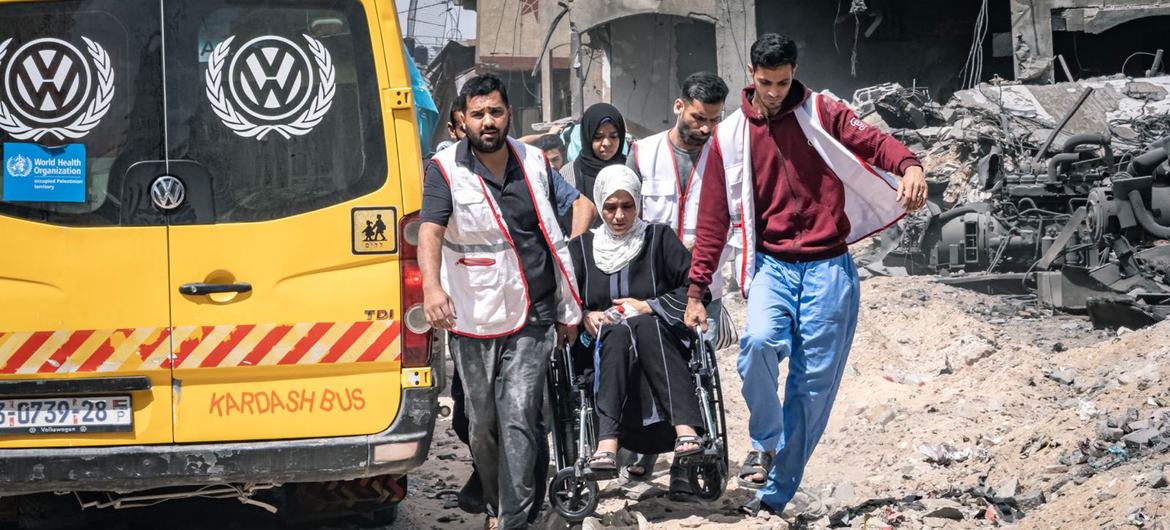
A woman in a wheelchair is carried across rubble.

States fail to protect rights of persons with disabilities

Following extensive interviews with individuals, delegations and organizations working in Gaza and the West Bank, the UN committee submitted a series of recommendations and serious concerns to Israel and the Palestinian Authority.

The situation in Gaza is a grave concern, Mr. Al-Azzeh stated.

“What we are witnessing there is highly concerning for us,” he warned. “We do believe that all the State parties to the Convention on the Rights of Persons with Disabilities, they really failed in one way or another to fulfill their obligations to protect and to ensure the minimum protection of persons with disabilities in the emergency situation.”

Citing grim cases reported to the committee since the start of war, he said in one instance, prolonged electricity shutdowns in Rafah left a mother unable to receive evacuation messages on her mobile phone, and she and her children subsequently died in an Israeli strike.

Nine-year-old Noor’s parents, who are deaf, have heavily relied on her to survive Israeli tank shelling and attacks. She has had to learn new signing vocabulary for the language of war, including tanks, armed quadcopters, shrapnel and aircraft, the committee representative said.

There are dozens of examples of people like Abdulrahman Al-Gharbawi, with cerebral palsy and a lower limb disability, he said. 

All nine times the 27-year-old graphic designer’s family has been forcibly displaced since the start of the war, his mother would carry his wheelchair while his father and brother would carry him.

‘Horrific’ situation in Gaza City

The UN Office for the Coordination of Humanitarian Affairs (OCHA) warned on Wednesday that further intensification of the continued offensive on Gaza City, amid ongoing famine, will push civilians – already battered and bereaved – into an even deeper catastrophe that world leaders must act decisively to prevent.

“Partners supporting displacement sites warned that the escalating hostilities in Gaza City are having horrific humanitarian consequences for people living at these sites, many of whom were previously displaced from North Gaza,” the UN agency said. “They say that many households are unable to move due to high costs and a lack of safe space to move to, with older people and those with disabilities especially affected.”

Partners report that between 14 and 31 August, more than 82,000 new displacements have been recorded, including nearly 30,000 movements from north to south, OCHA stated.

Chronic aid delivery obstacles

Meanwhile, humanitarian efforts continue to face chronic obstacles. While a trickle of aid is getting into the war-torn Gaza Strip, steep challenges remain, according to OCHA’s latest situation report.

Between 17 and 30 August, partners continued daily convoys to uplift humanitarian food aid from the Kerem Shalom and Zikim crossings, bringing more than 6,900 metric tonnes of wheat flour, food parcels and bulk food supplies into Gaza through the UN-coordinated aid mechanism, OCHA reported.

“However, nearly all of this aid was offloaded by hungry crowds or looted by organized groups along convoy routes, preventing targeted household distributions and delivery to partner warehouses,” the UN agency stated.

Since 20 July, when regular food cargo shipments from Gaza’s crossings resumed, less than 40 per cent of the 2,000 metric tonnes of food supplies required daily to meet basic humanitarian food assistance needs could enter the Strip, OCHA said.

Daily, civilians continue to be killed and injured by military forces or due to violence erupting among desperate crowds while trying to access aid, including in the militarised zone near checkpoints waiting for aid convoys and at non-humanitarian militarised distribution sites,” the UN agency reported.

‘Two per cent of food aid reached warehouses’

As of 30 August, 99 kitchens supported by 19 partners were preparing and distributing 468,000 meals daily across the Gaza Strip, with 155,000 in the north and 313,000 in central and southern Gaza, according to the OCHA report.

“Partners relied on the two per cent of food aid that safely reached warehouses, coupled with resources secured locally from markets,” the UN agency said.

“While representing an 80 per cent increase compared to the 260,000 daily meals prepared in early August, this remains far below the over one million meals produced in April with the humanitarian and commercial food stocks and cooking gas entered during the ceasefire.”
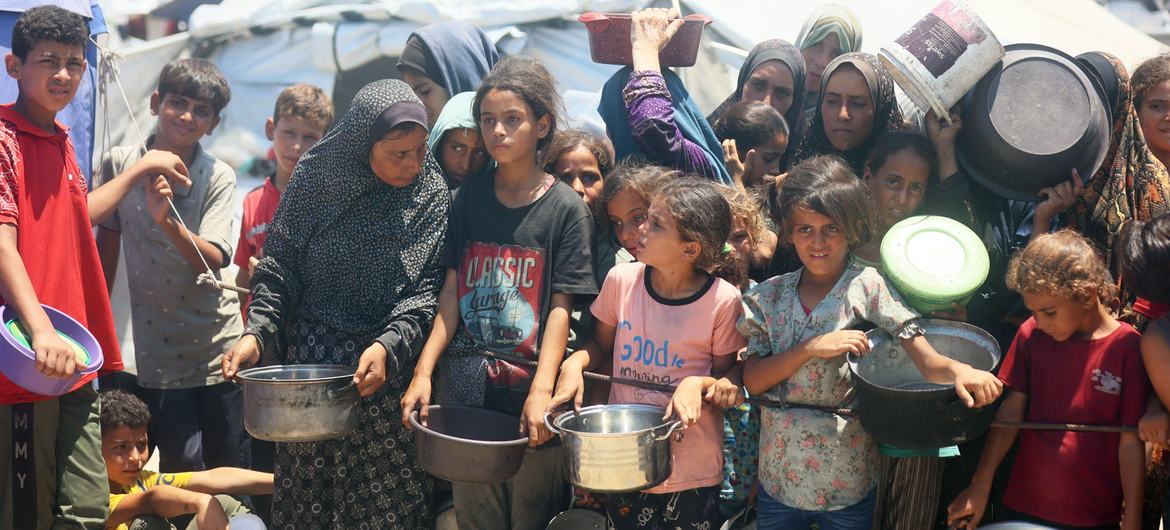
Families and children seeking food from a community kitchen in western Gaza City in late July. (file)

Famine response

The UN and partners continued integrated famine response efforts come on the heels of the UN-backed global hunger experts’ report finding famine conditions in parts of Gaza last month.

Efforts included scaling up cooked meal provision, promoting small-scale home gardening and community oven initiatives, expanding cash and voucher assistance and strengthening real-time monitoring and analysis systems.

“Intense advocacy continues with the Israeli authorities to increase the volume of humanitarian and commercial goods approved for entry, with a focus on fresh produce and fortified food, nutrition, health and cooking gas,” OCHA said in its report.
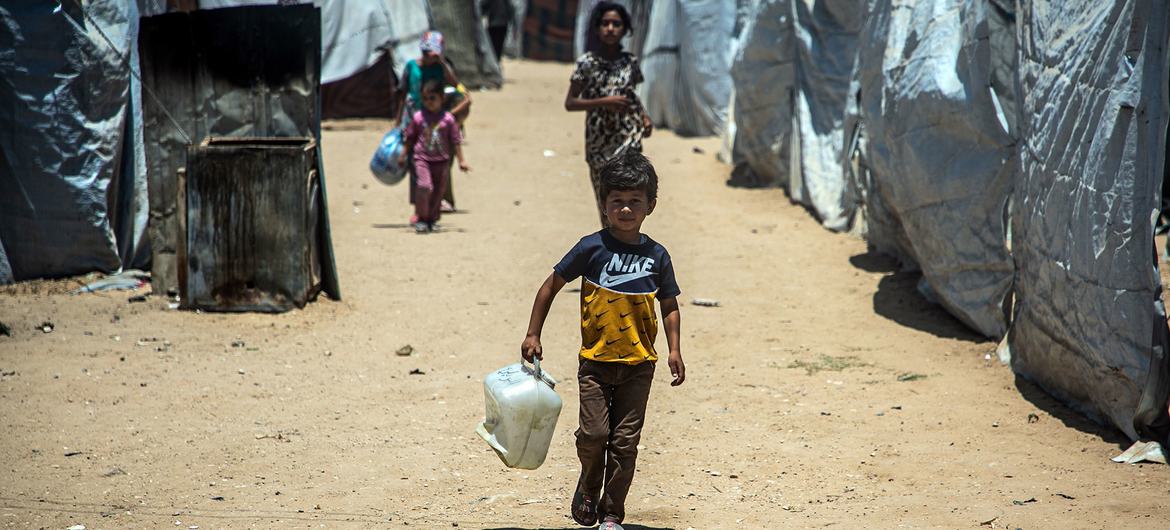
© UNICEF/Mohammed Nateel

Access to safe drinking water in the Gaza Strip has been severely compromised due to the ongoing war.

New supplies and critical shortages

For the first time in over five months, concentrated fodder for livestock owners entered Gaza. Approximately 60 metric tonnes were distributed to 600 livestock holders in Deir Al-Balah, OCHA said.

However, despite sustained advocacy, cooking gas has not entered Gaza for more than five months and is no longer available in markets, the UN agency stated.

“Firewood has also become increasingly unaffordable,” according to the agency. “Many people are reduced to using waste and scrap wood as alternative cooking sources, exacerbating health and environmental risks.”

Meanwhile, the UN relief agency for Palestine refugees’ (UNRWA) health facilities continue to serve around 132,000 patients with non-communicable diseases despite facing dire shortages of medical supplies. Insulin stocks will be exhausted within one to two weeks, leaving at least 16,000 diabetic patients without an essential part of their treatment, OCHA reported.

Access to clean water is severely limited. At the same time, hospitals remain lacking in essential supplies and continue to face overcrowding as daily attacks are seeing a rise in the numbers of dead and injured.

Source link

Pakistan floods leave villages cut off as monsoon devastation continues

Aid agencies are continuing to work tirelessly to reach the hardest-hit areas.

The National Disaster Management Authority (NDMA) said nearly 800 people have died since late June – almost three times the toll during the same period last year.

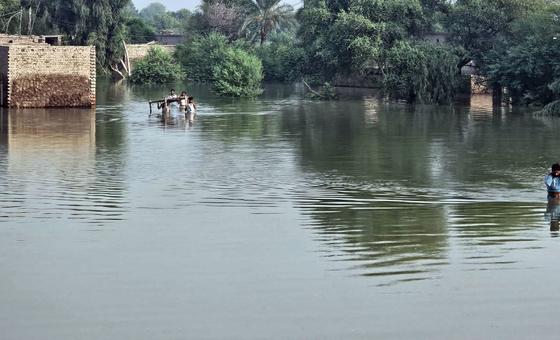
Khyber Pakhtunkhwa province has been hardest hit, where flash floods and landslides swept away homes and schools in mountainous districts, cutting off entire villages and communities.

Punjab – the country’s most populous province – is also on high alert as rising waters on the Sutlej, Ravi and Chenab rivers threaten downstream communities. Authorities fear that upstream water levels and near-full reservoirs could trigger further flooding in the coming days.

Glacier outbursts compound crisis

In Gilgit-Baltistan, so-called glacier lake outburst floods (GLOFs) have added another layer of devastation – destroying homes, water systems and power infrastructure in remote valleys.

These floods occur when heavy rains or rising temperatures cause glacial lakes to burst through natural barriers, suddenly releasing vast amounts of water and debris. With little warning, they are often catastrophic.

Experts warn that climate change is accelerating glacial melt in the Himalaya–Hindu Kush region, increasing the number and size of unstable lakes and heightening risks of such disasters.

Over a million affected

The humanitarian toll is widespread, with more than one million people affected nationwide.

Many families are sheltering with host communities rather than in relief camps, citing concerns over livestock and schooling. Health workers are reporting surges in malaria, fever and skin infections, stretching fragile health services.

Despite major efforts led by federal and provincial authorities, supported by the UN and humanitarian partners, critical gaps remain.

Communities cut off

The most acute needs are in remote mountain areas, where landslides block access and residents face worsening disease, hunger and water shortages, according to the UN aid coordination office, OCHA.

The UN Children’s Fund (UNICEF) said children face heightened risks, with schools damaged, safe water scarce and protection needs rising. The agency has dispatched hygiene kits and helped restore key water supplies.

The World Health Organization (WHO), for its part, is leading disease surveillance and control operations, in a bid to contain outbreaks.

DR Congo: The doctor who couldn’t leave Goma

Gunfire tore through the dark. Night after night, the 44-year-old physician from Guinea clung to the hope that the besieged city would hold somehow. Then, one morning in late January, the call came: he and the remaining international staff had to be evacuated immediately.

“We took the last flight out,” he recalled.

Hours later, Goma was in the hands of M23. The Tutsi-led rebel group, backed by neighbouring Rwanda, had just landed its boldest military victory in the region yet.

For most, that would have been the end of the story: a narrow escape, a mission cut short. But, as the aircraft lifted from the runway, he knew he would return. The only question was: how soon?

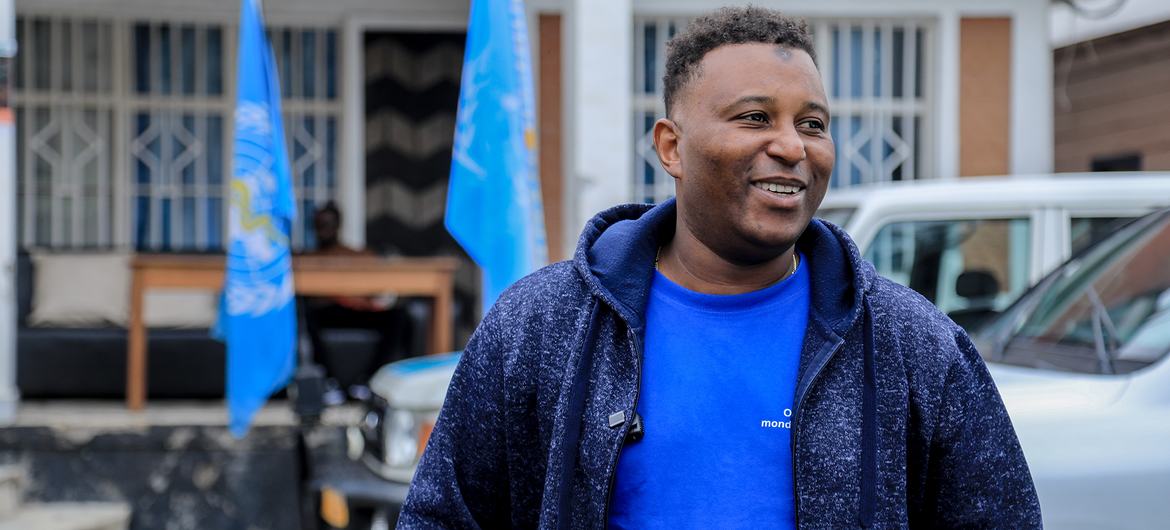
Dr Thierno Baldé, 45, led the WHO response in Goma after the city fell to M23 rebels in early 2025. (file)

A reluctant interlude

Back in Dakar, where he heads the World Health Organization (WHO) emergency hub for West and Central Africa, Dr. Balde grew restless. Reports of civilian massacres kept trickling out of North Kivu, each new detail cutting deeper. The colleagues he had left behind haunted him. With every grim report, his conviction deepened: his place was at their side.

Two weeks later, on the day he turned 45, he was tapped to lead the agency’s response in eastern DRC. He kept the assignment from his parents in Conakry, his hometown, to spare them the dread.

“I only told them once I was already there,” he admitted, almost sheepishly. His wife and two children had long since grown used to watching him vanish into the world’s most dangerous crises.

Return to ruins

It took him five days to reach Goma. By then, the airport had been shut and the roads pocked with checkpoints.

The city he found was hollowed out. Power lines were down, hospitals crammed with the wounded and talk of the streets being littered with bodies. Fear had settled like ash after a blaze on every face. “In 15 days, everything had changed.”

His team was broken. Some 20 Congolese staffers, gaunt from exhaustion, had been trying to hold the city’s fragile health system together. He gave half of them time off to recover, despite knowing every pair of hands was desperately needed. It was the least he could do.

And yet, amid the wreckage, there was one stroke of good fortune. Unlike most other UN agencies, the WHO warehouses had not been looted. They became lifelines, providing fuel to power hospitals, surgical kits for the wounded and cell phones to coordinate emergency evacuations.

Still, the numbers were crushing, with as many as 3,000 dead, according to initial reports. The bodies needed to be dealt with swiftly before disease spread.

“We had to bury everyone intensely, in a very specific timeframe,” he said, noting that WHO ended up paying local gravediggers to collect the corpses.

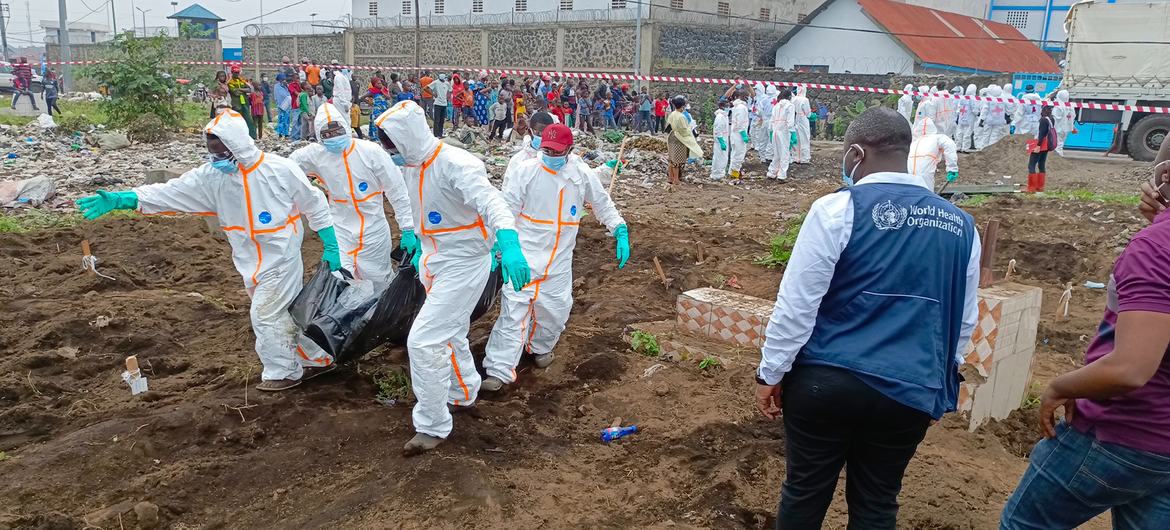
Bodies are being buried with the assistance of WHO personnel in the aftermath of the fall of Goma to M23 rebels in early February 2025. (file)

The spectre of cholera

On the day of his return, another illness announced itself: cholera. The first cases had just been confirmed in a MONUSCO camp, where hundreds of disarmed Congolese soldiers and their families had sought shelter after losing the city to the M23 militia. The UN peacekeeping mission’s bases, designed for Blue Helmets, were not built to accommodate a large number of civilians. Sanitation conditions were dire, and the disease spread fast.

That night, Dr. Balde could not sleep.

The next morning, he walked into the camp and saw patients stretched out on the floor. There were 20 or 30 people, with only one doctor, he remembered. Two were already dead.

For days, his team scrambled to hold back the tide, with chlorine for disinfection, protective gear, makeshift triage and staff recruited and trained on the spot. Vaccines were rushed in from Kinshasa.

Rumours rippled through the city

Still, rumours rippled through the city.

“People began saying ‘cholera is exploding in Goma and WHO is overwhelmed.’” He, who had come for humanitarian relief, now found himself with an epidemic on his hands.

“We had to completely re-orient ourselves,” he said. The ghost of another Haiti, where the UN played a role in a cholera outbreak in 2010, hovered over his every decision.

As if on cue, another disease was spreading. Mpox, once confined to the sprawling camps of displaced people on Goma’s outskirts, now spilled into the city itself. Those camps, home to hundreds of thousands uprooted by earlier waves of violence in the region, were emptied in the chaos of Goma’s fall.

“The patients ended up in the community,” he explained.

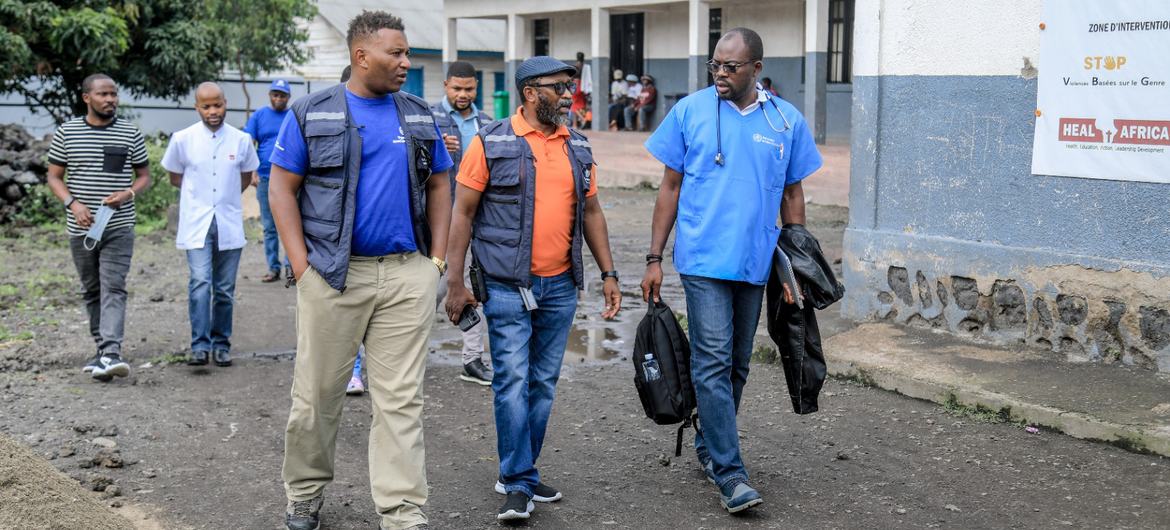
Dr Thierno Baldé (center left) and colleagues visit a WHO-supported health centre providing care to the population around Goma. (file)

Sitting across from rebels

Then came the men with guns. One afternoon, they barged into the WHO compound without warning. Were they under M23 orders, fighters acting on their own or mere criminals? It hardly mattered. The staff talked them down, persuading them to leave, but the incident made one thing clear. Without some understanding with the de facto authorities, the agency’s work could be compromised overnight.

So, Dr. Balde sought them out.

“We mustered the courage and went to meet them,” he said. At the North Kivu governor’s offices, now run by the rebels, he laid down his WHO “Incident Manager” card.

“I told them Ebola can affect everyone, cholera can affect everyone. We are here to contain them.”

A channel was opened. Fragile, but enough.

The cost of altruism

There’s a stiff price to pay for helping others. In Goma, the days blurred together. Hours were spent in fevered meetings and evenings spent alone in a hotel where heavily armed men dined at nearby tables.

During Ramadan, with the city under curfew, he broke the fast each night with the same simple meal, the city outside trembling with uncertainty.

When he returned to Dakar two month later, his blood tests were a mess.

“It was a real personal sacrifice,” he said, “and I’m not even talking about mental health. As a humanitarian, you have to take care of yourself, too.”

A veteran, still marked

Dr. Balde is no stranger to disaster zones. Trained in Guinea and Quebec, an associate professor at the University of Montreal, he cut his teeth with the Canadian Red Cross in Haiti after the earthquake, then in Guinea during the Ebola outbreak. Since joining WHO in 2017, he has faced emergency after emergency, including COVID-19.

I did everything I could to go back, but I paid a price.

And yet, he admitted, Goma left a mark that few other crises had.

“I did everything I could to go back, but I paid a price.”

In the Senegalese capital, his family bears that price, too. His children know their father disappears into places where the world is breaking apart. His wife has learned to live with the absence.

Still, when he speaks of those feverish weeks in eastern DRC, one sentence returns again and again, insistent and unshaken: “I had to be there.”

Source link

Aid cuts leave refugee agency unable to shelter six in 10 fleeing war in Sudan

Globally, $1.4 billion of the agency’s programmes are being shuttered or put on hold, UNHCR said in a new report.

“We can’t stop water, you can’t stop sanitation, but we’re having to take decisions when it comes, for example, to shelter,” said UNHCR Director of External Relations, Dominique Hyde.

“We’re have people arriving on a daily basis from Sudan, from the Darfur regions…arriving in Chad, not able to be given any shelter.”

In an urgent appeal for flexible funding from donors, Ms. Hyde noted that up to 11.6 million refugees and others risk losing access this year to direct humanitarian assistance from UNHCR. The figure represents about one-third of those reached by the organization last year.

On the Sudan-Chad border, the UN agency is now unable to provide “even basic shelter” to more than six in 10 refugees fleeing the conflict. Thousands more vulnerable people have been left stranded in remote border locations in South Sudan, too. “If we just had a bit more support, we could get them to settlements,” she insisted.

Because of the funding cuts, basic activities have already been hit hard. These include refugee registration, child protection, legal counselling and prevention of and responses to gender-based violence.

Every aid sector hit

In South Sudan, 75 per cent of safe spaces for women and girls supported by UNHCR have closed, leaving up to 80,000 refugee women and girls without access to medical care, psychosocial support, legal aid, material support or income-generating activities. This includes survivors of sexual violence, UNHCR noted.

“Behind these numbers are real lives hanging in the balance,” Ms. Hyde said.

“Families are seeing the support they relied on vanish, forced to choose between feeding their children, buying medicines or paying rent, while hope for a better future slips out of sight. Every sector and operation has been hit and critical support is being suspended to keep life-saving aid going.”

Libya influx

Many of those impacted by the war in Sudan have taken the decision to move from Chad and Egypt to Libya, into the hands of people smugglers who dangerously overload boats with desperate people seeking to cross the Mediterranean Sea to Europe.

“What we’re observing now is that in terms of arrivals in Europe of…Sudanese refugees, [it] has increased since the beginning of the year by about 170 per cent compared to the first six months of 2024,” said UNHCR spokesperson Olga Sarrado.

Support slashed from Niger to Ukraine

In camps hosting Myanmar’s Rohingya refugees in Bangladesh, education for some 230,000 children could now be suspended. Meanwhile in Lebanon “UNHCR’s entire health programme is at risk of being shuttered by the end of the year”, Ms. Hyde continued.

In Niger and other emergency settings, cuts in financial aid for shelter have left families in overcrowded structures or at risk of homelessness. In Ukraine, financial aid has also been slashed, “leaving uprooted families unable to afford rent, food or medical treatment”, Ms. Hyde noted.

Assistance to returning Afghans has also become another victim of the global aid cuts. Around 1.9 million Afghan nationals have returned home or been forced back since the start of the year, “but financial aid for returnees is barely enough to afford food, let alone rent, undermining efforts to ensure stable reintegration”, UNHCR said.

Legal aid halted

Overall, several UNHCR operations hit by severe funding gaps have now had to curtail investments in strengthening asylum systems and promoting regularization efforts.

In Colombia, Ecuador, Costa Rica and Mexico, any prolonged lack of legal status means prolonged insecurity for people on the move, the UN agency said. This results in deepening poverty “as refugees are excluded from formal employment and greater exposure to exploitation and abuse,” Ms. Hyde explained.

Approximately one in three of the agency’s 550 offices around the world has been impacted by the cuts, Ms. Hyde told journalists in Geneva:

“We’re not in a position to do so much contingency planning; what we’re able to do is make decisions on priorities – and at this point the priorities as I mentioned are dramatic.”

For 2025 UNHCR needs $10.6 billion. Only 23 per cent of this amount has been provided.

“Against this backdrop, our teams are focusing efforts on saving lives and protecting those forced to flee,” Ms. Hyde said. “Should additional funding become available, UNHCR has the systems, partnerships and expertise to rapidly resume and scale up assistance.”

Source link

Should I stay or should I leave?

Knowing whether to stay in or leave a romantic relationship is often an agonizing experience and that ambivalence can have negative consequences for health and well-being.

Now a new study offers insights into what people are deliberating about and what makes the decision so difficult, which could help therapists working with couples and stimulate further research into the decision-making process.

The study, led by U psychology professor Samantha Joel, was published in Social Psychology and Personality Science. Co-authors were Geoff MacDonald and Elizabeth Page-Gould of the University of Toronto.

“Most of the research on breakups has been predictive, trying to predict whether a couple stays together or not, but we don’t know much about the decision process — what are the specific relationship pros and cons that people are weighing out,” Joel said.

In the first phase of the study, the researchers recruited three samples of people — including people who were in the midst of trying to decide whether to break up or not — to participate in an anonymous survey.

Participants were asked open-ended questions about their specific reasons for both wanting to stay and leave a relationship.

That yielded a list of 27 different reasons for wanting to stay in a relationship and 23 reasons for wanting to leave.

The stay/leave factors were then converted into a questionnaire that was given to another group of people who were trying to decide whether to end a dating relationship or marriage. Those dating had been together for two years on average, while married participants reported relationships that averaged nine years.

In both studies, general factors considered as the individuals deliberated what to do were similar.

At the top of the stay list: emotional intimacy, investment and a sense of obligation. At the top of the leave list: issues with a partner’s personality, breach of trust and partner withdrawal.

Individuals in both dating and married situations gave similar reasons for wanting to leave a relationship.

But the researchers found significant differences in stay reasoning between the two groups.

Participants who were in a dating relationship said they were considering staying based on more positive reasons such as aspects of their partner’s personality that they like, emotional intimacy and enjoyment of the relationship. Those who were married gave more constraint reasons for staying such as investment into the relationship, family responsibilities, fear of uncertainty and logistical barriers.

And about half of the participants said they had reasons to both stay and leave, indicating ambivalence about their relationships.

“What was most interesting to me was how ambivalent people felt about their relationships. They felt really torn,” Joel said. “Breaking up can be a really difficult decision. You can look at a relationship from outside and say ‘you have some really unsolvable problems, you should break up’ but from the inside that is a really difficult thing to do and the longer you’ve been in a relationship, the harder it seems to be.”

Most people, Joel said, have standards and deal breakers about the kind of person they want to date or marry but those often go out the window when they meet someone.

“Humans fall in love for a reason,” Joel said. “From an evolutionary perspective, for our ancestors finding a partner may have been more important than finding the right partner. It might be easier to get into relationships than to get back out of them.”