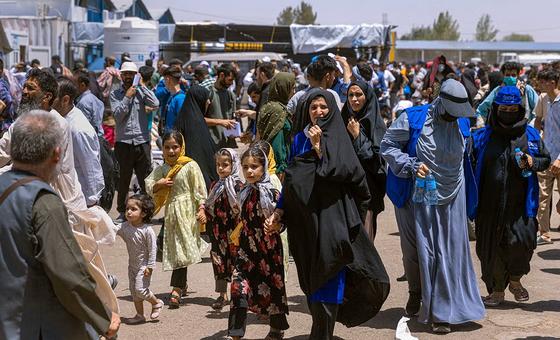
Afghanistan: Lifesaving services cut as Taliban bars women aid workers

“All of us at the United Nations are suffering from a reinforcement of the ban on females working with us…We are simply unable to operate without females,” said Arafat Jamal, UN refugee agency (UNHCR) Representative to Afghanistan, a day after agencies warned that the de facto authorities’ measures have impacted life-saving assistance for hundreds of thousands of people.

Last Sunday, de facto Afghan security forces prevented national female staff members and contractors of the UN from entering the global body’s compounds in Kabul, the UN Mission in the country, UNAMA, said in a statement on Thursday.

Centres closed

And in light of the restrictions, on Tuesday, UNHCR temporarily closed its cash and support centres for vulnerable Afghans, both at the border and in areas where so many people have been returning from Iran, Pakistan and elsewhere since the start of the year.

The registration process involves providing biometric data, along with screening and interviews – work that would be “entirely impossible without Afghan female workers”, the UNHCR official stressed, noting that more than one in two returnees are women.

This was an operational decision,” Mr. Jamal continued. It is not a decision taken to punish anyone or to make a statement, but simply it demonstrates that we cannot work without female workers in certain circumstances.”

Since the start of the year, some 2.6 million Afghans have returned from neighbouring countries – “many not by choice”, UNHCR said.

Mr. Jamal noted that the pace of returns continues to surge, with nearly 100,000 people crossing back from Pakistan in the first week of September alone, “stretching our capacities and the capacities of this country to the limit”.

Aftershocks reverberate

Echoing those concerns, the UN Children’s Fund (UNICEF) warned that Afghanistan is still reeling from the 6.0 magnitude earthquake that struck Kunar and Nangarhar provinces on 31 August, followed by multiple severe aftershocks.

At least 1,172 children have died, more than half the entire death toll, said UNICEF Country Representative in Afghanistan, Dr. Tajudeen Oyewale.

Briefing journalists in Geneva via videolink, Dr Oyewale described meeting young victims of the disaster in Machkandol in Nangahar, three girls and a young boy rescued from the emergency.

“For the girls it was even more sobering; they were lost; they have lost their families, their homes have been destroyed,” he said. “The family livestock have died. And for these young girls and this young boy, the future is completely bleak.”

The provinces impacted by the earthquake are mountainous and extremely remote, the UNICEF official continued.

Jammed dirt roads

“It is filled with steep terrain, difficult navigation…it took us about three and a half hours’ drive, 40 minutes of which was on paved road and the rest was through rough mountain dirt roads, a lot of turns with jammed with oncoming vehicles and especially with falling rocks on the road.”

Humanitarians warn that the earthquake has compounded Afghanistan’s existing acute problems.

In total, the crisis has claimed more than 2,164 lives, at least 3,428 people have been injured and at least 6,700 homes have either been destroyed or badly damaged.

“Behind these numbers are children left standing alone in the rubble and families torn apart in the blink of an eye… UNICEF is literally going the extra mile and doing whatever it takes to reach these children and families with the support they need,” Dr Oyewale insisted.

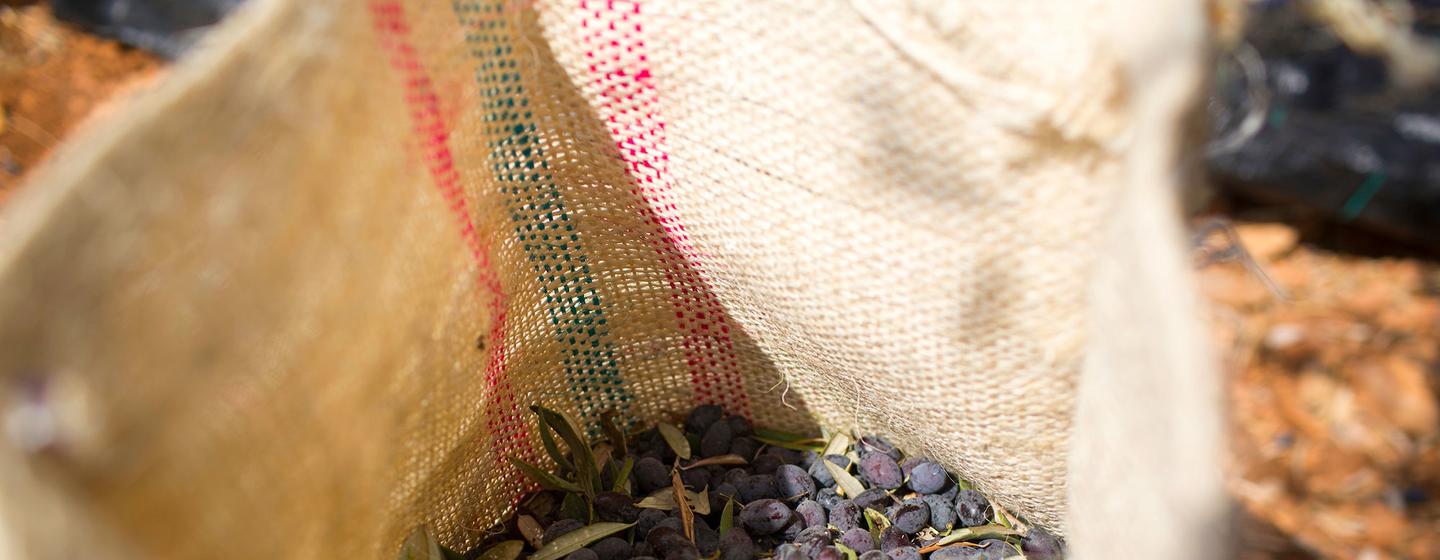
‘Our livelihoods have been cut off’, say West Bank farmers ahead of olive harvest

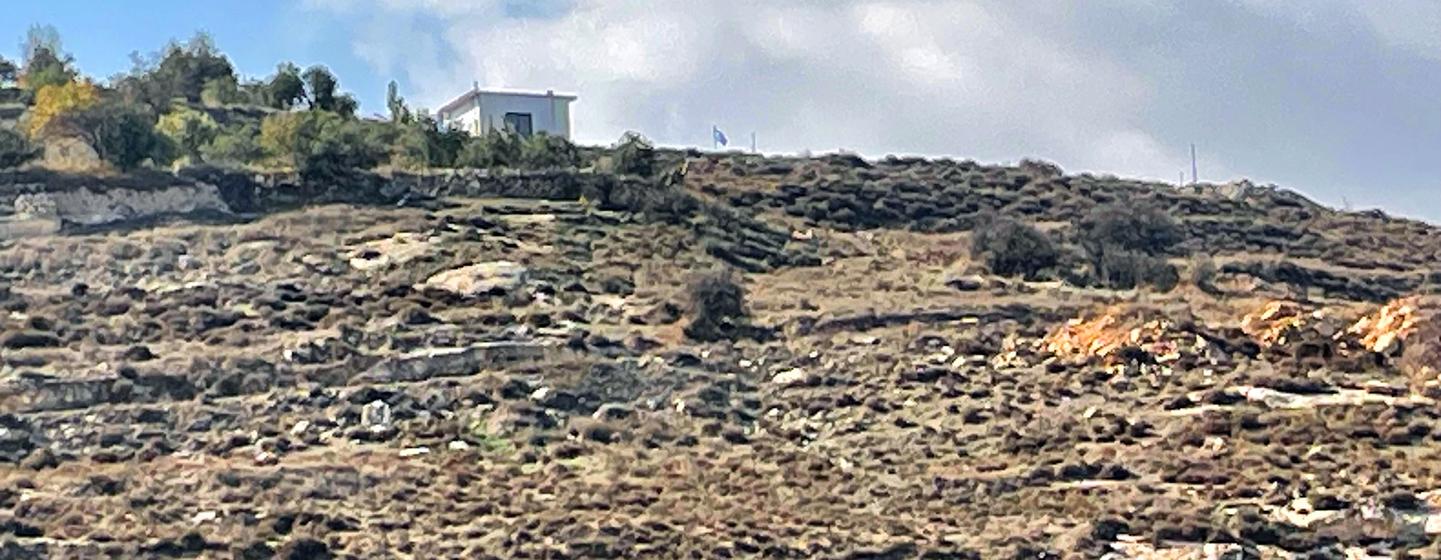
Like thousands of Palestinian farmers, he faces growing restrictions from Israeli forces and settlers, who have made the olive harvest season – running from September to November – a time of uncertainty and struggle.  

In recent years, the UN Food and Agriculture Organization (FAO) has supported olive farmers and cooperatives to improve access to and management of land and water resources, introduced sustainable practices such as intercropping, and helped them increase food production and income by using natural resources more efficiently.

The olive harvest is both a primary source of livelihood for thousands of families and an integral part of Palestinian heritage.

Yet, attacks on the harvest threaten such heritage and hinder Palestinian farmers’ work and way of life – as settler attacks reach their highest level in at least two decades, according to the UN aid coordination office, OCHA.

‘Unprecedented’ risks

“As the West Bank gears up for the annual olive harvest, the message from farmers is clear: This year’s harvest season is marked by uncertainty, and livelihoods are under unprecedented risk,” said Ciro Fiorillo, FAO’s Head of Office in the West Bank and Gaza Strip.  

The combination of State policies and settler violence has prevented Palestinians from accessing tens of thousands of dunums of farmland and pasture, one dunum equating 1,000 square meters.

These restrictions have contributed to the destruction of the local economy and the displacement of thousands of Palestinian herders and farmers, in conditions that may amount to forcible transfer, according to the UN human rights office (OHCHR).

Olives and olive oil production in the West Bank are a cornerstone of Palestinian culture.

“Our livelihoods have been cut off. Olive crops are the primary source of income for farmers,” a Palestinian farmer from Kufr Qaddum village, told UN News.

Land access denied

“For two years now, we have been denied access to our lands,” Yousef, a Palestinian farmer from Kufr Qaddum told UN News. All land in the northern area of the village has been sealed off with an iron gate following the most recent escalation between Iran and Israel.

Yousef’s family owns over 300 dunums of land, primarily cultivated with olive trees, located near the Israeli Kedumim settlement, in Qalqiliya Governorate.  

Since Hamas’s attack on Israel in 2023, they have had no access to their land, including during the harvesting season.  

“These lands cover approximately four to five thousand dunams. We have been prevented from accessing them,” Yousef said, adding that “this issue [affected] all farmers across the entire West Bank.”   

Mohammed, a Palestinian farmer from Kifl Harris, a village located near the Israeli Ariel settlement in Salfit Governorate, has been denied access to over 3,000 dunums of olive-cultivated land located within the settlement boundary. This restriction has completely cut off the ability of Kifl Harris’s farmers to tend to and harvest their groves.  

“The olive season is our main economic lifeline as farmers and employees in both the public and the private sectors,” Mohammed told UN News, adding that Palestinian farmers had not been given a reason for being denied access.

“After settlers installed a caravan on our family’s land, access to more than 200 dunums of farmland, much of it planted with olive trees, was restricted,” Ahmed, a farmer from Khalet Al Luza told OCHA.  

Harassment from settlers

“We have endured all kinds of harassment from settlers and the [Israeli] army,” Yousef from Kufr Qaddum told us.  

In an advisory opinion from July 2024, the International Court of Justice (ICJ) concluded that Israel’s continued presence in the Occupied Palestinian Territory is unlawful and that it is under an obligation to end its unlawful presence “as rapidly as possible”.

Settlers installed a caravan on a Palestinian family’s land in Khalet Al Luza, West Bank.

“Settler attacks have affected all farmers. I, personally, have been prevented from reaching my land, and we’ve been subjected to repeated attacks by settlers and the army, including theft of olive crops, theft of olive harvesting equipment, vehicle vandalism, cutting down olive trees, and threats,” Yousef said.  

In a statement published on 30 July, the UN human rights office (OHCHR) warned of escalating Israeli settler violence “with the acquiescence, support, and in some cases participation” of Israeli forces.

It stated that Israeli Government “policy and legislative actions appear aimed at emptying certain areas of the West Bank of the Palestinian population, advancing the settlement enterprise, and consolidating the annexation” of large parts of the West Bank.  

“We urge you to work with international institutions through peaceful means to achieve a result that enables us to access our lands safely and harvest the fruits of our olives and trees,” Yousef pleaded.

“Together with our resource partners, FAO is committed to continuing supporting local olive cultivation, which is as important to livelihoods and food security as it is to Palestinian culture and tradition,” said Mr. Fiorillo. 

*Names in this story have been changed to protect the identities of those featured.

Source link

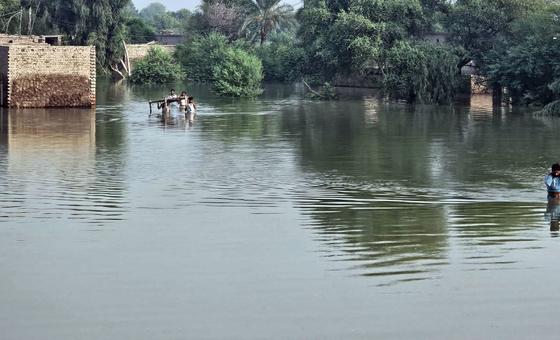
Pakistan floods leave villages cut off as monsoon devastation continues

Aid agencies are continuing to work tirelessly to reach the hardest-hit areas.

The National Disaster Management Authority (NDMA) said nearly 800 people have died since late June – almost three times the toll during the same period last year.

Khyber Pakhtunkhwa province has been hardest hit, where flash floods and landslides swept away homes and schools in mountainous districts, cutting off entire villages and communities.

Punjab – the country’s most populous province – is also on high alert as rising waters on the Sutlej, Ravi and Chenab rivers threaten downstream communities. Authorities fear that upstream water levels and near-full reservoirs could trigger further flooding in the coming days.

Glacier outbursts compound crisis

In Gilgit-Baltistan, so-called glacier lake outburst floods (GLOFs) have added another layer of devastation – destroying homes, water systems and power infrastructure in remote valleys.

These floods occur when heavy rains or rising temperatures cause glacial lakes to burst through natural barriers, suddenly releasing vast amounts of water and debris. With little warning, they are often catastrophic.

Experts warn that climate change is accelerating glacial melt in the Himalaya–Hindu Kush region, increasing the number and size of unstable lakes and heightening risks of such disasters.

Over a million affected

The humanitarian toll is widespread, with more than one million people affected nationwide.

Many families are sheltering with host communities rather than in relief camps, citing concerns over livestock and schooling. Health workers are reporting surges in malaria, fever and skin infections, stretching fragile health services.

Despite major efforts led by federal and provincial authorities, supported by the UN and humanitarian partners, critical gaps remain.

Communities cut off

The most acute needs are in remote mountain areas, where landslides block access and residents face worsening disease, hunger and water shortages, according to the UN aid coordination office, OCHA.

The UN Children’s Fund (UNICEF) said children face heightened risks, with schools damaged, safe water scarce and protection needs rising. The agency has dispatched hygiene kits and helped restore key water supplies.

The World Health Organization (WHO), for its part, is leading disease surveillance and control operations, in a bid to contain outbreaks.

Lifesaver: Study shows vaccine campaigns cut deaths by nearly 60 per cent

The study, conducted by Gavi, the Vaccine Alliance, in collaboration with Australia’s Burnet Institute, and published in the authoritative British Medical Journal (BMJ) Global Health, analyzed 210 outbreaks across 49 low-income countries over a 23-year period.

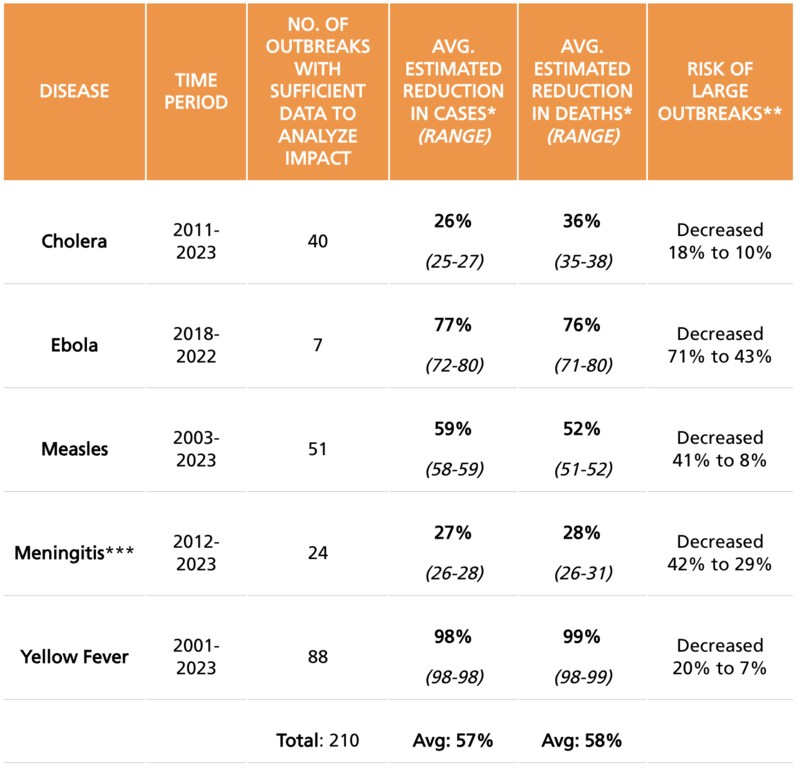
It found that rapid vaccine deployment during outbreaks of cholera, Ebola, measles, meningitis and yellow fever, had led to estimated reductions in illnesses and deaths of nearly 60 per cent on average.

For diseases like yellow fever and Ebola, the impact was even more dramatic: yellow fever deaths dropped by 99 per cent, while Ebola fatalities fell by 76 per cent.

The results highlight not only the effectiveness of emergency vaccination, but also the critical role of preparedness and speed in response to emerging threats.

“For the first time, we are able to comprehensively quantify the benefit, in human and economic terms, of deploying vaccines against outbreaks of some of the deadliest infectious diseases,” said Sania Nishtar, CEO of Gavi.

This study demonstrates clearly the power of vaccines as a cost-effective countermeasure to the increasing risk the world faces from outbreaks.

Gavi: A lifesaving partnership

Gavi, the Vaccine Alliance, is a unique global partnership that helps vaccinate nearly half the world’s children against deadly and debilitating diseases.

It brings together developing country and donor governments, the World Health Organization (WHO), UN Children’s Fund (UNICEF), the World Bank, the Bill & Melinda Gates Foundation and other key partners to expand access to immunisation.

Gavi also maintains global vaccine stockpiles for major diseases, managed in coordination with WHO, UNICEF, Médecins Sans Frontières (MSF), and the International Federation of Red Cross and Red Crescent Societies (IFRC).

Working in partnership with Gavi, governments and health authorities, UN agencies support vaccination campaigns in some of the most remote regions of the wrote. Pictured here, a child receives a vaccine in Solomon Islands in the Pacific.

Quantifying lives and costs saved

In addition to reducing deaths and disability-adjusted life years, emergency vaccination during the 210 outbreaks studied generated nearly $32 billion in economic benefits – from averting premature deaths and years of life lost to disability.

The study’s authors say this figure is likely a conservative estimate, as it does not include the broader social and macroeconomic impacts of major outbreaks.

For example, the 2014 Ebola outbreak in West Africa, which occurred before an approved vaccine was available, cost the region an estimated $53 billion. In contrast, later outbreaks responded to with emergency vaccines saw deaths reduced by three-quarters and the threat of regional spread dramatically lowered.

Source: Gavi/Burnet Institute study

Results by disease

Click here for details.

Disease-by-disease gains

The study provides a breakdown of vaccine effectiveness by disease.

Measles, one of the most infectious viruses known, saw cases drop by 59 per cent and deaths by 52 per cent thanks to outbreak response campaigns.

Yellow fever saw the biggest gains, with emergency vaccination nearly eliminating deaths – a 99 per cent drop.

Cholera and meningitis, which often strike communities with limited healthcare access and infrastructure, saw more modest but still meaningful reductions in cases and deaths.

Vaccinations helped reduce cholera cases and deaths by 28 per cent and 36 per cent, respectively, across 40 cholera outbreaks between 2011 and 2023. For meningitis, cases and deaths fell by 27 per cent and 28 per cent respectively, over 10 years.

Vaccines, COVID-19, and future threats

The coronavirus“>COVID-19 pandemic was a stark reminder of the value of vaccines, which saved an estimated 20 million lives globally in the first year of rollout alone, according to the respected and influential Lancet medical journal.

Yet the pandemic also disrupted routine immunisation, leading to dangerous backsliding in coverage rates for diseases like measles and polio. The Gavi study emphasizes that emergency vaccination must be paired with strong routine immunisation systems to prevent future outbreaks.

Looking ahead, Gavi’s 2026-2030 strategy includes expanding stockpiles, accelerating vaccine access for diseases like mpox and hepatitis E, and supporting preventive campaigns in high-risk regions.

Look back: COVID-19 pandemic disrupts vaccinations for children globally.

UN chief calls for major reforms to cut costs and improve efficiency

Briefing Member States in New York on Monday Mr. Guterres outlined wide-ranging effort to revamp how the UN system operates – cutting costs, streamlining operations, and modernizing its approach to peace and security, development and human rights.

“These are times of peril,” he said, “but they are also times of profound opportunity and obligation. The mission of the United Nations is more urgent than ever.

Three main objectives

Launched in March, the UN80 Initiative centres on three priorities: enhancing operational efficiency, assessing how mandates – or key tasks – from Member States are implemented, and exploring structural reforms across the UN system.

The conclusions will be reflected in revised estimates for the 2026 budget in September this year, with additional changes that require more detailed analysis presented in 2027.

‘Meaningful’ budget reductions

Mr. Guterres said the changes are expected to yield “meaningful reductions” in the overall budget. For example, the departments for political and peacekeeping affairs could see a 20 per cent reduction in staff by eliminating duplication.

This level of reduction, he said, could serve as a benchmark across the UN system – while also considering unique factors for each department.

Additional examples include consolidating all counter-terrorism work within the main Office of Counter-Terrorism (UNOCT), ending building leases and relocating posts away from expensive “duty stations” where cost of living is high.

“There might be immediate, one-off costs involved in relocating staff and providing potential termination packages,” he said, “but by moving posts from high-cost locations, we can reduce our commercial footprint in those cities and reduce our post and non-post costs.

UN Secretary-General António Guterres briefs on the UN80 Initiative.

Efficiencies and upgrades

The first workstream focuses on efficiencies and improvements, developing a new model that improves consolidation, looks at centralising services, relocating to cheaper locations, and expanding the use of automation and digital platforms.

Mr. Guterres said departments the UN’s headquarters in New York and Geneva have been asked to review whether some teams can be relocated to lower-cost duty stations, reduced or abolished.

Reviewing mandates

The second workstream involves a review of how existing mandates are being carried out – not the mandates themselves, which are the purview of Member States only.

A preliminary review identified more than 3,600 unique mandates for the Secretariat alone. A full and more detailed analysis is now underway.

Mr. Guterres emphasised that the sheer number of mandates – and the bureaucracy needed to implement them – places a particular burden on smaller Member States with limited resources.

“Based on this work, Member States may wish to consider the opportunity to conduct themselves a review of the mandates,” he added.

Structural change

The third workstream – focused on structural reform – is already underway, Mr. Guterres said.

Nearly 50 initial submissions have already been received from senior UN officials, reflecting what Mr. Guterres described as “a high level of ambition and creativity.”

Key work areas have been identified for review. These include peace and security, development, human rights, humanitarian, training and research and specialised agencies.

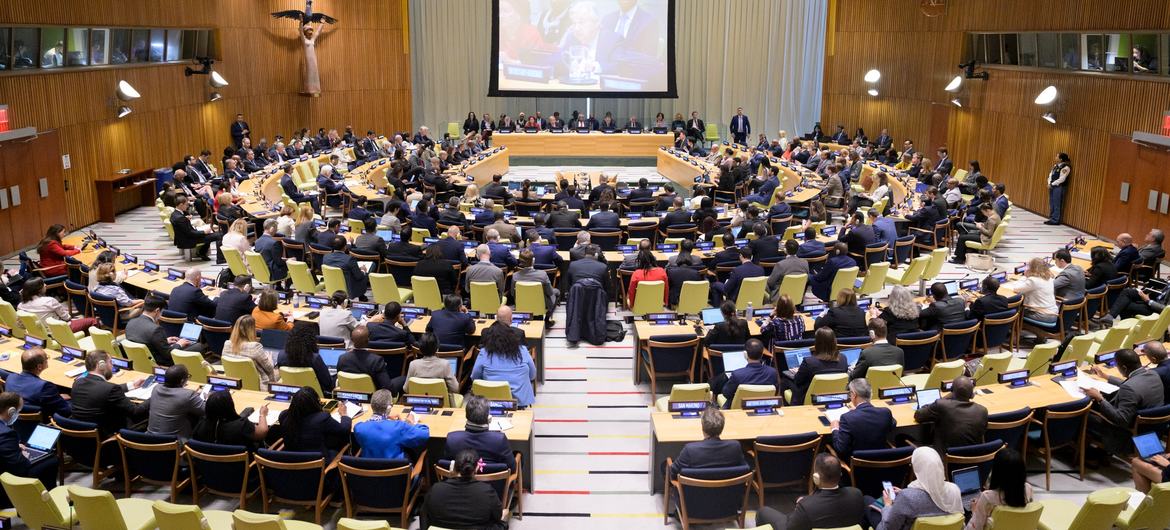
A wide view of the informal meeting of the General Assembly plenary that heard a briefing by the Secretary-General on the UN80 Initiative.

Not an answer to liquidity crisis

Mr. Guterres also touched on the UN dire cashflow situation, noting that the initiative “is not an answer” to the months-long liquidity crisis but by being more cost effective, it should help limit the impact.

The liquidity crisis is caused by one simple fact – the arrears,” he said, adding that structural reform is not the answer to a fundamental failure by some Member States to pay what they owe on time to meet running costs.

Unpaid dues

According to information provided by the UN Controller to the General Assembly’s Fifth Committee (Administrative and Budgetary), only $1.8 billion has been received against the $3.5 billion regular budget assessments for 2025 – a shortfall of around 50 per cent.

As of 30 April, unpaid assessments stood at $2.4 billion, with the United States owing about $1.5 billion, China ($597 million), Russia ($72 million), Saudi Arabia ($42 million), Mexico ($38 million), and Venezuela ($38 million). An additional $137 million is yet to be paid by other Member States.

For the peacekeeping budget (which runs on a July-June cycle), including prior-period arrears, the unpaid amount totals $2.7 billion. For the International Tribunals, total contribution outstanding was $79 million as of 30 April.

Close consultation

The Secretary-General told Member States he would be consulting with them  closely and regularly on the cash crisis and needed reforms, seeking guidance  and presenting concrete proposals for countries to act on.

UN staff members and their representatives are being consulted and listened to, he added: “Our concern is to be humane and professional in dealing with any aspect of the required restructuring.

In conclusion, he highlighted that the UN80 Initiative is a “significant opportunity” to strengthen the UN system and deliver for those who depend on it.

In response to the suggestion that the UN should focus on just the one key pillar of peace and security, he said it would be wrong to ditch development and human rights – all three are essential he underscored.

Let us seize this momentum with urgency and determination, and work together to build the strongest and most effective United Nations for today and tomorrow.”

Source link