‘Our livelihoods have been cut off’, say West Bank farmers ahead of olive harvest

Like thousands of Palestinian farmers, he faces growing restrictions from Israeli forces and settlers, who have made the olive harvest season – running from September to November – a time of uncertainty and struggle.  

In recent years, the UN Food and Agriculture Organization (FAO) has supported olive farmers and cooperatives to improve access to and management of land and water resources, introduced sustainable practices such as intercropping, and helped them increase food production and income by using natural resources more efficiently.

The olive harvest is both a primary source of livelihood for thousands of families and an integral part of Palestinian heritage.

Yet, attacks on the harvest threaten such heritage and hinder Palestinian farmers’ work and way of life – as settler attacks reach their highest level in at least two decades, according to the UN aid coordination office, OCHA.

‘Unprecedented’ risks

“As the West Bank gears up for the annual olive harvest, the message from farmers is clear: This year’s harvest season is marked by uncertainty, and livelihoods are under unprecedented risk,” said Ciro Fiorillo, FAO’s Head of Office in the West Bank and Gaza Strip.  

The combination of State policies and settler violence has prevented Palestinians from accessing tens of thousands of dunums of farmland and pasture, one dunum equating 1,000 square meters.

These restrictions have contributed to the destruction of the local economy and the displacement of thousands of Palestinian herders and farmers, in conditions that may amount to forcible transfer, according to the UN human rights office (OHCHR).

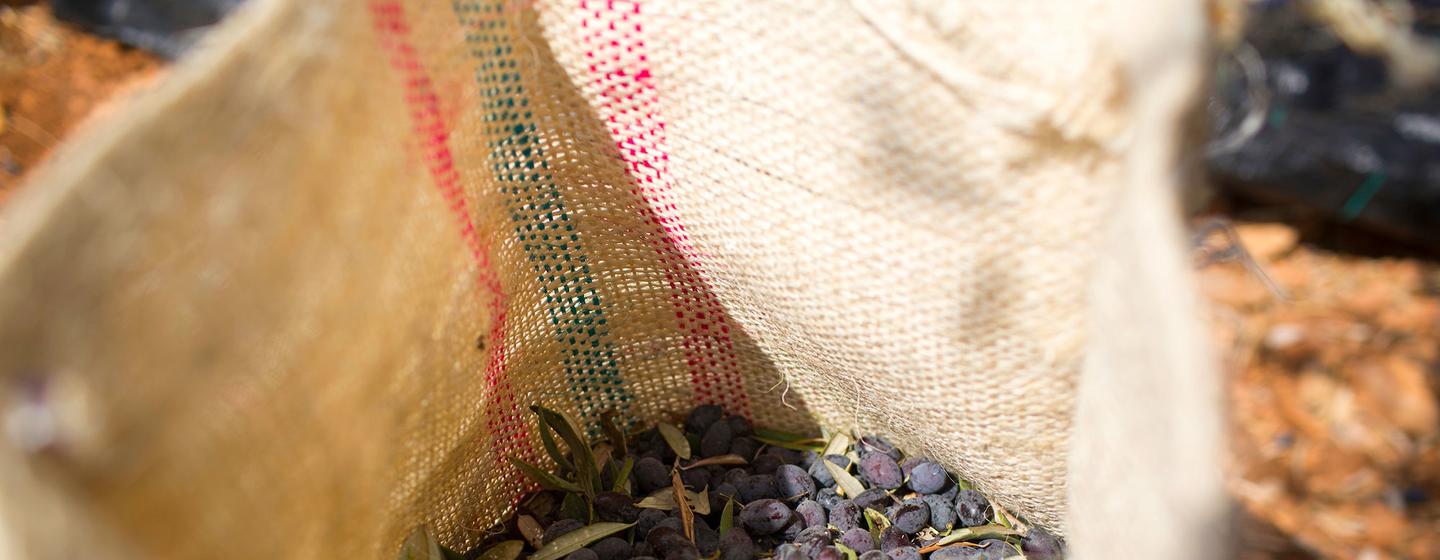
Olives and olive oil production in the West Bank are a cornerstone of Palestinian culture.

“Our livelihoods have been cut off. Olive crops are the primary source of income for farmers,” a Palestinian farmer from Kufr Qaddum village, told UN News.

Land access denied

“For two years now, we have been denied access to our lands,” Yousef, a Palestinian farmer from Kufr Qaddum told UN News. All land in the northern area of the village has been sealed off with an iron gate following the most recent escalation between Iran and Israel.

Yousef’s family owns over 300 dunums of land, primarily cultivated with olive trees, located near the Israeli Kedumim settlement, in Qalqiliya Governorate.  

Since Hamas’s attack on Israel in 2023, they have had no access to their land, including during the harvesting season.  

“These lands cover approximately four to five thousand dunams. We have been prevented from accessing them,” Yousef said, adding that “this issue [affected] all farmers across the entire West Bank.”   

Mohammed, a Palestinian farmer from Kifl Harris, a village located near the Israeli Ariel settlement in Salfit Governorate, has been denied access to over 3,000 dunums of olive-cultivated land located within the settlement boundary. This restriction has completely cut off the ability of Kifl Harris’s farmers to tend to and harvest their groves.  

“The olive season is our main economic lifeline as farmers and employees in both the public and the private sectors,” Mohammed told UN News, adding that Palestinian farmers had not been given a reason for being denied access.

“After settlers installed a caravan on our family’s land, access to more than 200 dunums of farmland, much of it planted with olive trees, was restricted,” Ahmed, a farmer from Khalet Al Luza told OCHA.  

Harassment from settlers

“We have endured all kinds of harassment from settlers and the [Israeli] army,” Yousef from Kufr Qaddum told us.  

In an advisory opinion from July 2024, the International Court of Justice (ICJ) concluded that Israel’s continued presence in the Occupied Palestinian Territory is unlawful and that it is under an obligation to end its unlawful presence “as rapidly as possible”.
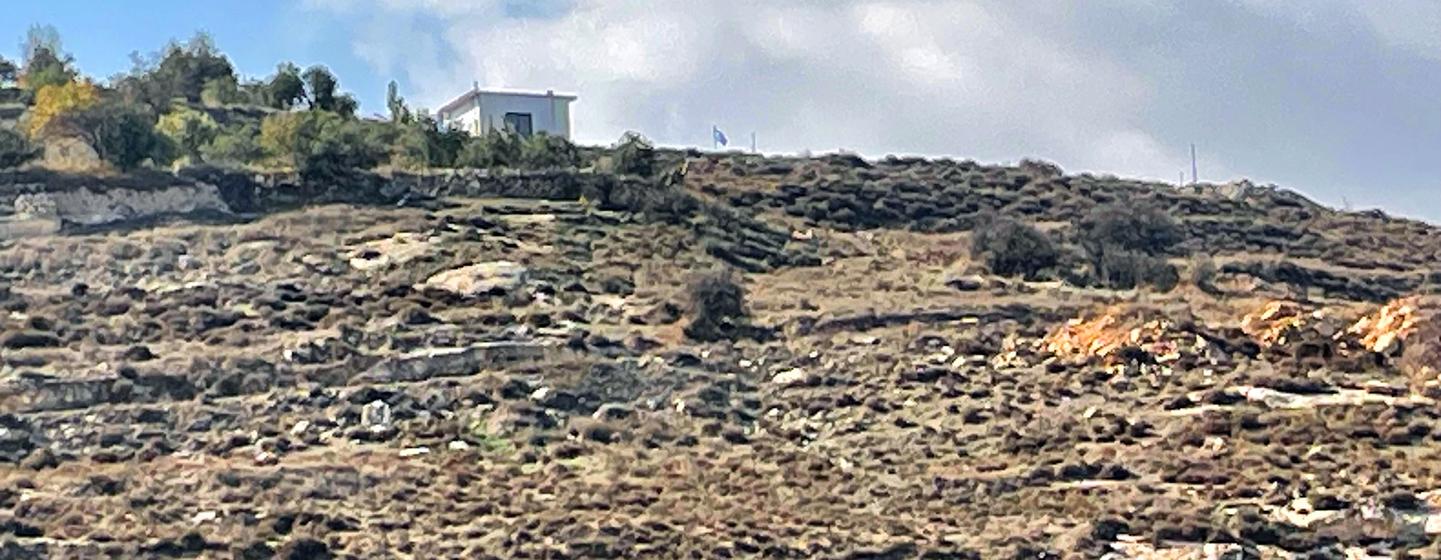
Settlers installed a caravan on a Palestinian family’s land in Khalet Al Luza, West Bank.

“Settler attacks have affected all farmers. I, personally, have been prevented from reaching my land, and we’ve been subjected to repeated attacks by settlers and the army, including theft of olive crops, theft of olive harvesting equipment, vehicle vandalism, cutting down olive trees, and threats,” Yousef said.  

In a statement published on 30 July, the UN human rights office (OHCHR) warned of escalating Israeli settler violence “with the acquiescence, support, and in some cases participation” of Israeli forces.

It stated that Israeli Government “policy and legislative actions appear aimed at emptying certain areas of the West Bank of the Palestinian population, advancing the settlement enterprise, and consolidating the annexation” of large parts of the West Bank.  

“We urge you to work with international institutions through peaceful means to achieve a result that enables us to access our lands safely and harvest the fruits of our olives and trees,” Yousef pleaded.

“Together with our resource partners, FAO is committed to continuing supporting local olive cultivation, which is as important to livelihoods and food security as it is to Palestinian culture and tradition,” said Mr. Fiorillo. 

*Names in this story have been changed to protect the identities of those featured.

Source link

Tide of change in Philippines as women revive watersheds and livelihoods

Onshore, women in this tropical zone gather to mend torn nets, sort the day’s catch, and prepare their harvests for the market.

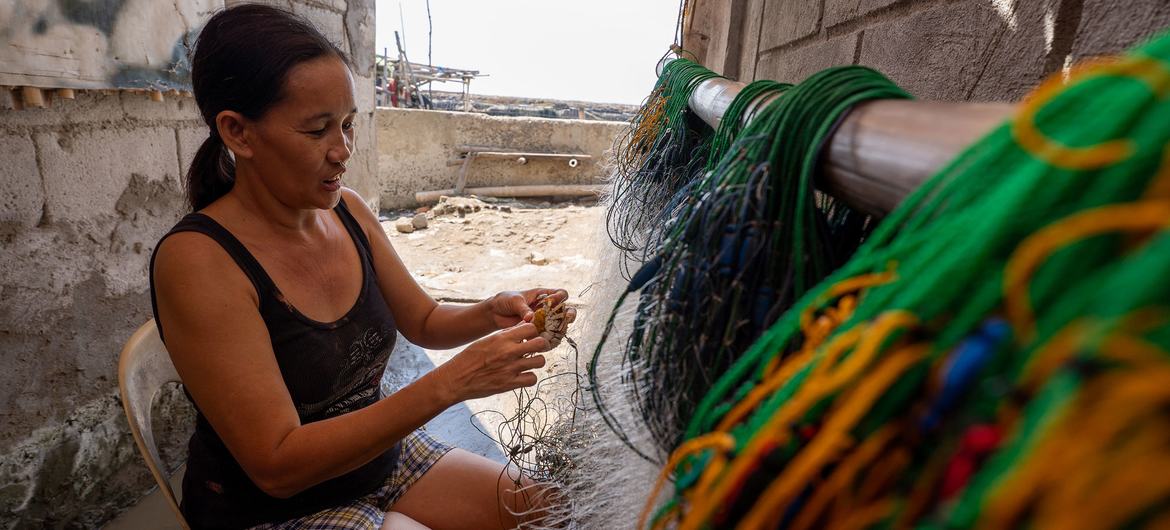
Among them is Christina Guevarra, who gently frees a blue swimming crab from her net. “From February to May, we are grateful,” she told the UN ahead of the International Day of the Tropics  marked annually on 29 June. “But after these months, especially when the rainy season begins, we have to find other ways to earn.”

Christina Guevarra removes crabs from fishing nets.

Simple but hard life

Christina’s family, like many others in Sasmuan, relies on the river’s bounty, a livelihood increasingly threatened by dwindling fish populations and environmental degradation.

“It’s difficult in coastal communities like ours because we are so dependent on the river’s harvests,” she explained. “Life for us fishers is simple, but it’s also hard.”

For generations, the local people have depended on the Sasmuan Pampanga coastal wetlands, part of a watershed that drains into Manila Bay.

But pollution, poor waste management, and unsustainable practices now imperil its biodiversity and the local economy.

“The wastes we see in the river also come from upstream communities,” said Irene Villar, Assistant Head of Pampanga’s Environment and Natural Resources Office. “Even with proper waste disposal and policies in place, enforcement remains a challenge.”

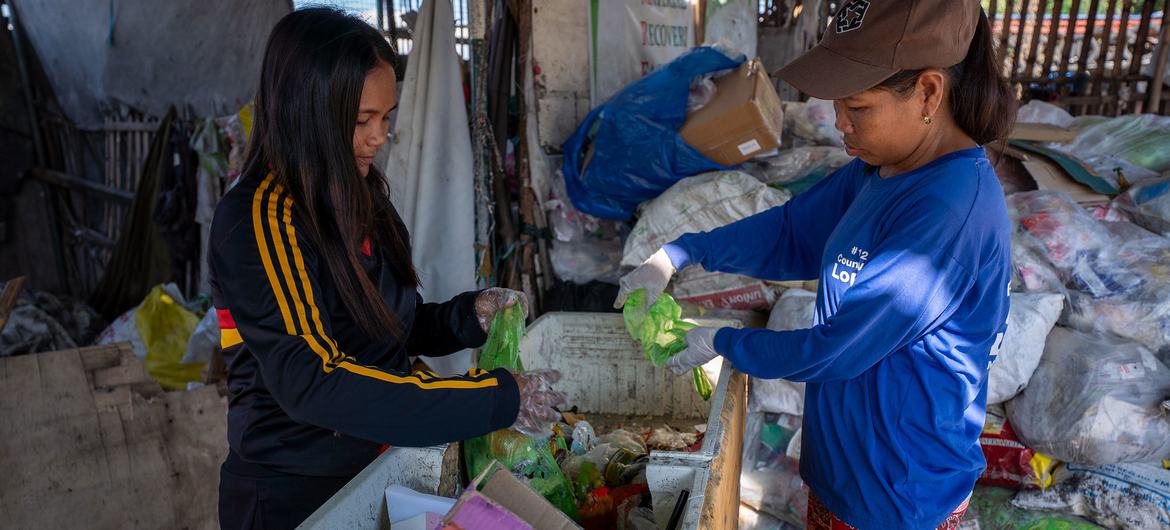
Edna Bilacog and Rose Ann Tungol have been supporting their families as waste segregators.

To address these issues, the Integrated River Basin Management (IRBM) Project which is financed by the Global Environment Facility, implemented by  the UN Development Programme (UNDP) has partnered with the Provincial Government of Pampanga and local groups to promote sustainable practices including not only on conserving waterways but also on uplifting vulnerable communities—especially women.

In Sasmuan, women like Edna Bilacog and Rose Ann Tungol find work at a Materials Recovery Facility, sorting household waste. Their pay, about 175 pesos a day (US$4), is well below the local minimum wage. “What we earn barely meets our needs,” they admit, but their work helps sustain their families.

Net gain

Others, like Maricar Guevarra, have relied on traditional crafts. A skilled weaver for over 20 years, she earns about $4 per repaired net and $13 for a large one known as a panti, which takes four days to complete. “This has been my main source of income, especially when my husband fell ill,” she said. To make ends meet, she also does laundry and sells home-cooked meals.

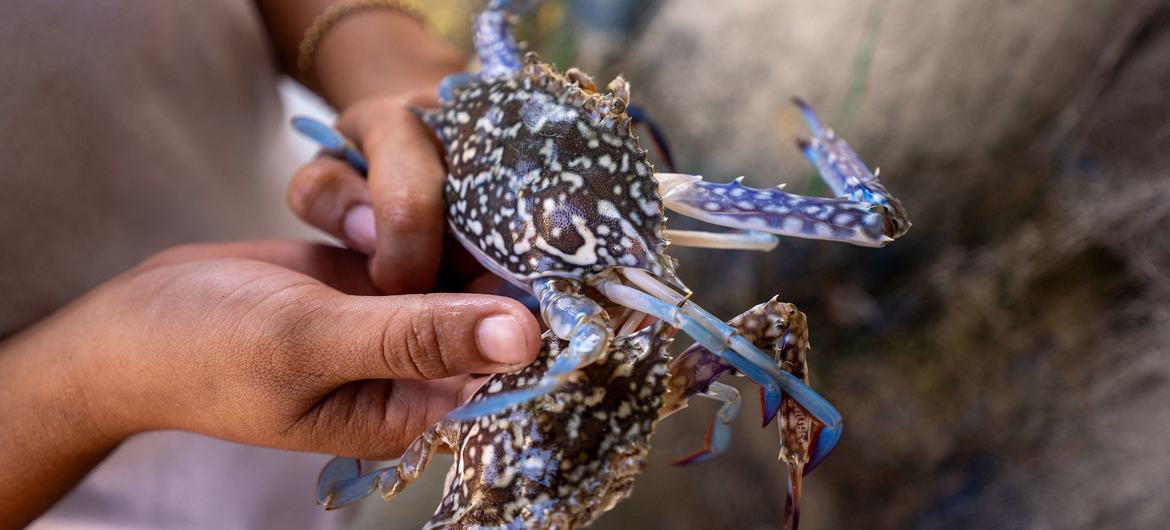
Women also lead the crab trade, detangling crustaceans from nets and preparing them for market, though unsustainable aquaculture from nearby fishponds threatens their livelihood. In response, many have diversified. During the off-season, they work as helpers, labourers, or store employees in nearby towns.

The blue swimming crab is abundant in the Sasmuan Pampanga coastal wetland.

In the village of Batang 2nd, a women’s group turns sea purslane, a wild riverbank weed, into atchara (pickled salad), while on the mainland, Patricia Culala has built a business around crab paste. “The fat from the crab is the tastiest part—that’s what I preserve and sell in bottles,” she explained. “Through this business, I was able to send my children to school.”

The women of Sasmuan are both resilient and innovative. But without sustainable solutions, their future remains uncertain. Fair wages, community-led conservation, and responsible river management are essential to preserving the wetlands, and the lives they nourish.

‘This is not just ice’: Glaciers support human livelihoods, UN deputy chief says

Located in north-central Tajikistan, the glacier is a vital water source for many communities in Central Asia, feeding rivers and helping to sustain millions of lives and livelihoods.

But due to climate change, it is melting. Quickly. Over the past 80 years, it lost the equivalent of 6.4 million Olympic sized pools of water.

The International Conference on Glaciers Preservation, held 29 May – 1 June in Tajikistan’s capital Dushanbe, is highlighting the ways in which glacier retreat threatens lives and livelihoods worldwide.

“This is not just ice. This is food, water and security for generations to come,” said Ms. Mohammed.

‘Our glaciers are dying’

Glaciers, along with ice sheets, store approximately 70 per cent of the world’s freshwater, making them essential for human survival and economies. But five of the past six years have witnessed the most rapid glacier retreat on record.

“Our glaciers are dying,” said Celeste Saulo, Secretary-General of the World Meteorological Organization (WMO), a co-organizer of the conference.

“The death of a glacier means much more than the loss of ice. It is a mortal blow to our ecosystems, economies, and social fabric.”

Melting glaciers increase the likelihood and severity of floods and mudslides, in addition to impacting various industries such as agriculture and forestry.  

Bridging science and action 

Ms. Mohammad said that the rate of glacier retreat means that the international community must take immediate action. 

“The time to act is now for our people and our planet,” she said.  

The conference in Dushanbe has worked to elevate glacier preservation to the top of the worldwide climate agenda ahead of the UN COP30 climate change conference in Brazil this November.

Ms. Saulo emphasized that strengthening glacier monitoring and improving warning systems for glacier collapse will help “bridge science and services.” She also said that this must all translate into concrete action to slow glacier retreat.  

In Tajikistan specifically, Parvathy Ramaswami — the UN Resident Coordinator in the country — said that they have focused on supporting farmers through training and knowledge transfer for local communities.  

“[The training] means that more children are safe from disasters, they can go to school, learn and grow,” she explained. “Families and communities become resilient and prosper.” 

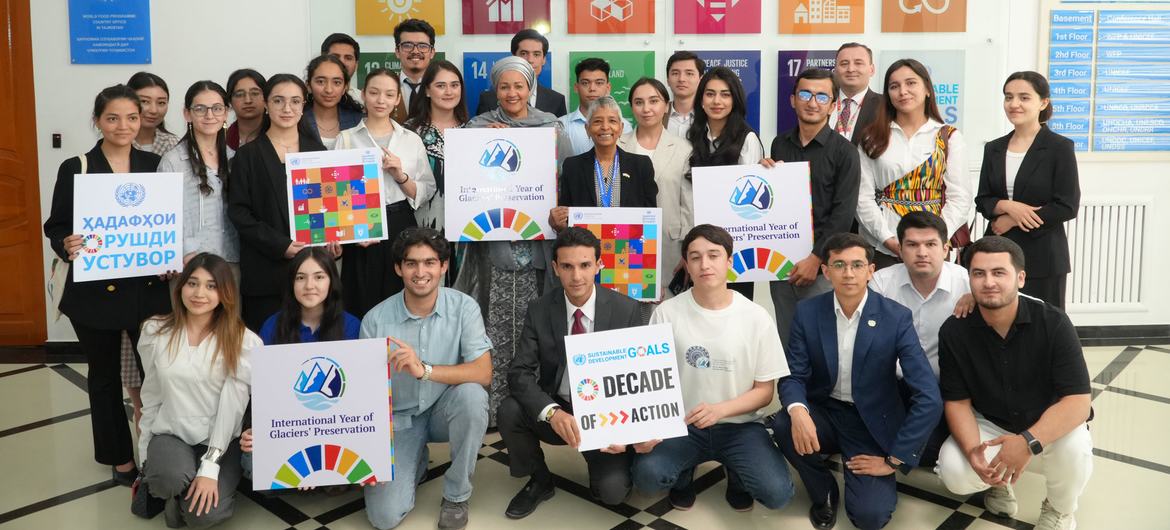
Deputy Secretary-General Amina Mohammed (centre) with Model UN youths and Ambassador for a Day in Tajikistan.

Intergenerational conversations

In Tajikistan, the Deputy Secretary-General met with many youth climate activists. She emphasized that actions to address glacier retreat must be intergenerational, much like the conversations which the conference encouraged. 

“The global decisions we are shaping today will affect [young people’s] lives. So to think that we can begin to shape a person’s future without them, really doesn’t bode well for the rights that they have to determine their future, their aspirations,” she said.

In giving advice to younger generations, she expressed hope that young activists would continue to advocate for their vision of the future. 

“They should continue to raise their voices, they should continue to have their courage of conviction, they should remember that this is about a life journey and they need to make every step count.”