11-year streak of record global warming continues, UN weather agency warns

The World Meteorological Organization (WMOconfirmed on Wednesday that 2025 was one of the three warmest years on record, continuing the streak of extraordinary global temperatures.

After analysing eight international datasets, the organization said that global average surface temperatures last year were 1.44°C above the 1850 to 1900 average.

Two of these datasets ranked 2025 as the second warmest year in the 176-year record, and the other six ranked it as the third warmest year.

Warm despite La Niña 

The fact that 2025 was very slightly cooler than the three-year average from 2023 is partly explained by the La Niña phenomenon, which is associated with colder weather.

But WMO insisted that any temporary cooling from La Niña is not reversing the long-term trend of warmer temperatures.

“The year 2025 started and ended with a cooling La Niña and yet it was still one of the warmest years on record globally because of the accumulation of heat-trapping greenhouse gases in our atmosphere,” said WMO Secretary-General Celeste Saulo.

The organization added that the high temperatures on land and sea last year helped to fuel extreme weather, including heatwaves, heavy rainfall and deadly tropical cyclones, underlining the need for early warning systems.

Ocean heat

Citing a separate study, WMO highlighted that ocean temperatures were also among the highest on record last year, reflecting the long-term accumulation of heat within the climate system.

Regionally, about 33 per cent of the global ocean area ranked among its historical (1958–2025) top three warmest conditions, while about 57 per cent fell within the top five, including the tropical and South Atlantic Ocean, Mediterranean Sea, North Indian Ocean and Southern Oceans, underscoring the broad ocean warming across basins.

WMO will provide full details of key climate change indicators, including greenhouse gases, surface temperatures, ocean heat and other trends, in its State of the Global Climate 2025 report to be issued in March.

UN aid push continues across Gaza despite Israeli airstrikes


“Our humanitarian colleagues tell us that their partners continue their scale-up efforts, despite reported Israeli airstrikes across the Strip,” he said, noting that some strikes hit areas near the so-called ‘Yellow Line’ – a buffer zone marked by the Israeli military inside Gaza as part of the ceasefire agreement.

“We stress again that all parties must refrain from any activities that put civilians, including aid workers, at risk.”

Despite the insecurity, UN operations have managed to move significant volumes of relief into the enclave. According to the UN’s so-called 2720 delivery mechanism authorised by the Security Council, more than 24,000 metric tonnes of aid – including food, medicine, nutritional supplements and shelter materials – have been collected from Gaza’s crossings since the truce began several weeks ago.

Looting subsides

Encouragingly, looting and interception of aid have sharply declined. Between 10 and 28 October, only five per cent of supplies were intercepted, compared with around 80 per cent in the months before the ceasefire.

The World Health Organization (WHO) has also delivered over 840 pallets of life-saving medical supplies, including insulin, surgical kits and essential medicines, and is supporting nutrition services to treat some 2,500 children.

But Mr. Dujarric warned that Gaza’s health system remains “under immense strain”, with the local Ministry of Health reporting that more than 1,700 health workers have been killed since the start of the war.

On education, agencies are working to restore “minimum teaching and learning conditions” for over 630,000 school-aged children who have missed more than two years of classes.

Over 90 classrooms have been rehabilitated, though Israeli restrictions on educational materials continue to hamper efforts.

“We continue to call for all crossing points to be open and more UN agencies and organizations authorized to bring in aid supplies into Gaza,” Mr. Dujarric said.

Fragile window to resume food production

Despite catastrophic destruction across Gaza’s farmlands, the current ceasefire has created a fragile but vital window to revive food production, the UN Food and Agriculture Organization (FAO) and satellite agency UNOSAT said on Thursday.

New satellite analysis shows nearly 87 per cent of cropland, 80 per cent of greenhouses and almost 87 per cent of irrigation wells have been damaged since the start of the conflict. But the pause in fighting has opened access to 37 per cent of affected farmland – some 600 hectares of which remain undamaged – allowing farmers to begin rehabilitating their land.

“The ceasefire has opened a window of opportunity,” said FAO Deputy Director-General Beth Bechdol. “Urgent support is needed to restore agricultural land and infrastructure, enable farmers to resume fresh food production, and rebuild fisheries and livestock so families can feed themselves again.”

FAO stressed that rebuilding food systems now could help stabilise livelihoods and prevent deeper hunger in Gaza.

However, its $75 million appeal to support recovery remains only 10 per cent funded, highlighting the need for swift international backing to seize this brief moment of hope amid widespread devastation.

‘No end’ expected to floods and storms as global heating continues

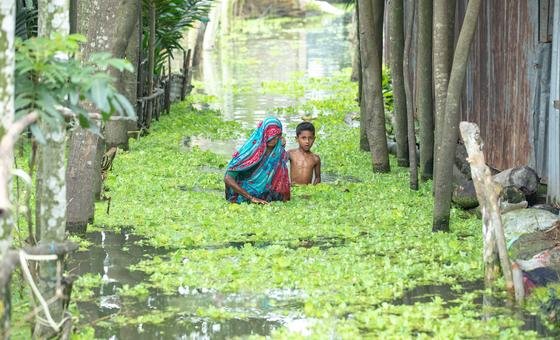
Water-related hazards continue to cause major devastation this year,” said Celeste Saulo, WMO Secretary-General. “The latest examples are the devastating monsoon flooding in Pakistan, floods in South Sudan and the deadly flash floods in the Indonesian island of Bali. And unfortunately, we see no end to this trend.”

Ms. Saulo highlighted that these emergencies have been happening amid increasingly warm air temperatures, which allow more water to be held in the atmosphere leading to heavier rainfall.

Her comments coincided with the publication of a new WMO report on the state of the world’s waterways, snow and ice which notes that 2024 was the hottest in 175 years of observation, with the annual mean surface temperature reaching 1.55 °C above the pre-industrial baseline from 1850 to 1900.

Storm Boris legacy

Against this backdrop in September 2024, central and eastern Europe experienced devastating flash-floods caused by deadly Storm Boris which uprooted tens of thousands of people. Similar disasters are likely to happen more often, even though they should – in theory – be extremely rare.

In the Czech Republic, several rivers flooded in an extreme fashion “that actually statistically should only occur every 100 years,” said Stefan Uhlenbrook, WMO Director of Hydrology, Water and Cryosphere Division.

A ‘century event’ happened…unfortunately, statistics show that these extreme events might become even more frequent,” he said, his comments echoing uncertainty over global water security, linked to the WMO report’s findings that only one-third of the world’s river basins have been at “normal” levels. 

Himalayan deluge

Another example of the increasingly erratic behaviour of the world’s water cycle is the extremely heavy rainfall that has affected parts of Himachal Pradesh or Jammu and Kashmir.

The region saw extremely heavy rainfall when it was not expected; the monsoon came early,” said Sulagna Mishra, WMO Scientific Officer. “So, this is what we are talking about as the unpredictability of the system is growing, more and more.”

Turning to the impact of last year’s pronounced El Niño weather phenomenon, WMO’s report indicates that it contributed to severe drought in the Amazon basin last year.

Equally, northwest Mexico and the northern part of North America saw below-average rainfall, as did southern and southeastern Africa.

“El Niño at the start of 2024 played a role,” explained Ms. Saulo, “but scientific evidence shows that our changing climate and rising temperatures lead to more extreme events, both droughts and floods.”

Our connected world

The WMO report’s other findings confirm wetter-than-normal conditions over central-western Africa, Lake Victoria in Africa, Kazakhstan and southern Russia, central Europe, Pakistan and northern India, southern Iran and north-eastern China in 2024.

One of the key messages of the UN agency report is that what happens to the water cycle in one part of the world has a direct bearing on another.

Melting glaciers continue to be a major concern for meteorologists because of the speed at which they are disappearing and their existential threat to communities downstream and in coastal areas.

“2024 was the third straight year with widespread glacial loss across all regions,” Ms. Saulo said. “Glaciers lost 450 gigatonnes, this is the equivalent of a huge block of ice seven kilometres in height, seven kilometres wide and seven kilometres deep, or 180 million Olympic swimming pools, enough to add about 1.2 millimetres to global sea level, increasing the risk of floods for hundreds of millions of people on the coasts.”

The report also highlights the critical need for improved data-sharing on streamflow, groundwater, soil moisture and water quality, which remain heavily under-monitored.  

World News in Brief: Afghan quake update, diplomacy continues to end Sudan war, UN honours victims of 9/11

Women and children face heightened risks, while operational challenges – including restrictions on female UN staff – threaten life-saving relief efforts.

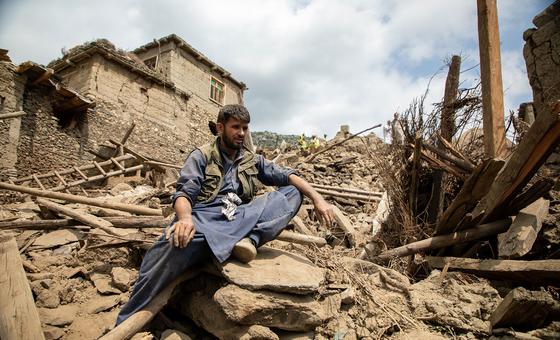
The twin quakes, measuring 6.0 and 6.2, struck on 31 August and 4 September, flattening entire villages in Kunar, Nangarhar, Laghman and Nuristan provinces. Mountainous terrain and landslides blocked key roads, leaving air transport as the only reliable access. 

Assessments indicate over 6,700 homes were destroyed or damaged, forcing most families to shelter in the open without privacy, clean water, or basic services.

Ensuring critical healthcare

UNFPA, the UN reproductive health agency, has deployed health teams to the hardest-hit areas, providing maternal and reproductive healthcare, psychosocial support and counselling. More than 9,500 people have received assistance so far.

“Women and children in particular are extremely traumatized,” said a psychosocial counsellor. “Our goal is to support their emotional and mental health and provide whatever assistance we can, including medicines and dignity kits.”

Among the affected, UNFPA estimates some 11,600 pregnant women face heightened risk due to limited access to health services.

“For pregnant women, a natural disaster can turn an already challenging time into a life-threatening crisis,” said UNFPA Representative Kwabena Asante-Ntiamoah.

World Health Organization (WHO) mobile teams have been deployed to provide trauma care, maternal and child health services, mental health support, immunizations, and emergency nutrition.

The agency has also dispatched 43 tonnes of medical supplies and provided over 4,500 consultations through its clinics.

Sudan: UN envoy heads to region in call for dialogue towards peace

The UN Secretary-General’s Personal Envoy for Sudan, Ramtane Lamamra, has travelled to East Africa to address the ongoing civil conflict there and push for negotiations towards a peace deal.

 In a post on X earlier this week, Mr. Lamamra called on combatants and political actors in Sudan “to engage in constructive dialogue leading to a sustainable solution.”

The goal of the visit is to make progress on the protection of civilians and to strengthen multilateral mediation efforts in the country.

Push for high level consultations

To achieve that, he is working together with the African Union to organize a ministerial-level consultative group meeting in Addis Ababa.

As the rival militaries continue to attack civilians and vital infrastructure, many displaced people and other communities are receiving reduced food assistance, or none at all.

“We continue to reiterate our calls for an end to this conflict that has left 25 million people acutely hungry,” said the UN Secretary General’s Spokesperson Stéphane Dujarric at a press conference on Thursday.

UN honours 9/11 anniversary, stands with New Yorkers

Marking the 24th anniversary of the 11 September terror attacks, the UN reaffirmed its enduring solidarity on Thursday with the people of New York, the city where it has been headquartered for nearly 80 years. 

“New York has hosted the United Nations for 80 years and has been the home to many of our colleagues, as well as to diplomats, staff, and of course all the Secretaries-General. We continue to stand in solidarity with the people of New York, as we did 24 years ago,” said UN Spokesperson Stéphane Dujarric. 

The attacks on the twin towers of the World Trade Center in downtown Manhattan claimed nearly 3,000 lives from over 90 countries and left thousands more injured. 

Decades later, survivors and first responders continue to face long-term health challenges, including respiratory illnesses, cancer, and mental health struggles. 

A place to call home

“New York City has hosted our UN Headquarters for decades and is the place many colleagues call home – so do I,” said Secretary-General António Guterres.

“Today, my thoughts are with everyone who lost loved ones on 9/11, and with all the people of New York City,” he added, in a social media post. 

The UN emphasised its ongoing commitment to commemorate the worst terror attack in US history, honouring the victims, and supporting New Yorkers as the city continues its journey of resilience and healing. 

Source link

World News in Brief: UN chief condemns Russian attacks on Ukraine, Gaza crisis continues, protecting civilians in DR Congo

Secretary-General António Guterres said it marked a “further escalation” of the conflict.

Authorities reported more than 80 civilian casualties, including a national non-governmental organization (NGO) worker and her two-month-old son in Kyiv.

Other affected cities included Zaporizhzhia, Odesa, Chernihiv, Kharkiv, Kremenchuk, Kryvyi Rih and Kherson. Energy infrastructure was also hit, causing temporary power and water outages ahead of winter, with repair crews working to restore services.

“Attacks against civilians and civilian infrastructure violate international humanitarian law. They are unacceptable and must end immediately,” UN Spokesperson Stéphane Dujarric said Monday at the regular news briefing in New York.

“The Secretary-General reiterates his call for a full, immediate and unconditional ceasefire as a first step towards a just, comprehensive and sustainable peace in Ukraine, one that fully upholds Ukraine’s sovereignty, independence and territorial integrity, in line with the UN Charter, international law and relevant UN resolutions,” he added.

Meanwhile, humanitarian support continues. On 5 September, UN agencies and partners delivered medical kits and hygiene supplies to roughly 1,000 people in several Donetsk villages, marking the tenth convoy to the region this year.

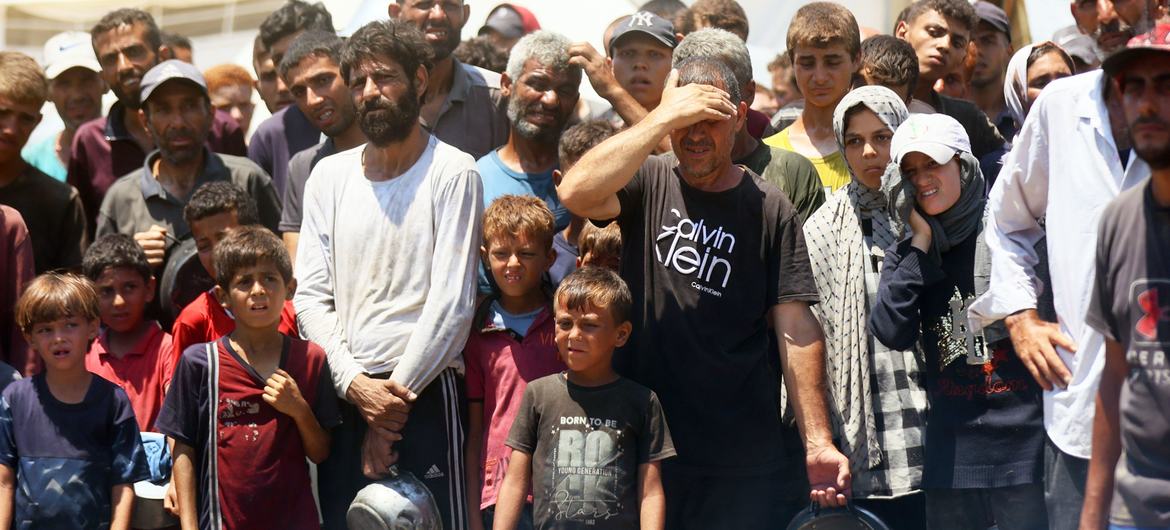
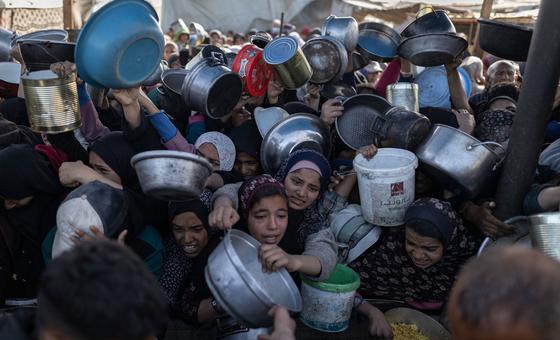
People seek food at a community kitchen in western Gaza City.

Gaza: Civilian toll continues to climb

Civilians in Gaza continue to face mounting deaths, displacement and famine as hostilities continue, with UN agencies warning that the window to prevent widespread starvation is closing.

According to local health authorities, some 67 people were killed and 320 injured in the past 24 hours, Mr. Dujarric said, adding that since the end of the ceasefire in mid-March nearly 12,000 people have died amid repeated displacement and attacks.

“We continue to condemn all killings of civilians,” he said.

The humanitarian situation remains dire. The UN aid coordination office, OCHA, noted urgent needs for food, water and shelter.

“Our colleagues remind us that over 80 per cent of Gaza is either under displacement orders or within militarized areas,” Mr. Dujarric added.

The Gaza Ministry of Health reported that over 100 people, a quarter of them children, have died from malnutrition since famine was confirmed in Gaza governorate.

Humanitarian operations remain heavily constrained.

Only 11 of 24 coordinated missions were facilitated on Sunday, including fuel collection at crossings, while others were denied or cancelled. Humanitarians were able to distribute water in northern Gaza and collect food shipments from Kerem Shalom, Karem Abu Salem and Zikim crossings.

UN peacekeepers in DR Congo continue to protect population against ‘grave danger’

Hundreds of thousands of people fleeing conflict in the eastern Democratic Republic of the Congo (DRC) continue to be protected against “grave danger” by United Nations peacekeepers, according to the head of UN Peace Operations.

Jean-Pierre Lacroix was speaking at the end of a mission to the DRC, where he visited the troubled Ituri and North Kivu regions.

Mr. Lacroix emphasised that hundreds of thousands of Congolese people, including displaced people, rely on the UN peacekeeping mission, MONUSCO for daily protection, particularly in the areas of Fataki and Beni, in North Kivu, where joint operations with the Congolese armed forces continue against armed groups.

USG Lacroix on the role of MONUSCO

Dire situation continues

The security situation in the eastern DRC remains dire, despite diplomatic efforts to bring lasting peace to the country.

The DRC is currently facing one of the most acute humanitarian emergencies in the world, with food insecurity on the rise and 5.9 million Congolese currently internally displaced.

“People are protected here by our MONUSCO colleagues, and they are provided with humanitarian support and protection”, said Mr. Lacroix adding that the UN remains committed to supporting government efforts towards peace and stability in the country.

Source link

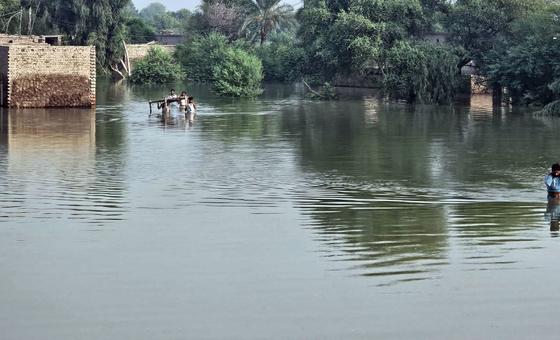
Pakistan floods leave villages cut off as monsoon devastation continues

Aid agencies are continuing to work tirelessly to reach the hardest-hit areas.

The National Disaster Management Authority (NDMA) said nearly 800 people have died since late June – almost three times the toll during the same period last year.

Khyber Pakhtunkhwa province has been hardest hit, where flash floods and landslides swept away homes and schools in mountainous districts, cutting off entire villages and communities.

Punjab – the country’s most populous province – is also on high alert as rising waters on the Sutlej, Ravi and Chenab rivers threaten downstream communities. Authorities fear that upstream water levels and near-full reservoirs could trigger further flooding in the coming days.

Glacier outbursts compound crisis

In Gilgit-Baltistan, so-called glacier lake outburst floods (GLOFs) have added another layer of devastation – destroying homes, water systems and power infrastructure in remote valleys.

These floods occur when heavy rains or rising temperatures cause glacial lakes to burst through natural barriers, suddenly releasing vast amounts of water and debris. With little warning, they are often catastrophic.

Experts warn that climate change is accelerating glacial melt in the Himalaya–Hindu Kush region, increasing the number and size of unstable lakes and heightening risks of such disasters.

Over a million affected

The humanitarian toll is widespread, with more than one million people affected nationwide.

Many families are sheltering with host communities rather than in relief camps, citing concerns over livestock and schooling. Health workers are reporting surges in malaria, fever and skin infections, stretching fragile health services.

Despite major efforts led by federal and provincial authorities, supported by the UN and humanitarian partners, critical gaps remain.

Communities cut off

The most acute needs are in remote mountain areas, where landslides block access and residents face worsening disease, hunger and water shortages, according to the UN aid coordination office, OCHA.

The UN Children’s Fund (UNICEF) said children face heightened risks, with schools damaged, safe water scarce and protection needs rising. The agency has dispatched hygiene kits and helped restore key water supplies.

The World Health Organization (WHO), for its part, is leading disease surveillance and control operations, in a bid to contain outbreaks.

Yemen: ‘Regional turmoil continues to erode prospects for peace,’ Security Council hears

Yemen continues to be one of the world’s most food-insecure countries following over 12 years of war between the Saudi-backed coalition supporting the internationally recognised Government and Ansar Allah – as the rebels are officially known – with  17 million going hungry, according to UN aid coordination office, OCHA.

Despite a fragile but long-lasting ceasefire, regional turmoil continues to erode prospects for peace and stability. Without a political solution, “current cycles of violence – local and regional – along with economic devolution and endemic humanitarian need, will persist,” Ramesh Rajasingham, Director of OCHA’s Coordination Division, told ambassadors.

However, hopes for a lasting peace deal remain: “Reaching a sustainable solution to the situation in Yemen is not only possible, it is essential,” said Special Envoy Grundberg.

Concerning developments

Although frontlines have barely shifted, July saw the Houthi’s fortify their positions, including around Hudaydah City, and launch a significant assault on Government forces in Sa’adah Governorate – developments Mr. Grundberg told the Security Council were “concerning.”

Since October 2023, the Houthis have been targeting Israel as well as commercial ships in the Red Sea, in solidarity with the Palestinian cause in Gaza.

In the past month, the Houthis have continued missile exchanges with Israel, further destabilising Yemen and commerce in the region.

For Yemen to have a real chance for peace, it must be protected from being further drawn into the ongoing regional turmoil emanating out of the war in Gaza,” Mr. Grundberg said, calling for and end to Houthi strikes against civilian ships in the Red Sea.

In the conflict at home, “the parties need to take actions that build trust and good faith,” he said, as the UN aims to establish a path for further talks.

“Unfortunately, we have seen the opposite in the last month with unilateral and escalatory decisions that risk deepening divisions within institutions and state structures,” said Mr. Grundberg.

Food insecurity

In some parts of Yemen, hunger and malnutrition are extreme – especially in areas of displacement. A needs-assessment mission in July found children from displaced families dying from starvation in such a camp in the Abs District of Hajjah Governorate.

These are children who have died not from war wounds, but from hunger – slow, silent, and preventable,” Mr. Rajasingham said.

Half of Yemen’s under fives are suffering from acute malnutrition, and nearly half overall from stunting, leaving them much more vulnerable to dying from common illnesses.

Where healthcare is desperately inadequate and support services are unavailable to many, “this is a life-or-death gamble for children,” he said.

Mr. Rajasingham called for increased funding to scale up emergency food and nutrition support across the country, as humanitarian organizations remain on the ground, despite limited resources and operational challenges.

Path forward

Meanwhile, the Office of the Special Envoy for Yemen continues to work towards de-escalation along the frontlines.

In order to establish a path for talks, “it is essential that measures that build trust and improve the day to day lives of Yemenis continue,” Mr. Grundberg said.

“I urge dialogue between the parties, which is the only way to bring about long-term sustainable solutions on all matters,” he said. 

World News in Brief: Sudan’s agony continues, Colombian presidential candidate dies, the world celebrates the steelpan

The Director of Operations and Advocacy at the UN aid coordination office (OCHA), Edem Wosornu, warned on Monday that over 60 people reportedly died from malnutrition during a single week in the besieged government-controlled city of El Fasher in North Darfur State. Most of the deaths are those in vulnerable groups, such as women and children. 

Famine was first detected in the Zamzam displacement camp in North Darfur about a year ago, likely expanding to other areas since.    

OCHA is also concerned about ongoing violence in the Kordofan region, including reports of attacks on villages in North Kordofan just last week. Eighteen civilians were reportedly killed and dozens more were wounded.

“It is tragic that we need to underscore on a regular basis that civilians must never be targeted, and all parties must uphold their obligations under international humanitarian law,” said UN Spokesperson Stéphane Dujarric at Monday’s daily briefing in New York.  

Cholera outbreak and response

The UN and humanitarian partners continue to scale up the response to cholera in Sudan, where 100,000 cases have been recorded nationwide since July 2024.  

Since 21 June, there have been 5,300 suspected and confirmed cases and 84 deaths due to the waterborne disease in North Darfur State. Most of these have been in the Tawila locality, where around 330,000 civilians displaced from the Zamzam Camp and El Fasher are sheltering in dire conditions.

UN partners are on the ground responding with cholera treatment centres, but overcrowding, poor sanitation, limited access and the ongoing rainy season are accelerating the spread of disease and restricting aid delivery.  

Nonetheless, on 10 August, a new vaccination campaign supported by the World Health Organization (WHO) began in Khartoum State, targeting 1.1 million people.

Guterres deeply saddened by death of Colombian presidential candidate

Secretary-General António Guterres released a statement on Monday expressing his deep sadness over the death of Colombian presidential candidate and former senator, Miguel Uribe, sending condolences to his family and the Colombian people.

Mr. Uribe’s death followed two months in intensive care after he was shot multiple times during what was reportedly a targeted attack at a campaign rally in the capital of Bogotá on 7 June.  

UN High Commissioner for Human Rights, Volker Türk, also released a statement expressing his shock and sadness over the death of the presidential candidate.

The top UN officials both noted the active investigations are ongoing into the shooting. A teenager who is believed to have carried out the attack has been arrested but the motive is still unclear, according to news reports.  

Mr. Türk stressed that this death “is a stark reminder of the importance that Colombia’s upcoming elections be conducted with respect for the lives of all, free from violence and in a climate that allows for safe and inclusive participation.”  

The UN rights chief said his office in Colombia will continue to assist Colombian authorities and civil society in their human rights work ahead of the upcoming election.

In the same vein, the Secretary-General urged Colombia’s authorities to take all necessary measures to ensure a peaceful election and security for all candidates taking part.

Let’s hear it for the Caribbean’s own steelpan

11 August marks World Steelpan Day, celebrating the exuberant musical instrument that originated in Trinidad and Tobago and is now enjoyed worldwide.

The steelpan, otherwise known as a steel drum, has roots in the early 20th-century carnival percussion groups of the Caribbean islands and is played with rubber-tipped sticks.

The UN recognises the joyous steelpan for its rich cultural and historical significance as well as its role in promoting sustainable development and diversity.

In honour of the day, the UN General Assembly is encouraging activities that raise awareness of the cultural significance of the beloved instrument and its connection to the Sustainable Development Goals (SDGs).

This celebration highlights how music and culture can foster inclusive and sustainable communities worldwide. 

Source link

Gaza: ‘Unbearable’ suffering continues, UN official tells Security Council

Briefing ambassadors in the Security Council, Assistant Secretary-General for the Middle East Khaled Khiari said more than 1,000 Palestinians had been killed since mid-June alone, many of them while seeking aid.

Citing figures from the Gazan health authorities, he reported that the total number of Palestinian fatalities since 7 October 2023 had surpassed 56,500.

The level of suffering and brutality in Gaza is unbearable,” Mr. Khiari said. “The continued collective punishment of the Palestinian people is unjustifiable.

Killed trying to access aid

Mr. Khiari cited multiple incidents involving the Israel Defense Forces (IDF) opening fire near food distribution points.

On 17 June, at least 50 people were killed and 200 injured in Khan Younis when an IDF tank opened fire on a crowd waiting for UN World Food Programme (WFP) aid trucks.

Once again a week later, IDF troops reportedly opened fire near Gaza Humanitarian Foundation sites, this time killing 49 Palestinians and injuring 197 others.

“We strongly condemn the loss of lives and injuries of Palestinians seeking aid in Gaza,” Mr. Khiari said. “We call for an immediate and independent investigation into these events and for perpetrators to be held accountable.”

He emphasised that the UN “will not participate in any aid delivery modality that does not comply with the fundamental humanitarian principles of humanity, impartiality, independence, and neutrality,” a sentiment which other UN officials have repeatedly said as well.

Strong condemnation

Mr. Khiari reiterated the UN’s strong condemnation of Hamas and other Palestinian armed groups for their attacks in Israel, which killed over 1,200 people and led to more than 250 being taken hostage. Fifty hostages, including one woman, remain in captivity.

Nothing can justify these acts of terror. We remain appalled that hostages may be subjected to ongoing ill-treatment and that the bodies of hostages continue to be withheld,” he said.

At the same time, he also condemned “the widespread killing and injury of civilians in Gaza, including children and women, and the destruction of homes, schools, hospitals and mosques.”

Rising violence in the West Bank

In the occupied West Bank, Israeli raids and settler violence have escalated.  

Mr. Khiari reported that a 15-year-old boy and an elderly woman were killed in separate incidents on 25 June. Armed settlers also killed several Palestinians during attacks in Surif and Kafr Malik.

The escalating violence in the occupied West Bank is alarming,” Khiari said, warning that military operations and settler expansion are leading to fatalities, displacement and destruction.

Iran-Israel ceasefire brings hope to the region

Mr. Khiari concluded his briefing with comments on the wider Middle East region, particularly the recent flare-up between Israel and Iran.

He welcomed the 24 June ceasefire agreement between the two countries, announced by US President Donald Trump, and credited US and Qatari mediation.

We hope that this ceasefire can be replicated in the other conflicts in the region – nowhere is this more needed than in Gaza,” he said.

Gaza ‘hungriest place on earth’, as Israel continues stranglehold on aid

“Gaza is the hungriest place on Earth,” OCHA spokesperson Jens Laerke told reporters in Geneva, stressing that it is the only defined territory in the world where the entire population is at risk of famine.

The aid operation that we have ready to roll is being put in an operational straitjacket that makes it one of the most obstructed aid operations, not only in the world today, but in recent history,” he said.

Mr. Laerke explained that out of nearly 900 aid trucks that were approved to enter from the Israeli side since the reopening of the Kerem Shalom border crossing between Israel and the war-torn enclave ten days ago, less than 600 have been offloaded on the Gaza side.

An even lower number has been picked up for distribution in Gaza, he said, pointing to the “congested, insecure” routes which humanitarians are assigned to use by the Israeli authorities, as well as “significant delays” in the approvals.

Drip-feed of desperation

The OCHA spokesperson stressed that the limited number of truckloads coming in is a “trickle”.

It is drip-feeding food into an area on the verge of catastrophic hunger,” he insisted.

Mr. Laerke added that many of the trucks were “swarmed by desperate people” on the way.

“It’s a survival reaction by desperate people who want to feed their families,” he said, adding that the aid on the trucks “had been paid for by the donors to go to those people”.

“I don’t blame them one second for taking the aid that essentially is already theirs, but it’s not distributed in a way we wanted,” he explained.

On Wednesday, hungry crowds overran a UN World Food Programme (WFP) warehouse in Deir Al-Balah in central Gaza, where limited stocks of wheat flour had been pre-positioned for use by the few bakeries able to resume operations.

The incident reportedly left two people dead. In a statement WFP reiterated warnings over “the risks imposed by limiting humanitarian aid to hungry people in desperate need of assistance”.

‘Paid for’ aid must be delivered

OCHA’s Mr. Laerke insisted once again on the fact that the UN and partners have “tens of thousands of pallets of food and other life-saving assistance” ready to enter Gaza to relieve the suffering.

The aid has been paid for by the world’s donors, who expect us on their behalf to deliver it. It is cleared for customs, it is approved and it’s ready to move,” he said.

A new US and Israeli-backed aid distribution scheme run by a private entity called the Gaza Humanitarian Foundation started operating independently of the UN this week in the Strip.

On Tuesday at least 47 Palestinians were reportedly shot and injured trying to collect aid from its distribution facility in the south, according to information received by UN human rights office, OHCHR.

Aid scheme to bypass UN ‘not working’

In reaction to the incident OCHA head in the Occupied Palestinian Territory Jonathan Whittall warned on Wednesday that the US-Israeli distribution scheme was “engineered scarcity: four distribution hubs located in central and southern Gaza, secured by private US security contractors, where those Palestinians who can reach them will receive rations.”

Mr. Laerke told reporters that this “alternative modality” is “not working” as it does not meet people’s needs.

He added that it constitutes a “violation of basic principle of impartiality”, and that criteria for getting aid have to be based on need, and not the ability to walk for kilometres to a distribution point.

It creates chaos, and it creates a situation that is extremely dangerous for people,” Mr. Laerke said. “Even if you enter one of those distribution points, pick up a package, the minute you’re out of it… Are you a target for looters again? Yes, you are.”

The OCHA spokesperson reiterated calls by the humanitarian community for the reopening of all crossing points into Gaza, to enable delivery from all corridors, including from Jordan and Egypt.

“We need to be able to deliver food directly to families where they are,” as has been the case in the past, he said.

Highlighting the challenges for humanitarian access, Mr. Laerke said that over 80 per cent of the Gaza Strip is currently within Israeli militarized zones or under displacement orders. Since the ceasefire between Israel and Hamas collapsed on 18 March nearly 635,000 people in the enclave have been displaced yet again.

Source link